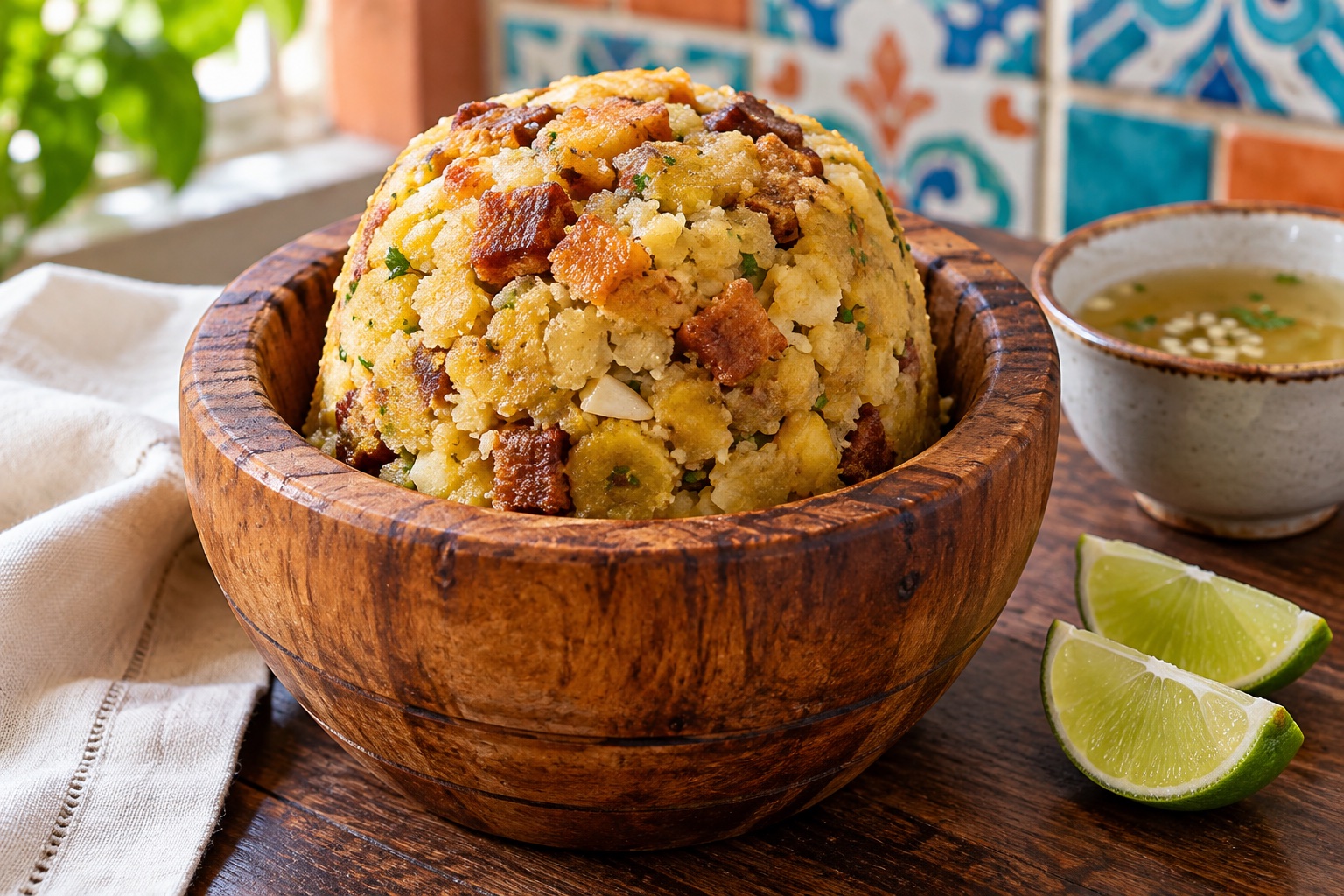
Mofongo is an emblematic Puerto Rican dish: green plantain is fried and mashed with garlic, commonly with chicharrón, oil, or butter.
This is a simple, unfilled home version. The goal is to soften plantain without browning it hard, then add warm broth gradually so the mash is tender rather than dry or gummy.
Why this method works
- Fully green plantains are starchy and savory; yellowing fruit becomes sweet and changes the classic texture.
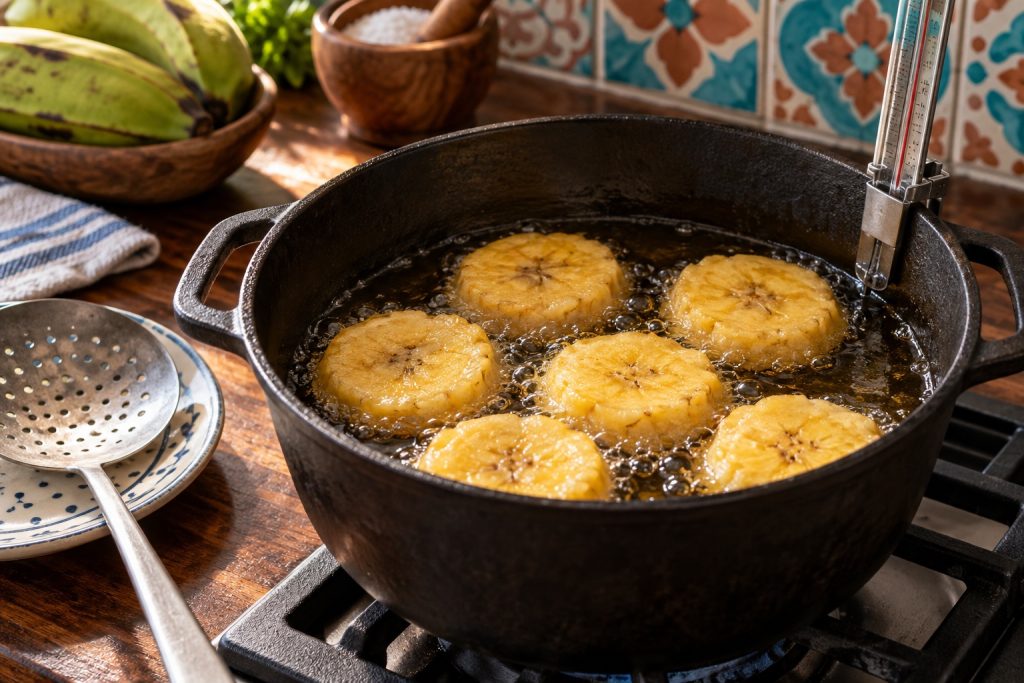
- Frying at 350°F only to pale gold softens the center; dark, crisp pieces will not mash cohesively.
- Mashing while hot and adding warm broth by spoonfuls lets the starch bind without turning gluey.
Before you start
Prepare a heavy pot, thermometer, slotted spoon, towels, large pilón or sturdy bowl, and wooden masher.
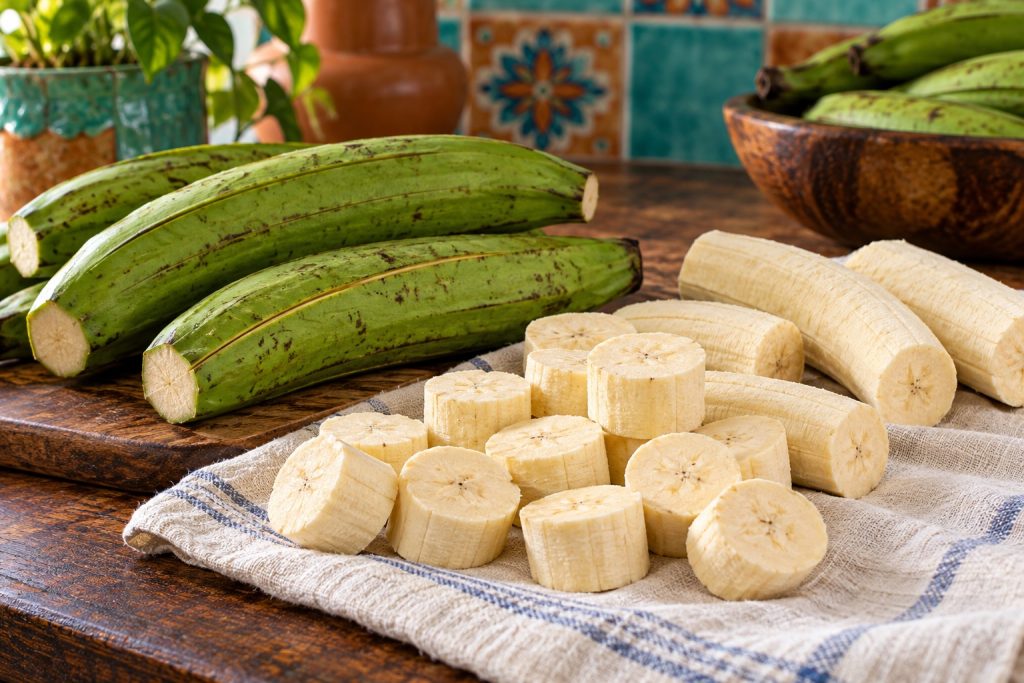
Plantains must be fully green and firm. Trim ends and score the peel lengthwise; gloves or oiled fingers help with sticky sap.
Never fill the pot more than halfway with oil. Dry plantain completely, keep water away from hot oil, and never use water on an oil fire.
Step-by-step method
1. Peel and thoroughly dry the plantain
Trim plantain ends, score the peel lengthwise in 3–4 places, and peel. Cut into 1-inch chunks. Optionally soak 10 minutes in salted water, but dry every piece completely before frying.
2. Fry until pale golden and tender
Bring oil to 350°F in a heavy pot. Fry plantain in two batches for 8–12 minutes until easily pierced and pale golden, not dark brown. Lift out and drain briefly.
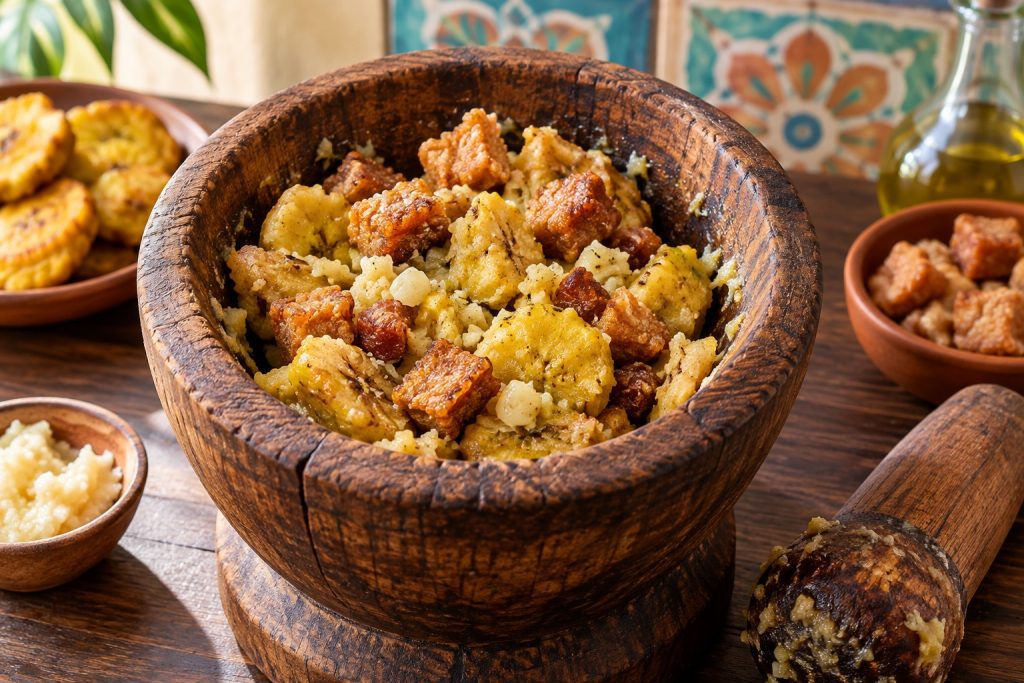
3. Mash hot with garlic
Pound garlic and salt to a paste in the pilón. Add hot plantain in batches and mash until no large chunks remain. Mix in cracklings and olive oil; do not overwork into an elastic paste.
4. Adjust with broth and mold
Add warm broth 1 tablespoon at a time. The mixture should hold when pressed without visible liquid. Adjust salt. Lightly oil four small bowls, pack in the mixture, invert onto plates, and serve immediately.
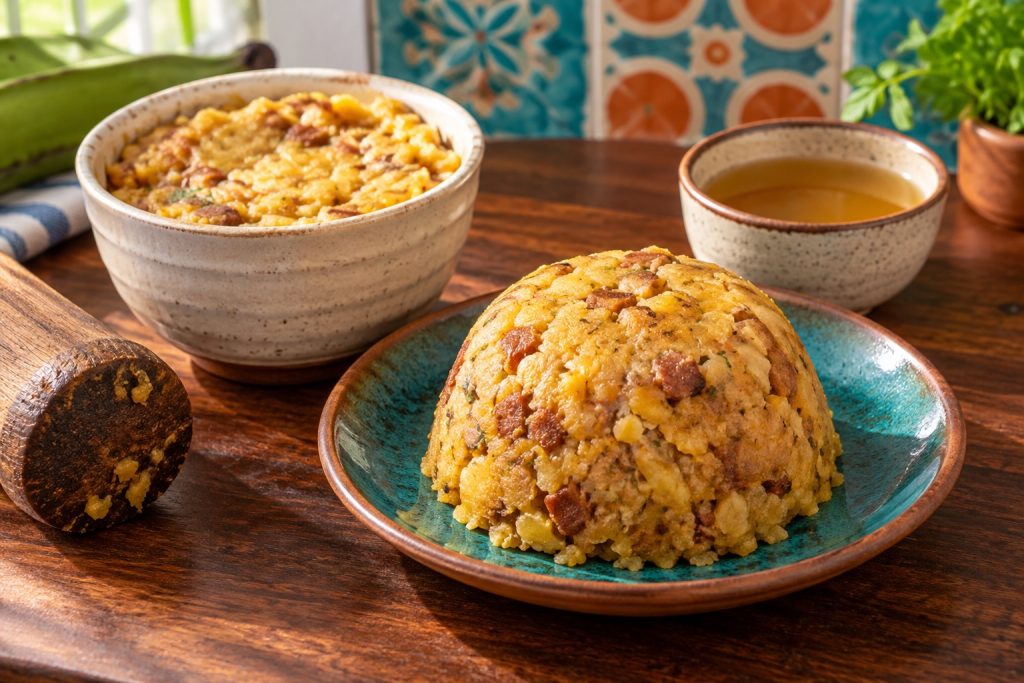
Puerto Rican Mofongo
Puerto Rican mofongo with pale-golden plantain, balanced garlic, crisp cracklings, and enough warm broth to stay tender, never gummy.
Ingredients
- 4 large green plantains — fully green and firm
- 750 ml neutral frying oil — as needed; not all absorbed
- 4 cloves garlic
- 1/2 tsp fine salt — adjust at end
- 100 g plain chicharrón or pork cracklings — coarsely crushed
- 2 tbsp olive oil
- 80-120 ml low-sodium chicken or vegetable broth — warm, as needed
- 2 tbsp cilantro leaves — optional garnish
- lime wedges or garlic sauce — optional, to serve
Instructions
- Trim plantain ends, score the peel lengthwise in 3–4 places, and peel. Cut into 1-inch chunks. Optionally soak 10 minutes in salted water, but dry every piece completely before frying.
- Bring oil to 350°F in a heavy pot. Fry plantain in two batches for 8–12 minutes until easily pierced and pale golden, not dark brown. Lift out and drain briefly.
- Pound garlic and salt to a paste in the pilón. Add hot plantain in batches and mash until no large chunks remain. Mix in cracklings and olive oil; do not overwork into an elastic paste.
- Add warm broth 1 tablespoon at a time. The mixture should hold when pressed without visible liquid. Adjust salt. Lightly oil four small bowls, pack in the mixture, invert onto plates, and serve immediately.
Notes
- Mofongo holds a dome but yields easily to a fork. There are no hard plantain cores or visible liquid, and some crackling pieces remain crisp.
- If it crumbles, add another tablespoon of warm broth. If gluey, it was overworked; fold in coarse cracklings and stop. Do not use ripe yellow plantain. For a pork-free adaptation, omit cracklings and use 2 extra tablespoons olive oil plus vegetable broth. 120 ml broth is about ½ US cup. Naturally wheat-free, but check packaged cracklings and broth for gluten or soy cross-contact.
- Serve hot with garlicky broth, salad, or a stew. Refrigerate leftovers in a shallow container within 2 hours for 3–4 days. Reheat covered with a splash of water in a microwave or skillet until the center reaches 165°F. Freezing makes plantain dry and mealy and is not recommended.
Texture and doneness cues
Mofongo holds a dome but yields easily to a fork. There are no hard plantain cores or visible liquid, and some crackling pieces remain crisp.
Mistakes, substitutions, and measurements
If it crumbles, add another tablespoon of warm broth. If gluey, it was overworked; fold in coarse cracklings and stop. Do not use ripe yellow plantain. For a pork-free adaptation, omit cracklings and use 2 extra tablespoons olive oil plus vegetable broth. 120 ml broth is about ½ US cup. Naturally wheat-free, but check packaged cracklings and broth for gluten or soy cross-contact.
Serving, storage, and allergens
Serve hot with garlicky broth, salad, or a stew. Refrigerate leftovers in a shallow container within 2 hours for 3–4 days. Reheat covered with a splash of water in a microwave or skillet until the center reaches 165°F. Freezing makes plantain dry and mealy and is not recommended.
Frequently asked questions
Can I use bananas for mofongo?
No. Sweet bananas and fully green plantains have different starch and moisture and will not produce the same result.
Why will the plantain not mash?
It may be undercooked or fried too dark and crisp. A fork should slide in easily while the outside is still pale gold.
What can I use without a pilón?
Use a sturdy bowl and wooden masher. A food processor easily overworks the starch and makes it sticky.
Leave a Reply