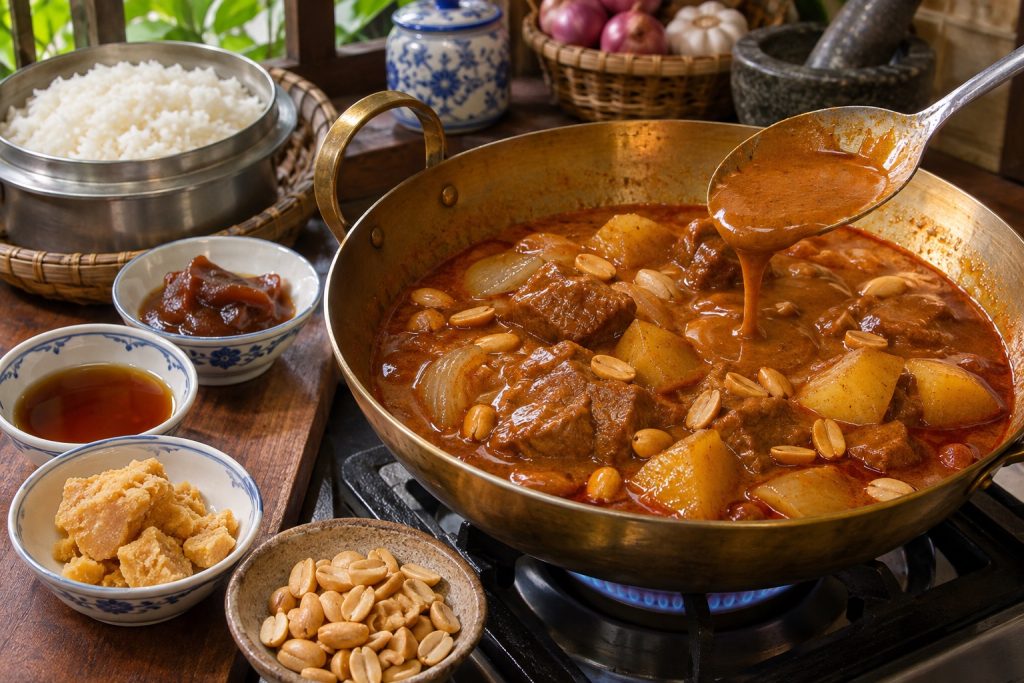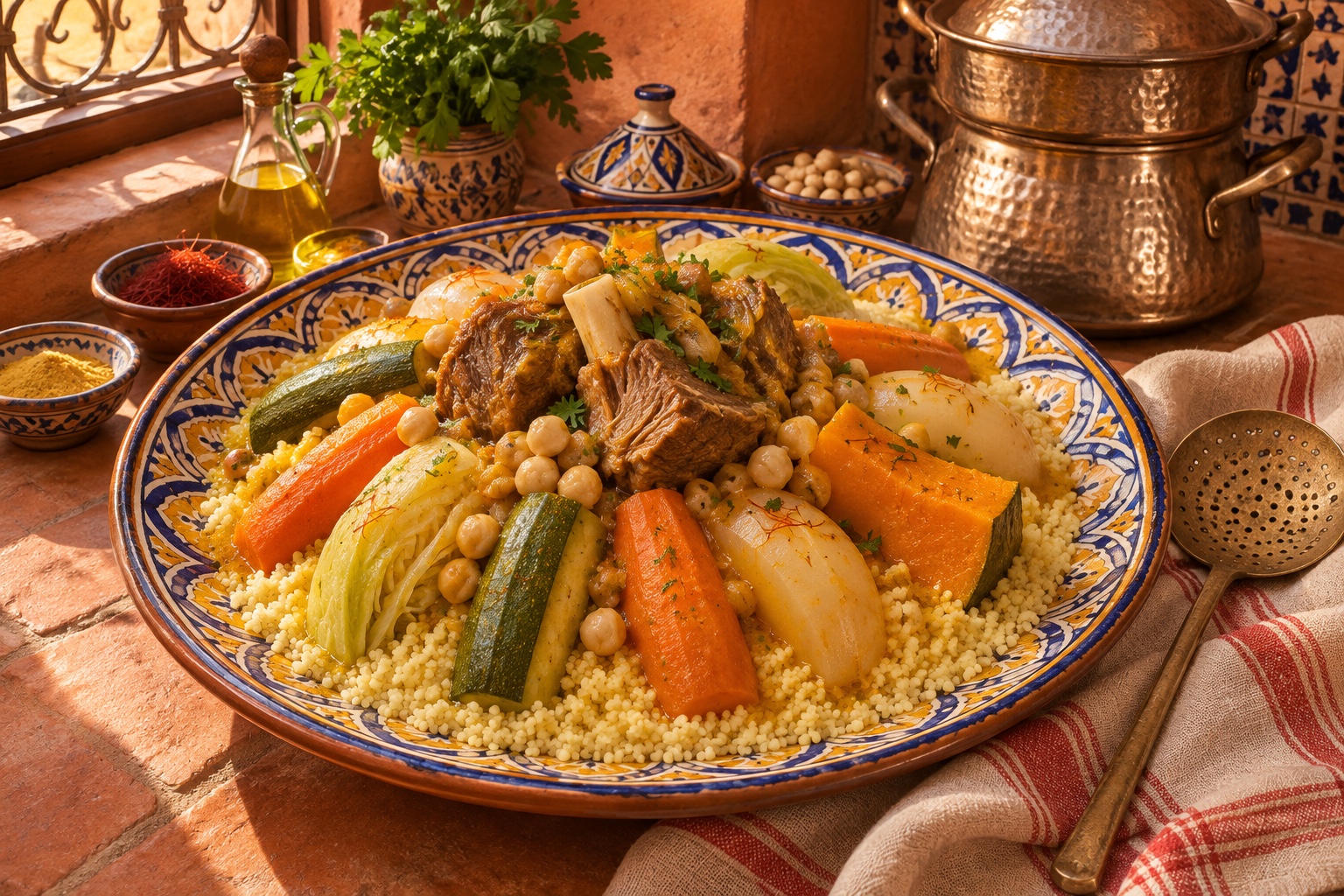
Category: Main Dishes

Satisfying main dishes from Turkish cooking and cuisines around the world. Meat, poultry, and plant-based recipes include doneness cues, texture guidance, practical substitutions, food-safety notes, storage, and reheating instructions.

  • Moroccan Lamb Couscous: Fluffy Grains and Seven Vegetables

    Moroccan Lamb Couscous: Fluffy Grains and Seven Vegetables

    Morocco’s official tourism source describes couscous as an Amazigh-rooted staple, commonly shared on Fridays and varied with meat, chicken, fish, or vegetables. This is a home lamb-and-seven-vegetable interpretation, not a claim to one “authentic” formula.

    The traditional fluffy texture comes from moistening and steaming couscous in stages over the meat-and-vegetable broth. Without a couscoussier, use a wide steamer basket that fits tightly over the pot.

    Why this method works

    • Lightly browning lamb in small batches deepens the broth.
    • Adding firm vegetables first and zucchini and squash later aligns their doneness.
    • Separating couscous with oil before moistening prevents clumps.
    • Two steaming rounds create lighter grains than simply soaking instant couscous.

    Before you start

    Prepare a 6–7 quart/liter pot and a wide steamer that fits over it; heavy steam should not escape around the seam.

    Use medium traditional dry couscous. Quick-cooking products may require their package method and a shorter steam.

    Cut vegetables into large even pieces; small pieces collapse during the long simmer.
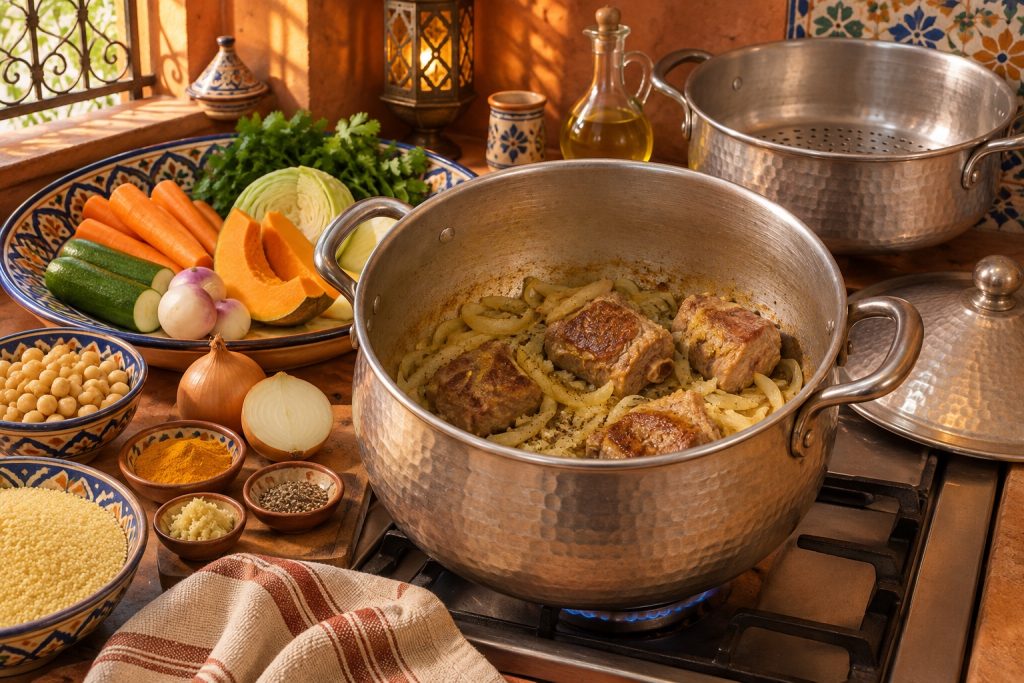
    Brown the lamb and onions lightly
    Pat lamb dry and season with 1 tsp salt. Heat 1 tbsp oil in a large pot over medium-high; lightly brown lamb in two batches for 8–10 minutes total. Add onion and soften 6 minutes. Stir in ginger, turmeric, pepper, cinnamon, and saffron for 30 seconds.

    Step-by-step method

    1. Brown the lamb and onions lightly

    Pat lamb dry and season with 1 tsp salt. Heat 1 tbsp oil in a large pot over medium-high; lightly brown lamb in two batches for 8–10 minutes total. Add onion and soften 6 minutes. Stir in ginger, turmeric, pepper, cinnamon, and saffron for 30 seconds.

    2. Build broth with the firm vegetables

    Add tomatoes, 7½ cups/1.8 liters stock, and herb bundle. Bring to a bare simmer, skim foam, and partly cover for 45 minutes. Add carrots, turnips, and cabbage; maintain only small bubbles for 25 minutes.
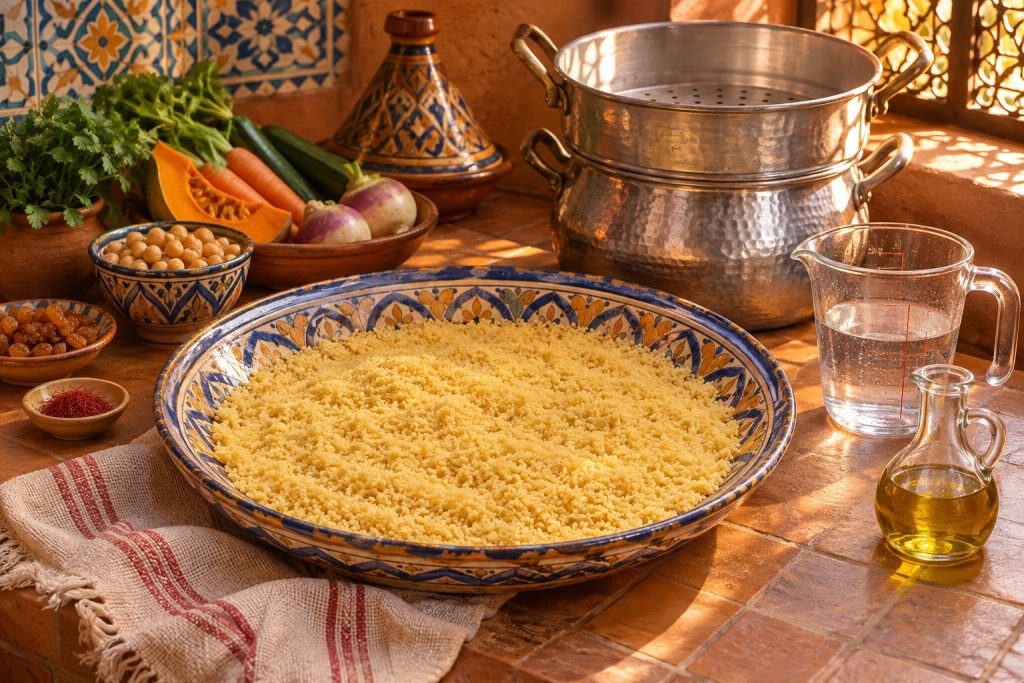
    Build broth with the firm vegetables
    Add tomatoes, 7½ cups/1.8 liters stock, and herb bundle. Bring to a bare simmer, skim foam, and partly cover for 45 minutes. Add carrots, turnips, and cabbage; maintain only small bubbles for 25 minutes.

    3. Steam couscous in two rounds

    Spread couscous in a wide tray. Rub in 1 tbsp oil and ¾ cup/200 ml cool water, breaking clumps; rest 10 minutes. Transfer loosely to the steamer and steam over the pot 20 minutes. Return to the tray, work in ⅔ cup/150 ml water and remaining oil; rest 10 minutes, then steam 20 minutes again.
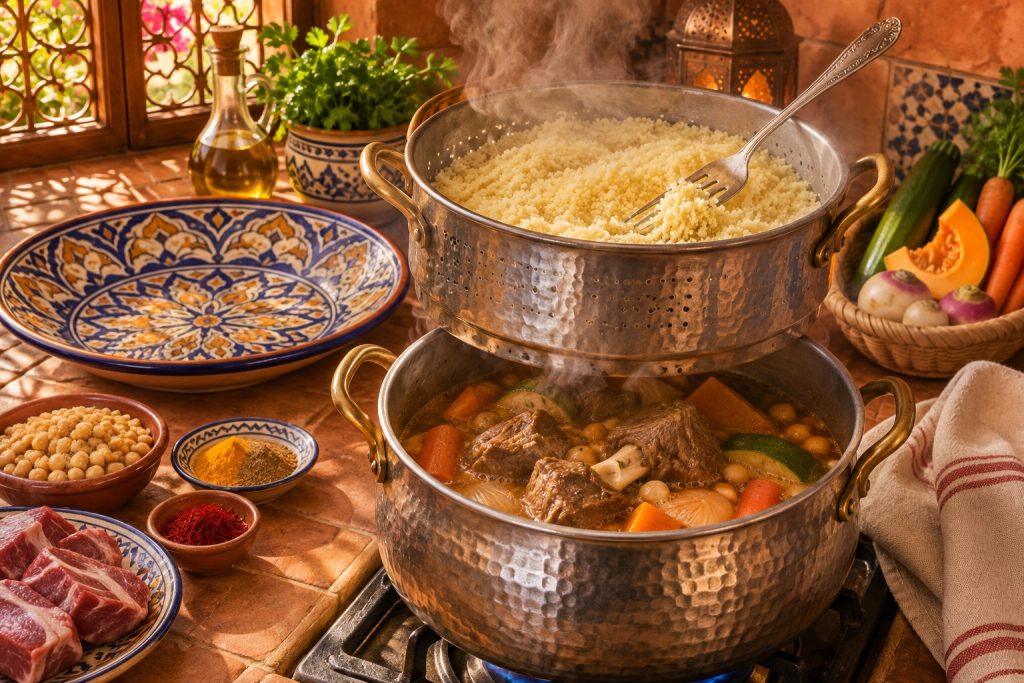
    Steam couscous in two rounds
    Spread couscous in a wide tray. Rub in 1 tbsp oil and ¾ cup/200 ml cool water, breaking clumps; rest 10 minutes. Transfer loosely to the steamer and steam over the pot 20 minutes. Return to the tray, work in ⅔ cup/150 ml water and remaining oil; rest 10 minutes, then steam 20 minutes again.

    4. Add tender vegetables and assemble

    Add zucchini, squash, and chickpeas to the lower pot. Simmer 15–20 minutes until vegetables pierce easily but hold shape and lamb is fork-tender. Remove herbs and adjust salt. Fluff couscous onto a platter; arrange lamb and vegetables, spooning on only enough broth to moisten. Serve extra broth alongside.
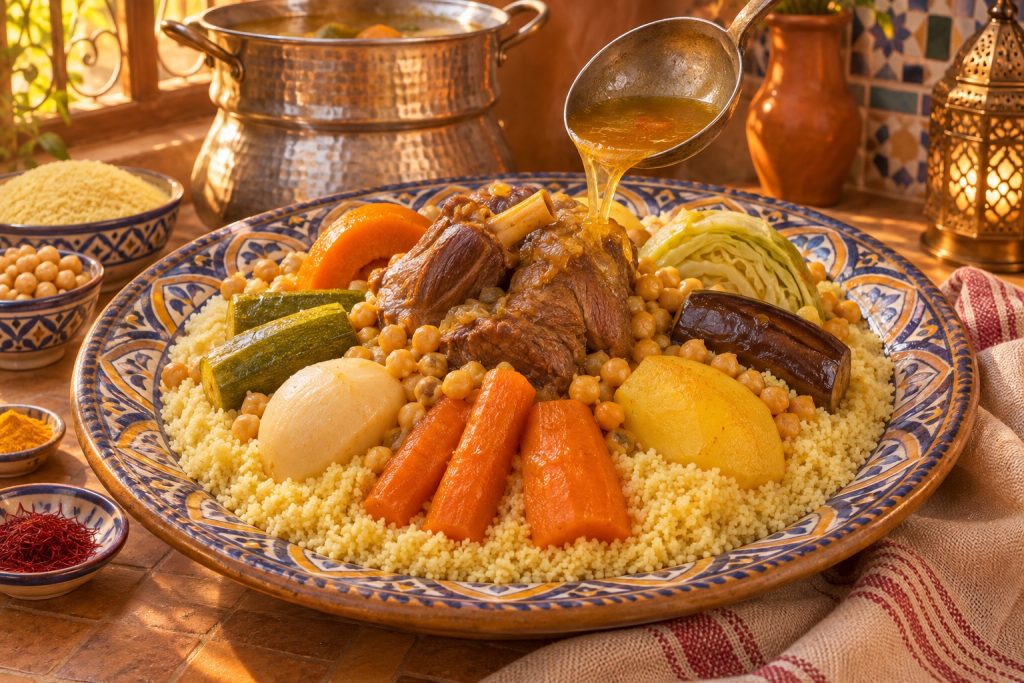
    Add tender vegetables and assemble
    Add zucchini, squash, and chickpeas to the lower pot. Simmer 15–20 minutes until vegetables pierce easily but hold shape and lamb is fork-tender. Remove herbs and adjust salt. Fluff couscous onto a platter; arrange lamb and vegetables, spooning on only enough broth to moisten. Serve extra broth alongside.

    Texture and doneness cues

    Couscous grains are separate, light, and moist rather than wet; they loosen easily after a gentle squeeze.

    Lamb yields to a fork; vegetables pierce easily yet survive transfer to the platter.

    Mistakes, substitutions, and conversions

    Pouring water all at once creates clumps; sprinkle and separate with fingertips.

    Beef chuck or chicken thighs may replace lamb; adjust cooking to tenderness and safe temperature.

    500 g dry couscous is about 3 US cups. Instant couscous needs different hydration; check the label.

    Serving, storage, and allergens

    Serve with a light salad or fermented milk such as lben. Cool meat, vegetables, and couscous in shallow containers within 2 hours and refrigerate 3–4 days. Reheat, stirring, to 165°F/74°C. Freeze up to 2 months; zucchini softens.

    Allergen: gluten. Prepared stock and couscous may contain additional allergens.

    Frequently asked questions

    Why did couscous clump?

    Water hit one spot or clumps were not separated before steaming. Sprinkle evenly and rub grains between fingertips.

    Can I make it without a couscoussier?

    Yes. Use a wide metal colander that fits tightly, stays above the liquid, and does not leak steam around the rim.

    Why did vegetables collapse?

    They were cut small or all added early. Add zucchini and squash only for the final 15–20 minutes.

    Can I use instant couscous?

    Yes, but follow its package hydration; cook meat and vegetables separately and combine for serving.
  • Hyderabadi Chicken Biryani: Separate Rice, Juicy Chicken

    Hyderabadi Chicken Biryani: Separate Rice, Juicy Chicken

    India’s official tourism sources describe Hyderabadi biryani as central to the city’s food culture, combining meat and fragrant rice through dum steam cooking. In kachchi biryani raw marinated meat cooks with rice; in pakki biryani the meat is cooked separately before layering with partly cooked rice.

    This home adaptation uses the more predictable pakki method. Chicken is cooked almost through, basmati is parboiled to about 70 percent, and both finish together over very low heat.

    Why this method works

    • Rinsing and a 30-minute soak reduce surface starch and help grains elongate evenly.
    • Parboiling rice only to about 70 percent prevents mushiness during dum.
    • A thick chicken masala supplies moisture without flooding the rice.
    • A heavy pot set over a heat diffuser, with a tight lid, traps steam without scorching the base.

    Before you start

    Prepare a heavy 4–5 quart pot, a large rice saucepan, fine strainer, and thermometer.

    Basmati age and brand change the timing; look for a flexible grain with a firm white dot in the center rather than trusting the clock alone.

    If saffron is unavailable, omit it; turmeric is not the same flavor. A tiny pinch for color is only a home adaptation.

    Marinate chicken and brown the onions
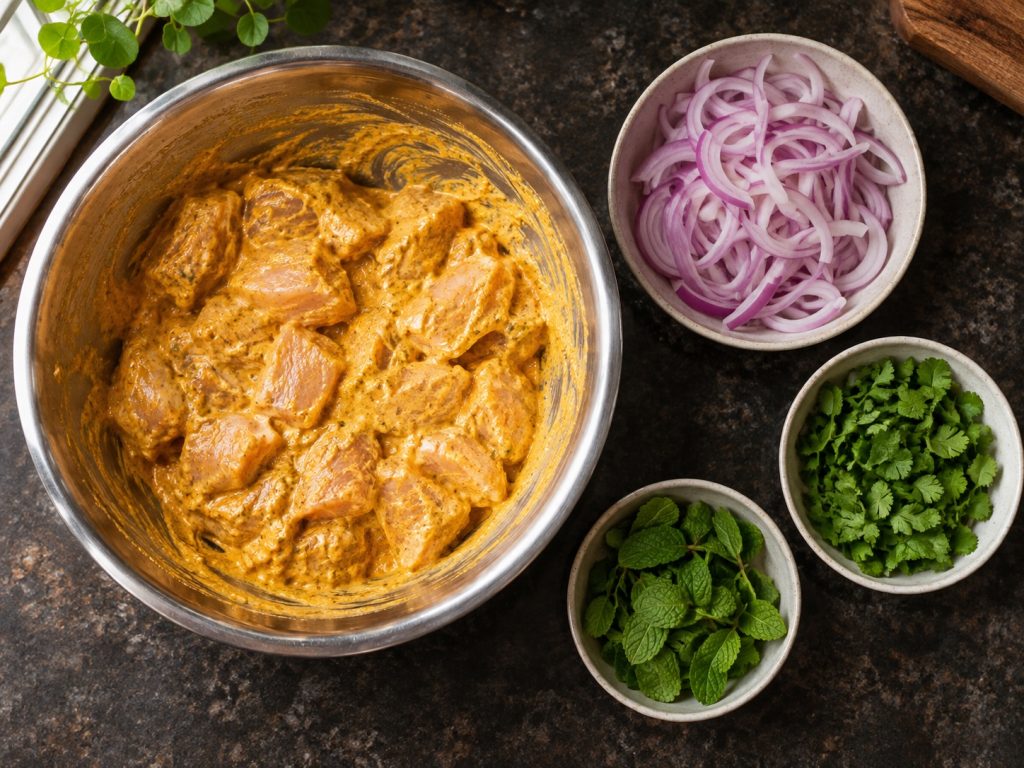
    Mix yogurt, garlic, ginger, chile, ground spices, lemon, and 1½ tsp salt; marinate chicken in the refrigerator 30 minutes to 12 hours. Fry onions in half the fat for 12–15 minutes until deep golden; drain half on paper.

    Step-by-step method

    1. Marinate chicken and brown the onions

    Mix yogurt, garlic, ginger, chile, ground spices, lemon, and 1½ tsp salt; marinate chicken in the refrigerator 30 minutes to 12 hours. Fry onions in half the fat for 12–15 minutes until deep golden; drain half on paper.

    2. Cook a thick chicken masala

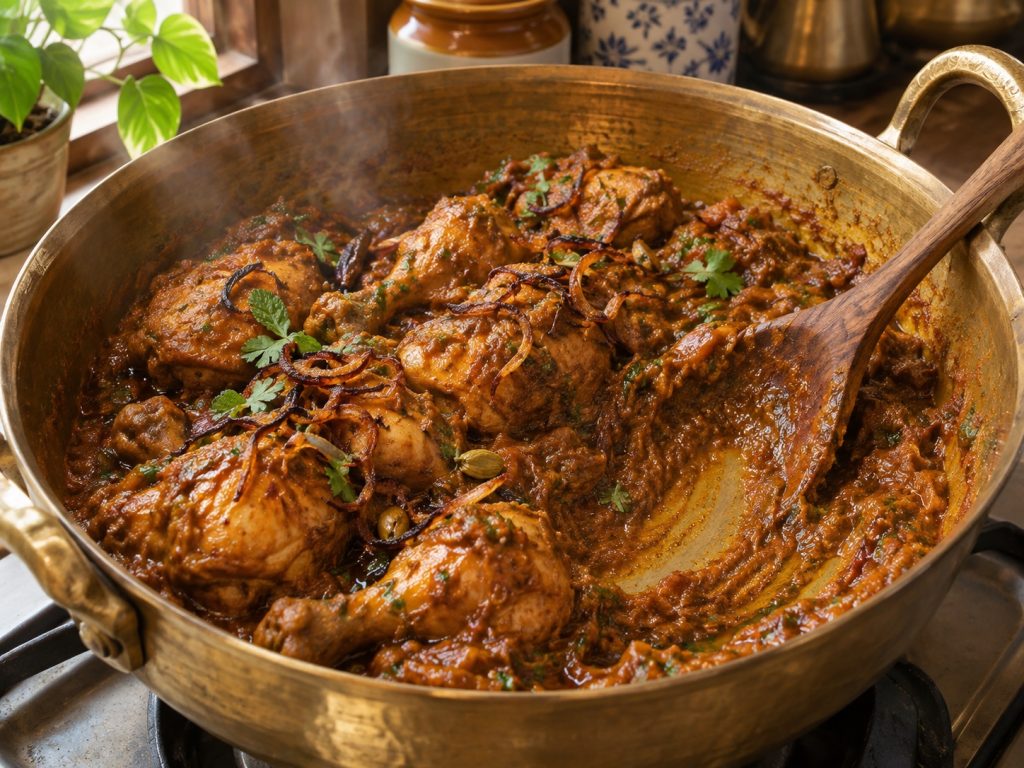
    Add chicken with marinade to the pot. Cook over medium 6 minutes, then cover and simmer on medium-low 12–15 minutes. Chicken should reach at least 155–158°F/68–70°C and the sauce should hold a spoon trail for 2 seconds. Add half the mint and cilantro.

    Cook a thick chicken masala
    Add chicken with marinade to the pot. Cook over medium 6 minutes, then cover and simmer on medium-low 12–15 minutes. Chicken should reach at least 155–158°F/68–70°C and the sauce should hold a spoon trail for 2 seconds. Add half the mint and cilantro.

    3. Parboil rice to 70 percent

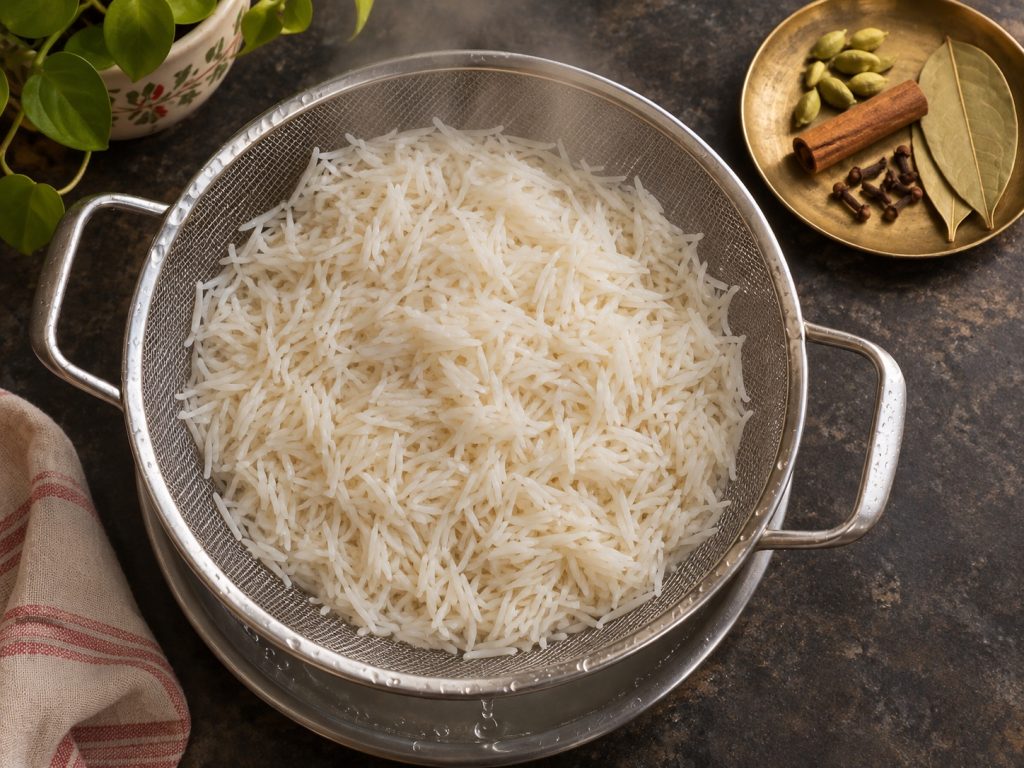
    Rinse rice until water is nearly clear and soak 30 minutes. Boil plenty of water with cardamom, cinnamon, cloves, bay, and remaining salt. Drain rice and boil 5–7 minutes; when flexible outside with a firm white dot inside, drain immediately.

    Parboil rice to 70 percent
    Rinse rice until water is nearly clear and soak 30 minutes. Boil plenty of water with cardamom, cinnamon, cloves, bay, and remaining salt. Drain rice and boil 5–7 minutes; when flexible outside with a firm white dot inside, drain immediately.

    4. Layer and finish with gentle dum steam

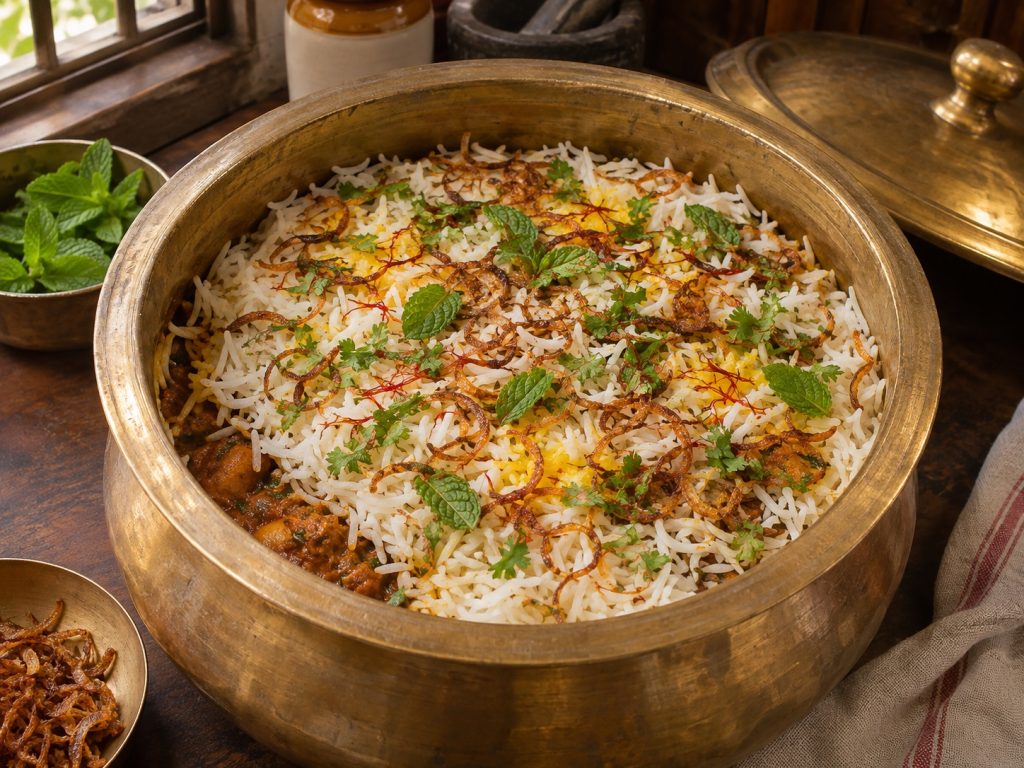
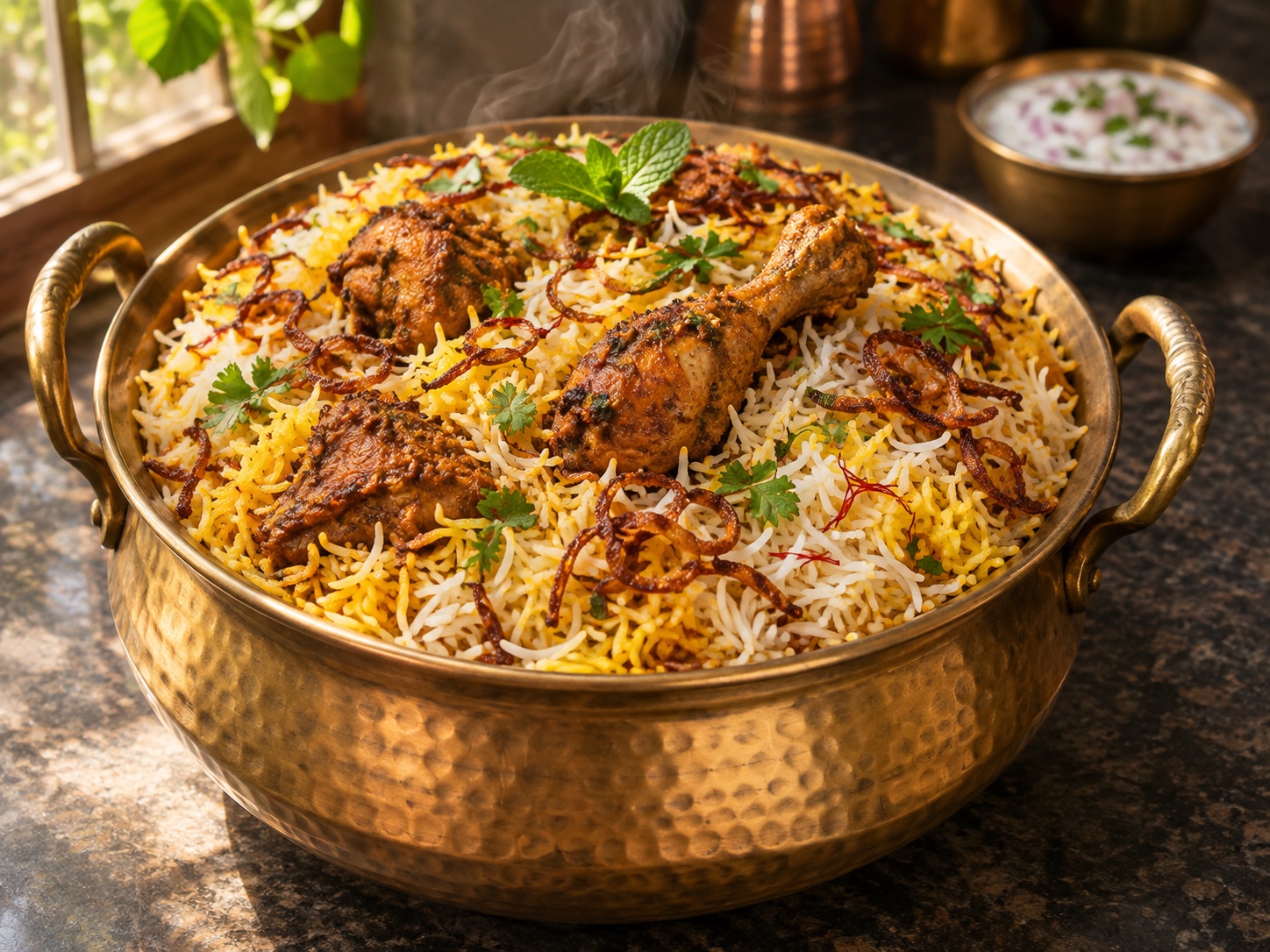
    Level chicken masala and spread rice loosely on top. Add fried onion, remaining herbs, and saffron milk. Seal tightly. Set the pot over a heavy skillet; cook 5 minutes on medium and 20 minutes on the lowest heat. Turn off and rest unopened 15 minutes. Verify chicken at 165°F/74°C, then lift gently from the edge and bottom.

    Layer and finish with gentle dum steam
    Level chicken masala and spread rice loosely on top. Add fried onion, remaining herbs, and saffron milk. Seal tightly. Set the pot over a heavy skillet; cook 5 minutes on medium and 20 minutes on the lowest heat. Turn off and rest unopened 15 minutes. Verify chicken at 165°F/74°C, then lift gently from the edge and bottom.

    Texture and doneness cues

    Rice grains are long, separate, and cooked through, with no free water or burnt smell at the base.

    Chicken reaches 165°F/74°C and stays juicy; masala lightly stains the rice without making it wet.

    Mistakes, substitutions, and conversions

    Fully cooked rice turns mushy after layering; drain while the center still shows a white dot.

    Bone-in thighs need longer; verify 165°F/74°C rather than relying on time.

    600 g basmati is about 3¼ US cups. An overly wide pot loses dum steam.

    Serving, storage, and allergens

    Cool biryani quickly in shallow containers, ideally within 1 hour. Refrigerate and use within 24 hours; reheat once until steaming throughout and 165°F/74°C. Freeze up to 1 month.

    Allergen: milk. Spice blends or prepared stock may add other allergens.

    Frequently asked questions

    Why did the rice turn mushy?

    It was over-parboiled, too much liquid remained, or it was stirred before the 15-minute rest. Drain at 70 percent and rest sealed.

    Why did the bottom burn?

    The pot was thin or heat stayed high; use the lowest flame over a heavy skillet.

    Can I skip marinating?

    At least 30 minutes helps yogurt and spices season the surface; do not exceed 12 hours.

    Can I replace basmati?

    Another long-grain rice can work, but absorption and timing change and it will not have the same length or aroma.

  • Irish Lamb Stew: Clear Broth, Tender Meat, Intact Potatoes

    Irish Lamb Stew: Clear Broth, Tender Meat, Intact Potatoes

    Ireland’s official tourism sources describe Irish stew as an enduringly simple slow-cooked combination of lamb, potatoes, onion, and carrots, sometimes with barley. Ingredients vary by region and household, so this recipe does not claim to be the one “authentic” formula.

    This version lightly browns the lamb before a gentle simmer. Potatoes and carrots join later, allowing the meat to tenderize while vegetables stay intact and the broth remains light.

    Why this method works

    • Browning lamb in small batches builds flavor without steaming the pot.
    • A bare simmer softens collagen; a hard boil tightens meat and clouds the broth.
    • Adding waxy potatoes for only the final 35–40 minutes keeps chunks intact.
    • A little barley gives the broth body without turning it into flour-thickened gravy.

    Before you start

    Prepare a heavy 4–5 quart pot, slotted spoon, and thermometer.

    Trim thick exterior fat from lamb shoulder but keep fine marbling; surface fat can be skimmed after cooking.

    If omitting barley, reduce stock by ⅔ cup/150 ml. Cut potatoes into even 1½–2 inch pieces.

    Brown lamb in small batches
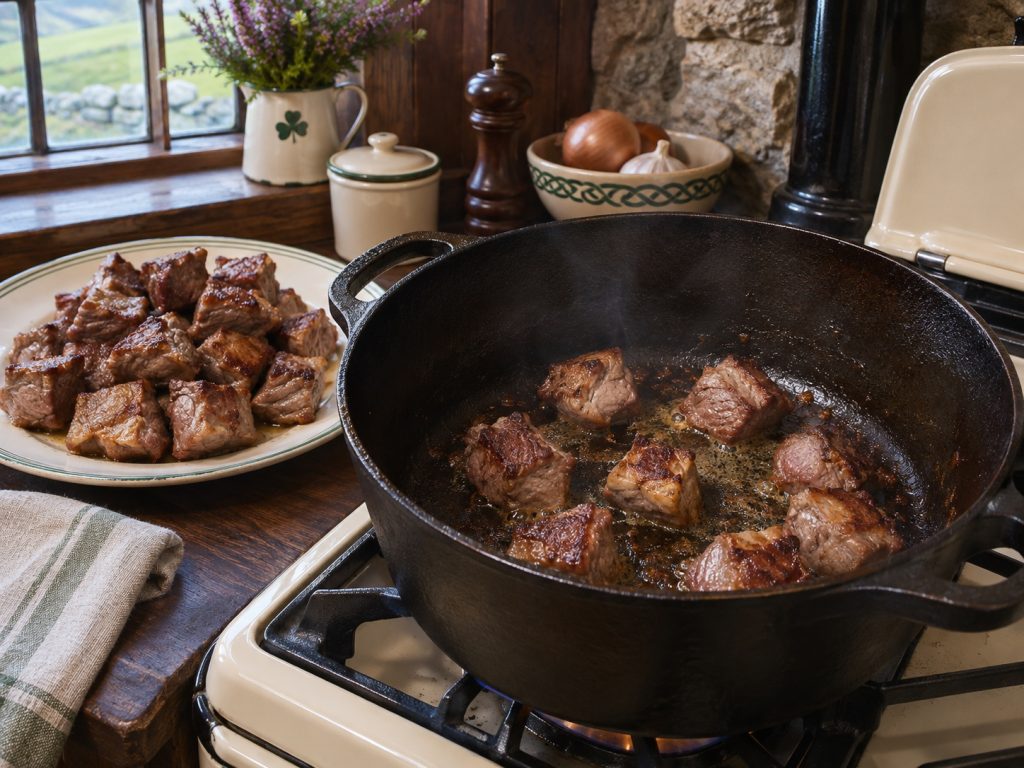
    Pat lamb dry and season with 1 tsp salt. Heat oil over medium-high; brown lamb in three batches for 6–8 minutes each, turning for deep color. Do not crowd. Transfer to a plate.

    Step-by-step method

    1. Brown lamb in small batches

    Pat lamb dry and season with 1 tsp salt. Heat oil over medium-high; brown lamb in three batches for 6–8 minutes each, turning for deep color. Do not crowd. Transfer to a plate.

    2. Barely simmer the meat and barley

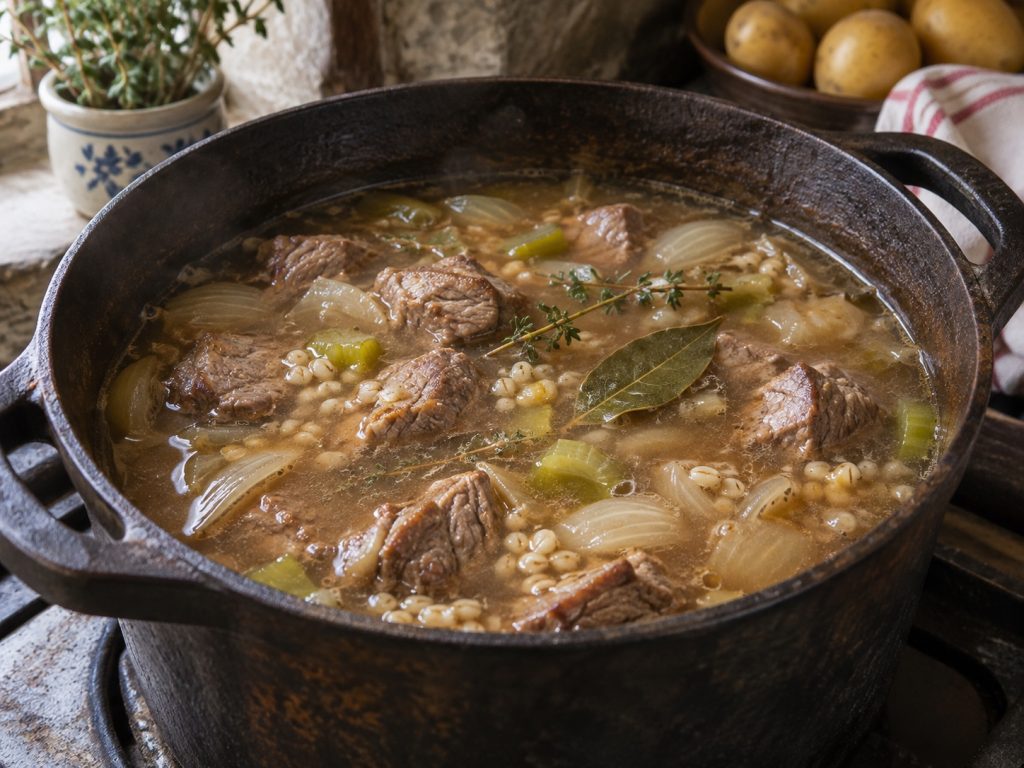
    Lower to medium and soften onion and celery 6 minutes. Return lamb and juices. Add stock, barley, bay, thyme, and pepper. As it nears a boil, skim foam; partly cover and maintain only small bubbles for 55–65 minutes.

    Barely simmer the meat and barley
    Lower to medium and soften onion and celery 6 minutes. Return lamb and juices. Add stock, barley, bay, thyme, and pepper. As it nears a boil, skim foam; partly cover and maintain only small bubbles for 55–65 minutes.

    3. Add potatoes and carrots later

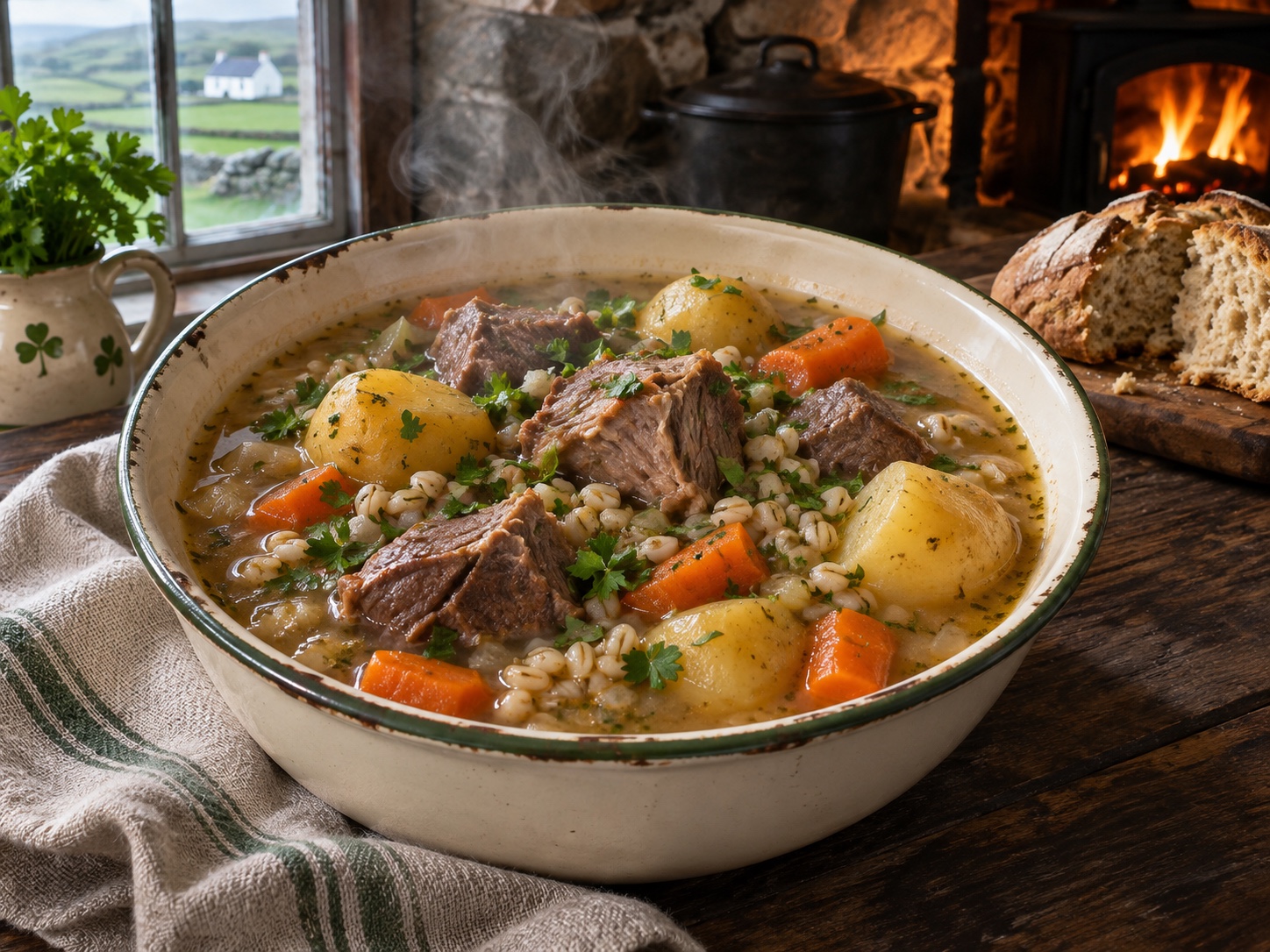
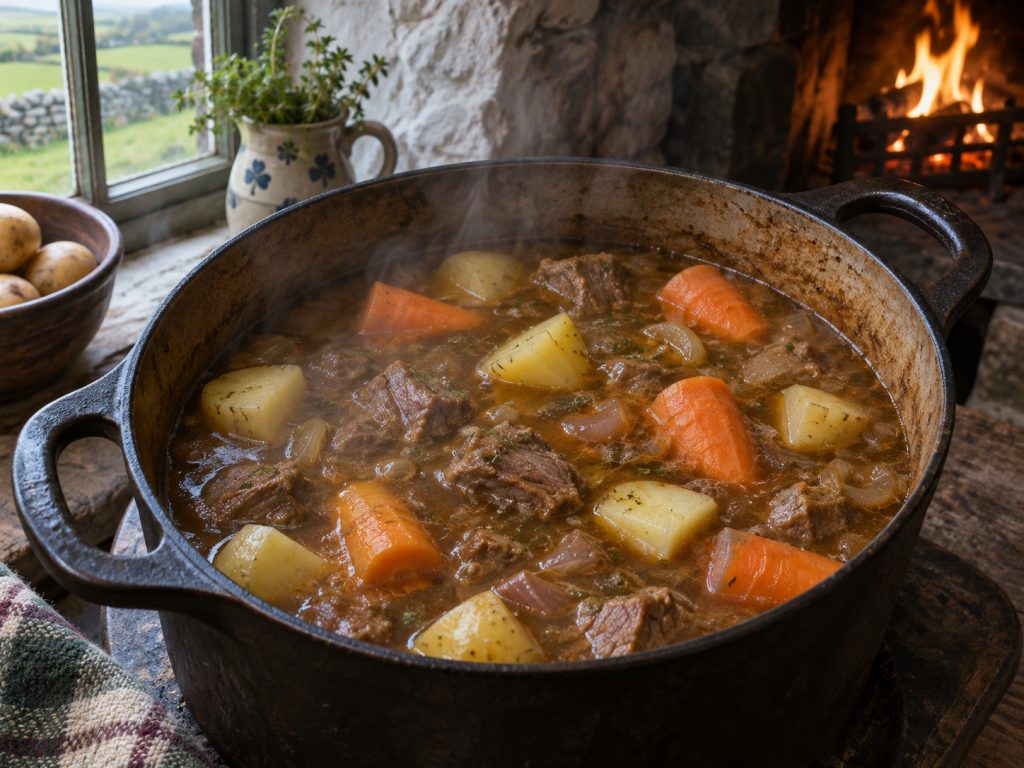
    When a fork begins to enter the meat, add potatoes and carrots. Keep most vegetables in liquid, adding a little hot water if needed. Simmer 35–40 minutes until potatoes pierce easily without collapsing and lamb is very tender.

    Add potatoes and carrots later
    When a fork begins to enter the meat, add potatoes and carrots. Keep most vegetables in liquid, adding a little hot water if needed. Simmer 35–40 minutes until potatoes pierce easily without collapsing and lamb is very tender.

    4. Skim, rest, and finish for serving

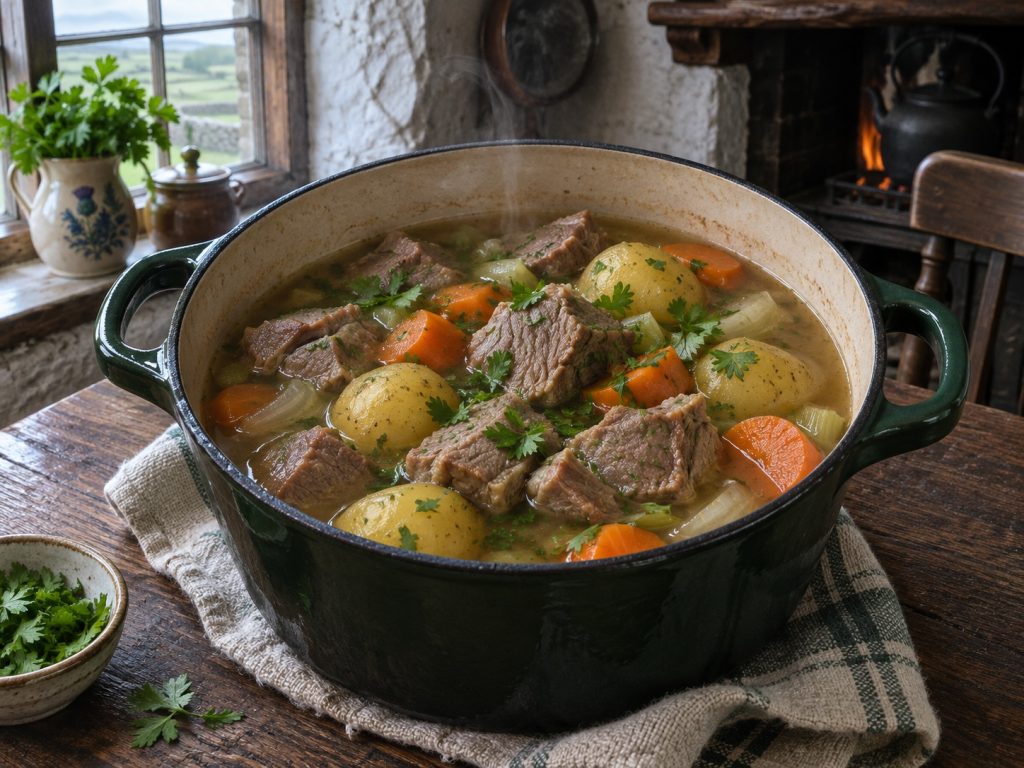
    Remove bay and thyme stems. Spoon off excess surface fat. Add remaining salt to taste and rest off heat 15 minutes. Stir in parsley. Lamb has passed 145°F/63°C and cooked longer for tenderness.

    Skim, rest, and finish for serving
    Remove bay and thyme stems. Spoon off excess surface fat. Add remaining salt to taste and rest off heat 15 minutes. Stir in parsley. Lamb has passed 145°F/63°C and cooked longer for tenderness.

    Texture and doneness cues

    Lamb separates easily with a fork but is not dry; if tough, it needs another 15–20 minutes even if already safe.

    Potatoes pierce easily but hold their corners; broth is lightly bodied, pourable, and not floury.

    Mistakes, substitutions, and conversions

    A hard boil tightens meat, breaks vegetables, and clouds broth; maintain a bare simmer.

    Beef chuck may replace lamb but can need 30–45 extra minutes. Barley is optional.

    1.5 liters stock is about 6 US cups. The stew thickens slightly as it rests.

    Serving, storage, and allergens

    Cool in shallow containers within 2 hours and refrigerate 3–4 days. Reheat gently, stirring, to 165°F/74°C throughout. Freeze up to 2 months, though potatoes soften slightly.

    Allergens: celery; barley contains gluten. Prepared stock may contain additional allergens.

    Frequently asked questions

    Why is the lamb still tough?

    Safe temperature does not guarantee tenderness; shoulder collagen may need another 15–30 minutes at a bare simmer.

    Why did potatoes fall apart?

    Floury potatoes or early addition are common causes; use waxy potatoes and add only for the last 35–40 minutes.

    Should I thicken the stew?

    This version keeps a light broth. For more body, mash a few potato pieces; flour is unnecessary.

    Is it better the next day?

    Yes. Fat is easier to remove and flavors meld; cool safely and reheat to 165°F/74°C.

  • Peruvian Ají de Gallina: Smooth Yellow Chile Sauce

    Peruvian Ají de Gallina: Smooth Yellow Chile Sauce

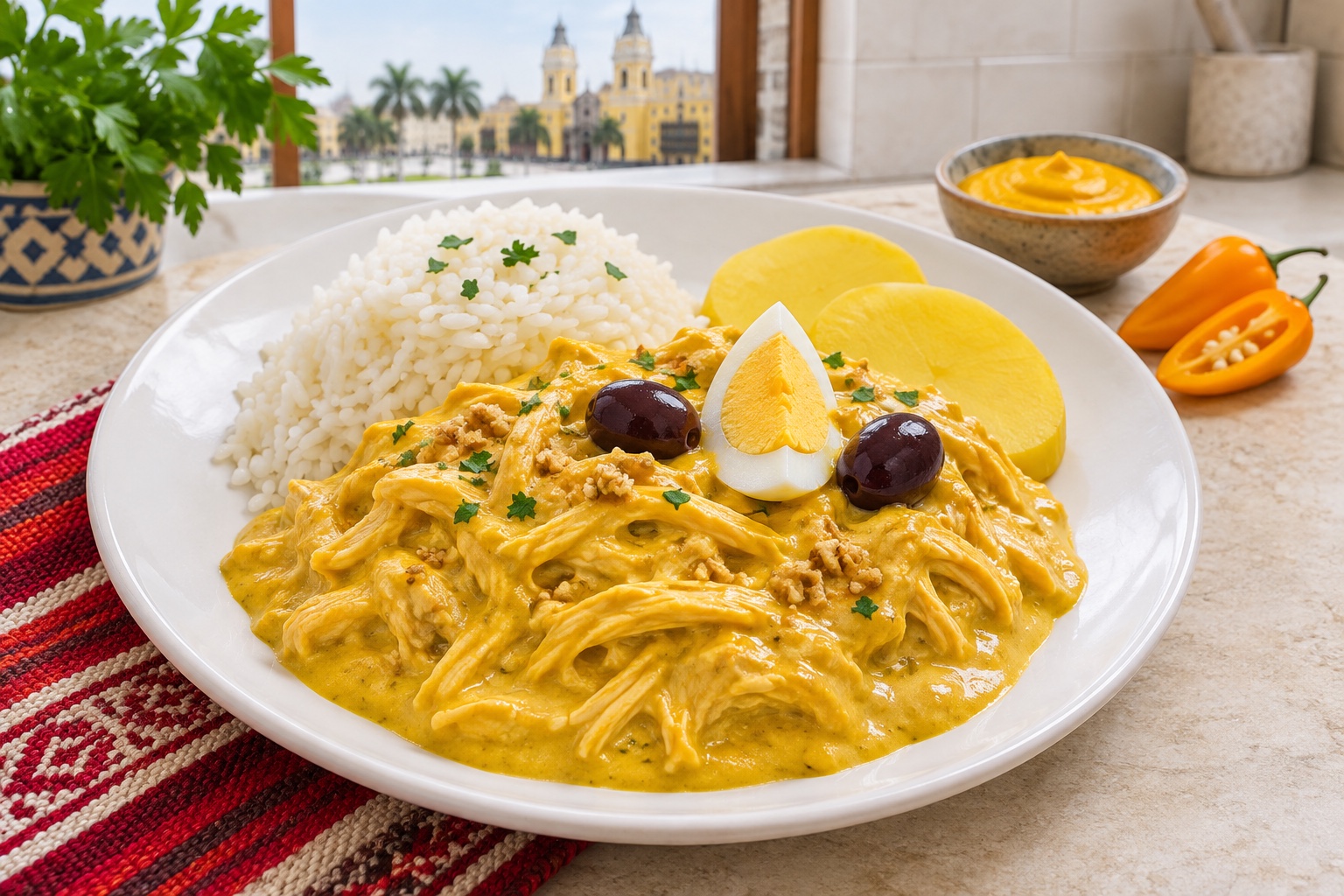
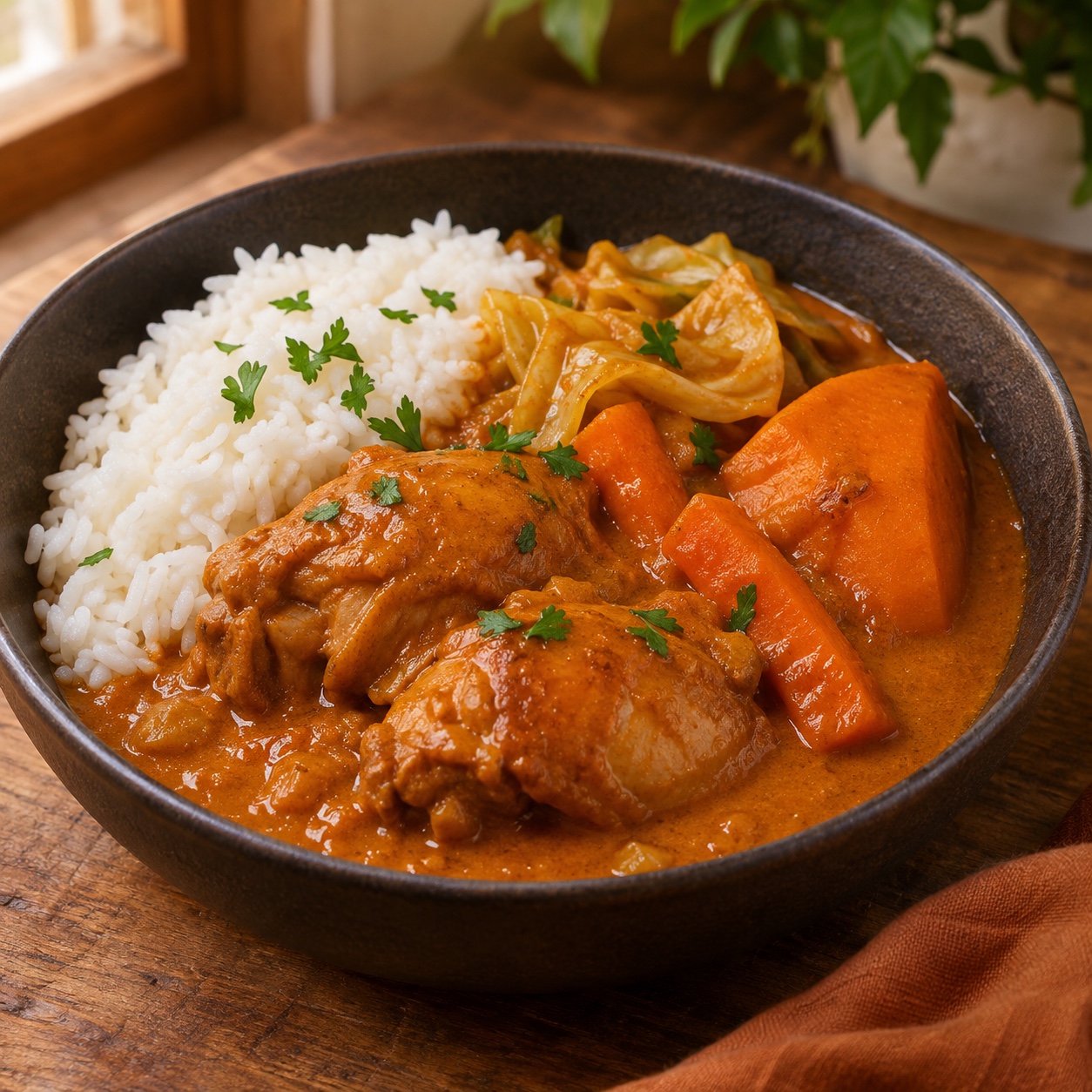
    Peru’s official tourism site presents ají de gallina as a Peruvian classic built from yellow ají, poultry, milk, bread, and walnuts, served with potato, rice, egg, and olives. Chicken is now common, so this home version uses chicken breast while keeping the established name.

    For a smooth sauce, fully soak the bread in milk and chicken broth, then blend with walnuts. The chicken is gently poached rather than boiled hard, so it stays moist after shredding.

    Why this method works

    • Gentle poaching to 165°F/74°C keeps chicken fibers moist.
    • Cooking ají amarillo with onion for 5 minutes softens its raw bite.
    • Fully soaking bread and blending it with walnuts prevents lumps.
    • Keeping the dairy sauce below a hard boil reduces splitting and scorching.

    Before you start

    Prepare a wide light-colored skillet, medium saucepan, blender, and thermometer.

    Start with 2 tbsp ají amarillo paste and add more to taste; brands vary widely in heat.

    Plan rice, boiled potatoes, and eggs so they are ready when the sauce finishes.

    Gently poach and shred the chicken
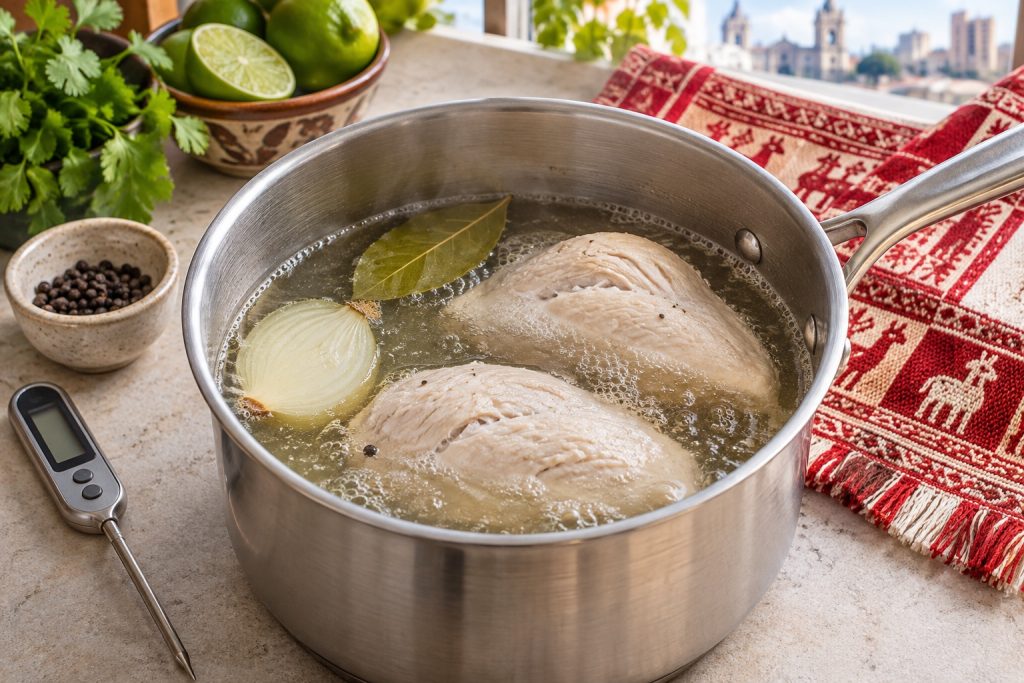
    Put chicken, half the onion, and bay in a saucepan; cover by 1 inch with water or stock. As it nears a boil, lower heat and poach partly covered 12–16 minutes. When the thickest piece reaches 165°F/74°C, remove, rest 10 minutes, and shred. Reserve 1 cup/250 ml broth.

    Step-by-step method

    1. Gently poach and shred the chicken

    Put chicken, half the onion, and bay in a saucepan; cover by 1 inch with water or stock. As it nears a boil, lower heat and poach partly covered 12–16 minutes. When the thickest piece reaches 165°F/74°C, remove, rest 10 minutes, and shred. Reserve 1 cup/250 ml broth.

    2. Cook the onion and ají amarillo base

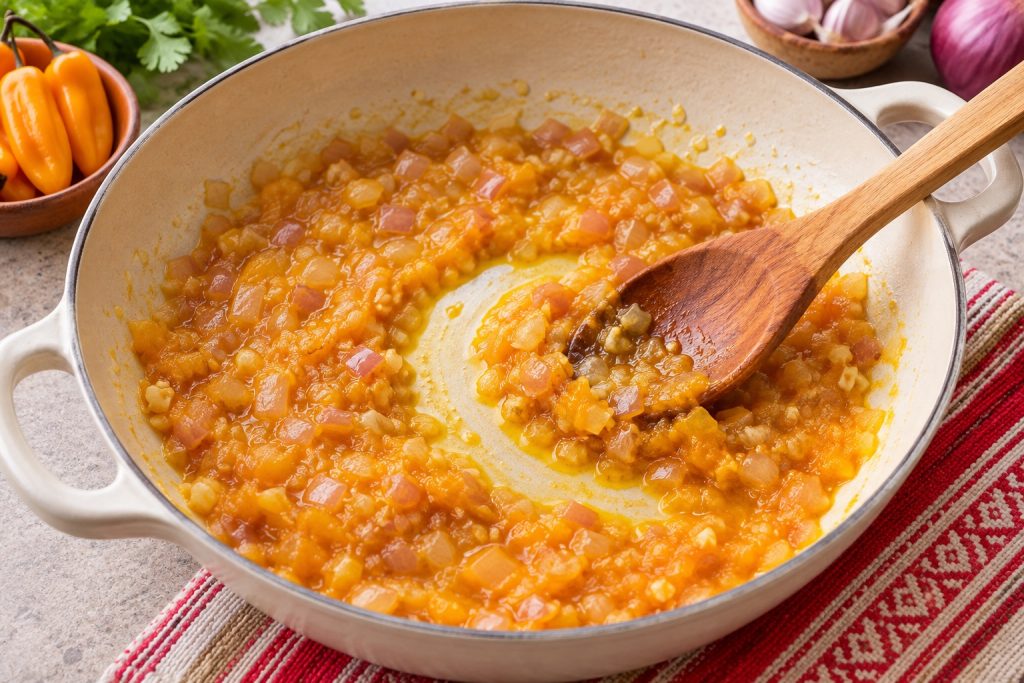
    Heat oil in a wide skillet over medium. Soften remaining chopped onion 8 minutes; add garlic for 1 minute. Stir in 2 tbsp ají amarillo paste and cook 5 minutes until its aroma mellows and oil turns golden. Taste and add more paste if desired.

    Cook the onion and ají amarillo base
    Heat oil in a wide skillet over medium. Soften remaining chopped onion 8 minutes; add garlic for 1 minute. Stir in 2 tbsp ají amarillo paste and cook 5 minutes until its aroma mellows and oil turns golden. Taste and add more paste if desired.

    3. Blend the bread-walnut sauce smooth

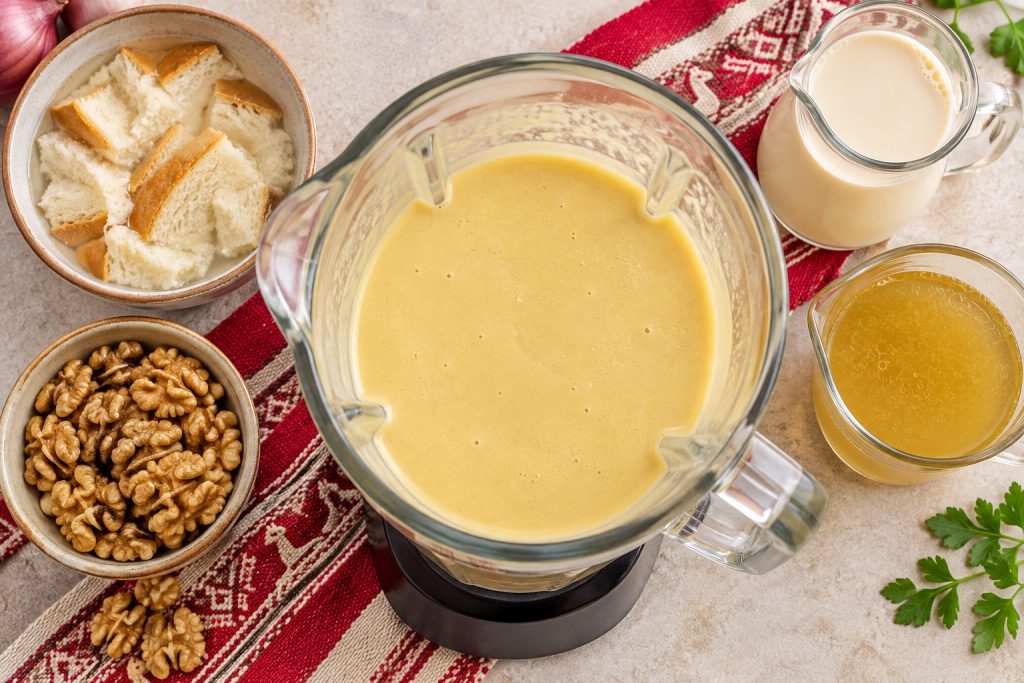
    Soak bread in evaporated milk and 1 cup/250 ml warm chicken broth for 10 minutes until fully soft. Blend with walnuts for 60–90 seconds until completely smooth. Pour into the skillet and add turmeric, salt, and pepper.

    Blend the bread-walnut sauce smooth
    Soak bread in evaporated milk and 1 cup/250 ml warm chicken broth for 10 minutes until fully soft. Blend with walnuts for 60–90 seconds until completely smooth. Pour into the skillet and add turmeric, salt, and pepper.

    4. Fold in chicken and adjust consistency

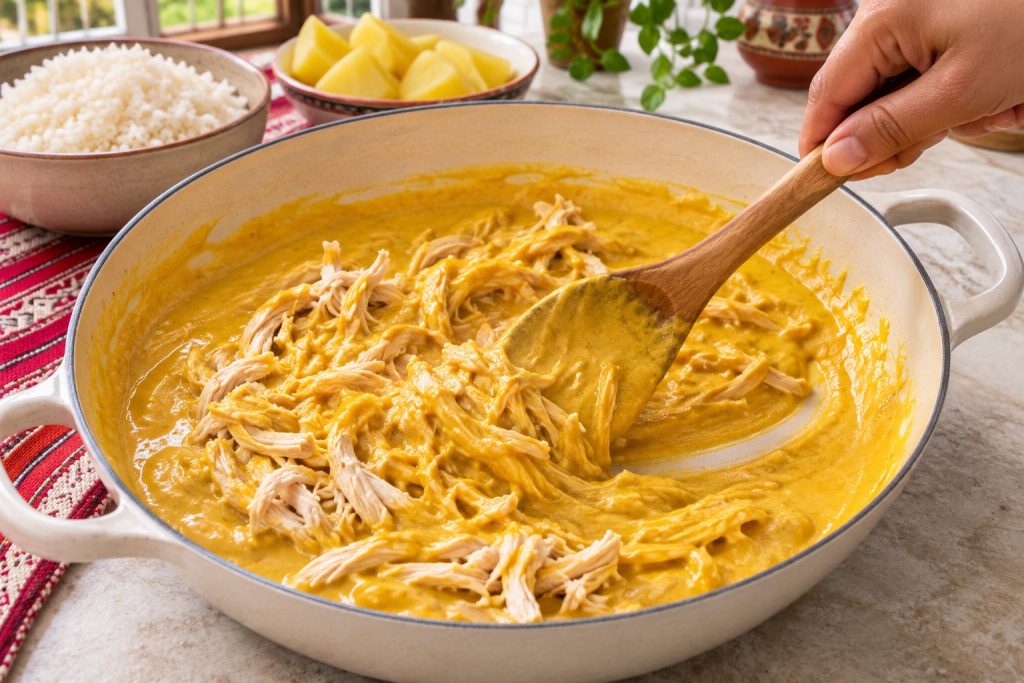
    Cook over medium-low, stirring constantly, 8–10 minutes until a spoon trail lasts 2 seconds; do not hard-boil. Fold in chicken and Parmesan and heat 5 minutes. If too thick, add hot broth 2 tbsp/30 ml at a time. Serve with potato, rice, egg, and olives; chill leftovers within 2 hours.

    Fold in chicken and adjust consistency
    Cook over medium-low, stirring constantly, 8–10 minutes until a spoon trail lasts 2 seconds; do not hard-boil. Fold in chicken and Parmesan and heat 5 minutes. If too thick, add hot broth 2 tbsp/30 ml at a time. Serve with potato, rice, egg, and olives; chill leftovers within 2 hours.

    Texture and doneness cues

    Sauce is glossy, lump-free, and spoon-coating; a spoon trail remains for about 2 seconds.

    Chicken fibers stay moist; the sauce never hard-boils or separates into oily and milky layers.

    Mistakes, substitutions, and conversions

    A hard boil splits dairy and scorches the base; use medium-low heat in a light-colored pan.

    If ají amarillo is unavailable, use roasted yellow pepper plus a little hot chile as an explicitly different adaptation. Pecans can replace walnuts.

    120 g bread is about 4 thick slices. The sauce thickens as it stands; loosen with 2–4 tbsp/30–60 ml hot water before serving.
    Serving, storage, and allergens

    Refrigerate 3–4 days. Reheat gently with a splash of water to 165°F/74°C without hard boiling. Freeze the chicken sauce up to 2 months; prepare potato, rice, and egg fresh.

    Allergens: milk, gluten, walnuts, and egg. Stock may contain celery.

    Frequently asked questions

    Why did the sauce turn lumpy?

    The bread was not fully soaked or blended long enough; soak 10 minutes and blend at least 60 seconds.

    Why is it too thick?

    Bread and walnuts keep absorbing liquid; add hot chicken broth 2 tbsp/30 ml at a time.

    How spicy should it be?

    There is no fixed level and brands vary. Start with 2 tbsp and taste the cooked base.

    Can I use chicken thighs?

    Yes. Poach boneless thighs to 165°F/74°C; the sauce will be richer and the fibers more forgiving.
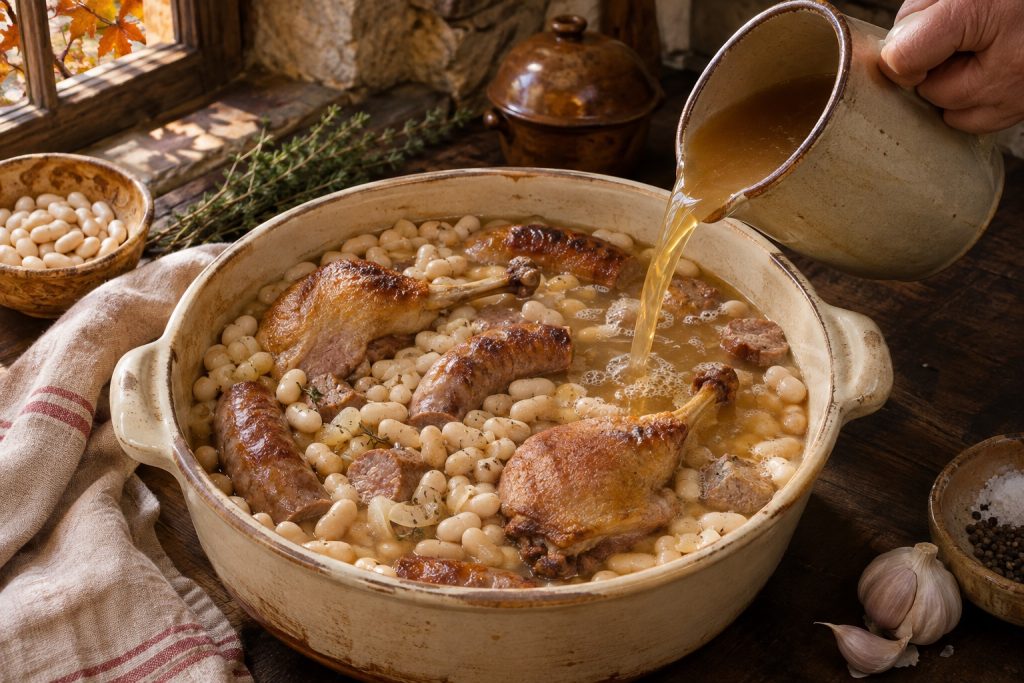
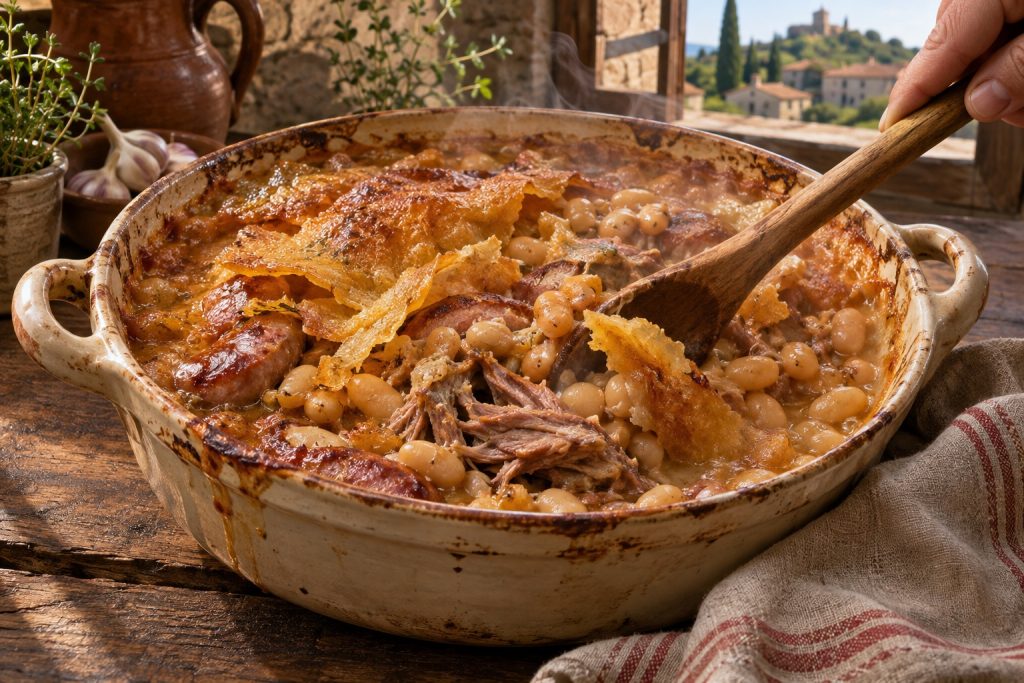
  • Home-Style French Cassoulet: Creamy Beans, Golden Crust

    Home-Style French Cassoulet: Creamy Beans, Golden Crust

    The Castelnaudary Tourist Office ties cassoulet to the Lauragais-Aude region and describes a long-cooked combination of white beans, duck or goose confit, pork, and sausage; Castelnaudary, Carcassonne, and Toulouse versions differ. This is a practical home-oven adaptation, not a claim to the single “authentic” formula.

    Soaked beans are cooked separately, combined with browned meats, and baked while the natural skin is broken and folded in several times. No breadcrumbs are needed; bean starch and fat form the crust.

    Why this method works

    • Overnight soaking and a separate gentle bean cook soften centers evenly.
    • Browning sausage and confit separately controls excess fat and develops flavor.
    • Bringing broth only to bean level prevents a soupy casserole.
    • Breaking and folding the natural skin twice creates a deeper crust and creamy interior.

    Before you start

    Prepare a deep 3–4 quart oven dish, large pot, and thermometer.

    Soak beans in at least three times their volume of cold water for 8–12 hours, then drain and discard soaking water.

    Duck confit and sausage may be salty, so do not add final salt until the last 30 minutes.

    Gently cook beans with aromatics
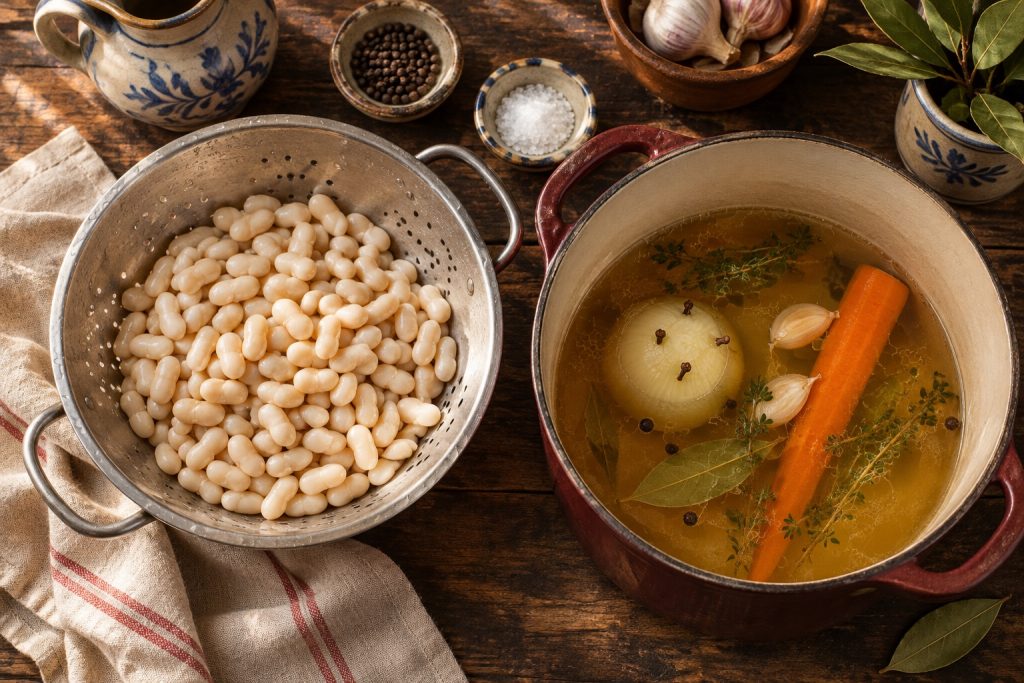
    Put soaked beans, onion, carrot, celery, 3 garlic cloves, bay, and half the thyme in a pot. Cover by 2 inches with cold stock. Bring near a boil and simmer very gently 45–60 minutes until centers are creamy but skins intact. Drain, reserving 3 cups/750 ml bean liquid.

    Step-by-step method

    1. Gently cook beans with aromatics

    Put soaked beans, onion, carrot, celery, 3 garlic cloves, bay, and half the thyme in a pot. Cover by 2 inches with cold stock. Bring near a boil and simmer very gently 45–60 minutes until centers are creamy but skins intact. Drain, reserving 3 cups/750 ml bean liquid.

    2. Brown the meats in controlled batches

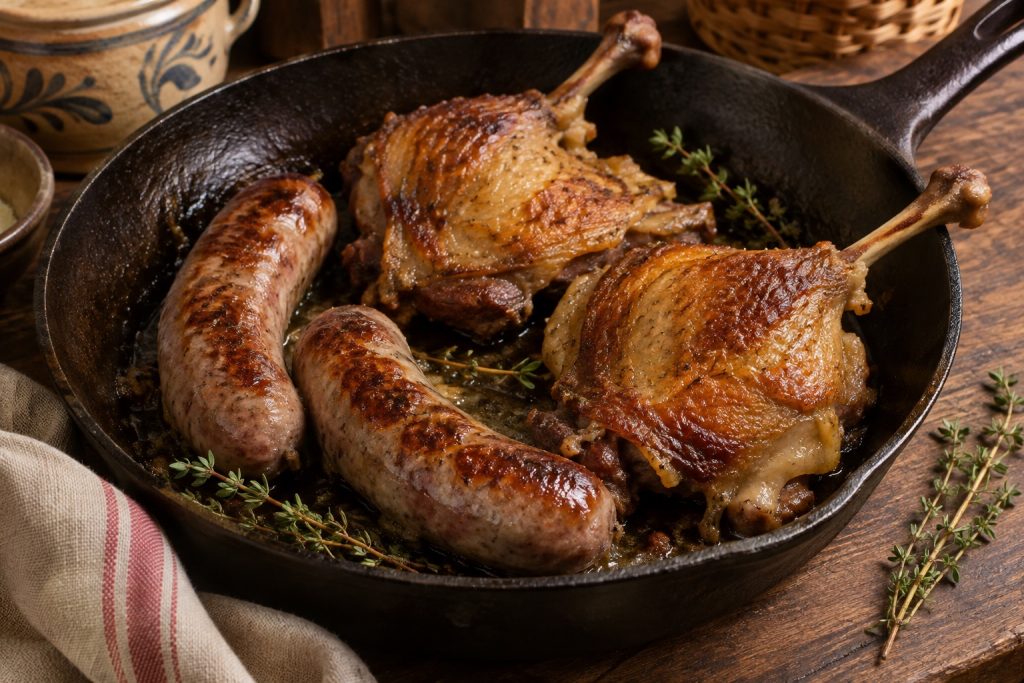
    Brown duck confit skin-side down 6–8 minutes; remove and halve. Brown sausages 8–10 minutes until all sides color and centers reach 160°F/71°C; cut into large pieces. Cook bacon 5 minutes. Leave 2 tbsp fat in the pan.

    Brown the meats in controlled batches
    Brown duck confit skin-side down 6–8 minutes; remove and halve. Brown sausages 8–10 minutes until all sides color and centers reach 160°F/71°C; cut into large pieces. Cook bacon 5 minutes. Leave 2 tbsp fat in the pan.

    3. Layer the cassoulet and start baking

    Heat oven to 325°F/160°C. Layer bacon, half the beans, duck and sausage, then remaining beans in the baking dish. Mix 2 crushed garlic cloves, pepper, and optional tomato paste with hot reserved liquid; pour in only to bean level. Bake uncovered 60 minutes.

    Layer the cassoulet and start baking
    Heat oven to 325°F/160°C. Layer bacon, half the beans, duck and sausage, then remaining beans in the baking dish. Mix 2 crushed garlic cloves, pepper, and optional tomato paste with hot reserved liquid; pour in only to bean level. Bake uncovered 60 minutes.

    4. Break the natural skin and finish

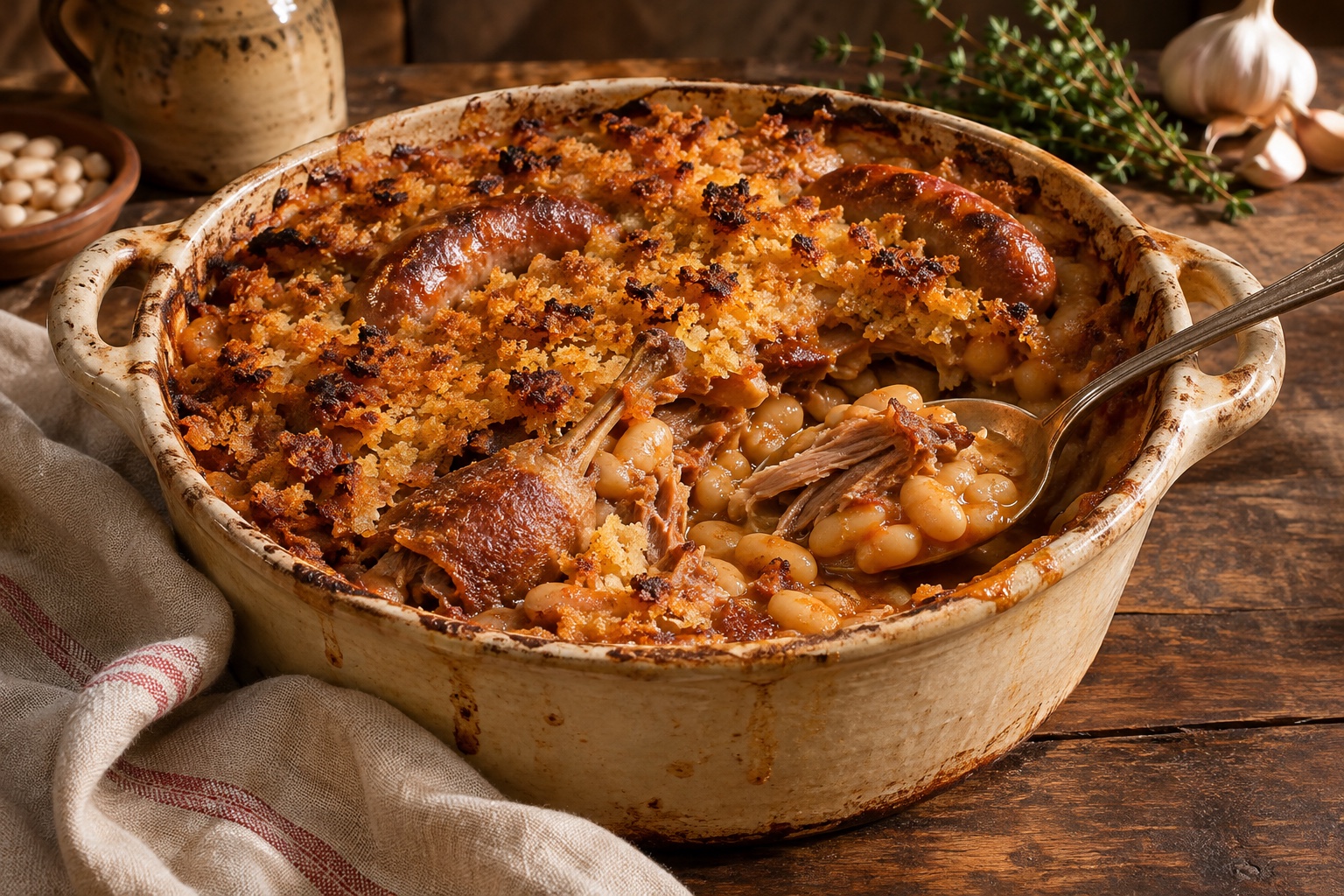
    When a skin forms, break it in two places with a wooden spoon and press lightly into the beans; add ½ cup/100–150 ml hot bean liquid if dry. Bake 30 minutes, break the skin once more, then bake 20–30 minutes until bubbling at the edges and deeply golden. Rest 15 minutes; the hot serving center should be at least 165°F/74°C.

    Break the natural skin and finish
    When a skin forms, break it in two places with a wooden spoon and press lightly into the beans; add ½ cup/100–150 ml hot bean liquid if dry. Bake 30 minutes, break the skin once more, then bake 20–30 minutes until bubbling at the edges and deeply golden. Rest 15 minutes; the hot serving center should be at least 165°F/74°C.

    Texture and doneness cues

    Beans are creamy inside with mostly intact skins; a thin spoon-coating sauce remains underneath.

    A deep golden breadcrumb-free crust forms and the edges bubble gently.

    Mistakes, substitutions, and conversions

    A hard boil splits bean skins; keep only a lazy simmer during precooking.
    If duck confit is unavailable, use cooked chicken thighs as an explicitly nontraditional home adaptation. Choose a coarse plain pork sausage for Toulouse style.

    500 g dried beans yields about 2½ lb/1.2 kg cooked. For canned beans, drain three 14-oz/400 g cans and reduce baking by about 30 minutes.

    Serving, storage, and allergens

    Cool in shallow containers within 2 hours and refrigerate 3–4 days. Reheat covered at 325°F/160°C with a splash of water until the center reaches 165°F/74°C. Freeze portions up to 2 months; beans soften slightly.

    Allergen: celery. Sausage and stock may contain gluten, milk, mustard, or sulfites; check labels.

    Frequently asked questions

    Why is it soupy?

    The liquid rose above the beans or it baked covered; fill only to bean level and bake uncovered.

    Why are the beans hard?

    Old beans, short soaking, or hard water may be responsible; extend the gentle precook 15–20 minutes without splitting skins.

    Does it need breadcrumbs?

    No. This method creates a natural skin from bean starch and fat.

    Can I make it a day ahead?

    Yes. Bake fully and cool; reheat covered, then uncover for the last 15 minutes to refresh the crust.

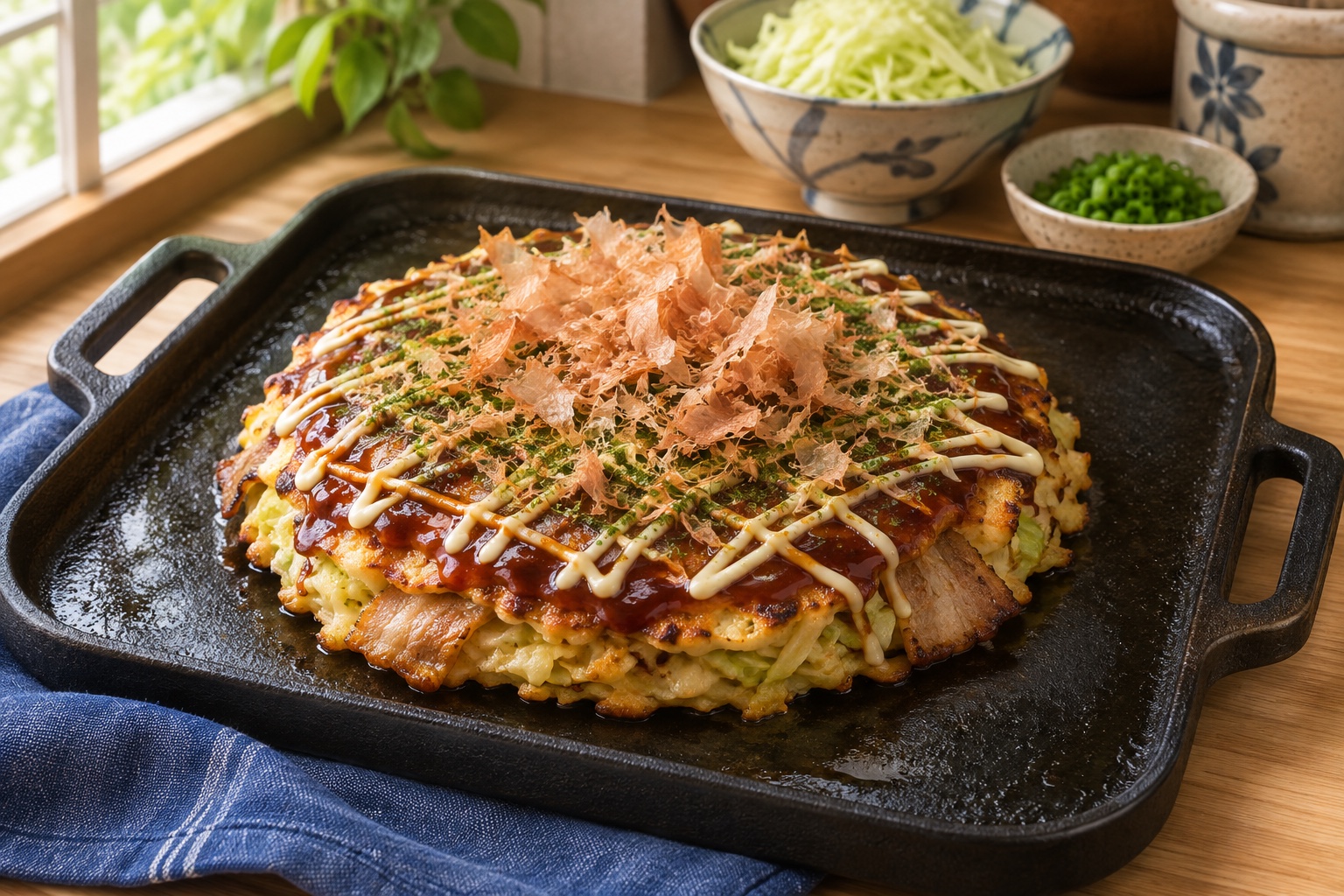
  • Osaka-Style Okonomiyaki: Cabbage-Forward and Easy to Flip

    Osaka-Style Okonomiyaki: Cabbage-Forward and Easy to Flip

    The Japan National Tourism Organization describes okonomiyaki as Osaka’s beloved savory pancake made with cabbage plus meat or seafood; its name conveys the idea of cooking it “as you like.” This is a home-stove adaptation of the mixed Osaka style.

    The reliable ratio uses just enough batter to bind a large volume of cabbage. Four 7–8 inch pancakes flip more cleanly and cook through more evenly than one oversized pancake.

    Why this method works

    • A high cabbage-to-batter ratio keeps the center light and moist.
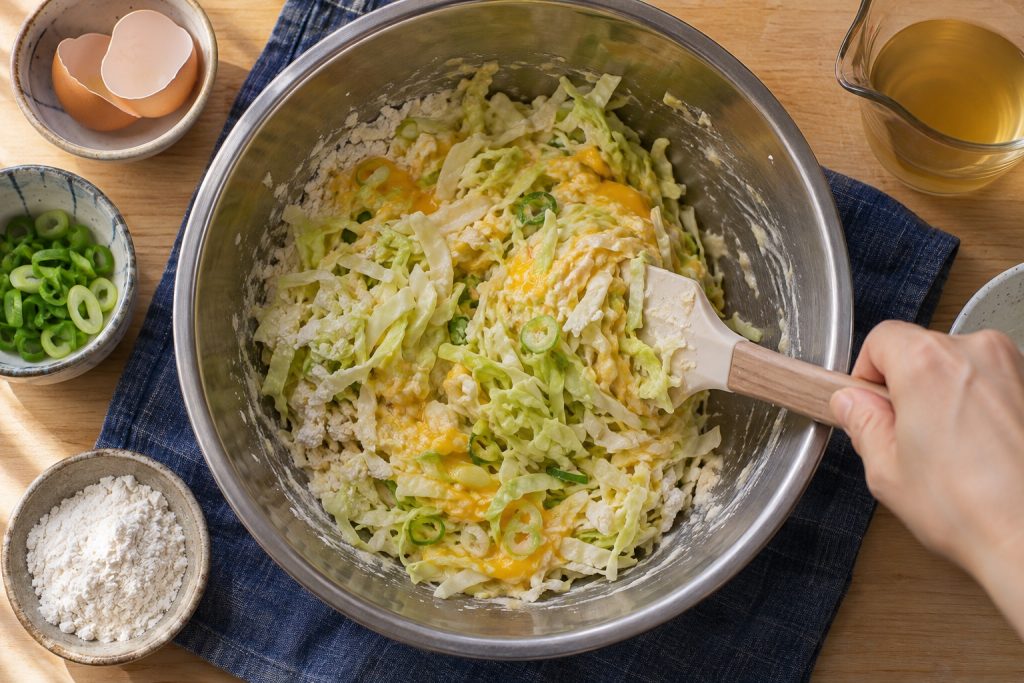
    • Folding only until dry flour disappears avoids a tough, gluten-heavy pancake.
    • A 7–8 inch diameter and two spatulas make flipping safer.
    • A brief covered cook lets the center reach 160°F/71°C before the outside burns.

    Before you start

    Prepare a large bowl, a 10-inch nonstick or cast-iron skillet with lid, and two wide spatulas.

    Slice cabbage ⅛ inch/3–4 mm thick and discard thick core pieces.

    If dashi is unavailable, use the same amount of cold water plus 1 tsp soy sauce; this is a home substitution.

    Make the cabbage batter without overmixing
    Whisk flour, baking powder, and salt. Beat dashi with eggs separately, add to flour, and mix only until dry flour disappears. Fold in cabbage, scallions, and tenkasu 8–10 times. Do not rest the batter; cabbage releases water, so cook promptly.

    Step-by-step method

    1. Make the cabbage batter without overmixing

    Whisk flour, baking powder, and salt. Beat dashi with eggs separately, add to flour, and mix only until dry flour disappears. Fold in cabbage, scallions, and tenkasu 8–10 times. Do not rest the batter; cabbage releases water, so cook promptly.

    2. Shape smaller pancakes in the skillet

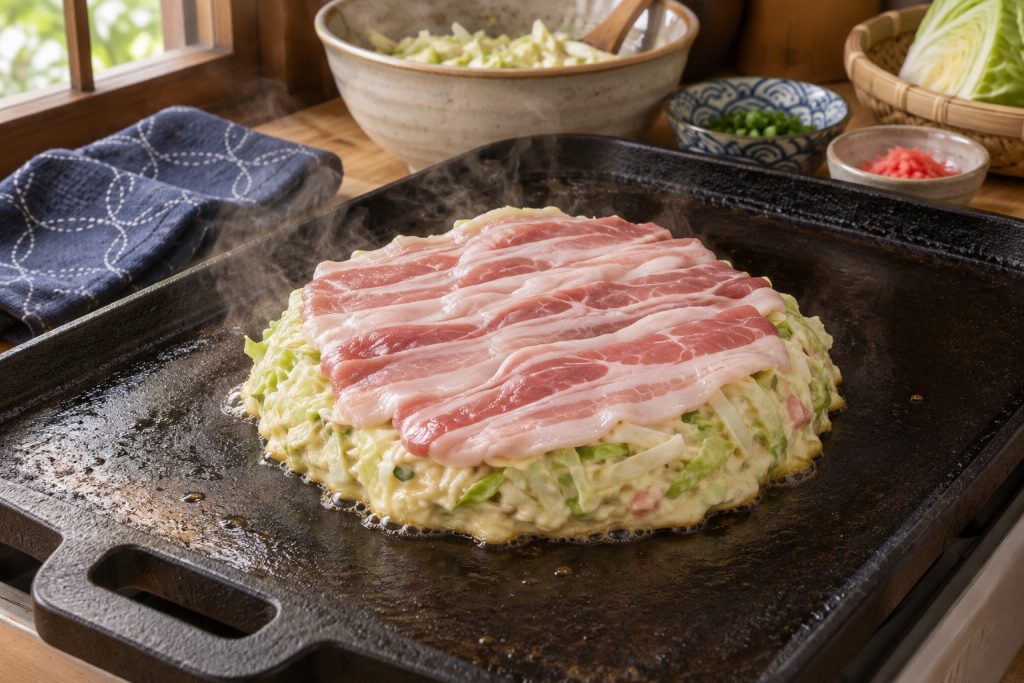
    Heat the skillet over medium and add ½ tbsp oil. Spread one quarter into a 7–8 inch round about ¾ inch thick. Lay 50 g pork belly on top. Cook 4–5 minutes until the base is golden and edges are set.

    Shape smaller pancakes in the skillet
    Heat the skillet over medium and add ½ tbsp oil. Spread one quarter into a 7–8 inch round about ¾ inch thick. Lay 50 g pork belly on top. Cook 4–5 minutes until the base is golden and edges are set.

    3. Flip with two spatulas and cook through

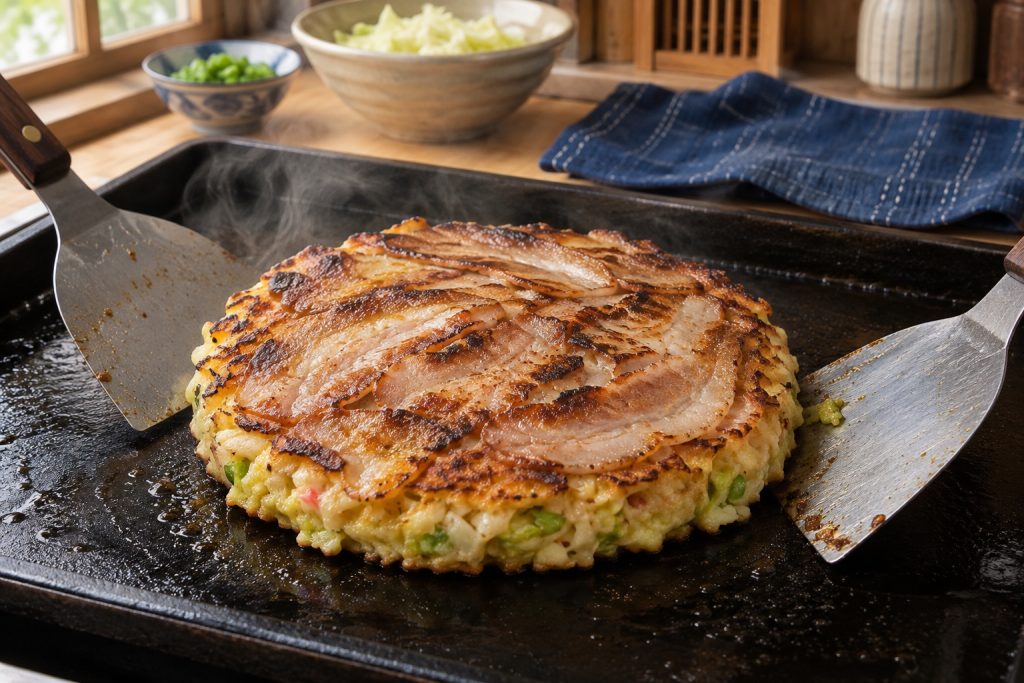
    Slide two spatulas fully underneath and flip in one decisive motion. Cover and cook over medium-low 4 minutes. Uncover, flip again, and cook 2–3 minutes until the center reaches 160°F/71°C and pork reaches 145°F/63°C. Repeat for three more.

    Flip with two spatulas and cook through
    Slide two spatulas fully underneath and flip in one decisive motion. Cover and cook over medium-low 4 minutes. Uncover, flip again, and cook 2–3 minutes until the center reaches 160°F/71°C and pork reaches 145°F/63°C. Repeat for three more.

    4. Sauce and serve immediately

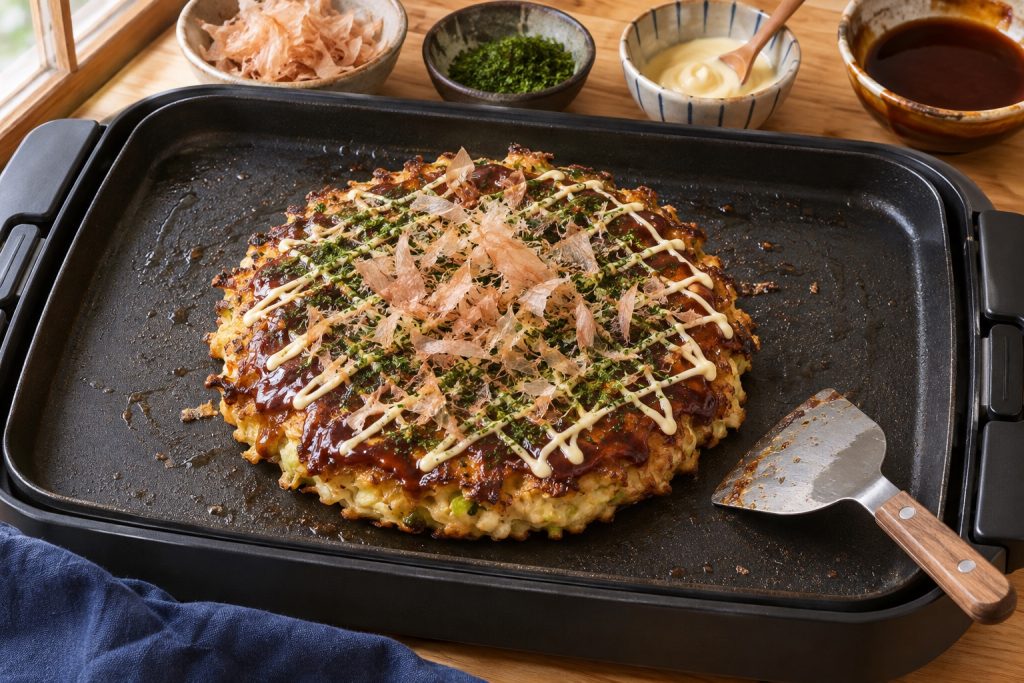
    Brush each pancake with sauce in the skillet; pipe mayonnaise in thin lines. Finish with aonori and bonito flakes. Rest 2 minutes before cutting and serve hot; chill leftovers within 2 hours.

    Sauce and serve immediately
    Brush each pancake with sauce in the skillet; pipe mayonnaise in thin lines. Finish with aonori and bonito flakes. Rest 2 minutes before cutting and serve hot; chill leftovers within 2 hours.

    Texture and doneness cues

    Edges are crisp and the center is moist but not pasty; a knife shows no wet flour.

    The pancake holds together, the center reaches 160°F/71°C, and pork reaches 145°F/63°C.

    Mistakes, substitutions, and conversions

    An oversized pancake breaks during flipping; make four smaller portions.

    Replace pork with 7 oz/200 g raw shrimp and verify 145°F/63°C, or use shiitake for a vegetarian version.

    250 ml dashi is about 1 cup. The batter should be spoonable, not pourable.

    Serving, storage, and allergens

    Refrigerate unsauced okonomiyaki up to 3 days. Reheat covered in a skillet with a splash of water to 165°F/74°C, then sauce. Freeze unsauced pancakes up to 1 month.

    Allergens: gluten, egg, soy, and fish; mayonnaise contains egg. Pork or shrimp changes dietary/allergen notes.

    Frequently asked questions

    Why did it fall apart?

    It was too large, the cabbage was wet, or it was flipped before the first side set; keep it 7–8 inches and wait for firm edges.

    Why is it rubbery?

    Overmixing develops gluten; fold only until flour disappears.

    Can I make it without dashi?

    Yes. Use water plus a little soy sauce, though the seafood depth will be milder.

    Can I prep ahead?

    Do not hold mixed batter. Prepare dry mix and cabbage separately, then combine just before cooking.
  • Bacalhau à Brás: Creamy Portuguese Cod and Eggs

    Bacalhau à Brás: Creamy Portuguese Cod and Eggs

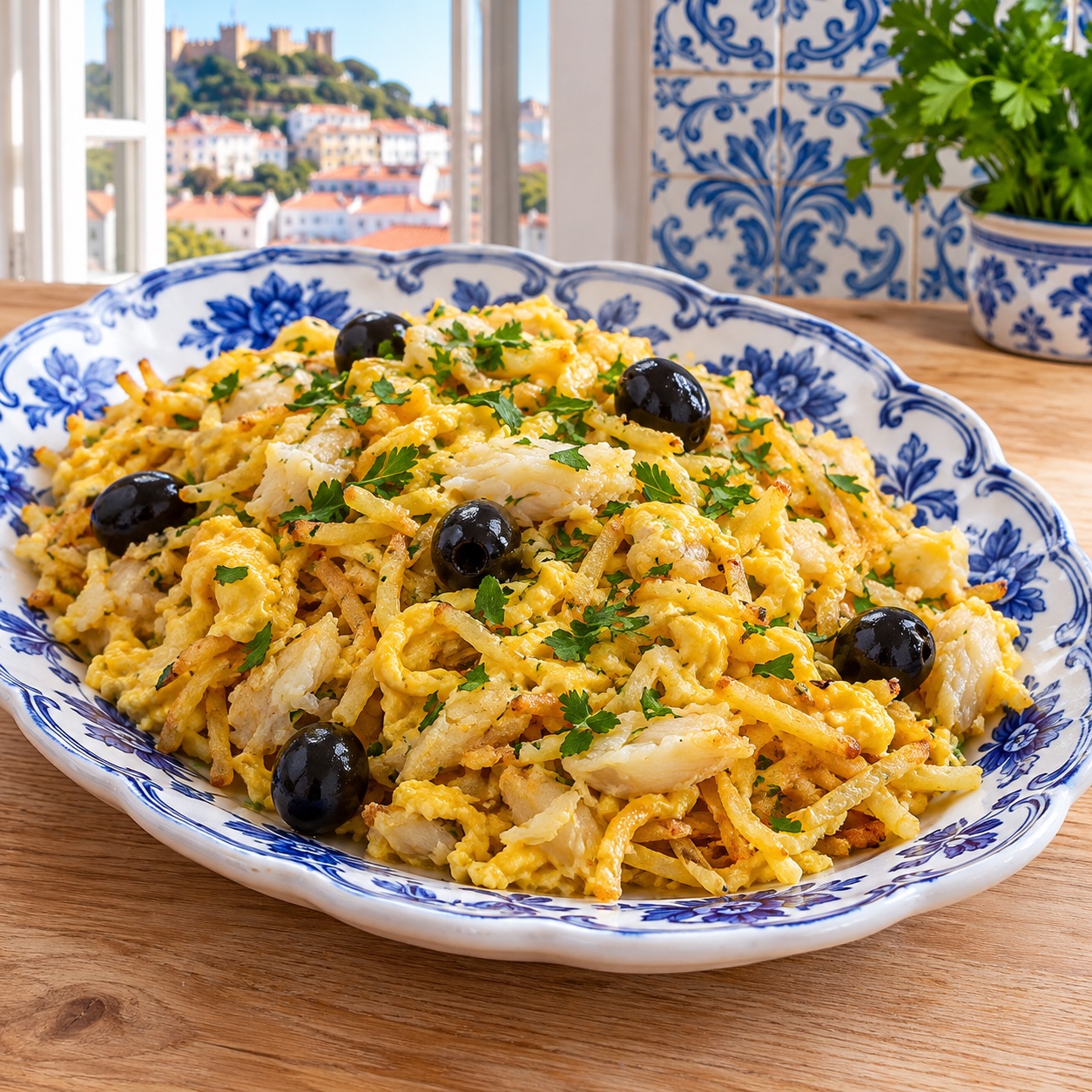
    VisitPortugal lists Bacalhau à Brás—cod with fried potatoes and eggs—among Portugal’s best-known cod dishes. This home adaptation uses pre-desalted cod, fine potato matchsticks, and controlled egg temperature.

    The key is timing three components: soften onion, cook cod only until flaky, and add half the potatoes at the end to preserve crunch.

    Why this method works

    • Refrigerated desalting evens salt while keeping fish cold.
    • Dry potatoes splatter less and crisp better.
    • Removing the pan from heat and carrying eggs to 160°F/71°C prevents dryness.
    • Adding half the potatoes at the end gives two textures.

    Before you start

    Prepare a wide nonstick skillet, 8-inch saucepan, thermometer, and mandoline/julienne cutter.

    If using salt cod, soak under refrigeration 24–36 hours, changing water every 8 hours. The listed weight is after desalting.
    Cut potatoes into ⅛-inch/3 mm sticks, rinse, and dry thoroughly.
    Prepare cod and fry crisp potatoes
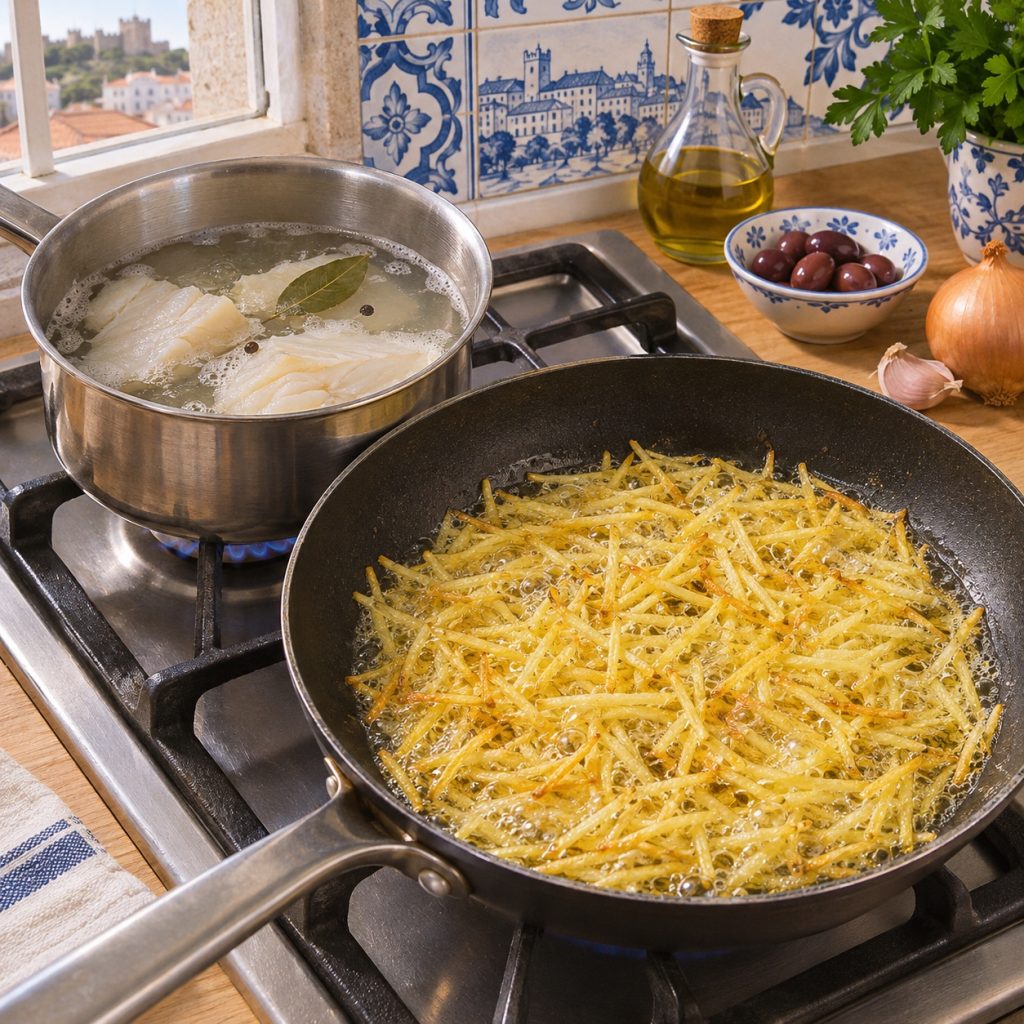
    Poach cod gently 8–10 minutes; when it reaches 145°F/63°C and flakes, drain and remove skin and bones. Fry potatoes in 340°F/170°C oil in 3–4 batches for 3–5 minutes until crisp; drain.

    Step-by-step method

    1. Prepare cod and fry crisp potatoes

    Poach cod gently 8–10 minutes; when it reaches 145°F/63°C and flakes, drain and remove skin and bones. Fry potatoes in 340°F/170°C oil in 3–4 batches for 3–5 minutes until crisp; drain.

    2. Soften onions and add cod

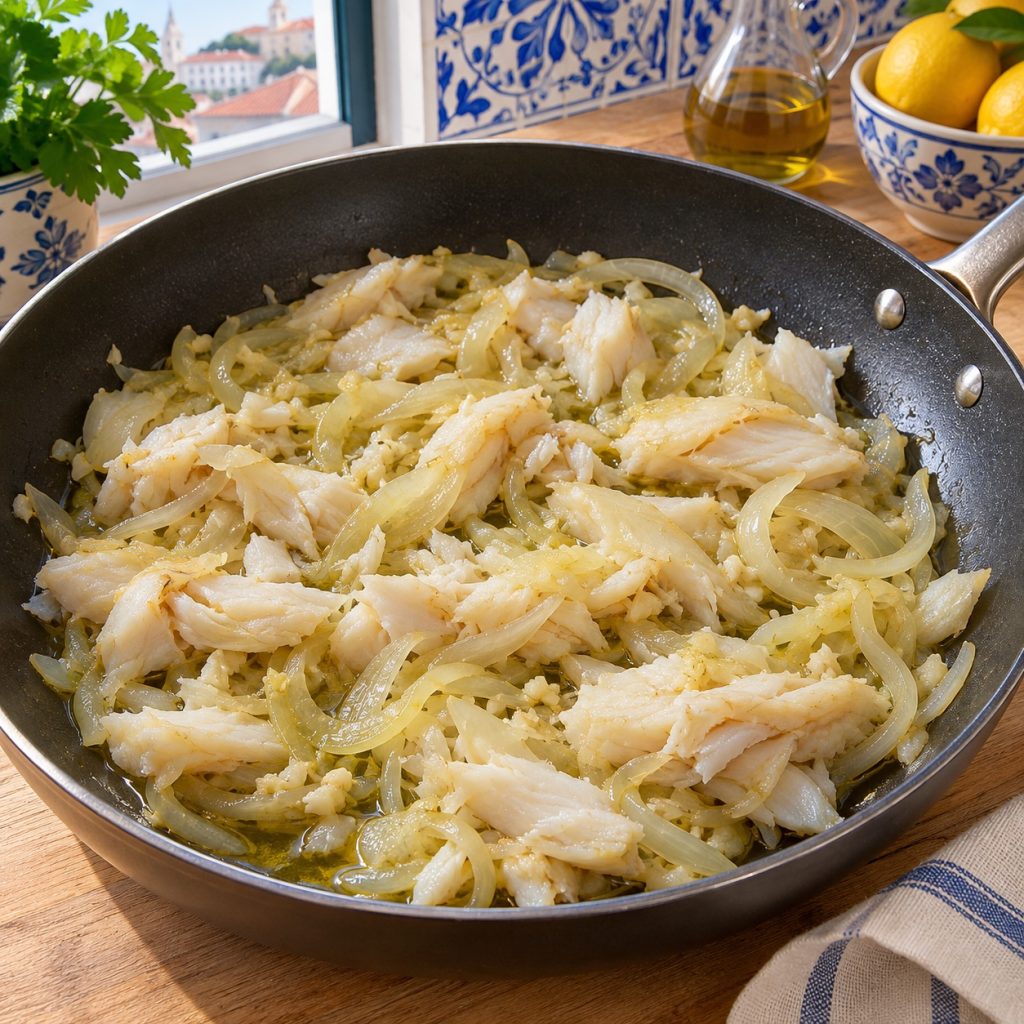
    Heat olive oil over medium. Soften onions 12–15 minutes without browning; add garlic for 1 minute. Fold in cod flakes and cook 2 minutes.

    Soften onions and add cod
    Heat olive oil over medium. Soften onions 12–15 minutes without browning; add garlic for 1 minute. Fold in cod flakes and cook 2 minutes.

    3. Set eggs gently and safely

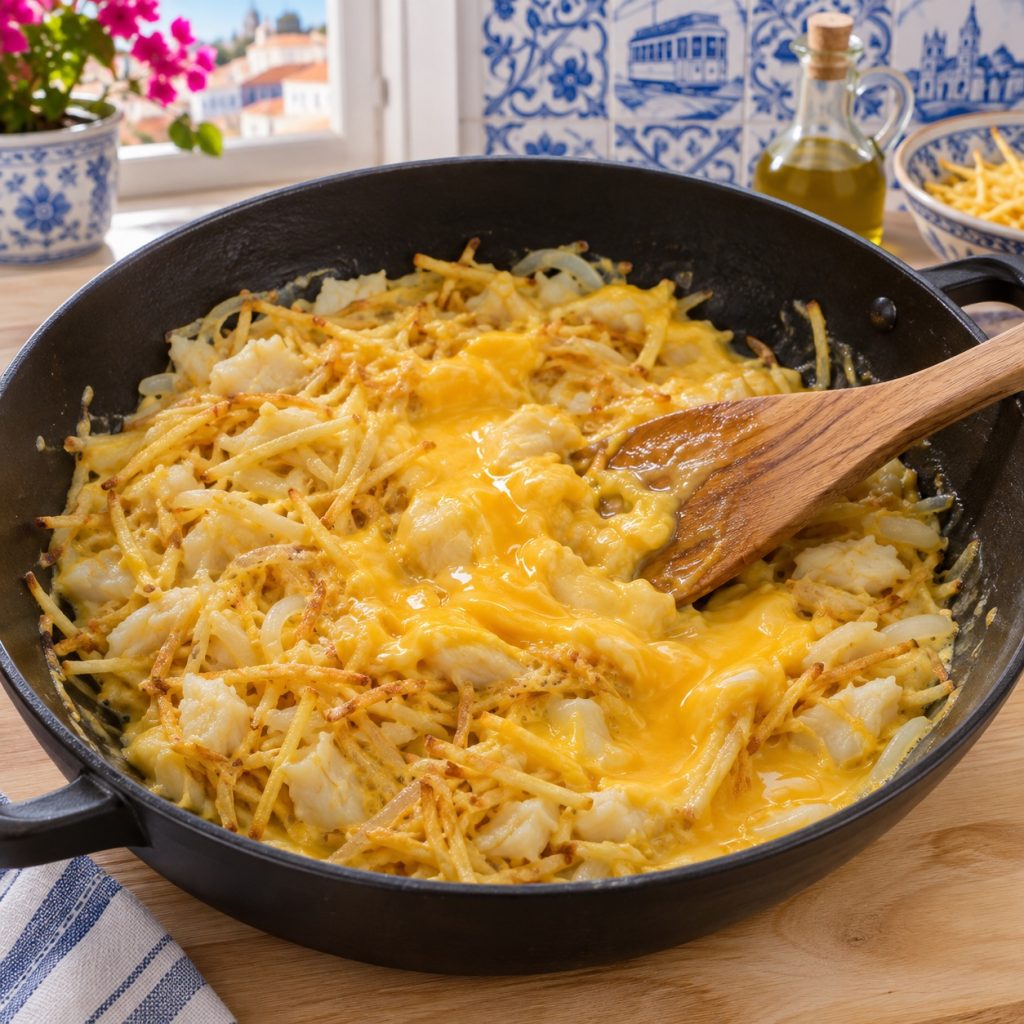
    Beat eggs with pepper. Add half the potatoes, lower heat, and pour in eggs. Fold gently for 1–2 minutes; remove from heat while glossy and soft.

    Set eggs gently and safely
    Beat eggs with pepper. Add half the potatoes, lower heat, and pour in eggs. Fold gently for 1–2 minutes; remove from heat while glossy and soft.

    4. Finish with crisp potatoes and garnish

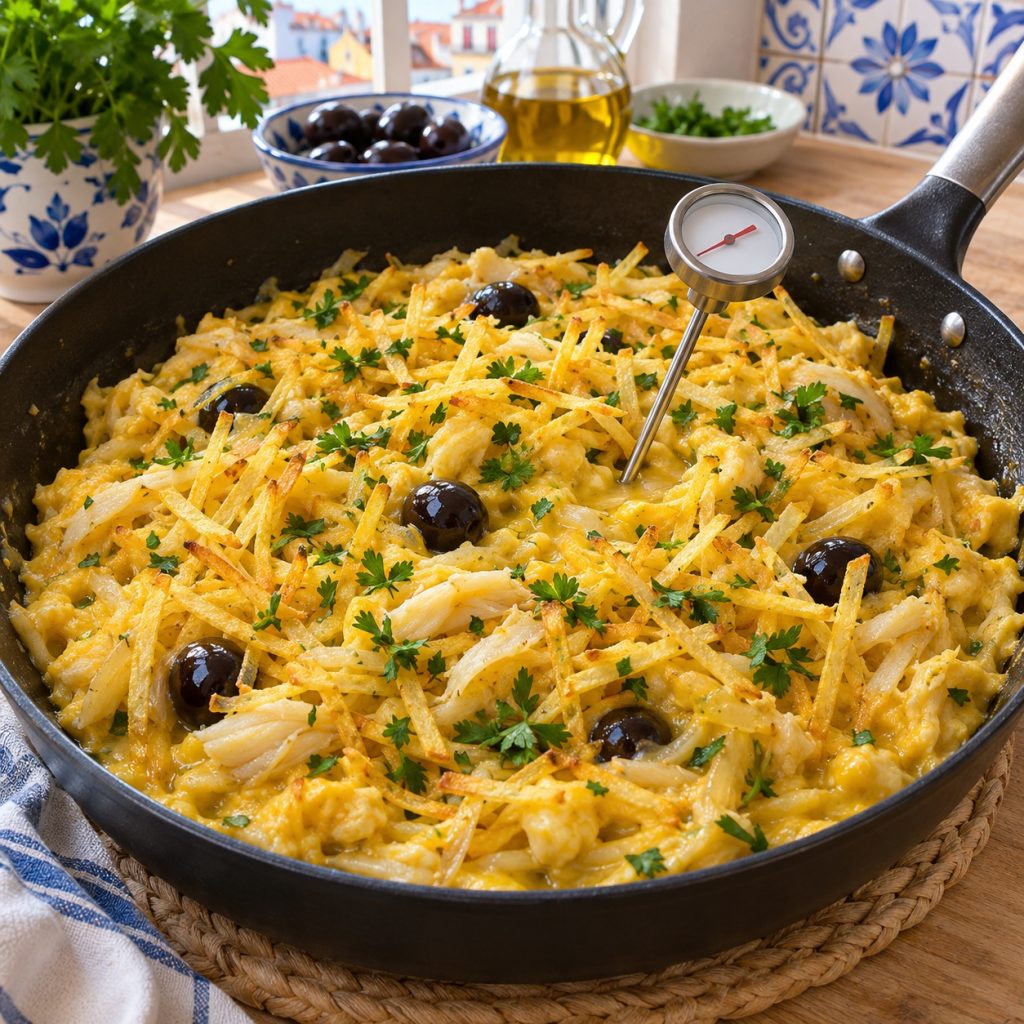
    Use residual heat to reach 160°F/71°C. Fold in remaining crisp potatoes, parsley, and olives; serve immediately. Chill leftovers in a shallow container within 2 hours.

    Finish with crisp potatoes and garnish
    Use residual heat to reach 160°F/71°C. Fold in remaining crisp potatoes, parsley, and olives; serve immediately. Chill leftovers in a shallow container within 2 hours.

    Texture and doneness cues

    Eggs are glossy and creamy without pooling and reach 160°F/71°C.

    Cod remains in flakes and the final potatoes retain an audible crunch.

    Mistakes, substitutions, and conversions

    Overboiling cod dries the flakes; poach only until they separate easily.

    For less frying, use plain packaged potato sticks as directed; taste before adding salt.

    600 g potatoes is about 4 medium potatoes. Add 100 g cod for every 2 extra eggs.

    Serving, storage, and allergens

    Best eaten fresh. Refrigerate up to 3 days; reheat gently with a splash of water to 165°F/74°C. Freezing damages the texture.

    Allergens: fish and eggs. Packaged potato sticks may contain gluten traces.

    Frequently asked questions

    Why is the cod too salty?

    It was not soaked long enough; use up to 36 hours for thick pieces and change water often.

    Why are the eggs dry?

    They stayed on heat too long; remove while glossy and finish with residual heat.

    Why are potatoes soft?

    They were wet or all added early; dry thoroughly and reserve half.

    Can I use fresh cod?

    Yes, though the salt-cod character changes; season separately.

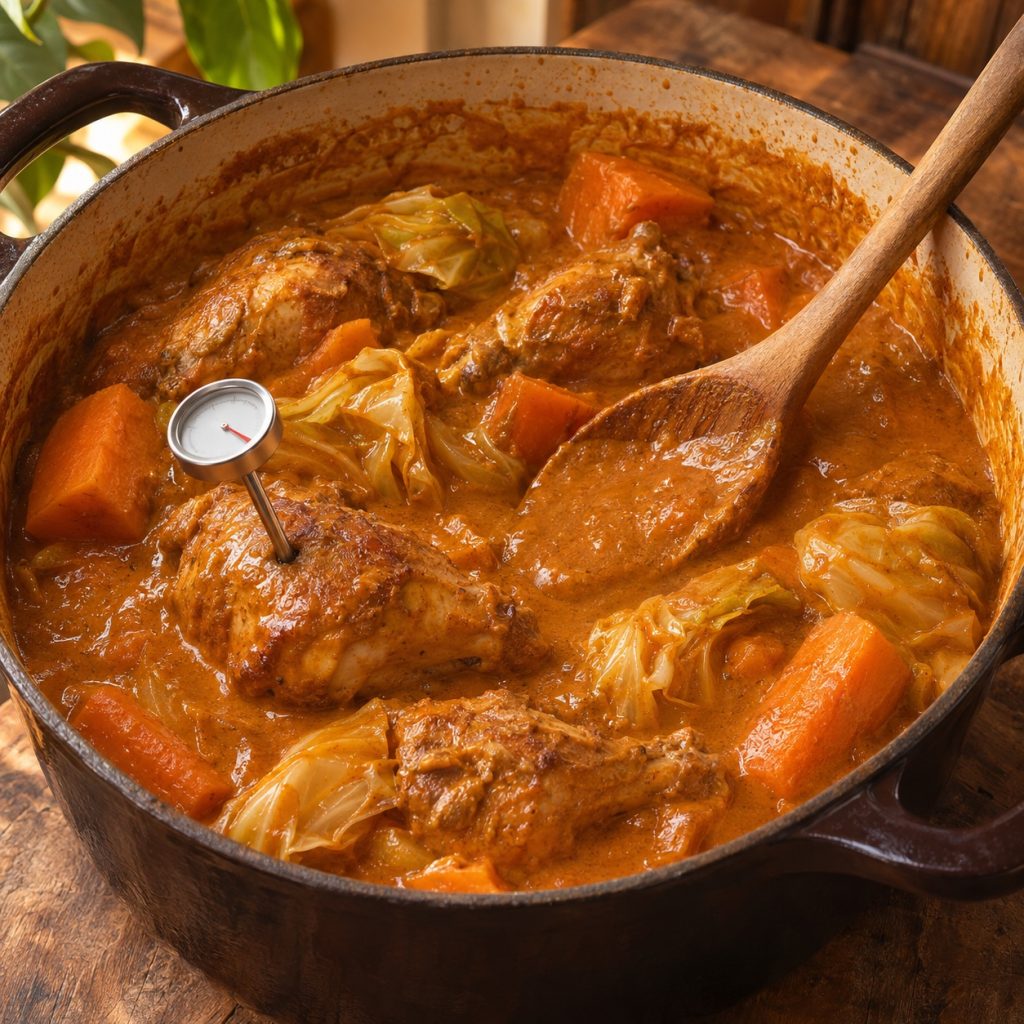
  • Senegalese Chicken Mafé: Smooth Peanut Stew

    Senegalese Chicken Mafé: Smooth Peanut Stew

    The Embassy of Senegal describes mafé as meat—chicken, lamb, or beef—simmered in a silky peanut-and-tomato sauce and served with rice and vegetables. Versions exist across West Africa; this is an accessible chicken-based home adaptation.

    Whisking unsweetened peanut butter with hot stock prevents lumps. Browning the chicken first and adding root vegetables later keeps both flavor and texture in balance.

    Why this method works

    • Whisking peanut butter with hot liquid keeps the sauce smooth.
    • Browning chicken builds flavor before the sauce simmers.
    • Adding sweet potato and carrot for the final 30 minutes prevents collapse.
    • An uncovered finish thickens naturally without flour.

    Before you start

    Prepare a 5-quart heavy pot, whisk, and thermometer.

    Use unsweetened peanut butter made from peanuts and salt; stir the jar well.

    Cut sweet potato into 1¼-inch pieces and carrots into ¾-inch pieces; prep raw chicken separately.

    Brown chicken and build the aromatic base
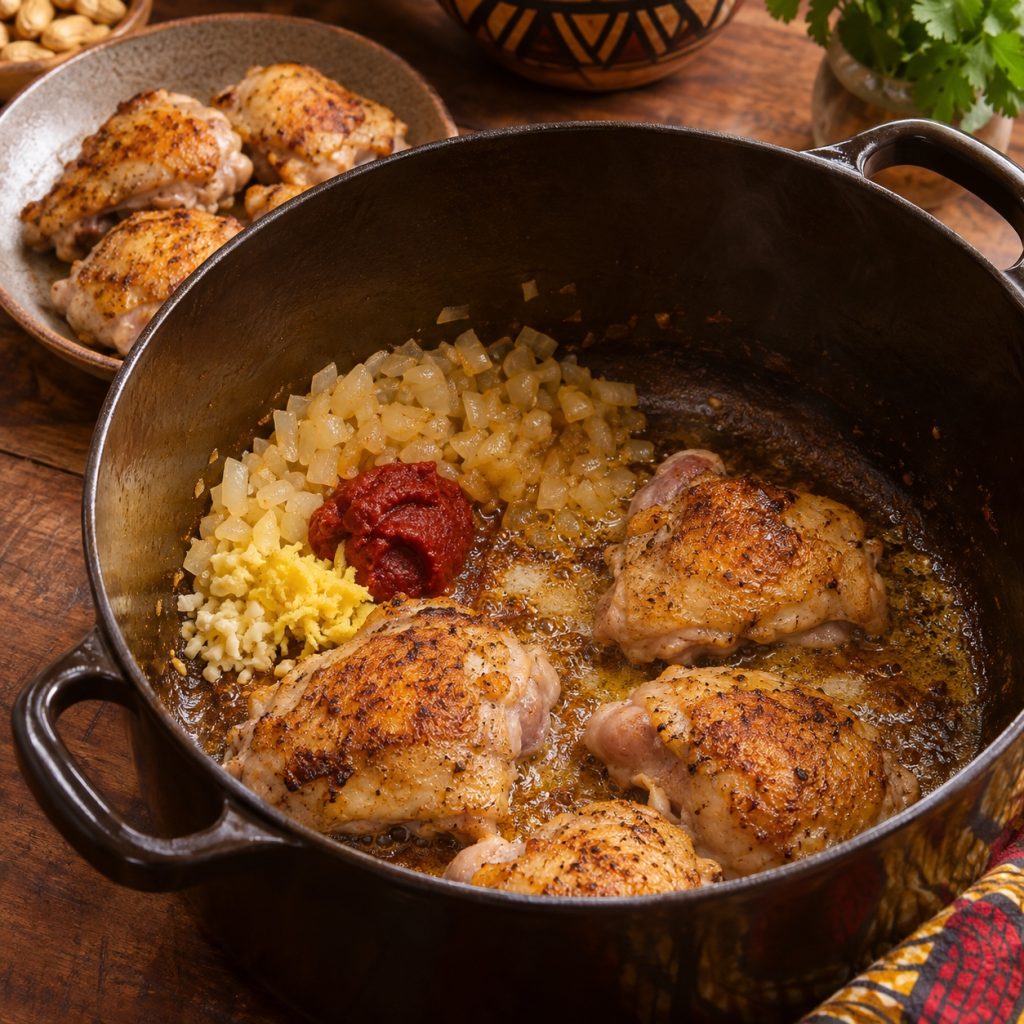
    Pat chicken dry and season with 1 tsp salt. Heat oil over medium-high; brown in two batches, 3 minutes per side, then remove. Cook onion 7 minutes; add garlic and ginger for 1 minute, then tomato paste for 2 minutes.

    Step-by-step method

    1. Brown chicken and build the aromatic base

    Pat chicken dry and season with 1 tsp salt. Heat oil over medium-high; brown in two batches, 3 minutes per side, then remove. Cook onion 7 minutes; add garlic and ginger for 1 minute, then tomato paste for 2 minutes.

    2. Make a lump-free peanut sauce

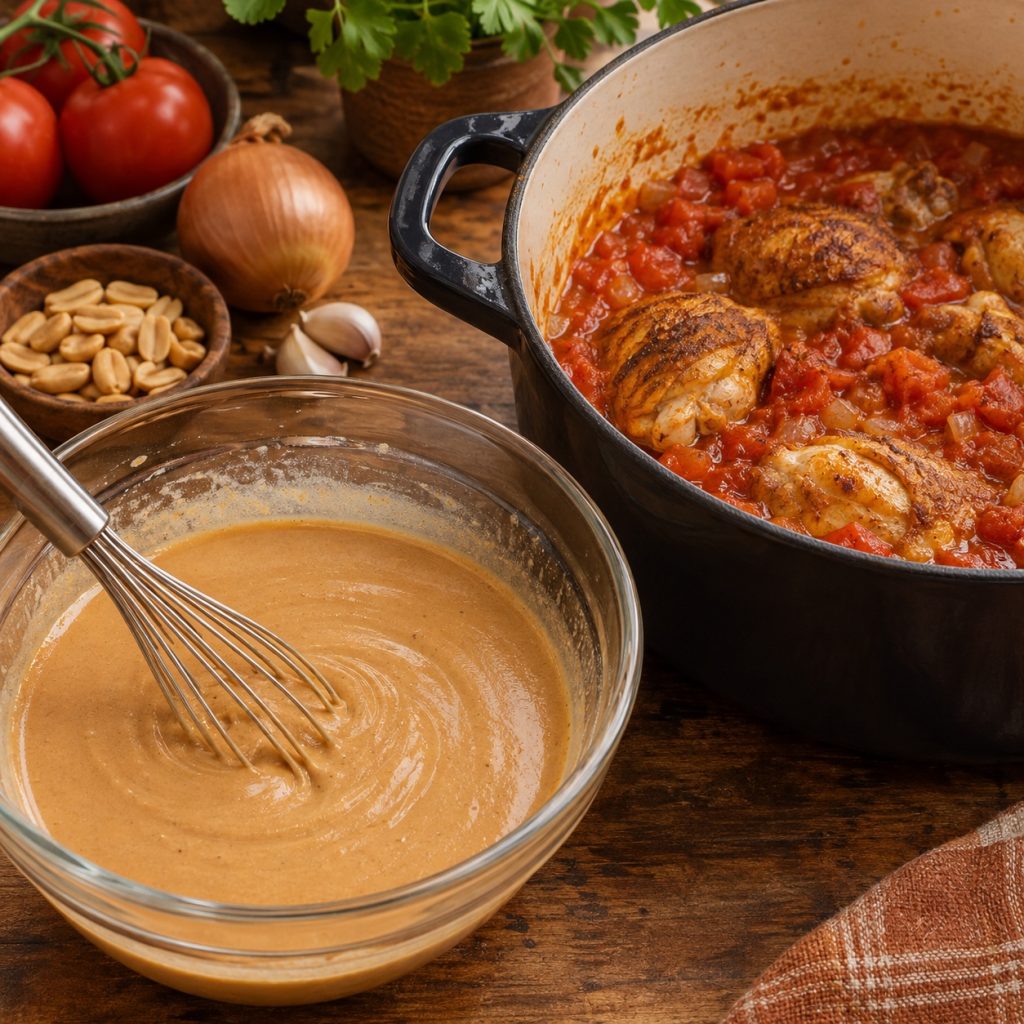
    Whisk peanut butter with 1 cup/250 ml hot stock until smooth. Add tomatoes to the pot and simmer 3 minutes; stir in peanut mixture, remaining stock, and chicken. Simmer gently 25 minutes.

    Make a lump-free peanut sauce
    Whisk peanut butter with 1 cup/250 ml hot stock until smooth. Add tomatoes to the pot and simmer 3 minutes; stir in peanut mixture, remaining stock, and chicken. Simmer gently 25 minutes.

    3. Cook vegetables without breaking them

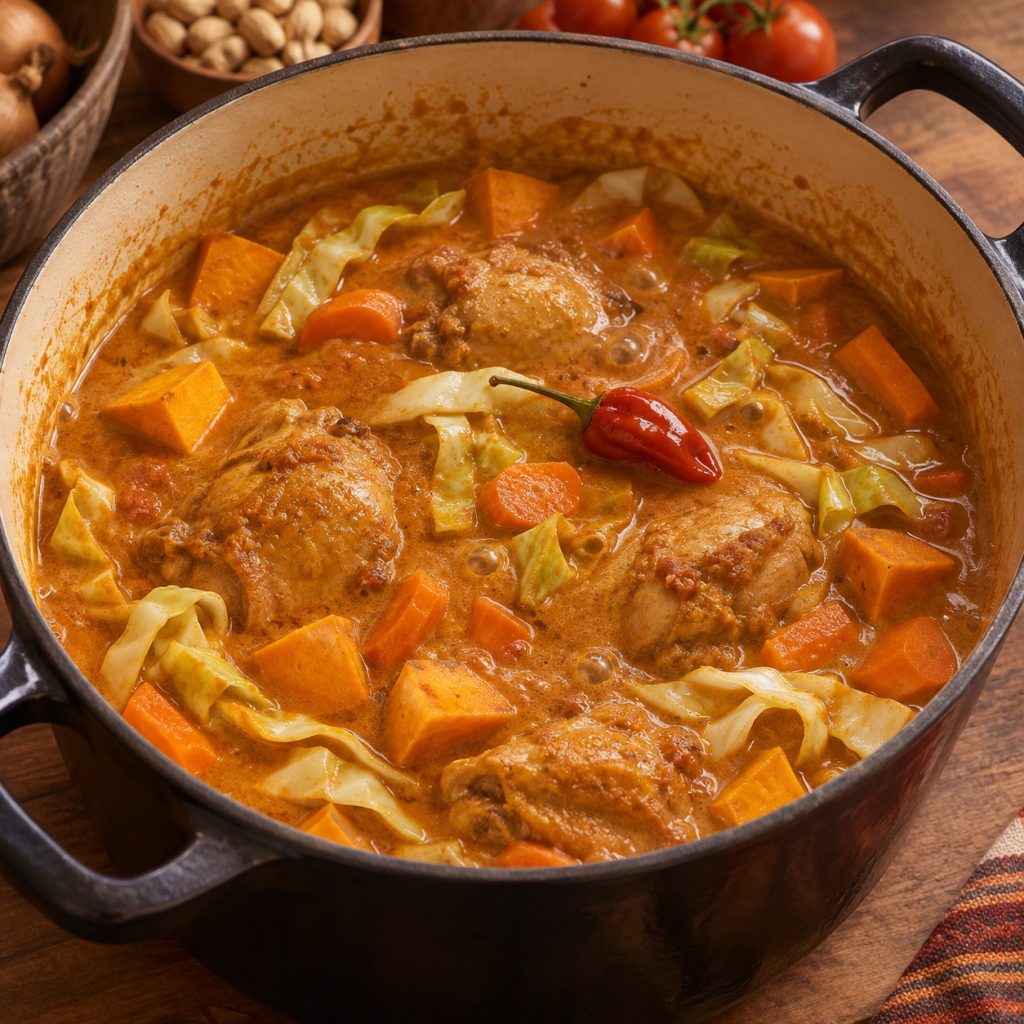
    Add sweet potato, carrots, cabbage, and whole chile. Cook partly covered 25–30 minutes until vegetables pierce easily but hold their shape.

    Cook vegetables without breaking them
    Add sweet potato, carrots, cabbage, and whole chile. Cook partly covered 25–30 minutes until vegetables pierce easily but hold their shape.

    4. Thicken, check doneness, and serve

    Remove chile. Simmer uncovered 5–10 minutes until sauce coats a spoon. Chicken must reach 165°F/74°C. Adjust lemon and salt; serve with rice and chill leftovers within 2 hours.

    Thicken, check doneness, and serve
    Remove chile. Simmer uncovered 5–10 minutes until sauce coats a spoon. Chicken must reach 165°F/74°C. Adjust lemon and salt; serve with rice and chill leftovers within 2 hours.

    Texture and doneness cues

    Sauce is glossy, smooth, and spoon-coating without a separate oil layer.

    Chicken reaches 165°F/74°C; sweet potato keeps defined edges.

    Mistakes, substitutions, and conversions

    Adding peanut butter directly to cold liquid causes lumps; loosen it with hot stock first.

    Potato can replace sweet potato and chard can replace cabbage; keep peanut butter unsweetened.

    180 g peanut butter is about ¾ cup. Add ¼ cup/60 ml hot water if too thick.

    Serving, storage, and allergens

    Refrigerate 3–4 days; add a splash of water and reheat to 165°F/74°C. Freeze the sauce and chicken without vegetables up to 2 months.

    Allergen: peanuts. Packaged stock may contain celery or gluten.

    Frequently asked questions

    Why did the sauce turn lumpy?

    The peanut butter met cold liquid; whisk it separately with hot stock.

    Why is it too thick?

    Peanuts thicken strongly; add hot water gradually.

    Must it be spicy?

    No. Keep the chile whole or omit it.

    Can I make it ahead?

    Yes. Flavor improves overnight; store rice separately.

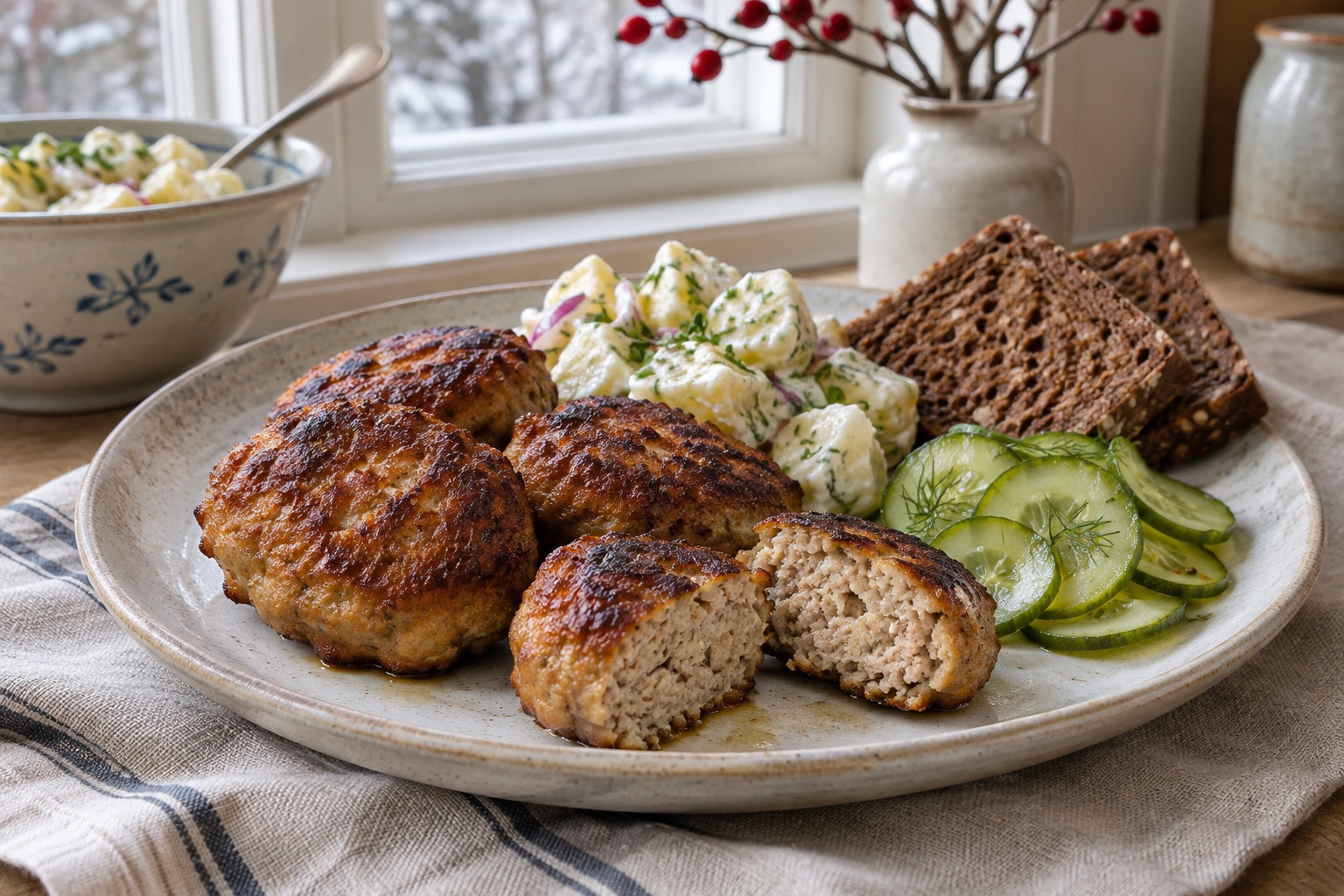
  • Danish Frikadeller: Juicy Centers, Deep-Browned Crust

    Danish Frikadeller: Juicy Centers, Deep-Browned Crust

    Denmark’s official country site describes frikadeller as a beloved national dish served for lunch with rye bread or as dinner. Household recipes vary; this home adaptation uses pork, beef, milk, and oats.

    Mixing salt into meat first builds structure, adding liquid gradually controls consistency, and chilling firms the mixture for even pan-frying.

    Why this method works

    • Salt mixed into meat first builds a cohesive bind.
    • Oats and flour absorb milk as the mixture rests.
    • A wet spoon forms smooth oval patties.
    • Medium heat browns the crust while the center cooks safely.

    Before you start

    Prepare a wide heavy skillet, large bowl, tablespoon, and thermometer.

    Grate onion very finely and use its juices.

    Chill the mixed batter at least 30 minutes.

    Bind meat with salt and build the batter
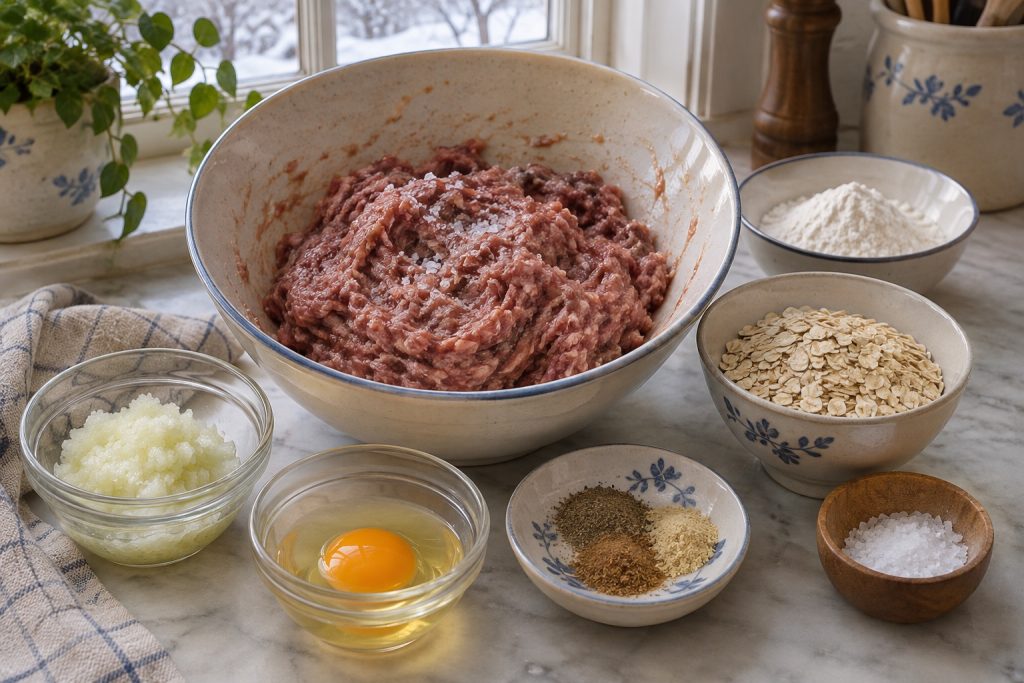
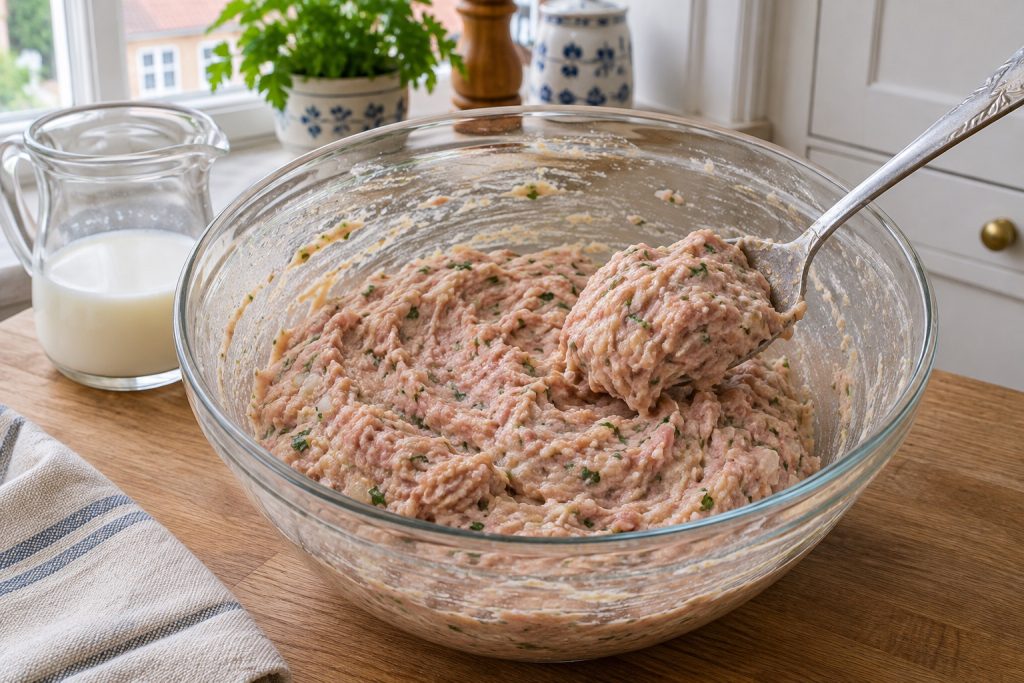
    Mix meats with salt for 2 minutes until tacky. Add onion, egg, oats, flour, pepper, and allspice.

    Step-by-step method

    1. Bind meat with salt and build the batter

    Mix meats with salt for 2 minutes until tacky. Add onion, egg, oats, flour, pepper, and allspice.

    2. Add milk gradually and chill

    Add milk in three additions, fully mixing each time. The batter should be soft but hold on a spoon. Cover and chill 30 minutes.

    Add milk gradually and chill
    Add milk in three additions, fully mixing each time. The batter should be soft but hold on a spoon. Cover and chill 30 minutes.

    3. Shape with a wet spoon and fry

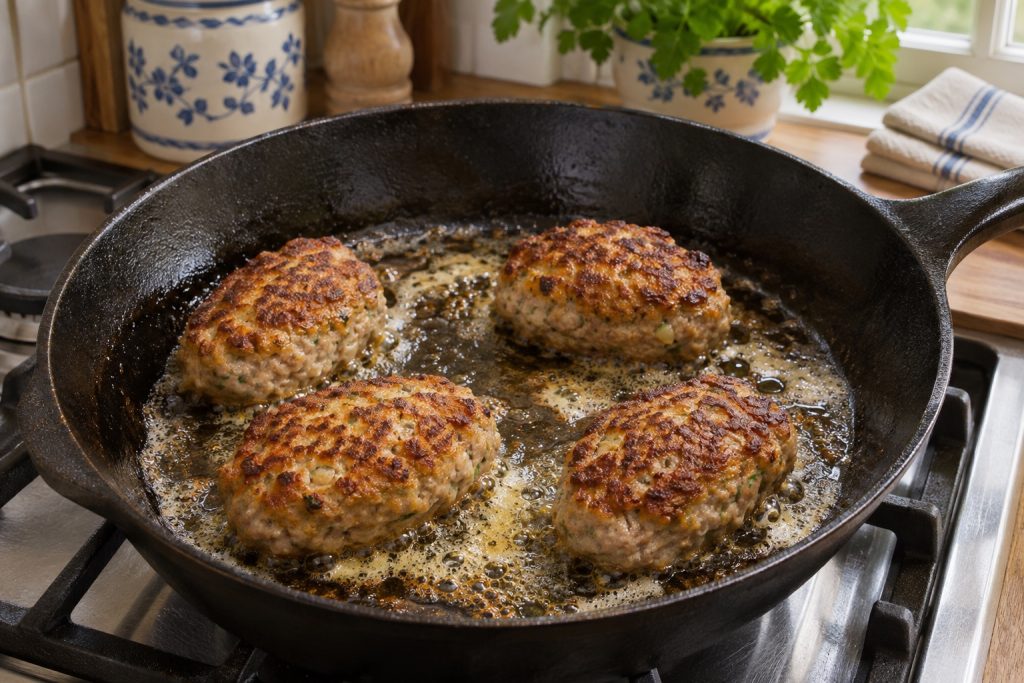
    Heat butter and oil over medium in a wide skillet. With a wet tablespoon form 12 oval patties. Without crowding, fry 5–6 minutes per side until deep golden.

    Shape with a wet spoon and fry
    Heat butter and oil over medium in a wide skillet. With a wet tablespoon form 12 oval patties. Without crowding, fry 5–6 minutes per side until deep golden.

    4. Check the center and rest

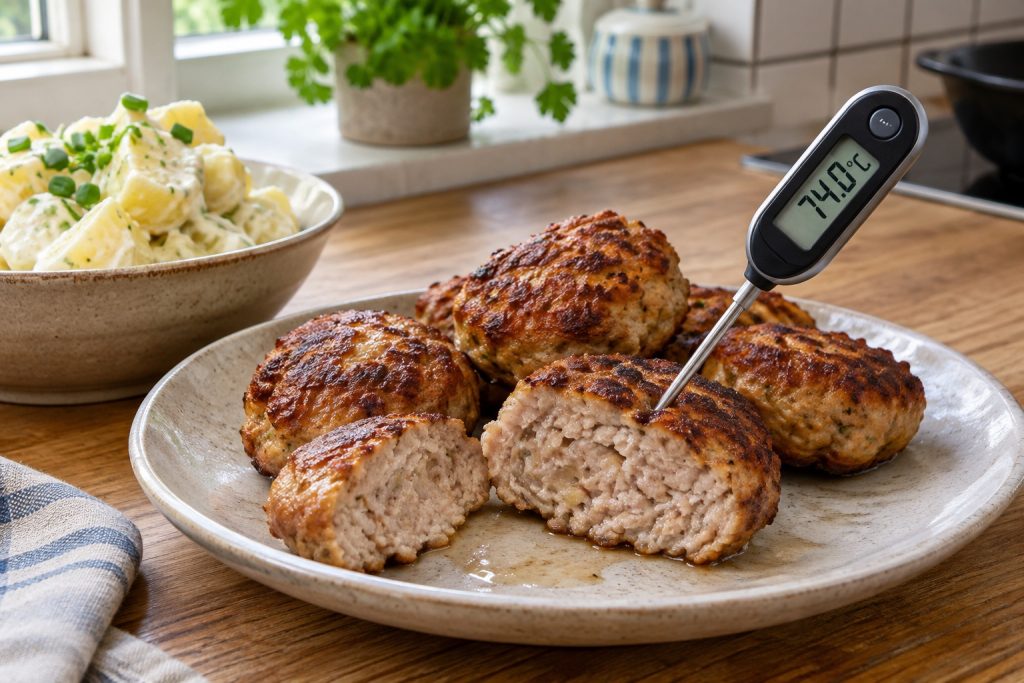
    Remove when the thickest center reaches 160°F/71°C. Rest 5 minutes. Serve with potato salad or rye bread and chill leftovers within 2 hours.

    Check the center and rest
    Remove when the thickest center reaches 160°F/71°C. Rest 5 minutes. Serve with potato salad or rye bread and chill leftovers within 2 hours.

    Texture and doneness cues

    Outside is deep golden and dry; the center springs back without feeling hard.

    No raw juices run from a cut patty; center reaches at least 160°F/71°C.

    Mistakes, substitutions, and conversions

    Too much milk makes patties spread; reserve the final 2 tbsp/30 ml unless needed.

    Turkey can replace pork but must reach 165°F/74°C; unsweetened oat drink can replace milk.

    Each patty is about 70 g or 2 heaped tablespoons. Cook in two batches.

    Serving, storage, and allergens

    Refrigerate 3–4 days. Reheat covered with a splash of water or in a 325°F/160°C oven to 165°F/74°C. Freeze cooked patties 2 months.

    Allergens: milk, egg, wheat, and oats. Certified gluten-free oats and flour can be used.

    Frequently asked questions

    Why did they fall apart?

    The meat was not bound with salt or the batter did not rest; mix salt in first.

    Why did they stick?

    The pan was not hot enough or they were turned early; wait for a crust.

    Can batter be made ahead?

    Yes. Keep covered in the refrigerator up to 24 hours.

    Can they be baked?

    Yes, but pan crust is stronger; always verify the center temperature.

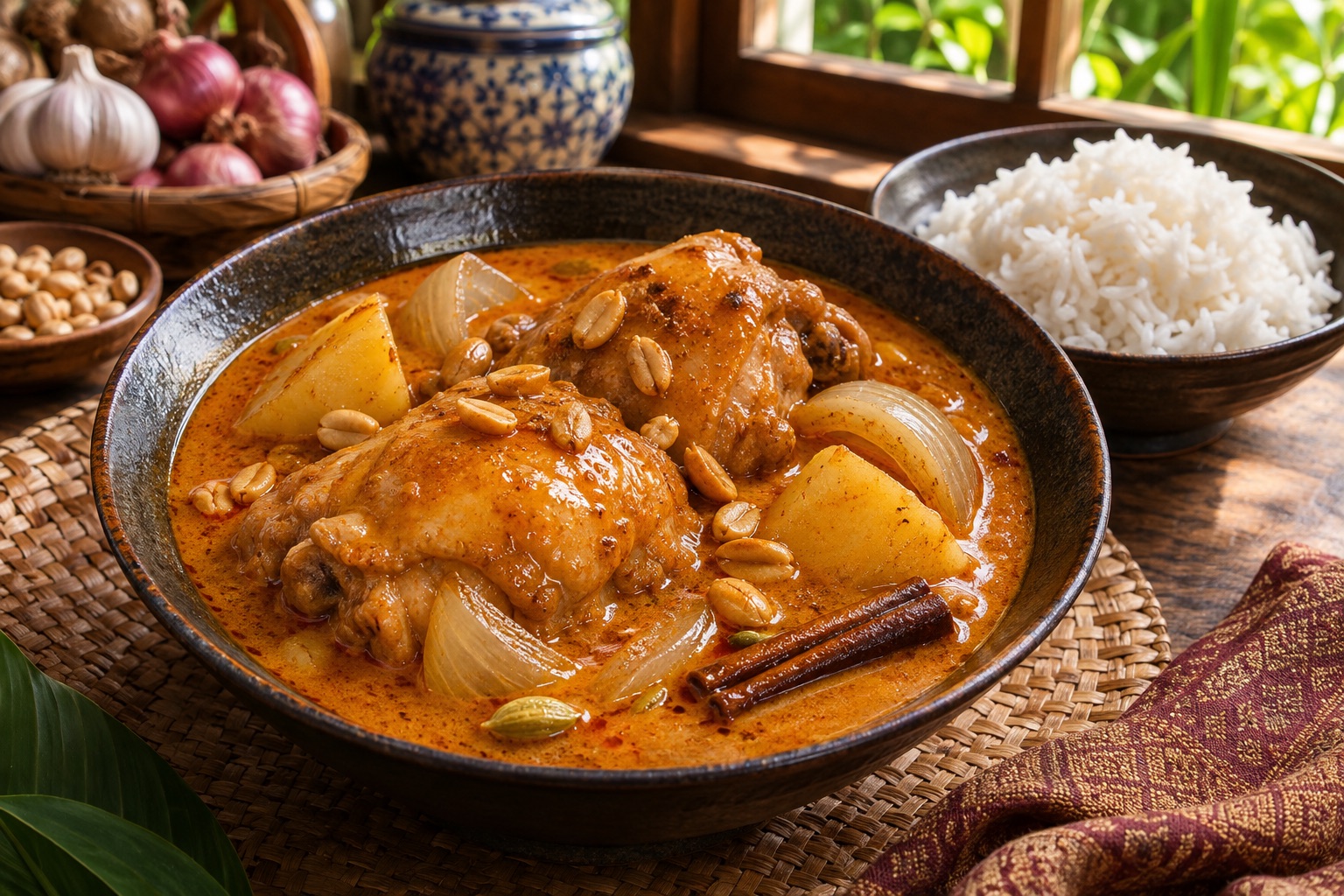
  • Thai Chicken Massaman Curry: Smooth Sauce, Tender Chicken

    Thai Chicken Massaman Curry: Smooth Sauce, Tender Chicken

    Thailand’s Department of Agricultural Extension links gaeng massaman gai to southern Thailand and Malay-Muslim influence. Warm spices meet Thai curry paste, coconut, and tamarind. This is a reliable home adaptation using prepared massaman paste.

    Frying the paste in thick coconut cream, gently simmering chicken, and adding potato later keeps the sauce smooth and the vegetables intact.

    Why this method works

    • Thick coconut cream acts as frying fat and blooms the paste.
    • Bone-in thighs stay juicy during a low simmer.
    • Adding potato later prevents crumbling edges.
    • Tamarind, fish sauce, and sugar are balanced at the end.

    Before you start

    Prepare a 5-quart pot, wooden spoon, and thermometer.

    Do not shake coconut milk; reserve the thick cream from the top.

    Cut potatoes into even 1½-inch/4 cm chunks and onions into wedges.

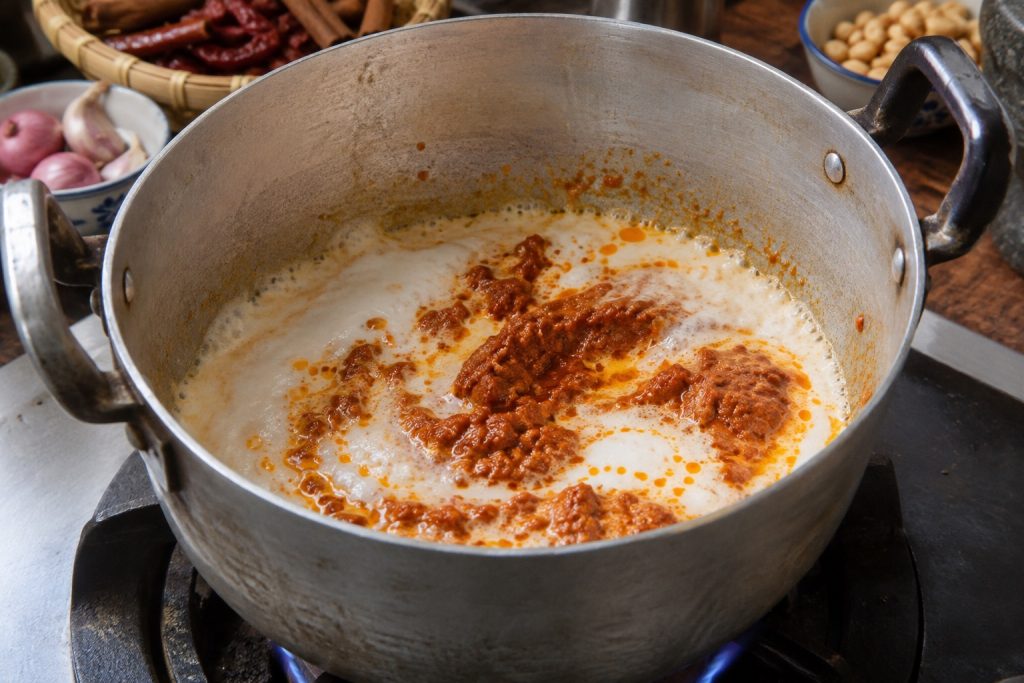
    Bloom curry paste in coconut cream
    Spoon ¾ cup/200 ml thick coconut cream into the pot. Heat 5–7 minutes over medium until tiny oil beads appear. Add curry paste and fry 4 minutes.

    Step-by-step method

    1. Bloom curry paste in coconut cream

    Spoon ¾ cup/200 ml thick coconut cream into the pot. Heat 5–7 minutes over medium until tiny oil beads appear. Add curry paste and fry 4 minutes.

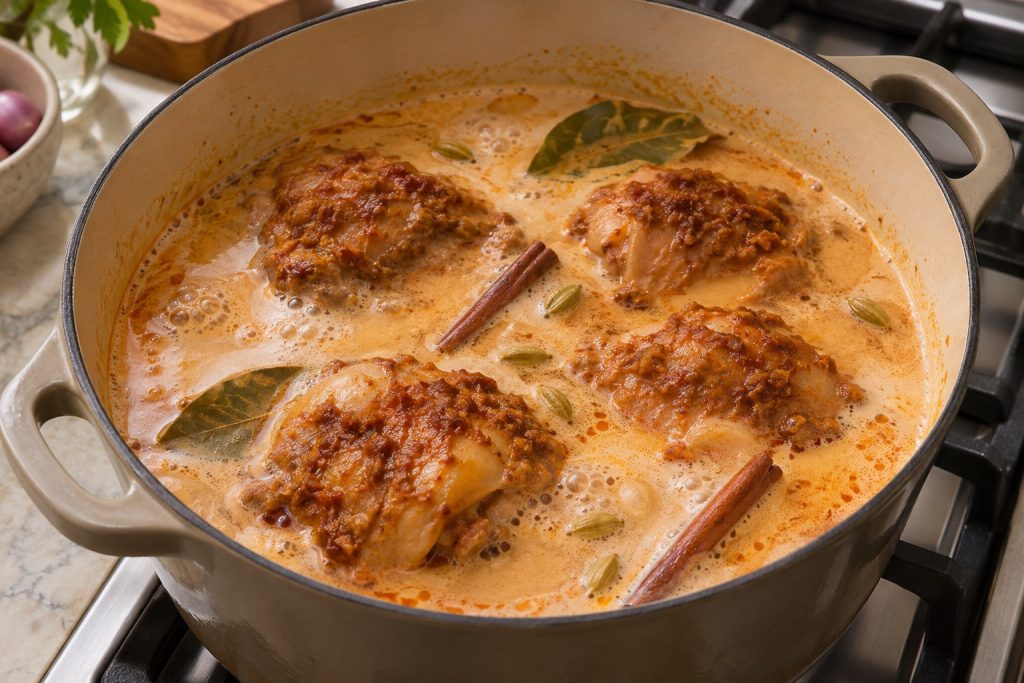
    2. Gently simmer chicken with spices

    Add chicken, cinnamon, cardamom, and bay; coat in paste. Add remaining coconut milk and stock. Simmer gently 25 minutes.

    Gently simmer chicken with spices
    Add chicken, cinnamon, cardamom, and bay; coat in paste. Add remaining coconut milk and stock. Simmer gently 25 minutes.

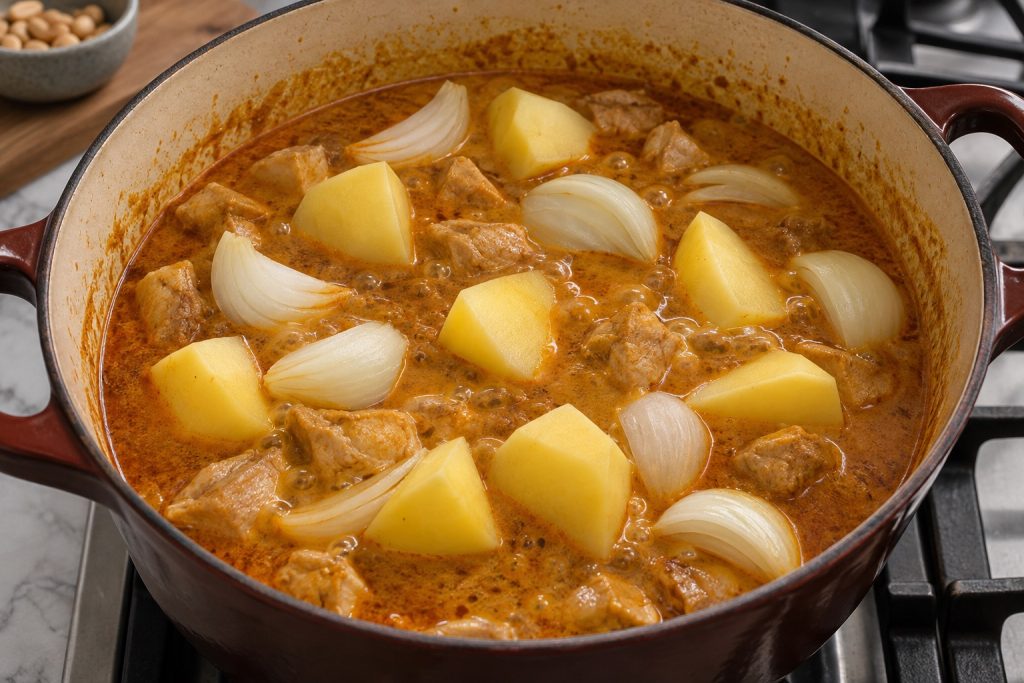
    3. Cook potatoes and onions intact

    Add potatoes and onions. Cook partly covered 20–25 minutes until potatoes pierce easily but hold shape and chicken reaches at least 165°F/74°C.

    Cook potatoes and onions intact
    Add potatoes and onions. Cook partly covered 20–25 minutes until potatoes pierce easily but hold shape and chicken reaches at least 165°F/74°C.

    4. Balance seasoning and finish with peanuts

    Add tamarind, fish sauce, and sugar. Reduce 5 minutes and balance sour, sweet, and salty. Stir in peanuts, serve with jasmine rice, and chill leftovers within 2 hours.

    Balance seasoning and finish with peanuts
    Add tamarind, fish sauce, and sugar. Reduce 5 minutes and balance sour, sweet, and salty. Stir in peanuts, serve with jasmine rice, and chill leftovers within 2 hours.

    Texture and doneness cues

    Sauce is glossy and spoon-coating without large separated oil pools.

    Potato edges remain defined and chicken exceeds 165°F/74°C near the bone.

    Mistakes, substitutions, and conversions

    A rolling boil splits coconut milk and dries chicken; keep a gentle simmer.

    Beef cubes can replace chicken with longer cooking; reduce salt if soy sauce replaces fish sauce.

    800 ml is about 3⅓ cups. Paste heat varies by brand, so start with 70 g if unsure.

    Serving, storage, and allergens

    Refrigerate 3–4 days below 40°F/4°C. Bring gently to a simmer and 165°F/74°C. Potatoes can turn mealy, so freeze the portion without potato up to 2 months.

    Allergens: peanuts and fish; curry paste may contain shrimp.

    Frequently asked questions

    Why did the sauce split?

    The coconut milk boiled too hard. Lower heat and stir gently.

    Can I reduce curry paste?

    Yes. Start with 70 g and strengthen near the end.

    Why did potatoes crumble?

    They were too small or added too early; use 1½-inch chunks for the last 25 minutes.

    Can it be made ahead?

    Yes. Flavor improves overnight; store rice separately.