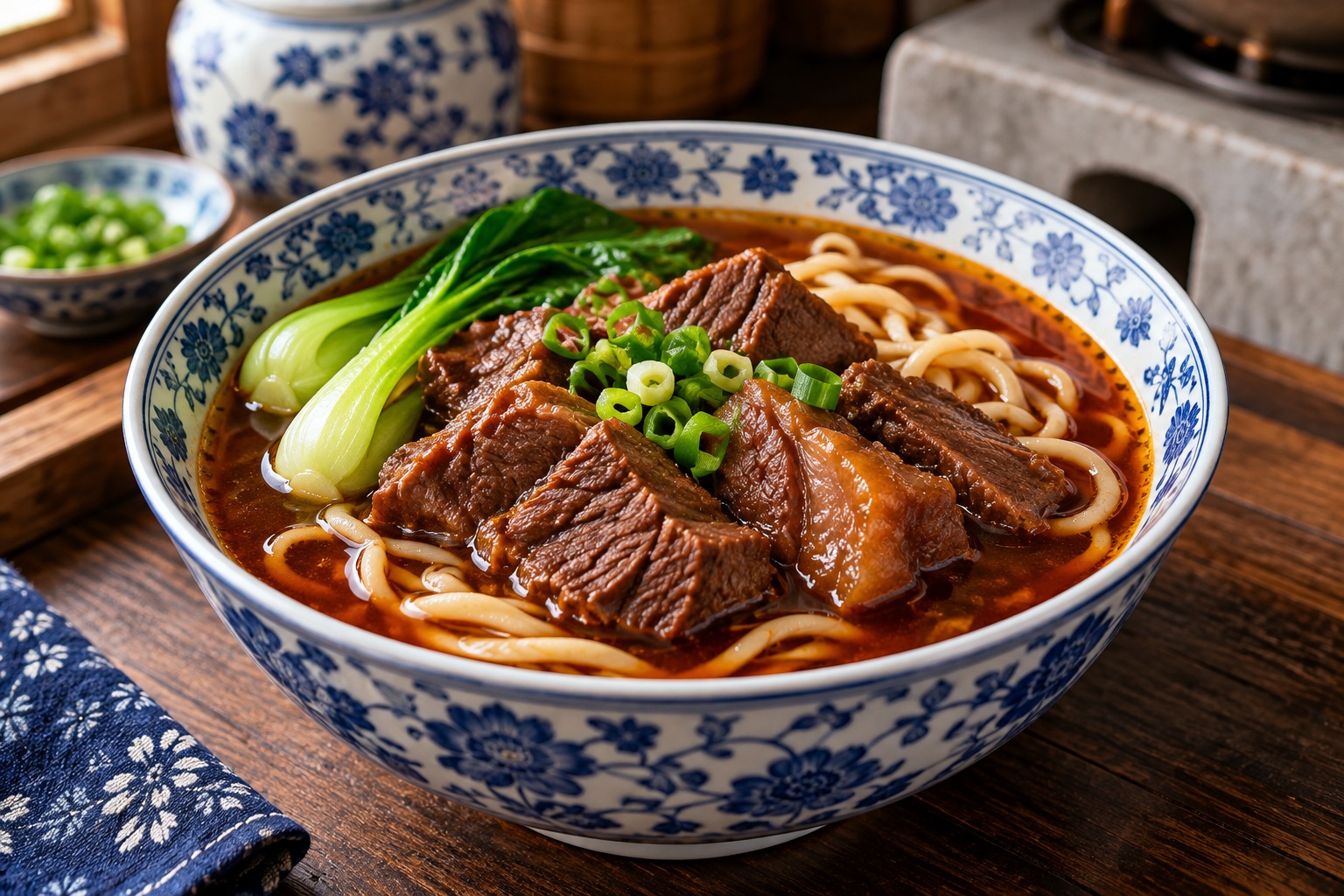
Taiwan’s Tourism Administration describes the island’s distinctive method as frying spicy bean paste before braising beef and serving the broth with noodles.
This home version does not claim one universal authentic formula. Tomato, doubanjiang, soy, and warm spices build balance, while cooking noodles separately keeps the broth cleaner.
Why this method works
- A brief blanch and rinse removes surface proteins so the soup is less foamy and cloudy.
- Frying doubanjiang for only 45–60 seconds blooms its aroma; cooking until dark makes the broth bitter.
- A bare simmer dissolves collagen without tightening the meat, while separate noodles keep starch out of the broth.
Before you start
Prepare a 6-quart heavy pot, strainer, ladle, small spice bag, and a separate noodle pot.
Doubanjiang and soy sauce are salty, so do not add salt at the beginning. Cut beef shank or chuck into 1½–2-inch pieces.
Wash boards and knives that touch raw beef with hot soapy water. Once boiling, reduce immediately to a bare simmer.
Step-by-step method
1. Blanch and rinse the beef
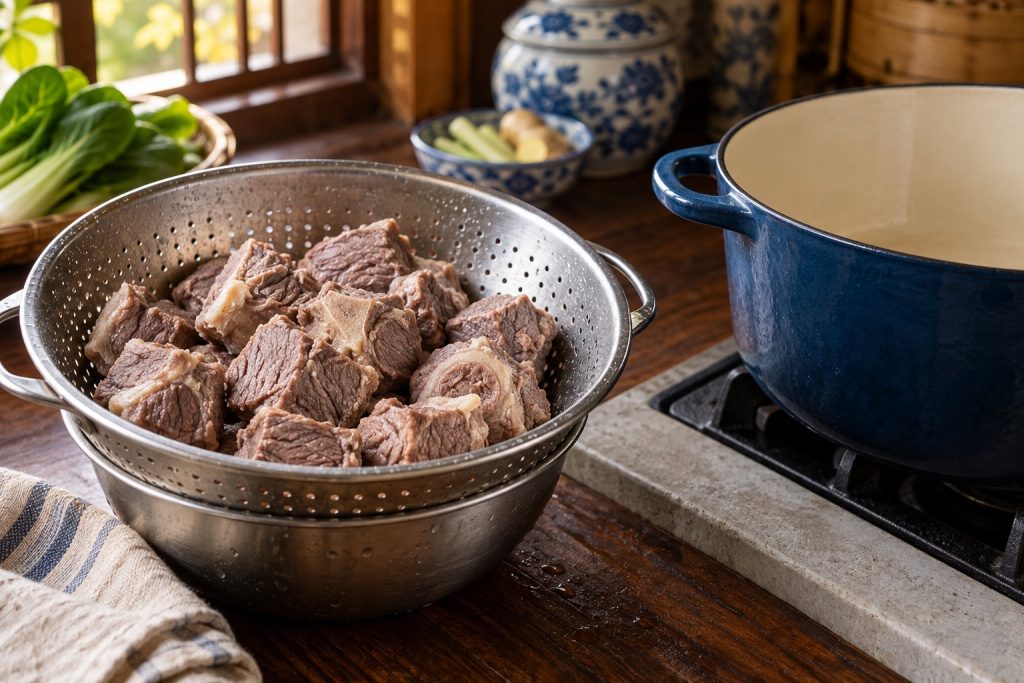
Cover beef with cold water, bring to a boil, and cook 5 minutes. Drain, rinse the meat and pot with warm water, discard the foamy liquid, and pat the beef dry.
2. Bloom the aromatic base without burning
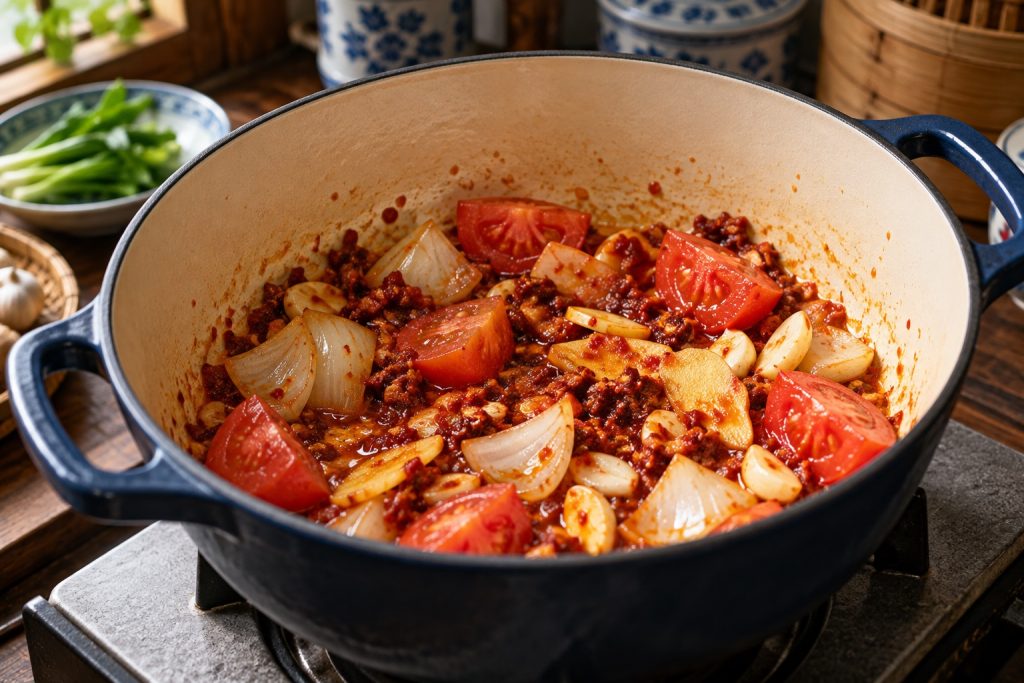
Heat oil over medium in the clean pot. Fry doubanjiang 45–60 seconds until red oil appears. Cook onion, ginger, and garlic 3 minutes; add tomatoes for 4 minutes. Stir in both soy sauces, wine, and sugar for 30 seconds.
3. Braise at a bare simmer until tender
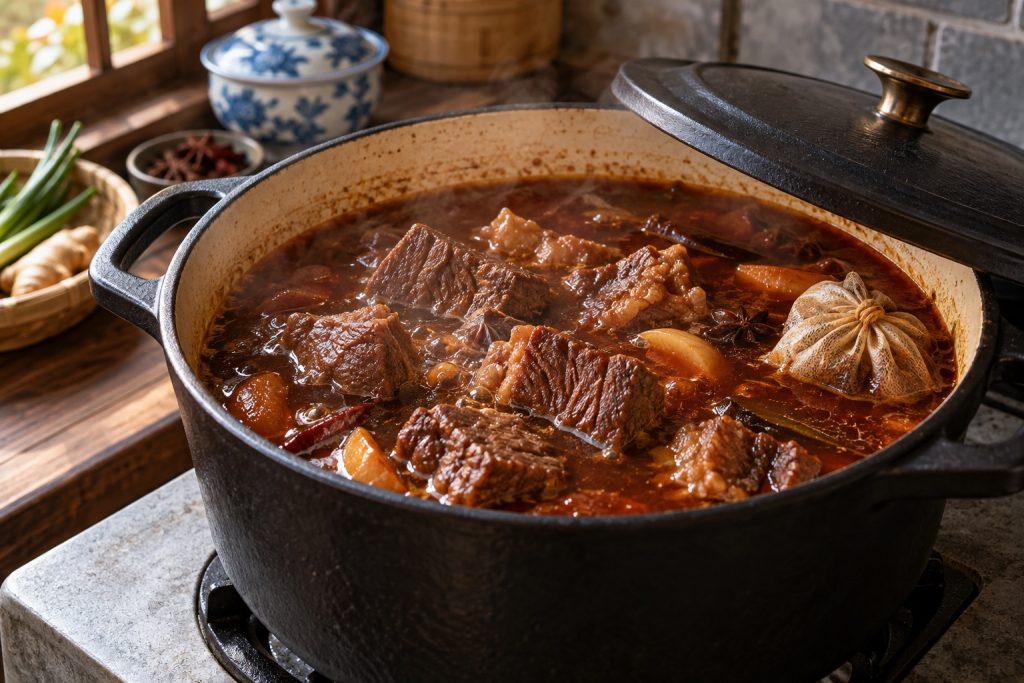
Return beef. Tie spices in a bag and add with the water. Bring to a boil, skim, then leave the lid ajar and barely simmer 2–2½ hours. Beef should yield to a fork; check the water level after 90 minutes.
4. Cook noodles separately and assemble
Remove the spice bag and skim excess fat. Adjust salt and heat only now. Boil noodles separately according to the package, adding greens for the final 60 seconds. Drain into bowls, top with beef and piping-hot broth, and finish with scallions.
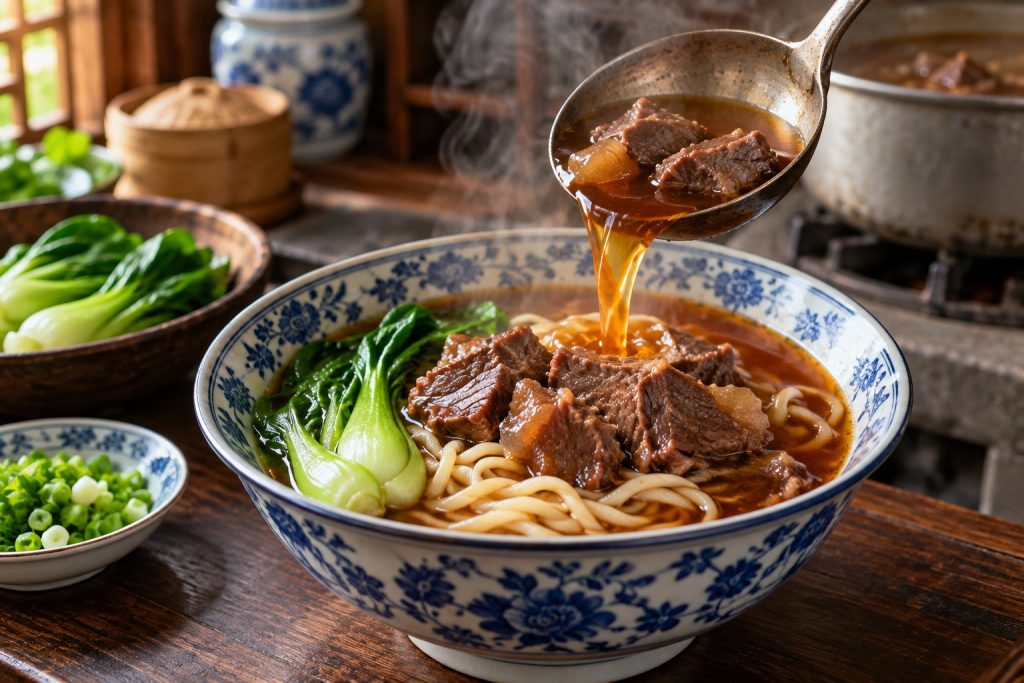
Taiwanese Beef Noodle Soup
Home-style Taiwanese red-braised beef noodle soup with a clear, deeply savory broth, tender beef, and noodles that stay springy.
Ingredients
- 1.2 kg beef shank or chuck — 1½–2-inch pieces
- 2 tbsp neutral oil
- 3 tbsp spicy doubanjiang
- 1 large onion — quartered
- 6 slices fresh ginger
- 5 cloves garlic — smashed
- 3 tomatoes — quartered
- 80 ml light soy sauce
- 1 tbsp dark soy sauce
- 2 tbsp Shaoxing wine or dry sherry
- 1 tbsp brown sugar
- 2 star anise
- 1 small stick cinnamon
- 1 tsp Sichuan peppercorns — optional
- 2.2 liters water
- 600 g fresh wheat noodles
- 300 g bok choy or spinach
- 4 scallions thinly sliced
Instructions
- Cover beef with cold water, bring to a boil, and cook 5 minutes. Drain, rinse the meat and pot with warm water, discard the foamy liquid, and pat the beef dry.
- Heat oil over medium in the clean pot. Fry doubanjiang 45–60 seconds until red oil appears. Cook onion, ginger, and garlic 3 minutes; add tomatoes for 4 minutes. Stir in both soy sauces, wine, and sugar for 30 seconds.
- Return beef. Tie spices in a bag and add with the water. Bring to a boil, skim, then leave the lid ajar and barely simmer 2–2½ hours. Beef should yield to a fork; check the water level after 90 minutes.
- Remove the spice bag and skim excess fat. Adjust salt and heat only now. Boil noodles separately according to the package, adding greens for the final 60 seconds. Drain into bowls, top with beef and piping-hot broth, and finish with scallions.
Notes
- The beef separates under fork pressure but still holds in chunks. Broth is deep red-brown, glossy, and fluid rather than greasy; noodles remain springy.
- If too hot, dilute gradually with water or unsalted stock; if salty, never add noodle water. Without doubanjiang, use 1 tbsp miso plus 1 tbsp chile paste and label it an adaptation. Dry sherry or water can replace Shaoxing. 600 g fresh noodles equals about 1 lb dried. Contains soy and wheat/gluten; certified gluten-free noodles and sauces are needed for a gluten-free adaptation.
- Keep noodles separate. Divide soup into shallow containers within 2 hours; refrigerate 3–4 days or freeze 3 months. Reheat soup to a rolling boil and beef to 165°F, then combine with freshly cooked noodles.
Texture and doneness cues
The beef separates under fork pressure but still holds in chunks. Broth is deep red-brown, glossy, and fluid rather than greasy; noodles remain springy.
Mistakes, substitutions, and measurements
If too hot, dilute gradually with water or unsalted stock; if salty, never add noodle water. Without doubanjiang, use 1 tbsp miso plus 1 tbsp chile paste and label it an adaptation. Dry sherry or water can replace Shaoxing. 600 g fresh noodles equals about 1 lb dried. Contains soy and wheat/gluten; certified gluten-free noodles and sauces are needed for a gluten-free adaptation.
Serving, storage, and allergens
Keep noodles separate. Divide soup into shallow containers within 2 hours; refrigerate 3–4 days or freeze 3 months. Reheat soup to a rolling boil and beef to 165°F, then combine with freshly cooked noodles.
Frequently asked questions
Why is my broth cloudy?
You may have skipped blanching, boiled hard, or cooked noodles in the soup. A bare simmer and separate noodles give a cleaner bowl.
Can I use a pressure cooker?
Yes. After building the aromatic base, cook at high pressure 45 minutes and release naturally for 15 minutes; adjust seasoning at the end.
Which beef cut works best?
Collagen-rich shank or chuck becomes tender and gives body. Lean steak tends to dry out during the long braise.
Leave a Reply