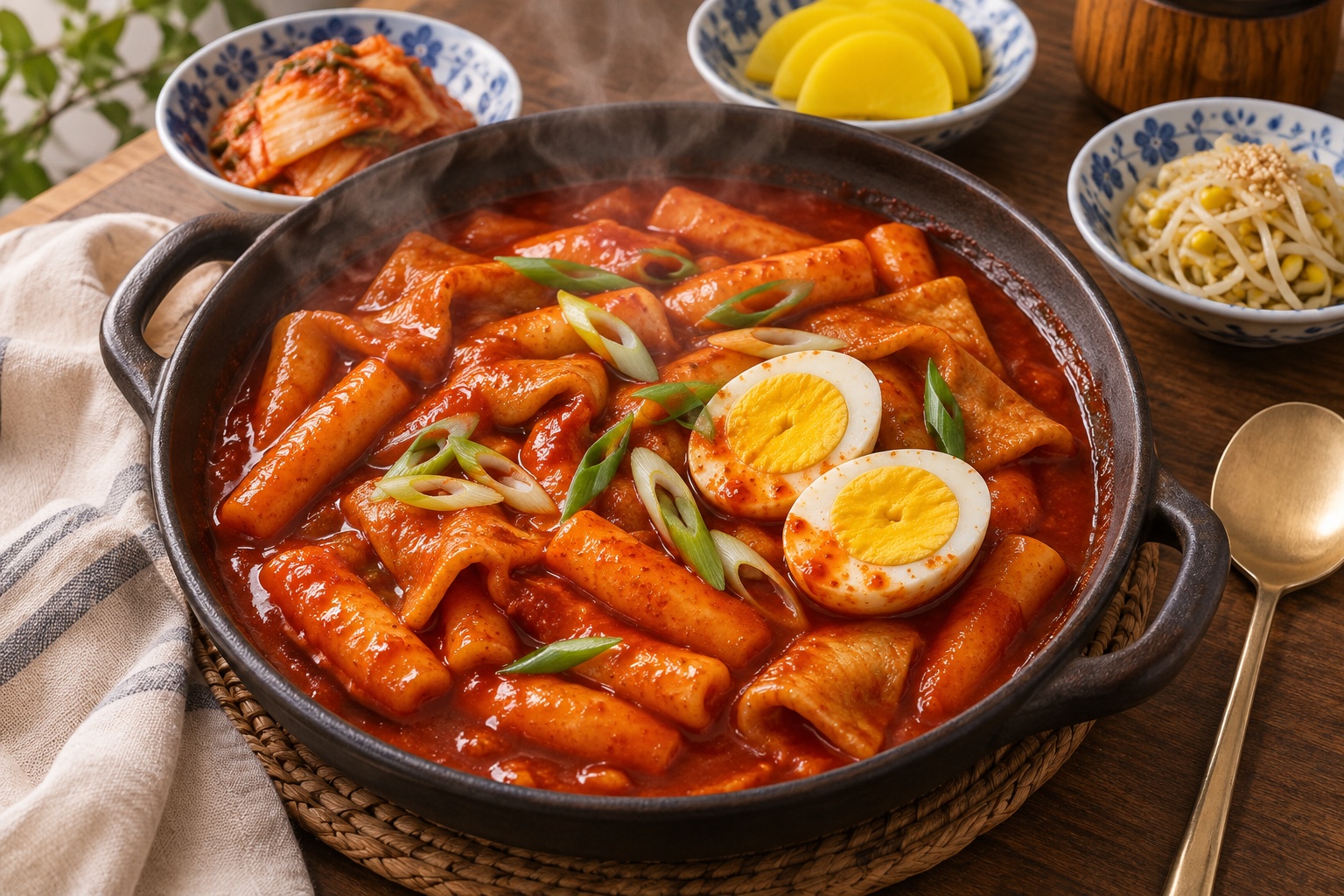
Korea.net describes tteokbokki as a signature Korean bunsik snack: cylindrical rice cakes cooked in a gochujang-based sauce. The familiar modern version often includes eomuk fish cake, egg, and scallions.
This home version starts with anchovy-kelp broth; kelp-only broth is the vegetarian option. Rice cakes simmer under control and fish cake joins near the end, so the sauce thickens without breaking the cakes.
Why this method works
- A short soak relaxes chilled or frozen tteok without cracking the surface.
- Dissolving gochujang in broth first produces a smooth, evenly spicy sauce.
- A wide pan speeds evaporation so sauce thickens before rice cakes overcook.
- Adding fish cake and scallions late preserves their texture.
Before you start
Use a 12-inch/28–30 cm wide skillet or shallow pot and wooden spoon.
Skip soaking if vacuum-packed cakes are already soft; soak hard or frozen cakes in cold water 10–15 minutes.
Gochujang salt and heat vary by brand; adjust only after the sauce reduces.
Step-by-step method
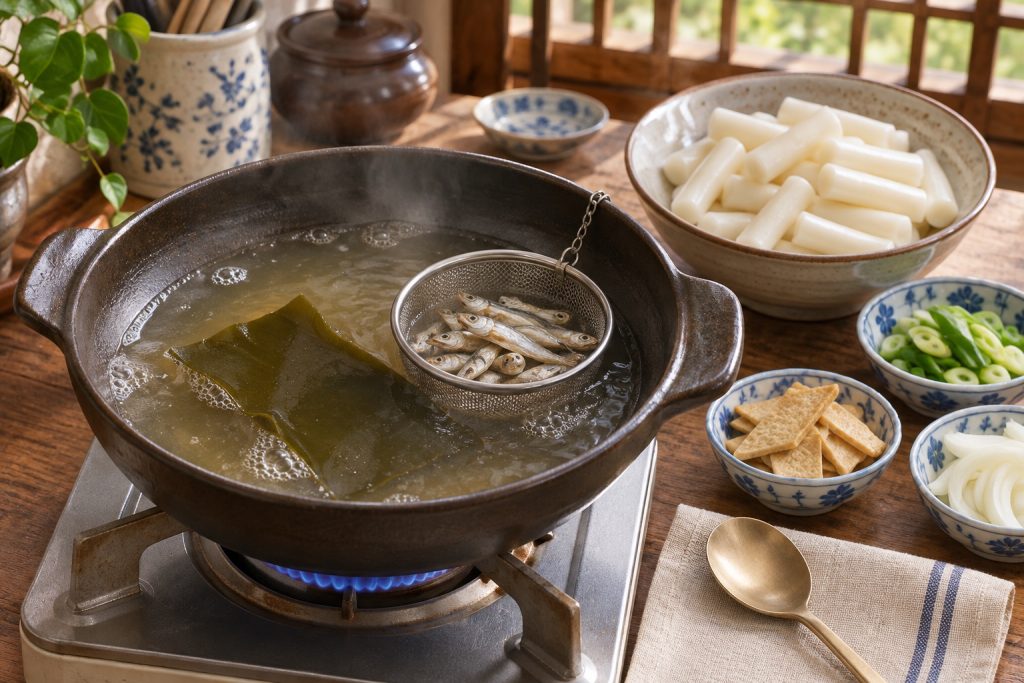
1. Make the anchovy-kelp broth
Add a 4-inch/10-cm square of kelp and 12 small dried anchovies to 3 cups/750 ml water. Heat 8 minutes until nearly boiling; remove kelp, simmer anchovies 5 minutes more, then strain. Skip if using prepared broth.
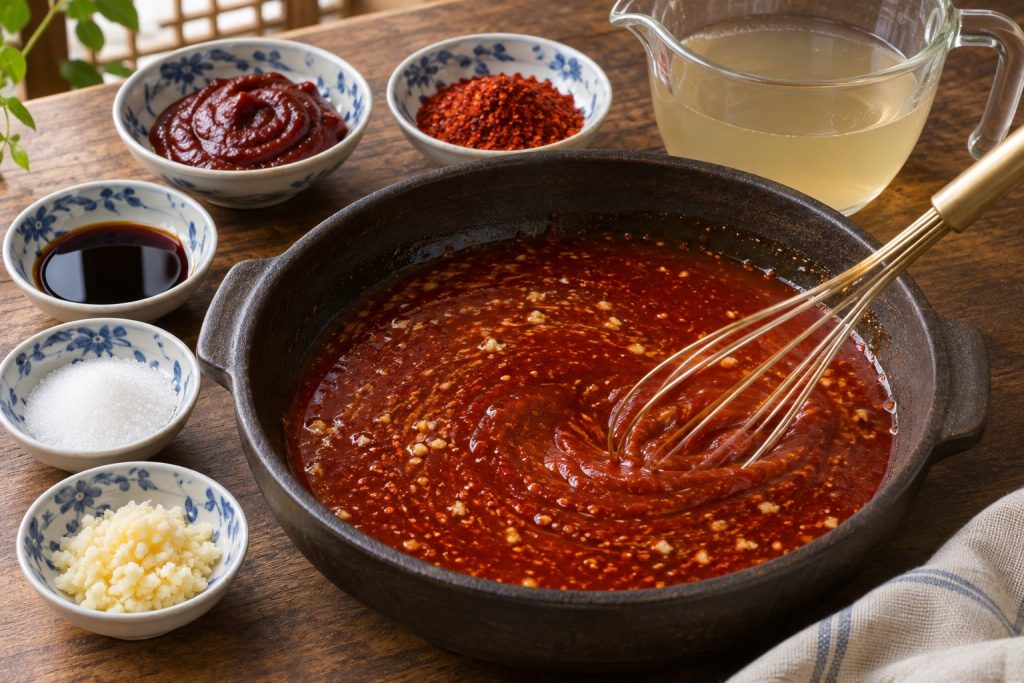
2. Dissolve the gochujang sauce
Pour broth into a wide pan. Whisk in gochujang, gochugaru, soy sauce, sugar, and garlic until smooth. Bring to a boil over medium-high.
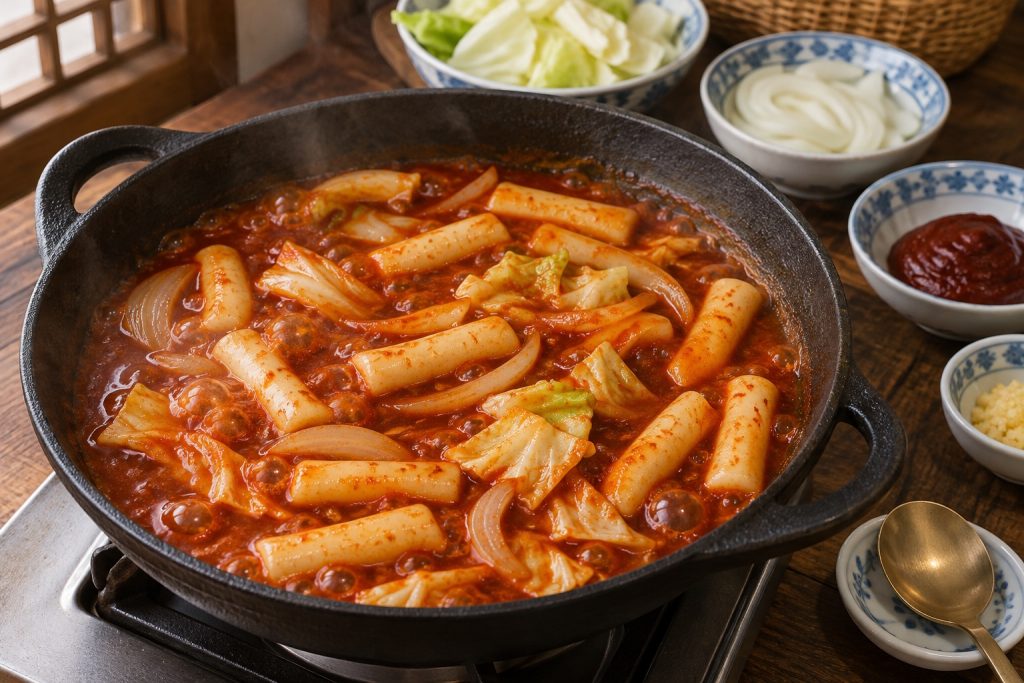
3. Simmer rice cakes under control
Add drained rice cakes, onion, and cabbage. Simmer over medium 10–12 minutes, scraping the base and separating cakes gently. When sauce starts coating the spoon, one cake should be flexible through the center.
4. Finish with fish cake and eggs
Add fish cake and most scallions; cook 4–6 minutes. Sauce should hold a spoon trail for 1–2 seconds; loosen with 2–3 tbsp hot water if too thick. Add eggs, remaining scallions, and optional sesame oil; serve immediately.
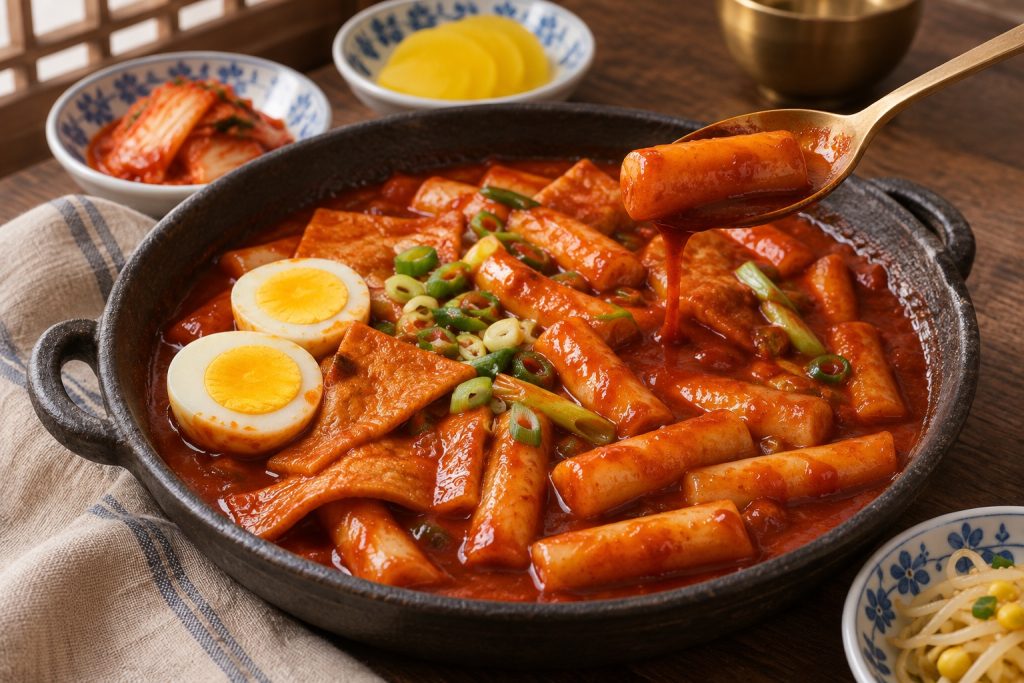
Korean Tteokbokki
A 40-minute classic gochujang tteokbokki with chewy rice cakes, balanced heat, and sauce that clings without turning gluey.
Ingredients
- 500 18 oz cylinder-shaped Korean rice cakes
- 750 3 cups anchovy-kelp broth
- 80 ⅓ cup gochujang
- 1 tbsp gochugaru — to taste
- 1½ tbsp soy sauce
- 1½ tbsp sugar
- 2 cloves garlic — finely grated
- 150 5 oz eomuk fish cake — cut into strips
- 100 3½ oz cabbage — roughly chopped
- ½ medium onion — thinly sliced
- 3 scallions — sliced diagonally
- 2 hard-boiled eggs — halved
- 1 tsp toasted sesame oil — optional
Instructions
- Add a 4-inch/10-cm square of kelp and 12 small dried anchovies to 3 cups/750 ml water. Heat 8 minutes until nearly boiling; remove kelp, simmer anchovies 5 minutes more, then strain. Skip if using prepared broth.
- Pour broth into a wide pan. Whisk in gochujang, gochugaru, soy sauce, sugar, and garlic until smooth. Bring to a boil over medium-high.
- Add drained rice cakes, onion, and cabbage. Simmer over medium 10–12 minutes, scraping the base and separating cakes gently. When sauce starts coating the spoon, one cake should be flexible through the center.
- Add fish cake and most scallions; cook 4–6 minutes. Sauce should hold a spoon trail for 1–2 seconds; loosen with 2–3 tbsp hot water if too thick. Add eggs, remaining scallions, and optional sesame oil; serve immediately.
Notes
- Rice cakes are flexible through the center, pleasantly chewy, and free of a hard core.
- Sauce is glossy and thick-flowing, clinging to cakes without becoming paste-like.
- High heat for too long cracks cakes and glues the sauce; use medium heat and add water as needed.
- Use browned tofu instead of fish cake and kelp-vegetable broth instead of anchovy broth.
- 500 g rice cakes is about 18 oz. Adjust extra heat with gochugaru rather than more gochujang.
- Best eaten hot. Cool leftovers within 2 hours and refrigerate up to 3 days. Reheat in a pan with a splash of water, stirring, to 165°F/74°C. Freezing can crack rice cakes and is not recommended.
- Allergens: fish, soy, sesame; eomuk may contain wheat and egg.
Texture and doneness cues
Rice cakes are flexible through the center, pleasantly chewy, and free of a hard core.
Sauce is glossy and thick-flowing, clinging to cakes without becoming paste-like.
Mistakes, substitutions, and conversions
High heat for too long cracks cakes and glues the sauce; use medium heat and add water as needed.
Use browned tofu instead of fish cake and kelp-vegetable broth instead of anchovy broth.
500 g rice cakes is about 18 oz. Adjust extra heat with gochugaru rather than more gochujang.
Serving, storage, and allergens
Best eaten hot. Cool leftovers within 2 hours and refrigerate up to 3 days. Reheat in a pan with a splash of water, stirring, to 165°F/74°C. Freezing can crack rice cakes and is not recommended.
Allergens: fish, soy, sesame; eomuk may contain wheat and egg.
Frequently asked questions
Why are the rice cakes still hard?
They may be very dry or sauce reduced too fast. Add ¼–½ cup/50–100 ml hot water and simmer a few more minutes.
Why is the sauce too thick?
It evaporated quickly in a wide pan. Add hot water by spoonfuls and remember it thickens further as it cools.
Can I replace gochujang?
There is no direct substitute with the same result. Another chile paste moves the dish away from Korean tteokbokki flavor.
Should I boil rice cakes first?
Not for soft fresh cakes. A short cold soak is usually enough for firm ones.
Leave a Reply