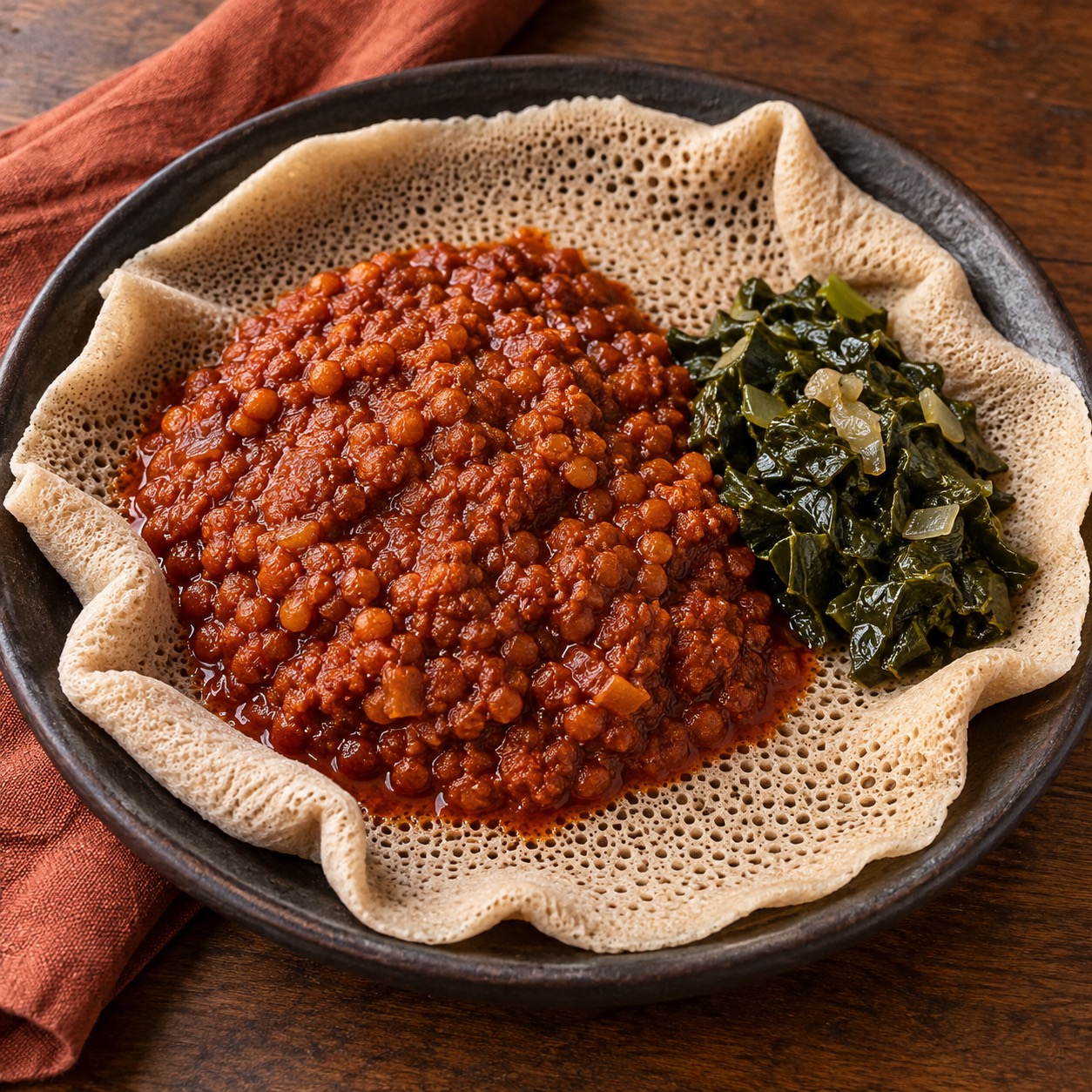
Misir Wot is an Ethiopian red-lentil stew built around the warmth and complexity of berbere. This accessible home version uses split red lentils, which are easy to find but cook faster than whole red lentils, so the method deliberately protects their texture.
The decisive steps are patient onions, gently bloomed spice, and hot water added with restraint. The result should be glossy and thick enough to hold a spoon trail—not a thin soup and not a completely smooth purée.
Why this method works
- Softening the large quantity of onion with a little water before adding oil lets it collapse and sweeten without burning at the edges.
- Briefly blooming berbere with tomato paste rounds out the raw spice flavor; low heat and a splash of hot water keep the blend from turning bitter.
- Starting with less hot water gives fast-cooking split lentils room to thicken gradually, so you can stop before the stew becomes soup.
Before you start
Equipment: heavy-bottomed wide pot or deep skillet, wooden spoon, fine grater, and measuring jug.
Rinse the lentils until the water runs mostly clear. Do not soak split lentils for hours; they can disintegrate too quickly.
Berbere heat varies by producer. Begin with 1 tablespoon, then assess before adding more.
Keep 3 3/4 cups (900 ml) water hot. Cold additions repeatedly drop the pot temperature and make cooking less even.
Misir Wot step by step
1. Build the onion base
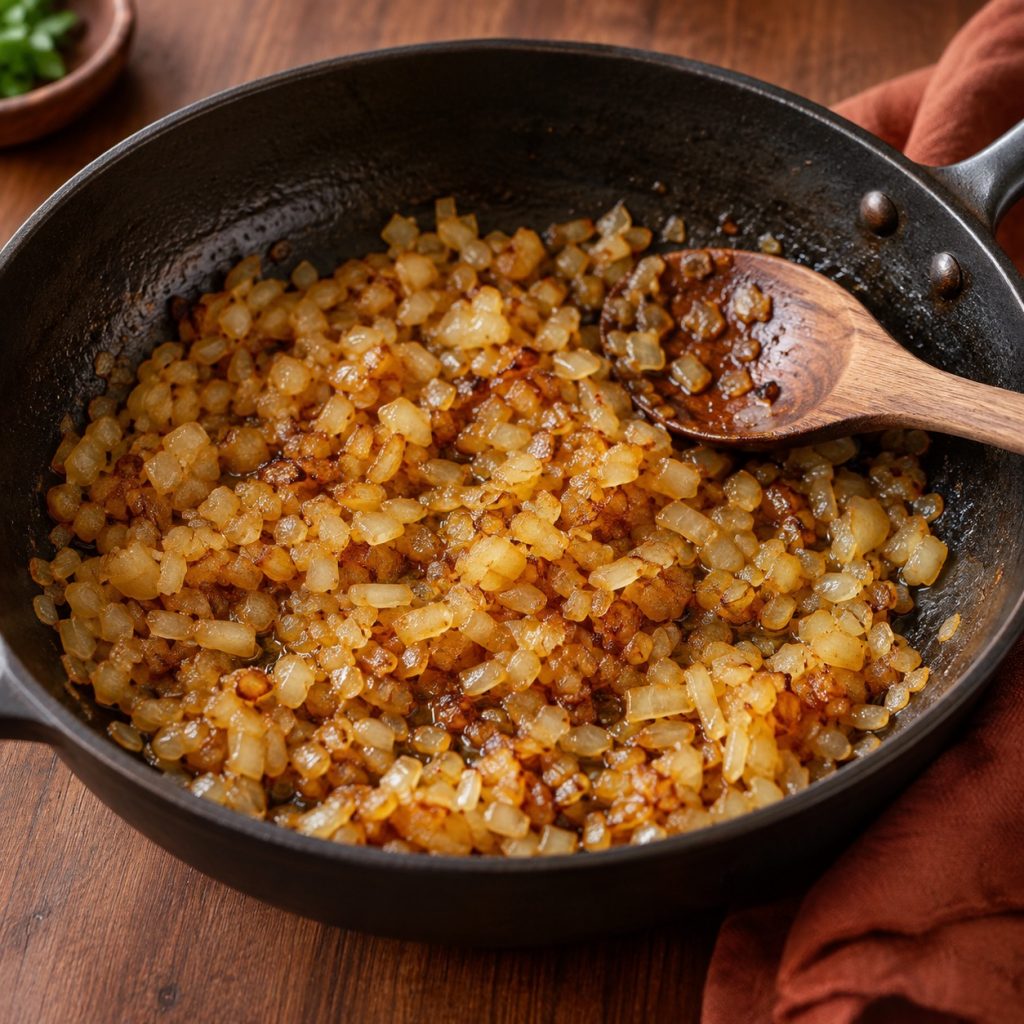
Put the finely chopped onions in a heavy pot. Add 1/4 cup (60 ml) hot water and cook over medium heat for 8 to 10 minutes until collapsed. Add the oil and cook 10 to 12 minutes more, stirring, until the onions are lightly golden and sweet.
2. Bloom the aromatics without scorching
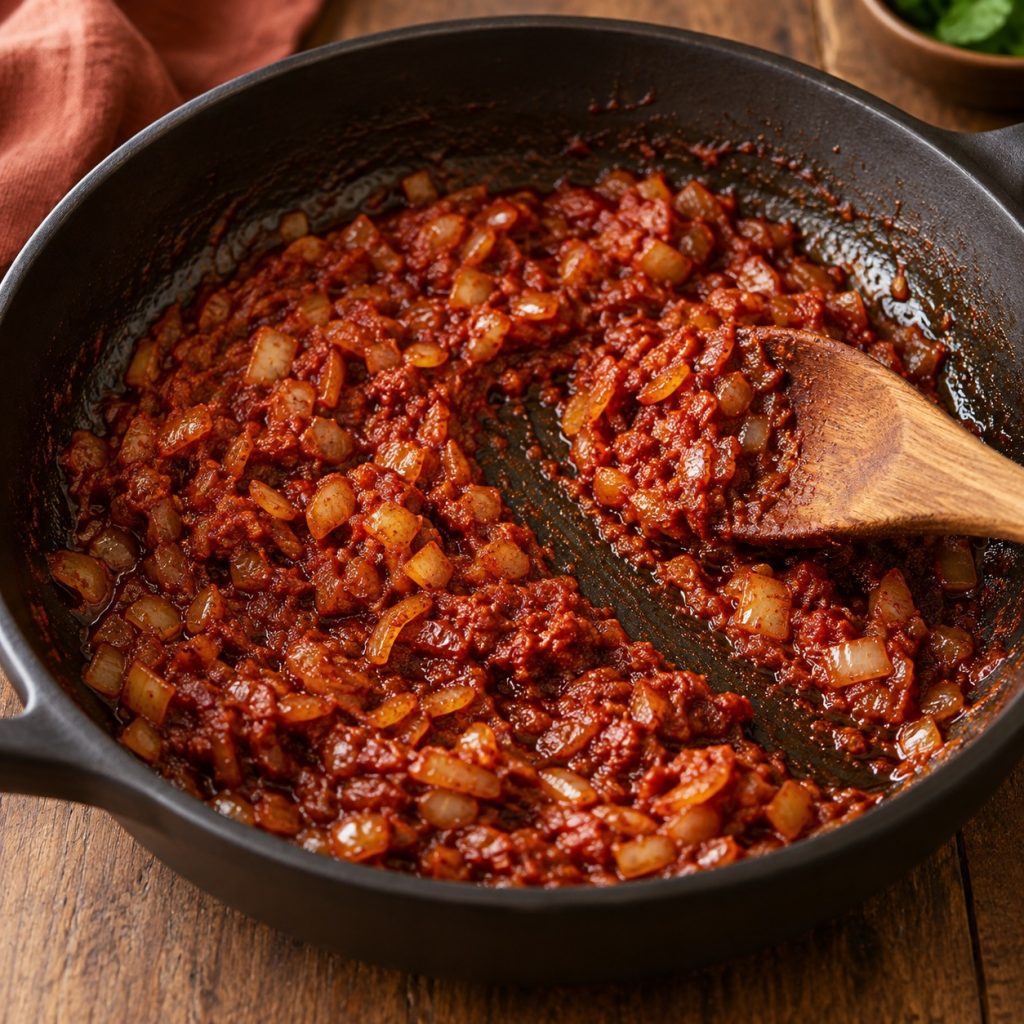
Add garlic and ginger; stir for 1 minute. Add tomato paste and 1 tablespoon berbere. Cook over medium-low heat for 2 to 3 minutes. If the bottom looks dry, add 1 to 2 tablespoons hot water. The mixture should be deep red and fragrant, not blackened.
3. Control the lentil cooking
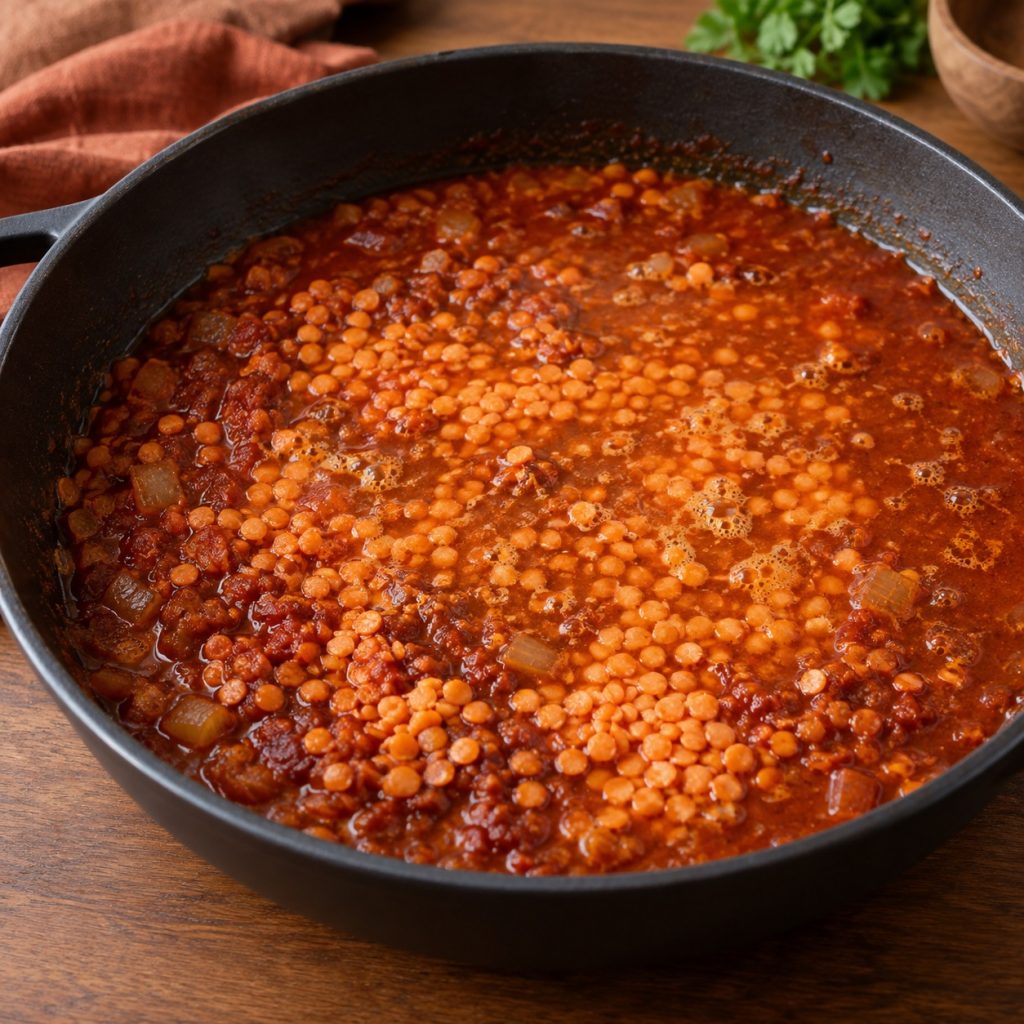
Stir in the rinsed lentils and 3 cups (750 ml) hot water. Bring to a simmer, lower the heat, and cook with the lid ajar for 20 minutes. Stir more often during the final 10 minutes and add the remaining hot water in small amounts only as needed.
4. Finish and rest
Add the salt and cook 5 to 10 minutes more, until the lentils are tender but not completely smooth. When a spoon dragged across the bottom leaves a trail for 2 to 3 seconds, remove from the heat. Rest 10 minutes; loosen with hot water before serving if needed.
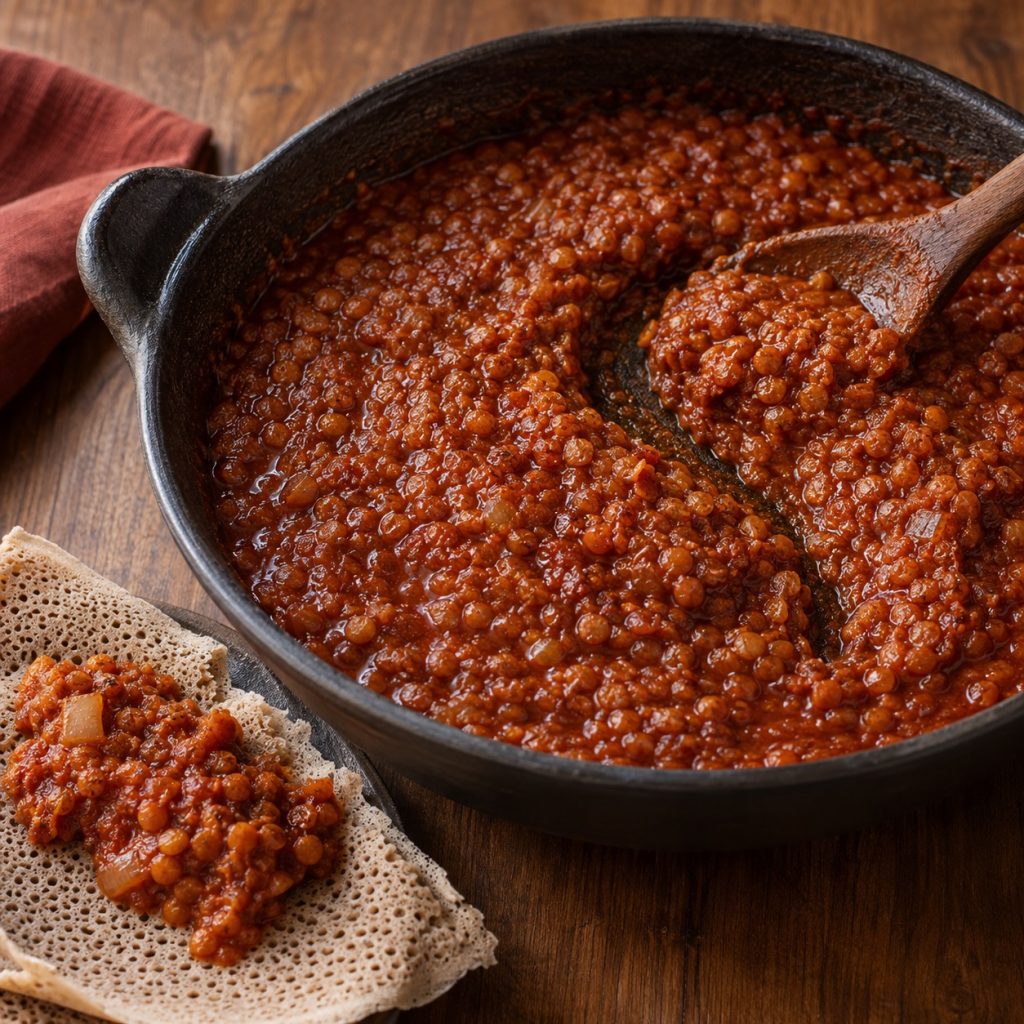
Ethiopian Misir Wot
A thick Ethiopian red-lentil stew with berbere, onions, garlic, and ginger.
Ingredients
- 1 1/2 cups split red lentils — about 300 g, rinsed and drained
- 3 medium yellow onions — about 400 g, very finely chopped
- 3 tbsp neutral oil — or niter kibbeh/ghee if dairy is acceptable
- 4 cloves garlic — crushed
- 1 1/2 tbsp fresh ginger — about 25 g, finely grated
- 2 tbsp tomato paste — about 30 g
- 1-2 tbsp berbere spice blend — to suit its heat level
- 3 3/4 cups hot water — 900 ml, added gradually
- 1 tsp fine salt — or to taste
Instructions
- Soften the onion with 1/4 cup hot water for 8 to 10 minutes; add oil and cook 10 to 12 minutes until lightly golden.
- Cook garlic and ginger 1 minute, then bloom tomato paste and berbere over medium-low heat for 2 to 3 minutes, adding hot water if dry.
- Add lentils and 3 cups hot water. Simmer 20 minutes, stirring often and adding the remaining water gradually as needed.
- Salt and cook 5 to 10 minutes more. Remove when a spoon trail closes slowly; rest 10 minutes before serving.
Notes
- Split red lentils break down faster than whole red lentils; begin checking the texture closely after 20 minutes.
- If berbere is unavailable, a blend of paprika, cayenne, cumin, coriander, ginger, and a small amount of fenugreek makes an adaptation, but it will not taste identical to traditional berbere.
- One US cup of dry red lentils weighs roughly 190 to 200 g; weighing is the most reliable approach.
- Cool leftovers within 2 hours. Refrigerate in a covered container for 3 to 4 days or freeze for 2 to 3 months. Reheat leftovers to 165°F/74°C.
- Allergen note: Made with oil, the recipe contains no inherent dairy, egg, or gluten. Niter kibbeh or ghee contains milk; check a packaged berbere blend for cross-contact.
How to read the texture
Misir Wot should sit on the plate without running, yet remain softer than a dry mash. A spoon drawn across the pot leaves a path for a few seconds; some lentil pieces remain visible while the sauce binds them together.
The stew thickens during the 10-minute rest, so turn off the heat when it is just slightly looser than your ideal serving texture.
Common problems and fixes
A bitter edge usually means the spice dried out over high heat. Next time lower the heat and protect the mixture with hot water. If the stew is thin, simmer uncovered while stirring. If it is too thick, use only hot water to loosen it.
If the lentils become completely smooth, the flavor is still useful: thin the batch and serve it as a soup, but do not describe that texture as the same traditional result.
Serving, make-ahead, and leftovers
Injera is the natural partner; plain rice or another flatbread works when injera is unavailable. Lemon-dressed greens or cabbage balance the spice.
The onion base can be cooked a day ahead. Leftover Misir Wot can be loosened into soup or spooned over a baked potato for a quick second meal.
Misir Wot FAQ
Does Misir Wot have to be very hot?
No. Berbere blends vary widely. Start with 1 tablespoon and add more near the end so you can preserve aroma while controlling heat.
Can I use green or brown lentils?
Yes, but the timing and texture change. This method is calibrated for fast-cooking red lentils; firmer lentils require more hot water and a longer simmer.
Why add hot rather than cold water?
Hot water keeps the pot at a steady simmer, helping the lentils cook evenly and the sauce thicken without separating.
Is it good for meal prep?
Yes; the flavors integrate overnight. Cool within 2 hours, refrigerate promptly, and reheat thoroughly before serving.
Leave a Reply