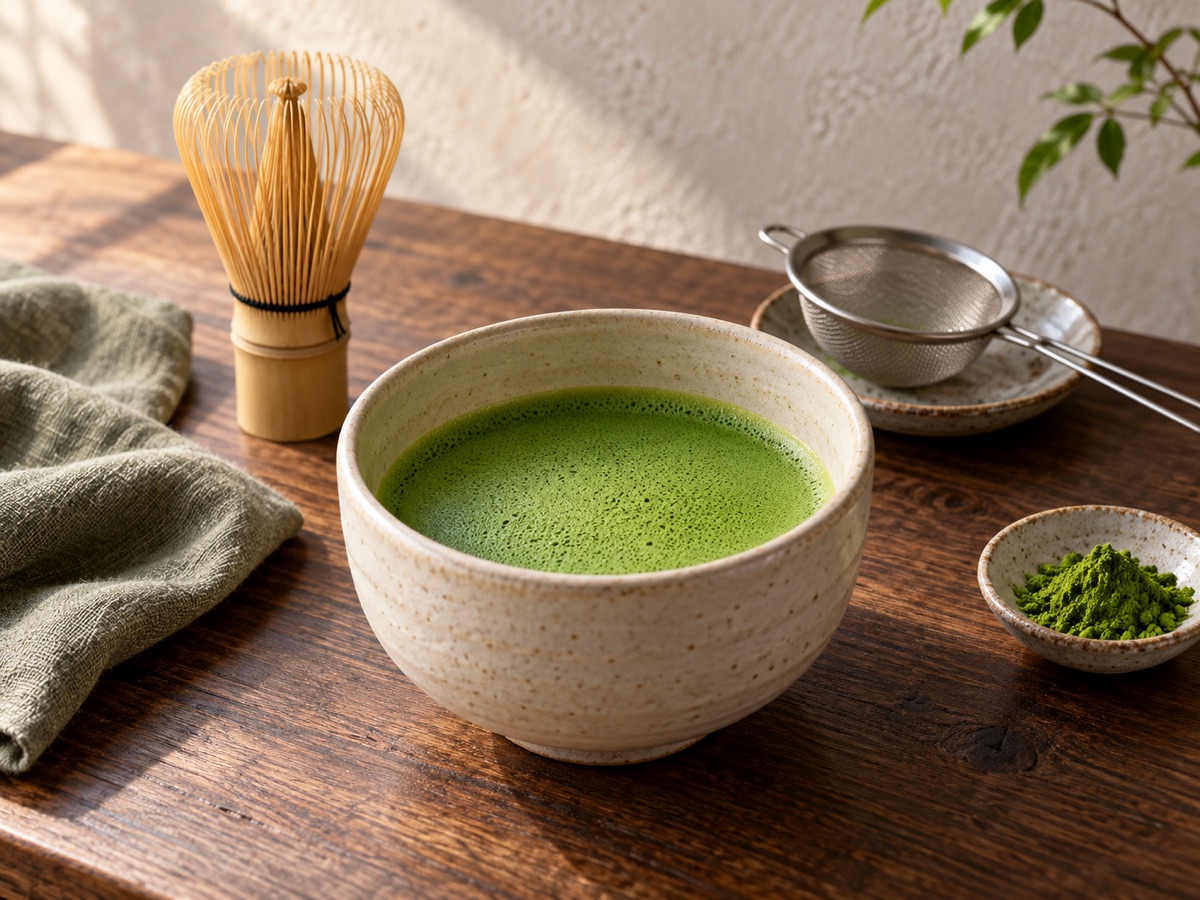
Matcha tea is made by suspending finely milled Japanese green tea directly in water. Because there is no tea bag or leaf to strain out, the cup depends on a sensible dose, water below boiling, and a whisking method that actually disperses the powder.
This practical home method is inspired by thin matcha, or usucha; it is not presented as a complete tea-ceremony procedure. It uses 2 grams of matcha and 60 milliliters of water for one small bowl, with workable alternatives if you do not own a scale or bamboo whisk.
Why this method makes smooth, balanced matcha
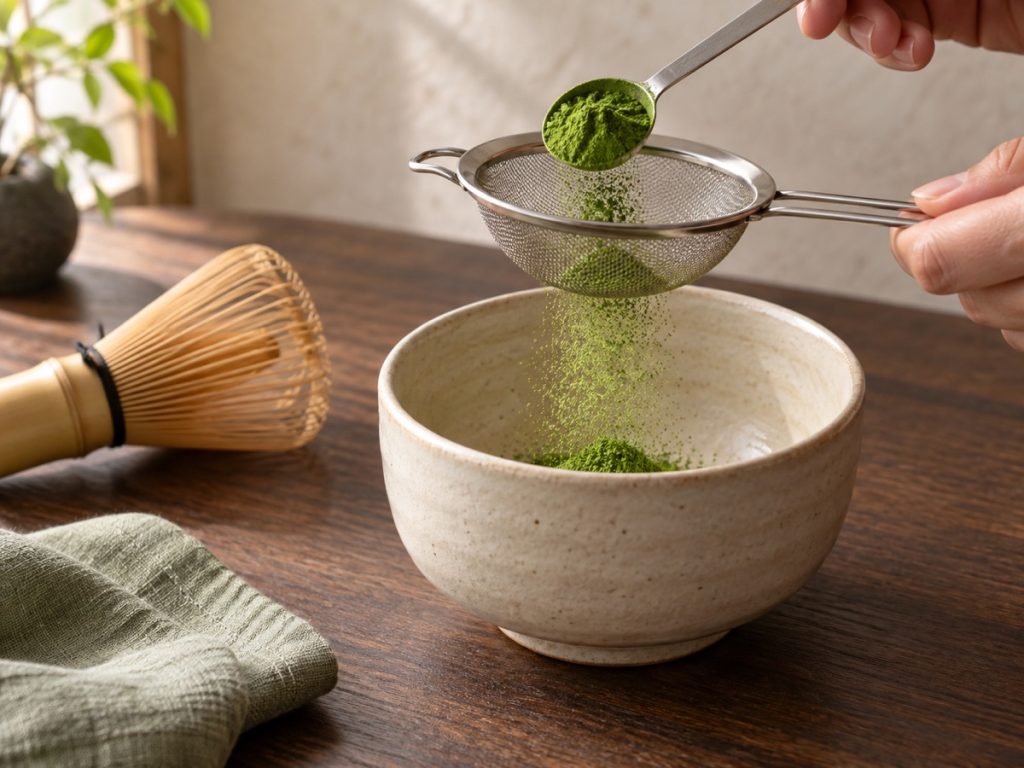
- A fine sieve breaks apart moisture-packed matcha before the water hits it, which is much easier than chasing wet lumps.
- Making a smooth base with the first tablespoon of water prevents dry pockets from floating around the bowl.
- Water at 167–176°F preserves a balanced flavor without the harsh edge boiling water can produce. A fast M motion builds fine foam instead of large bubbles.
Before you start: tools, temperature, and measures
Set out a small wide bowl, fine tea strainer, bamboo matcha whisk or handheld milk frother, and a digital scale if available. A small balloon whisk works too, but use a bowl wide enough for rapid strokes.
Two grams of matcha is about 1 level teaspoon. Sixty milliliters of water is about 1/4 cup. Weighing the powder is more repeatable than scooping.
Without a thermometer, let freshly boiled water sit uncovered for 5–7 minutes or transfer it between cups twice. The exact cooling time depends on the room and cup; the target is hot, not boiling.
How to make matcha tea without clumps
1. Warm the bowl and sift the matcha
Fill the bowl with hot water for 30 seconds, discard it, and dry the bowl completely. Sift 2 grams of matcha into the dry bowl. Press any soft pieces through the strainer with the back of a spoon.
2. Make a smooth base with a little water
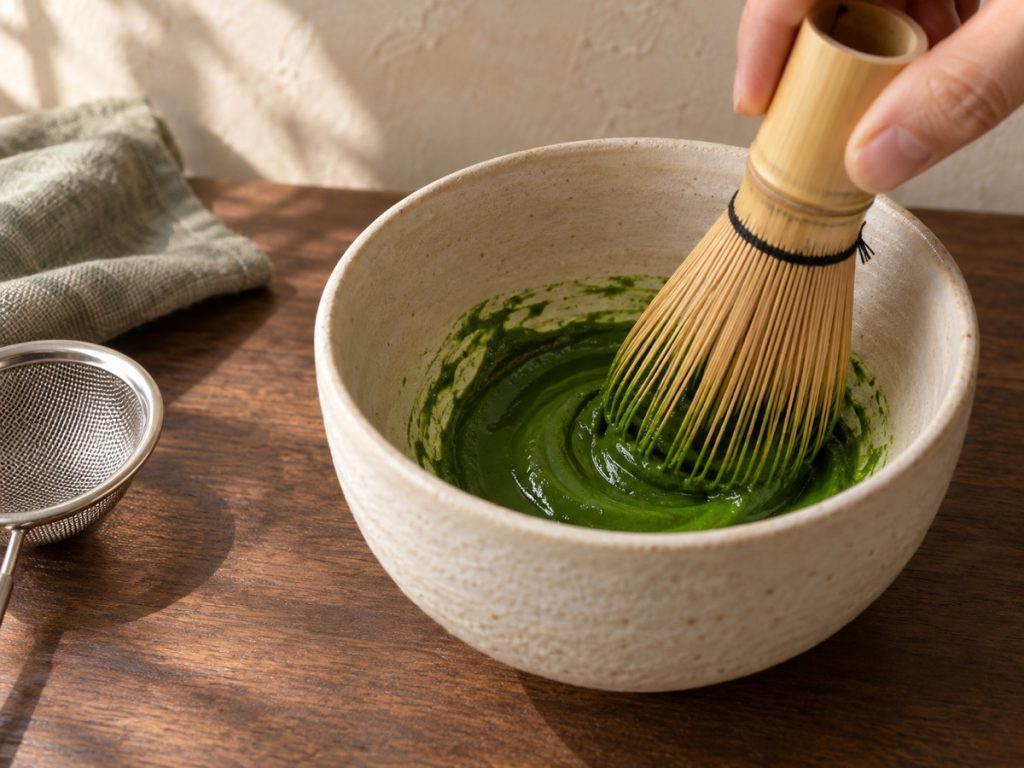
Add 1 tablespoon of the 167–176°F water. Stir slowly with the bamboo whisk for about 10 seconds until no dry pockets remain. The mixture should look glossy and fluid rather than thick or grainy.
3. Add the remaining water and whisk in an M
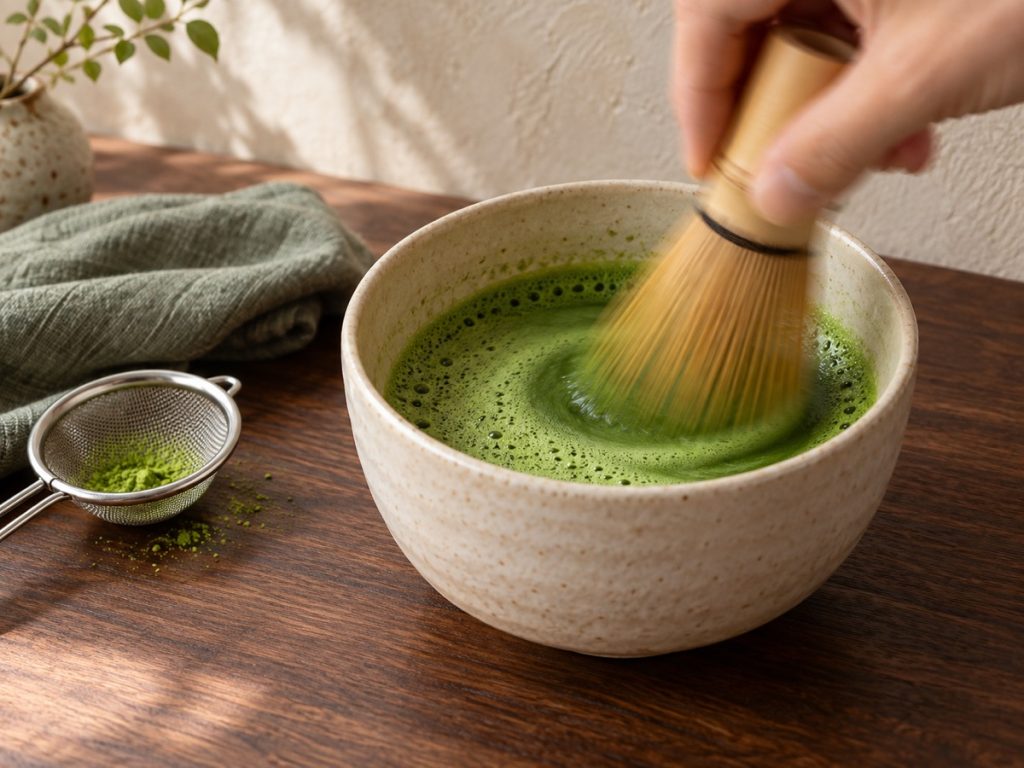
Add the remaining 3 tablespoons water. Steady the bowl with one hand and whisk briskly from the wrist in an M or W motion for 15–20 seconds. Keep the tines just off the bottom and use short strokes near the surface rather than circles.
4. Refine the foam and drink right away
If large bubbles remain, lift the whisk slightly and whisk gently for another 3–5 seconds. Trace one circle over the surface and lift the whisk from the center. Serve immediately when the tea is lump-free, vivid green, and covered with fine foam.
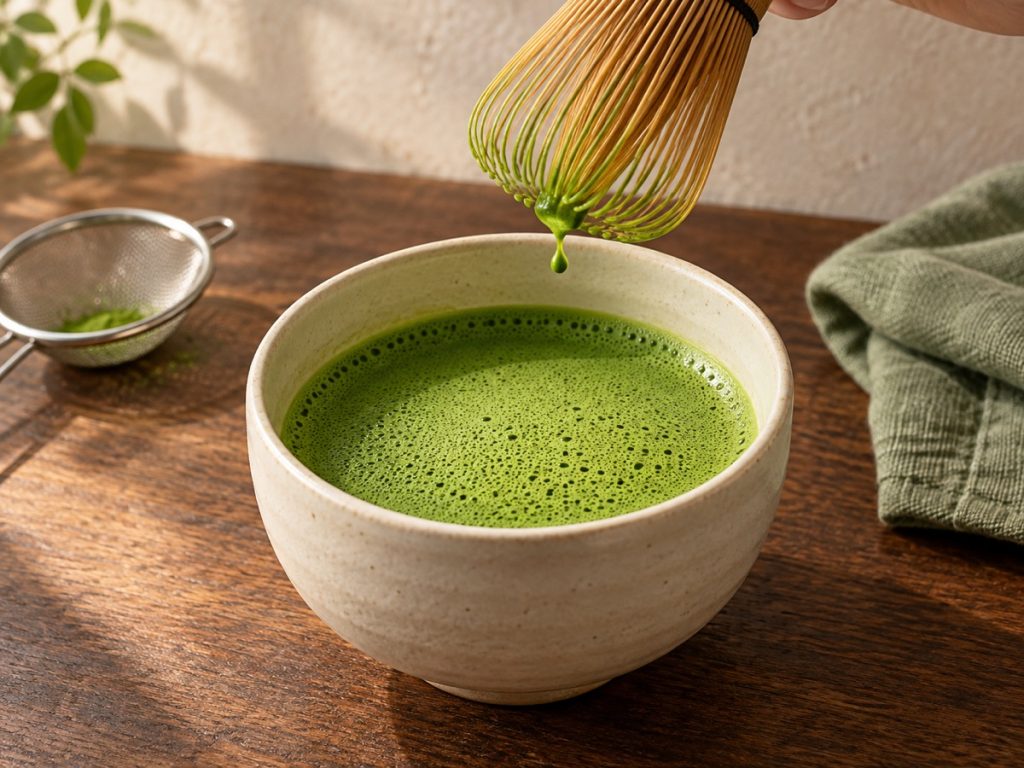
Smooth Hot Matcha Tea
A small bowl of bright, finely foamed matcha made with water below boiling, sifting, and controlled whisking.
Ingredients
- 2 grams plain matcha powder — about 1 level teaspoon; not a sweetened blend
- 1/4 cup filtered water — 60 ml at 167–176°F; divide into 1 tablespoon and the remainder
Instructions
- Warm the bowl with hot water, dry it completely, and sift in 2 grams matcha.
- Add 1 tablespoon water and mix until glossy and fluid with no dry pockets.
- Add the remaining water and whisk rapidly in an M for 15–20 seconds without scraping the bowl.
- Gently refine large bubbles for 3–5 seconds and drink while lump-free and finely foamed.
Notes
- Properly mixed matcha is fluid, not thick, with tiny even bubbles. If it is too intense, whisk in 1–2 tablespoons more hot water.
- Without a bamboo whisk, use a handheld frother for 10–15 seconds. A tightly sealed jar can work with hot but not boiling water; use caution because hot liquids can cause pressure and burns.
- Matcha naturally contains caffeine, and the amount varies by product and dose. Caffeine-sensitive readers should check the label; during pregnancy, count it toward the daily limit advised by a healthcare professional.
- Plain matcha contains none of the major common allergens, but check flavored mixes and milk additions. Drink it fresh; do not store, reheat, or freeze prepared matcha.
What should properly whisked matcha look and taste like?
The tea should be vivid green, fluid, and free of sandy lumps, with a fine layer of small bubbles rather than large soap-like foam. Strong bitterness usually points first to overly hot water, then too much powder or stale, low-quality matcha.
Common matcha problems and fixes
For clumps, sift into a dry bowl and avoid pouring in all the water at once. If no foam forms, the vessel may be too narrow, the whisk too deep, or the motion circular. Some settling is normal because matcha is suspended leaf powder; swirl gently before drinking.
How to make matcha without a bamboo whisk
A handheld milk frother is the easiest substitute. You can shake warm-hot water in a leakproof jar for about 15 seconds, but never shake boiling water. A small kitchen whisk also works in a wide bowl with quick, short strokes.
Storage and serving ideas
Keep matcha powder airtight and protected from moisture, light, heat, and strong odors; follow the package directions and use it while fresh after opening. Prepared matcha separates and loses aroma, so drink it immediately. For a longer tea add 1/4–1/3 cup more hot water; for a latte, add 1/2–2/3 cup warm milk separately.
Frequently asked questions
What water temperature is best for matcha?
Start around 167–176°F. Boiling water is not a safety problem, but it can make the tea taste harsher and more bitter. Let boiled water cool for several minutes if you do not have a thermometer.
Why is my matcha clumpy?
The ultrafine powder packs together with moisture. Sift into a dry bowl, make a smooth base with 1 tablespoon water, then add the rest.
Can I make matcha without a bamboo whisk?
Yes. Use a handheld frother, mini balloon whisk, or leakproof jar. Do not shake boiling water in a sealed jar.
Does matcha contain caffeine?
Yes. The amount varies with the product and dose. Check the package and use a smaller serving if you are sensitive to caffeine.
Why does matcha settle at the bottom?
Matcha is finely ground leaf suspended in water rather than a fully dissolved drink. Natural settling is expected; drink promptly or swirl gently to redistribute it.
Leave a Reply