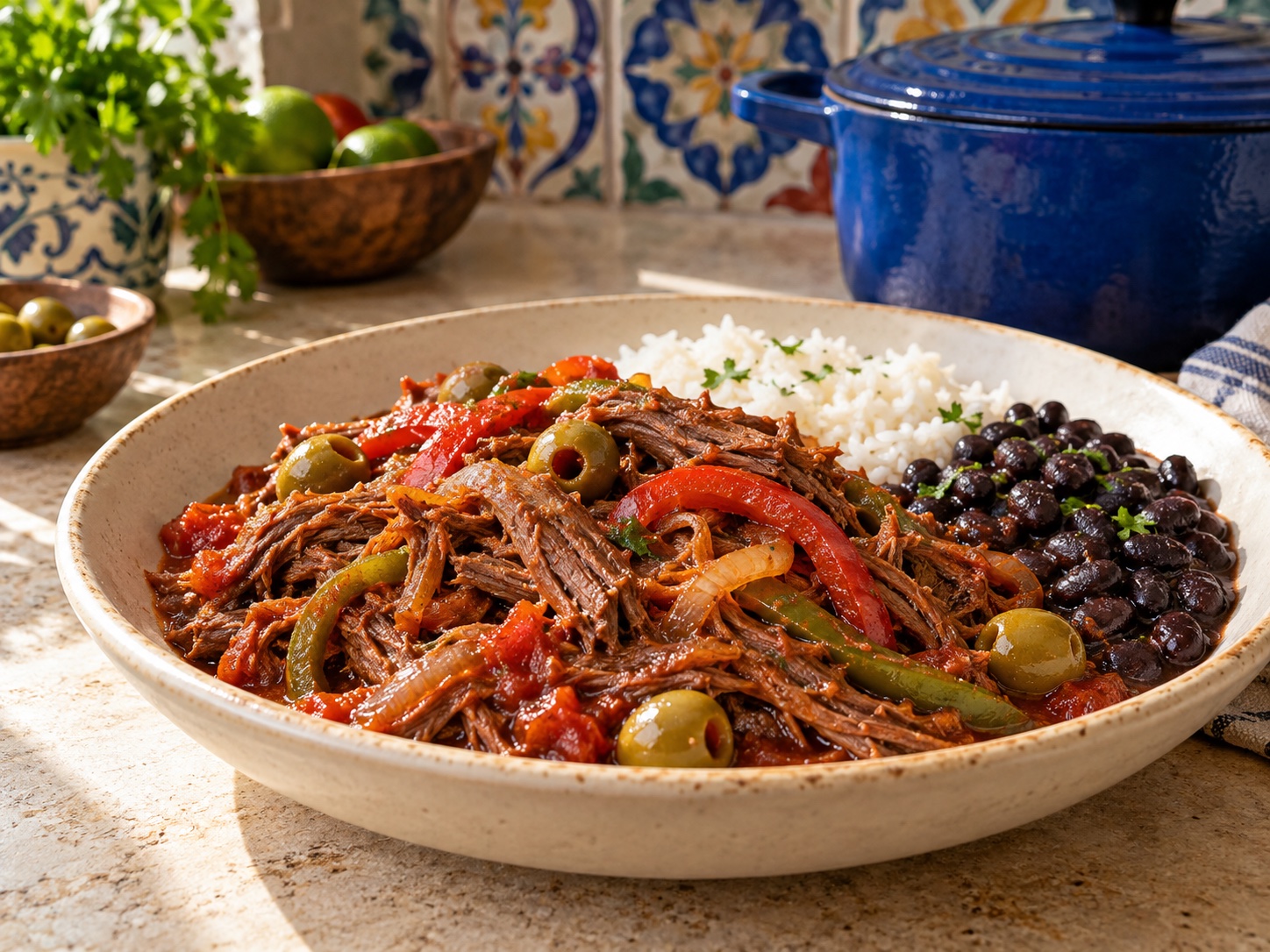
Ropa vieja has Canary Islands roots and became an emblematic Cuban dish of shredded beef in a tomato-and-pepper sauce.
This practical home version browns the beef, braises it at 325°F for 2½–3 hours, then returns the long shreds to a reduced sauce. It is a reliable adaptation, not a claim of one definitive authentic formula.
Why this method works
- Browning builds roasted depth; deglazing with wine or stock captures the fond.
- A long covered braise converts collagen to gelatin; at about 200–205°F the beef shreds readily.
- Shredding outside the sauce prevents mushiness, while the final uncovered simmer makes sauce cling to every strand.
Before you start
Use a lidded 5–6-quart Dutch oven, tongs, board, two forks, thermometer, and shallow storage containers. Heat oven to 325°F.
Keep raw beef on a separate board and wash hands and surfaces with hot soapy water.
Cut the roast into 2–3 large pieces for even cooking and note the grain so you can pull it into long strands later.
Step-by-step method
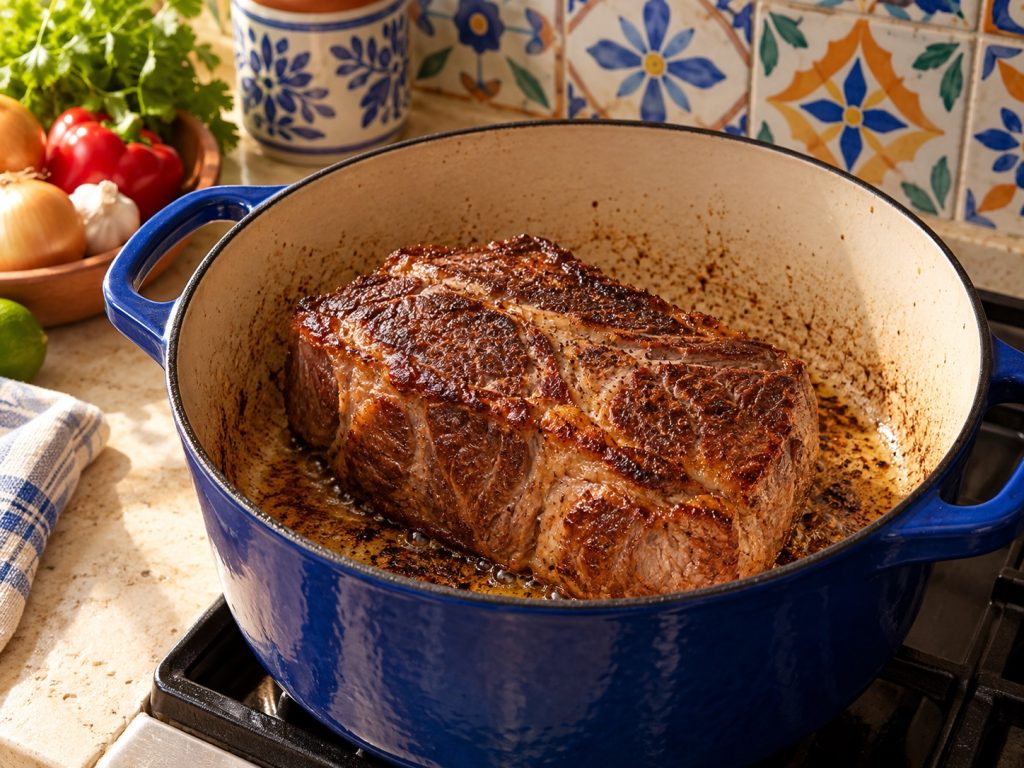
1. Brown the beef deeply
Heat oven to 325°F. Pat beef dry and season with half the salt and pepper. Heat oil over medium-high; brown in batches 3–4 minutes per side until deep brown. Transfer to a plate.
2. Build the vegetable sauce
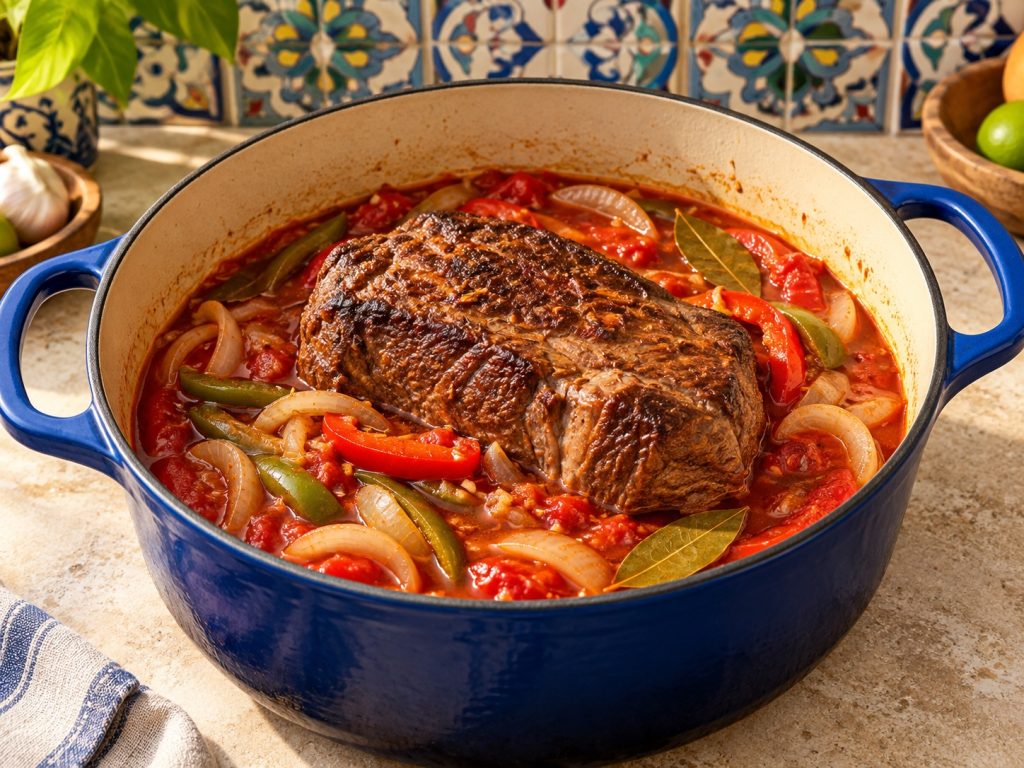
Lower heat to medium. Soften onions and peppers 8 minutes; cook garlic 1 minute. Fry paste, cumin, and oregano 1 minute. Add wine and scrape the fond, then add tomatoes and stock. Return beef, bay, and juices; liquid should reach halfway up.
3. Braise covered until fork-tender
Bring to a simmer, cover, and braise 2½–3 hours, turning every hour. Remove when 200–205°F and yielding easily to a fork. If still firm, cook another 20 minutes.
4. Shred and reduce the sauce
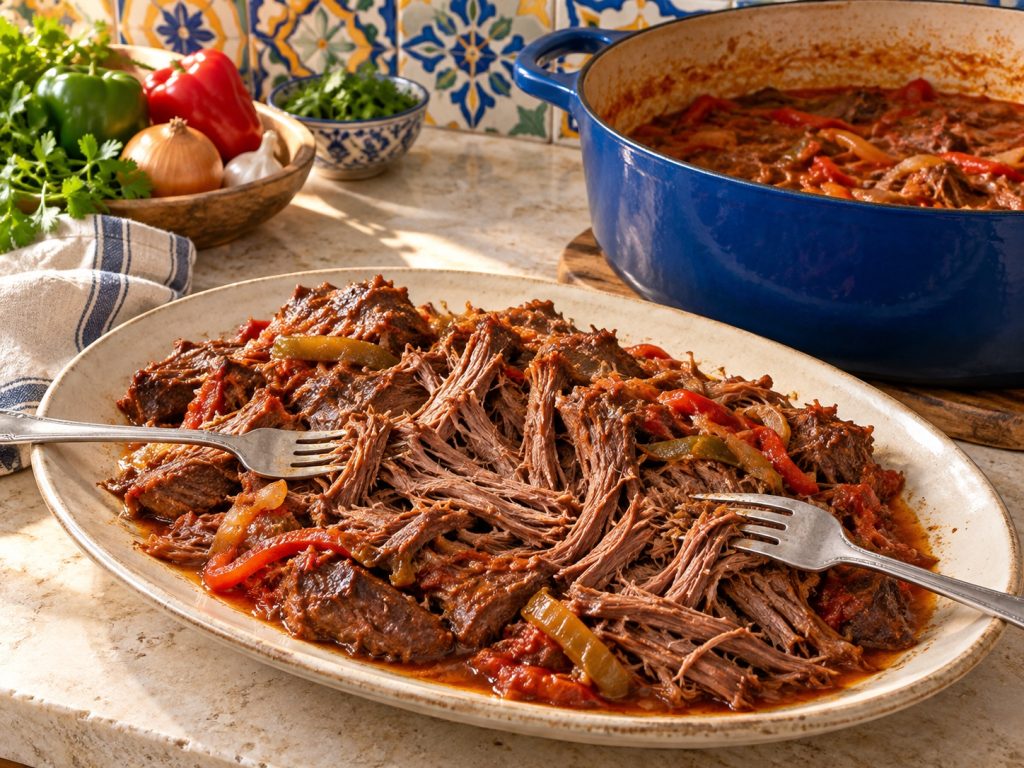
Rest beef 10 minutes, pull into long shreds with two forks, and discard large fat pockets. Remove bay and reduce sauce uncovered 10–15 minutes. Add beef, olives, and capers; simmer 5 minutes until the sauce clings without watery pooling.
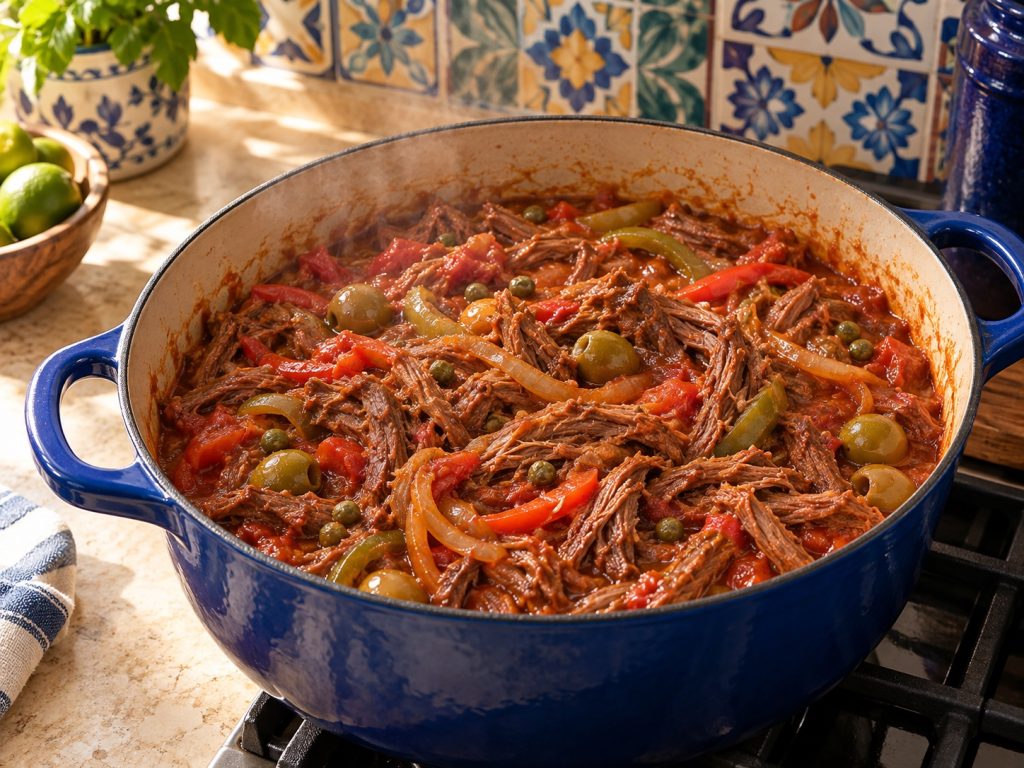
Ropa Vieja
Fork-tender beef braised and shredded into a concentrated tomato-pepper sauce with olives, without dry or stringy meat.
Ingredients
- 1.2 kg beef chuck roast — 2–3 large pieces
- 2 tbsp olive oil
- 2 large onions — thinly sliced
- 1 large red bell pepper — strips
- 1 large green bell pepper — strips
- 5 cloves garlic — minced
- 400 g crushed tomatoes
- 30 g tomato paste
- 500 ml low-sodium beef stock
- 120 ml dry white wine — or more stock
- 2 tsp ground cumin
- 1 tsp dried oregano
- 2 whole bay leaves
- 100 g green olives — sliced
- 20 g capers — optional
- 1½ tsp fine salt
- 1 tsp black pepper
Instructions
- Heat oven to 325°F. Pat beef dry and season with half the salt and pepper. Heat oil over medium-high; brown in batches 3–4 minutes per side until deep brown. Transfer to a plate.
- Lower heat to medium. Soften onions and peppers 8 minutes; cook garlic 1 minute. Fry paste, cumin, and oregano 1 minute. Add wine and scrape the fond, then add tomatoes and stock. Return beef, bay, and juices; liquid should reach halfway up.
- Bring to a simmer, cover, and braise 2½–3 hours, turning every hour. Remove when 200–205°F and yielding easily to a fork. If still firm, cook another 20 minutes.
- Rest beef 10 minutes, pull into long shreds with two forks, and discard large fat pockets. Remove bay and reduce sauce uncovered 10–15 minutes. Add beef, olives, and capers; simmer 5 minutes until the sauce clings without watery pooling.
Notes
- At 200–205°F the beef separates without resistance; strands stay moist, never mushy. The finished sauce coats a spoon and a dragged line remains visible briefly.
- Brisket or round roast can replace chuck; lean cuts dry faster, so keep them in sauce. Replace wine with equal stock. 500 ml is about 2 cups; 120 ml is ½ cup. Olives and capers are salty, so adjust final seasoning last. No major inherent allergen; check packaged stock.
- Cool in shallow containers within 2 hours. Refrigerate 3–4 days or freeze in sauce for 3 months. Thaw in the refrigerator; reheat with a splash of stock until 165°F throughout.
Texture and doneness cues
At 200–205°F the beef separates without resistance; strands stay moist, never mushy. The finished sauce coats a spoon and a dragged line remains visible briefly.
Mistakes, substitutions, and measurements
Brisket or round roast can replace chuck; lean cuts dry faster, so keep them in sauce. Replace wine with equal stock. 500 ml is about 2 cups; 120 ml is ½ cup. Olives and capers are salty, so adjust final seasoning last. No major inherent allergen; check packaged stock.
Serving, storage, and allergens
Cool in shallow containers within 2 hours. Refrigerate 3–4 days or freeze in sauce for 3 months. Thaw in the refrigerator; reheat with a splash of stock until 165°F throughout.
Frequently asked questions
Why will the beef not shred?
It has not cooked long or hot enough; wait for 200–205°F and fork tenderness.
Why is the sauce watery?
It stayed covered too long; remove the beef and reduce uncovered 10–15 minutes.
Why is the meat dry?
A very lean cut or holding it outside the sauce causes dryness; choose chuck/brisket and return shreds immediately.
Leave a Reply