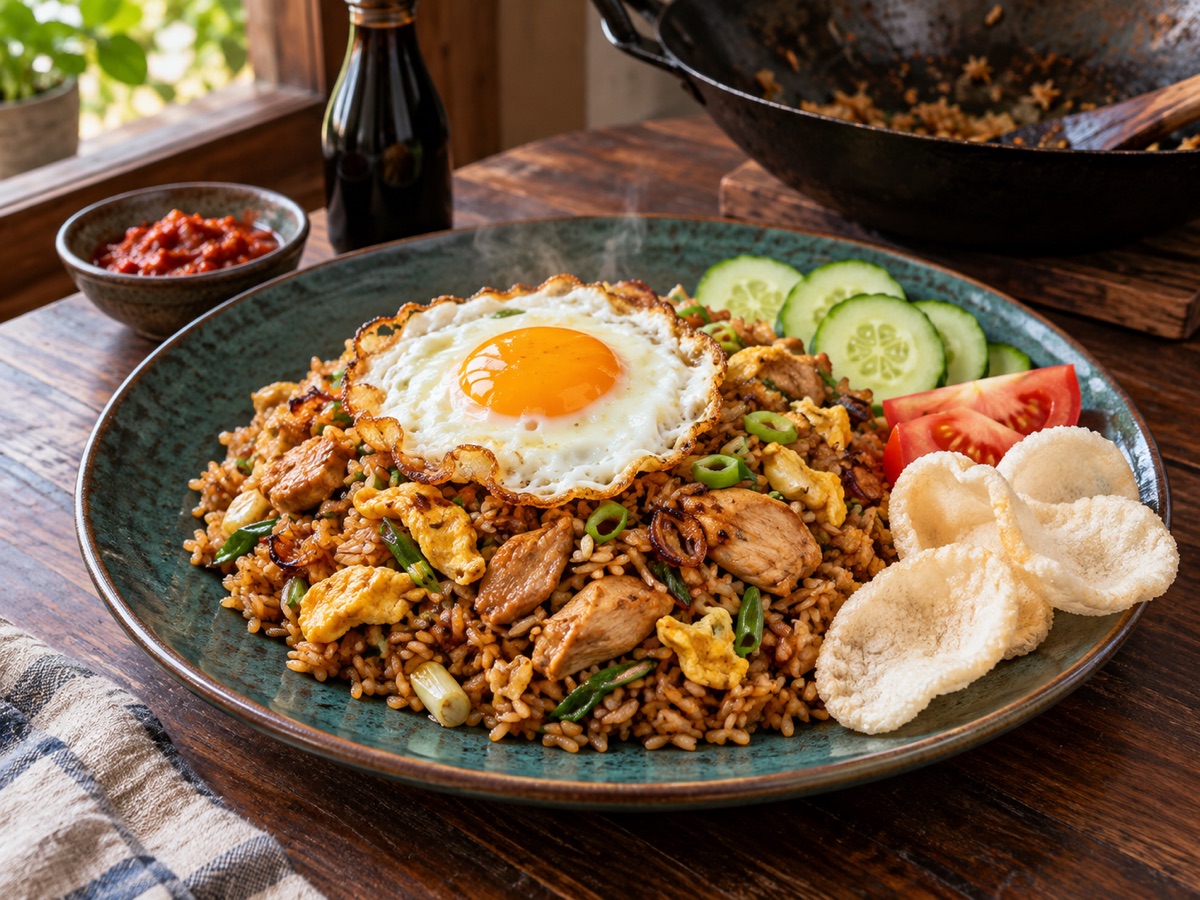
Nasi goreng is a family of Indonesian fried-rice dishes rather than one fixed national formula; regional and household versions vary. Kecap manis, an aromatic shallot-garlic-chile paste, and previously cooked rice are common anchors.
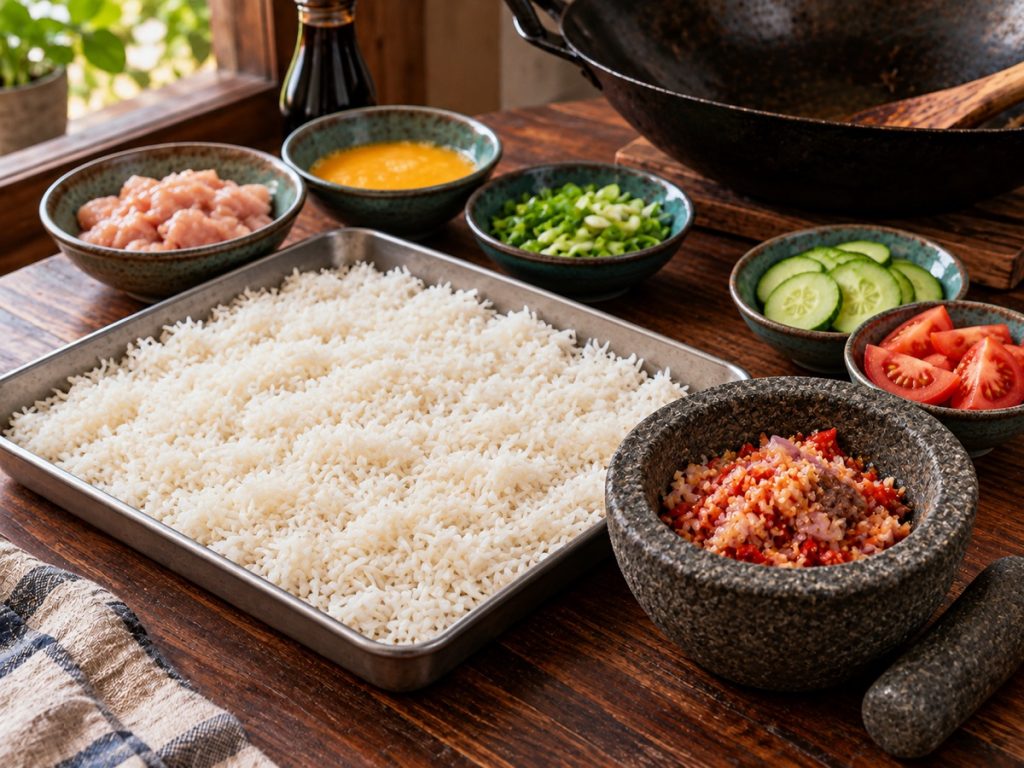
This chicken version does not require rice left overnight. Rapidly cooling freshly cooked rice on a shallow tray and refrigerating it within two hours gives the same dry-grain advantage safely.
Why this method works
- Cold, surface-dry rice takes on oil and sauce in a thin film instead of steaming into a clump.
- Browning chicken first to 165°F prevents crowding and leaves flavorful fond for the rice.
- Pouring kecap manis around the hot wok edge briefly caramelizes its sugar; tossing quickly colors grains without making them sticky.
Before you start
Prepare a 14-inch wok or your widest skillet, mortar or mini processor, spatula, shallow tray, and instant-read thermometer. Measure everything before heating the pan.
Do not use cooked rice left at room temperature beyond two hours. Spread fresh rice less than ¾ inch deep on a tray and refrigerate within two hours.
Terasi gives characteristic fermented seafood depth and is optional. Without it the dish is still workable but is a milder home adaptation.
Step-by-step method
1. Cool the rice and make the aromatic paste
Break cold rice apart on a tray with your fingers; leave no large lumps. Pound shallot, garlic, chiles, and optional terasi into a coarse thick paste. Mix kecap manis and soy sauce in a small bowl.
2. Brown chicken and softly scramble eggs
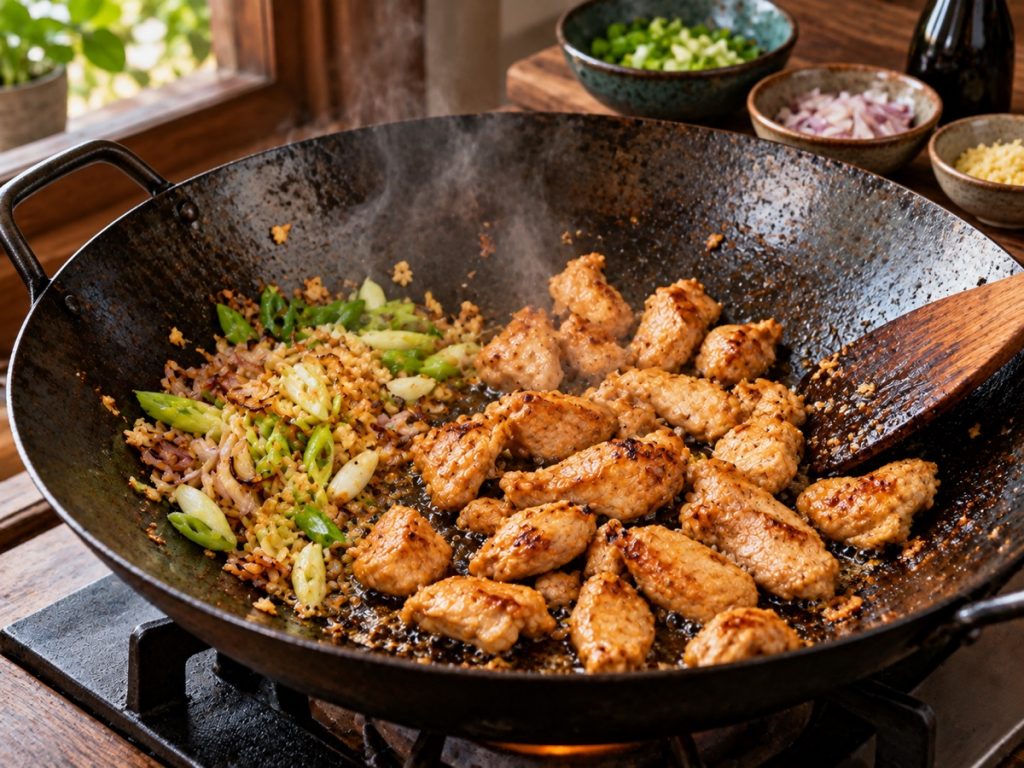
Heat the wok over high. Add 1 tablespoon/15 ml oil and chicken in one layer; cook 5–7 minutes until browned and the thickest piece reaches 165°F. Remove. Beat 2 eggs and softly scramble them in another teaspoon/5 ml oil; remove beside the chicken.
3. Fry rice over high heat with sauces
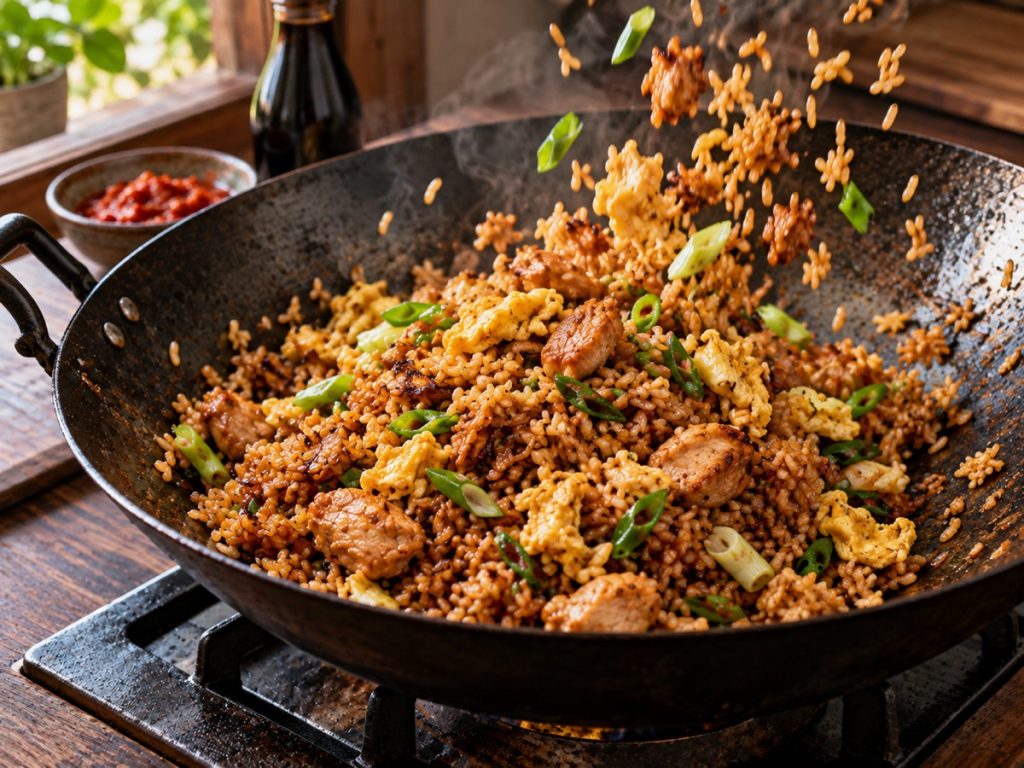
Heat another tablespoon/15 ml oil. Fry the aromatic paste 60–90 seconds until mellow. Add rice and toss without mashing for 3 minutes. Pour sauces around the hot edge; return chicken and scrambled egg, then toss 2–3 minutes until grains are dark, separate, and steaming hot. Add white pepper and most scallions.
4. Serve with fried eggs and fresh garnishes
Wipe the wok and fry the remaining 4 eggs in the last 2 teaspoons/10 ml oil until whites are fully set and edges crisp. Divide rice among four plates and add an egg, cucumber, tomato, remaining scallion, and optional prawn crackers. Taste before adding any salt.
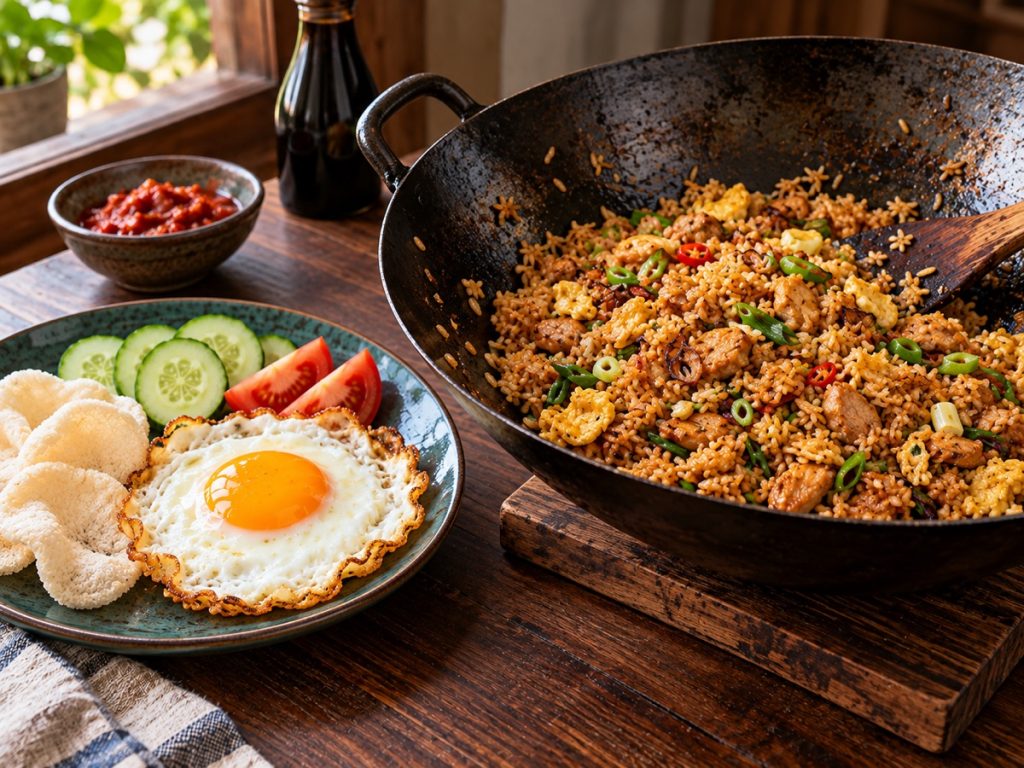
Nasi Goreng Recipe
Indonesian fried rice with cold grains, kecap manis, aromatic paste, 165°F chicken, egg, and a dry glossy wok finish.
Ingredients
- 600 g cold cooked jasmine rice — grains separated
- 300 g boneless skinless chicken thighs — ½-inch pieces
- 6 large eggs — 2 for rice, 4 for serving
- 100 g shallots or red onion — chopped
- 3 cloves garlic
- 1–2 red chiles — to taste
- 5 g terasi shrimp paste — optional
- 45 ml kecap manis
- 15 ml light soy sauce
- 45 ml neutral oil — divided
- 3 scallions — thinly sliced
- ½ tsp ground white pepper
- 1 small cucumber — sliced
- 2 medium tomatoes — cut into wedges
- 60 g prawn crackers — optional
Instructions
- Break cold rice apart on a tray with your fingers; leave no large lumps. Pound shallot, garlic, chiles, and optional terasi into a coarse thick paste. Mix kecap manis and soy sauce in a small bowl.
- Heat the wok over high. Add 1 tablespoon/15 ml oil and chicken in one layer; cook 5–7 minutes until browned and the thickest piece reaches 165°F. Remove. Beat 2 eggs and softly scramble them in another teaspoon/5 ml oil; remove beside the chicken.
- Heat another tablespoon/15 ml oil. Fry the aromatic paste 60–90 seconds until mellow. Add rice and toss without mashing for 3 minutes. Pour sauces around the hot edge; return chicken and scrambled egg, then toss 2–3 minutes until grains are dark, separate, and steaming hot. Add white pepper and most scallions.
- Wipe the wok and fry the remaining 4 eggs in the last 2 teaspoons/10 ml oil until whites are fully set and edges crisp. Divide rice among four plates and add an egg, cucumber, tomato, remaining scallion, and optional prawn crackers. Taste before adding any salt.
Notes
- Rice grains are deep brown and glossy but separate, with no wet sauce pooling in the wok. Chicken reaches 165°F; the serving egg white is fully set while the yolk may stay soft.
- Mushy rice usually means warm rice or an overcrowded pan; fry in two batches. If kecap manis is unavailable, simmer 2 tablespoons soy sauce with 2 tablespoons/25 g brown sugar for 2 minutes and cool; the flavor is not identical. Firm tofu can replace chicken after pressing and browning well. Terasi may be omitted. 600 g cooked rice is about 4 US cups.
- Cool cooked rice and leftover nasi goreng in a wide shallow container within 2 hours and refrigerate 3–4 days. Reheat once until steaming and 165°F throughout. Do not try to rescue rice left at room temperature beyond two hours. Contains egg and soy; terasi and prawn crackers contain shellfish, and sauces may contain wheat/gluten.
Texture and doneness cues
Rice grains are deep brown and glossy but separate, with no wet sauce pooling in the wok. Chicken reaches 165°F; the serving egg white is fully set while the yolk may stay soft.
Mistakes, substitutions, and measurements
Mushy rice usually means warm rice or an overcrowded pan; fry in two batches. If kecap manis is unavailable, simmer 2 tablespoons soy sauce with 2 tablespoons/25 g brown sugar for 2 minutes and cool; the flavor is not identical. Firm tofu can replace chicken after pressing and browning well. Terasi may be omitted. 600 g cooked rice is about 4 US cups.
Serving, storage, and allergens
Cool cooked rice and leftover nasi goreng in a wide shallow container within 2 hours and refrigerate 3–4 days. Reheat once until steaming and 165°F throughout. Do not try to rescue rice left at room temperature beyond two hours. Contains egg and soy; terasi and prawn crackers contain shellfish, and sauces may contain wheat/gluten.
Frequently asked questions
Why should rice be cold for nasi goreng?
Cold rice has a drier surface and firmer grains, so it takes sauce over high heat without turning mushy.
Can I use freshly cooked rice?
Yes. Spread it thinly on a shallow tray and refrigerate within two hours until completely cold.
Is kecap manis the same as soy sauce?
No. Kecap manis is darker, sweet, and syrupy; ordinary soy sauce alone does not provide the same caramel flavor.
Leave a Reply