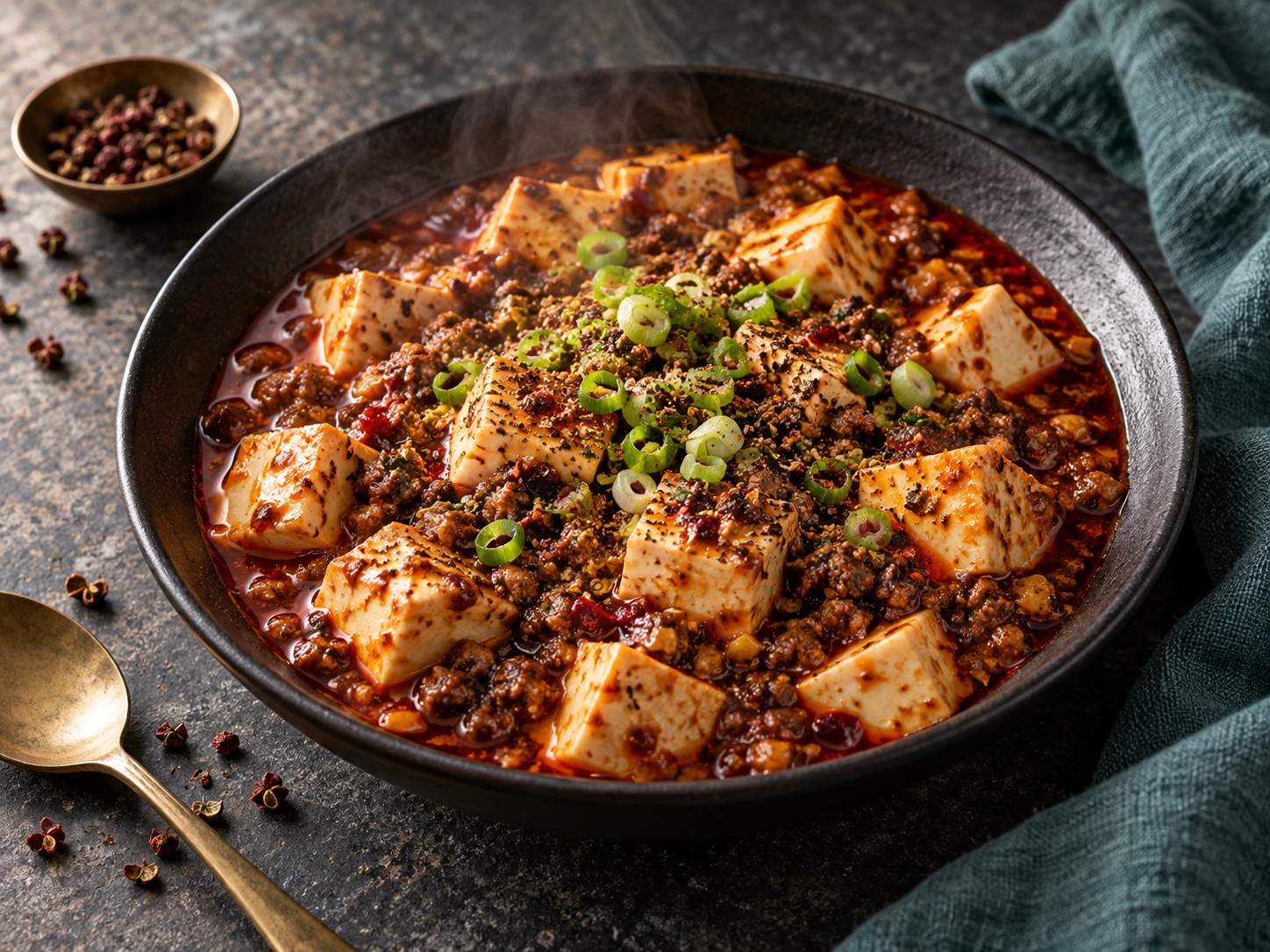
Mapo Tofu is closely associated with Chengdu and Sichuan cooking, combining tofu, minced meat, fermented broad-bean chili paste and fragrant Sichuan pepper. This home-kitchen version keeps that core profile while giving precise cues for ingredients commonly sold outside China.
Three details prevent the usual problems: warm the tofu in barely simmering water, fry the doubanjiang until the oil turns red, and add the starch slurry in stages. The cubes stay intact and the sauce becomes silky rather than gluey.
Why this method works
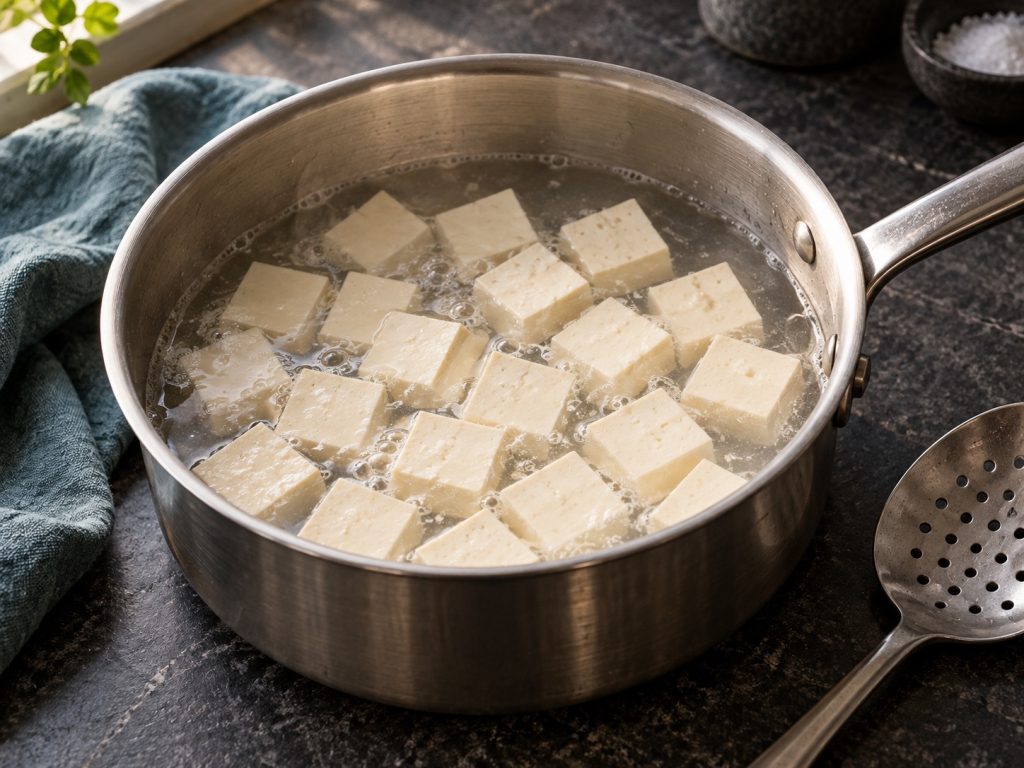
- A gentle 8-minute blanch firms the tofu surface so it tolerates careful movement in the wok.
- Briefly frying doubanjiang mellows its raw fermented edge and releases the red, aromatic oil that flavors the sauce.
- Adding slurry in two or three rounds lets you stop as soon as the sauce coats a spoon in a thin glossy film.
Equipment and preparation
Use a wok or 12-inch skillet, a small saucepan, slotted spoon, sharp knife and small mixing bowl. Keep the tofu water below a hard boil.
Pixian doubanjiang varies in salt and heat. Do not salt the dish at the start. If fermented black beans are unavailable, use 1 extra teaspoon doubanjiang; the flavor will be less layered.
Cook the ground beef to 160°F/71°C. Move the tofu by gently shaking the pan instead of mashing it with a spatula.
Step-by-step Mapo Tofu
1. Firm the tofu
Cut tofu into 1-inch cubes. Bring lightly salted water just below a simmer and hold the tofu in it for 8 minutes without vigorous bubbling. Lift with a slotted spoon and drain for 5 minutes. Toast the Sichuan pepper for 30–45 seconds until fragrant, then grind.
2. Brown the beef and aromatics
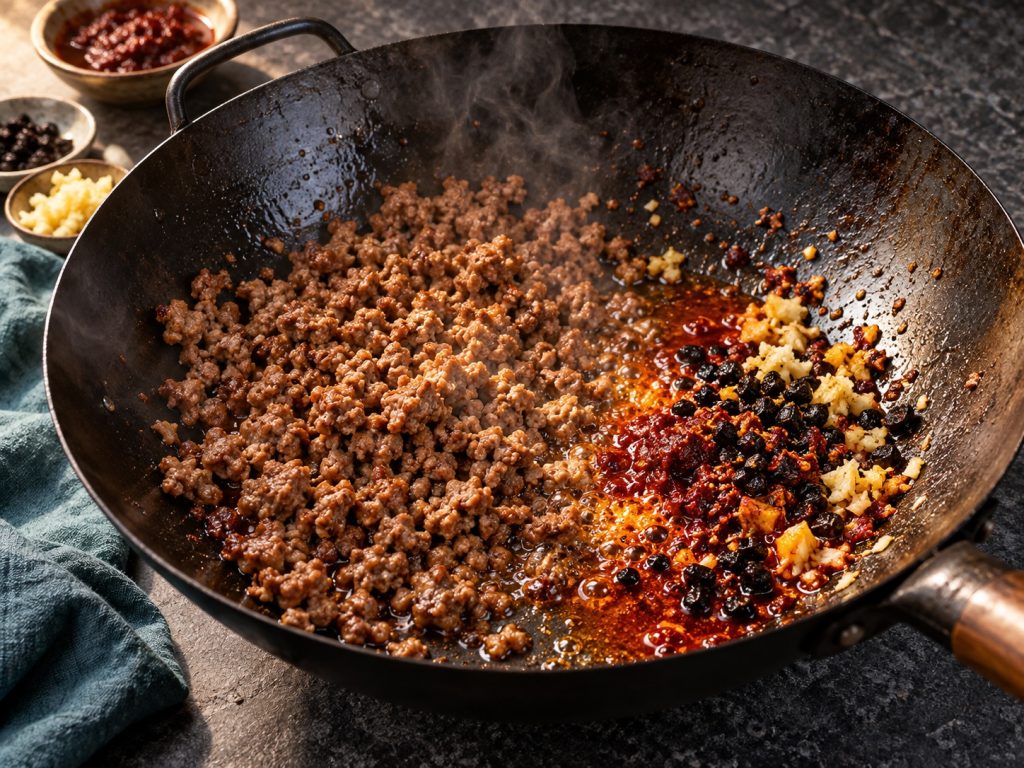
Heat the wok over medium-high. Add 1 tbsp oil and the beef; crumble and brown for 5–6 minutes until it reaches 160°F/71°C. Push aside. Add the remaining oil, doubanjiang and black beans; fry 60–90 seconds until the oil turns red. Stir in garlic, ginger and half the ground pepper for 30 seconds.
3. Simmer the tofu gently
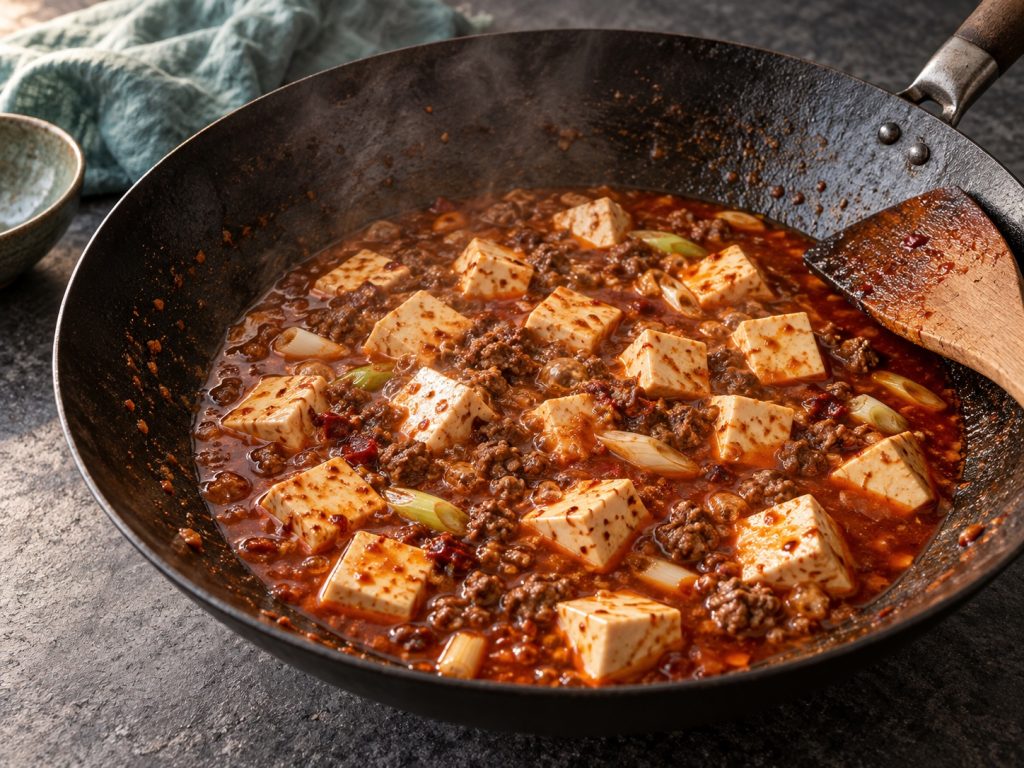
Add stock, soy sauce, sugar and scallion whites; simmer 2 minutes. Add tofu and coat it by gently shaking the pan instead of stirring hard. Maintain small bubbles for 5 minutes.
4. Thicken in stages
Stir the slurry again. Drizzle in one third and cook 30 seconds; repeat once or twice only until the sauce looks glossy and lightly coats a spoon. Finish with scallion greens, remaining Sichuan pepper and optional chili oil.
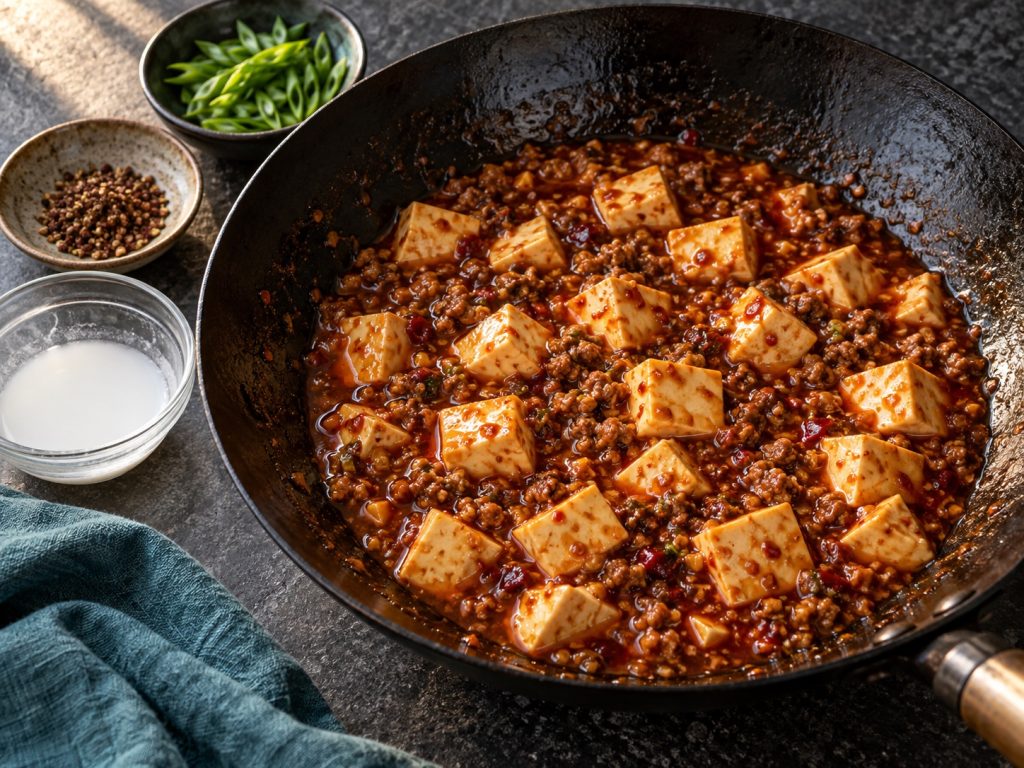
Sichuan-Style Mapo Tofu
Silky, glossy Mapo Tofu with intact cubes, properly fried doubanjiang, browned beef and fragrant Sichuan pepper.
Ingredients
- 450 g medium-firm tofu — 1 lb, cut into 1-inch cubes; do not use silken tofu
- 150 g ground beef — 5.3 oz, about 85% lean
- 2 tbsp Pixian doubanjiang — about 35 g; fermented broad-bean chili paste
- 1 tbsp fermented black beans — rinsed and roughly chopped
- 2 tbsp neutral oil — canola, sunflower or peanut
- 2 cloves garlic — finely chopped
- 15 g fresh ginger — about 1 tbsp, finely chopped
- 2 tsp Sichuan peppercorns — toasted until fragrant, ground and divided
- 240 ml unsalted chicken or vegetable stock — 1 cup
- 1 tbsp light soy sauce — reduce if the doubanjiang is very salty
- 1 tsp sugar — to balance heat and salt
- 2 tsp cornstarch — mixed with 2 tbsp cold water
- 3 scallions white and green parts separated
- 1 tsp chili oil — optional, for serving
Instructions
- Cut tofu into 1-inch cubes; hold in barely simmering salted water for 8 minutes and drain. Toast and grind the Sichuan pepper.
- Brown beef to 160°F/71°C. Fry doubanjiang and black beans until the oil turns red; add garlic, ginger and half the pepper.
- Add stock, soy sauce, sugar and scallion whites. Add tofu gently and simmer 5 minutes.
- Add slurry in stages and stop when glossy. Finish with scallion greens and remaining Sichuan pepper.
Notes
- Correct texture: the sauce clings to the tofu in a thin glossy film; it neither pools like broth nor stretches like paste.
- If too spicy, add 2–3 tbsp unsalted stock rather than more sugar. If too salty, omit soy sauce and serve with plain rice.
- Refrigerate in a shallow container within 2 hours for 3–4 days. Reheat the center to 165°F/74°C. Freezing is not recommended because tofu becomes spongy.
- Allergens: soy. Doubanjiang and soy sauce may contain wheat/gluten; choose verified gluten-free products if needed.
Common mistakes and fixes
Broken tofu usually means silken tofu, a rolling boil or too much stirring. A gluey sauce means the slurry went in at once; loosen with 2–3 tbsp hot stock. If doubanjiang tastes bitter, it scorched—lower the heat and cool the wok with a spoonful of stock.
Substitutions and conversions
Use the same amount of ground pork instead of beef and cook to 160°F/71°C. For a meatless version, brown 5.3 oz/150 g finely chopped mushrooms until dry. One cup stock is 240 ml; 1 lb tofu is about 450 g.
Serving and leftovers
Serve with steamed rice and plain cucumber. Loosen leftovers with a splash of stock and spoon over noodles, reheating to 165°F/74°C.
Frequently asked questions
What tofu is best for Mapo Tofu?
Medium-firm tofu with a smooth custardy center is ideal. Firm tofu is easier to handle but absorbs less sauce; silken tofu breaks too easily.
Can black pepper replace Sichuan pepper?
Black pepper adds heat but not the citrusy, numbing sensation. The dish will still work, but its defining character changes.
What if my doubanjiang is very salty?
Skip or reduce the soy sauce, use unsalted stock and serve with plain rice. Do not rinse doubanjiang because that washes away flavor.
Why blanch the tofu first?
It gently firms the surface, reduces the cold raw-bean aroma and lets the cubes warm through without breaking in the wok.
Leave a Reply