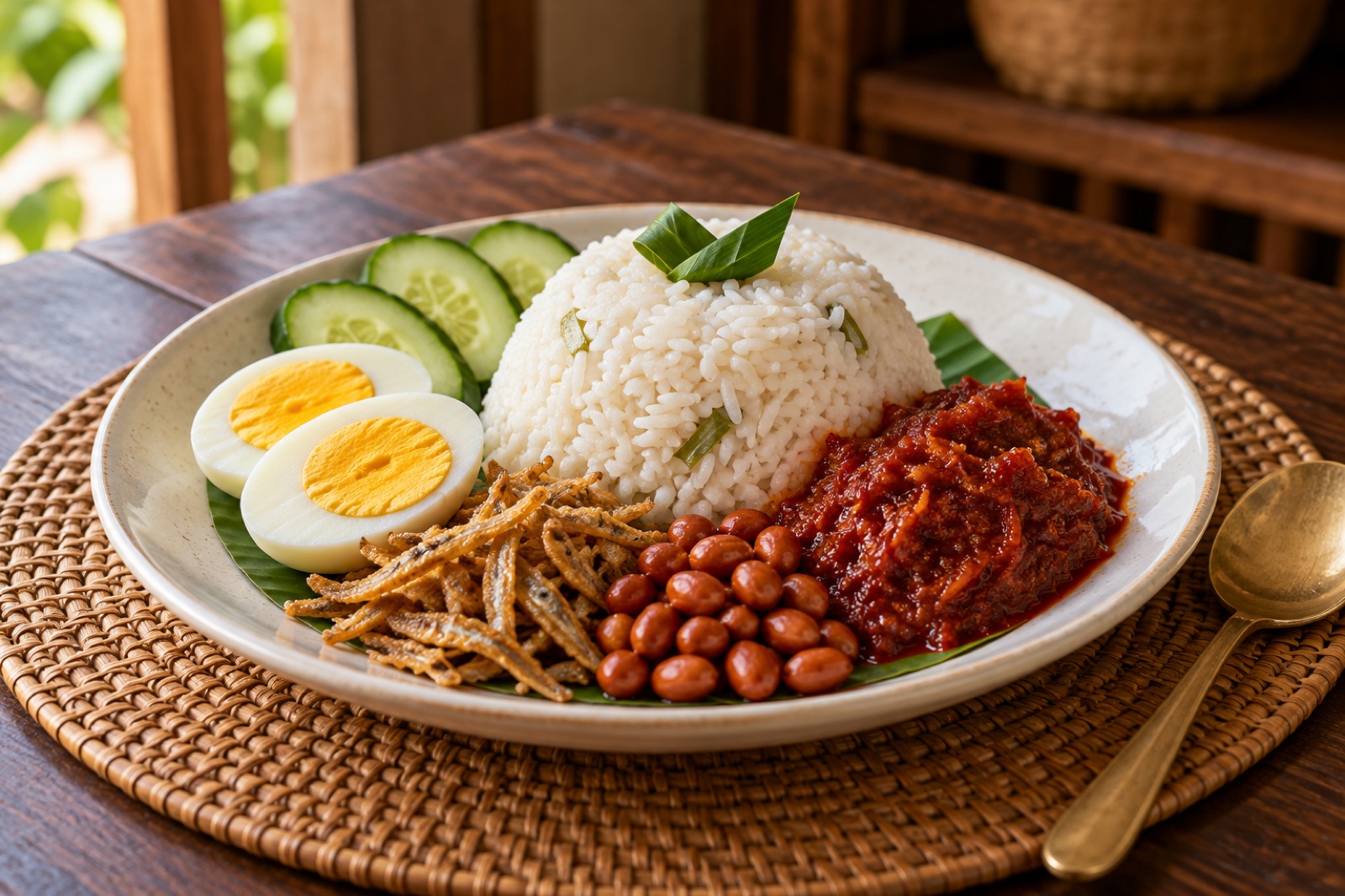
Nasi lemak takes its name from rice enriched with coconut milk and is strongly associated with Malaysia. A typical plate includes sambal, crisp small anchovies, peanuts, egg, and cucumber.
This home version keeps the heat adjustable. The important controls are restrained rice liquid, cooking sambal until the raw chile aroma disappears and oil shows at the edges, and adding crisp garnishes only at serving.
Why this method works
- Rinsing until the water is nearly clear removes excess surface starch; measured coconut milk adds aroma without making the grains mushy.
- A patient medium-low fry sweetens the shallot, mellows the chile, and turns sambal glossy rather than watery.
- Frying and cooling anchovies and peanuts separately preserves their crunch instead of steaming them in hot sambal.
Before you start
Prepare a lidded saucepan, strainer, blender or mortar, wide skillet, and a small pan for eggs. If pandan is unavailable, omit it; do not replace it with vanilla.
Soak dried chiles in hot water for 15 minutes. Remove seeds for less heat and use a fresh red pepper to retain color and body.
Rest the cooked rice covered for 10 minutes before fluffing. The residual steam evens out moisture and protects the grains.
Step-by-step method
1. Measure and cook the coconut rice
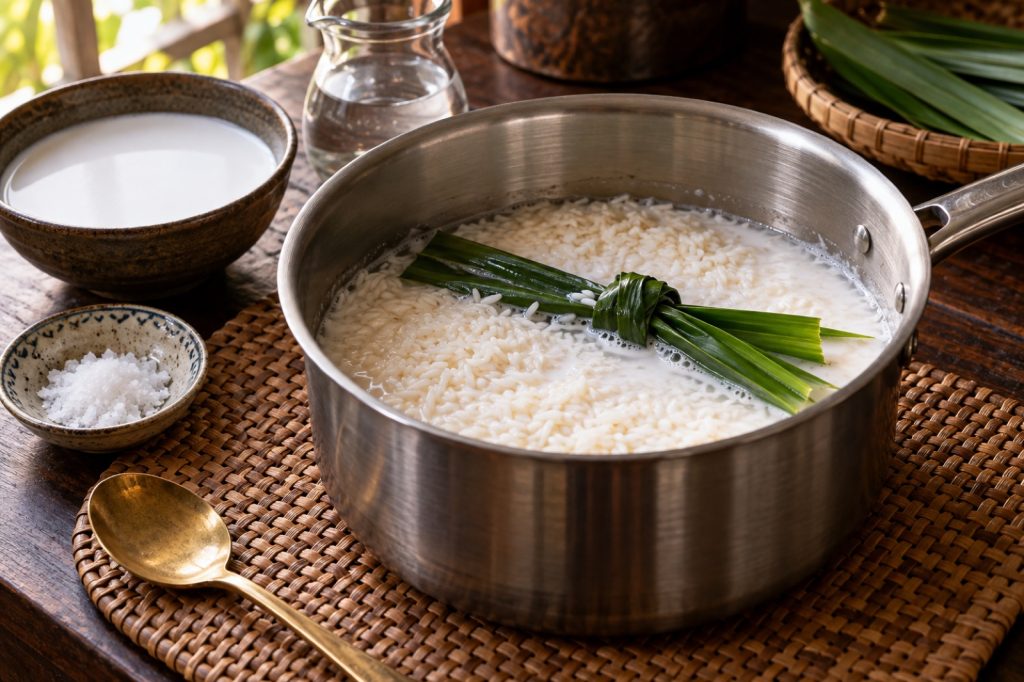
Rinse rice three or four times until the water is nearly clear; drain. Combine rice, coconut milk, water, pandan, and 1 teaspoon salt. Bring to a simmer, cover, and cook on the lowest heat for 14 minutes. Turn off the heat, rest covered 10 minutes, and fluff with a fork.
2. Blend the sambal base
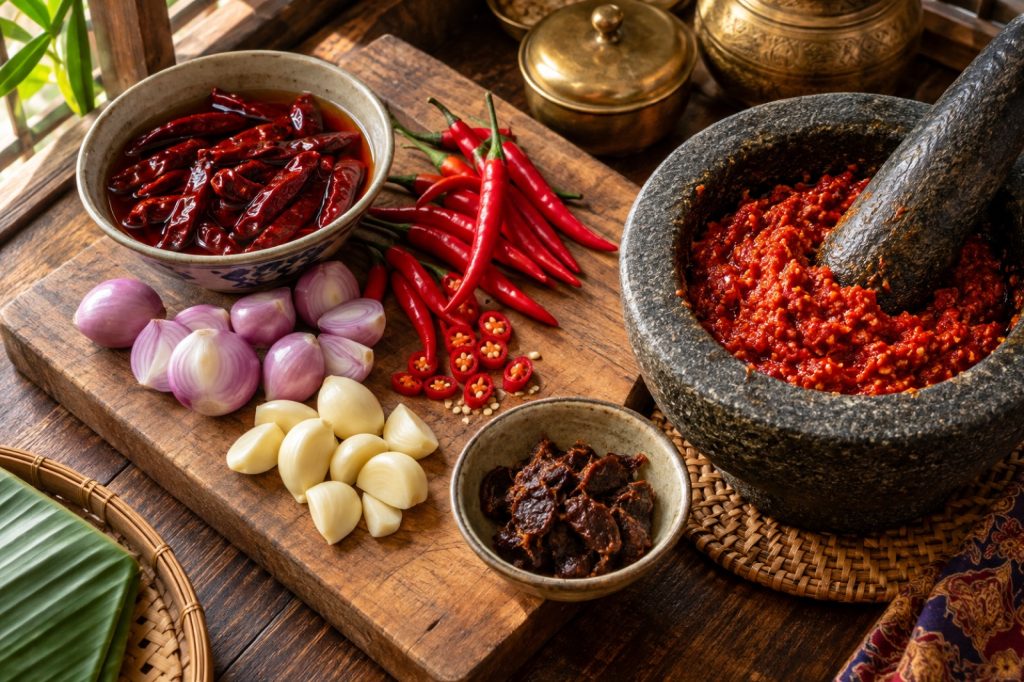
Blend soaked dried chiles, bell pepper, shallot, and garlic with 2–3 tablespoons soaking water into a thick paste. Avoid excess water; a thick paste cooks faster and spits less in the skillet.
3. Reduce sambal until glossy
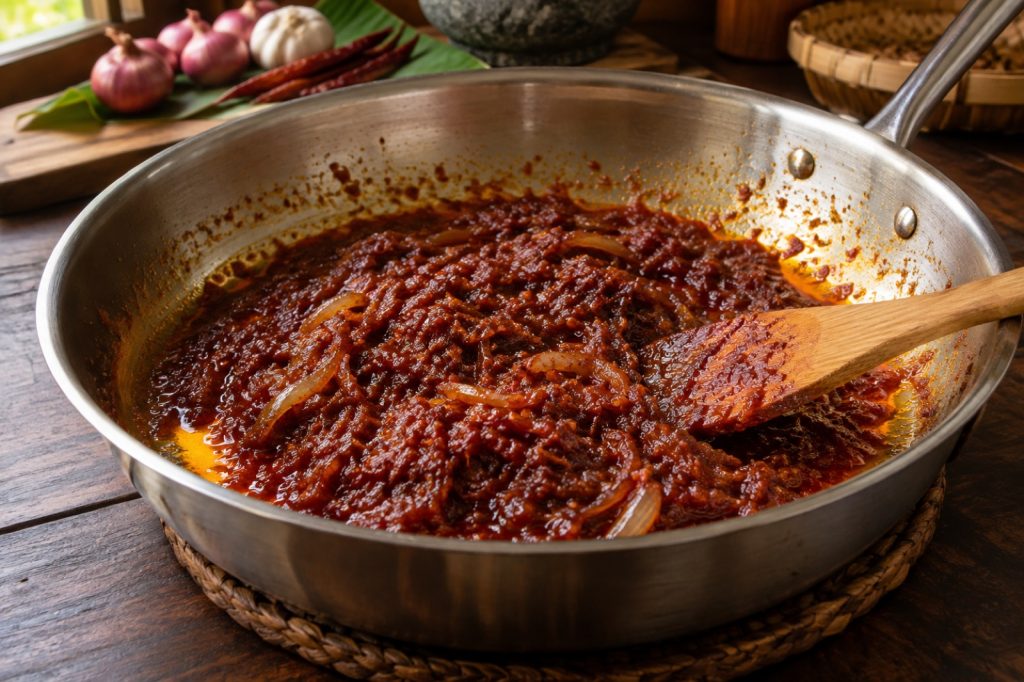
Heat oil in a wide skillet and add the chile paste. Cook over medium-low, stirring often, for 18–25 minutes. When darker and oil appears at the edges, add tamarind, sugar, and salt; cook 3–5 minutes until a spoon trail briefly remains.
4. Assemble with crisp garnishes
Fry anchovies and peanuts separately over medium heat until crisp; drain and cool. Boil eggs 9–10 minutes and peel under cold water. Divide rice among four plates and arrange sambal, anchovies, peanuts, egg, and cucumber in separate portions.
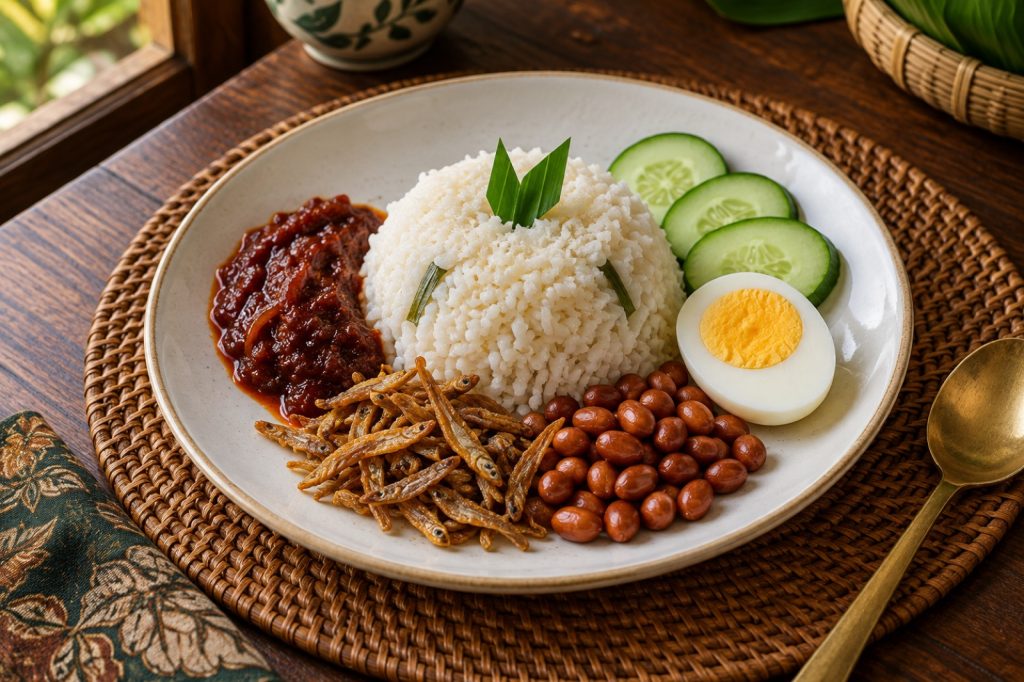
Malaysian Nasi Lemak
Fluffy pandan coconut rice, properly reduced sambal, crisp anchovies, peanuts, egg, and cucumber with clear texture and make-ahead guidance.
Ingredients
- 300 g jasmine rice
- 300 ml full-fat coconut milk
- 180 ml water
- 2 pandan leaves — tied; optional
- 1 tsp fine salt — for rice
- 20 g dried red chiles — soaked in hot water
- 1 medium red bell pepper — chopped
- 100 g shallots or onion — chopped
- 3 cloves garlic
- 60 ml neutral oil
- 30 ml tamarind water
- 25 g palm or brown sugar
- 60 g dried small anchovies
- 60 g raw peanuts
- 2 large eggs
- 1 small cucumber — sliced
Instructions
- Rinse rice three or four times until the water is nearly clear; drain. Combine rice, coconut milk, water, pandan, and 1 teaspoon salt. Bring to a simmer, cover, and cook on the lowest heat for 14 minutes. Turn off the heat, rest covered 10 minutes, and fluff with a fork.
- Blend soaked dried chiles, bell pepper, shallot, and garlic with 2–3 tablespoons soaking water into a thick paste. Avoid excess water; a thick paste cooks faster and spits less in the skillet.
- Heat oil in a wide skillet and add the chile paste. Cook over medium-low, stirring often, for 18–25 minutes. When darker and oil appears at the edges, add tamarind, sugar, and salt; cook 3–5 minutes until a spoon trail briefly remains.
- Fry anchovies and peanuts separately over medium heat until crisp; drain and cool. Boil eggs 9–10 minutes and peel under cold water. Divide rice among four plates and arrange sambal, anchovies, peanuts, egg, and cucumber in separate portions.
Notes
- The rice grains are distinct, tender, and lightly glossy with no free liquid in the pot. Sambal falls slowly from a spoon rather than running, with a thin sheen of oil at the edge.
- Mushy rice usually means poor draining or too much liquid; reduce water by 2 tablespoons next time. If sambal smells raw, extend the cook rather than raising the heat. Pandan may be omitted. For a fish-free adaptation, omit anchovies and add 1 teaspoon soy sauce to sambal, noting that it differs from the typical plate. 300 g rice is about 1½ US cups; 300 ml coconut milk about 1¼ cups.
- Serve sambal separately so each person controls heat and the anchovies remain crisp. Cool rice and sambal in shallow containers within 2 hours and refrigerate 3–4 days. Reheat until steaming and 165°F throughout. Anchovies are fish; peanuts are a major allergen, and coconut should also be disclosed.
Texture and doneness cues
The rice grains are distinct, tender, and lightly glossy with no free liquid in the pot. Sambal falls slowly from a spoon rather than running, with a thin sheen of oil at the edge.
Mistakes, substitutions, and measurements
Mushy rice usually means poor draining or too much liquid; reduce water by 2 tablespoons next time. If sambal smells raw, extend the cook rather than raising the heat. Pandan may be omitted. For a fish-free adaptation, omit anchovies and add 1 teaspoon soy sauce to sambal, noting that it differs from the typical plate. 300 g rice is about 1½ US cups; 300 ml coconut milk about 1¼ cups.
Serving, storage, and allergens
Serve sambal separately so each person controls heat and the anchovies remain crisp. Cool rice and sambal in shallow containers within 2 hours and refrigerate 3–4 days. Reheat until steaming and 165°F throughout. Anchovies are fish; peanuts are a major allergen, and coconut should also be disclosed.
Frequently asked questions
Why is my nasi lemak rice mushy?
The rice may be under-rinsed, poorly drained, or paired with too much liquid for that variety. Keep the lid closed during the rest.
Why does oil not separate from my sambal?
A watery paste or very low heat needs more time. Use a wide skillet and stir often.
Can I make it without pandan?
Yes. The aroma will be simpler; omitting pandan is a better adaptation than adding vanilla.
Leave a Reply