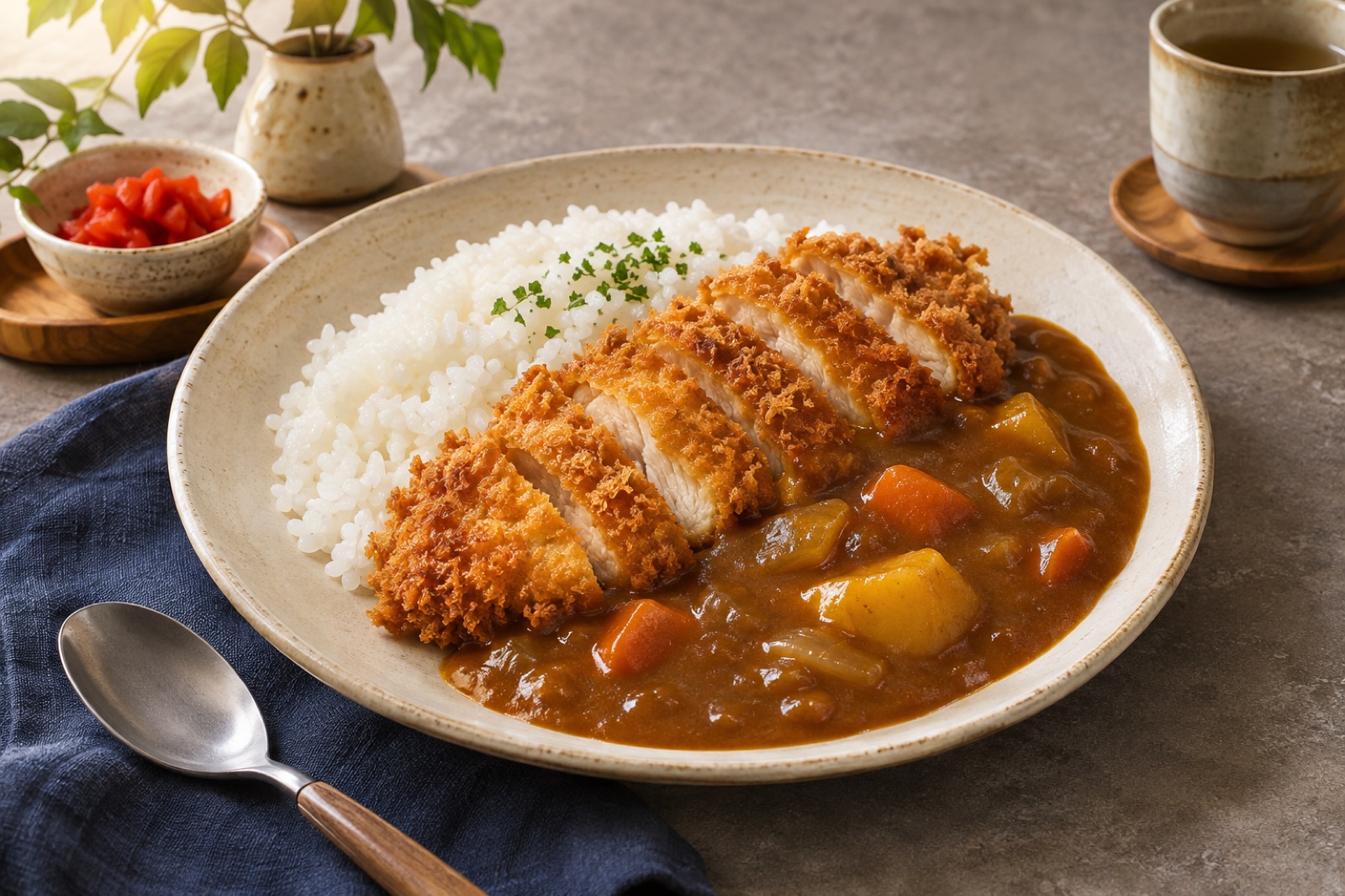
Katsu curry pairs thick Japanese curry with a breaded cutlet and rice, a popular yoshoku combination. Japanese curry is commonly traced through British naval influence; this version is a practical home adaptation using packaged Japanese curry roux.
The sauce and chicken are prepared separately. Roux is dissolved off the boil, while the panko-coated chicken cooks to deep gold and 165°F. Keeping most sauce beside—not over—the sliced cutlet protects the crunch.
Why this method works
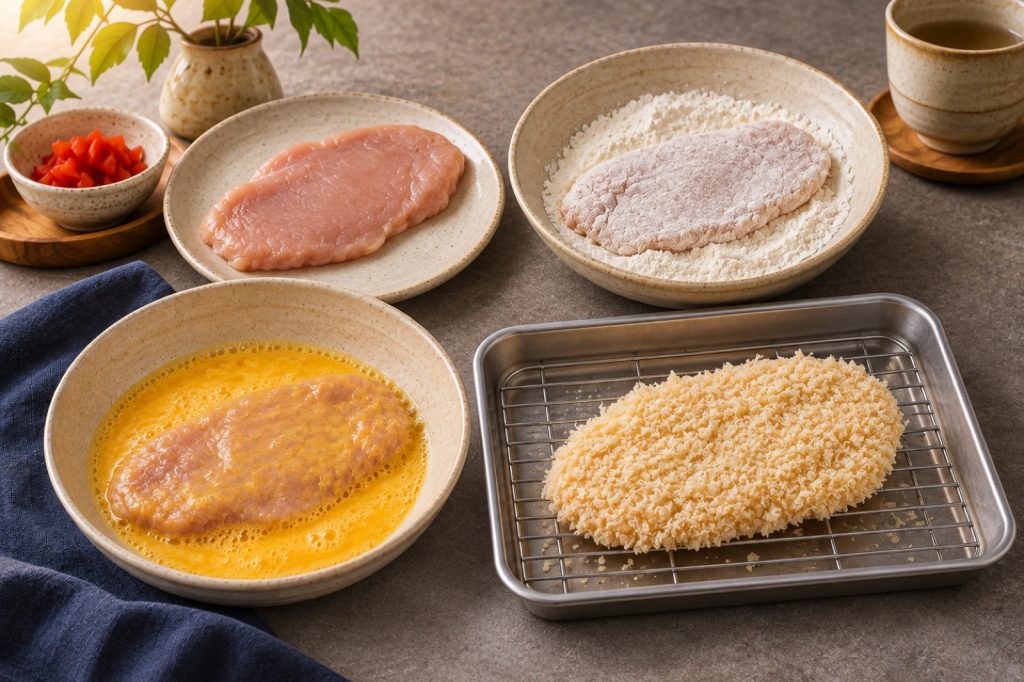
- Flour, egg, then panko gives the crust layers that adhere; a 5-minute rest reduces bare patches.
- Dissolving roux in hot liquid off the heat prevents lumps and scorching.
- A thermometer reaches a safe 165°F without needless drying, while storing sauce separately preserves leftover texture.
Before you start
Prepare a heavy saucepan, 11-inch skillet, three shallow dishes, wire rack, and instant-read thermometer. Time the rice separately.
Butterfly or split chicken breasts and pound to an even ½–⅝ inch. Thick spots can stay raw while the crust darkens.
Roux brands differ in salt and strength. Use the package liquid ratio as a guide; the finished sauce should coat a spoon.
Step-by-step method
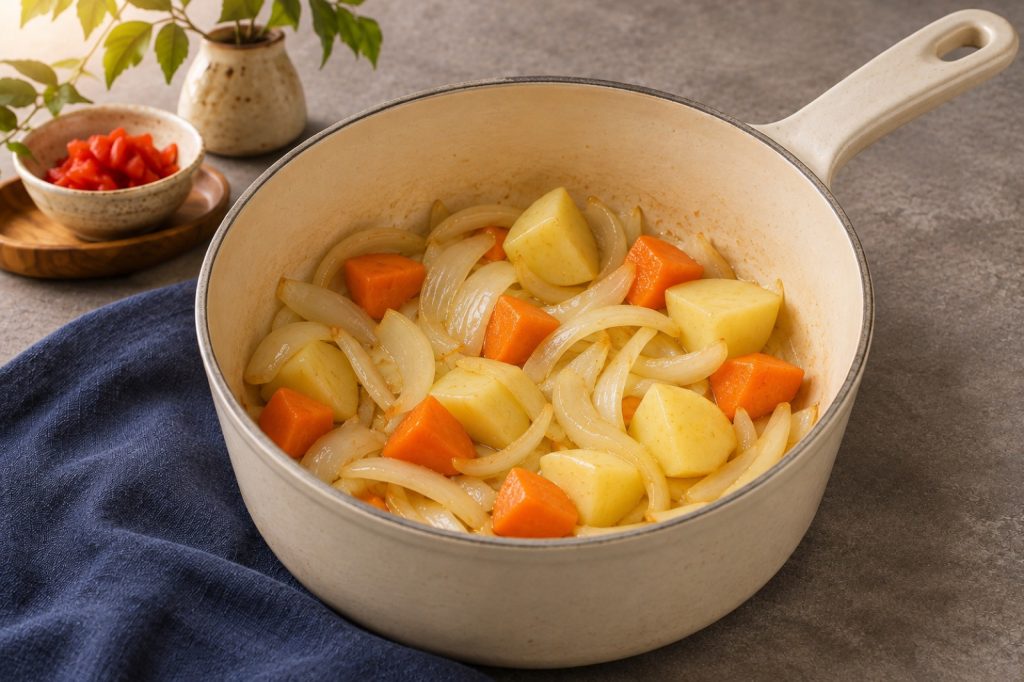
1. Cook the vegetable curry base
Heat 1 tablespoon/15 ml oil in a saucepan. Soften onion for 8 minutes; add carrot and potato for 3 minutes. Add water, boil, then simmer 15–18 minutes until vegetables are easily pierced.
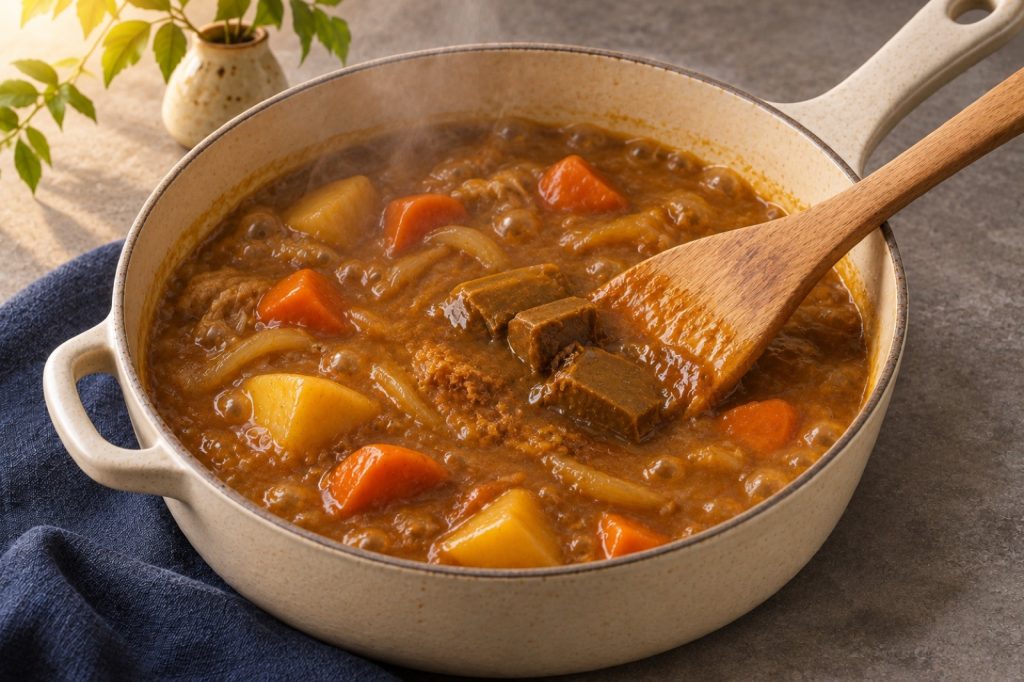
2. Dissolve roux smoothly off the boil
Take the pan off the heat. Add roux in small pieces and stir until fully dissolved. Return to low heat for 5–7 minutes until glossy and spoon-coating. Add optional soy, then taste before adding salt.
3. Bread and fry chicken to 165°F
Pound chicken evenly and season. Press into flour, egg, and panko in that order; rest 5 minutes. Heat frying oil to 340–350°F/170–175°C. Fry in two batches, 3–4 minutes per side, until deep gold and 165°F in the center; drain on a rack.
4. Rest, slice, and serve for maximum crunch
Rest katsu 5 minutes and slice across the grain. Plate rice, curry, and cutlet in separate sections, letting only a little sauce touch the edge of the crust. Thin overly thick curry with 1–2 tablespoons hot water.
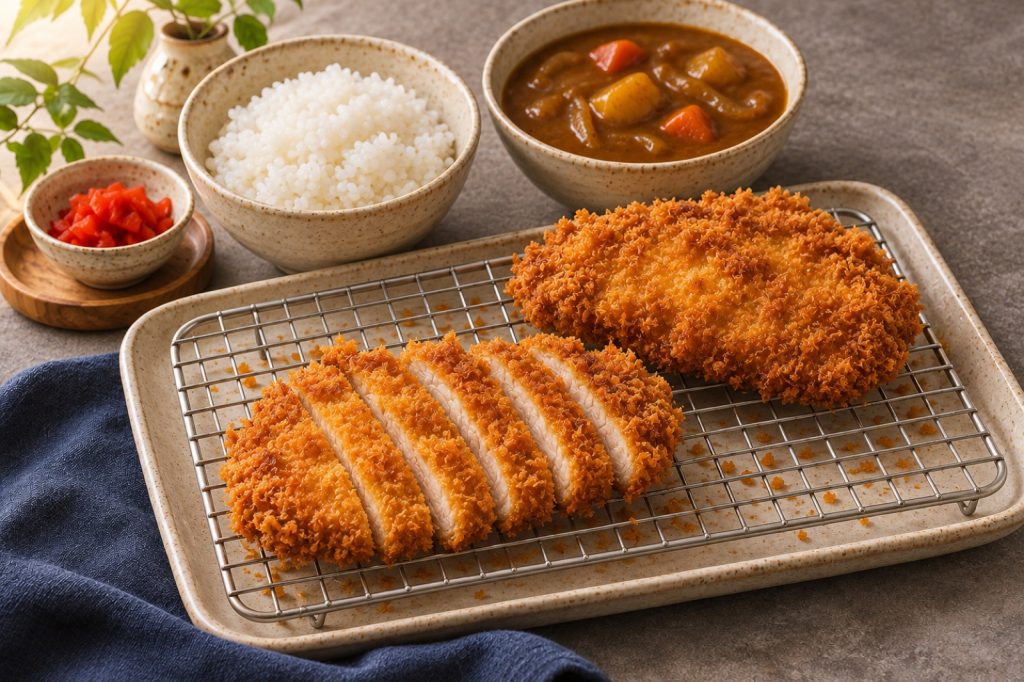
Chicken Katsu Curry
Juicy 165°F chicken, a crisp panko crust, and lump-free Japanese curry sauce in a practical home method.
Ingredients
- 500 g chicken breast — 4 even thin cutlets
- 1 tsp fine salt — divided
- ½ tsp black pepper
- 50 g all-purpose flour
- 2 large eggs — beaten
- 120 g panko breadcrumbs
- 180 ml neutral oil — for shallow frying
- 250 g onion — thinly sliced
- 180 g carrot — ¾-inch pieces
- 300 g potato — 1-inch pieces
- 15 ml neutral oil
- 750 ml water
- 90 g Japanese curry roux — adjust for brand
- 10 ml soy sauce — optional
- 600 g cooked short-grain rice
Instructions
- Heat 1 tablespoon/15 ml oil in a saucepan. Soften onion for 8 minutes; add carrot and potato for 3 minutes. Add water, boil, then simmer 15–18 minutes until vegetables are easily pierced.
- Take the pan off the heat. Add roux in small pieces and stir until fully dissolved. Return to low heat for 5–7 minutes until glossy and spoon-coating. Add optional soy, then taste before adding salt.
- Pound chicken evenly and season. Press into flour, egg, and panko in that order; rest 5 minutes. Heat frying oil to 340–350°F/170–175°C. Fry in two batches, 3–4 minutes per side, until deep gold and 165°F in the center; drain on a rack.
- Rest katsu 5 minutes and slice across the grain. Plate rice, curry, and cutlet in separate sections, letting only a little sauce touch the edge of the crust. Thin overly thick curry with 1–2 tablespoons hot water.
Notes
- The katsu is deep gold with crust attached after slicing and a 165°F center. Curry is smooth, glossy, spoon-coating yet pourable, with potato pieces still intact.
- If coating falls off, the chicken was wet or the layers were not pressed on; pat dry and rest 5 minutes. Coarse dry crumbs work without panko but are denser. A flour-fat-curry blend can replace packaged roux only as an adaptation. 750 ml water is about 3 US cups; 120 g panko about 2 cups.
- Serve with shredded cabbage or Japanese pickles. Cool within 2 hours. Refrigerate curry 3–4 days and katsu 3 days in separate containers; reheat both to 165°F. Recrisp katsu at 400°F/200°C in an oven or air fryer. Curry freezes up to 2 months, though potatoes soften. Contains wheat/gluten and egg; roux may contain soy and dairy.
Texture and doneness cues
The katsu is deep gold with crust attached after slicing and a 165°F center. Curry is smooth, glossy, spoon-coating yet pourable, with potato pieces still intact.
Mistakes, substitutions, and measurements
If coating falls off, the chicken was wet or the layers were not pressed on; pat dry and rest 5 minutes. Coarse dry crumbs work without panko but are denser. A flour-fat-curry blend can replace packaged roux only as an adaptation. 750 ml water is about 3 US cups; 120 g panko about 2 cups.
Serving, storage, and allergens
Serve with shredded cabbage or Japanese pickles. Cool within 2 hours. Refrigerate curry 3–4 days and katsu 3 days in separate containers; reheat both to 165°F. Recrisp katsu at 400°F/200°C in an oven or air fryer. Curry freezes up to 2 months, though potatoes soften. Contains wheat/gluten and egg; roux may contain soy and dairy.
Frequently asked questions
Why is my katsu greasy?
Oil below the target temperature soaks into the crust. Let it return to 340–350°F between batches and do not crowd the pan.
Why did the curry roux form lumps?
Large pieces added to a hard boil gel on the outside. Remove the pan from heat and dissolve small pieces gradually.
Can I air-fry the chicken?
Yes. Lightly oil the coating and cook near 400°F for about 10–14 minutes, checking that the center reaches 165°F.
Leave a Reply