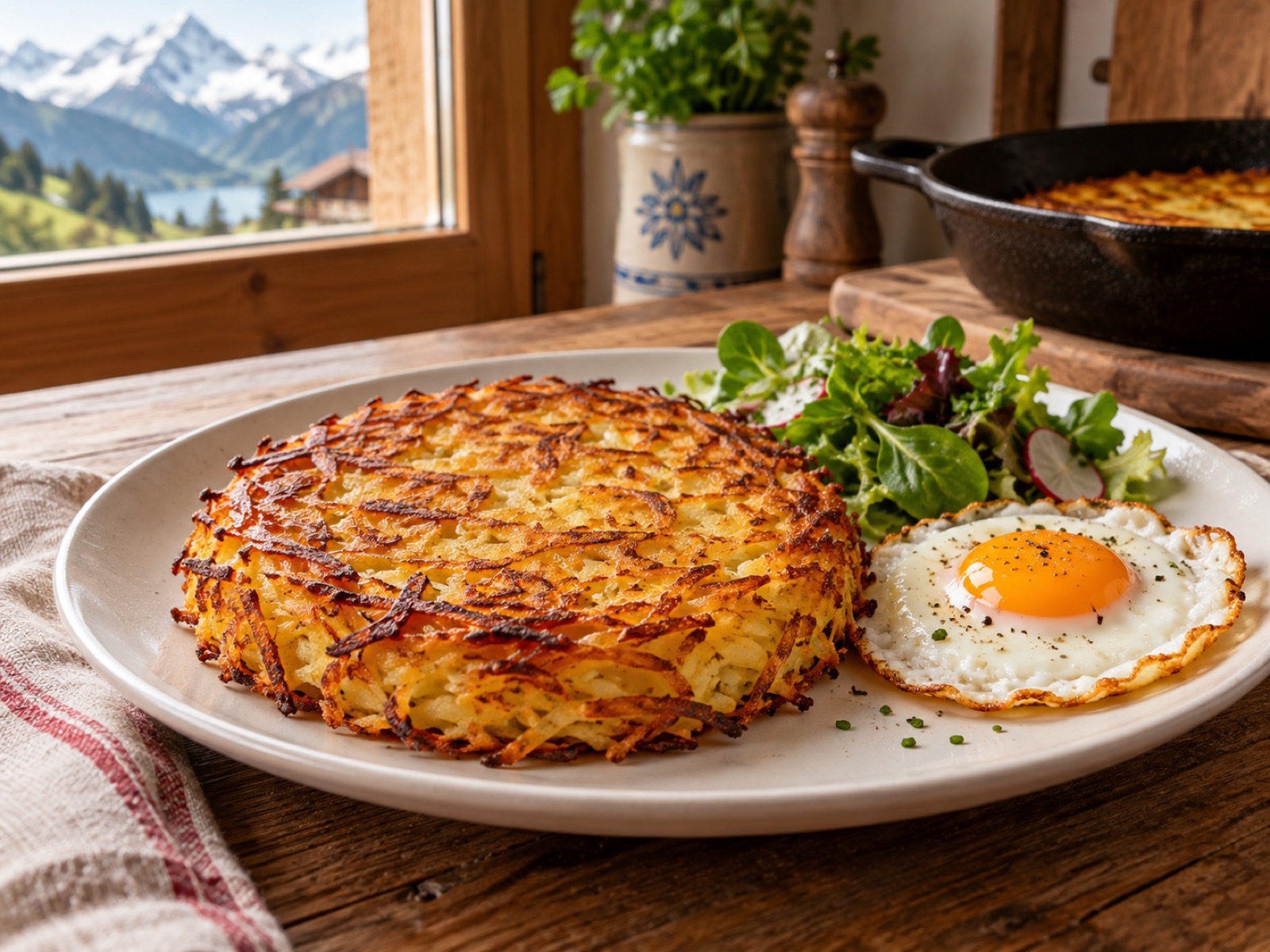
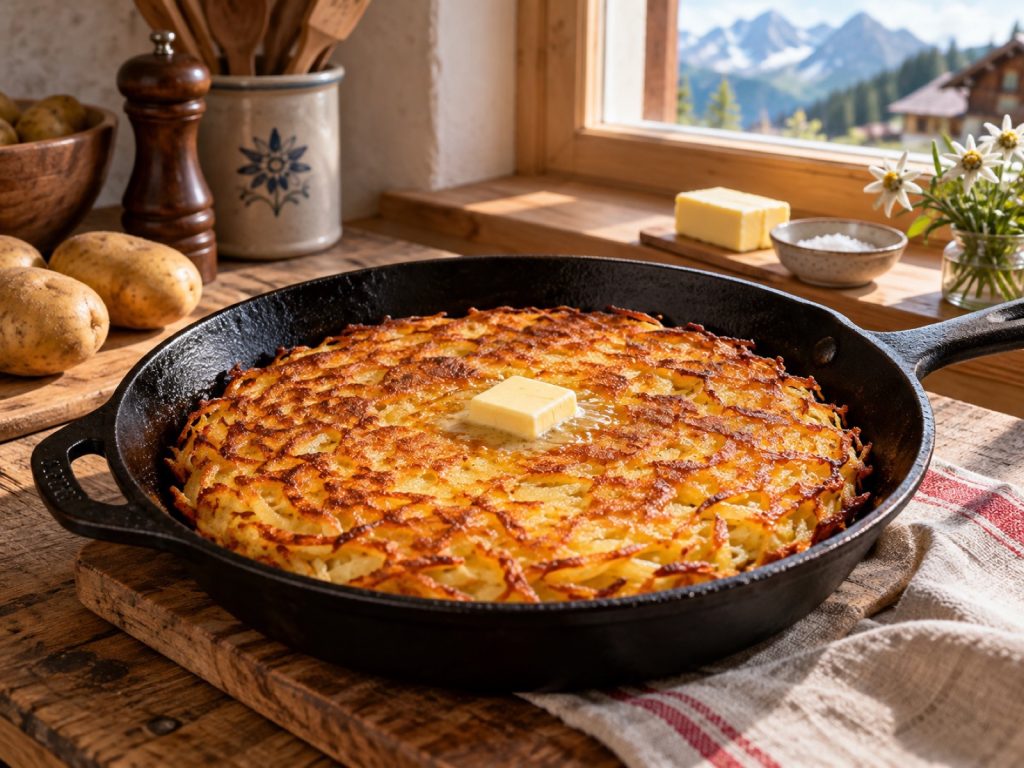
Rösti is Switzerland’s flat, round potato specialty, made with grated raw or cooked potatoes and fried in butter or fat. This version follows the common cooked-potato route: chill jacket potatoes overnight so the starch firms and the shreds hold together.
The goal is not a dense compressed block. Shape a loose cake with a deep golden crust and tender center; potato starch binds it without flour or egg.
Why this rösti holds together
- Par-cooking and fully chilling the potatoes prevents mushy shreds.
- Coarse grating creates long strands and more crisp edges.
- Salt only just before frying so it cannot draw out excess water.
- Equipment: 10–11 inch nonstick or seasoned skillet, coarse grater, wide plate and spatula.
Make-ahead notes and substitutions
2.2 lb potatoes is usually 6–8 medium potatoes. Waxy or floury types both work; avoid overcooking either.
Clarified butter resists scorching. Use neutral oil for dairy-free rösti.
Cook and chill the potatoes the day before to divide the work and improve texture.
Swiss rösti step by step
1. 1. Prepare the potatoes
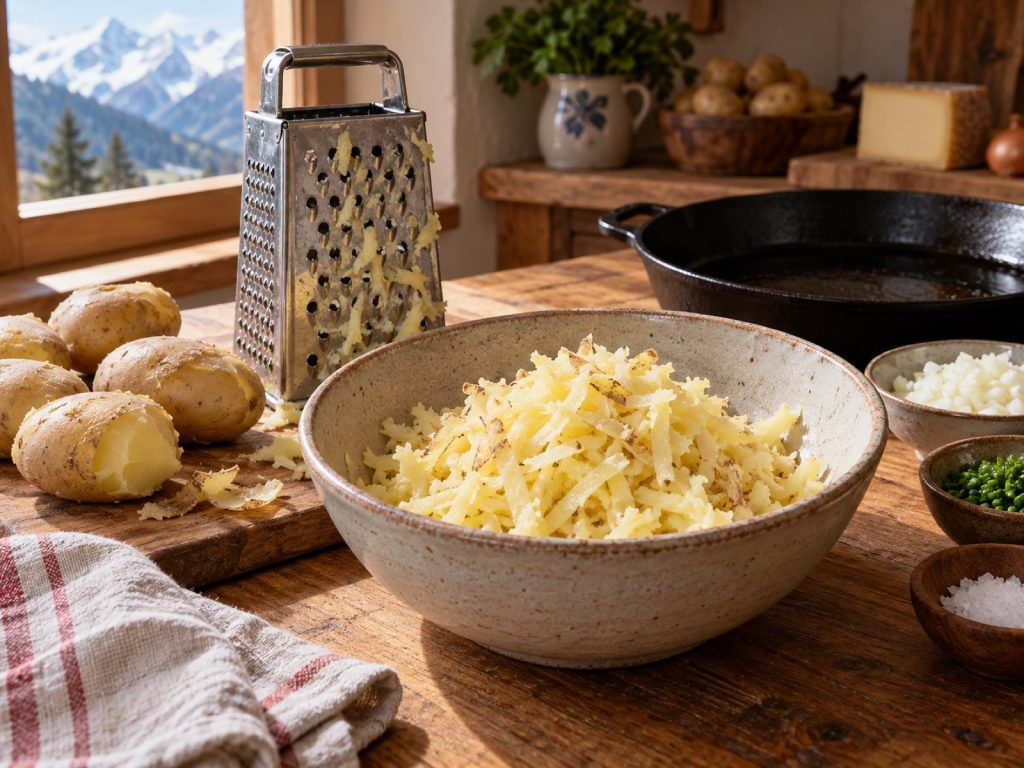
Boil the unpeeled potatoes in salted water for 12–18 minutes, until the centers still offer slight resistance. Drain, cool completely and refrigerate at least 4 hours, preferably overnight. Peel and grate into long shreds on the coarse side of a box grater.
2. 2. Start the fry
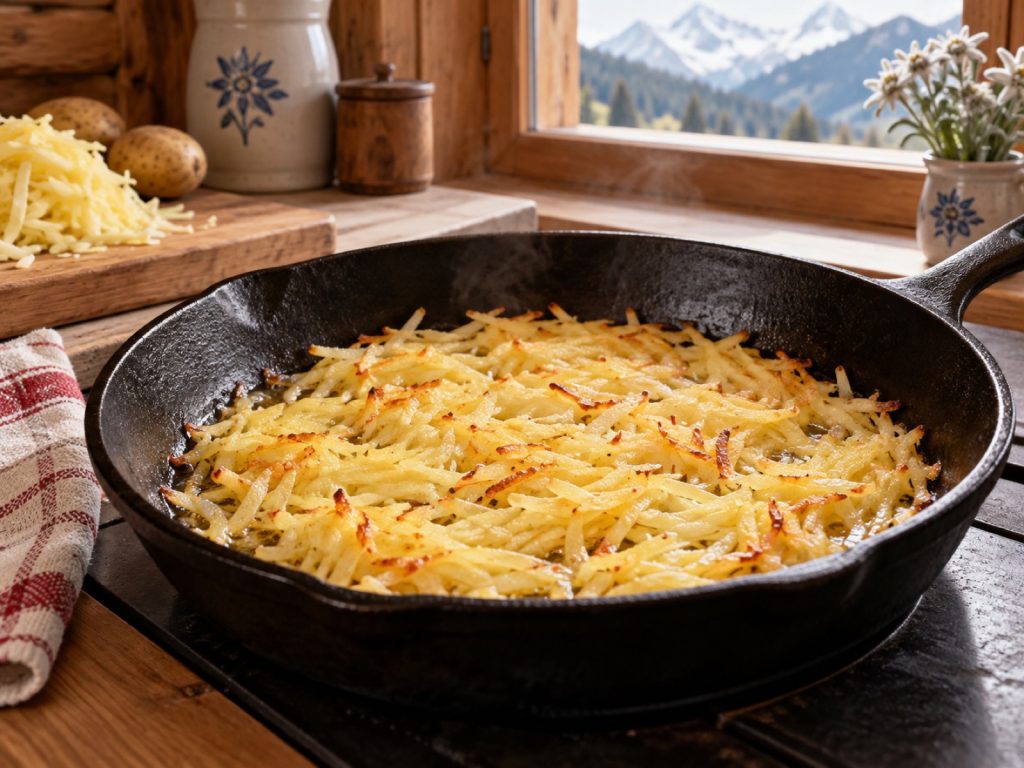
Heat the skillet over medium and melt 2 tablespoons clarified butter. Add the potatoes and salt; cook 5 minutes, turning gently only twice to release steam. Do not mash the shreds.
3. 3. Shape and build the crust
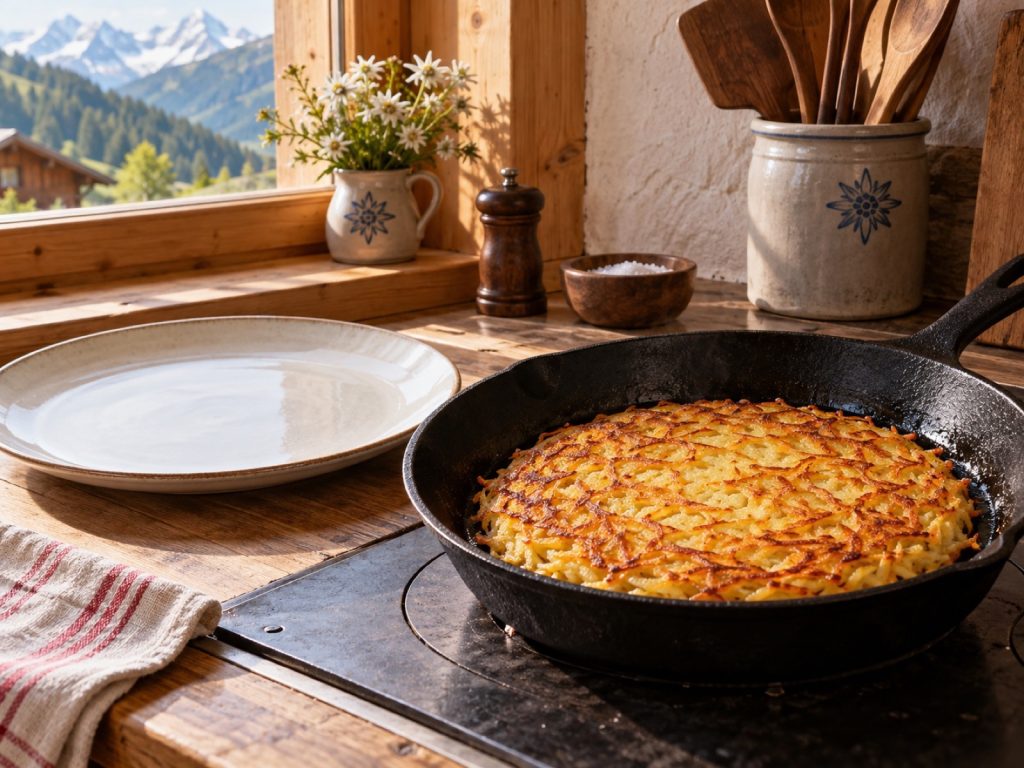
Gather the potatoes into a round cake 3/4 inch thick, neatening only the edges with a spatula. Cook over medium-low without moving for 10–12 minutes. It is ready to flip when the edge is deep gold and the cake slides as one piece.
4. 4. Flip and finish
Slide the rösti onto a wide plate, cover with the pan and invert in one confident motion. Add the remaining fat and slide the rösti back in. Cook the second side 10–12 minutes. Serve when both sides are deep gold and the center is hot and tender.
Crispy Swiss Rösti
Flour-free Swiss potato cake made with chilled cooked potatoes and a crisp two-sided crust.
Ingredients
- 2.2 lb medium potatoes — boiled in jackets and fully chilled
- 1 tsp fine salt
- 3 tbsp clarified butter or butter — divided
- 0.25 tsp black pepper — optional
Instructions
- Boil the unpeeled potatoes in salted water for 12–18 minutes, until the centers still offer slight resistance. Drain, cool completely and refrigerate at least 4 hours, preferably overnight. Peel and grate into long shreds on the coarse side of a box grater.
- Heat the skillet over medium and melt 2 tablespoons clarified butter. Add the potatoes and salt; cook 5 minutes, turning gently only twice to release steam. Do not mash the shreds.
- Gather the potatoes into a round cake 3/4 inch thick, neatening only the edges with a spatula. Cook over medium-low without moving for 10–12 minutes. It is ready to flip when the edge is deep gold and the cake slides as one piece.
- Slide the rösti onto a wide plate, cover with the pan and invert in one confident motion. Add the remaining fat and slide the rösti back in. Cook the second side 10–12 minutes. Serve when both sides are deep gold and the center is hot and tender.
Notes
- Chilling time is not included in total time.
- Allergen: milk if using butter; use neutral oil for dairy-free.
- Do not use green or heavily sprouted potatoes.
Troubleshooting, serving and storage
If it breaks, the potatoes may be warm, overcooked or flipped too soon. Wait for a firm golden edge and a cake that slides freely. If greasy, the pan was not hot enough.
Serve with fried eggs, mushrooms, salad or meat dishes. Cool leftovers within 2 hours and refrigerate 3–4 days; re-crisp in a 400°F oven or skillet. A microwave softens the crust.
Freeze cooked portions for up to one month and reheat from frozen in the oven.
Frequently asked questions
Can rösti use raw potatoes?
Yes, but they need squeezing and longer cooking. This recipe is calibrated for chilled cooked potatoes.
Why chill overnight?
Cooling firms the starch, producing clean shreds that flip more reliably.
Do I need cast iron?
No. A good nonstick skillet with enough fat works very well.
Leave a Reply