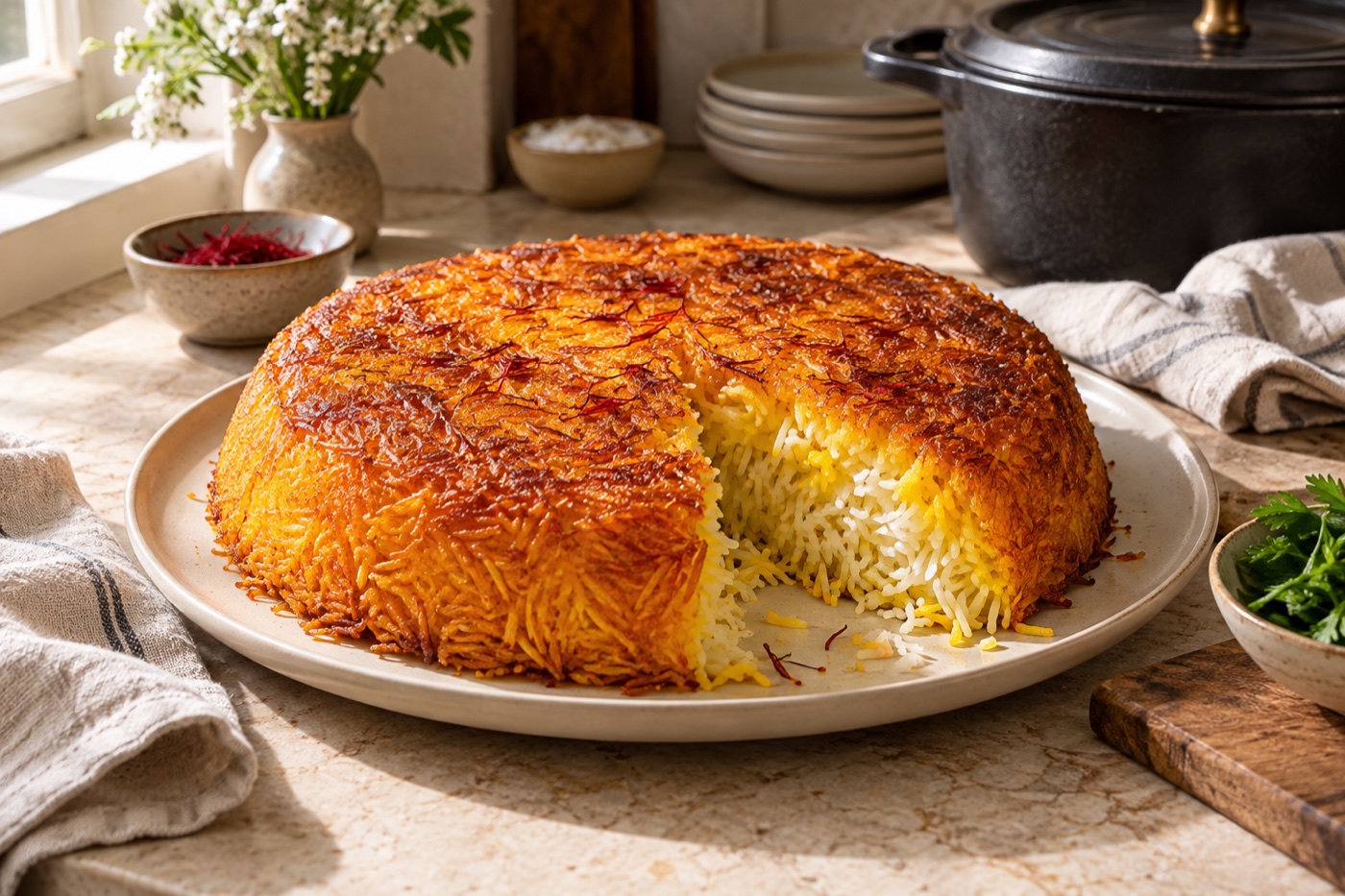
Tahdig is the prized golden crust formed at the bottom of Persian rice. The grains are parboiled until firm, drained, then finished by steaming over a fat-lined base.
This accessible version uses saffron rice for the crust. A flat nonstick pot, well-drained rice, and a medium-to-low heat sequence make clean release more likely.
Why this method works
- Brief parboiling in abundant salted water removes surface starch and keeps grains separate.
- Pressing the saffron first layer creates an even, unified crust.
- A towel under the lid catches condensation before it falls onto the rice.
Before you start
Use a 9½-inch flat nonstick pot, fine colander, and clean kitchen towel. Soak rice at least 30 minutes.
Bloom saffron in 2 tablespoons hot water for 10 minutes. Do not leave the drained rice standing.
Keep the towel well away from the flame or heating element.
Step-by-step method
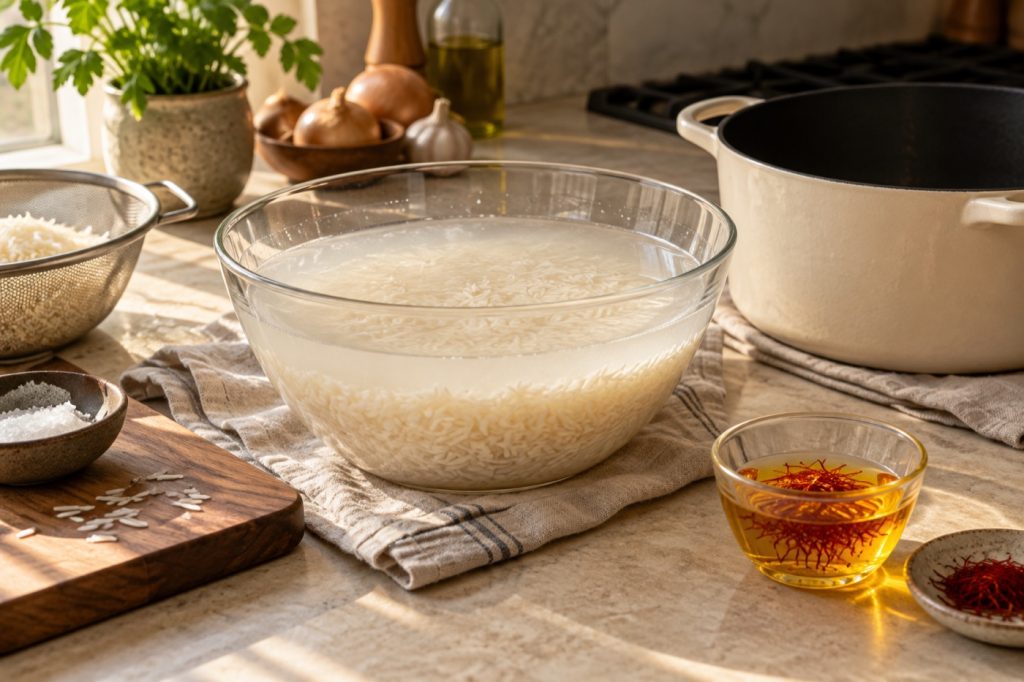
1. Rinse and soak the rice
Rinse rice 4–5 times until water is nearly clear. Soak in warm water 30 minutes. Bloom saffron in 2 tablespoons hot water.
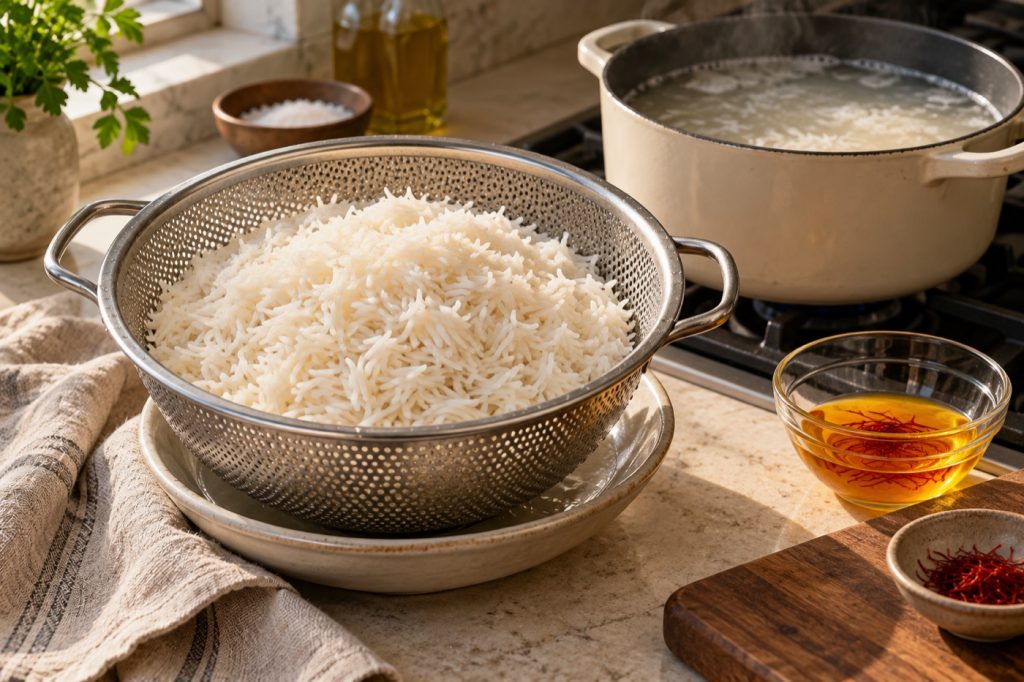
2. Parboil until firm
Boil abundant salted water. Add drained rice and cook 5–7 minutes; grains should lengthen but retain a firm center. Drain immediately.
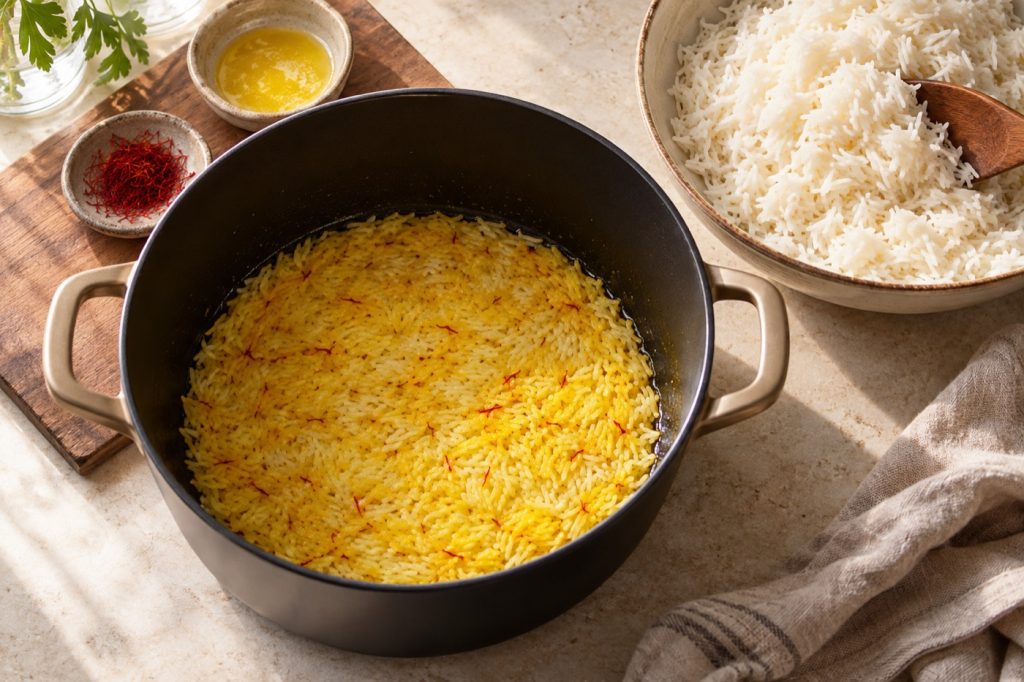
3. Build the saffron base
Heat oil, half the butter, 60 ml water, and saffron in the nonstick pot. Add about one-quarter of the rice and press into an even compact layer.
4. Steam and invert
Mound the remaining rice loosely and drizzle with remaining butter. Wrap the lid with a towel. Cook 8 minutes over medium, then 35–40 minutes very low. Rest 5 minutes and invert in one confident motion.
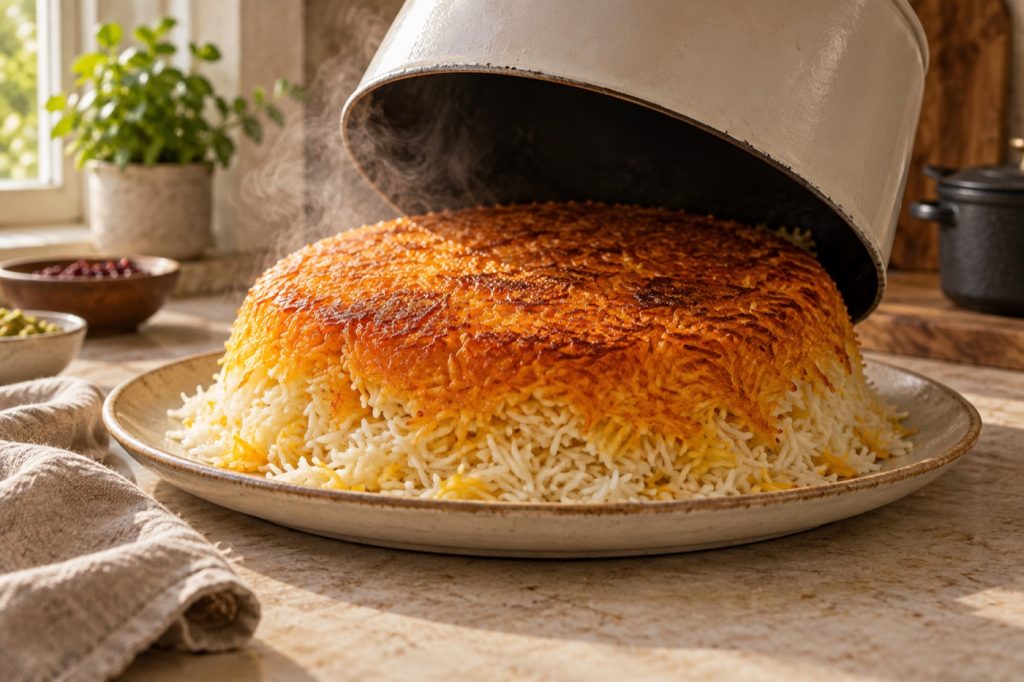
Persian Saffron Tahdig
Fluffy basmati beneath an intact saffron tahdig, with precise parboiling, steaming, and unmolding cues.
Ingredients
- 400 g basmati rice
- 2 tbsp fine salt — for cooking water
- 1/4 tsp saffron threads
- 45 g butter
- 2 tbsp neutral oil
- 60 ml water
Instructions
- Rinse rice 4–5 times until water is nearly clear. Soak in warm water 30 minutes. Bloom saffron in 2 tablespoons hot water.
- Boil abundant salted water. Add drained rice and cook 5–7 minutes; grains should lengthen but retain a firm center. Drain immediately.
- Heat oil, half the butter, 60 ml water, and saffron in the nonstick pot. Add about one-quarter of the rice and press into an even compact layer.
- Mound the remaining rice loosely and drizzle with remaining butter. Wrap the lid with a towel. Cook 8 minutes over medium, then 35–40 minutes very low. Rest 5 minutes and invert in one confident motion.
Notes
- A nutty toasted aroma appears, sizzling subsides, and the inverted crust is deep gold, dry, and intact. Lower heat immediately if it smells burnt.
- Turmeric can add color but cannot reproduce saffron flavor. 1 cup raw basmati is about 190–200 g. Contains dairy; use only oil for dairy-free rice.
- Serve with kebabs or yogurt-based dishes. Spread leftovers in a shallow container and chill within 2 hours; refrigerate 3–4 days. Reheat once to 165°F. Freezing softens the crust.
Texture and doneness cues
A nutty toasted aroma appears, sizzling subsides, and the inverted crust is deep gold, dry, and intact. Lower heat immediately if it smells burnt.
Mistakes, substitutions, and measurements
Turmeric can add color but cannot reproduce saffron flavor. 1 cup raw basmati is about 190–200 g. Contains dairy; use only oil for dairy-free rice.
Serving, storage, and allergens
Serve with kebabs or yogurt-based dishes. Spread leftovers in a shallow container and chill within 2 hours; refrigerate 3–4 days. Reheat once to 165°F. Freezing softens the crust.
Frequently asked questions
Why did tahdig stick?
The pot may be unsuitable, the base under-oiled, or cooking too short. Rest 5 minutes before inverting.
Why is the rice mushy?
It was parboiled too long. Drain while the grains still have a firm center.
How do I recrisp leftovers?
Heat wedges crust-side down in a lightly oiled skillet over medium heat for 3–4 minutes.
Leave a Reply