Category: Genel

Recipes that have not yet been moved into one of the main topic categories appear here. As the collection grows, these dishes are reviewed and organized into breakfast, soups, main dishes, desserts, baking, salads, drinks, or quick recipes.

  • Jamaican Beef Patties: Flaky Turmeric Crust, Juicy Filling

    Jamaican Beef Patties: Flaky Turmeric Crust, Juicy Filling

    Jamaica’s official tourism site describes the patty as a half-moon baked staple derived from the Cornish pasty and transformed with Jamaican seasoning, with meat and vegetable fillings.

    This home version uses a juicy but non-runny beef filling and a chilled turmeric pastry. Scotch bonnet is adjustable: its fruity aroma can be present without making every patty fiercely hot.

    Why this method works

    • Cold butter and minimal kneading create pastry layers.
    • Reducing the filling uncovered and cooling it fully prevents soggy pastry and burst seams.
    • Egg wash bonds the edge while fork crimping adds a second mechanical seal.
    • Cooking ground beef to 160°F/71°C makes safety independent of color.

    Before you start

    Prepare a food processor or wide bowl, 12-inch skillet, rolling pin, 6-inch cutter, and thermometer.

    Wear gloves for Scotch bonnet; removing seeds and white membranes lowers heat.

    Spread filling on a shallow plate, cool to room temperature, then chill before filling pastry.
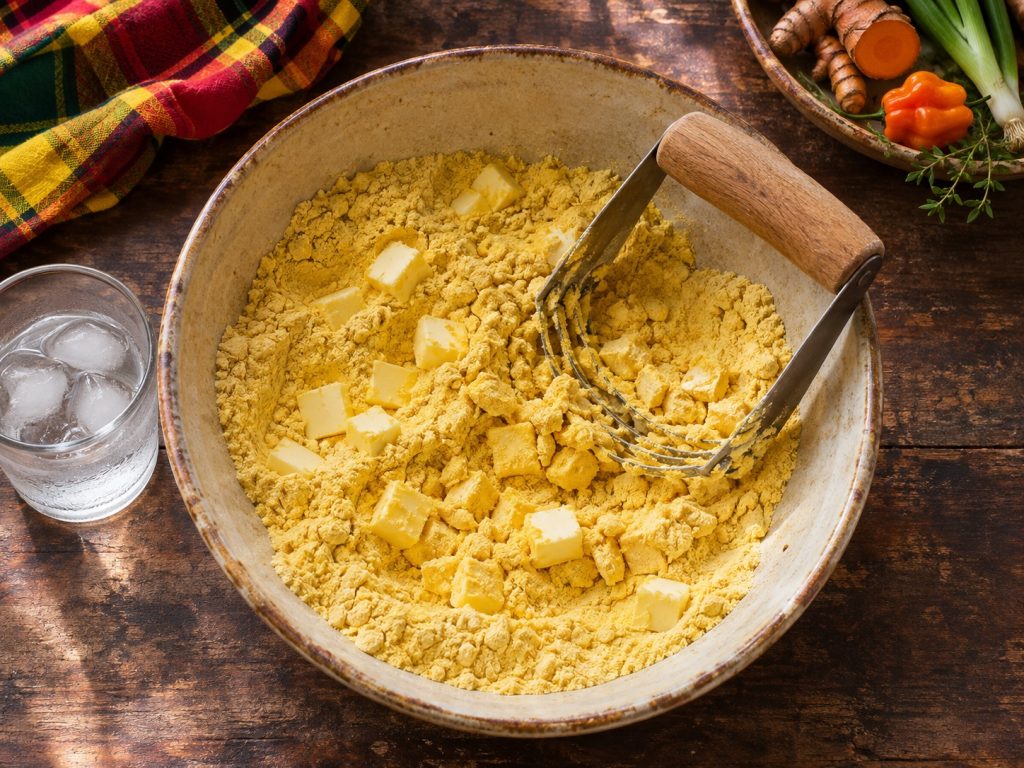
    Make and chill the turmeric pastry
    Mix flour, turmeric, and half the salt. Cut in cold butter, leaving pea-size pieces. Add ice water gradually and press only until the dough holds. Form a disk, wrap, and chill 30 minutes.

    Step-by-step method

    1. Make and chill the turmeric pastry

    Mix flour, turmeric, and half the salt. Cut in cold butter, leaving pea-size pieces. Add ice water gradually and press only until the dough holds. Form a disk, wrap, and chill 30 minutes.

    2. Reduce and cool the beef filling

    Brown beef in a wide skillet over medium-high, breaking it up. Add onion for 6 minutes, then garlic, scallions, thyme, allspice, curry, and chile for 1 minute. Add tomato paste, stock, Worcestershire, and remaining salt. Simmer uncovered 10–12 minutes until thick but moist; beef must reach 160°F/71°C. Stir in breadcrumbs and cool fully.

    Reduce and cool the beef filling
    Brown beef in a wide skillet over medium-high, breaking it up. Add onion for 6 minutes, then garlic, scallions, thyme, allspice, curry, and chile for 1 minute. Add tomato paste, stock, Worcestershire, and remaining salt. Simmer uncovered 10–12 minutes until thick but moist; beef must reach 160°F/71°C. Stir in breadcrumbs and cool fully.

    3. Fill and seal the patties firmly

    Roll pastry ⅛ inch/3 mm thick and cut eight 6-inch rounds. Place 2½–3 oz/75–80 g cold filling on one half, leaving a ½-inch/1.5 cm rim. Brush edge with egg, fold, expel air, and crimp with a fork. Chill on the tray 15 minutes.
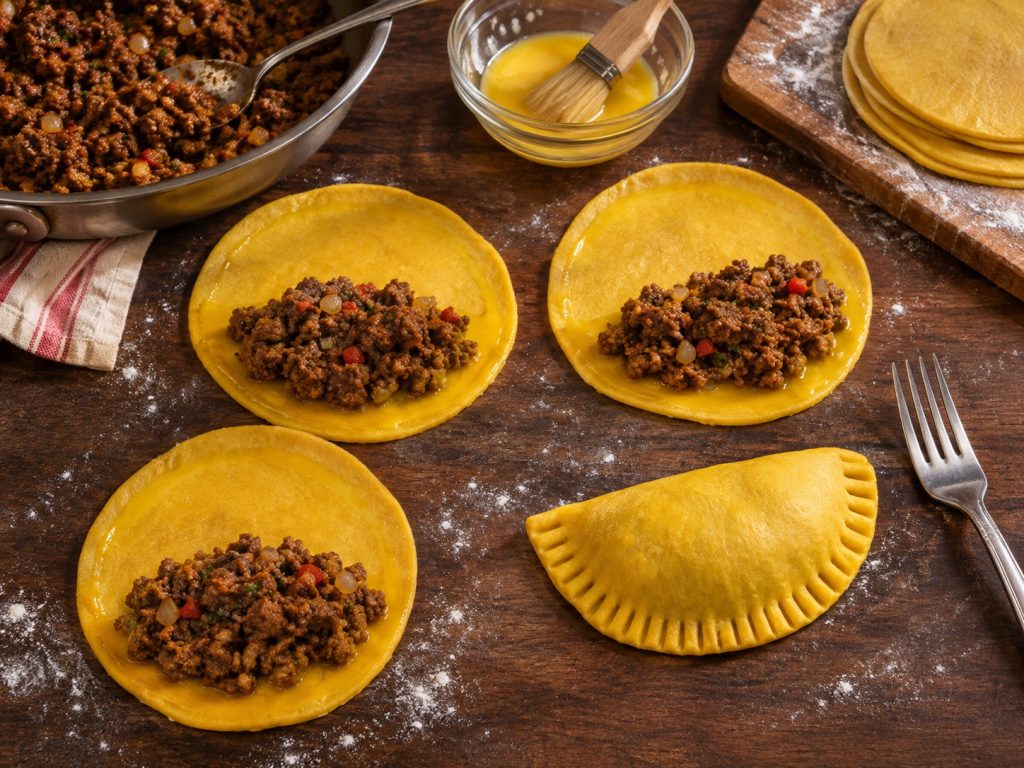
    Fill and seal the patties firmly
    Roll pastry ⅛ inch/3 mm thick and cut eight 6-inch rounds. Place 2½–3 oz/75–80 g cold filling on one half, leaving a ½-inch/1.5 cm rim. Brush edge with egg, fold, expel air, and crimp with a fork. Chill on the tray 15 minutes.

    4. Bake until deeply golden and crisp

    Heat oven to 400°F/200°C. Brush patties lightly with remaining egg and cut a small steam slit in each. Bake 25–30 minutes until tops and bottoms are deep golden. Rest 10 minutes; filling will be very hot.

    Bake until deeply golden and crisp
    Heat oven to 400°F/200°C. Brush patties lightly with remaining egg and cut a small steam slit in each. Bake 25–30 minutes until tops and bottoms are deep golden. Rest 10 minutes; filling will be very hot.

    Texture and doneness cues

    Pastry is flaky and crisp, with no pale or soggy bottom.

    Filling is thick but not dry, does not run when cut, and beef reached 160°F/71°C in the skillet.

    Mistakes, substitutions, and conversions

    Warm filling melts butter and opens seams; chill it completely before filling.

    Use habanero instead of Scotch bonnet, or omit chile and add ¼ tsp sweet paprika for a mild version.

    Re-kneading scraps toughens pastry; stack them and reroll only once.

    Serving, storage, and allergens

    Cool within 2 hours and refrigerate 3–4 days. Reheat in a 375°F/190°C oven 10–12 minutes to 165°F/74°C. Freeze baked or sealed unbaked patties up to 2 months.

    Allergens: gluten, milk, egg. Worcestershire may contain fish; check stock and curry-blend labels.

    Frequently asked questions

    Why did the patties burst?

    The filling was warm or wet, the edge was floury, or air was trapped. Use cold thick filling, a clean egg-washed rim, and expel air.

    Why is the pastry tough?

    Butter melted or dough was overworked; keep everything cold and mix only until cohesive.

    How hot should they be?

    There is no fixed level. Half a Scotch bonnet is assertive; start smaller and taste the cooked filling.

    Can I make them ahead?

    Yes. Refrigerate sealed unbaked patties one day or freeze two months and bake while cold.

  • Persian Saffron Tahdig: Crisp Rice Crust

    Persian Saffron Tahdig: Crisp Rice Crust

    Tahdig is the prized golden crust formed at the bottom of Persian rice. The grains are parboiled until firm, drained, then finished by steaming over a fat-lined base.

    This accessible version uses saffron rice for the crust. A flat nonstick pot, well-drained rice, and a medium-to-low heat sequence make clean release more likely.

    Why this method works

    • Brief parboiling in abundant salted water removes surface starch and keeps grains separate.
    • Pressing the saffron first layer creates an even, unified crust.
    • A towel under the lid catches condensation before it falls onto the rice.

    Before you start

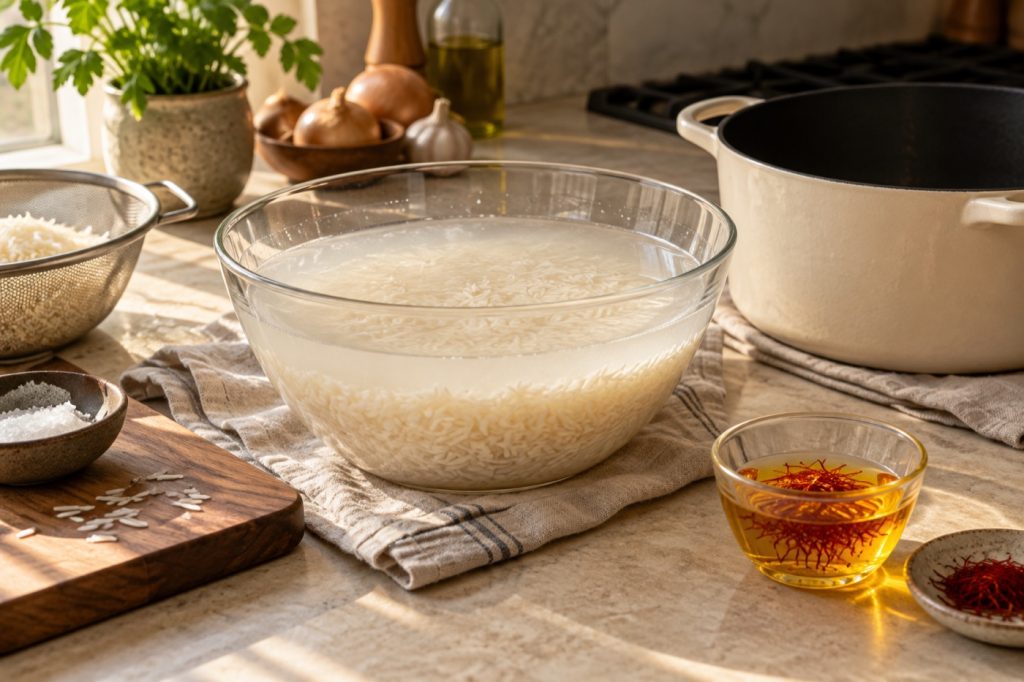
    Use a 9½-inch flat nonstick pot, fine colander, and clean kitchen towel. Soak rice at least 30 minutes.

    Bloom saffron in 2 tablespoons hot water for 10 minutes. Do not leave the drained rice standing.

    Keep the towel well away from the flame or heating element.

    Rinse and soak the rice
    Rinse rice 4–5 times until water is nearly clear. Soak in warm water 30 minutes. Bloom saffron in 2 tablespoons hot water.

    Step-by-step method

    1. Rinse and soak the rice

    Rinse rice 4–5 times until water is nearly clear. Soak in warm water 30 minutes. Bloom saffron in 2 tablespoons hot water.

    2. Parboil until firm

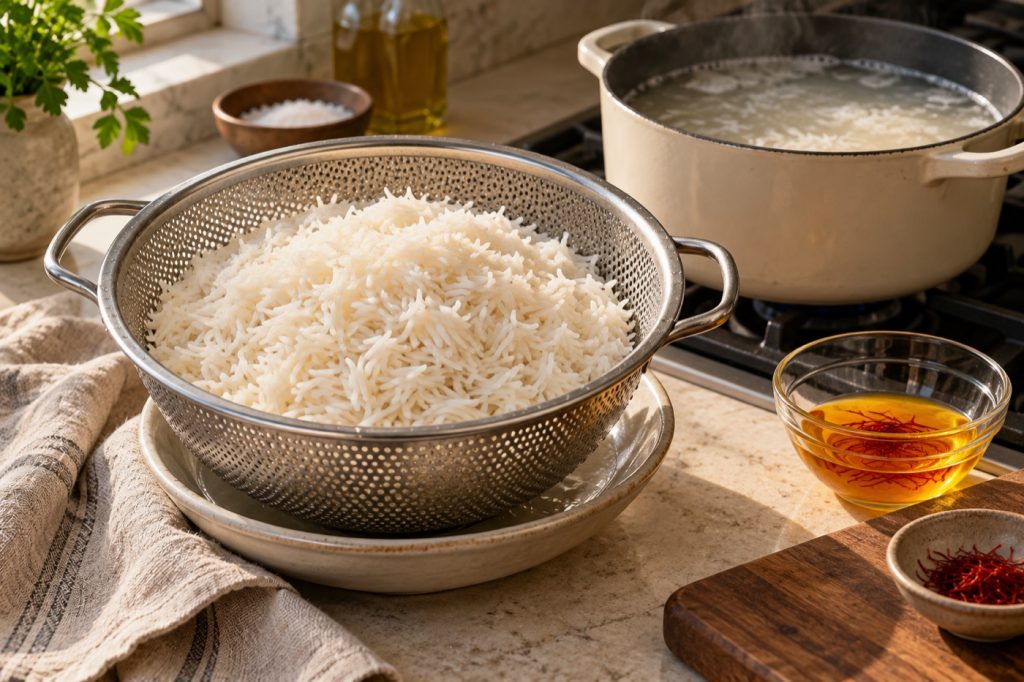
    Boil abundant salted water. Add drained rice and cook 5–7 minutes; grains should lengthen but retain a firm center. Drain immediately.

    Parboil until firm
    Boil abundant salted water. Add drained rice and cook 5–7 minutes; grains should lengthen but retain a firm center. Drain immediately.

    3. Build the saffron base

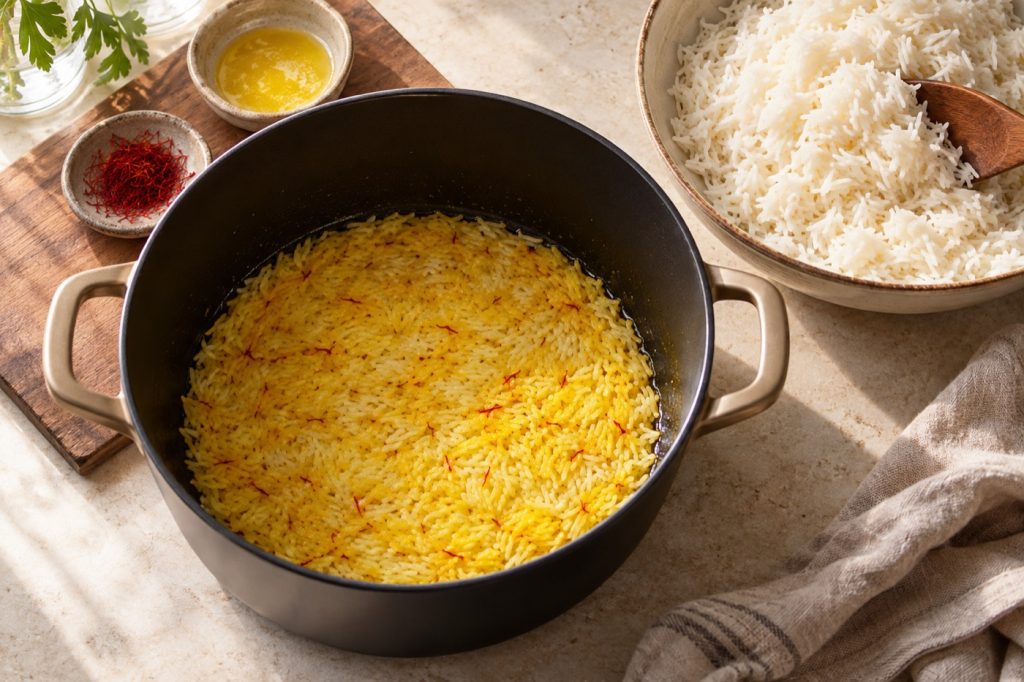
    Heat oil, half the butter, 60 ml water, and saffron in the nonstick pot. Add about one-quarter of the rice and press into an even compact layer.

    Build the saffron base
    Heat oil, half the butter, 60 ml water, and saffron in the nonstick pot. Add about one-quarter of the rice and press into an even compact layer.

    4. Steam and invert

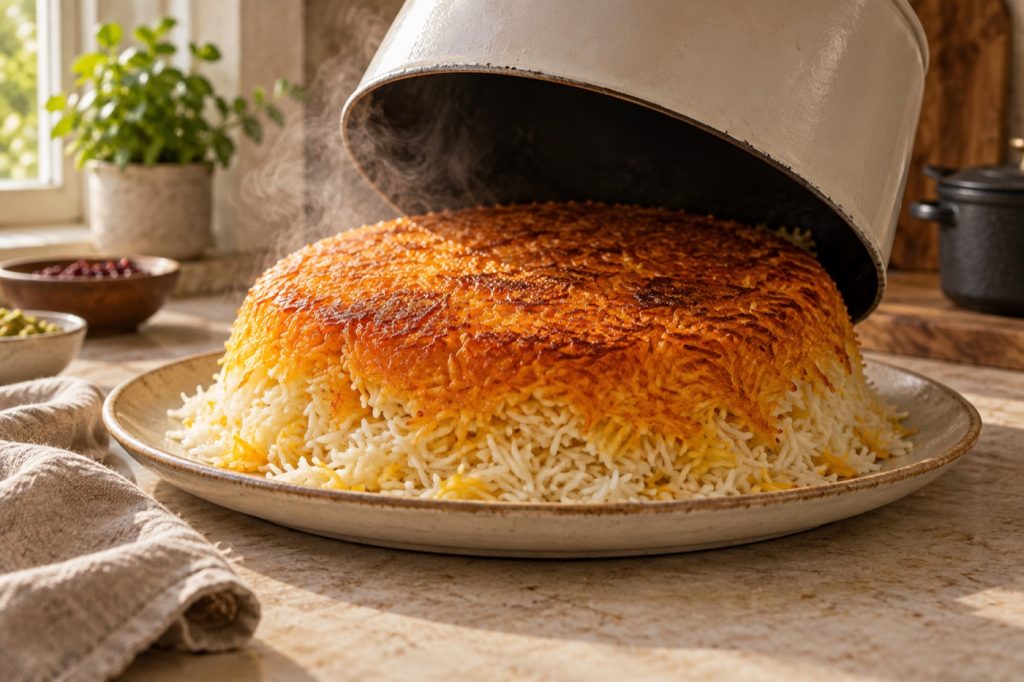
    Mound the remaining rice loosely and drizzle with remaining butter. Wrap the lid with a towel. Cook 8 minutes over medium, then 35–40 minutes very low. Rest 5 minutes and invert in one confident motion.

    Steam and invert
    Mound the remaining rice loosely and drizzle with remaining butter. Wrap the lid with a towel. Cook 8 minutes over medium, then 35–40 minutes very low. Rest 5 minutes and invert in one confident motion.

    Texture and doneness cues

    A nutty toasted aroma appears, sizzling subsides, and the inverted crust is deep gold, dry, and intact. Lower heat immediately if it smells burnt.

    Mistakes, substitutions, and measurements

    Turmeric can add color but cannot reproduce saffron flavor. 1 cup raw basmati is about 190–200 g. Contains dairy; use only oil for dairy-free rice.

    Serving, storage, and allergens

    Serve with kebabs or yogurt-based dishes. Spread leftovers in a shallow container and chill within 2 hours; refrigerate 3–4 days. Reheat once to 165°F. Freezing softens the crust.

    Frequently asked questions

    Why did tahdig stick?

    The pot may be unsuitable, the base under-oiled, or cooking too short. Rest 5 minutes before inverting.

    Why is the rice mushy?

    It was parboiled too long. Drain while the grains still have a firm center.

    How do I recrisp leftovers?

    Heat wedges crust-side down in a lightly oiled skillet over medium heat for 3–4 minutes.

  • Turkish Lentil Soup (Easy Mercimek Çorbası)

    Turkish Lentil Soup (Easy Mercimek Çorbası)

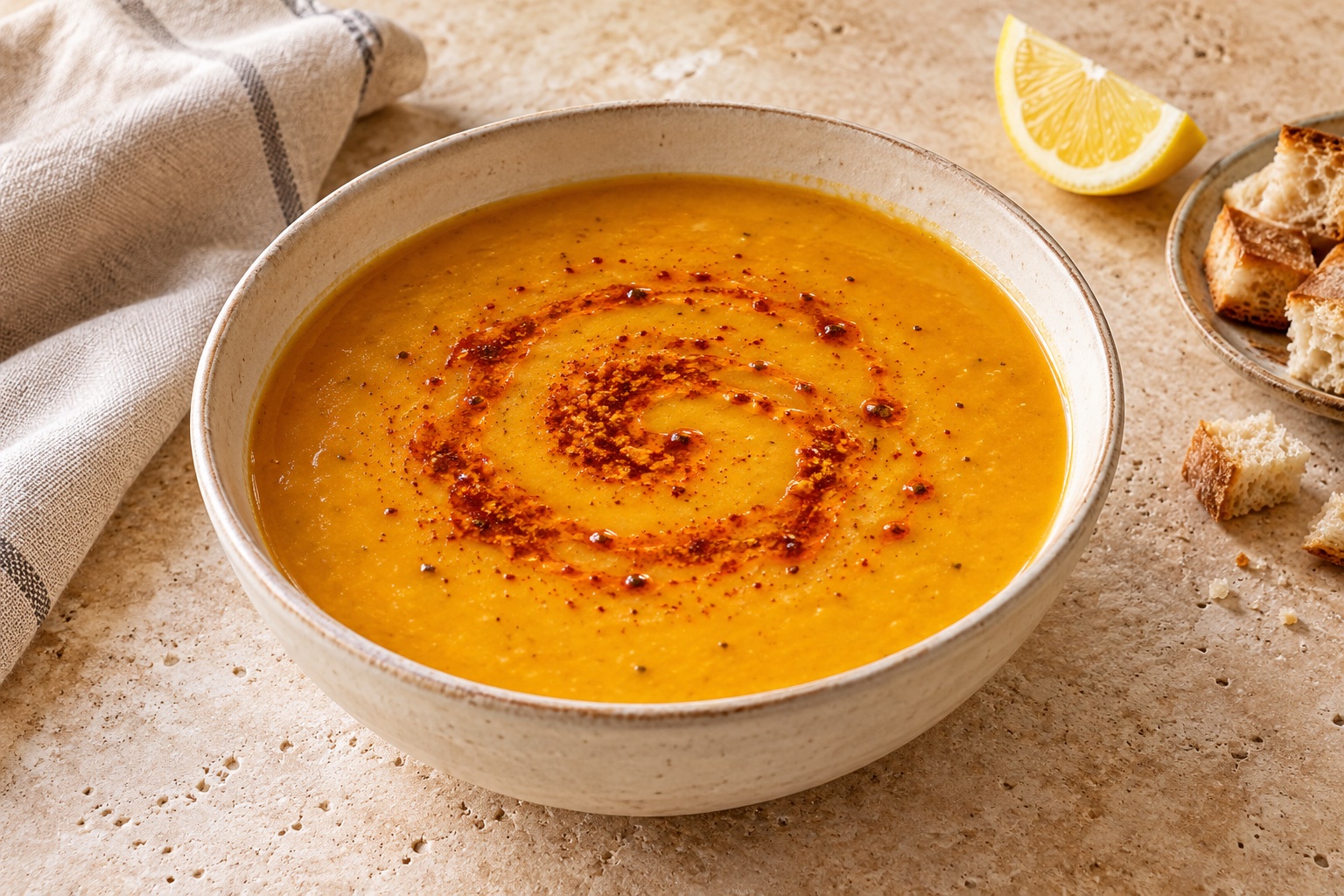
    Turkish lentil soup, known as mercimek çorbası, is a smooth and comforting red lentil soup served in homes and restaurants across Turkey. This version combines red lentils with carrot and potato, then blends everything until silky. A quick paprika-butter drizzle and fresh lemon bring the whole bowl to life.

    The recipe serves six and takes about 40 minutes from start to finish. It uses everyday ingredients and is naturally easy to adapt: omit the flour for a lighter, gluten-free version and use olive oil instead of butter if preferred.

    Why this Turkish lentil soup works

    • Potato gives the soup natural body without adding cream.
    • Sautéing the vegetables first builds a deeper, rounder flavor.
    • Cumin balances the earthy red lentils.
    • Blending and briefly simmering again creates a restaurant-style texture.

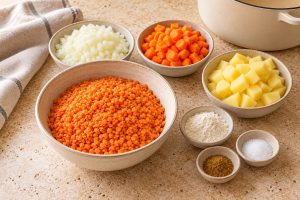
    Prepare the ingredients

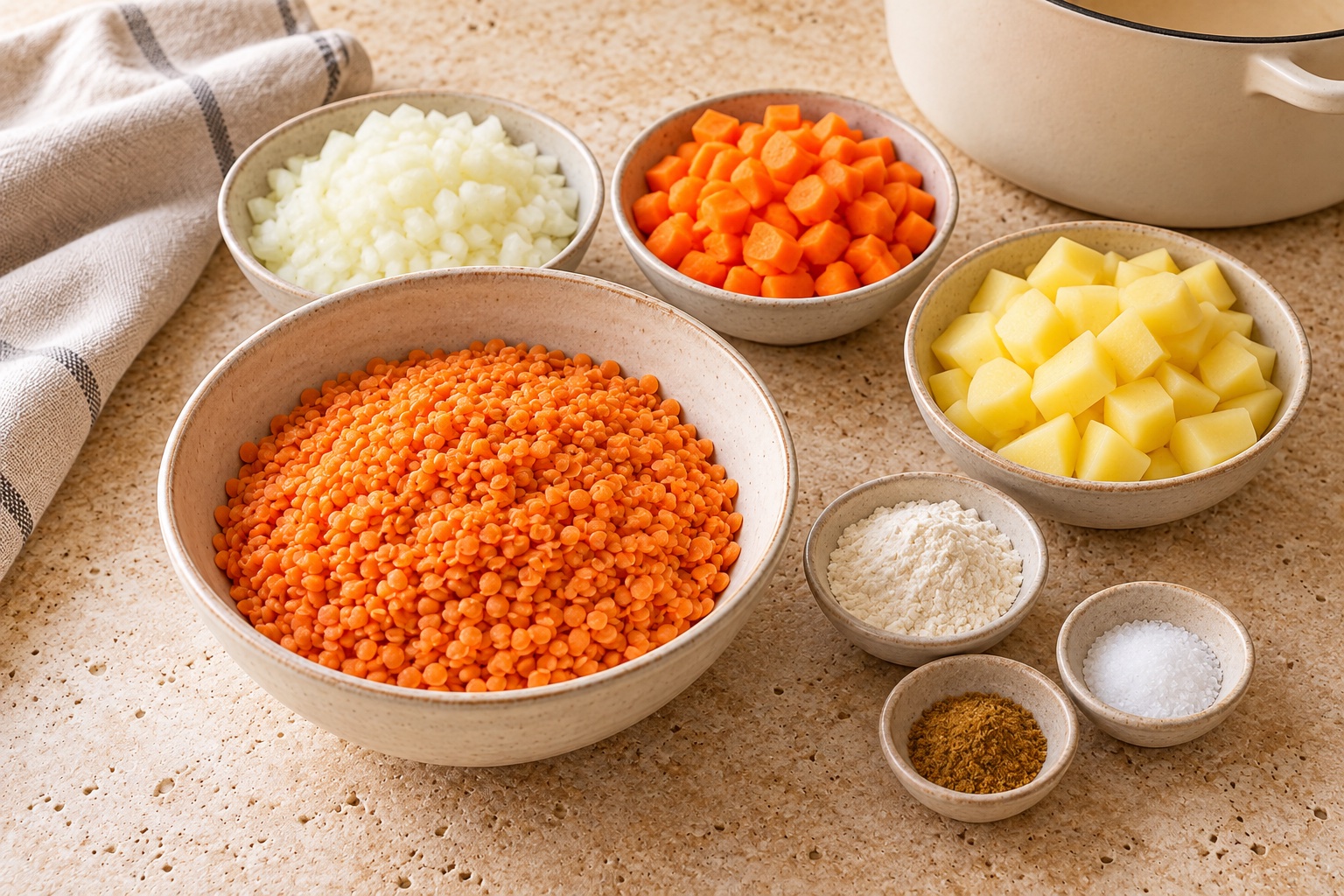
    Rinse the red lentils several times until the water runs mostly clear. Dice the onion, carrot and potato into similar-sized pieces so they soften evenly.

    Red lentils, onion, carrot, potato, flour and spices
    Ingredients prepared for Turkish lentil soup.

    How to make Turkish lentil soup

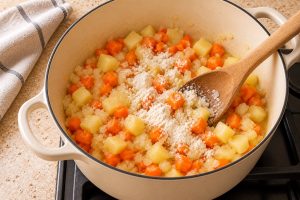
    1. Sauté the vegetables

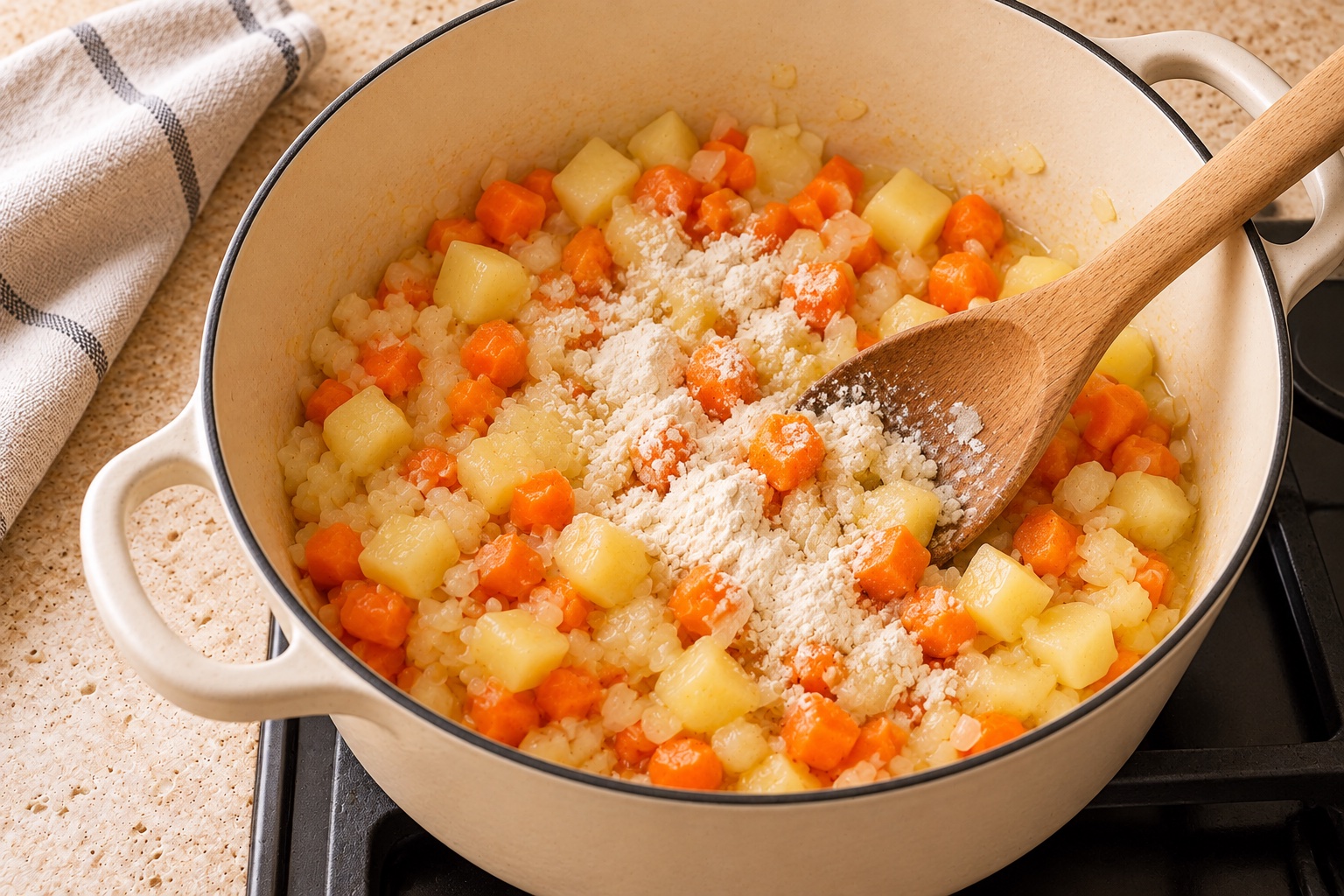
    Warm the olive oil and butter over medium heat. Soften the onion, then add the carrot and potato. Cook for a few minutes before stirring in the flour for one minute. Keep the heat moderate so the flour does not brown.

    Onion, carrot and potato sautéing with flour in a cream-colored pot
    Sauté the vegetables to build the soup’s flavor base.

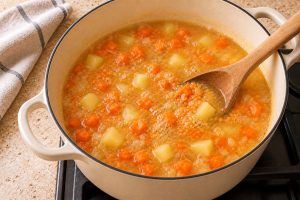
    2. Simmer until tender

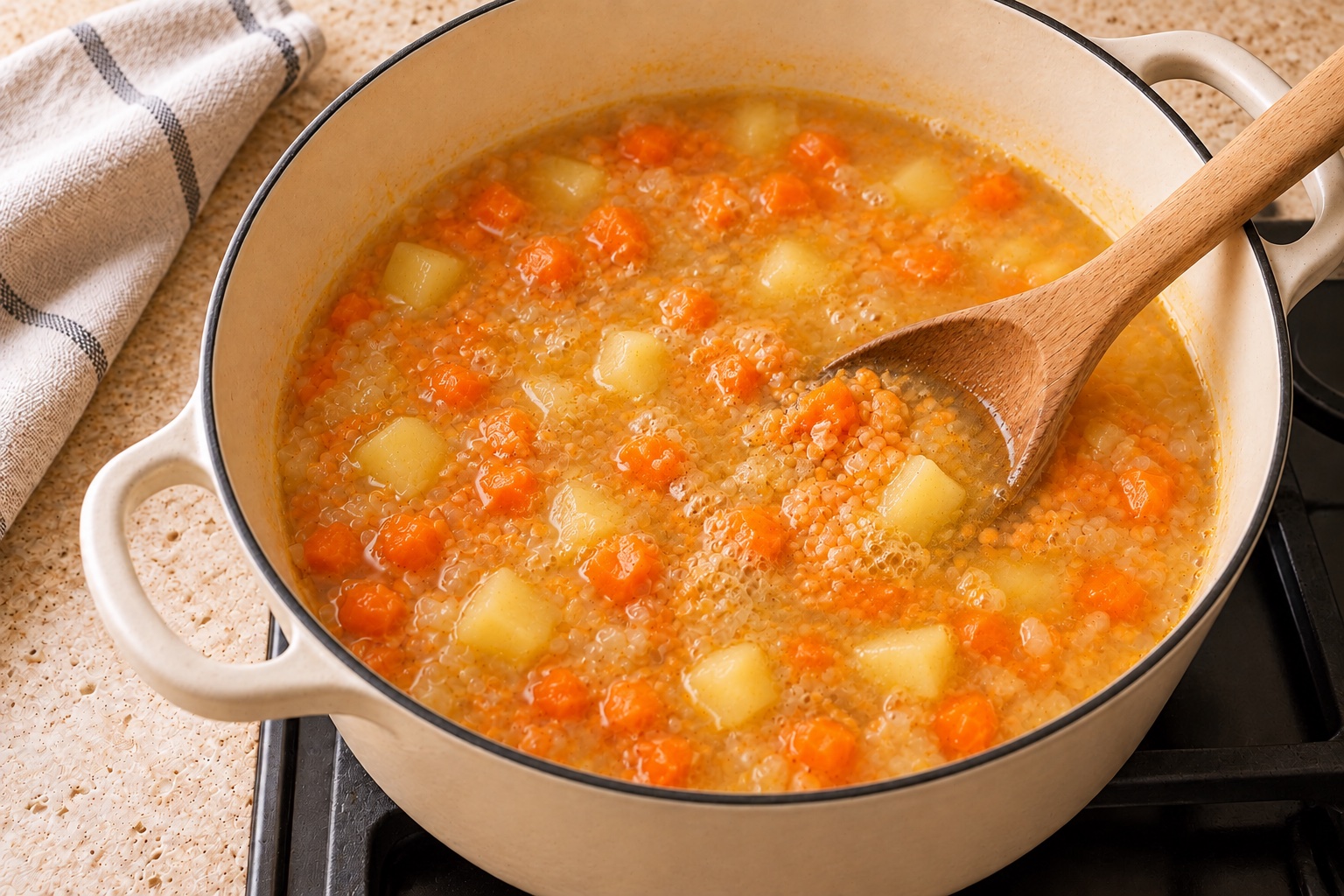
    Add the rinsed lentils, cumin, salt, black pepper and hot water or stock. Bring to a boil and skim away any foam. Simmer partly covered for 22–25 minutes, until the lentils and vegetables are completely tender.

    Red lentils and vegetables simmering until tender
    Simmer the lentils and vegetables until very soft.

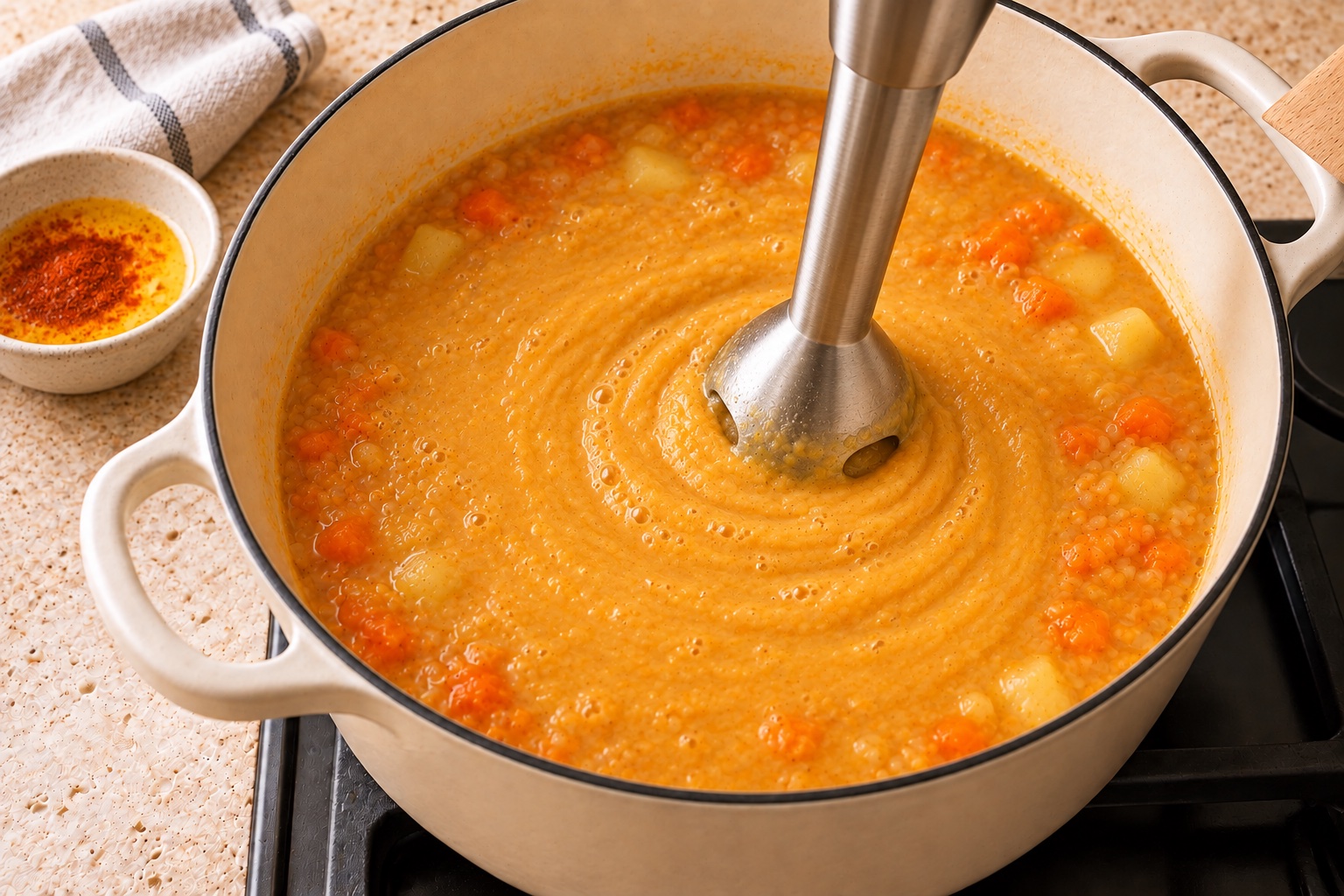
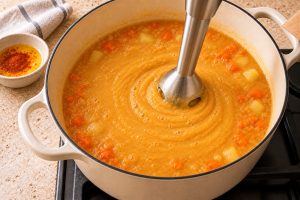
    3. Blend until smooth

    Remove the pot from the heat and blend with an immersion blender until completely smooth. Add a little hot water if the soup is too thick. Return it to the heat, simmer for two minutes and adjust the seasoning.

    Cooked lentil soup being puréed with an immersion blender
    Blend the soup until creamy and uniform.

    4. Finish with paprika butter

    Melt the remaining butter in a small pan. Stir in the sweet paprika for only 10–15 seconds, then drizzle it over the hot soup. Serve with lemon wedges.

    Paprika yağlı lokanta usulü mercimek çorbası

    Turkish Lentil Soup

    A silky Turkish red lentil soup with carrot and potato, blended smooth and finished with paprika butter.
    Prep Time 10 minutes
    Cook Time 30 minutes
    Total Time 40 minutes
    Servings: 6 servings
    Course: Soup

    Ingredients
      

    • 1 cup red lentils rinsed (200 g)
    • 1 medium onion diced
    • 1 medium carrot diced
    • 1 small potato diced
    • 1 tablespoon olive oil
    • 1 tablespoon butter
    • 1 tablespoon all-purpose flour
    • 1 teaspoon ground cumin
    • 1.5 litres hot water or low-sodium vegetable stock
    • 1 teaspoon salt or to taste
    • 1/4 teaspoon black pepper
    • 1 tablespoon butter for the topping
    • 1 teaspoon sweet paprika
    • lemon wedges for serving

    Method
     

    1. Rinse the red lentils under running water until the water runs clear. Dice the onion, carrot and potato evenly.
      Kırmızı mercimek, soğan, havuç, patates, un ve baharatlar
    2. Heat the olive oil and 1 tablespoon butter over medium heat. Soften the onion for 3 minutes. Add the carrot and potato and sauté for 4 minutes. Sprinkle in the flour and stir for 1 minute.
      Krem tencerede soğan, havuç ve patatesin unla kavrulması
    3. Add the lentils, cumin, salt, black pepper and hot water. Bring to a boil, skim any foam, then simmer partly covered for 22–25 minutes until completely tender.
      Kırmızı mercimek ve sebzelerin tencerede yumuşayana kadar pişmesi
    4. Remove from the heat and blend until smooth. Add a little hot water if needed. Return to the heat, simmer for 2 minutes and adjust the salt.
      Pişen mercimek çorbasının el blenderıyla pürüzsüzleştirilmesi
    5. Melt 1 tablespoon butter in a small pan. Stir in the paprika for 10–15 seconds without burning it. Drizzle over the soup and serve with lemon.

    Consistency, serving and storage

    The soup thickens as it rests. When reheating, add hot water a little at a time and stir well. Serve it with crusty bread, pita or croutons. Refrigerate in a covered container for up to three days and reheat thoroughly before serving.

    Frequently asked questions

    Can I make Turkish lentil soup without flour?

    Yes. Simply leave it out. The potato and red lentils still produce a creamy, satisfying consistency.

    Can I use a countertop blender?

    Yes, but let the soup cool slightly and blend it in small batches. Never seal a blender completely when processing hot liquid, because steam pressure can build up.