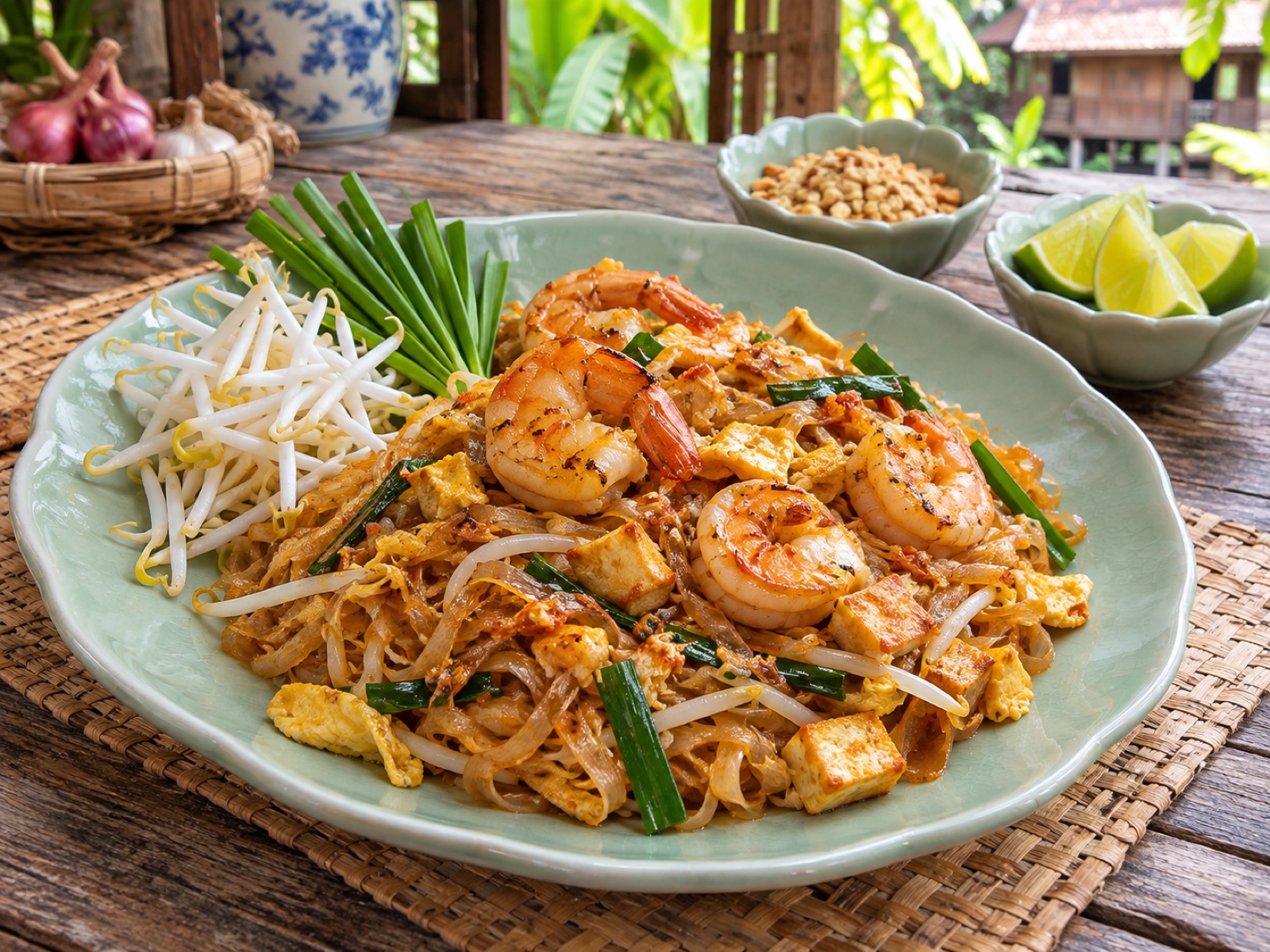
Thailand’s Consulate-General in Shanghai describes pad Thai around a three-flavor sauce of tamarind, palm sugar, and fish sauce, with rice noodles, tofu, egg, peanuts, and sprouts. Regional and household versions vary.
This home method sequences ingredients instead of crowding four servings into the wok at once. The noodles are not boiled; they soak in room-temperature water until flexible and finish by absorbing sauce in the wok.
Why this method works
- Room-temperature soaking prevents rice noodles from turning mushy outside while remaining hard inside.
- Dissolving the sauce before it reaches the wok prevents scorched sugar and uneven seasoning.
- Removing shrimp early and adding sprouts and chives in the final minute keeps seafood juicy and vegetables crisp.
Before you start
Prepare a wide wok or 12-inch skillet, tongs, two bowls, and strainer. Cut and measure everything before lighting the burner; wok cooking moves quickly.
Tamarind products vary greatly. Use unsweetened concentrate or pulp, not beverage syrup; with a very strong concentrate, start with half and taste.
Keep shrimp refrigerated, use a separate board, and never return cooked shrimp to the raw-shrimp plate.
Step-by-step method
1. Soak the noodles and dissolve the three-flavor sauce
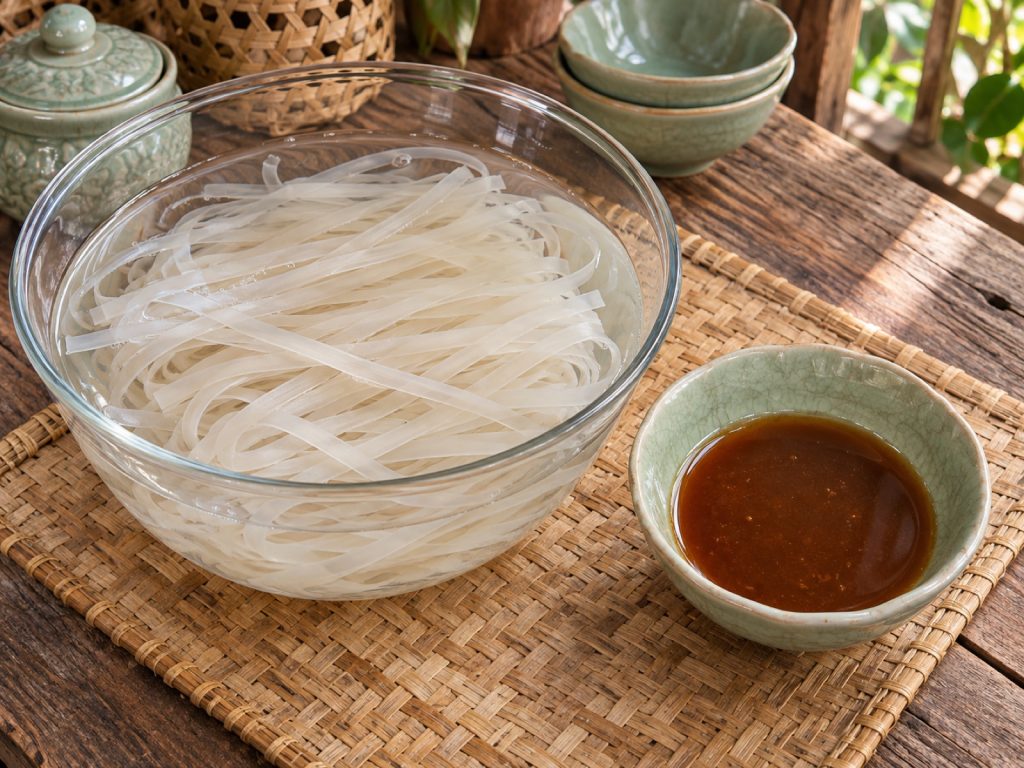
Soak noodles in plenty of room-temperature water for 25–35 minutes until bendable but still slightly firm in the center; drain. Stir tamarind, fish sauce, and sugar in a bowl until the sugar dissolves.
2. Sear the shrimp and tofu separately
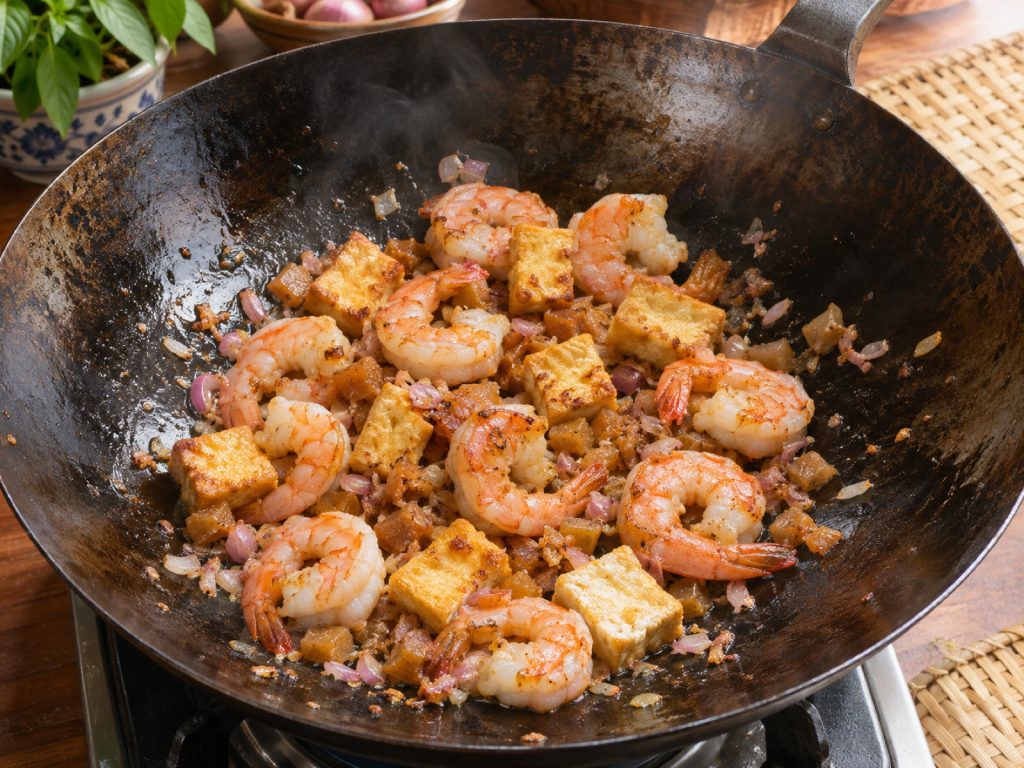
Heat the wok over medium-high. Brown tofu in 1 tablespoon oil for 4–5 minutes; remove. Add another tablespoon oil and cook shrimp 2–3 minutes until opaque and 145°F; move to a clean plate. Cook shallot and radish in remaining oil for 1 minute.
3. Finish the noodles in the wok with sauce
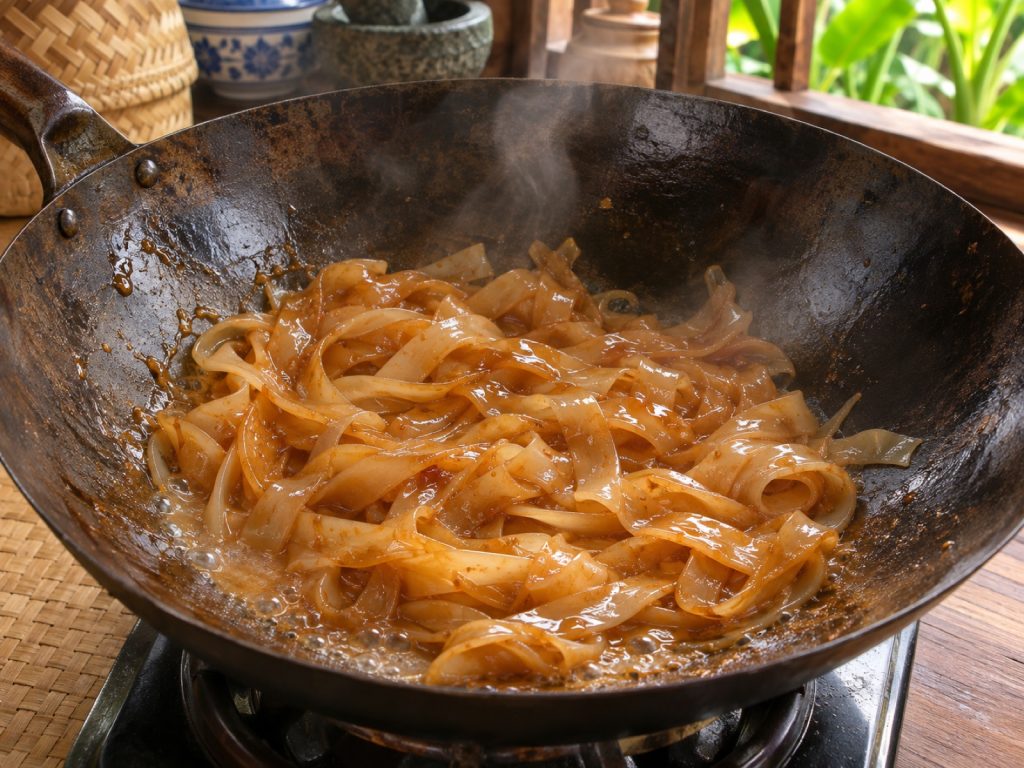
Add drained noodles, sauce, and ¼ cup/60 ml water. Toss continuously for 2–4 minutes until flexible and glossy with no pooled liquid. If the noodles look dry but remain firm, add water 1–2 tablespoons at a time.
4. Finish with egg, sprouts, and garlic chives
Push noodles aside; scramble eggs in the open space until set and 160°F. Return tofu and shrimp. Toss sprouts and chives for only 30–60 seconds so they stay crisp. Serve immediately with peanuts, lime, and optional chili.
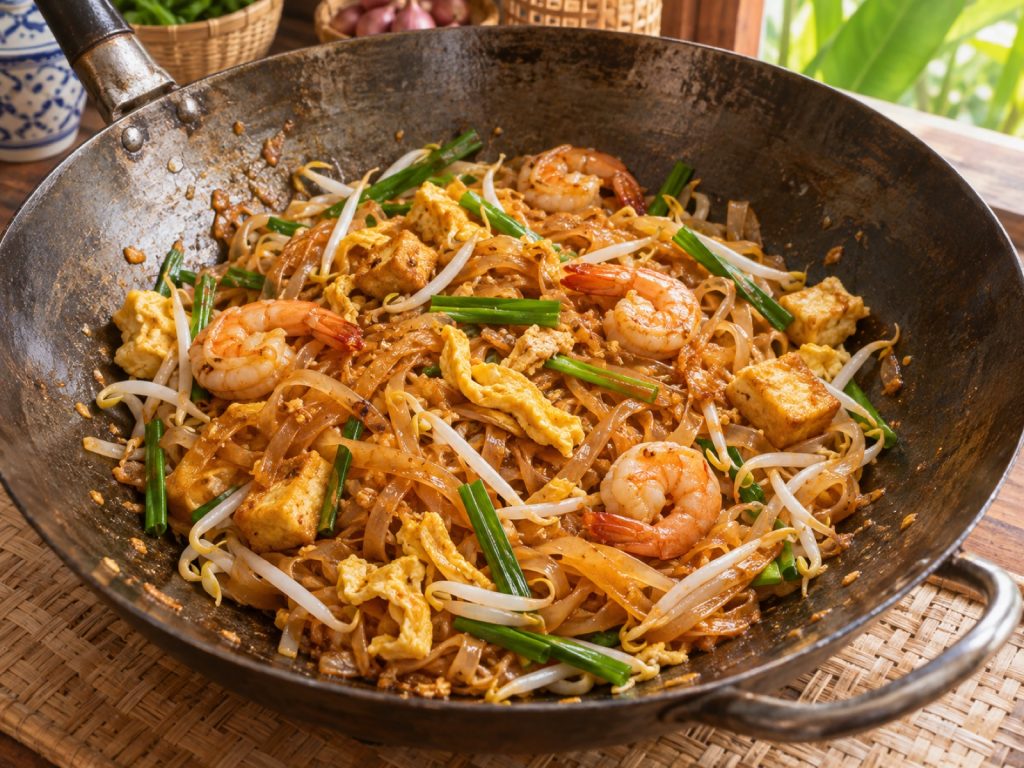
Pad Thai
Home-style pad Thai with room-temperature soaked rice noodles, balanced tamarind sauce, shrimp, tofu, and sprouts added at the end.
Ingredients
- 250 g flat rice noodles — ⅛-inch wide
- 45 ml unsweetened tamarind concentrate
- 45 ml fish sauce
- 45 g palm sugar or brown sugar
- 45 ml neutral oil
- 300 g raw large shrimp — peeled and deveined
- 200 g firm tofu — ¾-inch cubes
- 80 g shallots — thinly sliced
- 30 g Thai preserved radish — optional, minced
- 2 large eggs
- 200 g bean sprouts
- 80 g garlic chives — 2-inch pieces
- 60 g roasted peanuts — coarsely crushed
- 2 whole limes — cut into wedges
- ½ tsp chili flakes — optional
Instructions
- Soak noodles in plenty of room-temperature water for 25–35 minutes until bendable but still slightly firm in the center; drain. Stir tamarind, fish sauce, and sugar in a bowl until the sugar dissolves.
- Heat the wok over medium-high. Brown tofu in 1 tablespoon oil for 4–5 minutes; remove. Add another tablespoon oil and cook shrimp 2–3 minutes until opaque and 145°F; move to a clean plate. Cook shallot and radish in remaining oil for 1 minute.
- Add drained noodles, sauce, and ¼ cup/60 ml water. Toss continuously for 2–4 minutes until flexible and glossy with no pooled liquid. If the noodles look dry but remain firm, add water 1–2 tablespoons at a time.
- Push noodles aside; scramble eggs in the open space until set and 160°F. Return tofu and shrimp. Toss sprouts and chives for only 30–60 seconds so they stay crisp. Serve immediately with peanuts, lime, and optional chili.
Notes
- Noodles separate, shine, and bend without being hard or mushy; no sauce pools in the wok. Shrimp is opaque at 145°F, egg is fully set at 160°F, and sprouts remain crisp.
- Broken noodles were over-soaked or stirred too aggressively. If tamarind is sharply sour, your concentrate is strong; dilute and taste. For 10½ oz/300 g chicken instead of shrimp, cook the thickest piece to 165°F. Scallion greens can replace garlic chives. 250 g noodles is about 9 oz.
- Pad Thai is best immediately. Refrigerate leftovers in a shallow container within 2 hours for up to 3 days; reheat with 1–2 tablespoons water to 165°F. Freezing damages noodle and sprout texture. Contains shellfish, fish, egg, peanuts, and soy; check packaged sauces for gluten cross-contact.
Texture and doneness cues
Noodles separate, shine, and bend without being hard or mushy; no sauce pools in the wok. Shrimp is opaque at 145°F, egg is fully set at 160°F, and sprouts remain crisp.
Mistakes, substitutions, and conversions
Broken noodles were over-soaked or stirred too aggressively. If tamarind is sharply sour, your concentrate is strong; dilute and taste. For 10½ oz/300 g chicken instead of shrimp, cook the thickest piece to 165°F. Scallion greens can replace garlic chives. 250 g noodles is about 9 oz.
Serving, storage, and allergens
Pad Thai is best immediately. Refrigerate leftovers in a shallow container within 2 hours for up to 3 days; reheat with 1–2 tablespoons water to 165°F. Freezing damages noodle and sprout texture. Contains shellfish, fish, egg, peanuts, and soy; check packaged sauces for gluten cross-contact.
Frequently asked questions
Why do pad Thai noodles clump?
Over-soaking, too little oil, or leaving them still in the wok causes clumping; drain while slightly firm and keep tossing.
Can I make it without tamarind?
Tamarind supplies the characteristic sourness. Lime is not the same flavor and should be treated as an adaptation.
Why not cook everything at once?
Shrimp, tofu, egg, and noodles need different times; sequencing prevents overcooking and excess moisture.
Leave a Reply