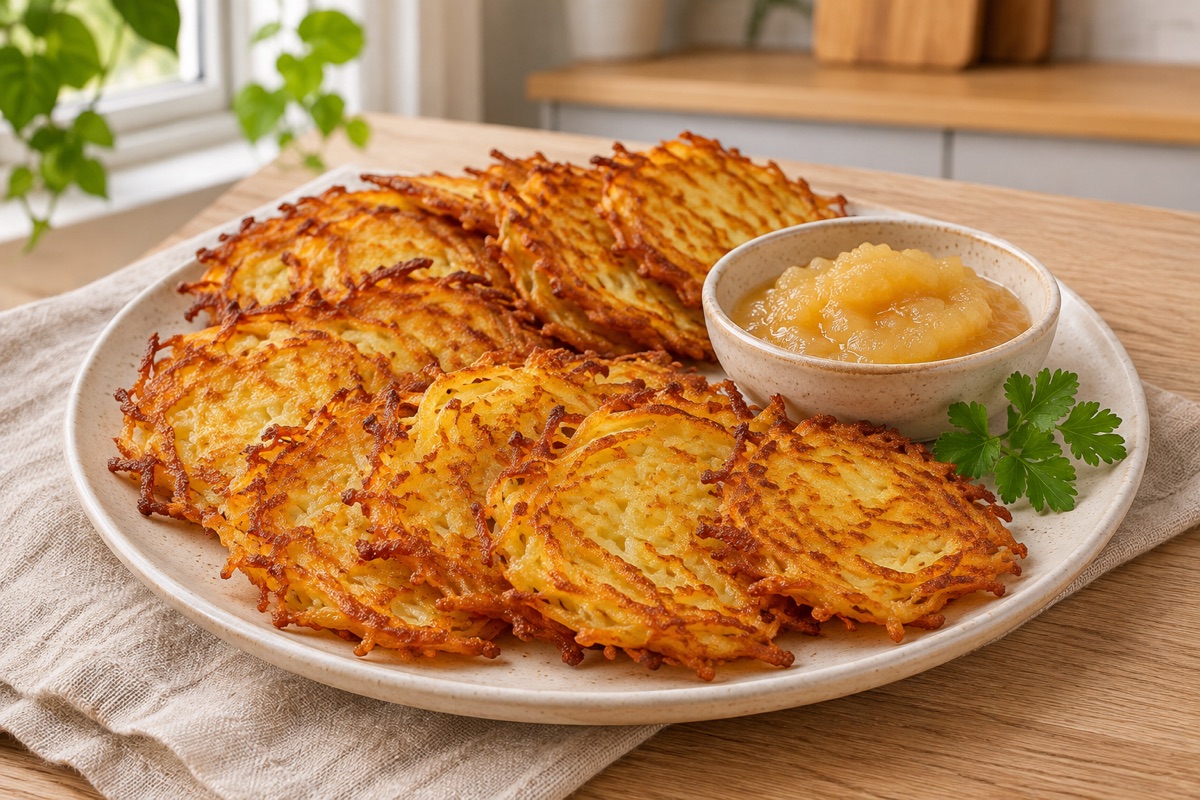
Germany Travel lists Kartoffelpuffer among Germany’s crisp fried potato dishes. Names and accompaniments vary by region; this straightforward home version works with applesauce or sour cream.
The key to crispness is squeezing the grated potato dry, returning the settled potato starch to the batter, and holding the oil near 340–350°F between batches.
Why this method works
- Removing water limits steam, so the surface browns before the center turns gummy.
- Settled potato starch binds the shreds without a flour-heavy texture.
- A wire rack prevents trapped steam from softening the underside.
Before you start
Prepare a box grater or food processor, clean towel, wide skillet, wire rack, and thermometer.
Grate potatoes just before frying; standing causes discoloration and more water release.
Never fill the skillet more than halfway with oil, and keep water away from hot oil.
Step-by-step method
1. Grate and thoroughly squeeze the potatoes
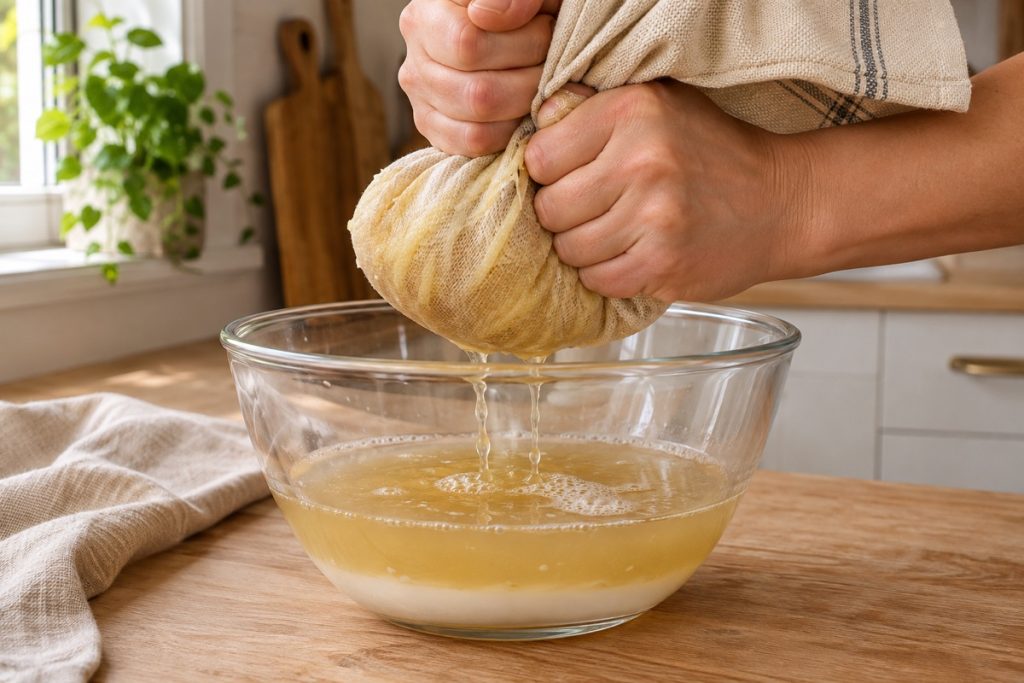
Coarsely grate potato and onion. Wrap in a clean towel and squeeze in small batches until very dry. Collect the liquid in a bowl and rest 5 minutes; pour off the water while keeping the white starch settled at the bottom.
2. Bind the batter with natural potato starch
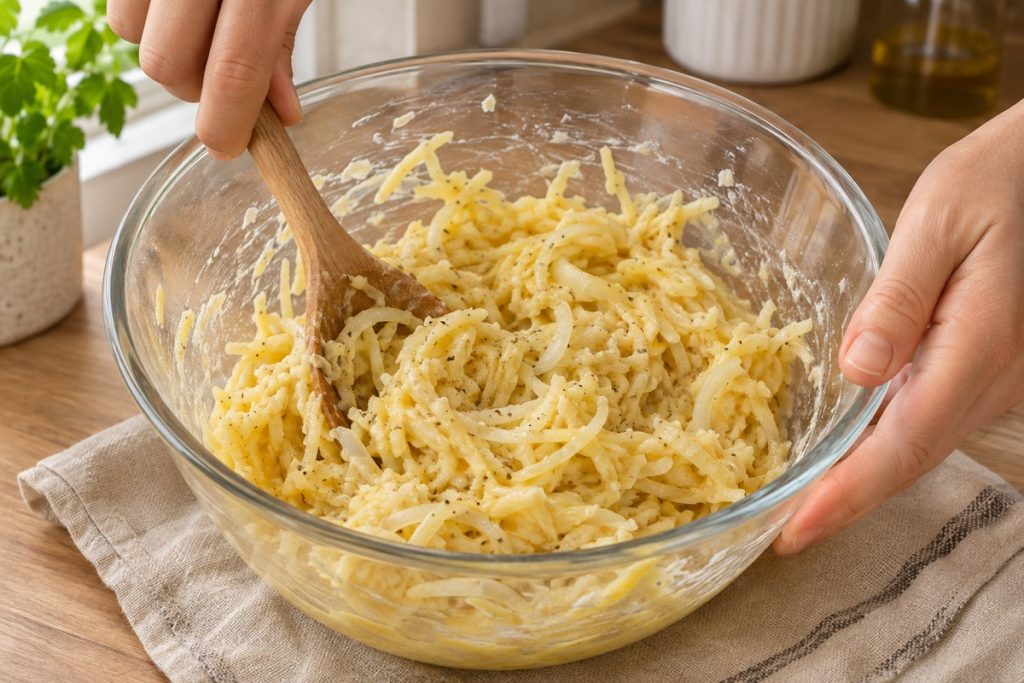
Add the squeezed shreds to the bowl with the starch. Mix in eggs, flour, salt, pepper, and nutmeg. The mixture should not run from a spoon and should form a thin patty when pressed.
3. Fry thin pancakes at controlled heat
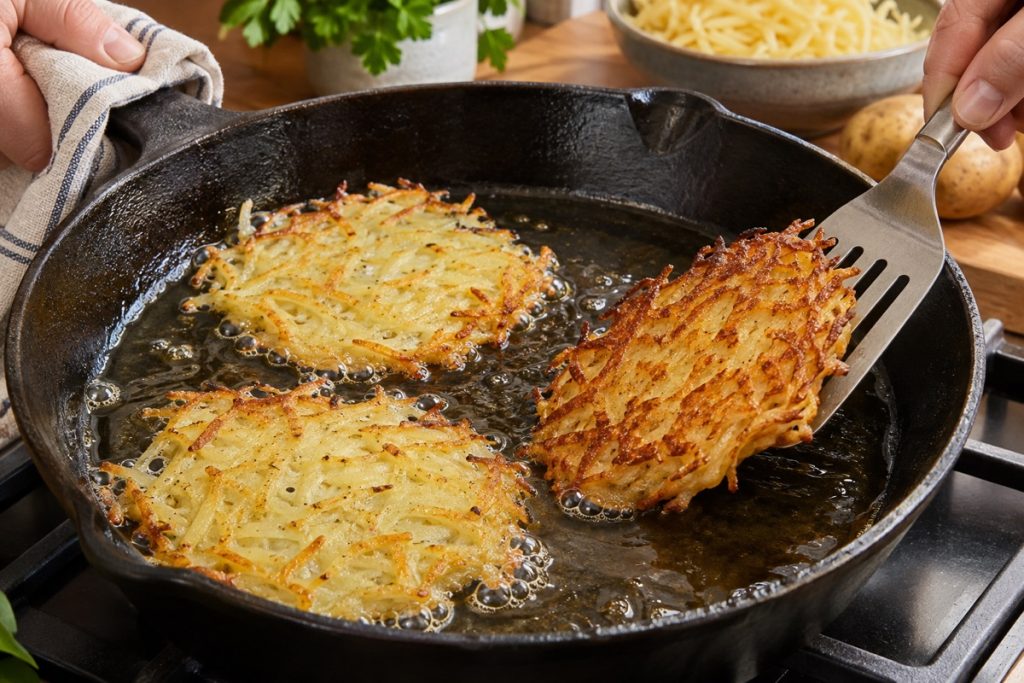
Heat ¼ inch/5 mm oil to 340–350°F. Add about ¼ cup batter per pancake and press to ¼–⅓ inch thick. Without crowding, fry 3–4 minutes per side until deep golden.
4. Drain on a rack to preserve crispness
Transfer to a wire rack and season lightly. Let oil return to 340°F between batches. Serve immediately, or hold in one layer in a 210°F/100°C oven for no more than 20 minutes.
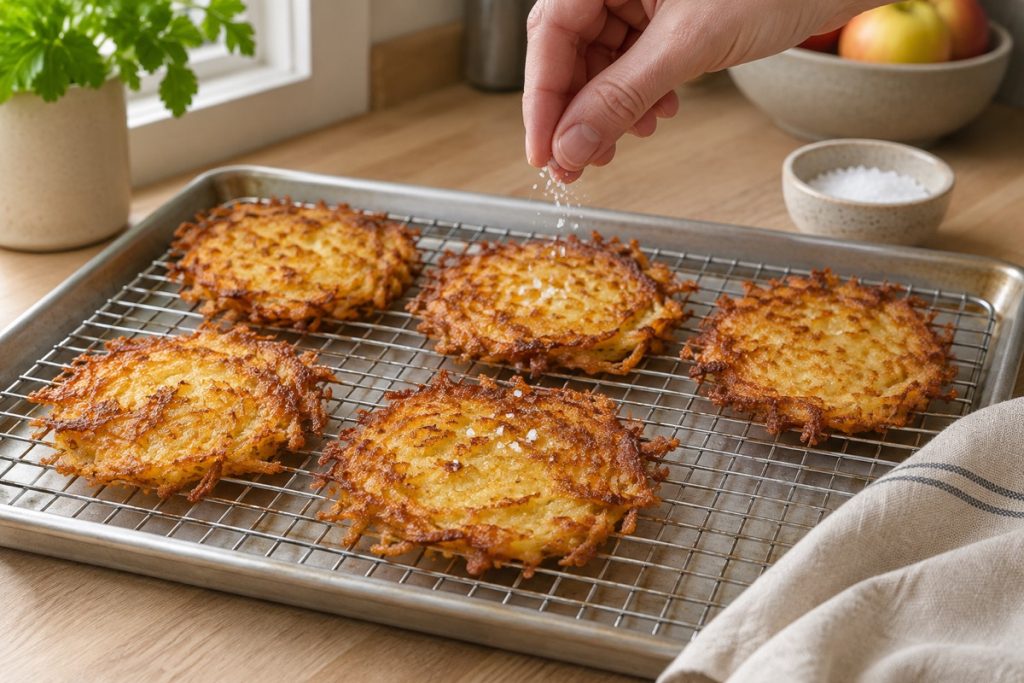
Kartoffelpuffer
German potato pancakes that stay crisp through thorough draining, controlled oil temperature, and rack draining.
Ingredients
- 1 kg starchy potatoes — peeled
- 120 g yellow onion — peeled
- 2 large eggs
- 30 g plain flour
- 1½ tsp fine salt
- ½ tsp black pepper
- ⅛ tsp nutmeg — optional
- 250 ml neutral frying oil — as needed
- 200 g unsweetened applesauce — optional, to serve
Instructions
- Coarsely grate potato and onion. Wrap in a clean towel and squeeze in small batches until very dry. Collect the liquid in a bowl and rest 5 minutes; pour off the water while keeping the white starch settled at the bottom.
- Add the squeezed shreds to the bowl with the starch. Mix in eggs, flour, salt, pepper, and nutmeg. The mixture should not run from a spoon and should form a thin patty when pressed.
- Heat ¼ inch/5 mm oil to 340–350°F. Add about ¼ cup batter per pancake and press to ¼–⅓ inch thick. Without crowding, fry 3–4 minutes per side until deep golden.
- Transfer to a wire rack and season lightly. Let oil return to 340°F between batches. Serve immediately, or hold in one layer in a 210°F/100°C oven for no more than 20 minutes.
Notes
- The outside is deep golden and glassy-crisp while the center is cooked but still visibly shredded. Proper oil gives active edge bubbles without pale, greasy pancakes.
- Soft pancakes usually mean wet potatoes, cool oil, or stacking. Replace flour with 25 g potato starch. You may reduce onion; if omitted completely, the batter may need 1–2 tbsp water. 1 kg potatoes is about 2.2 lb.
- Best eaten fresh. Cool leftovers within 2 hours and refrigerate up to 3 days; reheat on a rack at 400°F/200°C for 8–10 minutes. Freeze cooked pancakes separated for up to 1 month. Contains egg and gluten.
Texture and doneness cues
The outside is deep golden and glassy-crisp while the center is cooked but still visibly shredded. Proper oil gives active edge bubbles without pale, greasy pancakes.
Mistakes, substitutions, and conversions
Soft pancakes usually mean wet potatoes, cool oil, or stacking. Replace flour with 25 g potato starch. You may reduce onion; if omitted completely, the batter may need 1–2 tbsp water. 1 kg potatoes is about 2.2 lb.
Serving, storage, and allergens
Best eaten fresh. Cool leftovers within 2 hours and refrigerate up to 3 days; reheat on a rack at 400°F/200°C for 8–10 minutes. Freeze cooked pancakes separated for up to 1 month. Contains egg and gluten.
Frequently asked questions
Why are my pancakes greasy?
Oil below 340°F is absorbed by the batter; fry small batches and let the temperature recover.
Can I grate the potatoes ahead?
Not recommended; they release water and discolor. Grate and squeeze no more than 15 minutes ahead.
Can I bake them?
Yes, though the edges differ; bake on a well-oiled pan at 425°F/220°C, turning once, for 25–30 minutes.
Leave a Reply