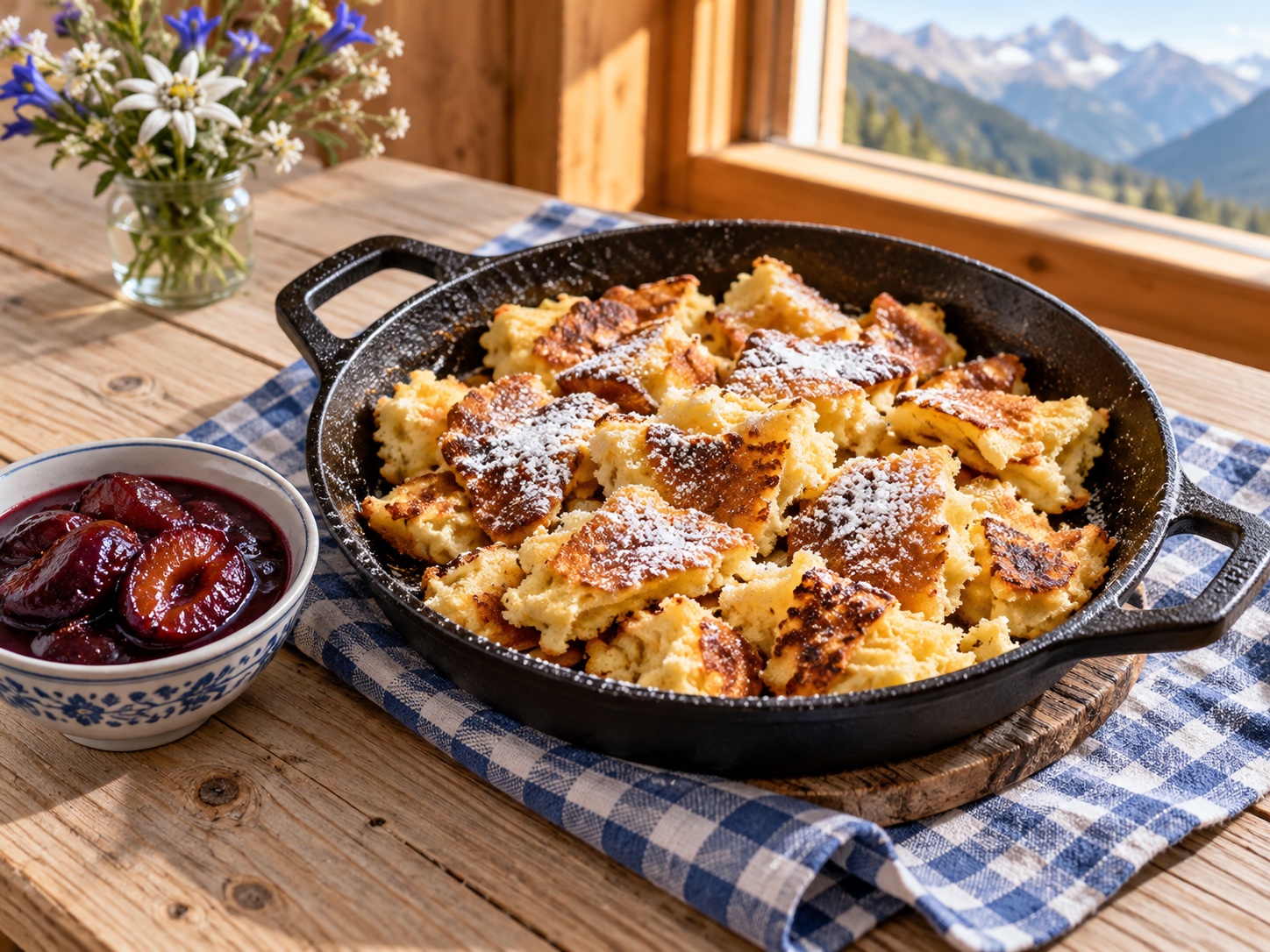
Kaiserschmarrn is the Austrian torn pancake dessert: cooked thick, pulled into pieces, dusted with sugar, and commonly served with plum compote.
Several origin legends exist, so no single story is presented as fact. This method whips the whites separately, finishes the pancake in the oven, then caramelizes the torn pieces briefly on the hob.
Why this method works
- Separately whipped whites carry air into the batter without baking powder.
- Starting on the hob and finishing in the oven cooks the thick center without burning the base.
- Tearing only after the pancake is cooked preserves lift; a final butter-sugar toss caramelizes just the surface.
Before you start
Use a 10–11-inch ovenproof skillet, two bowls, mixer, spatula, two wooden forks/spatulas, and thermometer.
Heat the oven to 350°F. Confirm the handle is ovenproof, and mark it as hot after removal.
Separate eggs while cold; keeping yolk and fat out of the whites improves volume.
Step-by-step method
1. Make the smooth yolk batter
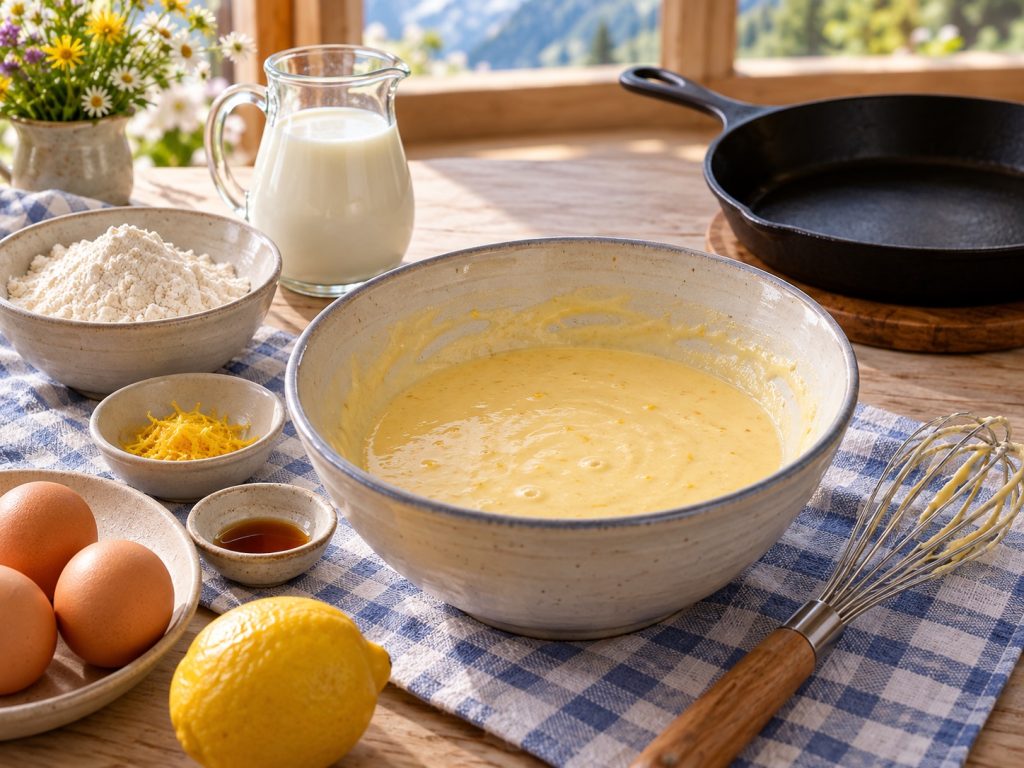
Heat oven to 350°F. Whisk yolks with 30 g sugar, vanilla, lemon zest, and salt. Add half the milk, sift in flour and whisk smooth, then add remaining milk. Rest batter 10 minutes.
2. Whip and gently fold the whites
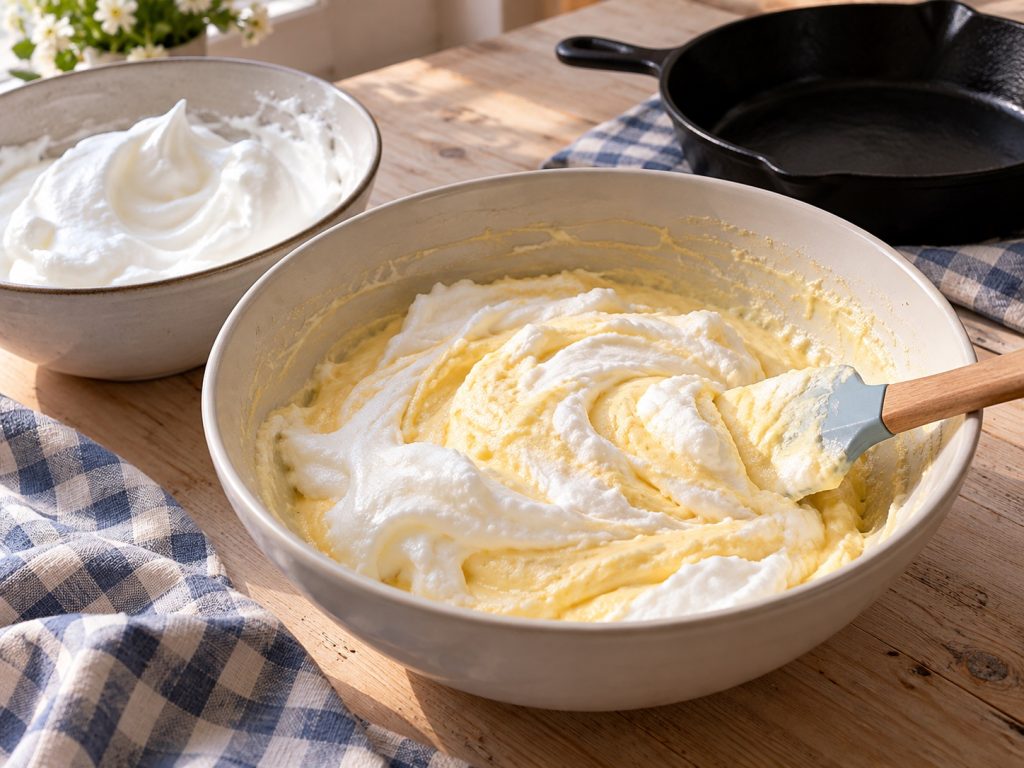
Beat whites in a clean bowl to glossy medium-stiff peaks. Stir one-third into the batter to lighten it, then fold the rest in two additions. Leave no white streaks without deflating; fold in raisins if using.
3. Start on the hob and finish in the oven
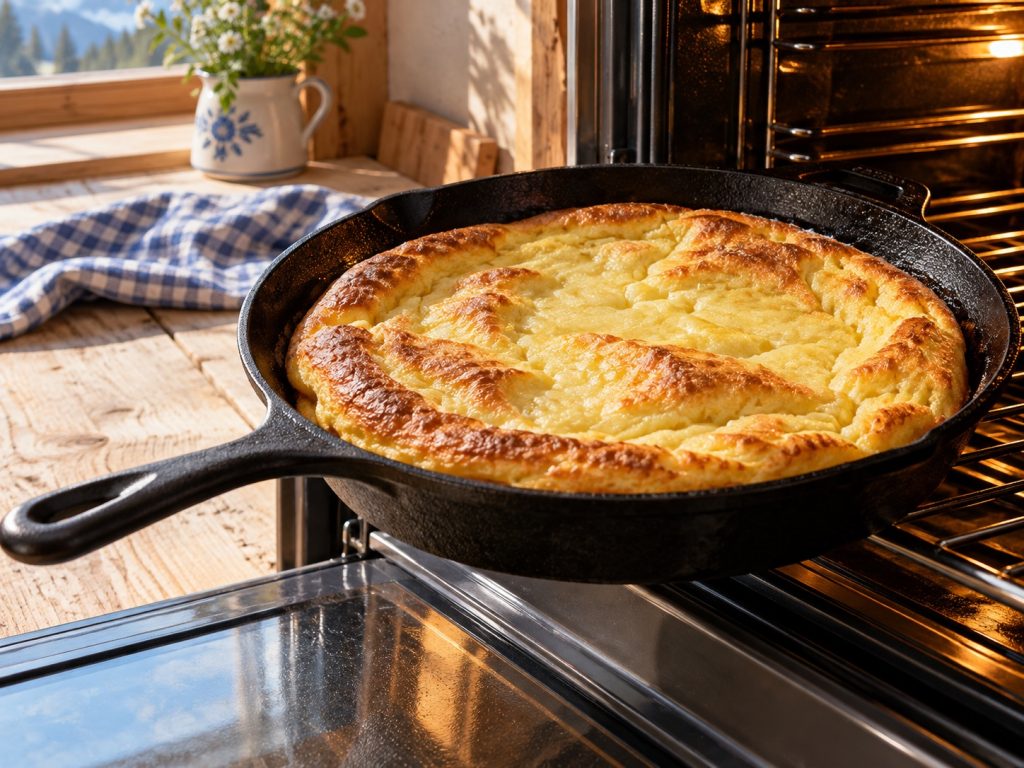
Melt 30 g butter in an ovenproof skillet over medium heat. Pour in batter and cook 3–4 minutes until the bottom edge is golden. Transfer to the oven for 10–12 minutes, until puffed, no wet batter remains, and the center reaches 160°F.
4. Tear and lightly caramelize
Return the hot skillet carefully to the hob. Use two wooden spatulas to tear the pancake into irregular 2-inch pieces. Add remaining 20 g butter and 15 g sugar; toss over medium-high heat 2–3 minutes to caramelize only the edges. Serve immediately with icing sugar and plum compote.
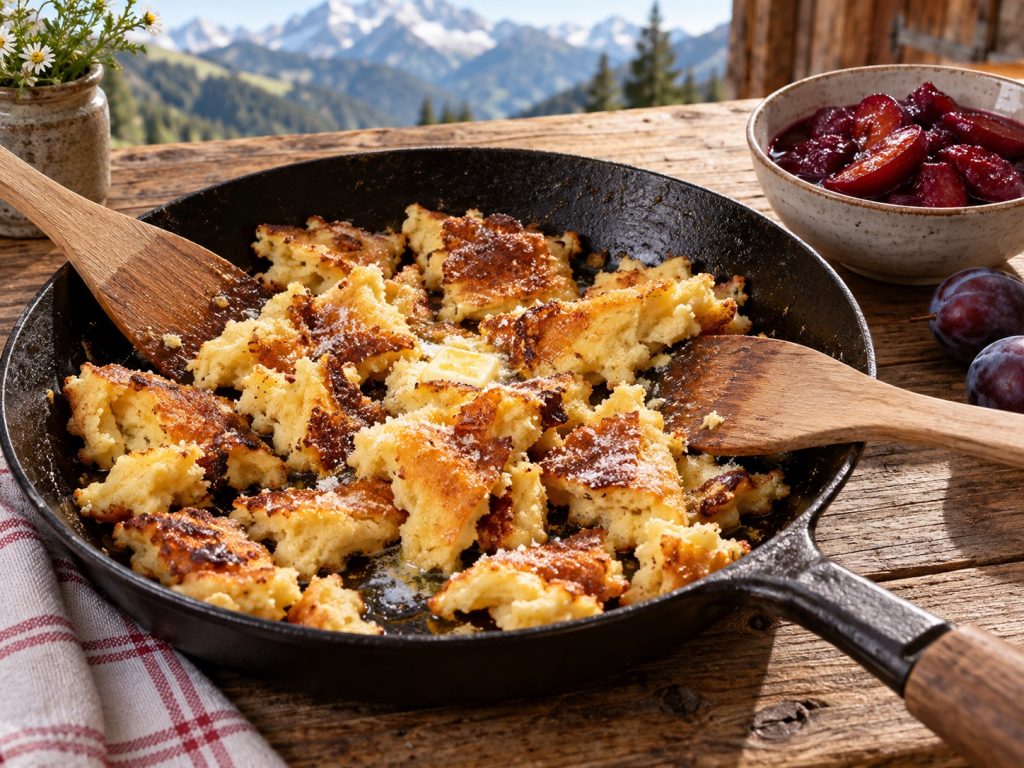
Kaiserschmarrn
Airy Austrian Kaiserschmarrn cooked through, torn into irregular pieces, and caramelized in the skillet without becoming rubbery.
Ingredients
- 6 large eggs — separated
- 180 g all-purpose flour
- 350 ml whole milk
- 45 g granulated sugar — 30 g batter, 15 g caramelizing
- 1 tsp vanilla extract
- 1 whole lemon zest
- ¼ tsp fine salt
- 50 g butter — divided
- 40 g raisins — optional
- 15 g icing sugar — for serving
- 300 g plum compote — for serving
Instructions
- Heat oven to 350°F. Whisk yolks with 30 g sugar, vanilla, lemon zest, and salt. Add half the milk, sift in flour and whisk smooth, then add remaining milk. Rest batter 10 minutes.
- Beat whites in a clean bowl to glossy medium-stiff peaks. Stir one-third into the batter to lighten it, then fold the rest in two additions. Leave no white streaks without deflating; fold in raisins if using.
- Melt 30 g butter in an ovenproof skillet over medium heat. Pour in batter and cook 3–4 minutes until the bottom edge is golden. Transfer to the oven for 10–12 minutes, until puffed, no wet batter remains, and the center reaches 160°F.
- Return the hot skillet carefully to the hob. Use two wooden spatulas to tear the pancake into irregular 2-inch pieces. Add remaining 20 g butter and 15 g sugar; toss over medium-high heat 2–3 minutes to caramelize only the edges. Serve immediately with icing sugar and plum compote.
Notes
- The pancake is substantially puffed, reaches 160°F with no wet batter at the center, and has an airy crumb. Torn pieces stay soft inside with golden, lightly crisp edges.
- Raisins are optional. Serve fruit alongside rather than folding in apple chunks, which can weigh down the batter. Unsweetened soy milk and neutral margarine can replace dairy, with a flavor change. 1 cup flour is about 125 g; 1½ cups milk is about 360 ml. Contains eggs, gluten, and dairy.
- Best eaten immediately. Refrigerate leftovers within 2 hours for up to 2 days; reheat 6–8 minutes at 350°F or in a buttered skillet until 165°F throughout. Cooked pieces can be frozen for 1 month, though they lose lift; thaw in the refrigerator and refresh in the oven.
Texture and doneness cues
The pancake is substantially puffed, reaches 160°F with no wet batter at the center, and has an airy crumb. Torn pieces stay soft inside with golden, lightly crisp edges.
Mistakes, substitutions, and measurements
Raisins are optional. Serve fruit alongside rather than folding in apple chunks, which can weigh down the batter. Unsweetened soy milk and neutral margarine can replace dairy, with a flavor change. 1 cup flour is about 125 g; 1½ cups milk is about 360 ml. Contains eggs, gluten, and dairy.
Serving, storage, and allergens
Best eaten immediately. Refrigerate leftovers within 2 hours for up to 2 days; reheat 6–8 minutes at 350°F or in a buttered skillet until 165°F throughout. Cooked pieces can be frozen for 1 month, though they lose lift; thaw in the refrigerator and refresh in the oven.
Frequently asked questions
Why did it stay flat?
The whites were underwhipped or folded too aggressively; make glossy medium-stiff peaks and fold with a spatula.
Why did the base burn while the middle stayed raw?
It remained on the hob too long; transfer after 3–4 minutes and finish the center in a 350°F oven.
Why is it rubbery?
The batter was overmixed or torn before set; stop once flour disappears and tear only after the center reaches 160°F.
Leave a Reply