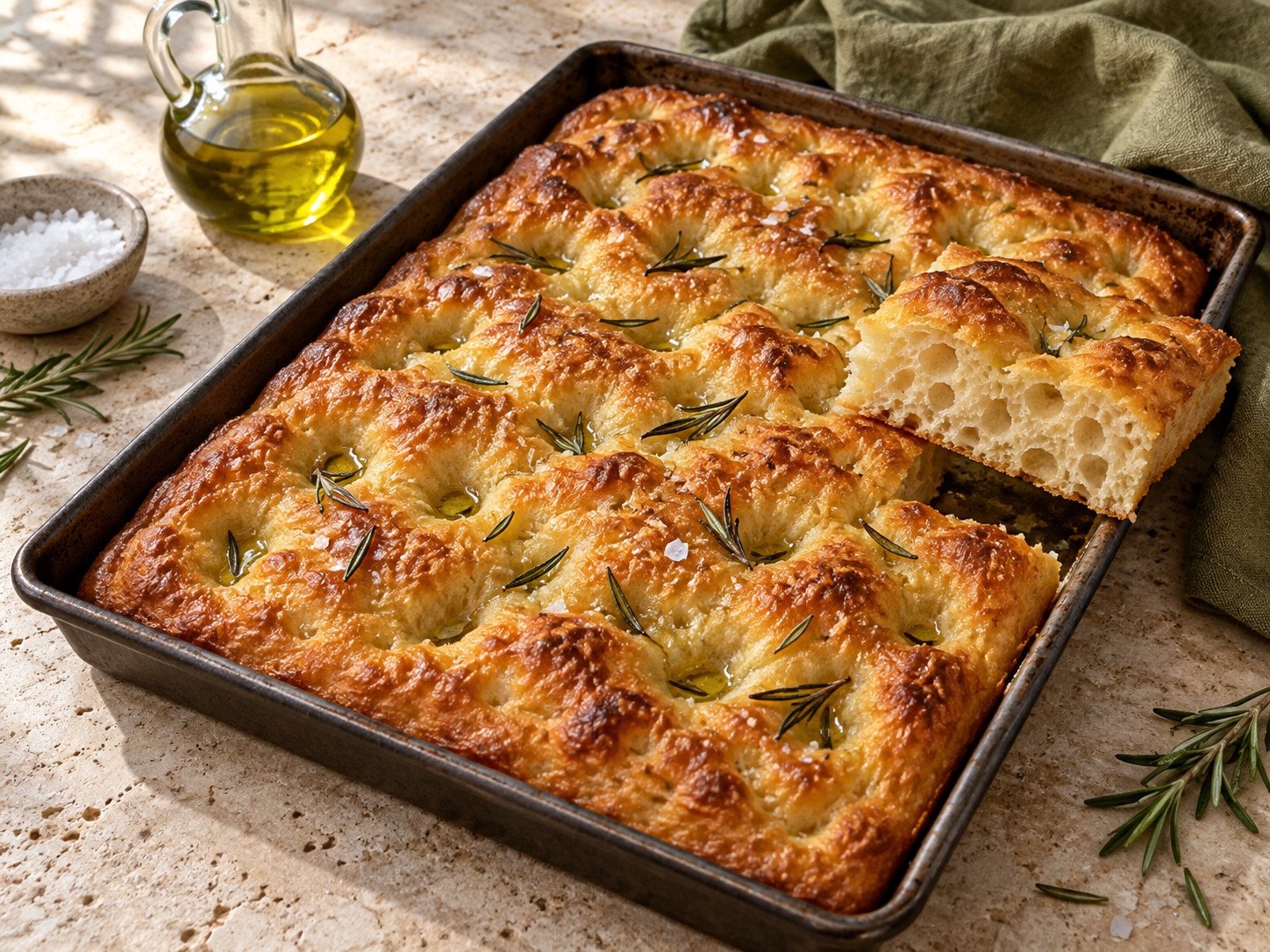
Yeasted focaccia is closely associated with Liguria and Genoa, where olive oil, deep dimples and a soft crumb turn a few pantry staples into a distinctive bread. This is not Focaccia di Recco, the thin unleavened cheese-filled protected specialty.
At 80% hydration, stickiness is expected. Wet-hand folds, a rest in an oiled pan and an oil-water brine create the structure without adding extra flour.
How the airy crumb and crisp edge form
- Four hundred milliliters water to 500 g flour keeps the dough loose; short rests and folds develop gluten without kneading in flour.
- A 20-minute rest in the pan lets the dough relax so it reaches the corners without tearing.
- Oil-water brine pools in the dimples, keeping the top supple while a 450°F/230°C oven browns the edges.
Equipment, timing and cues
Use a 9 x 13-inch dark metal pan, large clear bowl, dough scraper, kitchen scale and cooling rack. Glass browns more slowly and may need 3–5 extra minutes.
Total time is about 3 hours, mostly hands-off. Watch volume rather than the clock: the first rise should reach 1.5–2 times the starting size and the pan proof should show bubbles.
Preheat for at least 30 minutes to 450°F/230°C conventional or 410°F/210°C convection. A scale is much more consistent than cups for flour.
Step-by-step focaccia
1. Mix the wet dough
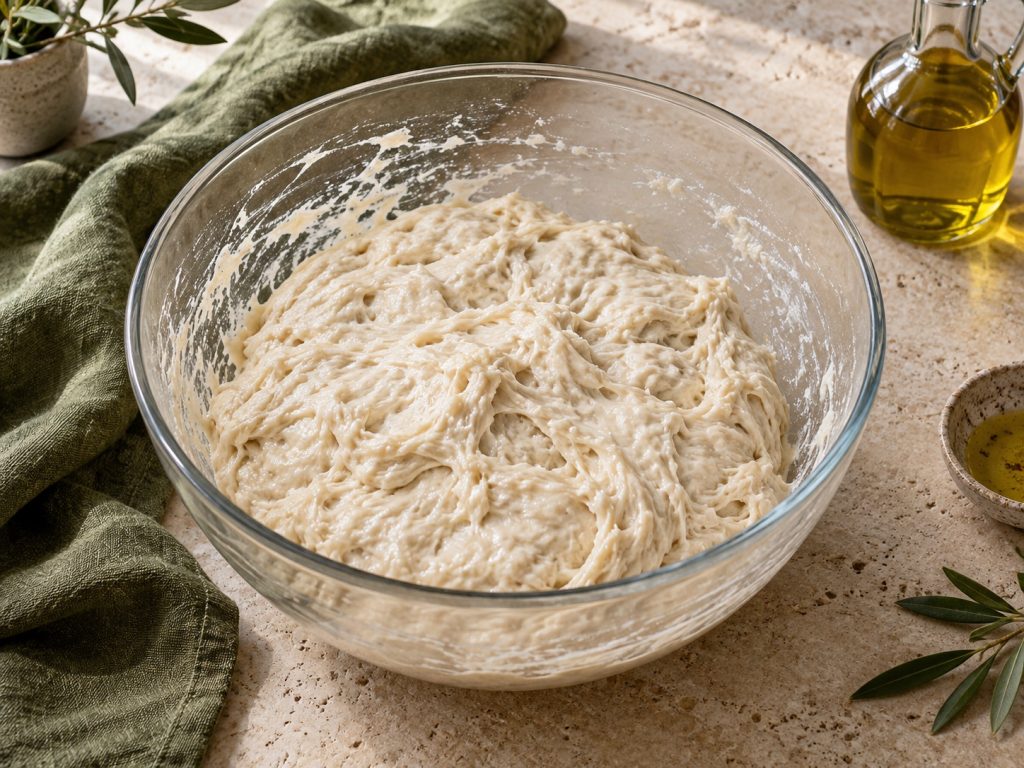
Combine lukewarm water and yeast. Add flour and stir until no dry pockets remain; rest 10 minutes. Add fine salt and 1 tbsp oil, folding for 2 minutes. The dough will be very sticky and rough—do not add flour.
2. Fold and watch the volume
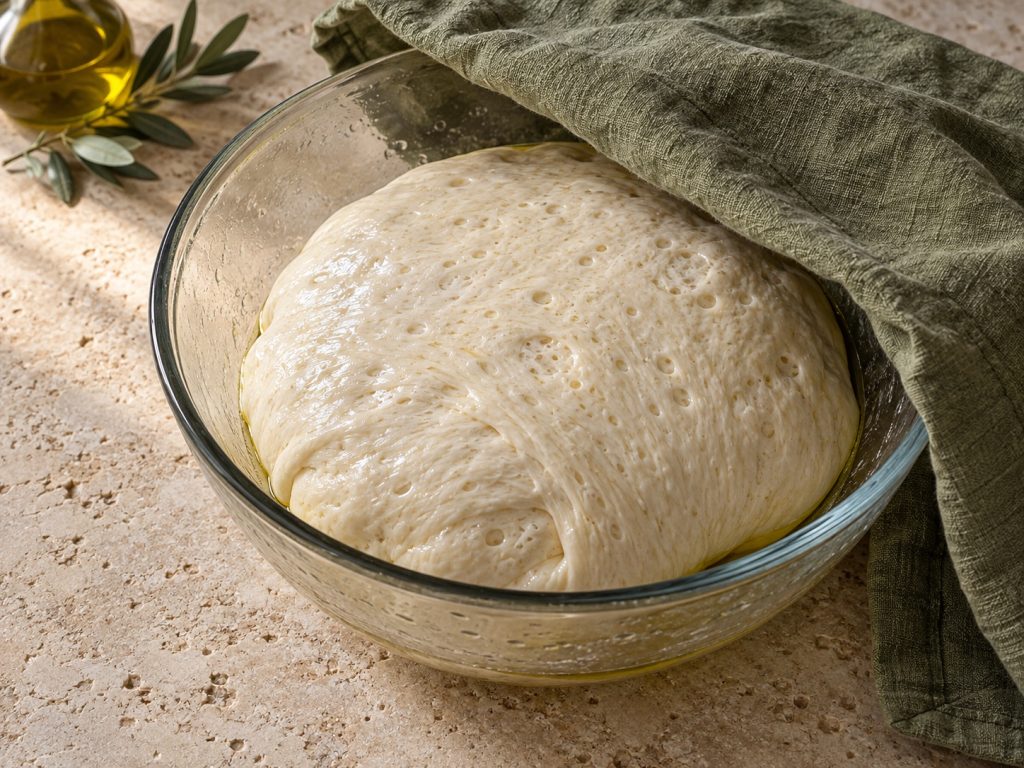
Wet your hands. Lift one edge and fold to the center; rotate and repeat on four sides. Do 3 rounds at 15-minute intervals. Cover and rise 60–75 minutes, until 1.5–2 times larger with bubbles on the surface.
3. Pan, proof and dimple
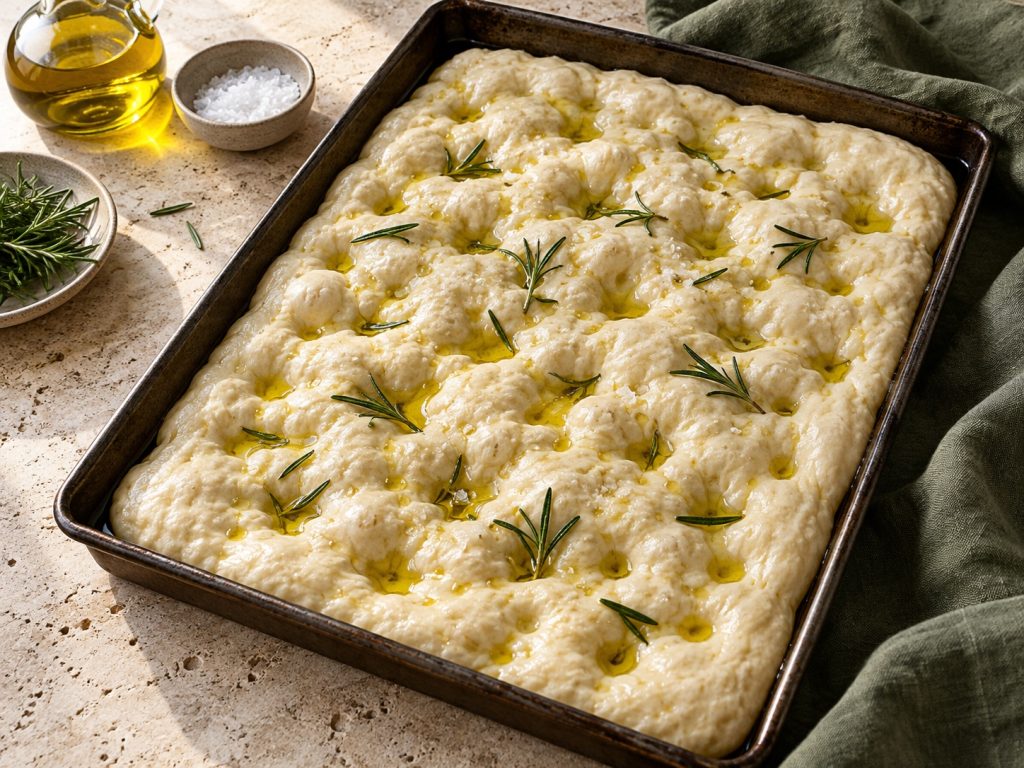
Coat a 9 x 13-inch pan with 2 tbsp oil. Scrape in the dough, turn once to oil both sides, rest 20 minutes and stretch to the corners. Proof 30 minutes. Whisk remaining 1 tbsp oil with 2 tbsp water. With wet fingers, dimple down to the pan; distribute brine, rosemary and flaky salt.
4. Bake to deep gold
Bake on the lower-middle rack for 22–27 minutes. The top should be deep golden, edges pull from the pan and the bottom feel crisp. Cool 5 minutes in the pan and at least 15 on a rack; cutting too hot compresses the crumb.
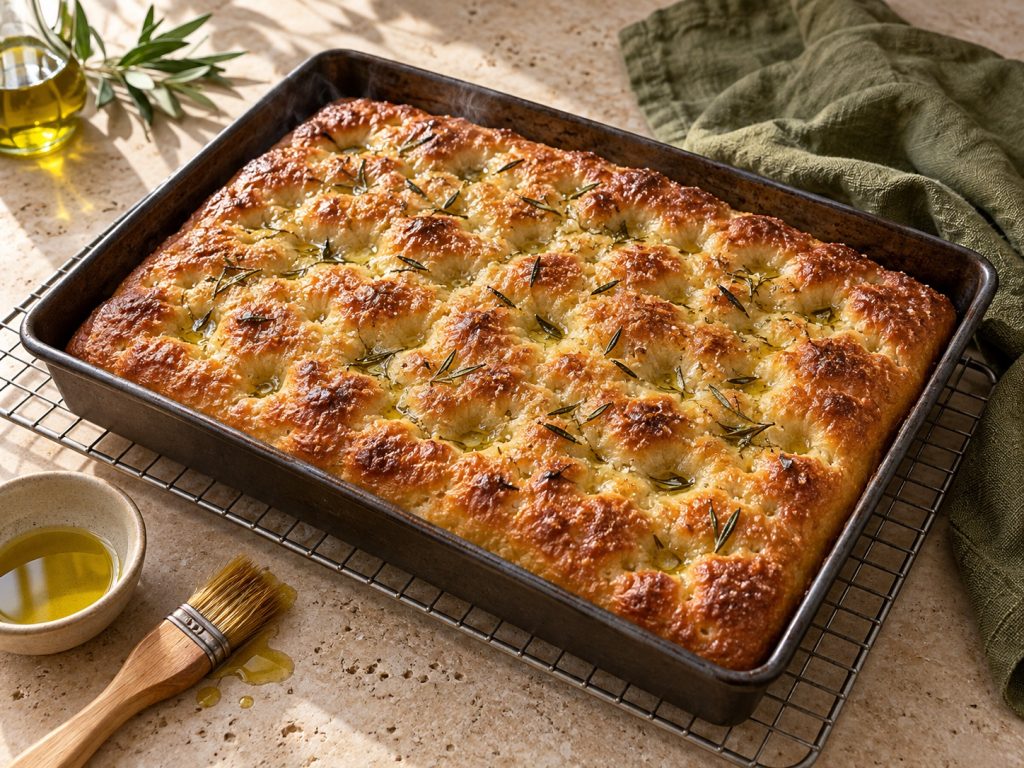
Homemade Ligurian-Style Rosemary Focaccia
An 80%-hydration focaccia strengthened by folds and finished with olive-oil brine for deep dimples and crisp edges.
Ingredients
- 500 g bread flour — about 4 cups by spoon-and-level; 12–13% protein
- 400 ml lukewarm water — 1 2/3 cups, 75–79°F/24–26°C; for dough
- 7 g instant yeast — 1 packet or 2 1/4 tsp
- 10 g fine sea salt — about 1 3/4 tsp
- 60 ml extra-virgin olive oil — 4 tbsp, divided among dough, pan and top
- 30 ml water — 2 tbsp, for the topping brine
- 1 tbsp fresh rosemary leaves — roughly chopped; optional
- 1 tsp flaky sea salt — for topping
Instructions
- Mix water, yeast and flour; rest 10 minutes. Fold in salt and 1 tbsp oil without adding flour.
- Complete 3 fold rounds 15 minutes apart. Rise 60–75 minutes until 1.5–2 times larger and bubbly.
- Move to an oiled 9 x 13-inch pan; rest 20 minutes, stretch, proof 30 minutes, dimple and add brine, rosemary and salt.
- Bake at 450°F/230°C conventional or 410°F/210°C convection for 22–27 minutes; cool 15 minutes on a rack.
Notes
- Correct dough is sticky but stretches as one piece after the folds. If it is slow to rise, keep it near 75–79°F/24–26°C and follow volume rather than forcing the clock.
- Doneness is more than top color: edges release, the bottom is browned and the center slowly springs back when pressed.
- Wrap and keep at room temperature for 2 days; refrigeration speeds staling. Freeze sliced up to 2 months and reheat from frozen at 350°F/180°C for 6–8 minutes.
- Allergen: wheat/gluten. Gluten-free flour will not work at the same hydration; use a formula specifically developed for gluten-free focaccia.
Common mistakes and fixes
Dense focaccia usually comes from adding flour, ending the first rise too soon or crushing all gas while dimpling. For a pale bottom, use dark metal or move the pan lower for the final 5 minutes. A greasy yet gummy loaf usually means the oven was not fully heated.
Flour, pan and topping options
All-purpose flour around 11.5–12% protein can work; begin with 1 tbsp/15 ml less water. Leave it plain or add thin onion. Keep heavy tomato and cheese toppings below about 5 oz/150 g so they do not suppress the rise.
Make-ahead and serving
For deeper flavor, reduce instant yeast to 3 g and refrigerate the first rise 12–18 hours; warm the dough 45 minutes before panning. Serve with soup, split for sandwiches or snack with olive oil. One cup water is 240 ml; 500 g flour is roughly 4 spoon-and-level cups, but weighing is more reliable.
Frequently asked questions
Why is focaccia dough so sticky?
The 80% hydration is intentional for an open, soft crumb. Wet your hands and use a scraper instead of kneading in flour.
What if the dough will not reach the pan corners?
Do not force it. Rest 15–20 minutes so the gluten relaxes, then stretch again with oiled fingers.
Can I prepare focaccia overnight?
Yes. Reduce yeast to 3 g and refrigerate the first rise 12–18 hours. Warm 45 minutes before moving to the pan.
How do I get a crisp bottom?
Use a dark, well-oiled metal pan, fully preheat the oven and move the bread to a rack soon after baking.
Leave a Reply