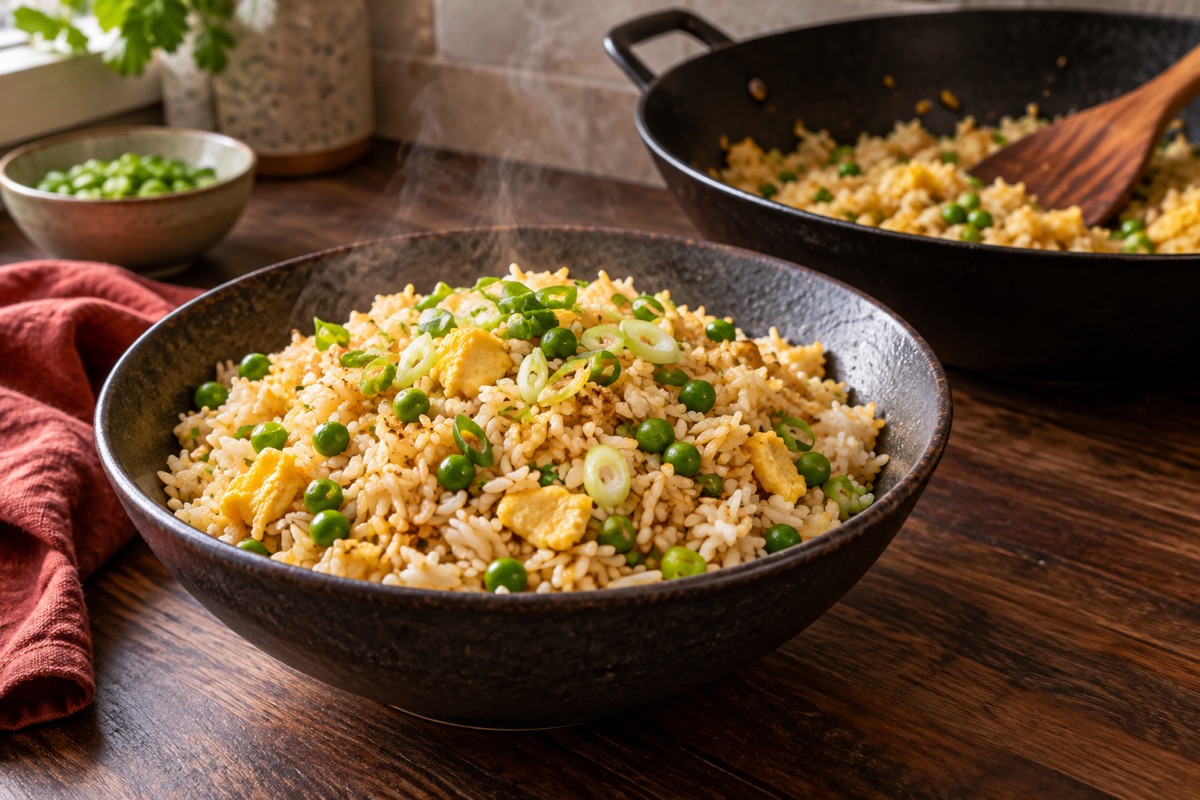
Egg fried rice is one of the most useful ways to turn leftover rice into a quick, satisfying meal. This version serves three in 20 minutes and uses a 12-inch skillet, so you do not need a wok or restaurant-strength burner.
This is a practical adaptation inspired by Chinese homestyle egg fried rice, not a claim to one definitive regional recipe. Dry-surfaced rice, a properly heated pan, and enough room for steam to escape matter more than loading the dish with sauce.
Why this method keeps every grain separate
- Chilled long-grain rice has a drier surface. Breaking up clumps before cooking lets the grains toast without being crushed.
- Soft-scrambling and removing the eggs frees the skillet for the rice and prevents rubbery curds.
- A thin layer in a wide skillet releases steam quickly. Pouring soy sauce around the hot edge drives off moisture before it can soften the rice.
Before you start: rice safety, equipment, and measures
Set out a 12-inch skillet or wok, a broad spatula, two small bowls, and a plate. Prep everything before heating the pan because the stir-fry moves quickly.
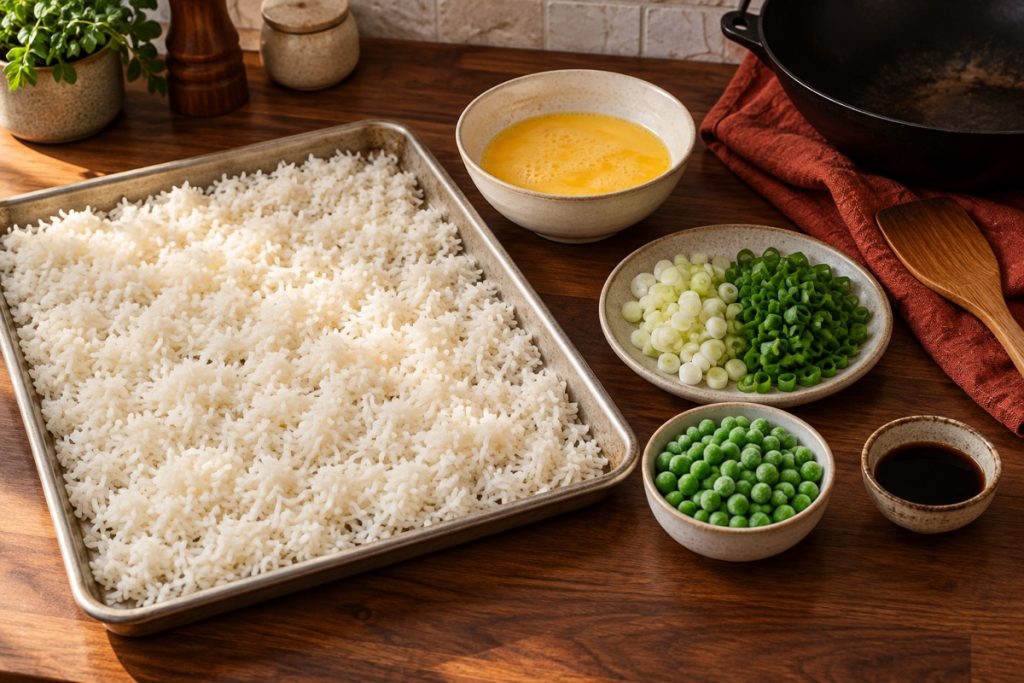
Use about 3 packed cups/21 ounces of cooked jasmine or other long-grain rice. For same-day rice, spread it thin on a sheet pan after cooking, cool it promptly, and refrigerate for at least 30 minutes.
Do not leave cooked rice at room temperature for an extended period. Cool it quickly, refrigerate within one hour, use within 24 hours, and reheat only once until steaming hot throughout.
How to make egg fried rice without a wok
1. 1. Separate the rice and prepare the seasonings
Spread cold rice on a tray and gently loosen every clump with your fingers without mashing the grains. Mix soy sauce, white pepper, and salt in a small bowl. Beat eggs in another bowl just until combined. Keep the white and green scallion parts separate.
2. 2. Soft-scramble the eggs and remove them
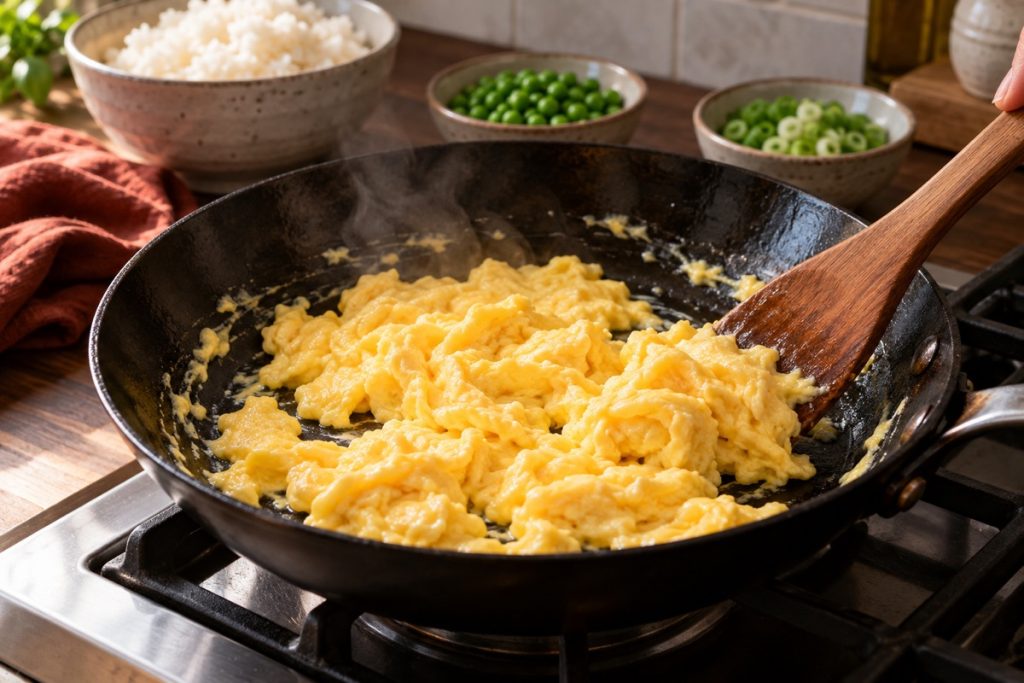
Heat the skillet over medium-high for 2 minutes. Add 1 tablespoon oil; when it shimmers, pour in the eggs. Once the edges set, fold into large curds. Transfer to a plate after 45–60 seconds while the tops still look slightly glossy.
3. 3. Fry the vegetables and rice
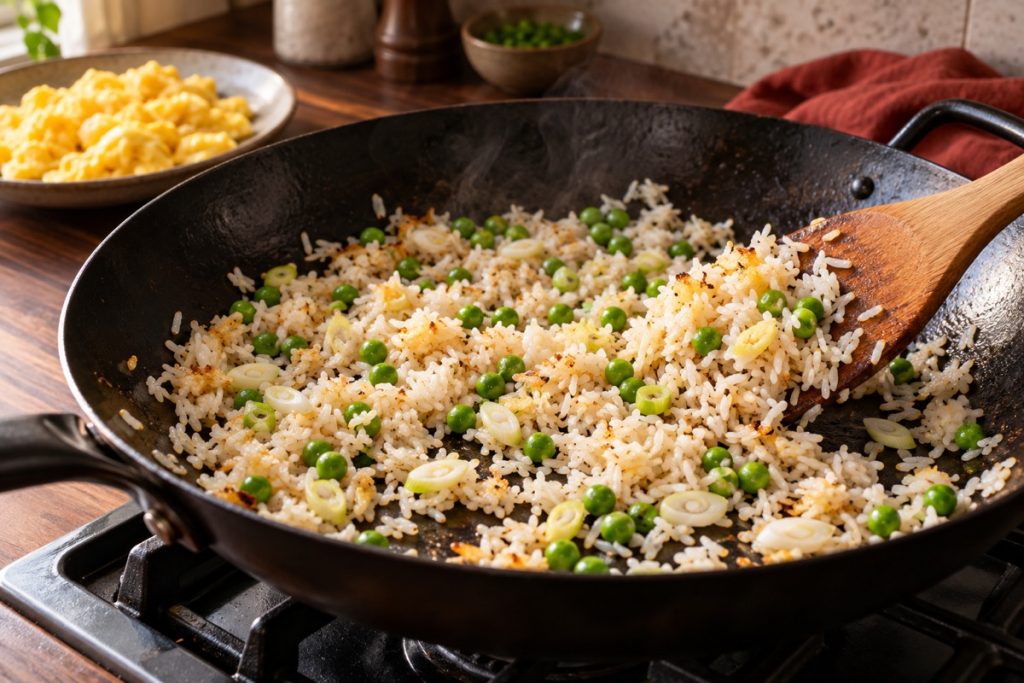
Add the remaining 2 tablespoons oil. Stir-fry scallion whites and peas for 30–45 seconds. Add rice and spread it into a thin layer. Leave it untouched for 30 seconds, then lift and turn. Break clumps with the spatula edge and cook 3–4 minutes until steaming with a few lightly golden grains.
4. 4. Add sauce around the edge and finish
Pour the sauce around the hot skillet edge rather than onto one patch of rice. Toss immediately, then fold in the eggs and scallion greens. Cook 1–2 minutes until the egg is fully set and the entire pan is steaming. Turn off heat, add sesame oil if using, and serve immediately.
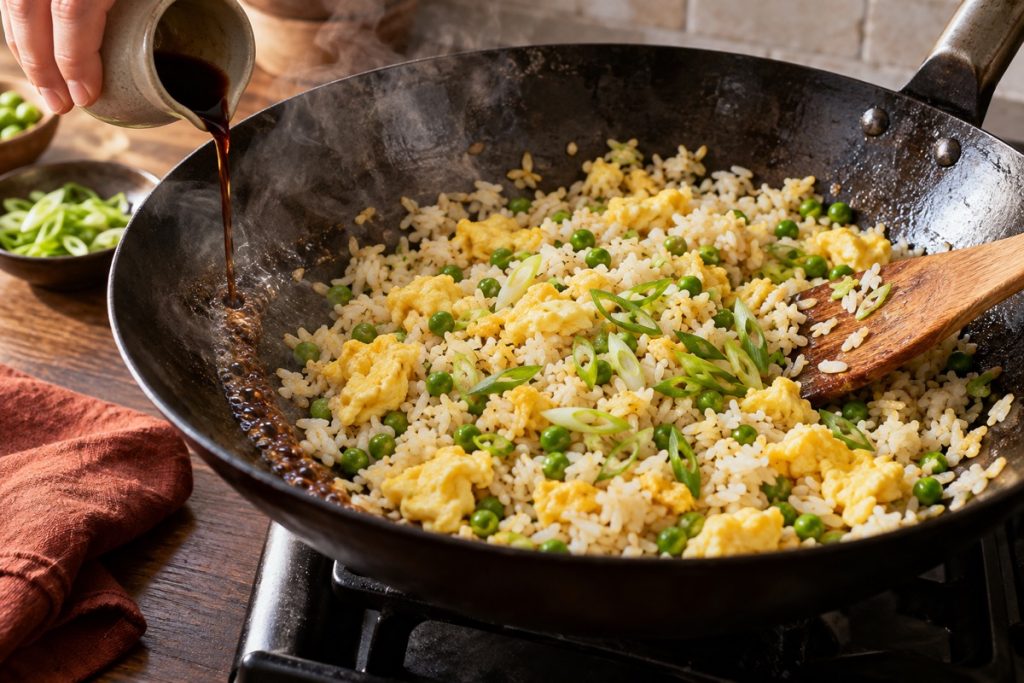
Wide-Skillet Egg Fried Rice
A 20-minute egg fried rice made with safely chilled leftovers, separate grains, tender eggs, and no wok required.
Ingredients
- 3 packed cups cold cooked long-grain rice — about 21 ounces/600 g; promptly and safely chilled
- 3 large eggs — room temperature is fine
- 3 tablespoons neutral oil — canola, peanut, or vegetable oil; divided
- 1/2 cup frozen peas — about 3 ounces/80 g; no need to thaw
- 4 medium scallions — white and green parts sliced separately
- 1 tablespoon light soy sauce — use tamari if a verified gluten-free option is needed
- 1/4 teaspoon white or black pepper — adjust to taste
- 1/4 teaspoon fine salt — reduce if the soy sauce is salty
- 1 teaspoon toasted sesame oil — optional; add off heat
Instructions
- Break up cold rice clumps and prepare the sauce, beaten eggs, and sliced scallions before heating the pan.
- Soft-scramble eggs in one-third of the oil for 45–60 seconds; remove while the top remains slightly glossy.
- Cook scallion whites and peas in remaining oil, then fry rice in a thin layer for 3–4 minutes.
- Pour sauce around the hot edge. Fold in eggs and scallion greens; cook 1–2 minutes until steaming throughout.
Notes
- The rice should sizzle and separate easily. If the pan goes quiet and liquid collects, it is overcrowded; divide the batch.
- For fresh rice, cook it slightly firm, spread it thin, cool promptly, and refrigerate for at least 30 minutes before frying.
- Cool cooked rice quickly, refrigerate within one hour, use within 24 hours, and reheat only once until steaming hot throughout.
- Cook only what you will eat rather than cooling it again. Allergens: egg, soy, and wheat/gluten depending on soy sauce; sesame if used.
How to tell when fried rice is ready
Good fried rice is not dry: the grains are glossy, hot, and distinct. The pan bottom appears briefly when the spatula passes and no liquid collects. Eggs remain in tender curds and peas stay bright green.
Common problems and fixes
Soggy rice usually means warm damp rice, a crowded pan, or too much sauce. Chill and separate the rice, cook in two batches, and measure the sauce. Sticking points to an underheated skillet or oil added too soon. For tender eggs, remove them before fully set.
Substitutions and budget ideas
Swap peas for finely diced carrot, corn, or leftover cooked vegetables; fry wet vegetables separately first. Use cubed tofu for an egg-free variation. If adding cooked chicken, cut it small and heat it fully before the rice. Tamari can work for gluten-free diets when the label is verified.
Serving and storage
Serve with cucumber salad or quickly wilted greens. Because this method is designed as the single reheat of safely stored rice, make only the amount you plan to eat rather than cooling the finished fried rice for another day.
Frequently asked questions
Can I make fried rice with freshly cooked rice?
Yes. Cook it slightly firm, spread it thin on a sheet pan, cool promptly, and refrigerate at least 30 minutes. Do not put warm, wet rice straight into the skillet.
Why does my fried rice turn mushy?
The rice may be too moist, the pan too small, or the batch overcrowded. Use a wide skillet, spread rice thin, and cook in two batches if needed.
Can I get good results without a wok?
Yes. Use a preheated 12-inch heavy skillet and limit the batch to about 3 packed cups of cooked rice.
Can I make it without soy sauce?
Yes. Increase salt to about 1/2 teaspoon and use extra scallions. The finished rice will be lighter and closer to a very simple Chinese homestyle version.
Leave a Reply