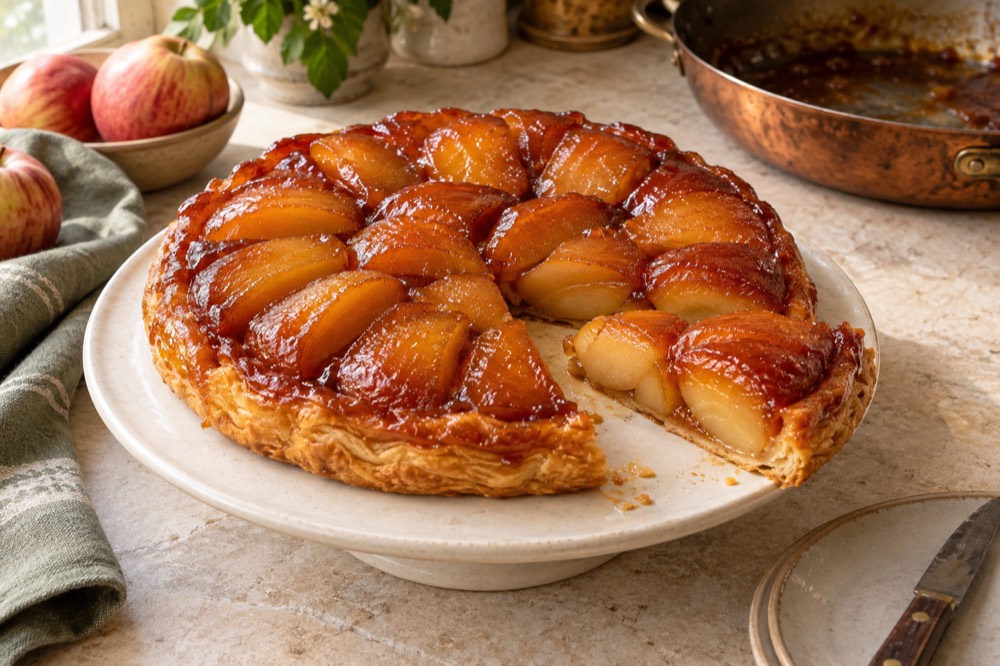
Tarte Tatin is a French upside-down tart: caramelized apples are covered with pastry, baked, and inverted to serve. France’s official tourism site connects it with Sologne and Lamotte-Beuvron in the Loire Valley, while noting that the famous accidental-invention story is hazy. This is a practical home adaptation using all-butter puff pastry and a 9 1/2-inch/24 cm ovenproof skillet.
Three decisions control the result: choose apples that resist collapse, stop caramel before dark brown, and invert while the caramel is warm but no longer dangerously fluid. The visual cues below make those moments easier to judge.
Why this method works
- Quartering rather than thinly slicing apples helps them survive both stovetop and oven cooking without becoming applesauce.
- Dissolving sugar with a little water encourages even color without stirring; gently swirling the pan is enough.
- Stovetop pre-cooking evaporates excess apple juice. Chilled pastry goes on only after the caramel calms, so its butter stays cold enough for cleaner layers.
Before you start: equipment, measures, and swaps
Use a heavy 9 1/2-inch/24 cm ovenproof skillet, a flat serving plate 1–2 inches wider than the pan, tongs, heatproof spatula, peeler, paring knife, and two sturdy oven mitts. Never bake a plastic-handled skillet.
Two pounds 3 ounces/1 kg apples is about 6 medium-large apples. A mix of Granny Smith and Pink Lady or Braeburn balances acidity and structure. Very soft varieties can collapse.
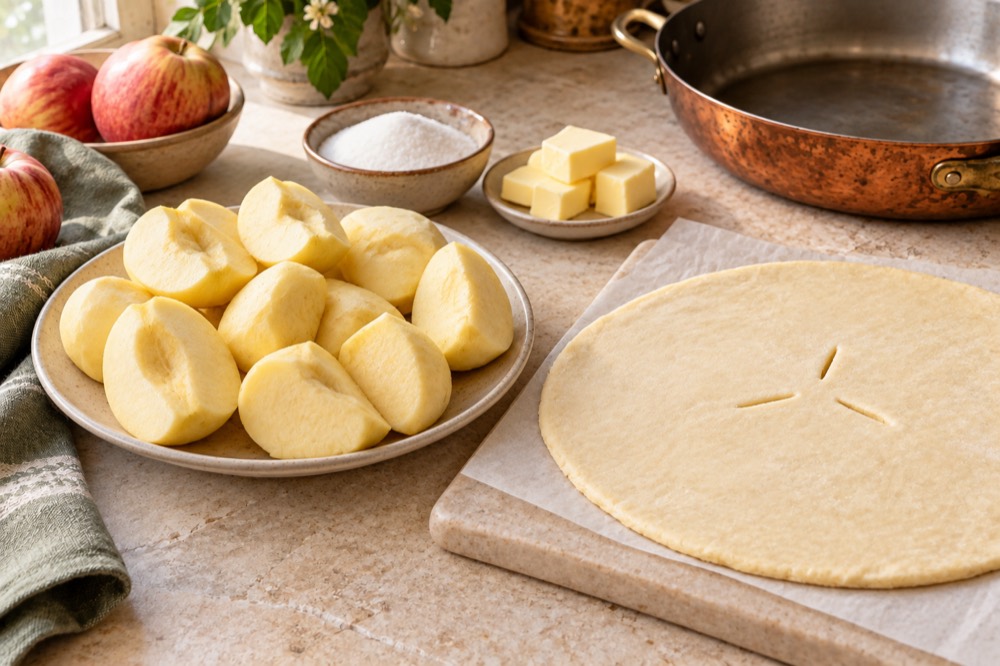
Ten ounces/275 g puff pastry makes a 10-inch/25 cm round. All-butter pastry tastes best; vegan block-butter or gluten-free puff pastry can work, but rise and browning will differ.
How to make tarte Tatin
1. 1. Prepare the pastry and apples
Heat the oven to 375°F/190°C. Cut pastry into a round 1/2 inch/1 cm wider than the skillet, cut three small steam vents, and refrigerate. Peel and core apples, cut into large quarters, and toss lightly with lemon juice.
2. 2. Cook the caramel to amber
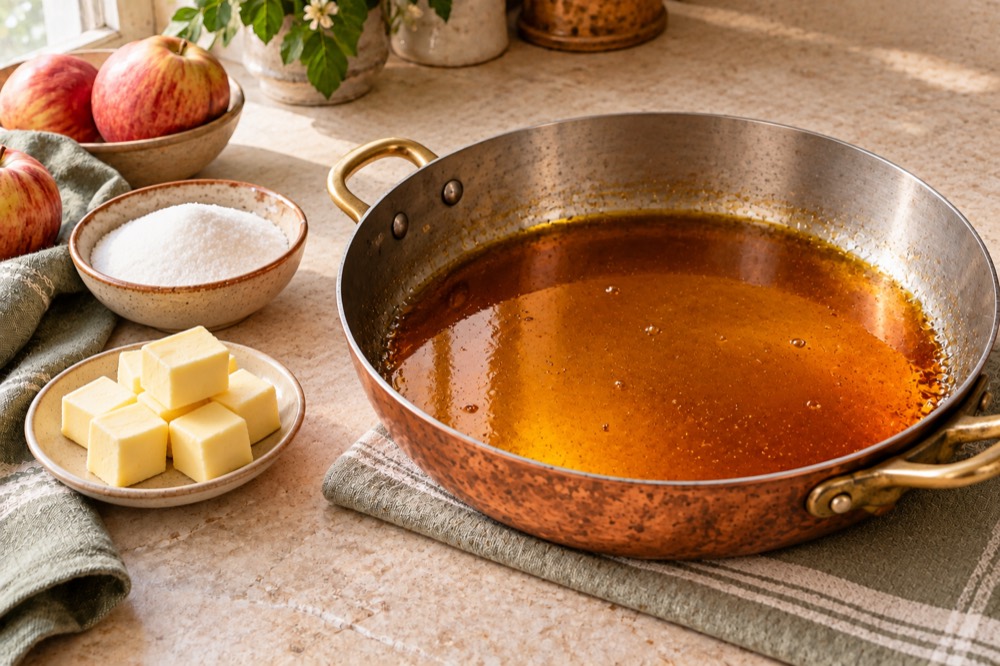
Spread sugar and 3 tablespoons/45 ml water evenly in the skillet. Cook over medium for 7–9 minutes without a spoon, gently swirling the pan. The moment the syrup becomes evenly amber, remove from heat. Carefully add butter and salt; it can foam aggressively, so keep your face back.
3. 3. Pre-cook and tightly arrange the apples
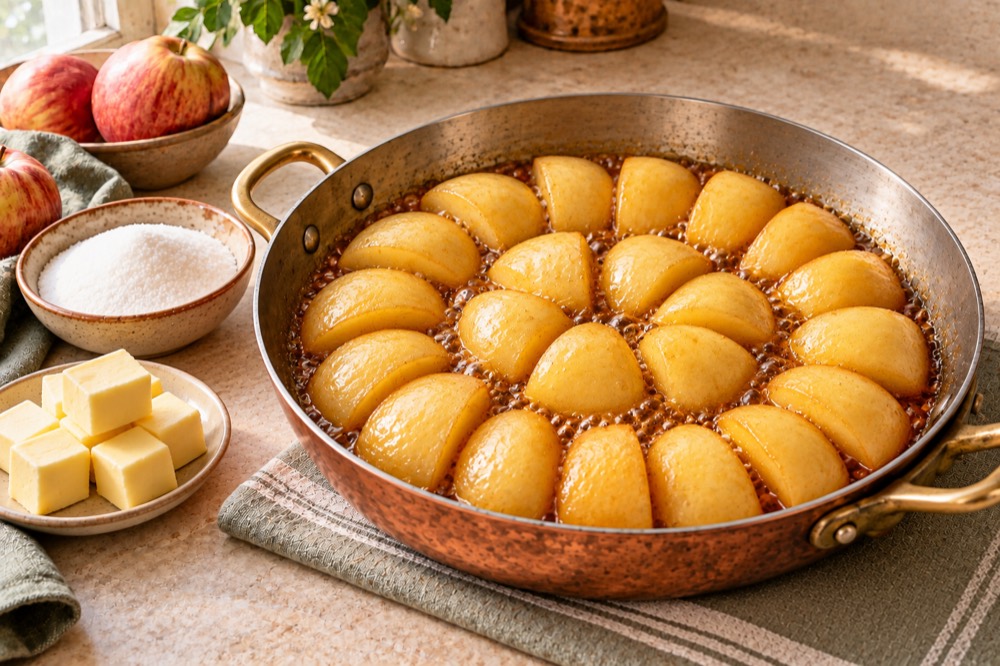
Pack apples rounded-side down. Cook over medium-low for 15–18 minutes, occasionally spooning caramel over them. A knife should enter with slight resistance, and caramel should bubble as a coating rather than run like thin syrup. Remove from heat and cool 10 minutes.
4. 4. Bake under pastry and invert safely
Lay cold pastry over the apples and tuck edges between fruit and pan. Bake 30–35 minutes until deeply golden. Rest 10–12 minutes. Loosen edges, place the larger plate over the skillet, grip both with two oven mitts, and invert in one confident motion. Replace any apple that remains in the pan.
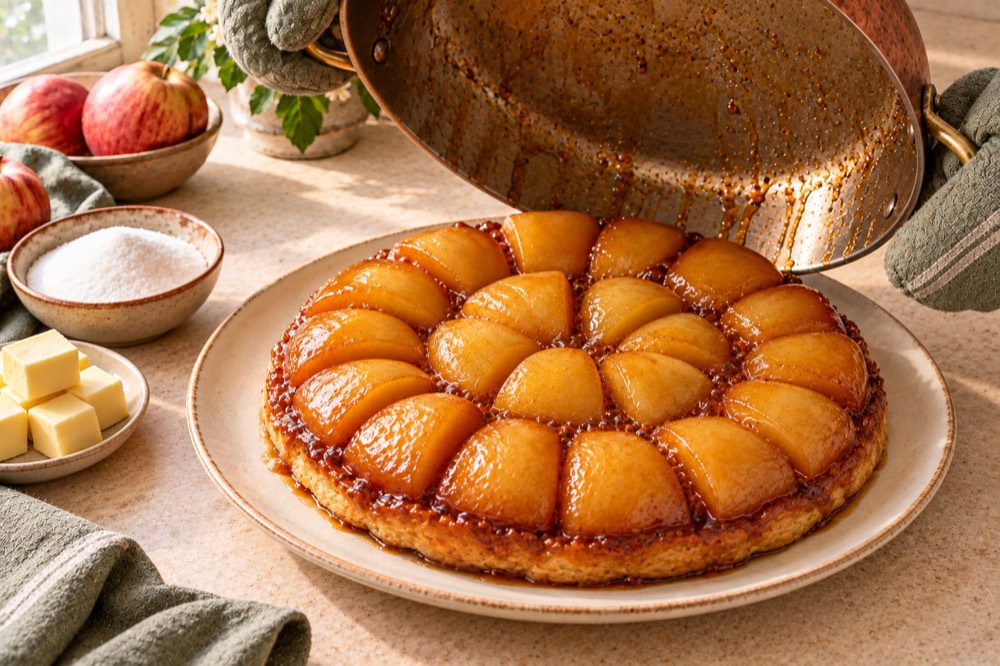
Easy Apple Tarte Tatin with Puff Pastry
A home adaptation of French tarte Tatin with amber caramel, firm apple quarters, chilled puff pastry, and a controlled inversion.
Ingredients
- 2 1/4 pounds firm baking apples — about 6; 1 kg; Granny Smith, Pink Lady, or Braeburn
- 10 ounces all-butter puff pastry — 275 g; chilled; cut into a 10-inch round
- 3/4 cup granulated sugar — 150 g
- 5 tablespoons unsalted butter — 70 g; cubed
- 3 tablespoons water — 45 ml; for caramel
- 1 tablespoon lemon juice — 15 ml
- 1/4 teaspoon fine salt
- 1/2 cup crème fraîche or vanilla ice cream — optional, for serving
Instructions
- Heat oven to 375°F/190°C; cut pastry 1/2 inch wider than the pan and chill. Peel, core, and quarter apples.
- Cook sugar and 3 tablespoons water without stirring for 7–9 minutes until amber; remove from heat and add butter and salt.
- Pack apples rounded-side down; cook 15–18 minutes until a knife enters with slight resistance, then cool 10 minutes.
- Cover with pastry, bake 30–35 minutes, rest 10–12 minutes, and invert onto a larger plate in one motion.
Notes
- Total time includes two resting periods totaling 15 minutes. Hot caramel causes serious burns: never taste it, lean over it, or allow children near the stove.
- If caramel crystallizes, stop stirring, add 1 tablespoon water, and let it dissolve over low heat. If it is smoking and dark brown, it will taste bitter; starting again gives a better tart.
- Keep covered at room temperature for 1 day or refrigerate up to 3 days. Reheat at 340°F/170°C for 8–10 minutes; microwaving softens the pastry. Freezing is not recommended because apples weep and pastry loses crispness.
- Allergens: milk and wheat/gluten. Packaged pastry may contain egg or soy; check the label.
Caramel, apple, and pastry cues
Caramel should be amber without smoke. A knife enters the apples with slight resistance and each quarter keeps its shape. The visible pastry surface should be deep gold, dry, and puffed, with slow caramel bubbles around the pan edge.
Common problems and fixes
Pale caramel lacks depth; dark brown tastes bitter. A watery tart means apples were not reduced enough on the stove: wait until syrup coats the spatula. Flips fail when the tart is piping hot or fully cold, so use the 10–12 minute window.
Serving, make-ahead, and reducing waste
Serve warm with crème fraîche, plain yogurt, or a small scoop of ice cream. Cut the pastry round one day ahead and keep chilled; leave apples whole until cooking. Twist pastry scraps with sugar and bake beside the tart for 12–15 minutes as crisp snacks.
Frequently asked questions
What apples are best for tarte Tatin?
Use firm Granny Smith, Pink Lady, or Braeburn. Mixing two varieties balances sweetness, acidity, and structure.
Can I stir the caramel?
A spoon can encourage crystals while sugar melts. Gently swirl the skillet instead; use a spatula only after adding butter.
What if the tart sticks to the pan?
Warm the pan bottom over very low heat for 15–20 seconds and invert again. Lift any remaining apple with a spatula and place it into the gap.
Can I use cast iron?
Yes. Because it retains heat, remove caramel at light amber and rest only 8–10 minutes before inverting.
Leave a Reply