Category: Soups

Discover comforting classics and soups inspired by cuisines around the world. Each recipe explains texture cues, accessible substitutions, storage, reheating, and how to prevent common problems such as curdling, scorching, or over-thickening.

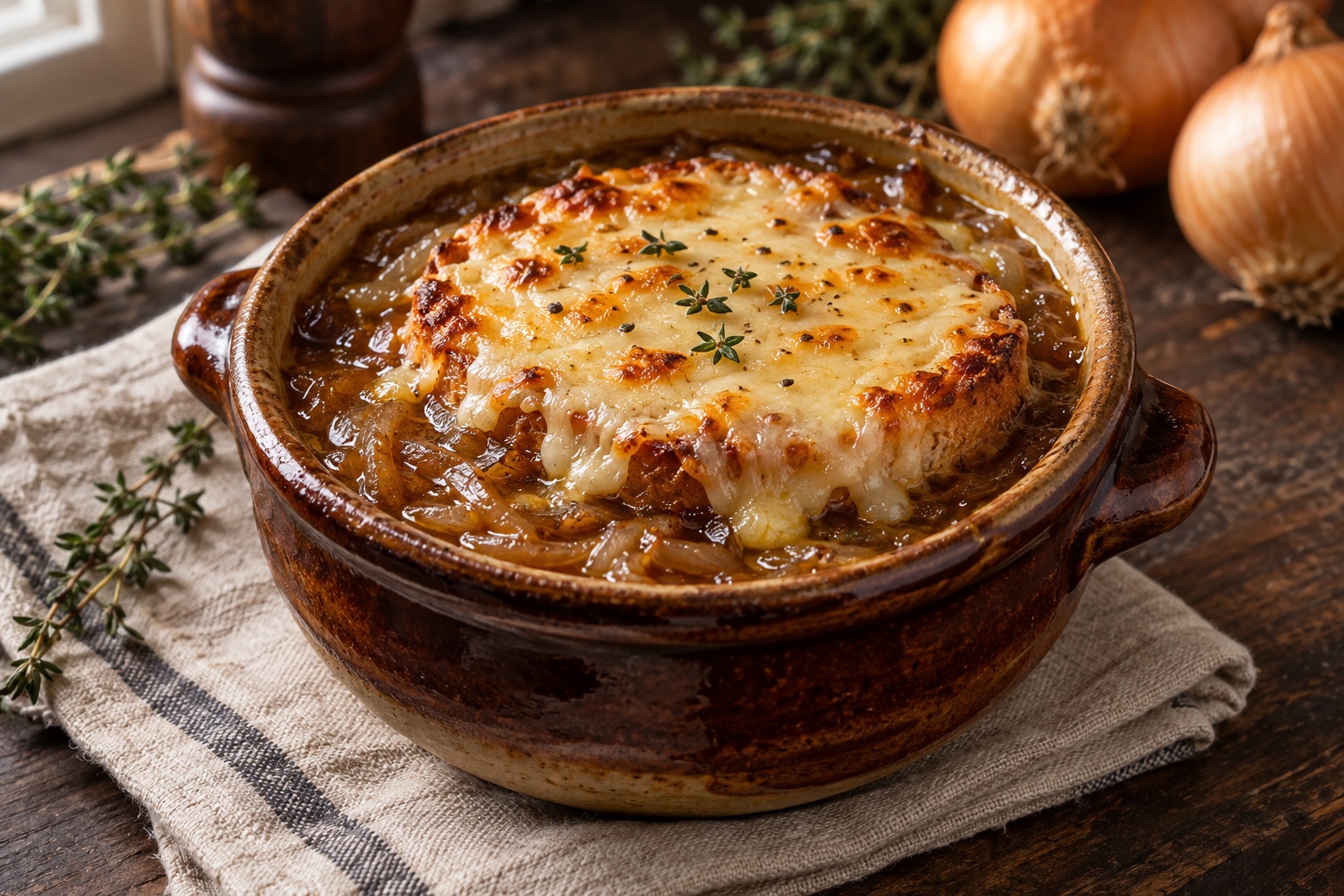
  • French Onion Soup: Deeply Caramelized with a Crisp Cheese Gratin

    French Onion Soup: Deeply Caramelized with a Crisp Cheese Gratin

    French onion soup depends less on expensive ingredients than on giving the onions enough time to become a deep, even amber.

    This home method uses neither added sugar nor baking soda: moisture is driven off in a wide pot, browned fond is loosened with water, and the bread is toasted separately so it stays structured.

    Why this method works

    • Starting covered releases the onions’ moisture; finishing uncovered over moderate-low heat allows even browning without scorching.
    • A tablespoon or two of water whenever the fond darkens stops burning and pulls the browned flavor back into the onions.
    • Dry, well-toasted bread and low-sodium hot stock keep the soup balanced beneath the cheese cap.

    Before you start

    Prepare a wide 5-quart pot, sharp knife, wooden spoon, ladle, sheet pan, and four broiler-safe bowls.

    Slice onions evenly, about ⅛ inch thick; paper-thin pieces scorch while thick pieces brown at different rates.

    Use only bowls rated for the broiler. If yours are not, melt the cheese on the toasts separately and place them on the soup.
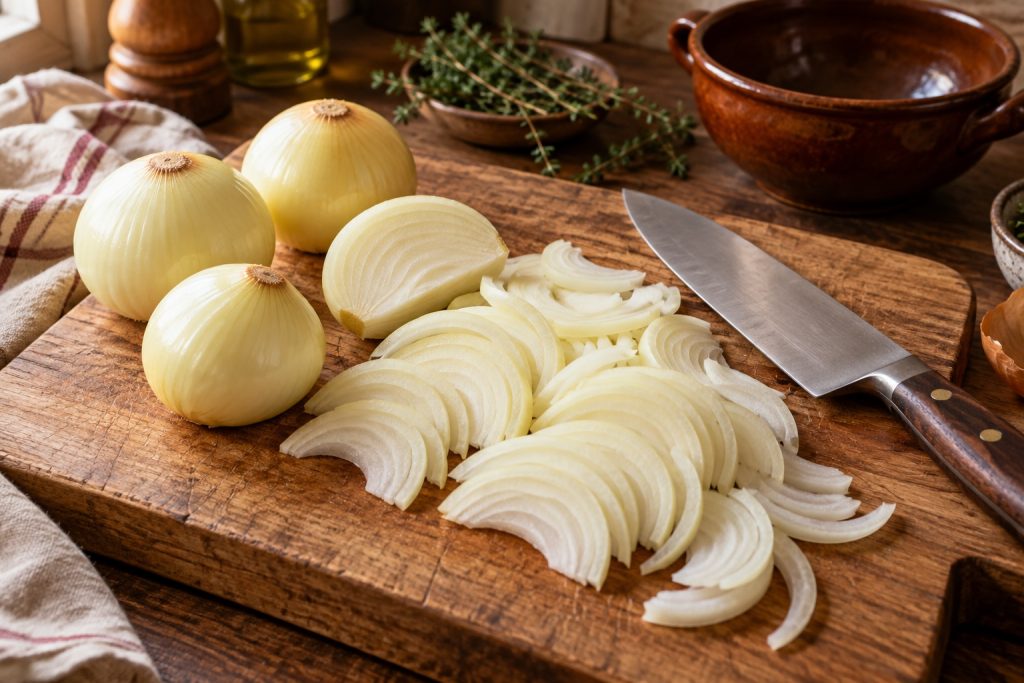
    Slice the onions evenly
    Halve onions through the root and slice into even ⅛-inch half-moons. Melt butter and oil in a wide pot over medium; add onions and salt. Cover and cook 10 minutes, stirring once, until softened and releasing liquid.

    Step-by-step method

    1. Slice the onions evenly

    Halve onions through the root and slice into even ⅛-inch half-moons. Melt butter and oil in a wide pot over medium; add onions and salt. Cover and cook 10 minutes, stirring once, until softened and releasing liquid.

    2. Caramelize to a deep amber

    Uncover, lower to medium-low, and cook 45–55 minutes. Stir every 5 minutes at first and every 1–2 minutes near the end. When the fond turns dark brown, add 1–2 tablespoons water and scrape. Aim for deep amber onions; black specks mean scorching.
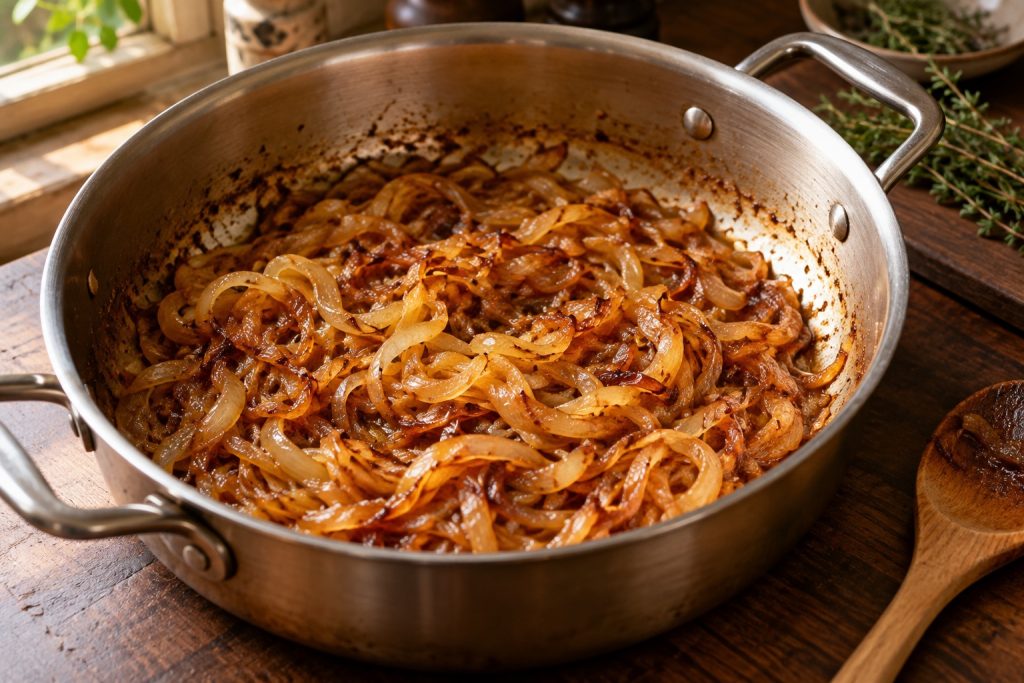
    Caramelize to a deep amber
    Uncover, lower to medium-low, and cook 45–55 minutes. Stir every 5 minutes at first and every 1–2 minutes near the end. When the fond turns dark brown, add 1–2 tablespoons water and scrape. Aim for deep amber onions; black specks mean scorching.

    3. Build the soup with wine and stock

    Stir in garlic and flour for 1 minute. Add wine, scrape the pot, and reduce by half, 3–4 minutes. Add hot stock, thyme, and bay. Simmer uncovered 25 minutes. Remove herbs, then adjust salt and pepper.
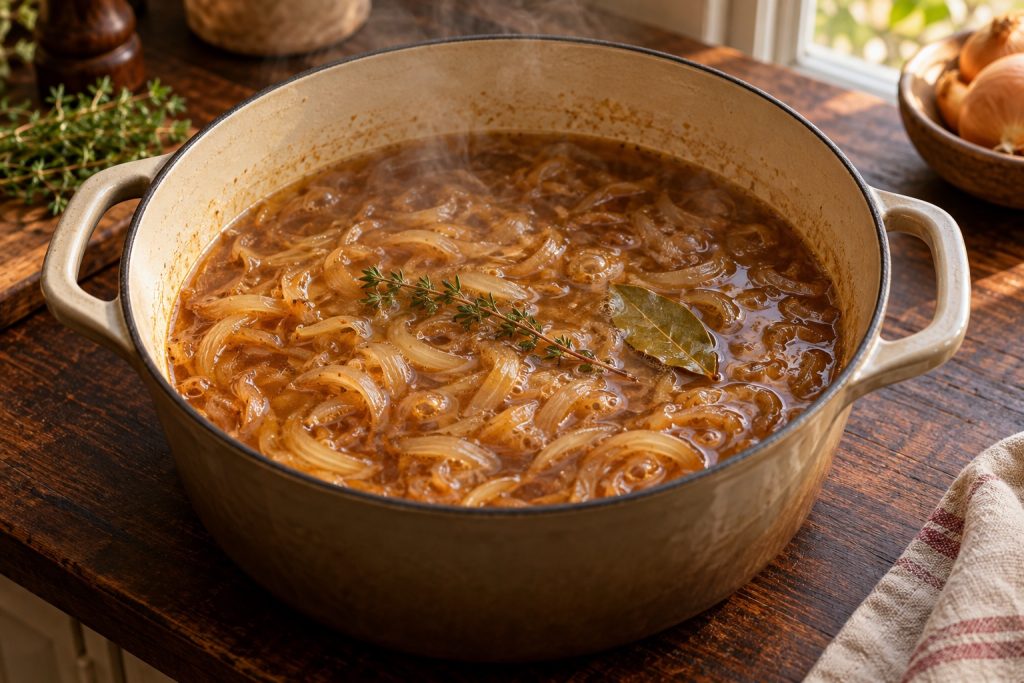
    Build the soup with wine and stock
    Stir in garlic and flour for 1 minute. Add wine, scrape the pot, and reduce by half, 3–4 minutes. Add hot stock, thyme, and bay. Simmer uncovered 25 minutes. Remove herbs, then adjust salt and pepper.

    4. Toast and broil the cheese cap

    Toast baguette at 400°F for 8–10 minutes until dry and golden on both sides. Ladle soup into bowls; top each with two toasts and 1½ ounces cheese. Broil on a tray 4–5 inches from the element for 2–4 minutes until bubbling and spotted brown. Rest 5 minutes.
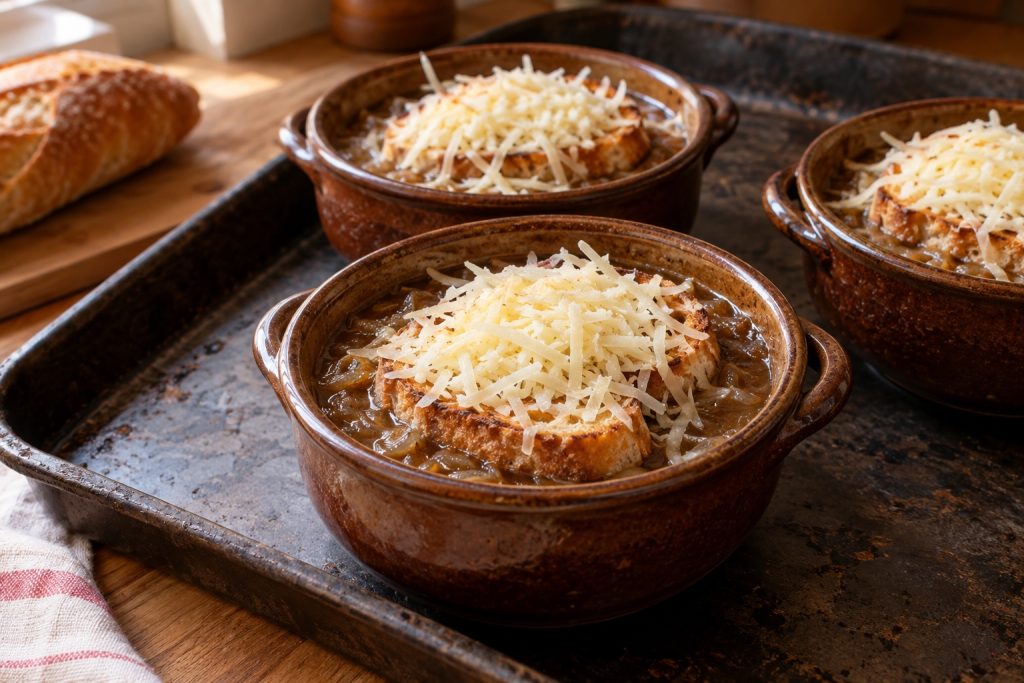
    Toast and broil the cheese cap
    Toast baguette at 400°F for 8–10 minutes until dry and golden on both sides. Ladle soup into bowls; top each with two toasts and 1½ ounces cheese. Broil on a tray 4–5 inches from the element for 2–4 minutes until bubbling and spotted brown. Rest 5 minutes.

    Texture and doneness cues

    The onions are jammy and deep amber but still recognizable; the brown broth only lightly coats a spoon. Cheese is fully melted with bronze spots, not a greasy solid lid.

    Mistakes, substitutions, and measurements

    Pale onions after 30 minutes mean heat is too low; stop adding water and raise it slightly. If they taste bitter or show black fond, transfer without scraping the burnt layer. Replace wine with ½ cup stock; use Emmental/Comté and sturdy sourdough if needed. 1.2 L is about 5 cups. Contains wheat and dairy.

    Serving, storage, and allergens

    Serve with a sharp green salad. Cool ungratinated soup in shallow containers within 2 hours; refrigerate 3–4 days or freeze up to 3 months. Reheat the soup to a boil and make fresh toast and cheese caps. Do not freeze assembled bowls.

    Frequently asked questions

    Why are my onions not browning?

    The pot may be crowded or the heat too low. Once visible liquid is gone, use a wider pot or raise the heat slightly.

    Should I add sugar?

    No. Natural onion sugars and enough time create the color; added sugar can burn before the onions are ready.

    What if I do not own broiler-safe bowls?

    Broil the cheese-topped toasts separately on a sheet pan and float them on the hot soup.
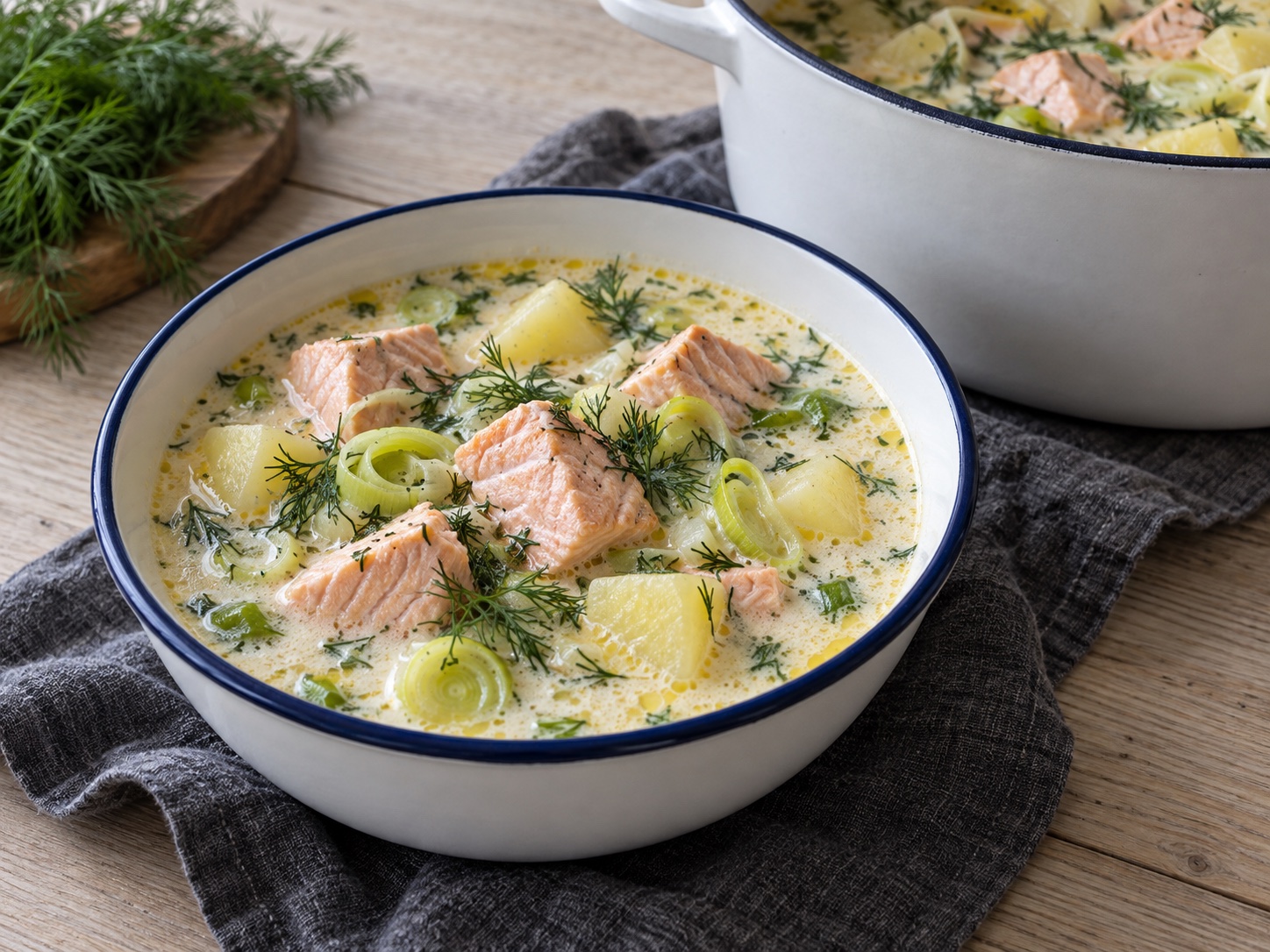
  • Lohikeitto: Creamy Finnish Salmon Soup

    Lohikeitto: Creamy Finnish Salmon Soup

    Lohikeitto is Finland’s comforting salmon soup, found in home kitchens, lunch cafés, and traditional restaurants, usually with potatoes, leek, cream, and dill.

    This home version cooks the vegetables first, adds salmon near the end so it stays moist at 145°F, and finishes with cream without a hard boil.

    Why this method works

    • Waxy potatoes hold their shape in broth better than floury varieties.
    • Adding salmon only after the vegetables are tender keeps the fish from overcooking.
    • Finishing with cream over low heat keeps the broth smooth, while late-added dill stays aromatic.

    Before you start

    Have a 4–5-quart pot, board, sharp knife, ladle, and instant-read thermometer ready.

    Cut salmon into even 1¼-inch pieces and refrigerate until the vegetables are ready; keep the raw-fish board separate.

    Taste the fish stock before salting, especially when using store-bought stock.

    Prepare the salmon and vegetables safely
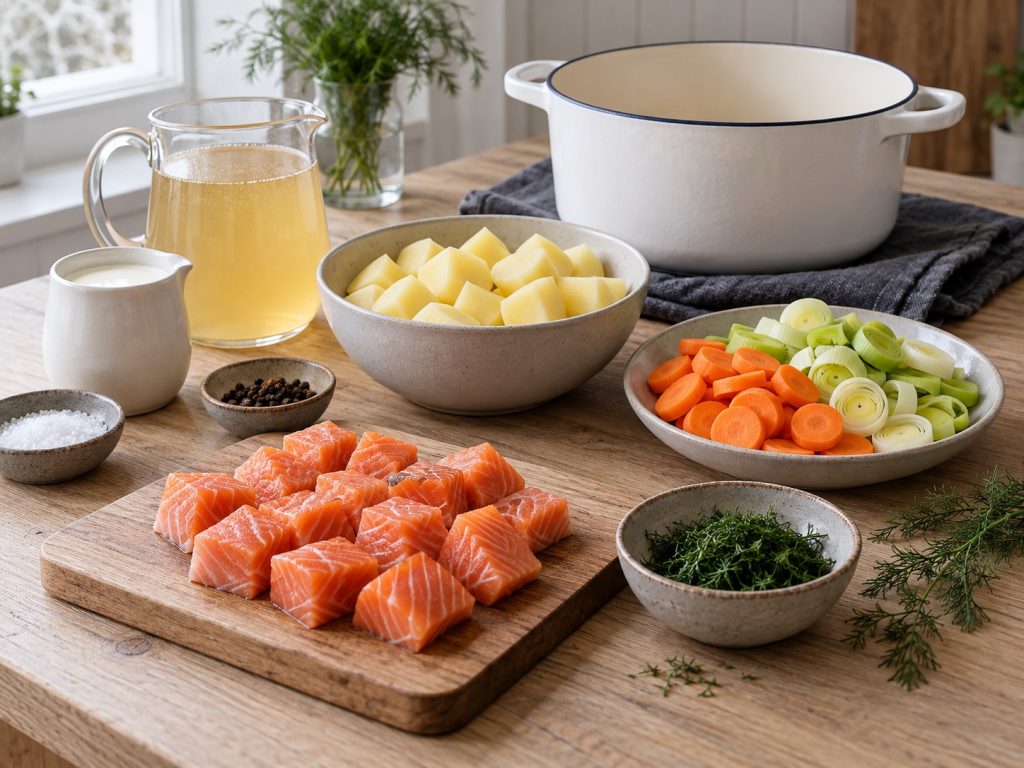
    Cut salmon into 1¼-inch cubes and keep covered and cold. Cut potatoes similarly, carrots ½ inch thick, and thoroughly washed leek into ½-inch rounds. Wash the raw-fish board and knife with hot soapy water.

    Step-by-step method

    1. Prepare the salmon and vegetables safely

    Cut salmon into 1¼-inch cubes and keep covered and cold. Cut potatoes similarly, carrots ½ inch thick, and thoroughly washed leek into ½-inch rounds. Wash the raw-fish board and knife with hot soapy water.

    2. Simmer the vegetables in stock

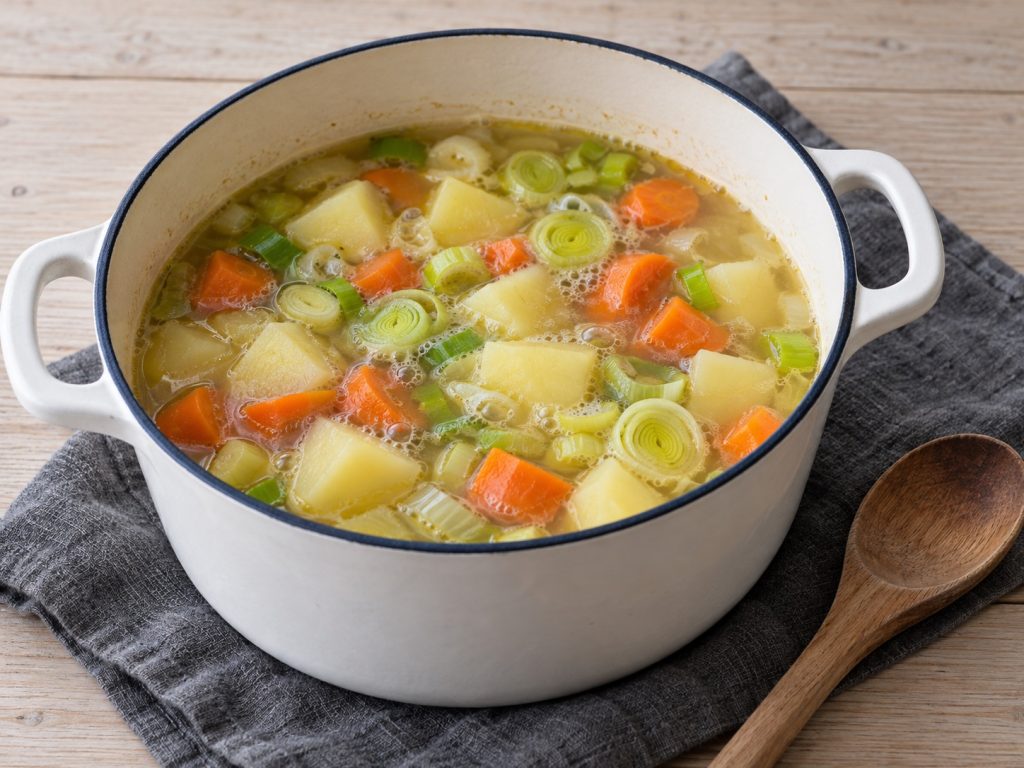
    Melt butter in the pot over medium heat. Sweat leek 4 minutes; add potatoes, carrots, bay, and allspice. Pour in stock and bring to a gentle simmer. Cook 15–18 minutes, until a knife enters the potato easily but the pieces still hold.

    Simmer the vegetables in stock
    Melt butter in the pot over medium heat. Sweat leek 4 minutes; add potatoes, carrots, bay, and allspice. Pour in stock and bring to a gentle simmer. Cook 15–18 minutes, until a knife enters the potato easily but the pieces still hold.

    3. Cook the salmon gently

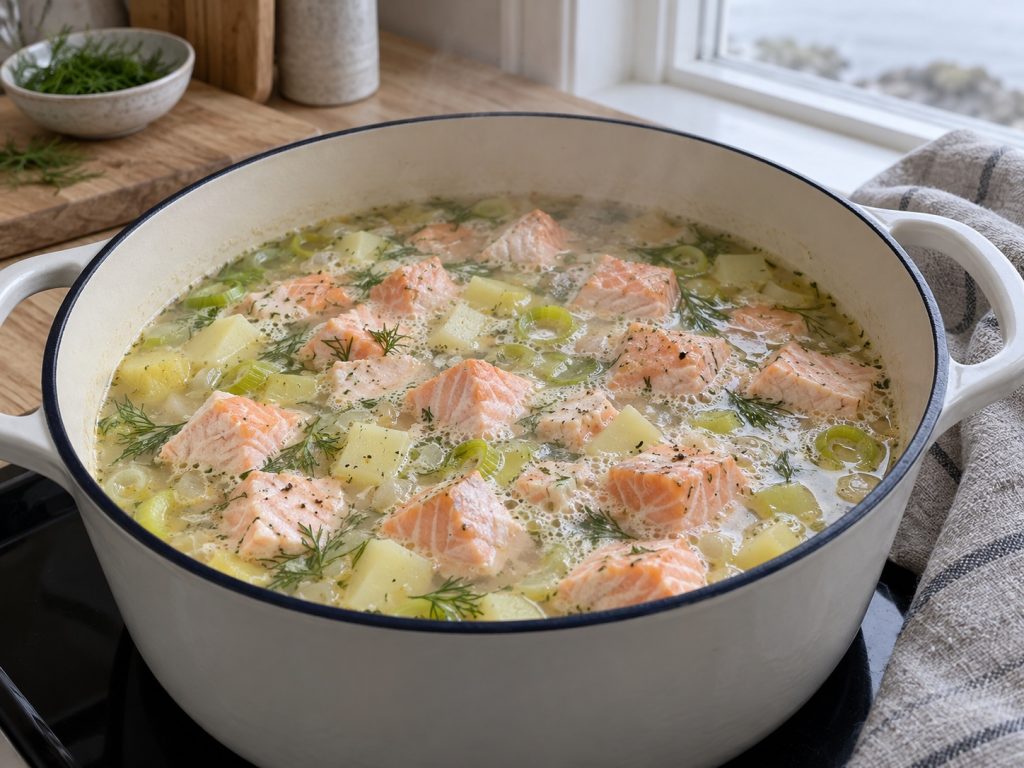
    Reduce to the gentlest simmer. Add salmon in one layer and rock the pot instead of stirring. Cook 5–7 minutes, until the thickest piece reaches 145°F or is opaque and separates easily with a fork.

    Cook the salmon gently
    Reduce to the gentlest simmer. Add salmon in one layer and rock the pot instead of stirring. Cook 5–7 minutes, until the thickest piece reaches 145°F or is opaque and separates easily with a fork.

    4. Finish with cream and dill

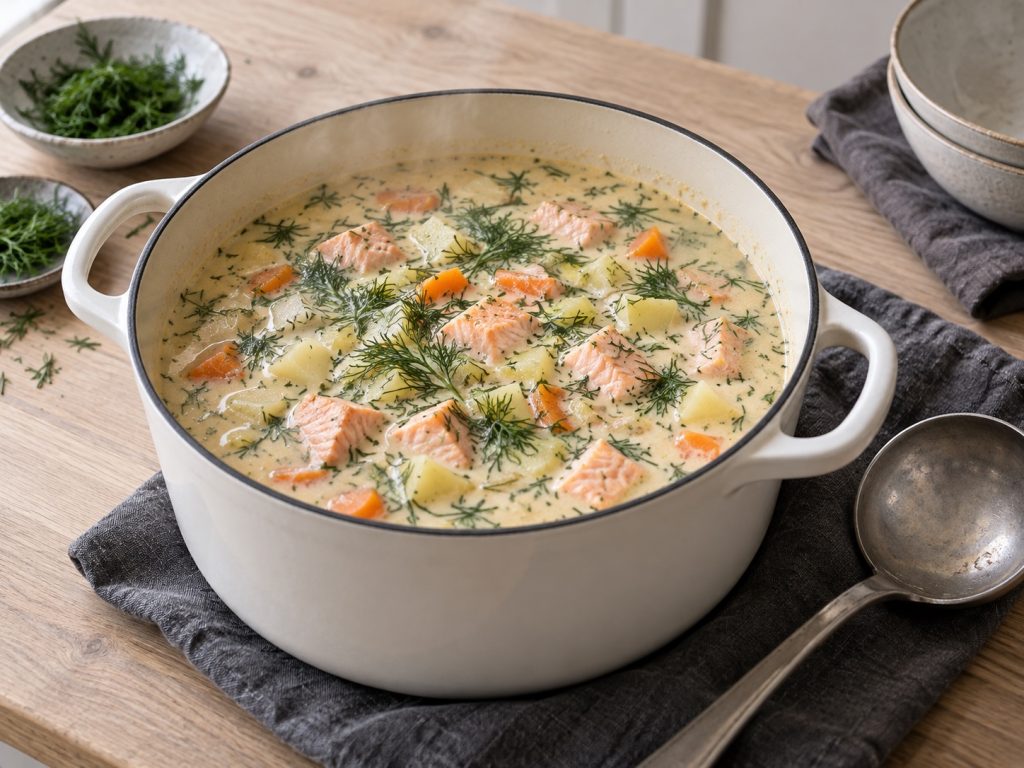
    Add cream and heat 2–3 minutes just until steaming; do not boil hard. Remove bay and allspice. Fold in most dill, pepper, and salt as needed. Rest 5 minutes and serve with the remaining dill.

    Finish with cream and dill
    Add cream and heat 2–3 minutes just until steaming; do not boil hard. Remove bay and allspice. Fold in most dill, pepper, and salt as needed. Rest 5 minutes and serve with the remaining dill.

    Texture and doneness cues

    Potatoes yield to a knife without collapsing; salmon is opaque, moist, and flakes in large pieces. The broth is creamy but pourable, never split or greasy.

    Mistakes, substitutions, and measurements

    Trout or a firm skinless white fish can replace salmon; adjust time to thickness. Unsweetened oat cream works, though the flavor changes. 1 litre is about 4¼ cups; 200 ml is about ¾ cup plus 1 tablespoon. Contains fish and dairy.

    Serving, storage, and allergens

    Cool in shallow containers within 2 hours and refrigerate up to 2 days. Reheat gently without vigorous stirring to 165°F. Cream can split after freezing; for best results freeze the soup without cream up to 1 month and add cream after thawing.

    Frequently asked questions

    Why did the cream split?

    The soup boiled hard after the cream went in; add it over low heat and warm only to steaming.

    Why is the salmon dry?

    It cooked with the vegetables or boiled too long; add near the end and stop at 145°F.

    Why did the potatoes fall apart?

    A floury variety or vigorous stirring is usually responsible; use waxy potatoes and rock the pot.

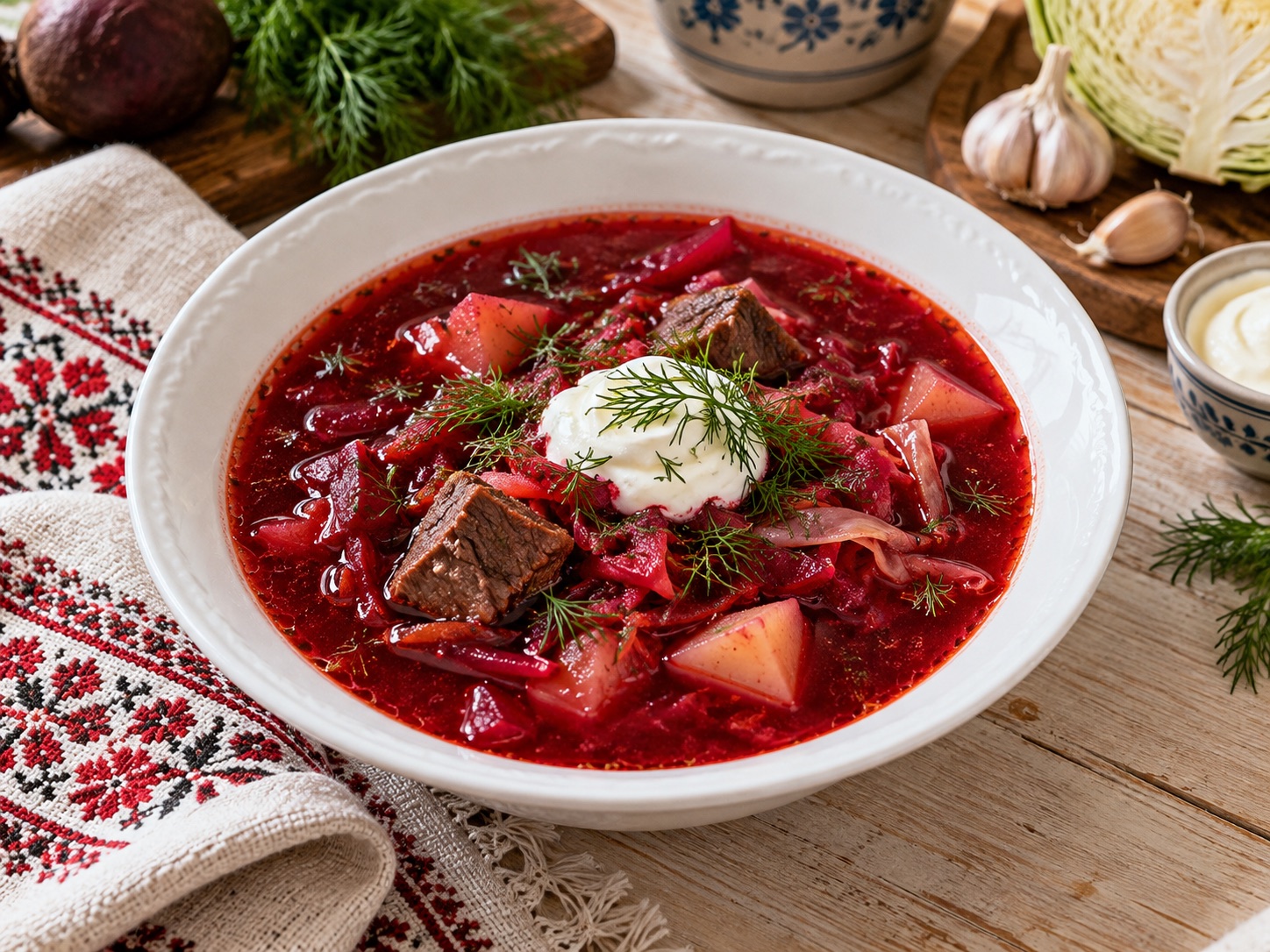
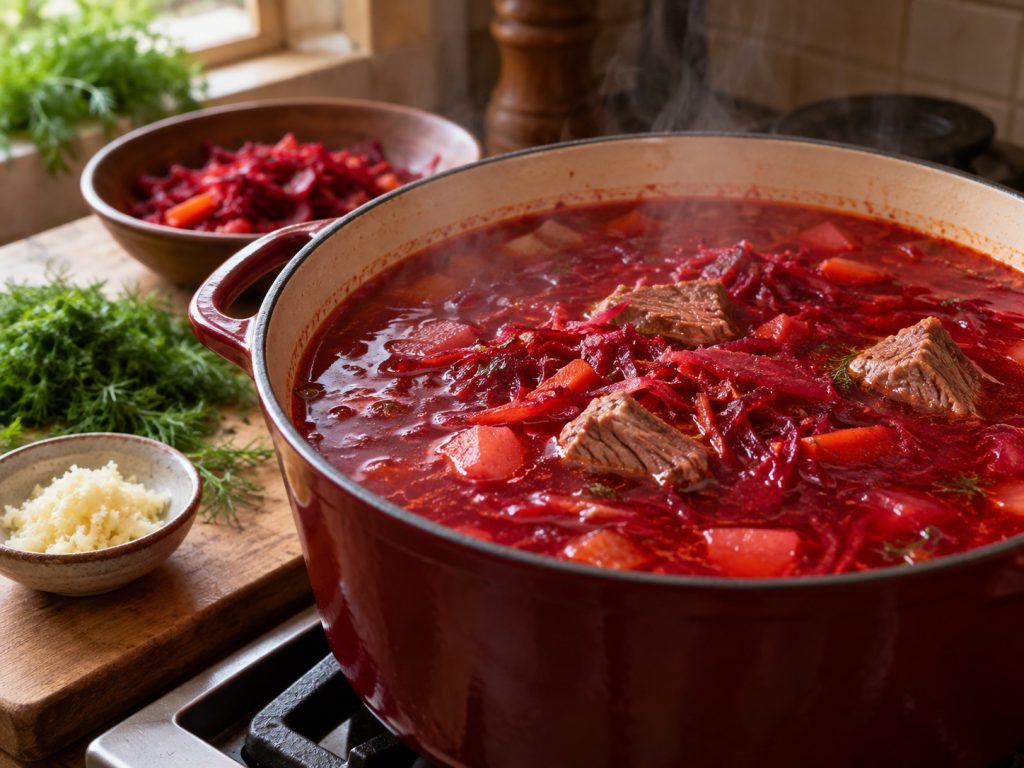
  • Ukrainian Borscht with Beef, Beets, and Cabbage

    Ukrainian Borscht with Beef, Beets, and Cabbage

    Ukrainian borscht is not one fixed formula but a beet-soup tradition that varies by region, season, and family. This home version uses beef, cabbage, and potatoes with balanced sweet-sour flavor.

    Cooking beets separately with acid protects their ruby color. Staggering cabbage and potatoes keeps each tender without disintegrating.

    Why this method works

    • A gentle beef simmer builds a clean, flavorful broth.
    • Cooking beets separately with tomato and vinegar concentrates color and sweetness.
    • Resting lets flavors meld; the soup is often more balanced the next day.

    Before you start

    Use a large pot, wide skillet, grater, and thermometer. An apron and gloves help with beet stains.

    Cut beef in 1¼-inch chunks. Tenderizing time varies; rely on a fork test, not only the clock.

    After adding beets, avoid a hard boil because the color can dull.

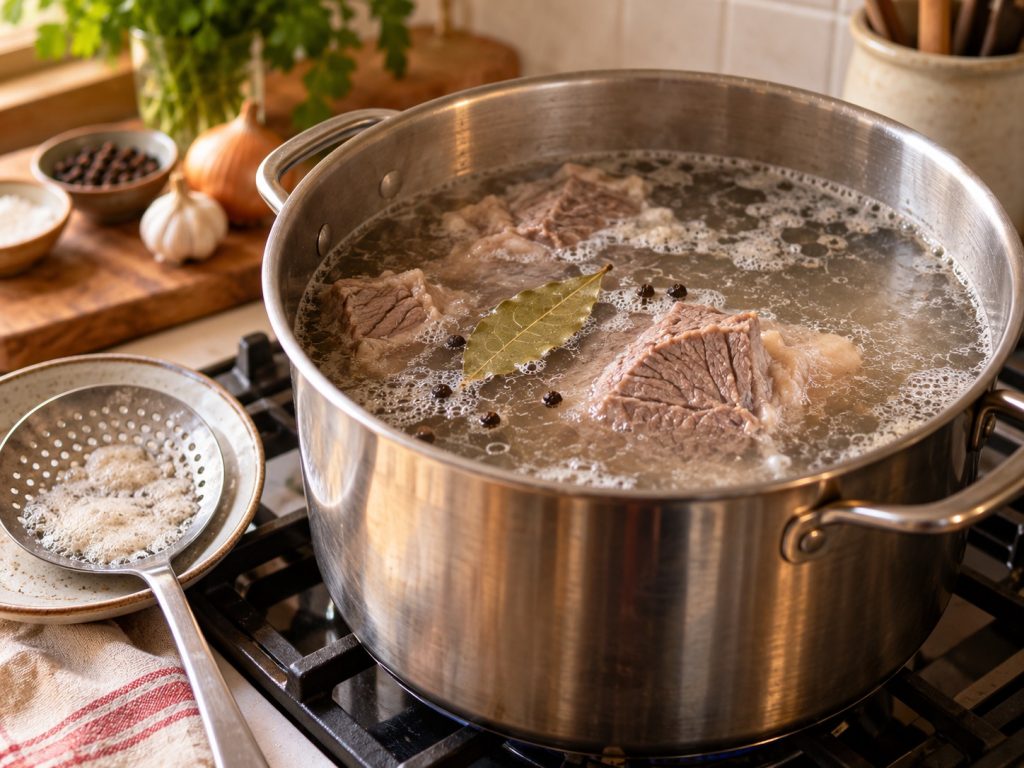
    Simmer beef until tender
    Bring beef, water, and bay to a boil and skim. Barely simmer 70–90 minutes until beef is fork-tender.

    Step-by-step method

    1. Simmer beef until tender

    Bring beef, water, and bay to a boil and skim. Barely simmer 70–90 minutes until beef is fork-tender.

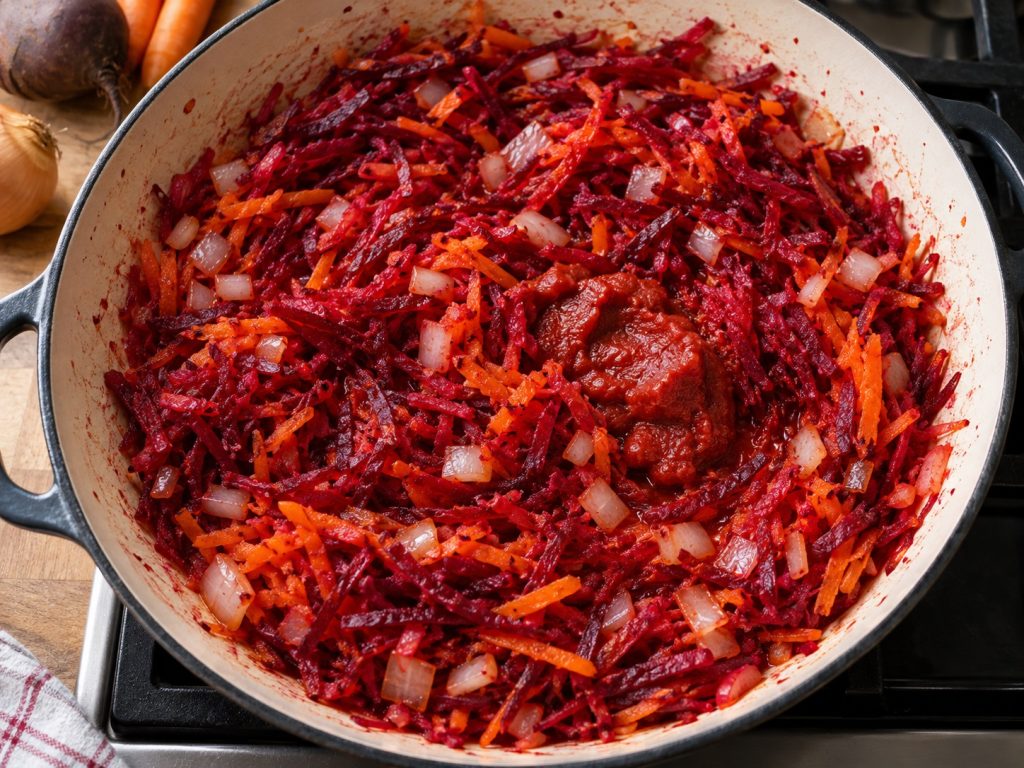
    2. Sauté the beet base separately

    Sauté onion and carrot in a little oil for 7 minutes. Add beets, tomato paste, and vinegar; cook 12–15 minutes until glossy and tender.

    Sauté the beet base separately
    Sauté onion and carrot in a little oil for 7 minutes. Add beets, tomato paste, and vinegar; cook 12–15 minutes until glossy and tender.

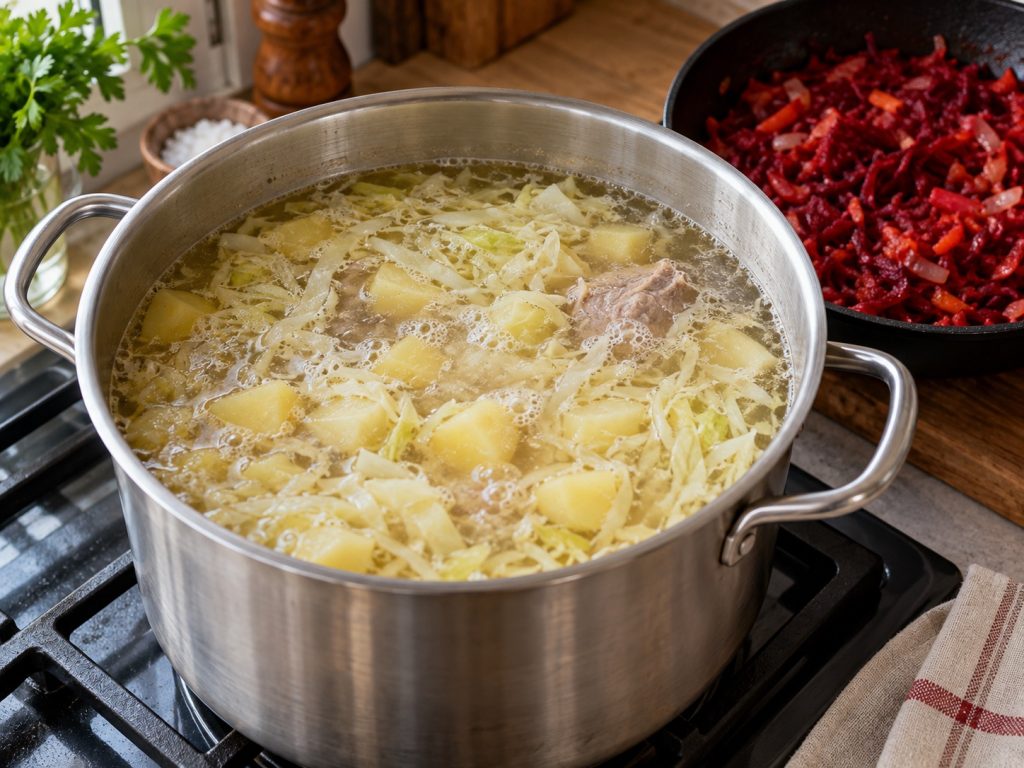
    3. Stagger potatoes and cabbage

    Add potatoes to broth for 10 minutes. Add cabbage and cook 8–10 minutes more, until both are tender but intact.

    Stagger potatoes and cabbage
    Add potatoes to broth for 10 minutes. Add cabbage and cook 8–10 minutes more, until both are tender but intact.

    4. Add beets and rest

    Return beet mixture and beef; barely simmer 10 minutes. Add garlic and dill, turn off heat, and rest at least 30 minutes.

    Add beets and rest
    Return beet mixture and beef; barely simmer 10 minutes. Add garlic and dill, turn off heat, and rest at least 30 minutes.

    Texture and doneness cues

    Soup is ruby red; beef separates easily with a fork, while potatoes and cabbage retain shape. Flavor starts gently sweet, then turns bright, sour, and savory.

    Mistakes, substitutions, and measurements

    For a meatless variation, use vegetable stock and cooked white beans; label it as a different variation. Sour cream is optional. Contains dairy; stock may contain gluten.

    Serving, storage, and allergens

    Serve with sour cream, dill, and bread. Cool in shallow containers within 2 hours; refrigerate 3–4 days or freeze 2–3 months. Reheat to a rolling boil/165°F.

    Frequently asked questions

    Why did borscht turn orange-brown?

    It likely boiled hard after beets were added; cook vinegar with beets and use gentle heat at the end.

    Why is the beef tough?

    Chuck needs time; keep a bare simmer until it passes the fork test.

    Can I make it a day ahead?

    Yes. Many find the flavor more integrated the next day. Cool promptly and refrigerate.

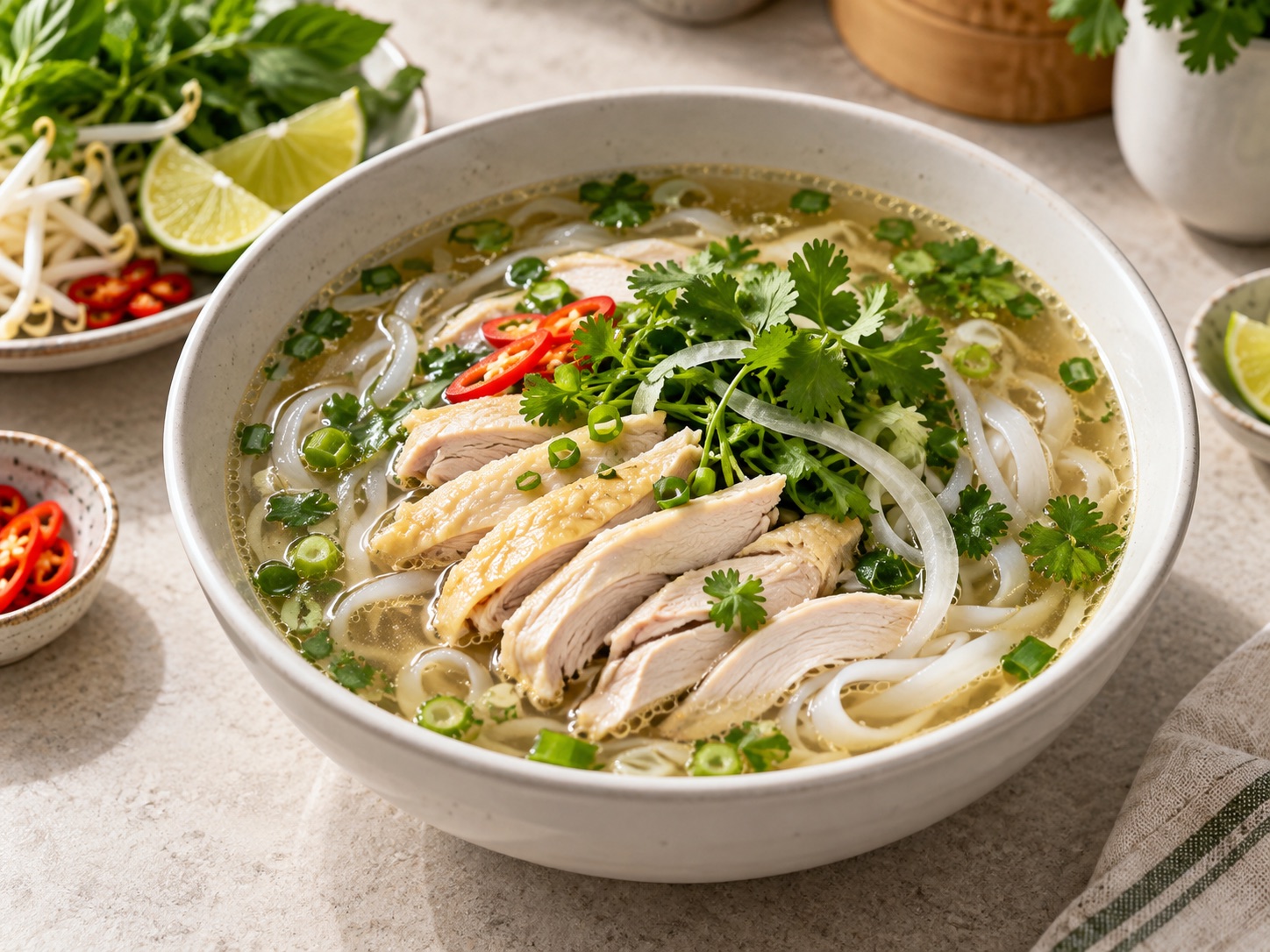
  • Vietnamese Phở Gà: Clear Chicken Noodle Soup

    Vietnamese Phở Gà: Clear Chicken Noodle Soup

    Phở gà is Vietnam’s beloved chicken version of phở. Charred onion and ginger plus briefly toasted spices add depth without making the broth heavy.

    This home version leans toward a restrained Hanoi style. A bare simmer and separately prepared noodles are the keys to clear broth and springy texture.

    Why this method works

    • Charring onion and ginger softens raw harshness and adds sweet-smoky aroma.
    • A bare simmer avoids breaking proteins into the broth, keeping it clearer.
    • Preparing noodles in the bowl prevents them swelling and turning mushy in the pot.

    Before you start

    Have a large pot, fine sieve, tongs, and thermometer ready. Do not wash raw chicken; splashing can spread contamination.

    Soak or boil rice noodles according to their package, then rinse briefly in cool water before serving.

    Chicken must reach 165°F at the thickest point. Remove the meat, then simmer the bones 30 minutes longer for body.

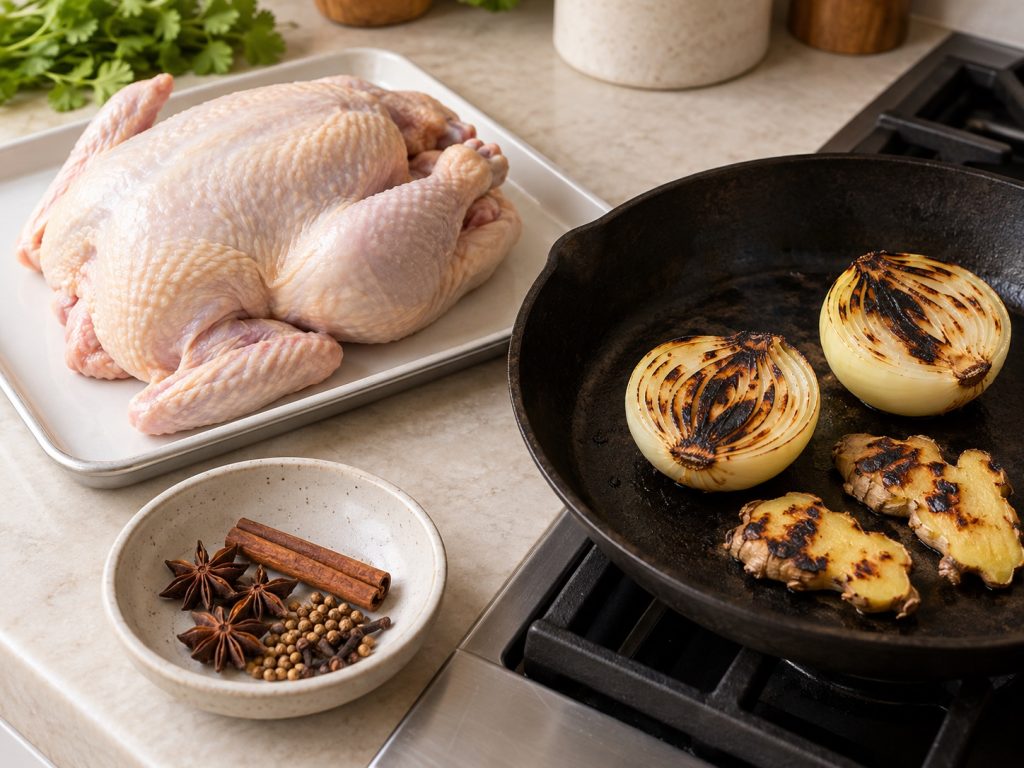
    Char the aromatics
    Char onion and ginger cut-side down in a dry skillet for 8–10 minutes. Toast the whole spices for 1 minute until fragrant.

    Step-by-step method

    1. Char the aromatics

    Char onion and ginger cut-side down in a dry skillet for 8–10 minutes. Toast the whole spices for 1 minute until fragrant.

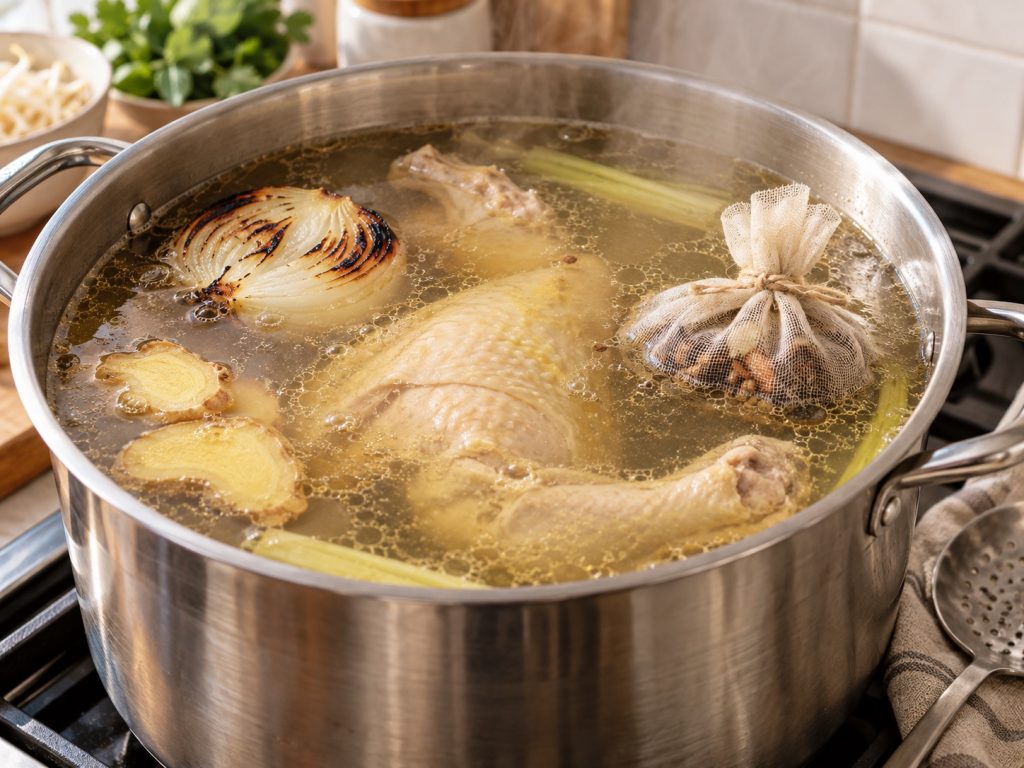
    2. Poach the chicken gently

    Add chicken, water, charred aromatics, and spices to a pot. Barely simmer 45–55 minutes, skimming foam. Verify 165°F in the thickest meat.

    Poach the chicken gently
    Add chicken, water, charred aromatics, and spices to a pot. Barely simmer 45–55 minutes, skimming foam. Verify 165°F in the thickest meat.

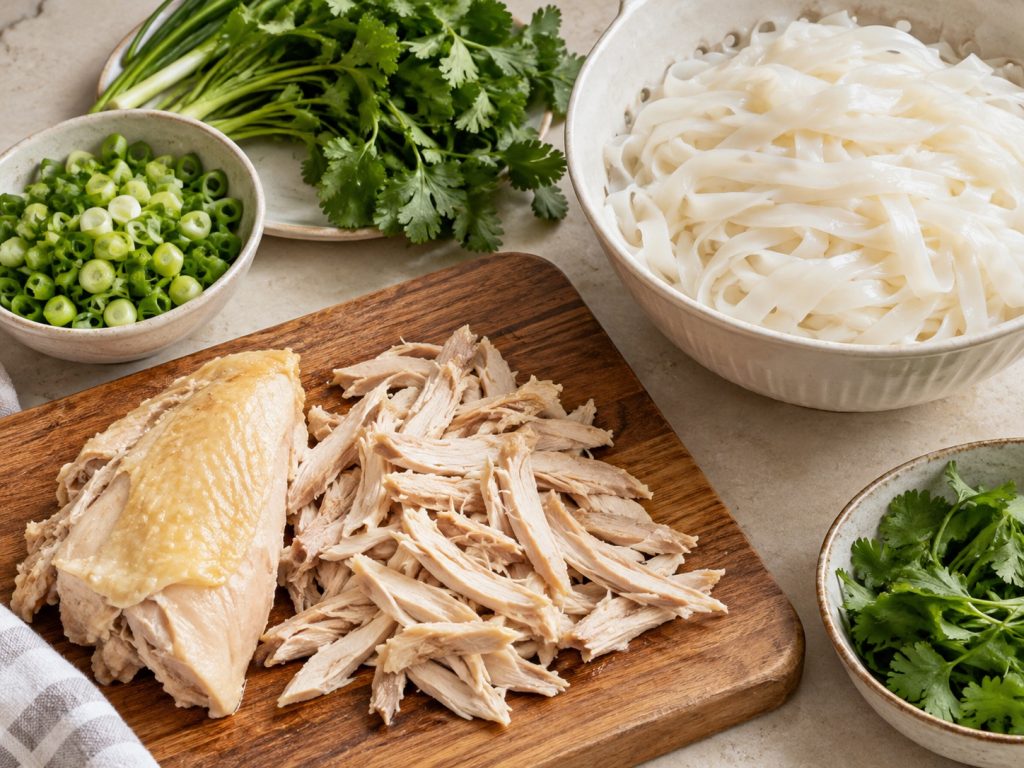
    3. Shred and strain

    Remove chicken and shred the meat. Return bones for 30 minutes. Fine-strain the broth and balance with fish sauce, sugar, and salt.

    Shred and strain
    Remove chicken and shred the meat. Return bones for 30 minutes. Fine-strain the broth and balance with fish sauce, sugar, and salt.

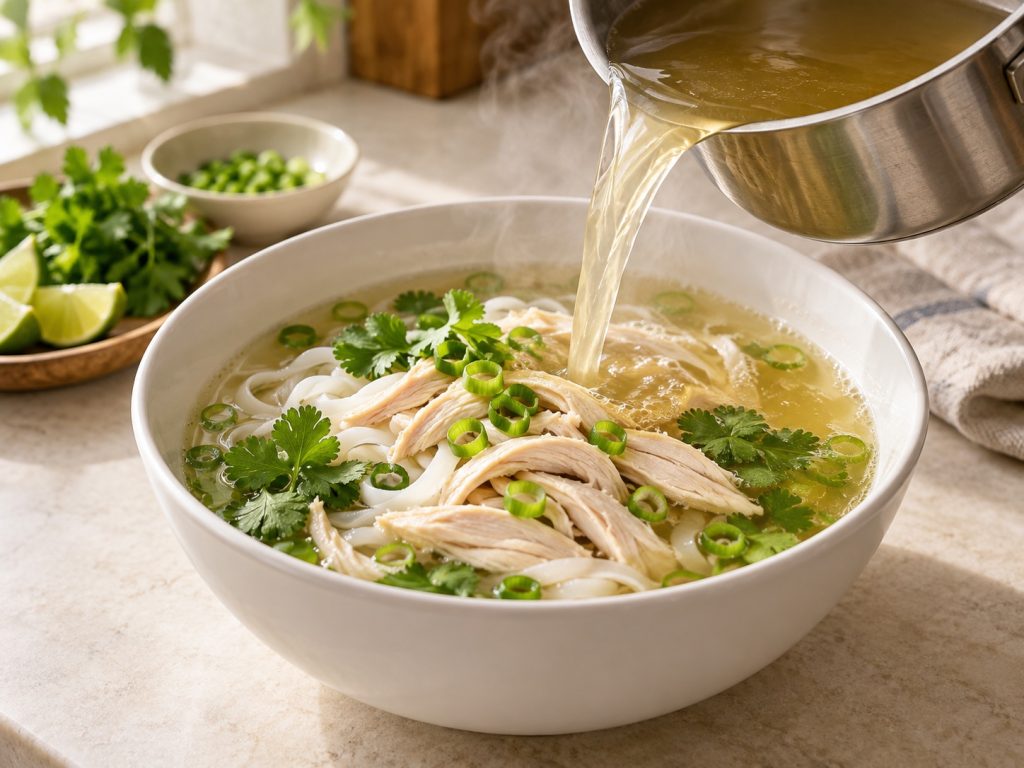
    4. Build bowls with hot broth

    Divide prepared noodles among hot bowls; add chicken, scallions, and cilantro. Ladle over piping-hot broth and serve at once with lime and chile.

    Build bowls with hot broth
    Divide prepared noodles among hot bowls; add chicken, scallions, and cilantro. Ladle over piping-hot broth and serve at once with lime and chile.

    Texture and doneness cues

    Broth should be clear-gold with fine fat droplets and a clean aroma. Chicken reaches 165°F; noodles are tender yet resilient.

    Mistakes, substitutions, and measurements

    Soy sauce can replace fish sauce to taste, though flavor changes. 1 cup is 240 ml. May contain fish and soy; choose certified gluten-free noodles if needed.

    Serving, storage, and allergens

    Cool components separately within 2 hours. Refrigerate chicken and broth 3–4 days, noodles 2 days; boil broth and reheat chicken to 165°F.

    Frequently asked questions

    Why is my broth cloudy?

    Hard boiling and stirring disperse proteins; keep only a few bubbles breaking the surface.

    Why are the noodles mushy?

    They sat too long in hot liquid or were stored in the pot; prepare and combine at serving.

    Can I make it ahead?

    Yes. Make broth and chicken up to 2 days ahead; cook noodles on serving day.

  • Moroccan Harira: Lentil and Chickpea Soup

    Moroccan Harira: Lentil and Chickpea Soup

    Harira is a Moroccan soup built from tomato, pulses, fresh herbs, and warm spices. It is strongly associated with Ramadan but eaten year-round.

    This meatless home version uses red lentils and cooked chickpeas. A thin flour slurry is streamed in at the end so the soup stays silky and pourable rather than pasty.

    Why this method works

    • Sweating onion, celery, and spices first removes raw spice flavor.
    • Lentils give body while whole chickpeas preserve a contrasting bite.
    • Cold-water flour slurry stays smooth when streamed slowly into simmering soup.

    Before you start

    Use a heavy pot, fine sieve, and whisk. Rinse canned chickpeas well.

    If the tomatoes taste sharp, simmer 5–10 minutes longer before adding sugar; adjust salt last.

    Vermicelli absorbs broth as it stands. For make-ahead soup, add noodles on serving day.

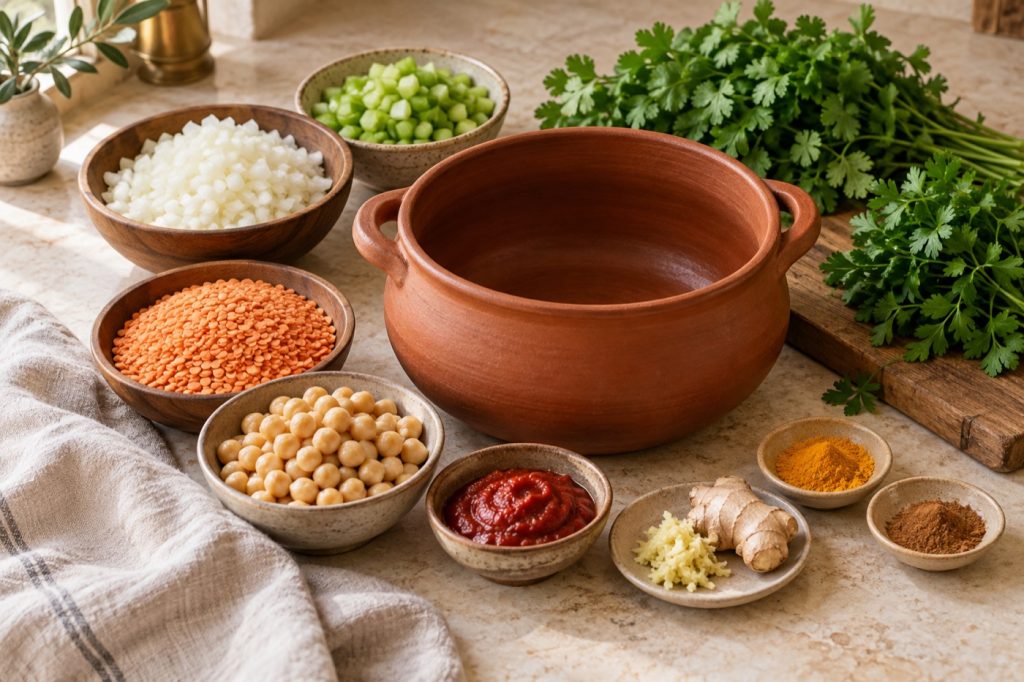
    Prepare the ingredients shown in an original step photograph
    Finely chop onion, celery, and herbs. Rinse lentils and chickpeas. Whisk flour with 100 ml cold water until completely smooth.

    Step-by-step method

    1. Prepare the ingredients

    Finely chop onion, celery, and herbs. Rinse lentils and chickpeas. Whisk flour with 100 ml cold water until completely smooth.

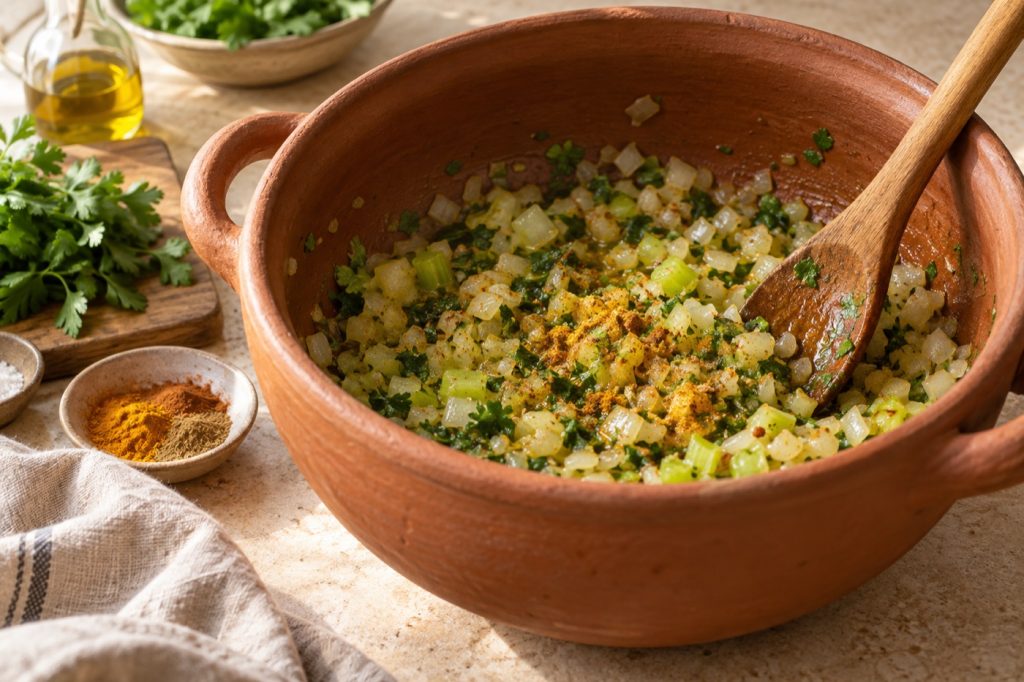
    2. Build the aromatic base

    Heat oil in a pot. Soften onion and celery for 6–8 minutes. Add ginger, turmeric, cinnamon, and tomato paste; stir 1 minute.

    Build the aromatic base shown in an original step photograph
    Heat oil in a pot. Soften onion and celery for 6–8 minutes. Add ginger, turmeric, cinnamon, and tomato paste; stir 1 minute.

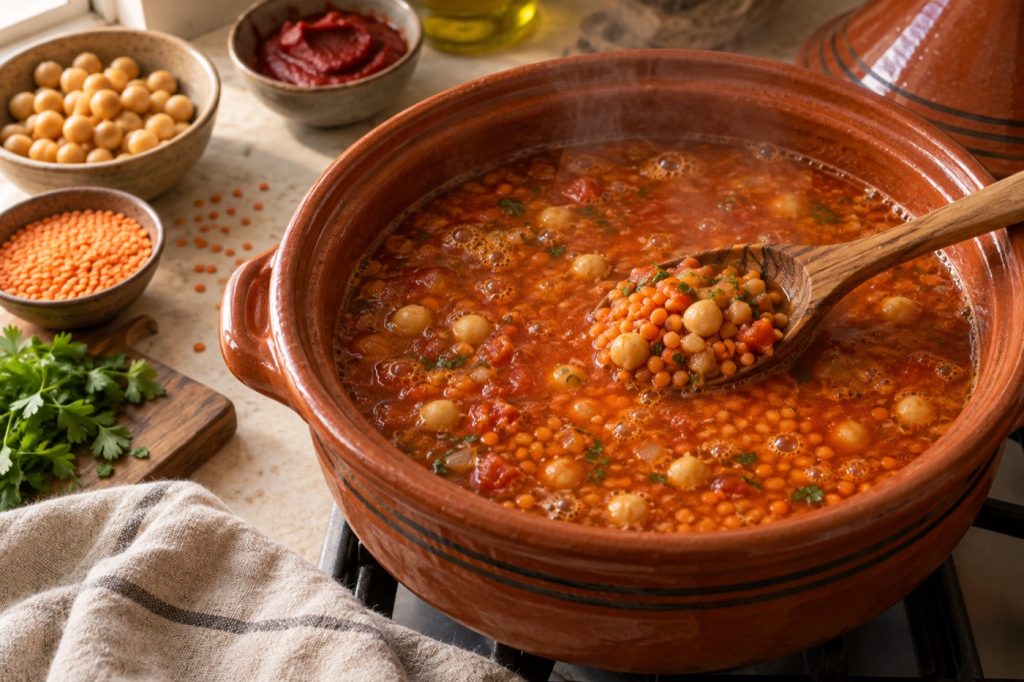
    3. Cook the pulses

    Add crushed tomatoes, lentils, chickpeas, and stock. Bring to a boil, lower the heat, and simmer partly covered 25–30 minutes until lentils are tender.

    Cook the pulses shown in an original step photograph
    Add crushed tomatoes, lentils, chickpeas, and stock. Bring to a boil, lower the heat, and simmer partly covered 25–30 minutes until lentils are tender.

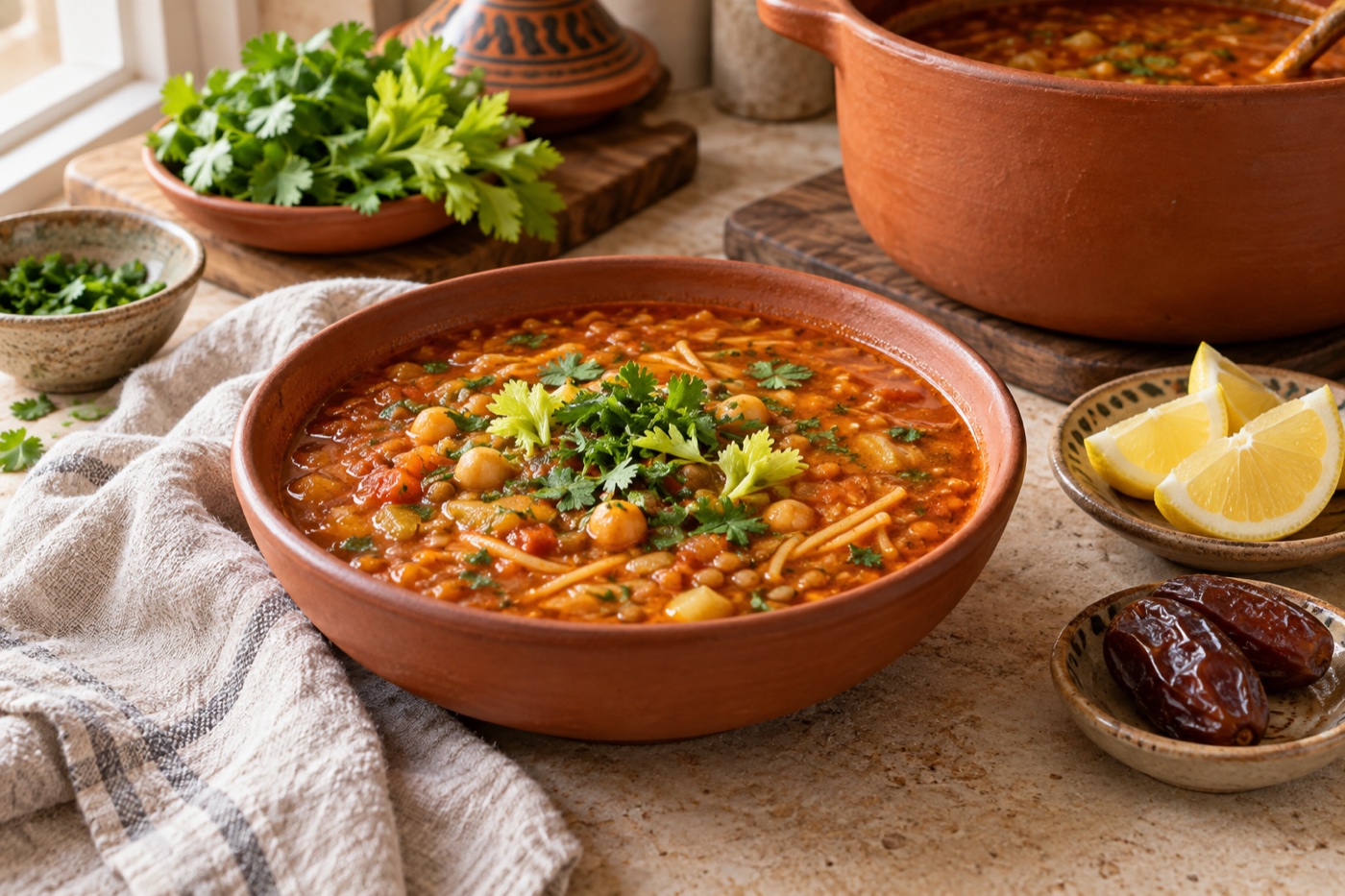
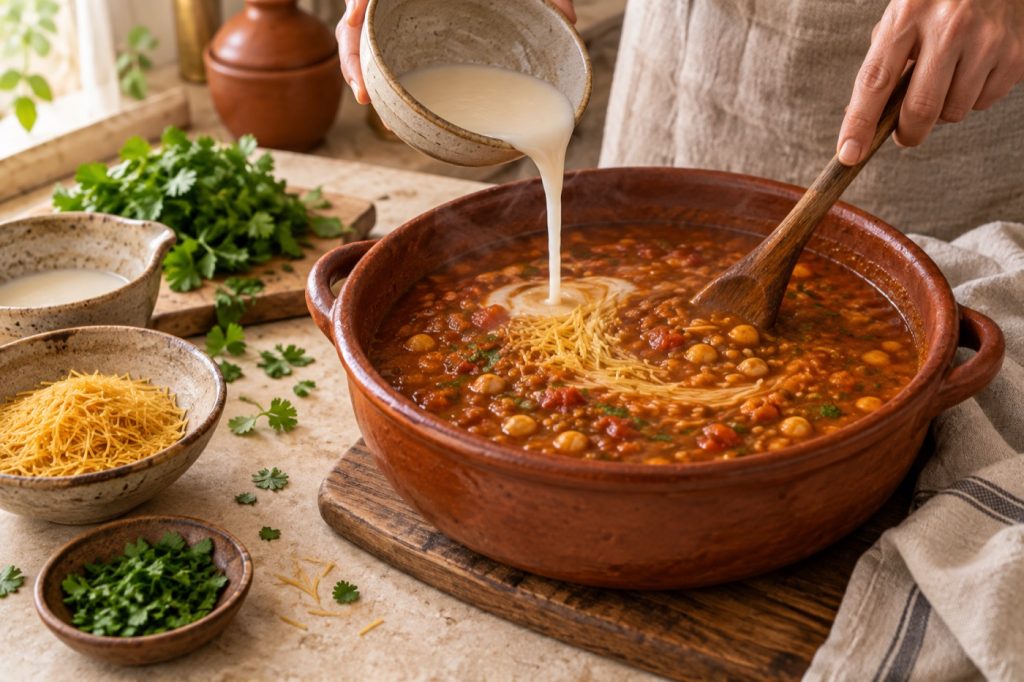
    4. Finish with slurry and noodles

    Add vermicelli and herbs. Stream in the slurry while stirring. Simmer 8–10 minutes; when the soup lightly coats a spoon, balance with lemon and salt.

    Finish with slurry and noodles shown in an original step photograph
    Add vermicelli and herbs. Stream in the slurry while stirring. Simmer 8–10 minutes; when the soup lightly coats a spoon, balance with lemon and salt.

    Texture and doneness cues

    Hot harira should pour freely while lightly coating a spoon; it thickens as it cools. Too much flour or fast pouring makes it lumpy and pasty.

    Mistakes, substitutions, and measurements

    Use a small piece of celeriac if stalk celery is unavailable. For gluten-free soup, replace flour with 15 g cornstarch and use rice noodles.

    Serving, storage, and allergens

    Serve with lemon, dates, and bread. Cool in shallow containers within 2 hours; refrigerate 3–4 days or freeze 2–3 months. Add water and bring to a boil when reheating. Contains gluten and celery.

    Frequently asked questions

    Why is my harira too thick?

    Lentils and noodles absorb liquid as they stand. Add hot water or stock and return to a boil.

    Is flour essential?

    No. Omit it for a lighter soup, though the classic silky body will be reduced.

    Can I use canned chickpeas?

    Yes. Rinse well and add with the lentils; no pre-boiling is needed.

  • Turkish Lentil Soup (Easy Mercimek Çorbası)

    Turkish Lentil Soup (Easy Mercimek Çorbası)

    Turkish lentil soup, known as mercimek çorbası, is a smooth and comforting red lentil soup served in homes and restaurants across Turkey. This version combines red lentils with carrot and potato, then blends everything until silky. A quick paprika-butter drizzle and fresh lemon bring the whole bowl to life.

    The recipe serves six and takes about 40 minutes from start to finish. It uses everyday ingredients and is naturally easy to adapt: omit the flour for a lighter, gluten-free version and use olive oil instead of butter if preferred.

    Why this Turkish lentil soup works

    • Potato gives the soup natural body without adding cream.
    • Sautéing the vegetables first builds a deeper, rounder flavor.
    • Cumin balances the earthy red lentils.
    • Blending and briefly simmering again creates a restaurant-style texture.

    Prepare the ingredients

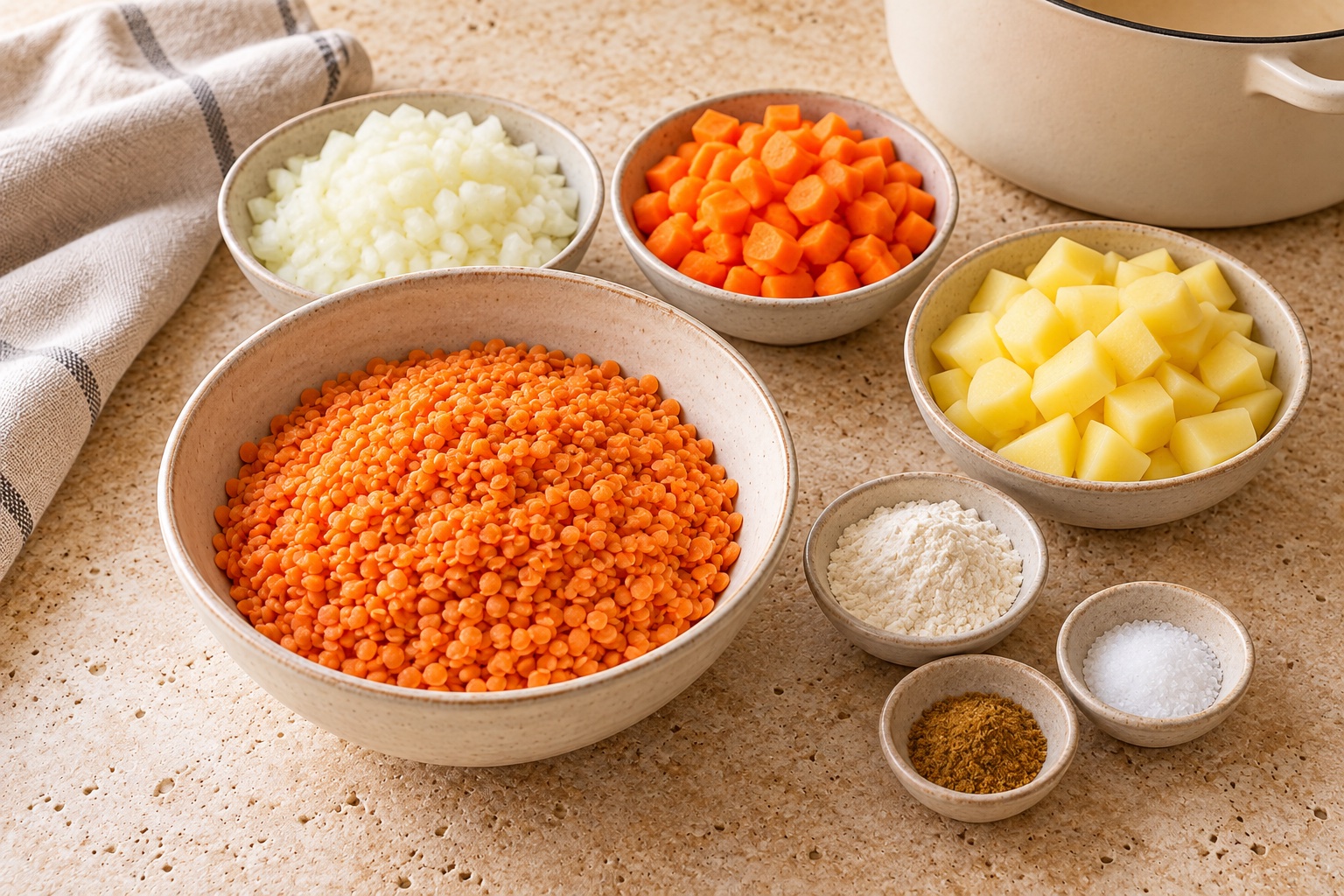
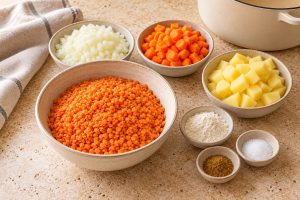
    Rinse the red lentils several times until the water runs mostly clear. Dice the onion, carrot and potato into similar-sized pieces so they soften evenly.

    Red lentils, onion, carrot, potato, flour and spices
    Ingredients prepared for Turkish lentil soup.

    How to make Turkish lentil soup

    1. Sauté the vegetables

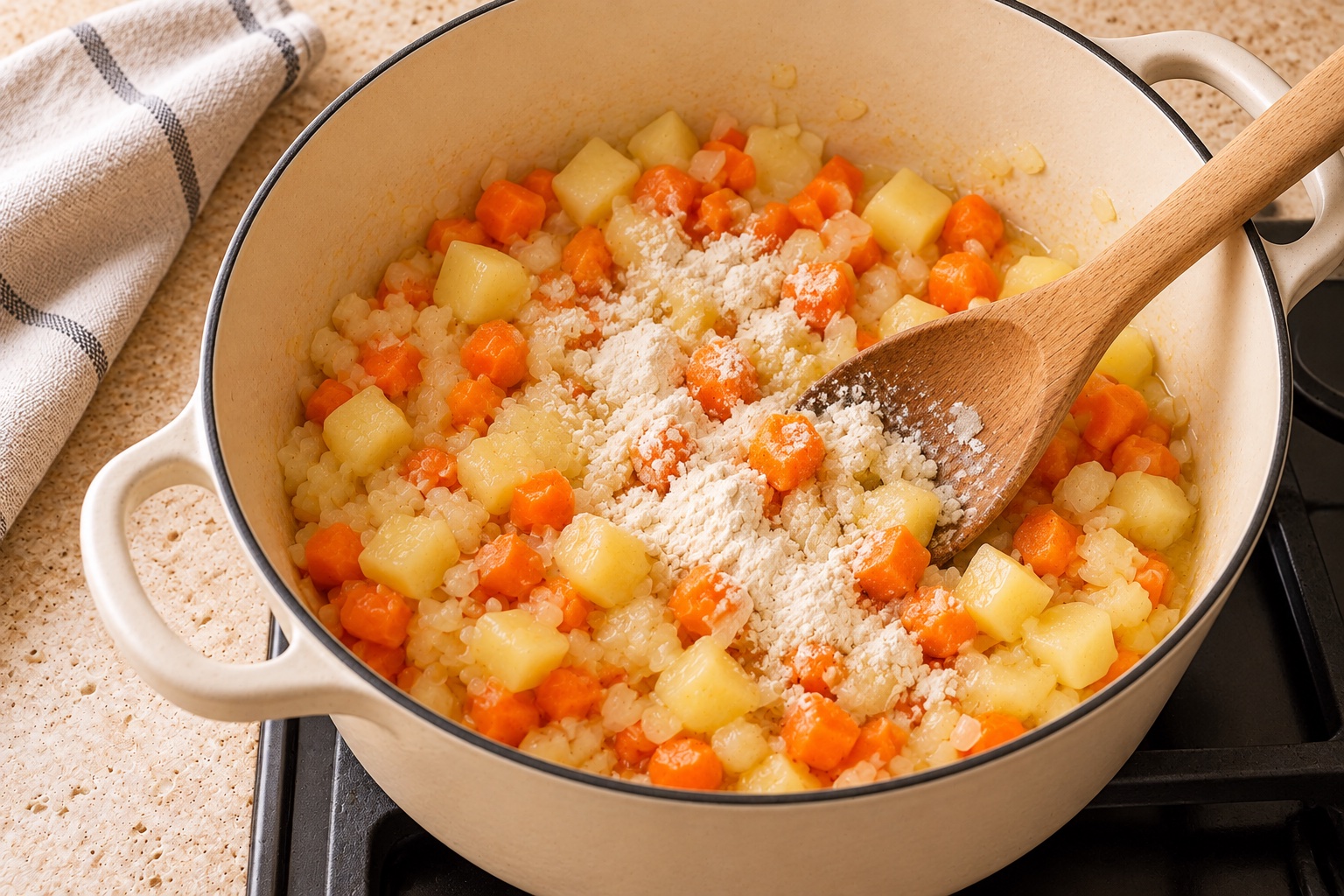
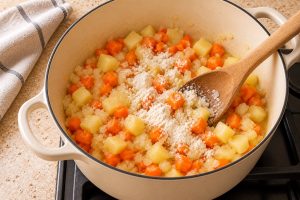
    Warm the olive oil and butter over medium heat. Soften the onion, then add the carrot and potato. Cook for a few minutes before stirring in the flour for one minute. Keep the heat moderate so the flour does not brown.

    Onion, carrot and potato sautéing with flour in a cream-colored pot
    Sauté the vegetables to build the soup’s flavor base.

    2. Simmer until tender

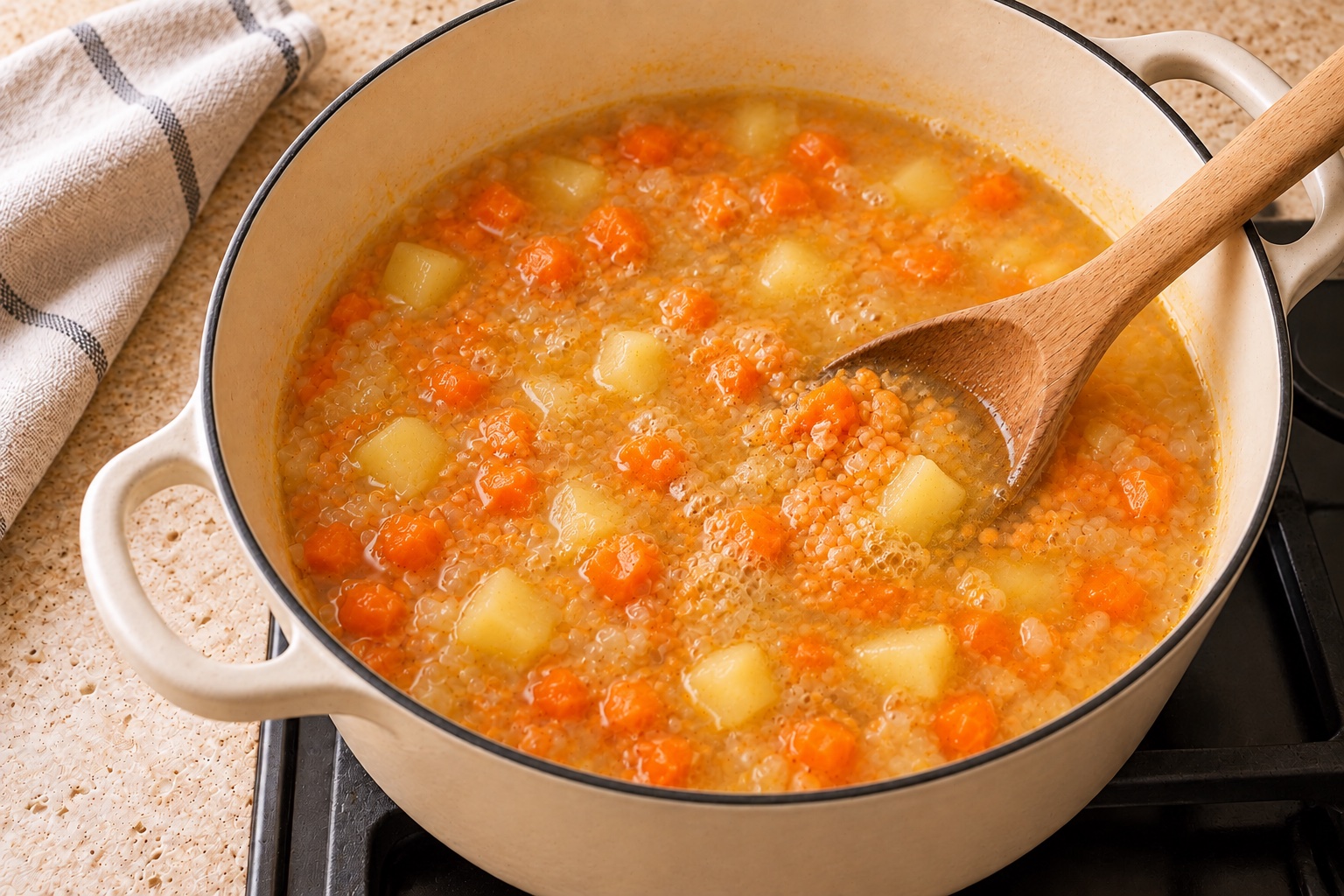
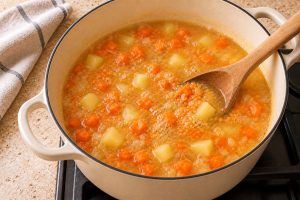
    Add the rinsed lentils, cumin, salt, black pepper and hot water or stock. Bring to a boil and skim away any foam. Simmer partly covered for 22–25 minutes, until the lentils and vegetables are completely tender.

    Red lentils and vegetables simmering until tender
    Simmer the lentils and vegetables until very soft.

    3. Blend until smooth

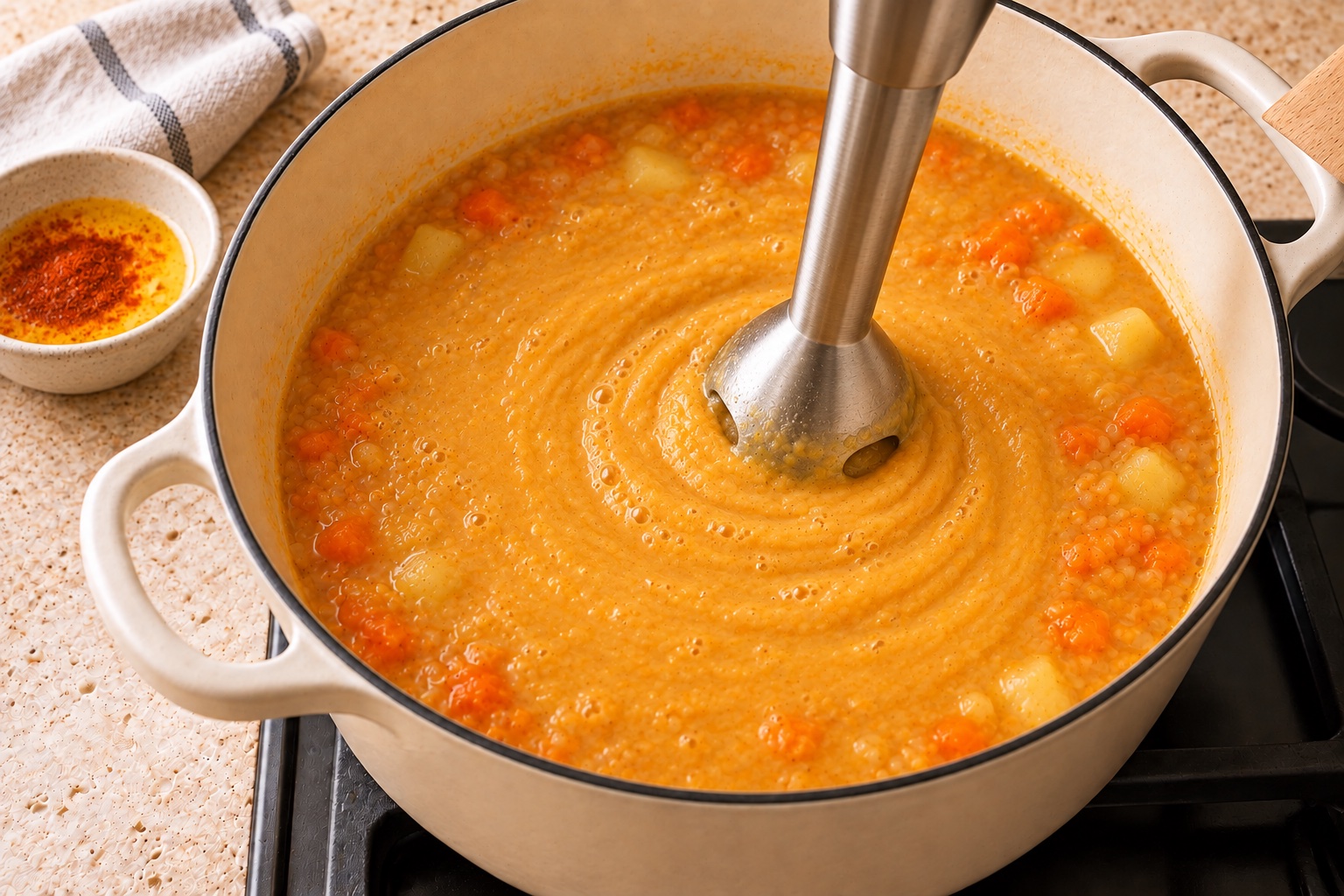
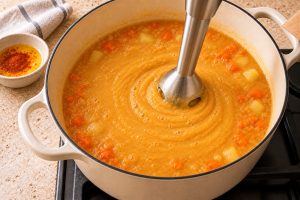
    Remove the pot from the heat and blend with an immersion blender until completely smooth. Add a little hot water if the soup is too thick. Return it to the heat, simmer for two minutes and adjust the seasoning.

    Cooked lentil soup being puréed with an immersion blender
    Blend the soup until creamy and uniform.

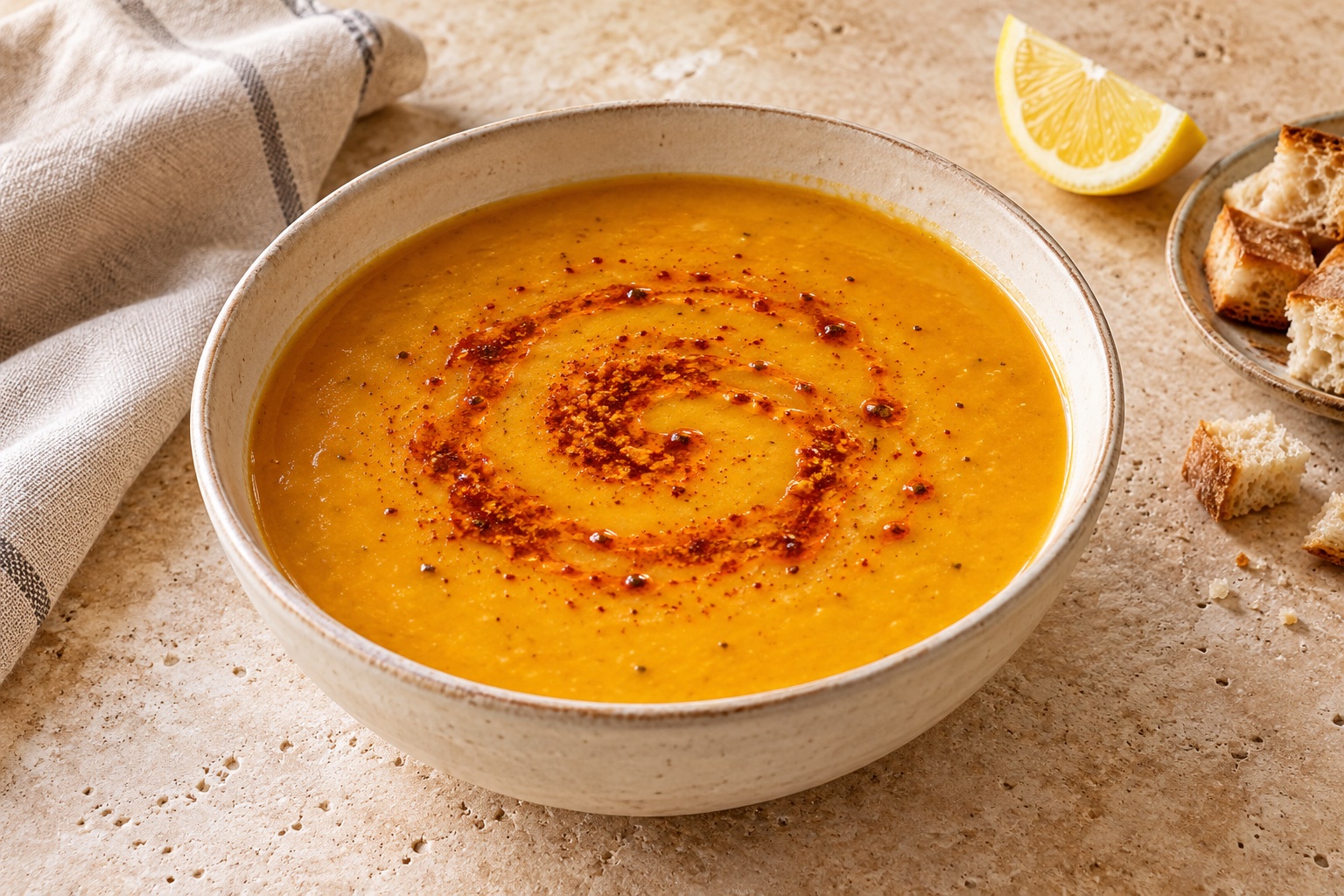
    4. Finish with paprika butter

    Melt the remaining butter in a small pan. Stir in the sweet paprika for only 10–15 seconds, then drizzle it over the hot soup. Serve with lemon wedges.
    Paprika yağlı lokanta usulü mercimek çorbası

    Turkish Lentil Soup

    A silky Turkish red lentil soup with carrot and potato, blended smooth and finished with paprika butter.
    Prep Time 10 minutes
    Cook Time 30 minutes
    Total Time 40 minutes
    Servings: 6 servings
    Course: Soup

    Ingredients
      

    • 1 cup red lentils rinsed (200 g)
    • 1 medium onion diced
    • 1 medium carrot diced
    • 1 small potato diced
    • 1 tablespoon olive oil
    • 1 tablespoon butter
    • 1 tablespoon all-purpose flour
    • 1 teaspoon ground cumin
    • 1.5 litres hot water or low-sodium vegetable stock
    • 1 teaspoon salt or to taste
    • 1/4 teaspoon black pepper
    • 1 tablespoon butter for the topping
    • 1 teaspoon sweet paprika
    • lemon wedges for serving

    Method
     

    1. Rinse the red lentils under running water until the water runs clear. Dice the onion, carrot and potato evenly.
      Kırmızı mercimek, soğan, havuç, patates, un ve baharatlar
    2. Heat the olive oil and 1 tablespoon butter over medium heat. Soften the onion for 3 minutes. Add the carrot and potato and sauté for 4 minutes. Sprinkle in the flour and stir for 1 minute.
      Krem tencerede soğan, havuç ve patatesin unla kavrulması
    3. Add the lentils, cumin, salt, black pepper and hot water. Bring to a boil, skim any foam, then simmer partly covered for 22–25 minutes until completely tender.
      Kırmızı mercimek ve sebzelerin tencerede yumuşayana kadar pişmesi
    4. Remove from the heat and blend until smooth. Add a little hot water if needed. Return to the heat, simmer for 2 minutes and adjust the salt.
      Pişen mercimek çorbasının el blenderıyla pürüzsüzleştirilmesi
    5. Melt 1 tablespoon butter in a small pan. Stir in the paprika for 10–15 seconds without burning it. Drizzle over the soup and serve with lemon.

    Consistency, serving and storage

    The soup thickens as it rests. When reheating, add hot water a little at a time and stir well. Serve it with crusty bread, pita or croutons. Refrigerate in a covered container for up to three days and reheat thoroughly before serving.

    Frequently asked questions

    Can I make Turkish lentil soup without flour?

    Yes. Simply leave it out. The potato and red lentils still produce a creamy, satisfying consistency.

    Can I use a countertop blender?

    Yes, but let the soup cool slightly and blend it in small batches. Never seal a blender completely when processing hot liquid, because steam pressure can build up.