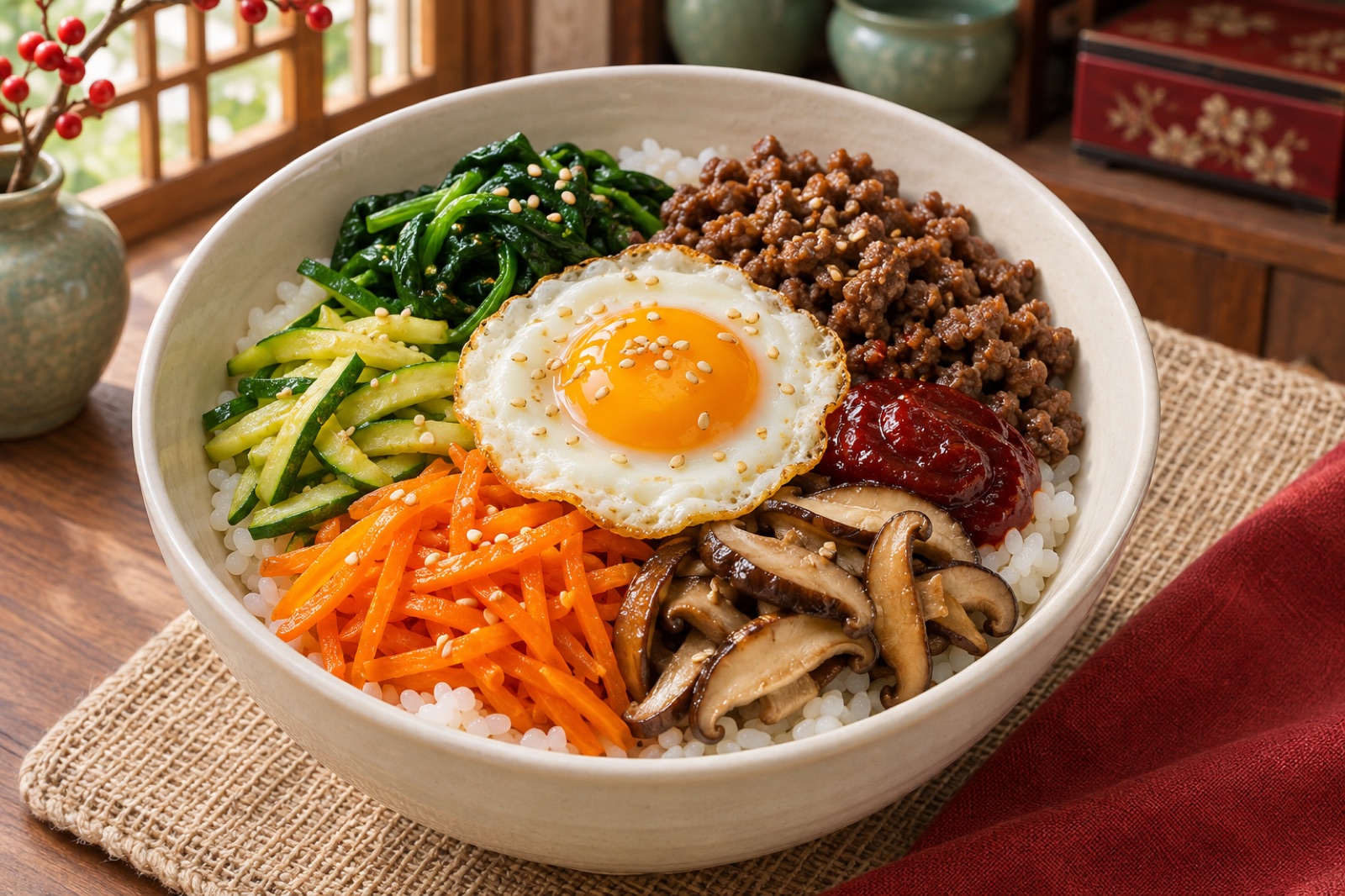
Bibimbap literally means mixed rice. Korea.net describes it as an iconic Korean dish combining rice, vegetables, meat, and red pepper paste. This accessible home version does not claim to be a specific Jeonju or dolsot preparation.
The toppings cook one by one in the same skillet but stay separate until serving. Zucchini avoids steaming, carrots keep bite, and mushrooms brown properly. Egg, beef, and sauce can be adjusted at the table.
Why this method works
- Cooking vegetables separately preserves distinct color and texture.
- Cooking crumbled beef to 160°F provides safety without making the rice wet.
- Serving gochujang sauce separately lets each diner control heat, salt, and sesame richness.
Before you start
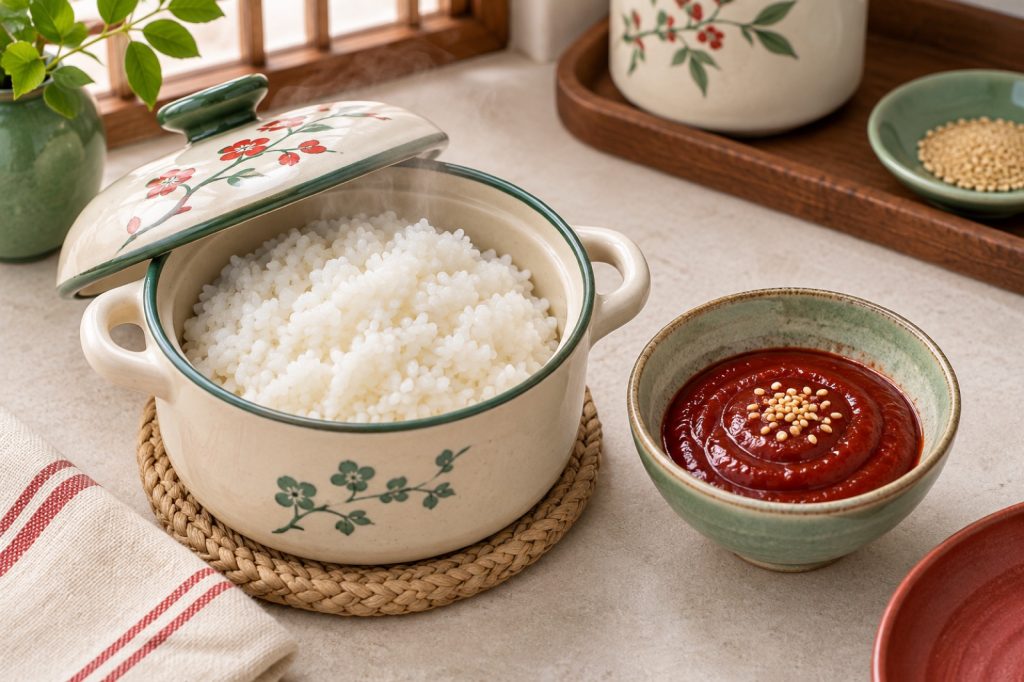
Prepare a wide skillet, lidded saucepan, four bowls, fine strainer, and thermometer. Rinse rice until the water is mostly clear.
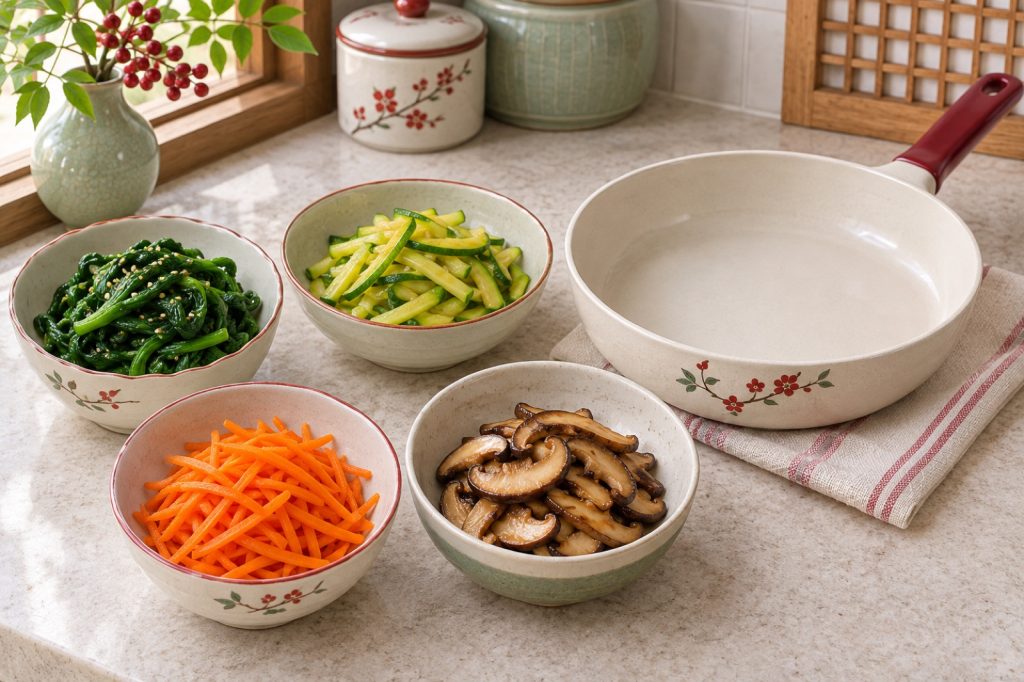
Squeeze spinach and dry zucchini and mushrooms before cooking; wet vegetables steam instead of browning.
Gochujang may contain wheat; use certified gluten-free paste and tamari when needed.
Step-by-step method
1. Cook the rice and mix the sauce
Bring rice and 1¾ cups/420 ml water to a boil; cover and cook on low 12 minutes, then rest off heat 10 minutes. Mix gochujang, vinegar, 1 teaspoon sesame oil, and 1 tablespoon water.
2. Sauté vegetables one at a time
Blanch spinach 30 seconds, chill, and squeeze very dry. Heat the skillet medium-high; cook zucchini, carrot, and mushrooms separately with a little oil and salt, 2–4 minutes each, transferring each to its own bowl.
3. Cook beef to 160°F and fry the eggs
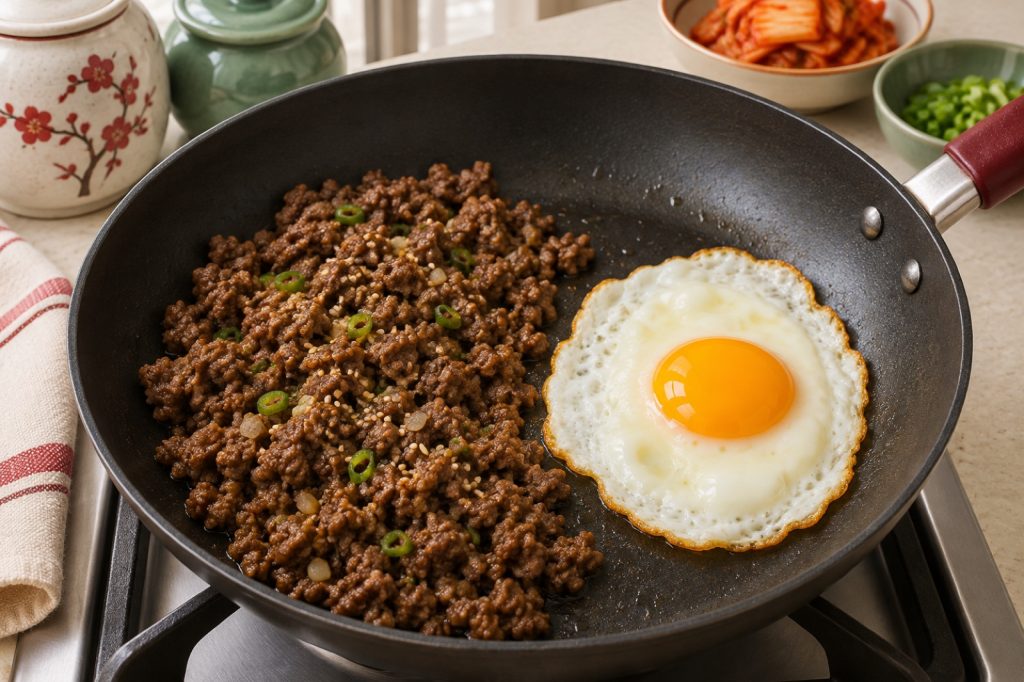
Crumble beef with garlic and soy sauce for 6–8 minutes until every part reaches 160°F. Wipe the pan and fry eggs until whites are fully set; cook yolks firm if preferred for extra safety.
4. Arrange colorful bowls and mix
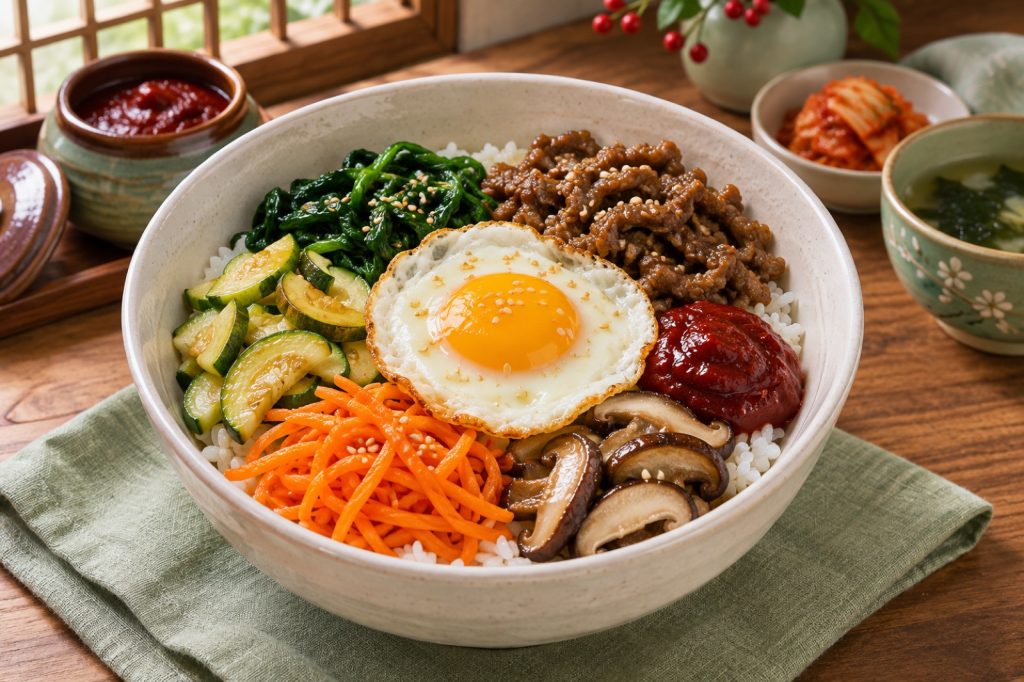
Divide rice among four bowls. Arrange vegetables and beef in separate colorful sections; add egg, sesame seeds, and remaining sesame oil. Add sauce gradually and mix thoroughly just before eating.
Bibimbap Recipe
A balanced bibimbap with separately cooked vegetables, fluffy rice, beef cooked to 160°F, and adjustable gochujang sauce.
Ingredients
- 300 g short-grain rice
- 420 ml water
- 250 g lean ground beef
- 2 tbsp soy sauce
- 2 tsp toasted sesame oil
- 2 cloves garlic — minced
- 200 g spinach
- 200 g zucchini — matchsticks
- 150 g carrot — matchsticks
- 200 g shiitake or cremini mushrooms — sliced
- 4 large eggs
- 1 tbsp neutral oil
- 3 tbsp gochujang
- 1 tbsp rice vinegar
- 2 tsp sesame seeds
Instructions
- Bring rice and 1¾ cups/420 ml water to a boil; cover and cook on low 12 minutes, then rest off heat 10 minutes. Mix gochujang, vinegar, 1 teaspoon sesame oil, and 1 tablespoon water.
- Blanch spinach 30 seconds, chill, and squeeze very dry. Heat the skillet medium-high; cook zucchini, carrot, and mushrooms separately with a little oil and salt, 2–4 minutes each, transferring each to its own bowl.
- Crumble beef with garlic and soy sauce for 6–8 minutes until every part reaches 160°F. Wipe the pan and fry eggs until whites are fully set; cook yolks firm if preferred for extra safety.
- Divide rice among four bowls. Arrange vegetables and beef in separate colorful sections; add egg, sesame seeds, and remaining sesame oil. Add sauce gradually and mix thoroughly just before eating.
Notes
- Rice is tender and cohesive, not mushy. Vegetables stay colorful and distinct, beef reaches 160°F, and sauce lightly coats rather than floods the bowl.
- Watery mushrooms mean the pan was cool or crowded. If zucchini softens, cut thicker. Substitute 9 oz/250 g firm tofu for beef as a vegetarian adaptation. Chili paste, miso, and a little honey are only a practical substitute, not gochujang. 300 g rice is about 1½ US cups.
- Serve immediately. Refrigerate components in shallow containers within 2 hours for 3–4 days and reheat to 165°F. Fry eggs fresh. Freeze without egg and zucchini, separately, up to 1 month. Contains soy, sesame, and egg; gochujang may contain gluten.
Texture and doneness cues
Rice is tender and cohesive, not mushy. Vegetables stay colorful and distinct, beef reaches 160°F, and sauce lightly coats rather than floods the bowl.
Mistakes, substitutions, and conversions
Watery mushrooms mean the pan was cool or crowded. If zucchini softens, cut thicker. Substitute 9 oz/250 g firm tofu for beef as a vegetarian adaptation. Chili paste, miso, and a little honey are only a practical substitute, not gochujang. 300 g rice is about 1½ US cups.
Serving, storage, and allergens
Serve immediately. Refrigerate components in shallow containers within 2 hours for 3–4 days and reheat to 165°F. Fry eggs fresh. Freeze without egg and zucchini, separately, up to 1 month. Contains soy, sesame, and egg; gochujang may contain gluten.
Frequently asked questions
How much bibimbap sauce should I use?
Start with 1–2 teaspoons per bowl because gochujang varies in salt and heat.
Can I cook all vegetables together?
You can, but they steam and colors mix; at minimum cook mushrooms separately.
Do I need a dolsot stone bowl?
No. Dolsot creates a crisp rice crust; this recipe is designed for regular bowls.
Leave a Reply