
Pumpkin risotto is an autumnal Northern Italian-style main that turns a short ingredient list into something deeply comforting. Its creaminess should come from the rice starch, tender squash and an off-heat mantecatura—not heavy cream—so the grains remain distinct while the sauce flows around them.
This guide goes beyond a basic ingredient list. It explains why the rice stays unwashed, when to add each ladle of stock, how to rescue a risotto that tightens before serving, and how to cool rice leftovers safely. The recipe is not presented as kitchen-tested; its quantities are carefully built around established risotto technique and current food-safety advice.
Why this method works
- Leaving Arborio or Carnaroli unwashed preserves the surface starch that creates a creamy sauce without cream.
- Adding hot stock gradually keeps the simmer steady, allowing the exterior to release starch while the centre stays al dente.
- Mashing part of the squash builds a natural sauce while the remaining cubes provide contrast and clear pumpkin flavour.
- Vigorously stirring cold butter and finely grated cheese off the heat prevents splitting and gives the risotto a glossy finish.
Before you start: equipment, measures and prep
Set out a wide, heavy 12-inch sauté pan, a small saucepan to keep stock hot, a ladle, wooden spoon and fine grater. The 320 g rice is about 1 2/3 US cups; 500 g peeled squash is roughly 3 packed cups of 1/2-inch cubes. A scale gives the most repeatable result.
Cut the squash into even 1 cm (about 1/2-inch) cubes and keep the stock just below a simmer. Do not rinse the rice: washing removes useful surface starch. For an alcohol-free version, use the same amount of extra stock and finish with 1 teaspoon lemon juice for balance.
How to make pumpkin risotto
1. Soften the onion and squash
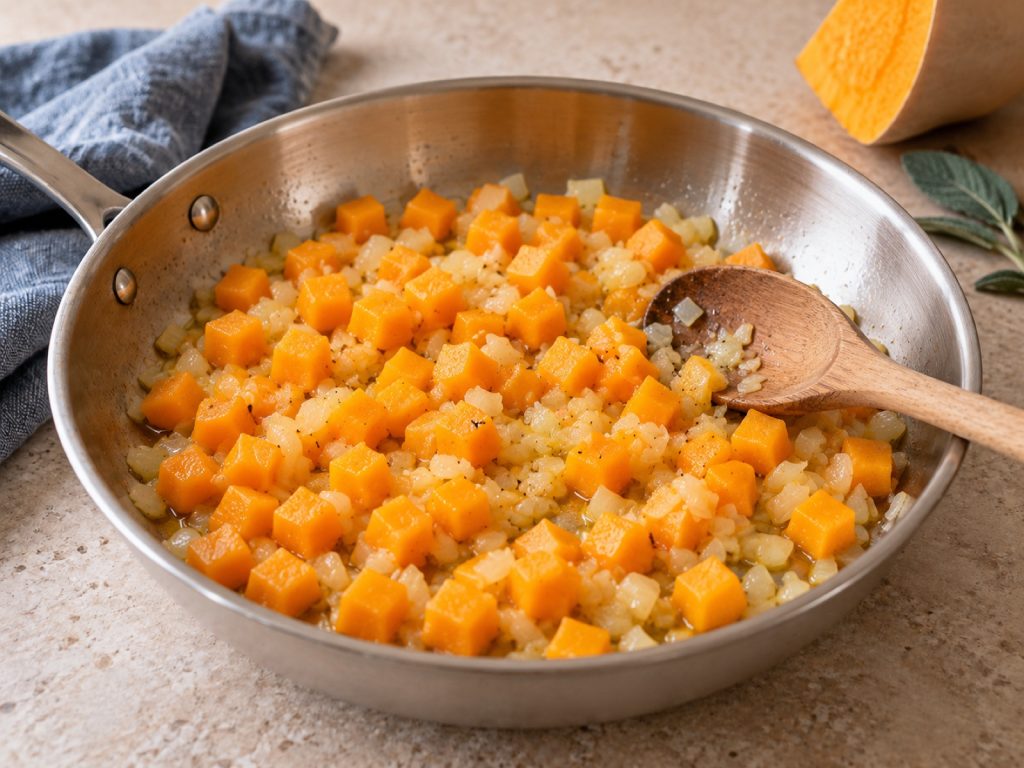
Warm the olive oil and half the butter in a wide pan over medium-low heat. Cook the onion with a pinch of salt for 3–4 minutes without browning. Add the squash and cook for 8–10 minutes. Move on when the edges crush easily with a fork but the centres still hold their shape. Add a ladle of hot stock if the pan becomes dry.
2. Toast the rice and reduce the wine
Add the unwashed rice. Cook over medium-high heat for 2 minutes, stirring, until the grains look glossy and their edges turn translucent. Pour in the wine and cook for 1–2 minutes, until the sharp alcohol smell is gone and the pan is nearly dry again.

3. Cook gradually with hot stock
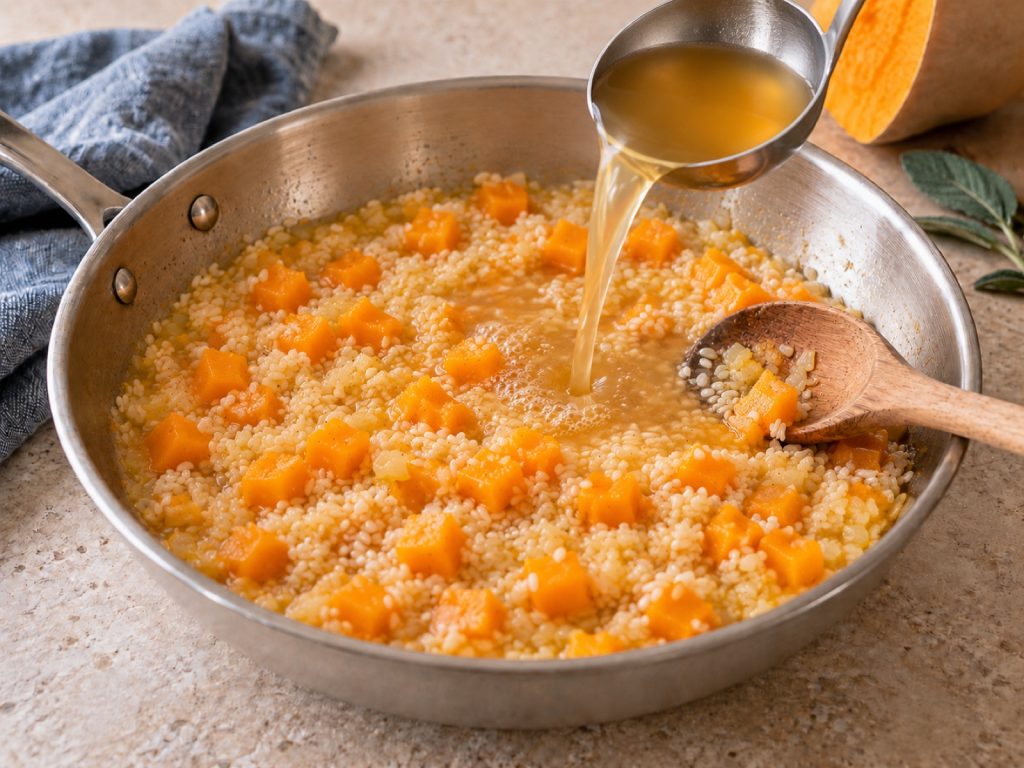
Reduce the heat to medium. Add hot stock one ladle at a time, stirring often but not constantly. Add the next ladle when the previous one is mostly absorbed. After about 16–18 minutes, the rice should be creamy outside with a slight bite at the centre. Mash roughly one-third of the squash against the pan to enrich the sauce.
4. Finish off the heat
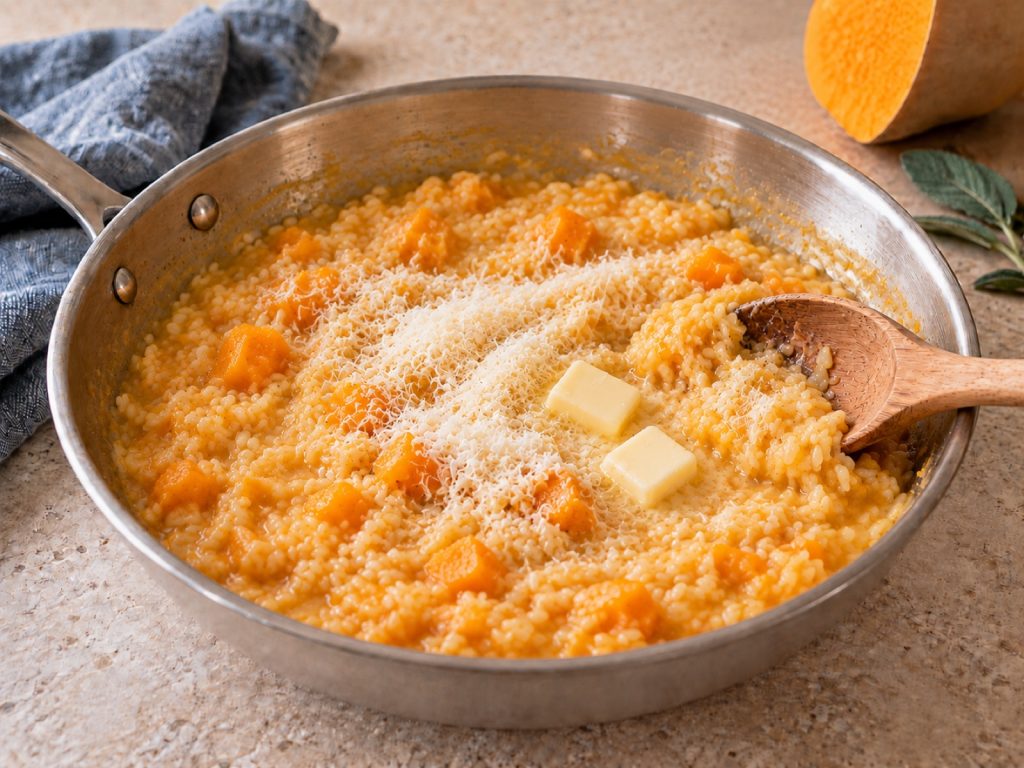
Take the pan off the heat while the risotto still looks slightly looser than your desired result. Add the remaining cold butter and finely grated Parmesan, then shake the pan and stir vigorously for 30–45 seconds. Loosen with 2–3 tablespoons hot stock if needed. Cover for 2 minutes; the surface should ripple when the pan is shaken. Serve immediately.
Creamy Pumpkin Risotto Without Cream
A flowing Northern Italian-style pumpkin risotto made creamy with Arborio rice and an off-heat mantecatura rather than heavy cream.
Ingredients
- 320 g Arborio or Carnaroli rice — about 1 2/3 US cups, unwashed
- 500 g peeled butternut squash — about 3 packed cups, cut into 1 cm cubes
- 1 small yellow onion — about 100 g, finely chopped
- 1.2 litres low-sodium vegetable stock — about 5 cups, kept hot; you may not need all of it
- 60 ml dry white wine — 1/4 cup, optional; replace with stock if needed
- 40 g unsalted butter — about 3 tablespoons, divided; keep the final portion cold
- 1 tablespoon extra-virgin olive oil
- 80 g Parmigiano Reggiano or Parmesan — about 3/4 cup, finely grated
- 6 fresh sage leaves — optional, for serving
- 1/4 teaspoon freshly grated nutmeg — optional
- fine salt and freshly ground black pepper — to taste
Instructions
- Soften the onion in the olive oil and half the butter for 3–4 minutes without browning. Add the squash and cook for 8–10 minutes, until its edges mash easily.
- Add the unwashed rice and toast for 2 minutes. Add the wine and cook until the liquid and sharp alcohol aroma have evaporated.
- Add the hot stock one ladle at a time and cook for 16–18 minutes, adding more as each ladle is mostly absorbed. Mash some of the squash into the sauce.
- Remove from the heat. Vigorously stir in the cold butter and Parmesan for 30–45 seconds; loosen with hot stock if needed, rest for 2 minutes and serve at once.
Notes
- The risotto should spread gently on a plate. If it sits in a stiff mound, loosen it with 2–3 tablespoons hot stock.
- Parmigiano may use animal rennet. For a vegetarian meal, choose a clearly labelled vegetarian hard cheese.
- Allergens: milk; wine may contain sulphites and prepared stock may contain celery. Check labels.
- Cool leftovers quickly, ideally within 1 hour in a shallow container; refrigerate for no more than 1 day and reheat only once until steaming throughout.
Texture guide and common mistakes
Proper risotto is neither soupy nor as dry as pilaf. A path drawn by the spoon should close slowly, and the surface should move in a wave when you shake the pan. If the liquid runs out before the rice is tender, add hot water. If the risotto tightens before serving, fold in hot stock a tablespoon at a time.
Mushy risotto usually comes from unsuitable rice, overcooking or forceful nonstop stirring. Start tasting two minutes before the package time. Adding butter and cheese while the pan is boiling can split the fat, so finish only after removing the pan from the burner.
Substitutions and serving ideas
Use another firm, dry-fleshed winter squash if butternut is unavailable; watery carving pumpkins will not give the same body. Arborio becomes creamier, while Carnaroli offers more resistance to overcooking. For an alcohol-free version, replace the wine with 60 ml extra stock and add 1 teaspoon lemon juice at the end.
A lemony arugula salad or roasted mushrooms balances the squash’s sweetness. Leftover risotto will not return to its original flowing texture; on the next day, shape the cold mixture into patties, coat lightly with breadcrumbs and pan-fry to reduce waste.
Storage, reheating and allergens
Do not leave cooked rice at room temperature. Spread leftovers in a shallow container and cool as quickly as possible, ideally within 1 hour; cover and refrigerate for no more than 1 day. Reheat only once until steaming throughout, adding a splash of water or stock to loosen the texture.
The recipe contains milk. Wine may contain sulphites and prepared stock may contain celery. Vegetarians should check whether the Parmesan-style cheese is made without animal rennet.
Pumpkin risotto questions
Does risotto need heavy cream?
No. Surface starch from unwashed risotto rice, controlled stock additions and an off-heat butter-and-cheese mantecatura provide plenty of creaminess.
Can I use regular long-grain rice?
Long-grain or parboiled rice will not release enough starch. Arborio and Carnaroli are the most reliable choices; a medium-grain risotto rice can work if those are unavailable.
How do I balance an overly sweet pumpkin risotto?
Use well-seasoned low-sodium stock, black pepper and Parmesan. For a wine-free version, a teaspoon of lemon juice stirred in just before serving adds useful acidity.
Can pumpkin risotto be made ahead?
It is best served immediately. You can cook the squash one day ahead, but cook the rice close to serving. Repurpose fully chilled leftovers as breaded risotto patties rather than trying to restore the original texture.
Leave a Reply