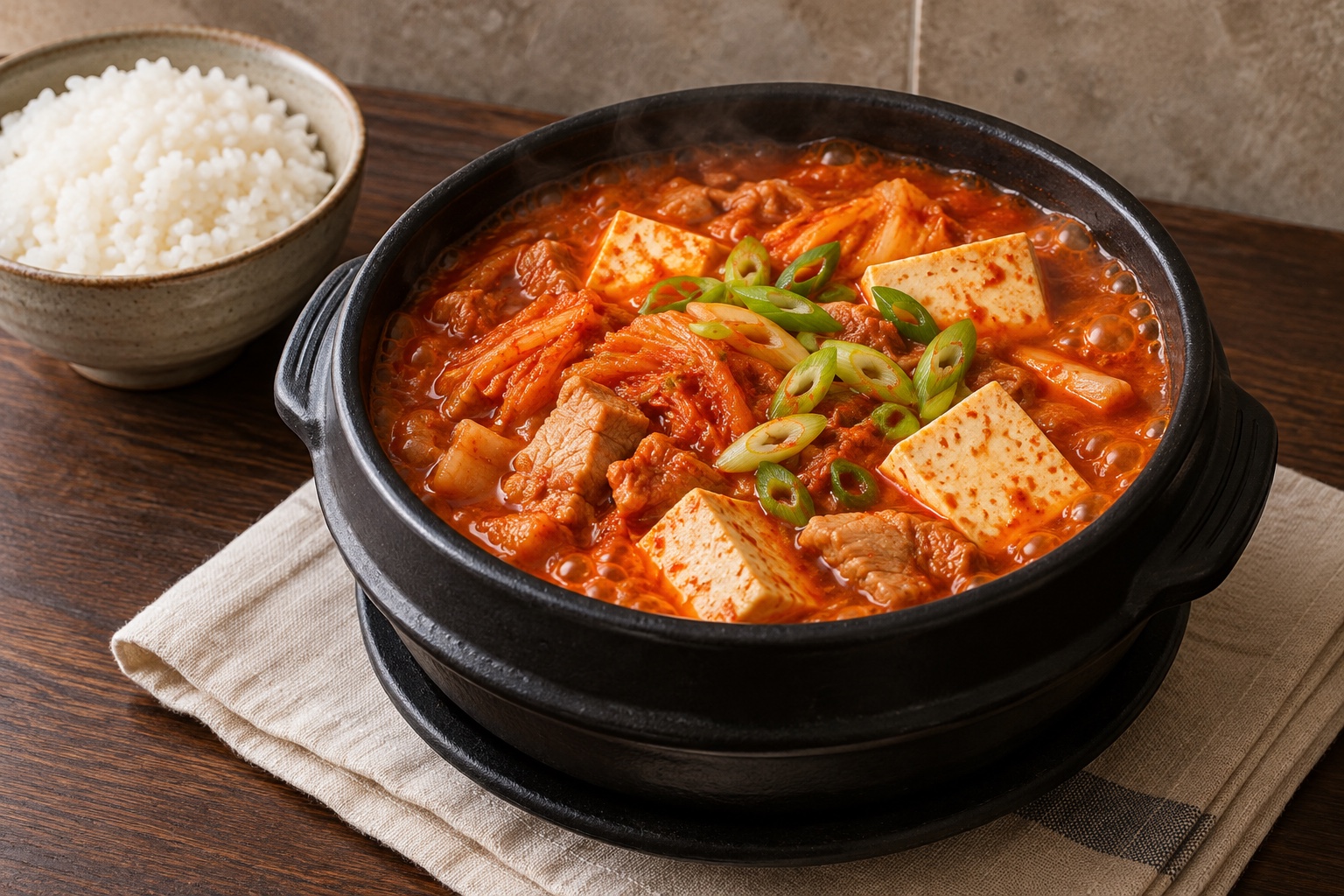
Kimchi jjigae is one of Korea’s best-loved home stews, commonly built around well-fermented napa-cabbage kimchi, pork, and tofu.
This is a practical home method rather than a claim to one definitive authentic formula: cook the sour kimchi with pork first, add measured stock, and add tofu late for a bold broth and intact cubes.
Why this method works
- Sour, well-fermented kimchi mellows and develops more depth during simmering than very fresh kimchi.
- Cooking pork briefly with kimchi carries the seasonings through the fat; adding stock later avoids a diluted base.
- Adding tofu for the final 5 minutes lets it absorb broth without crumbling.
Before you start
Prepare a 3-quart heavy pot, board, knife, ladle, and instant-read thermometer.
Use kimchi that smells distinctly sour and save its brine. Keep raw pork on a separate board.
Kimchi and soy sauce vary in salinity, so adjust salt only after the final taste.
Step-by-step method
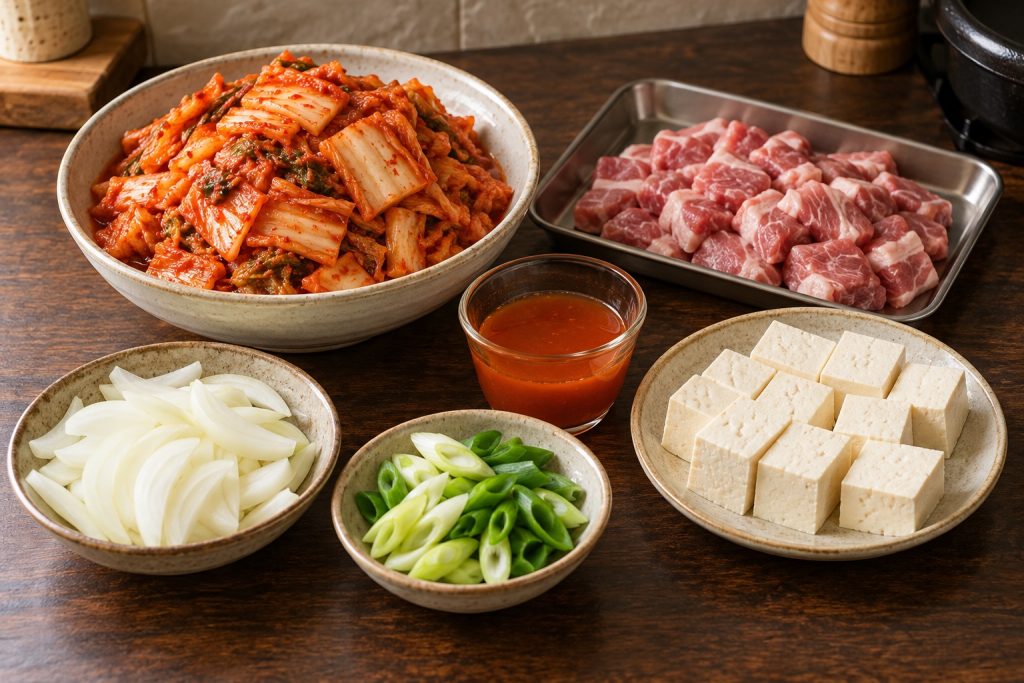
1. Prepare the pork and kimchi
Cut kimchi into 1½-inch pieces and pork into thin bites. Cube tofu to ¾ inch; slice onion and scallions. Measure the brine. Wash the raw-pork board and knife with hot soapy water.
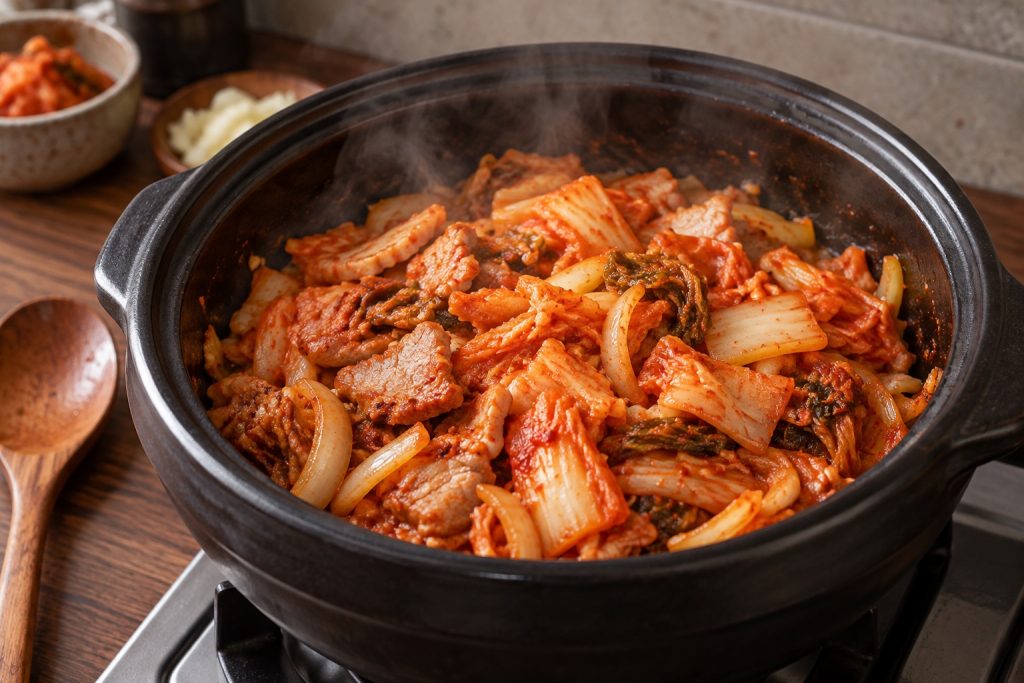
2. Cook pork and kimchi together
Heat the pot over medium. Cook pork 4–5 minutes until the edges color. Add onion, garlic, kimchi, and gochugaru; cook 6–8 minutes until the kimchi softens and the juices look glossy.
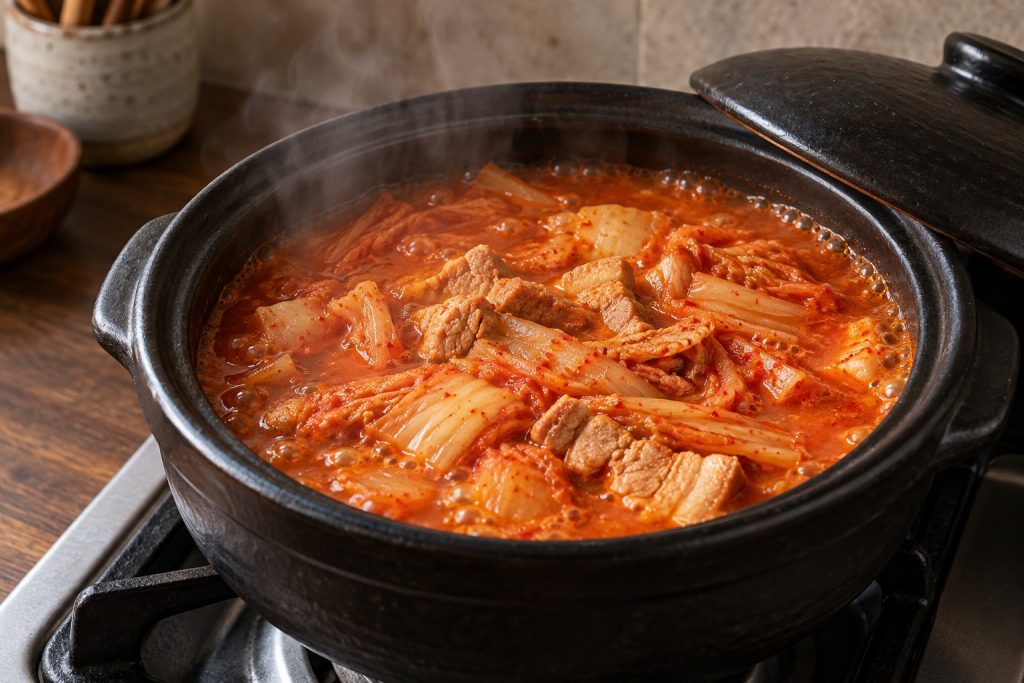
3. Add stock and simmer steadily
Add kimchi brine, anchovy stock, soy sauce, and optional gochujang. Bring to a boil, then simmer partly covered 20 minutes. Pork must reach at least 145°F; give shoulder 5–10 minutes longer for tenderness.
4. Add tofu and finish the texture
Lay tofu on top and press it into the broth; simmer gently without vigorous stirring for 5 minutes. Add half the scallions and sesame oil. It is ready when broth lightly coats a spoon and the kimchi is tender but distinct.
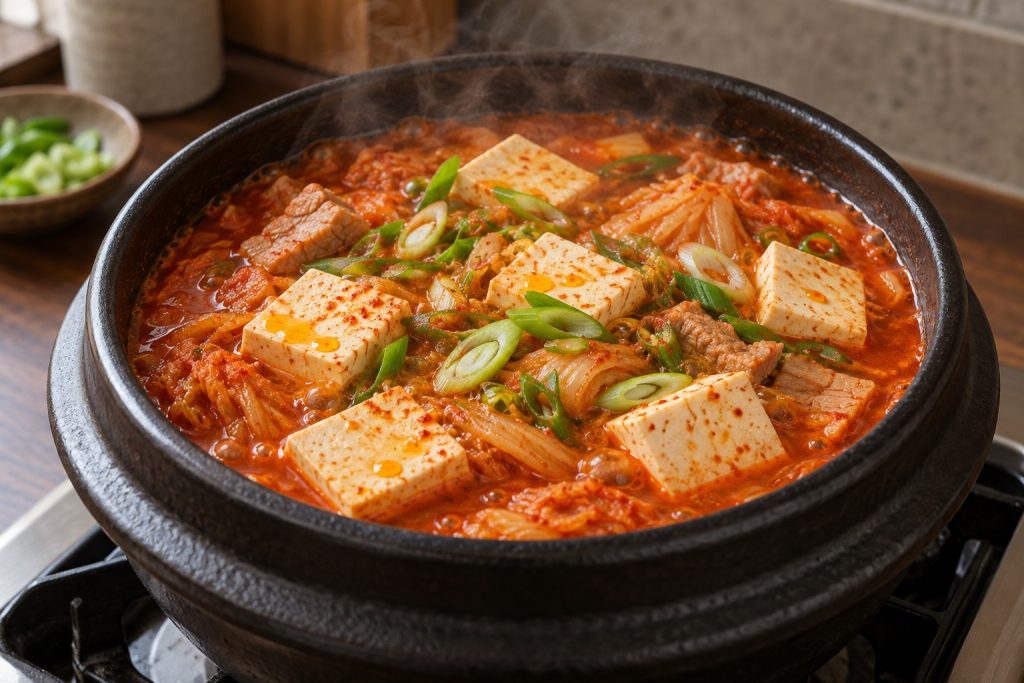
Kimchi Jjigae
A deeply savory Korean kimchi stew with aged kimchi, pork, and tofu, balanced so the broth is bold rather than watery.
Ingredients
- 500 g well-fermented napa-cabbage kimchi — cut into 1½-inch pieces
- 120 ml kimchi brine
- 250 g pork shoulder or belly — thin bite-size pieces
- 250 g firm tofu — ¾-inch cubes
- 1 medium onion — thinly sliced
- 2 cloves garlic — minced
- 2 tsp gochugaru — to taste
- 1 tsp gochujang — optional
- 2 tsp soy sauce
- 750 ml anchovy stock or water
- 2 whole scallions — sliced
- 1 tsp toasted sesame oil — to finish
Instructions
- Cut kimchi into 1½-inch pieces and pork into thin bites. Cube tofu to ¾ inch; slice onion and scallions. Measure the brine. Wash the raw-pork board and knife with hot soapy water.
- Heat the pot over medium. Cook pork 4–5 minutes until the edges color. Add onion, garlic, kimchi, and gochugaru; cook 6–8 minutes until the kimchi softens and the juices look glossy.
- Add kimchi brine, anchovy stock, soy sauce, and optional gochujang. Bring to a boil, then simmer partly covered 20 minutes. Pork must reach at least 145°F; give shoulder 5–10 minutes longer for tenderness.
- Lay tofu on top and press it into the broth; simmer gently without vigorous stirring for 5 minutes. Add half the scallions and sesame oil. It is ready when broth lightly coats a spoon and the kimchi is tender but distinct.
Notes
- The broth shows bright red droplets and lightly coats a spoon without becoming a heavy sauce. Kimchi is tender, tofu cubes remain intact, and pork is easy to chew.
- Use drained tuna or sliced shiitake instead of pork; add tuna for the final 5 minutes. Replace anchovy stock with water or kelp-mushroom stock. 750 ml is about 3 cups; 120 ml is ½ cup. Contains soy and sesame; anchovy stock adds fish, and kimchi may contain fish or shrimp.
- Cool in a shallow container within 2 hours and refrigerate 3–4 days. Freeze up to 2 months; tofu becomes spongier after thawing. Reheat on the stove, stirring, to 165°F throughout.
Texture and doneness cues
The broth shows bright red droplets and lightly coats a spoon without becoming a heavy sauce. Kimchi is tender, tofu cubes remain intact, and pork is easy to chew.
Mistakes, substitutions, and measurements
Use drained tuna or sliced shiitake instead of pork; add tuna for the final 5 minutes. Replace anchovy stock with water or kelp-mushroom stock. 750 ml is about 3 cups; 120 ml is ½ cup. Contains soy and sesame; anchovy stock adds fish, and kimchi may contain fish or shrimp.
Serving, storage, and allergens
Cool in a shallow container within 2 hours and refrigerate 3–4 days. Freeze up to 2 months; tofu becomes spongier after thawing. Reheat on the stove, stirring, to 165°F throughout.
Frequently asked questions
Why does it taste flat?
The kimchi may be too fresh or the broth excessive; use sourer kimchi and reduce uncovered 5 minutes.
Why is it too sour?
Add a small pinch of sugar or another ⅓ cup stock and simmer 5 minutes; adjust gradually.
Why did the tofu break?
Very soft tofu or hard stirring causes it; use firm tofu and only press it into the broth near the end.
Leave a Reply