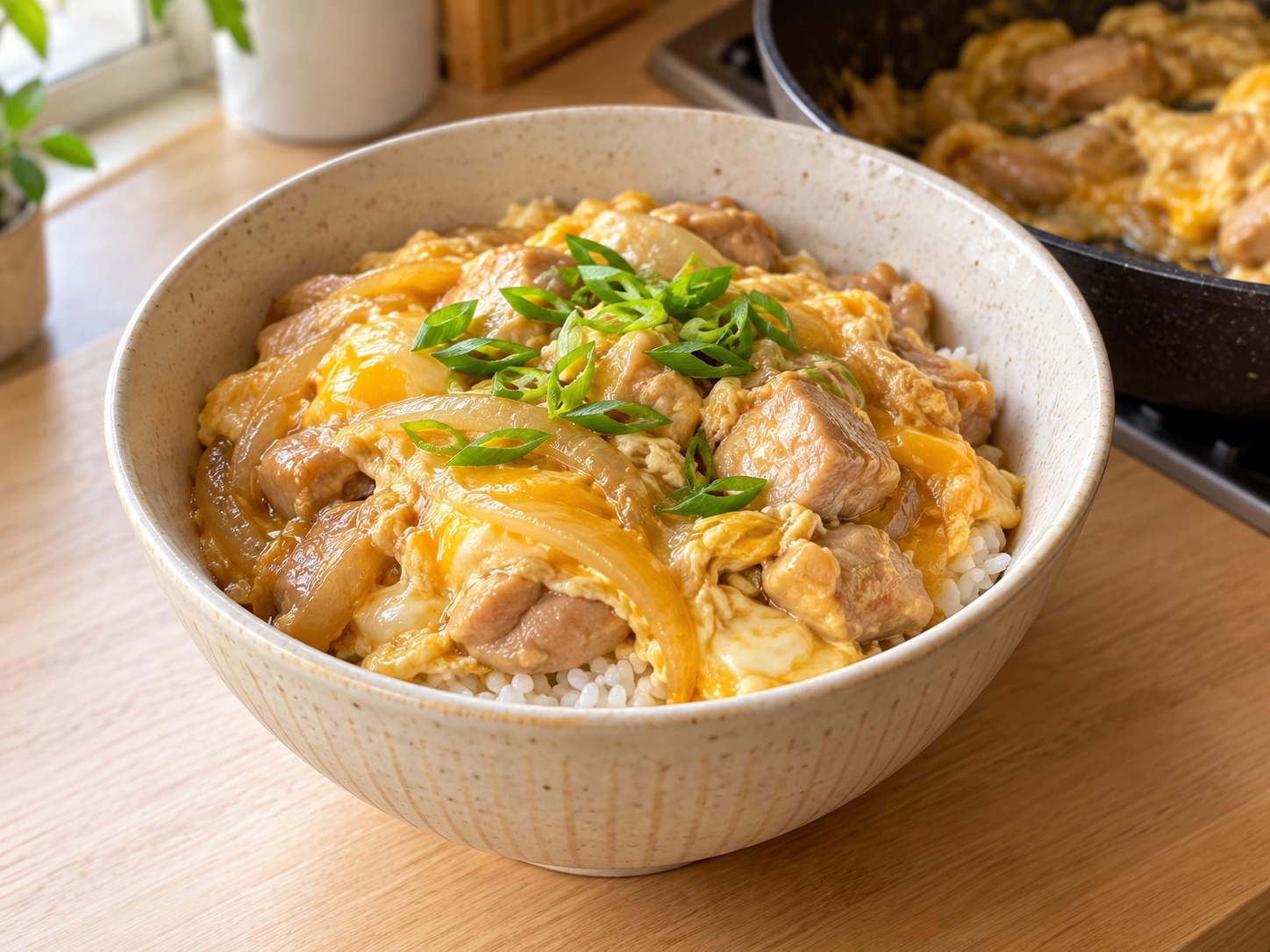
Oyakodon is a Japanese donburi of chicken and egg simmered in a sweet-savory dashi sauce over rice; its name means “parent-and-child bowl.”
Japanese versions may leave the egg softer. This home adaptation cooks chicken to 165°F and the egg mixture to 160°F for a safer fully set result.
Why this method works
- Thigh meat stays juicier than breast during the short simmer.
- Adding egg in two stages creates a binding lower layer and a moist upper layer.
- A wide skillet keeps chicken in one layer for even cooking.
Before you start
Use a lidded 10-inch skillet, board, separate raw-chicken knife, and thermometer.
Unsalted chicken stock can replace dashi, but it is an adaptation.
Wash the board and knife that touched raw chicken with hot soapy water.
Step-by-step method
1. Prepare ingredients safely
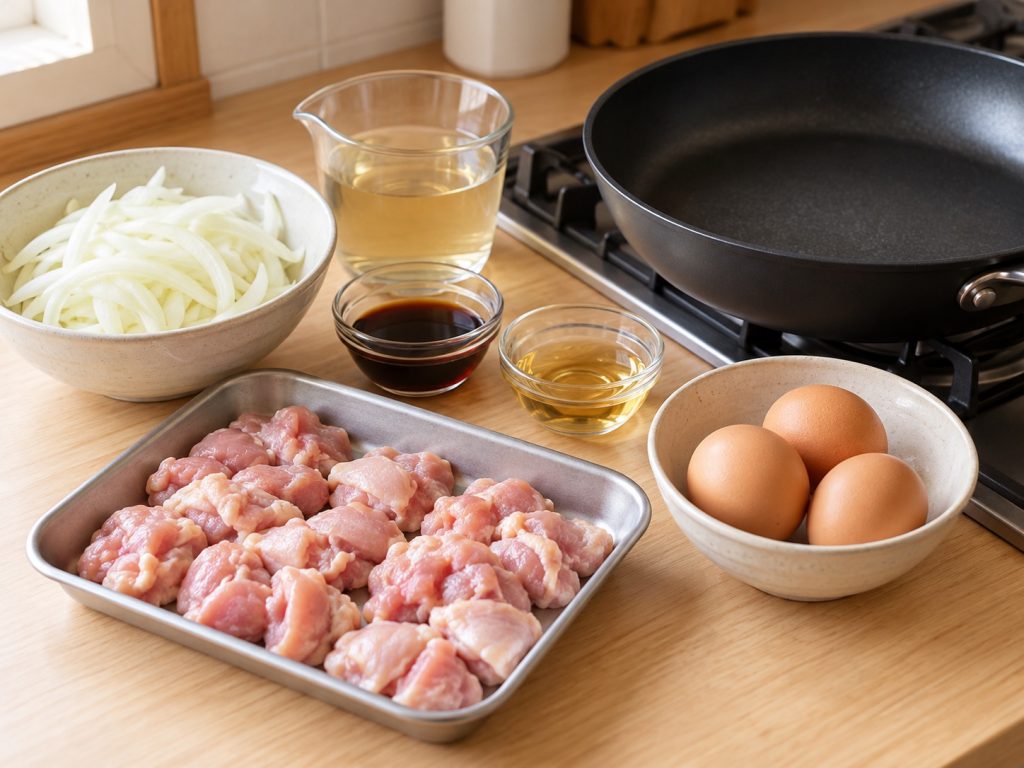
Divide hot rice among four bowls. Cut chicken into ¾-inch pieces. Mix dashi, soy, mirin, and sugar; lightly beat eggs so a few streaks remain.
2. Simmer chicken and onion
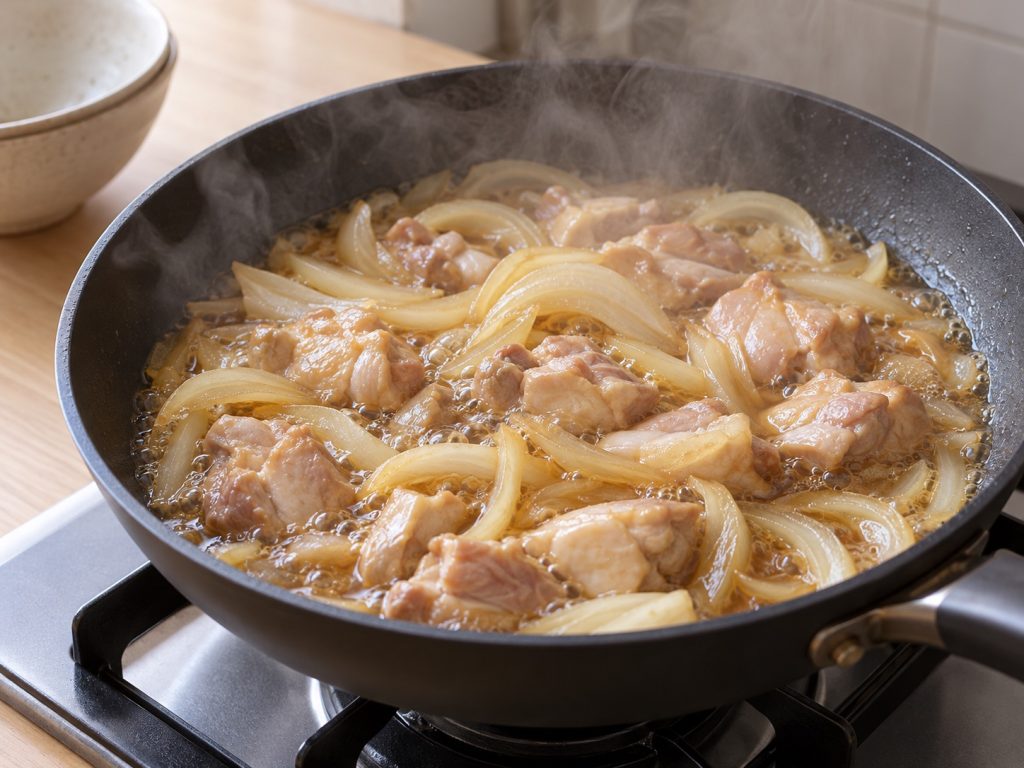
Simmer sauce and onion gently for 3 minutes. Add chicken in one layer, cover, and cook 6–8 minutes until the thickest piece reaches 165°F.
3. Add egg in two stages
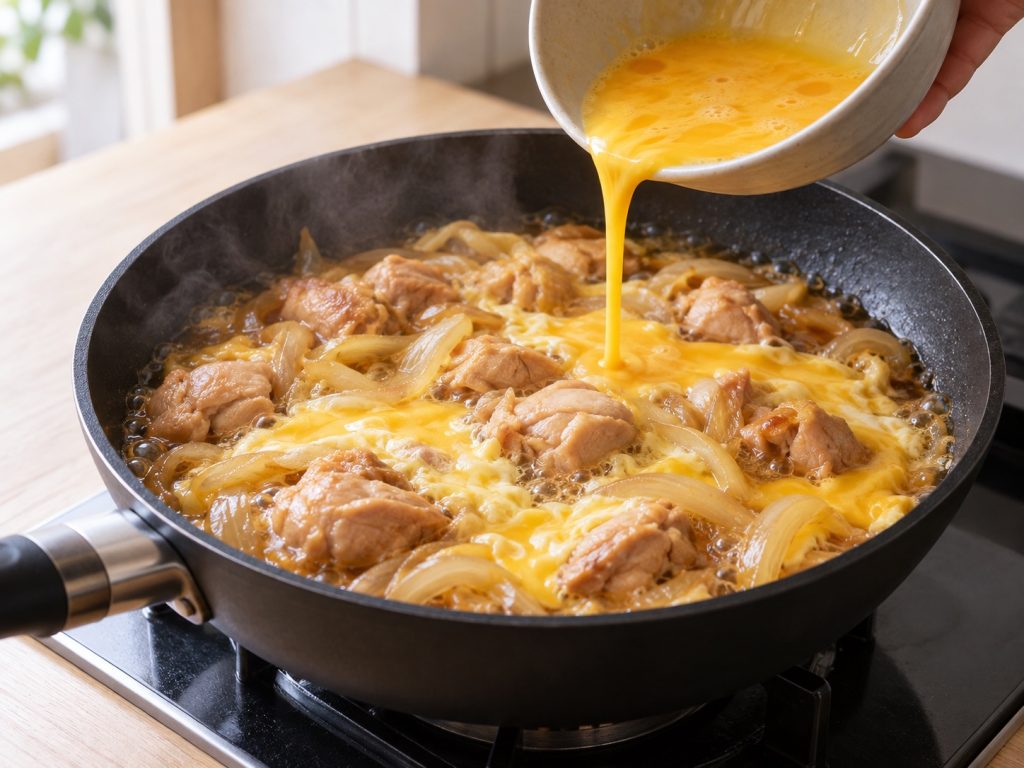
With the liquid bubbling steadily, stream in two-thirds of the egg. Cover 60–90 seconds; add the rest and cook 1–2 minutes until the center reaches 160°F and no liquid egg remains.
4. Serve immediately over rice
Remove from heat. Divide chicken, egg, and broth over the hot rice, add scallions, and serve immediately.
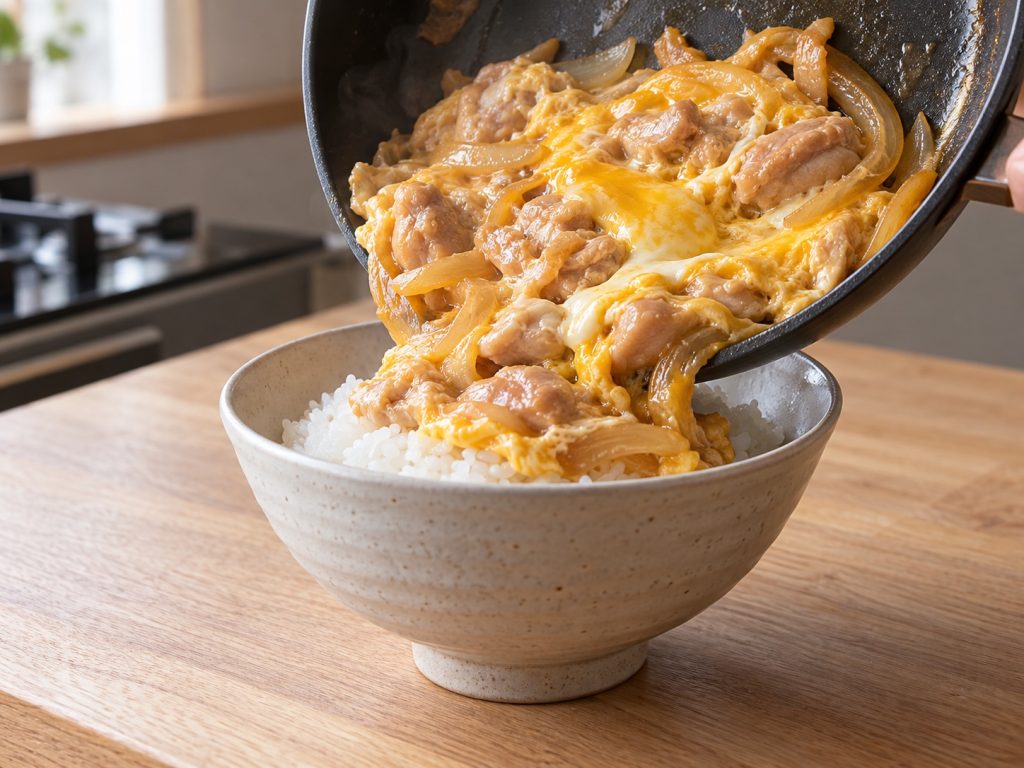
Japanese Oyakodon
A 35-minute Japanese oyakodon with chicken cooked safely to 165°F and egg added in two stages for a moist, fully set finish.
Ingredients
- 720 g hot cooked short-grain rice
- 350 g boneless chicken thighs — ¾-inch pieces
- 1 medium onion — thinly sliced
- 5 large eggs
- 240 ml dashi
- 45 ml soy sauce
- 45 ml mirin
- 10 g sugar
- 2 scallions scallions — thinly sliced
Instructions
- Divide hot rice among four bowls. Cut chicken into ¾-inch pieces. Mix dashi, soy, mirin, and sugar; lightly beat eggs so a few streaks remain.
- Simmer sauce and onion gently for 3 minutes. Add chicken in one layer, cover, and cook 6–8 minutes until the thickest piece reaches 165°F.
- With the liquid bubbling steadily, stream in two-thirds of the egg. Cover 60–90 seconds; add the rest and cook 1–2 minutes until the center reaches 160°F and no liquid egg remains.
- Remove from heat. Divide chicken, egg, and broth over the hot rice, add scallions, and serve immediately.
Notes
- Chicken is opaque at 165°F; egg is moist but not runny at 160°F; onion is translucent and sauce remains fluid enough to soak the rice.
- Chicken breast works but check temperature earlier. Unsalted stock for dashi is an adaptation. Use certified tamari for gluten-free service. 1 cup=240 ml; 1 tbsp=15 ml.
- Serve alone or with pickles. Cool in a shallow container within 2 hours, refrigerate 3–4 days, and reheat to 165°F. Freezing is not recommended because egg texture suffers. Contains egg and soy; regular soy sauce may contain gluten.
Texture and doneness cues
Chicken is opaque at 165°F; egg is moist but not runny at 160°F; onion is translucent and sauce remains fluid enough to soak the rice.
Mistakes, substitutions, and measurements
Chicken breast works but check temperature earlier. Unsalted stock for dashi is an adaptation. Use certified tamari for gluten-free service. 1 cup=240 ml; 1 tbsp=15 ml.
Serving, storage, and allergens
Serve alone or with pickles. Cool in a shallow container within 2 hours, refrigerate 3–4 days, and reheat to 165°F. Freezing is not recommended because egg texture suffers. Contains egg and soy; regular soy sauce may contain gluten.
Frequently asked questions
Why did the egg turn firm?
Carryover heat continued cooking it; remove from heat as soon as it reaches 160°F.
Why is there too much broth?
The pan may be narrow or heat too low; reduce uncovered 1–2 minutes before adding egg.
Can I make it without dashi?
Yes, use unsalted chicken stock and recognize the flavor is an adaptation.
Leave a Reply