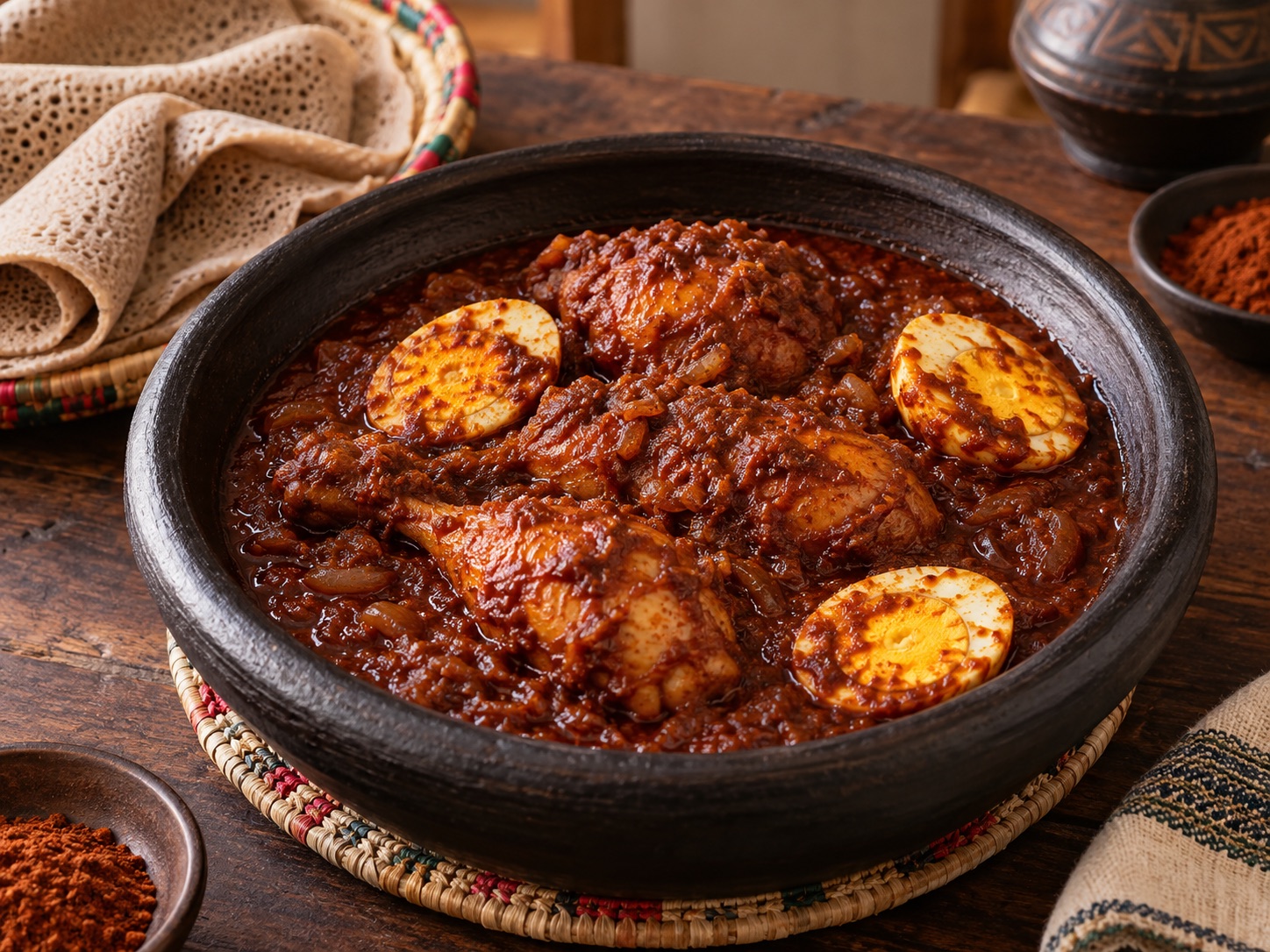
Doro wat is Ethiopia’s berbere-spiced chicken stew, commonly shared with injera. Its body comes not from flour but from a generous amount of onion cooked down slowly without water.
If niter kibbeh is unavailable, this accessible home adaptation uses butter and oil. Berbere heat varies widely, so the amount is built gradually.
Why this method works
- Dry-cooking onions first concentrates their liquid and thickens the sauce.
- Briefly blooming berbere in fat releases aroma; low heat prevents scorching.
- Slow-simmering chicken in the sauce lets the seasoning penetrate.
Before you start
Use a wide heavy pot, sturdy spatula, and thermometer. A processor can finely chop onions, but do not purée them.
Taste the berbere; start with 30 g and increase to 50 g. Scorched spice tastes bitter.
Sanitize surfaces after raw chicken. The thickest meat must reach 165°F.
Step-by-step method
1. Cook onions down patiently
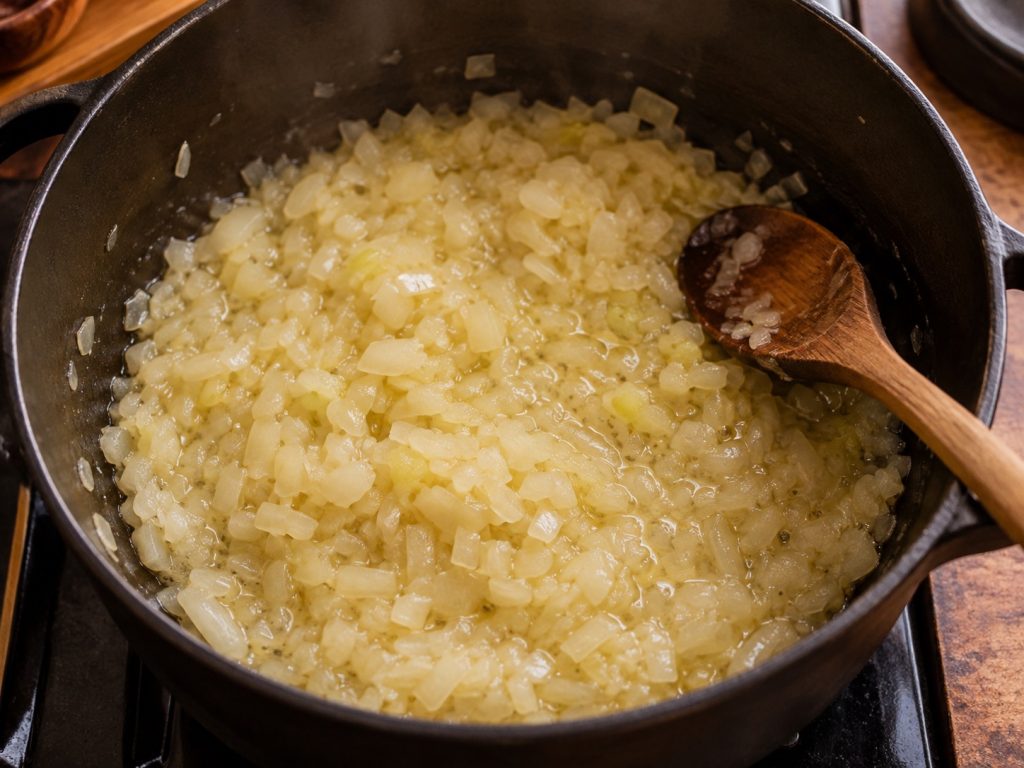
Dry-cook onions over medium-low 30–40 minutes, stirring often, until deep gold and paste-like; add a spoonful of water if sticking.
2. Bloom fat and berbere
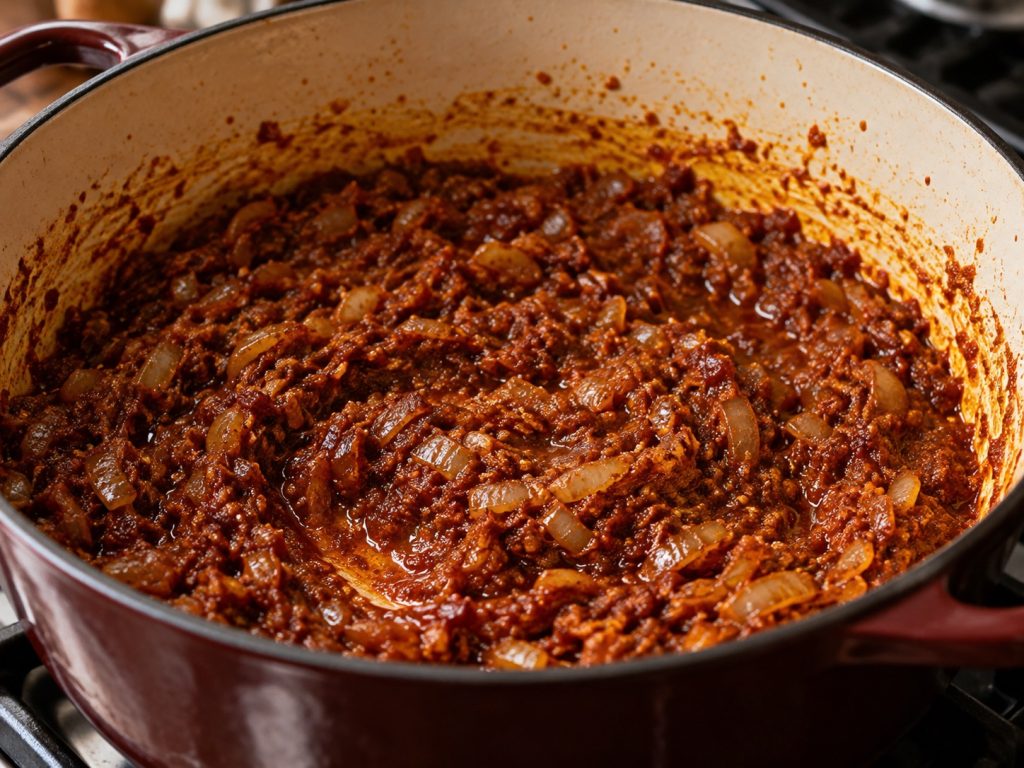
Add niter kibbeh and oil. Stir in berbere, garlic, and ginger over low heat for 3–4 minutes until fragrant; do not let it blacken.
3. Simmer chicken in the sauce
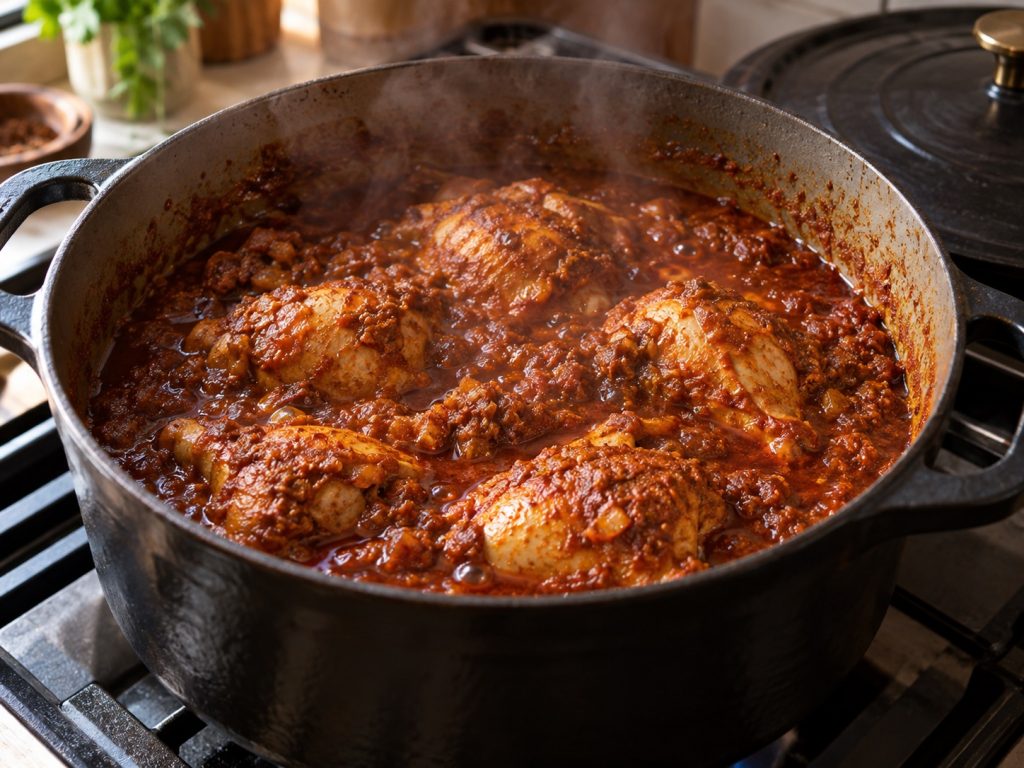
Add chicken and coat with sauce. Add stock gradually; partly cover and barely simmer 45–55 minutes. Thickest meat must reach 165°F.
4. Add eggs and balance
Shallow-score the eggs and add them. Simmer 10 minutes more. Balance with lemon and salt; sauce should flow slowly from a spoon.
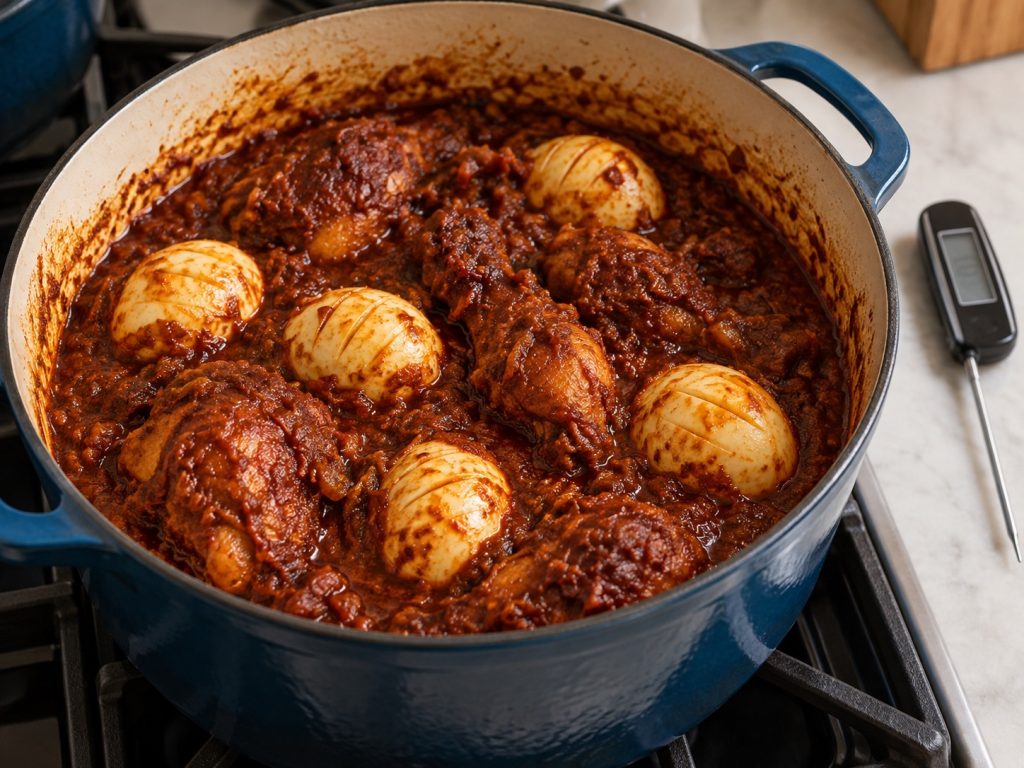
Ethiopian Doro Wat
A thick Ethiopian chicken stew with slow-cooked onion, berbere, and eggs, plus burn-proof spice and safety guidance.
Ingredients
- 1 kg bone-in chicken thighs
- 900 g yellow onions — very finely chopped
- 60 g niter kibbeh or butter
- 30 ml neutral oil
- 30-50 g berbere spice
- 4 cloves garlic
- 20 g ginger
- 500 ml chicken stock
- 6 large eggs — hard-boiled
- 15 ml lemon juice
Instructions
- Dry-cook onions over medium-low 30–40 minutes, stirring often, until deep gold and paste-like; add a spoonful of water if sticking.
- Add niter kibbeh and oil. Stir in berbere, garlic, and ginger over low heat for 3–4 minutes until fragrant; do not let it blacken.
- Add chicken and coat with sauce. Add stock gradually; partly cover and barely simmer 45–55 minutes. Thickest meat must reach 165°F.
- Shallow-score the eggs and add them. Simmer 10 minutes more. Balance with lemon and salt; sauce should flow slowly from a spoon.
Notes
- Sauce is glossy brick-red and slowly falls from a spoon, with no distinct onion pieces. Chicken reaches 165°F away from bone.
- If niter kibbeh is unavailable, add pinches of cardamom, fenugreek, and turmeric to butter; this is an adaptation. Berbere and stock may contain gluten.
- Serve with injera or rice. Cool in shallow containers within 2 hours; refrigerate 3–4 days or freeze 3 months. Reheat chicken and sauce to 165°F.
Texture and doneness cues
Sauce is glossy brick-red and slowly falls from a spoon, with no distinct onion pieces. Chicken reaches 165°F away from bone.
Mistakes, substitutions, and measurements
If niter kibbeh is unavailable, add pinches of cardamom, fenugreek, and turmeric to butter; this is an adaptation. Berbere and stock may contain gluten.
Serving, storage, and allergens
Serve with injera or rice. Cool in shallow containers within 2 hours; refrigerate 3–4 days or freeze 3 months. Reheat chicken and sauce to 165°F.
Frequently asked questions
Why is the sauce thin?
Onions were not reduced enough or stock was added quickly; uncover and reduce gently.
What if berbere is too hot?
Start low; butter and plain yogurt at serving soften the heat.
Can I use boneless chicken?
Yes. Use thigh meat, simmer 25–35 minutes, and still verify 165°F.
Leave a Reply