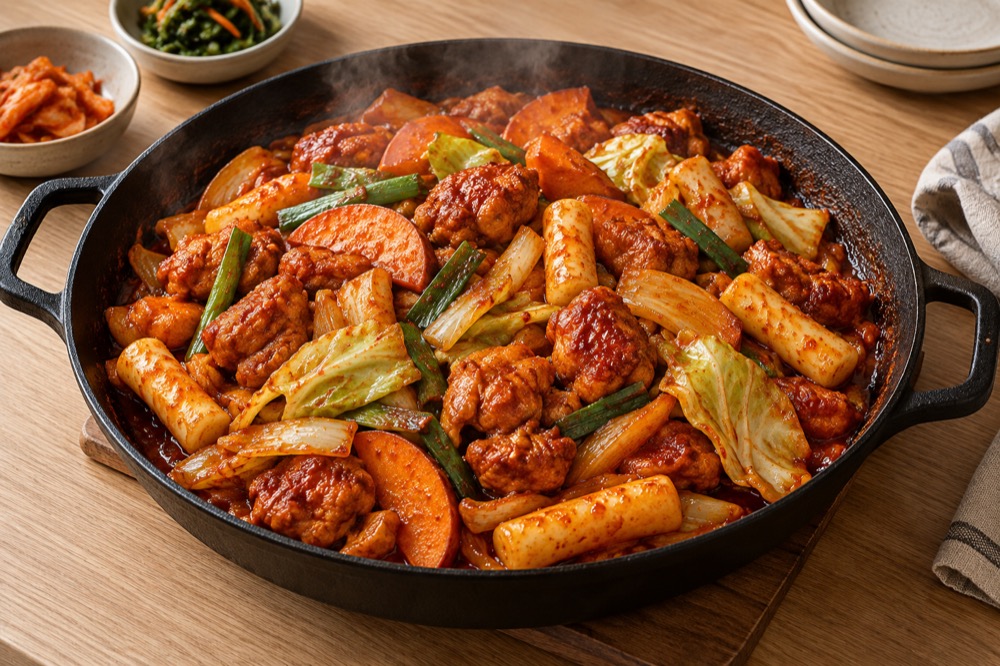
Dakgalbi is closely associated with Chuncheon, South Korea. Visit Korea describes two common forms: cheolpan dakgalbi, stir-fried on an iron plate, and sutbul dakgalbi, grilled over charcoal. This recipe is a practical home-skillet adaptation of the cheolpan style with gochujang chicken, cabbage, sweet potato, and rice cakes.
Three details matter: slice sweet potato no thicker than 1/4 inch/5 mm, keep the sweetened chile sauce away from prolonged high heat, and verify that the thickest chicken piece reaches 165°F/74°C. Rice cakes are optional when unavailable; the substitution notes keep the dish workable without pretending the result is identical.
Why this method works
- A thin, even coating of sauce and a short 15-minute refrigerated marinade season bite-size chicken without an unnecessary long wait.
- Starting chicken and sweet potato under a lid with a small amount of water uses steam to soften the root while protecting the sugary gochujang sauce from scorching.
- Adding cabbage and soaked rice cakes later preserves the cabbage's structure and keeps the rice cakes flexible and chewy rather than bloated.
Before you start: equipment, measures, and swaps
Use a 12-inch/30 cm skillet with a lid or a wide shallow Dutch oven, two bowls, tongs, cutting board, and an instant-read thermometer. A crowded narrow pan steams the food; cook in two batches if necessary.
Eight ounces/200 g Korean cylindrical rice cakes is roughly 2 cups. Soak refrigerated or vacuum-packed cakes in cold water for 15 minutes; follow the package for frozen cakes. If unavailable, omit them and serve with cooked short-grain rice.
Orange sweet potato or thinly sliced white potato can replace Korean sweet potato. Gochujang defines the sauce; if gochugaru is unavailable, use 2 teaspoons sweet paprika plus cayenne to taste, acknowledging the adaptation.
How to make dakgalbi in a skillet
1. 1. Mix the sauce and briefly marinate
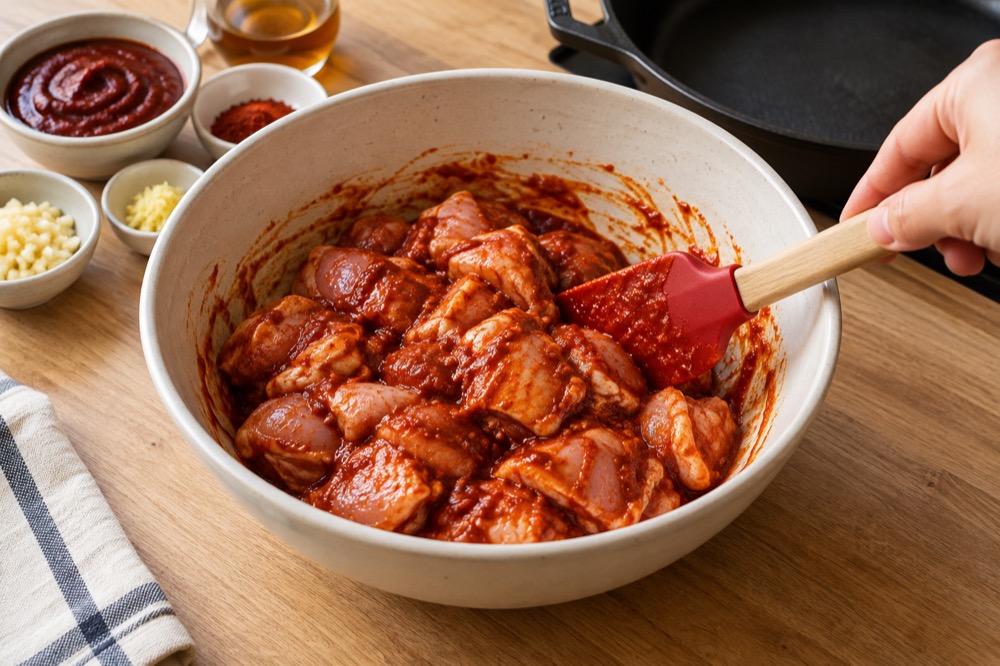
Stir gochujang, gochugaru, soy sauce, rice wine or water, sugar, garlic, ginger, and sesame oil until smooth. Cut chicken into 1 1/4-inch/3 cm pieces, coat thoroughly, and refrigerate for 15 minutes while preparing vegetables. Do not reuse the raw-chicken bowl for cooked food.
2. 2. Start the chicken, onion, and sweet potato
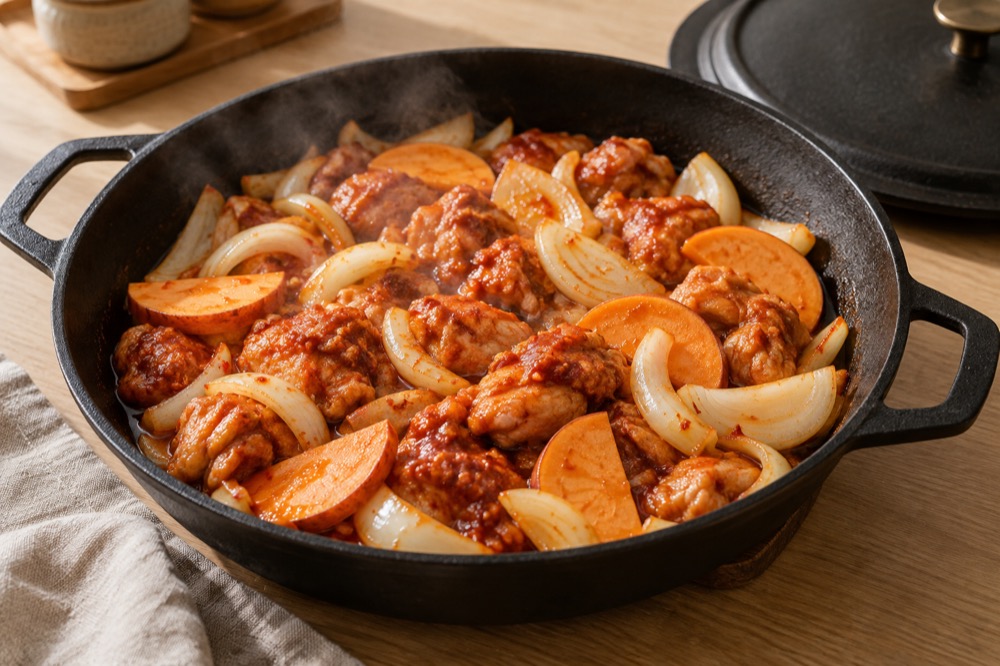
Heat a 12-inch skillet over medium-high and add neutral oil. Spread marinated chicken, onion, and 1/4-inch/5 mm sweet potato slices nearly in one layer; leave undisturbed for 2 minutes. Add 1/4 cup/60 ml water, cover, reduce to medium, and cook 6 minutes, stirring twice. Add 1–2 tablespoons water if the sauce looks dry.
3. 3. Add cabbage and rice cakes
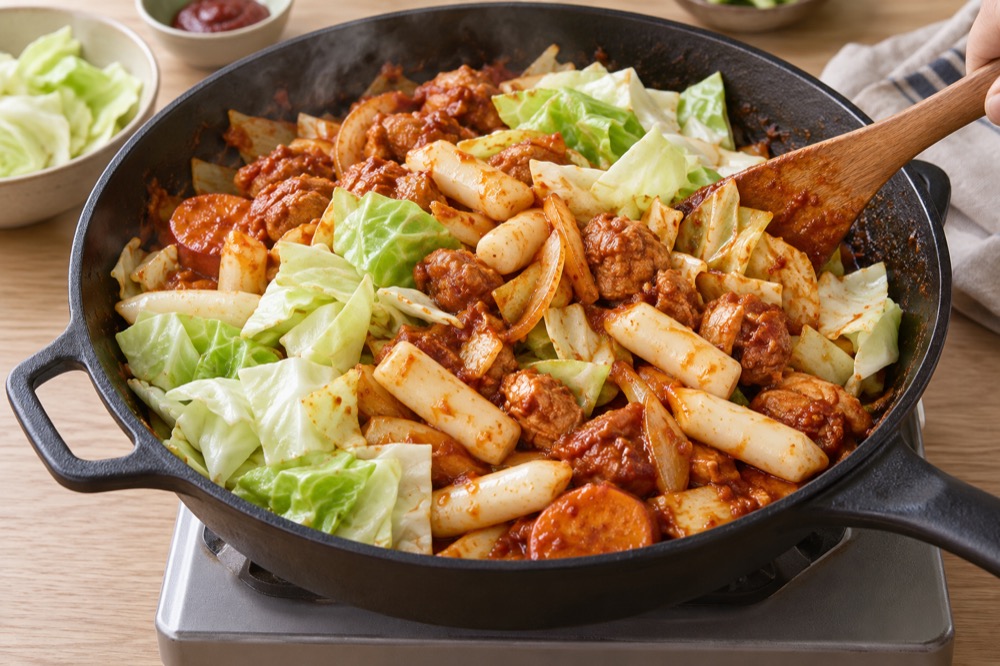
Add drained rice cakes and cabbage cut into 1 1/2-inch/4 cm pieces. Cook uncovered over medium for 7–9 minutes, stirring often. Cabbage should collapse, rice cakes should bend easily, and sweet potato should pierce without resistance. If the rice cakes remain hard, add 2 tablespoons water, cover, and cook 2 minutes.
4. 4. Check the chicken and finish
Check the center of the thickest chicken piece; it must reach 165°F/74°C. If lower, reduce heat to medium-low and cook 2–3 minutes more. Add scallions and toss for 1 minute. The sauce should look glossy, thick, and cling to the food; add 1 tablespoon water if dry or cook uncovered 1–2 minutes if watery. Rest off heat for 3 minutes.
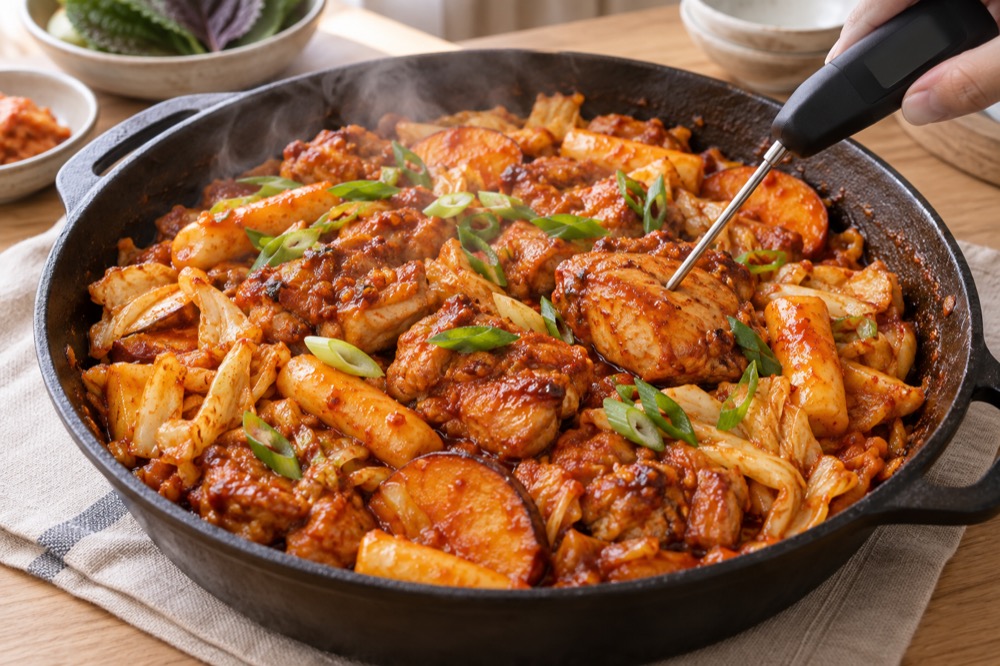
Chuncheon-Style Dakgalbi Skillet
A home-skillet adaptation of Korean spicy chicken with gochujang, cabbage, sweet potato, and chewy rice cakes.
Ingredients
- 1 1/3 pounds boneless skinless chicken thighs — 600 g; cut into 1 1/4-inch pieces
- 10 1/2 ounces green cabbage — 300 g; cut into 1 1/2-inch pieces
- 9 ounces sweet potato — 250 g; sliced 1/4 inch thick
- 8 ounces cylindrical Korean rice cakes — 200 g; soaked 15 minutes
- 1 medium yellow onion — about 5 ounces/150 g; thickly sliced
- 2 scallions — cut into 1 1/2-inch lengths
- 1 tablespoon neutral oil — 15 ml
- 1/4 cup water — 60 ml; plus more as needed
- 3 tablespoons gochujang — about 45 g
- 1 tablespoon gochugaru — use 2 teaspoons for milder heat
- 2 tablespoons soy sauce — 30 ml
- 1 tablespoon rice wine or water — 15 ml
- 1 tablespoon brown sugar — 12 g
- 3 cloves garlic — finely grated
- 1 teaspoon fresh ginger — grated
- 2 teaspoons toasted sesame oil — 10 ml
Instructions
- Mix the sauce, coat 1 1/4-inch chicken pieces, and refrigerate for 15 minutes.
- Heat oil in a wide skillet. Sear chicken, onion, and 1/4-inch sweet potato for 2 minutes; add 1/4 cup water, cover, and cook over medium for 6 minutes.
- Add cabbage and soaked rice cakes; cook uncovered for 7–9 minutes until cabbage collapses and sweet potato pierces easily.
- Cook chicken to 165°F/74°C. Add scallions for 1 minute, adjust the sauce to a glossy clinging consistency, and rest 3 minutes.
Notes
- If the sauce scorches, the heat is too high or the pan is dry. Lower the heat and add water 1–2 tablespoons at a time; too much at once will boil the food.
- For less heat, reduce gochugaru rather than dramatically reducing gochujang. Lettuce wraps and plain rice also soften the heat.
- Refrigerate in a shallow covered container within 2 hours and use within 3–4 days; reheat to 165°F/74°C. Cooked rice cakes harden after freezing, so remove them and freeze the chicken-vegetable mixture up to 2 months for best quality.
- Allergens: soy and sesame. Gochujang and soy sauce may contain wheat; use certified gluten-free gochujang and tamari if needed. Wash surfaces and tools that touched raw chicken with hot, soapy water.
Doneness and texture cues
Sauce should not pool like water; it should gloss and cling to the chicken and vegetables. Sweet potato should pierce easily without breaking apart, rice cakes should bend, and chicken must register 165°F/74°C in the center.
Common problems and fixes
A bitter burnt flavor means excessive heat; firm sweet potato means slices were too thick; rubbery rice cakes mean overcooking. Keep slices to 1/4 inch, add water by the tablespoon when dry, and serve rice cakes as soon as tender.
Serving, make-ahead, and leftover fried rice
Mix the sauce one day ahead; marinate raw chicken for no more than 24 hours under refrigeration. Serve with lettuce or perilla and plain rice. The next day, chop 1–2 leftover servings and stir-fry with 2 cups/300 g cold cooked rice for 4–5 minutes, heating everything to 165°F/74°C.
Frequently asked questions
Does dakgalbi have to be very spicy?
No. Reduce gochugaru to 2 teaspoons and serve with plain rice. Removing gochujang entirely changes the dish’s defining flavor.
Can I make dakgalbi without rice cakes?
Yes. Omit them, reduce the starting water to 3 tablespoons/45 ml, and serve the finished chicken and vegetables with short-grain rice.
Can I use chicken breast?
Yes. Cut it evenly and stop cooking as soon as it reaches 165°F/74°C; breast dries faster than thigh meat.
Why is my sauce sticking to the skillet?
Gochujang and sugar scorch quickly over high heat. A wide pan, medium heat, and small additions of water let the sauce thicken without burning.
Leave a Reply