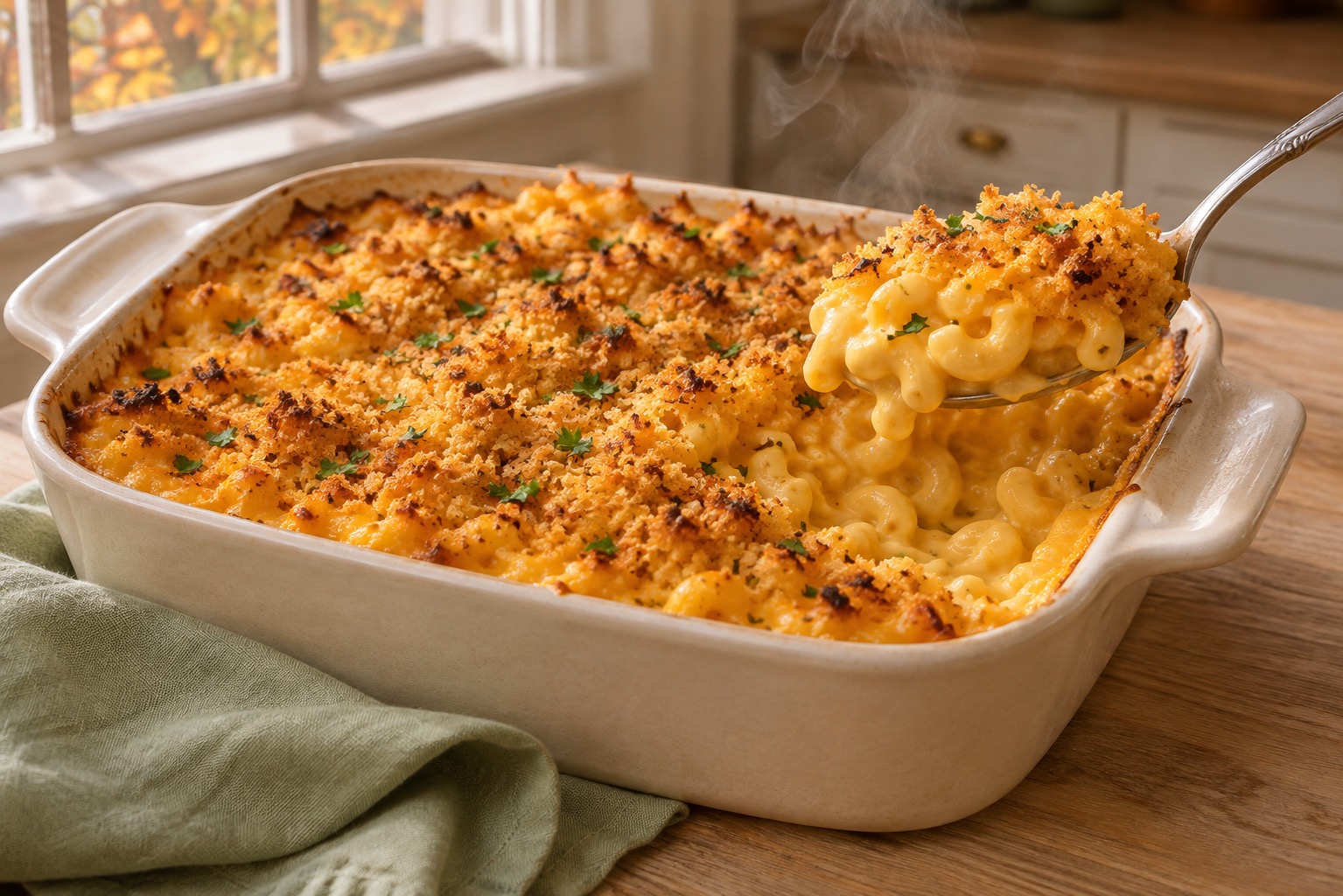
The exact origin of macaroni and cheese is debated; Smithsonian sources trace its long European history and its lasting place in American food. This is a béchamel-based baked American adaptation, not a claim of one definitive recipe.
The pasta is boiled short of done, cheese is added to a hot base off the heat, and the casserole stays in the oven only until browned. Those controls prevent a greasy sauce and mushy pasta.
Why this method works
- Boiling pasta two minutes short leaves room for sauce and oven carryover.
- Equal butter and flour make a balanced roux that holds the milk.
- Adding cheese off heat prevents tightened proteins and oil separation.
- Panko with a little butter browns crisp without a long bake.
Before you start
Prepare a 9×13-inch/23×33 cm baking dish, 5-quart pot, saucepan, whisk, spatula, and grater.
Grate cheddar from a block; pre-shredded cheese can carry anti-caking coating that hinders melting.
Heat oven to 400°F/200°C. Reserve ½ cup/120 ml pasta water before draining.
Step-by-step method
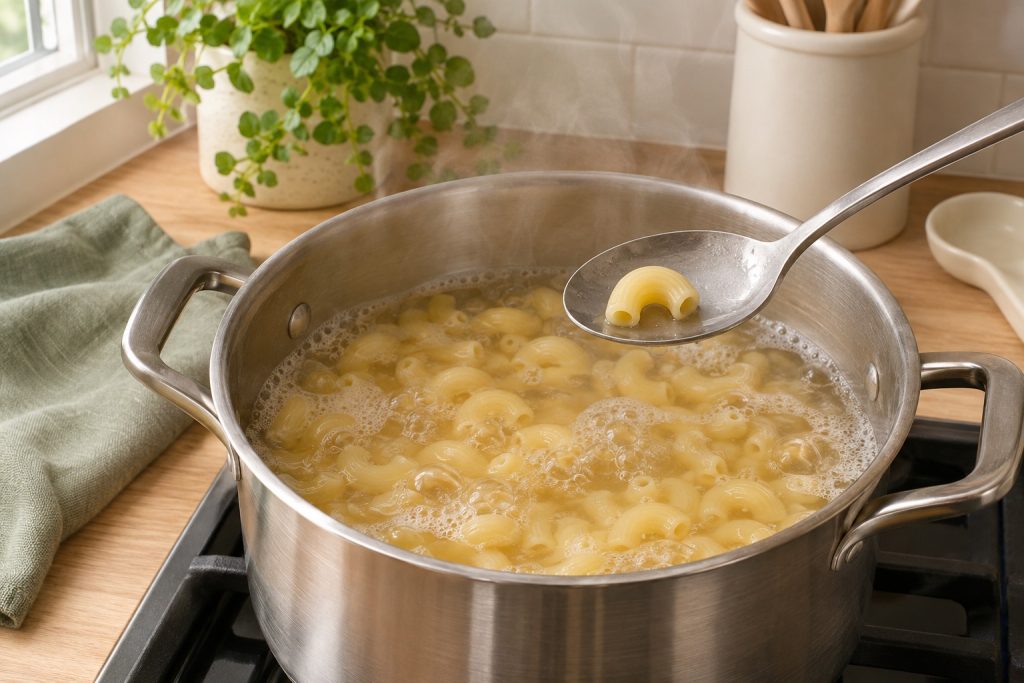
1. Boil the pasta very firm
Boil well-salted water. Cook macaroni 2 minutes less than the package time, until the center has clear resistance. Reserve ½ cup/120 ml water, drain, and do not rinse.
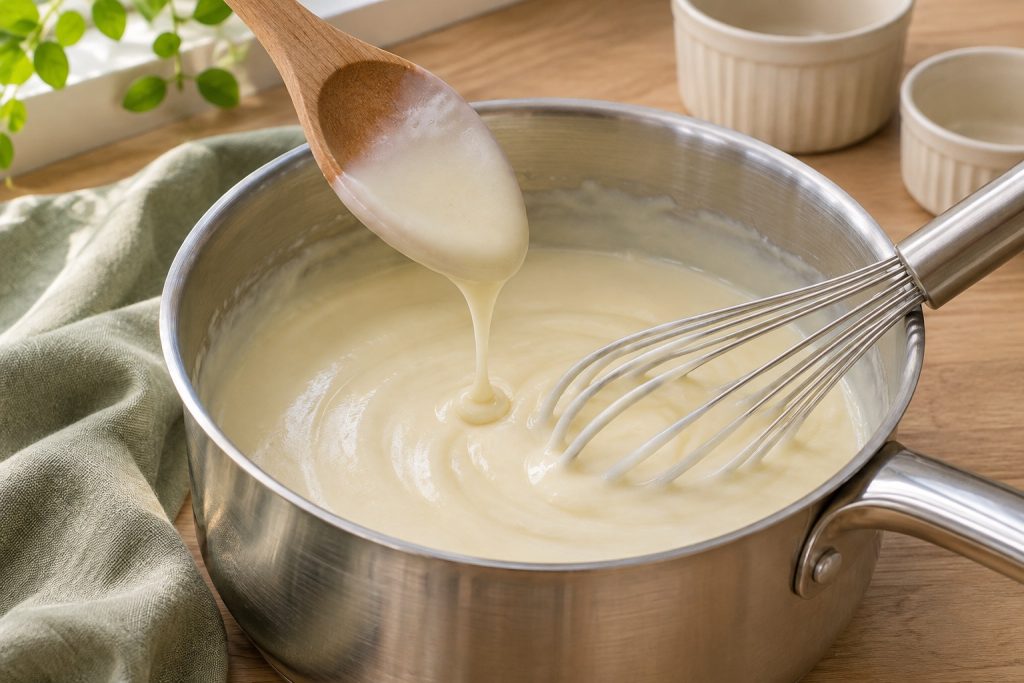
2. Build a lump-free white sauce
Melt 4 tbsp/60 g butter over medium heat; whisk in flour for 2 minutes. Add warm milk in 4–5 additions, whisking smooth each time. Cook 5–7 minutes until it lightly coats a spoon. Add mustard, garlic, paprika, salt, and pepper.
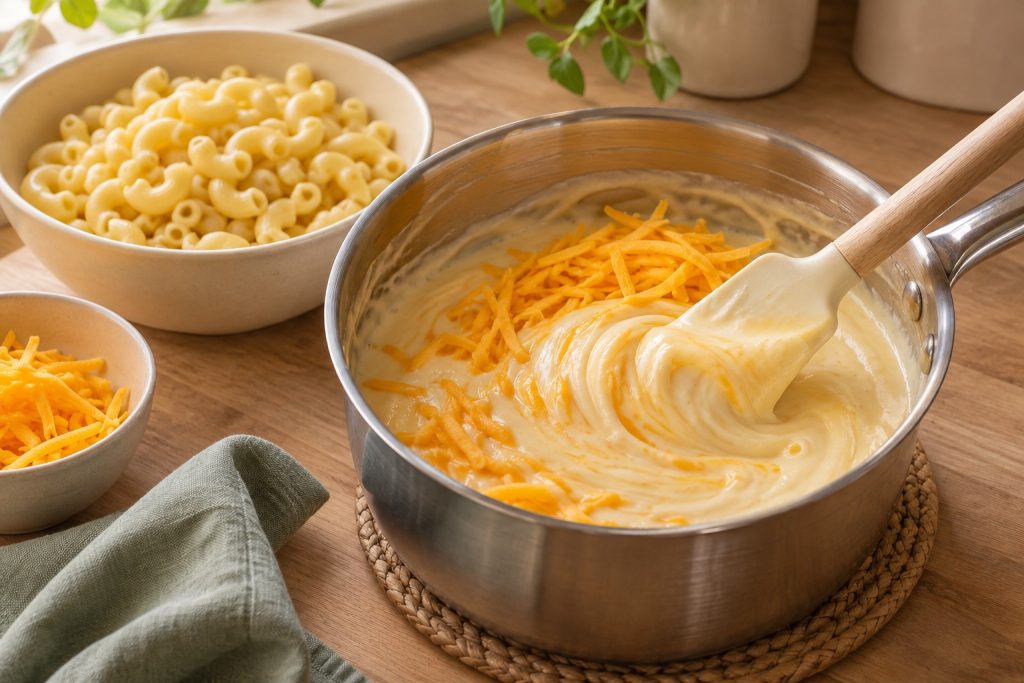
3. Melt cheese off heat and combine
Remove from heat and wait 1 minute. Add cheddar and mozzarella in three batches, stirring only until each melts. Thin with reserved water if needed. Fold in pasta; keep it loose because the oven thickens it.
4. Top with crumbs and brown briefly
Spread in a greased dish. Mix panko with 2 tbsp/25 g melted butter and scatter evenly. Bake at 400°F/200°C for 18–22 minutes until bubbling at the edges and golden; rest 5 minutes. Chill leftovers within 2 hours.
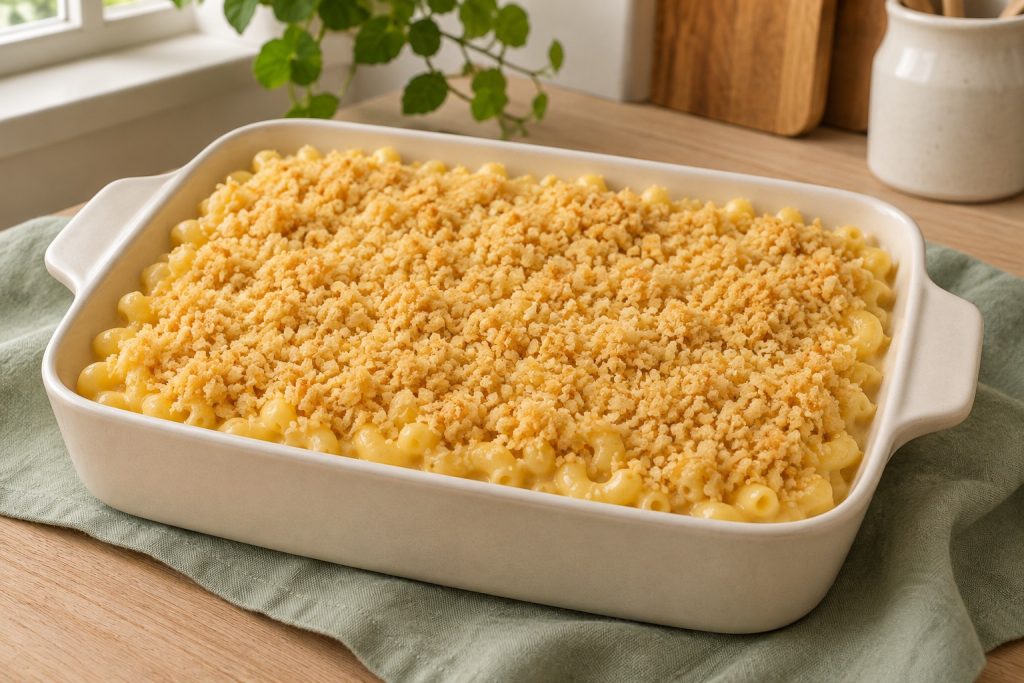
Baked Mac and Cheese
Baked macaroni and cheese with a smooth cheddar sauce, firm pasta, crisp crumbs, and practical make-ahead and reheating guidance.
Ingredients
- 450 g elbow macaroni
- 60 g unsalted butter — for sauce
- 60 g all-purpose flour
- 900 ml whole milk — warm
- 1 tsp Dijon mustard
- ½ tsp garlic powder
- ¼ tsp smoked paprika
- 450 g sharp cheddar — freshly grated
- 100 g low-moisture mozzarella — grated
- 1 tsp fine salt — plus pasta-water salt
- ½ tsp black pepper
- 80 g panko breadcrumbs
- 25 g butter — melted, for topping
Instructions
- Boil well-salted water. Cook macaroni 2 minutes less than the package time, until the center has clear resistance. Reserve ½ cup/120 ml water, drain, and do not rinse.
- Melt 4 tbsp/60 g butter over medium heat; whisk in flour for 2 minutes. Add warm milk in 4–5 additions, whisking smooth each time. Cook 5–7 minutes until it lightly coats a spoon. Add mustard, garlic, paprika, salt, and pepper.
- Remove from heat and wait 1 minute. Add cheddar and mozzarella in three batches, stirring only until each melts. Thin with reserved water if needed. Fold in pasta; keep it loose because the oven thickens it.
- Spread in a greased dish. Mix panko with 2 tbsp/25 g melted butter and scatter evenly. Bake at 400°F/200°C for 18–22 minutes until bubbling at the edges and golden; rest 5 minutes. Chill leftovers within 2 hours.
Notes
- Sauce coats every elbow in a glossy layer with no oily pools or flour taste. Edges bubble, crumbs are golden, and the center is spoonable but not runny.
- Grainy sauce usually means cheese met boiling liquid or stayed hot too long; move the pan to a cool surface and whisk in 2–3 tbsp warm milk. Monterey Jack replaces mozzarella; another well-melting mature cheese replaces cheddar with a different flavor. 450 g pasta is 1 lb; 450 g grated cheese is about 4½ US cups.
- Serve with green salad or roasted vegetables. Chill in a shallow container within 2 hours and refrigerate below 40°F/4°C up to 4 days. Reheat covered at 350°F/180°C for 15–20 minutes to 165°F/74°C, adding 1 tbsp milk if needed. Freeze airtight up to 2 months. Contains gluten, dairy, and mustard.
Texture and doneness cues
Sauce coats every elbow in a glossy layer with no oily pools or flour taste. Edges bubble, crumbs are golden, and the center is spoonable but not runny.
Mistakes, substitutions, and conversions
Grainy sauce usually means cheese met boiling liquid or stayed hot too long; move the pan to a cool surface and whisk in 2–3 tbsp warm milk. Monterey Jack replaces mozzarella; another well-melting mature cheese replaces cheddar with a different flavor. 450 g pasta is 1 lb; 450 g grated cheese is about 4½ US cups.
Serving, storage, and allergens
Serve with green salad or roasted vegetables. Chill in a shallow container within 2 hours and refrigerate below 40°F/4°C up to 4 days. Reheat covered at 350°F/180°C for 15–20 minutes to 165°F/74°C, adding 1 tbsp milk if needed. Freeze airtight up to 2 months. Contains gluten, dairy, and mustard.
Frequently asked questions
Why did the cheese sauce turn grainy?
Cheese added to boiling sauce tightens. Turn off heat, wait 1 minute, and melt it in batches.
Can I assemble it ahead?
Yes. Combine pasta and sauce, keep crumbs separate, refrigerate up to 24 hours, then add crumbs and 5–10 minutes baking time.
Why was it dry?
The pasta may be overcooked, the sauce too thick, or the bake too long. Keep the sauce loose before baking.
Can I use pre-shredded cheese?
Yes, but melting can be less smooth; freshly grated block cheese is more reliable.
Leave a Reply