Category: Main Dishes

Satisfying main dishes from Turkish cooking and cuisines around the world. Meat, poultry, and plant-based recipes include doneness cues, texture guidance, practical substitutions, food-safety notes, storage, and reheating instructions.

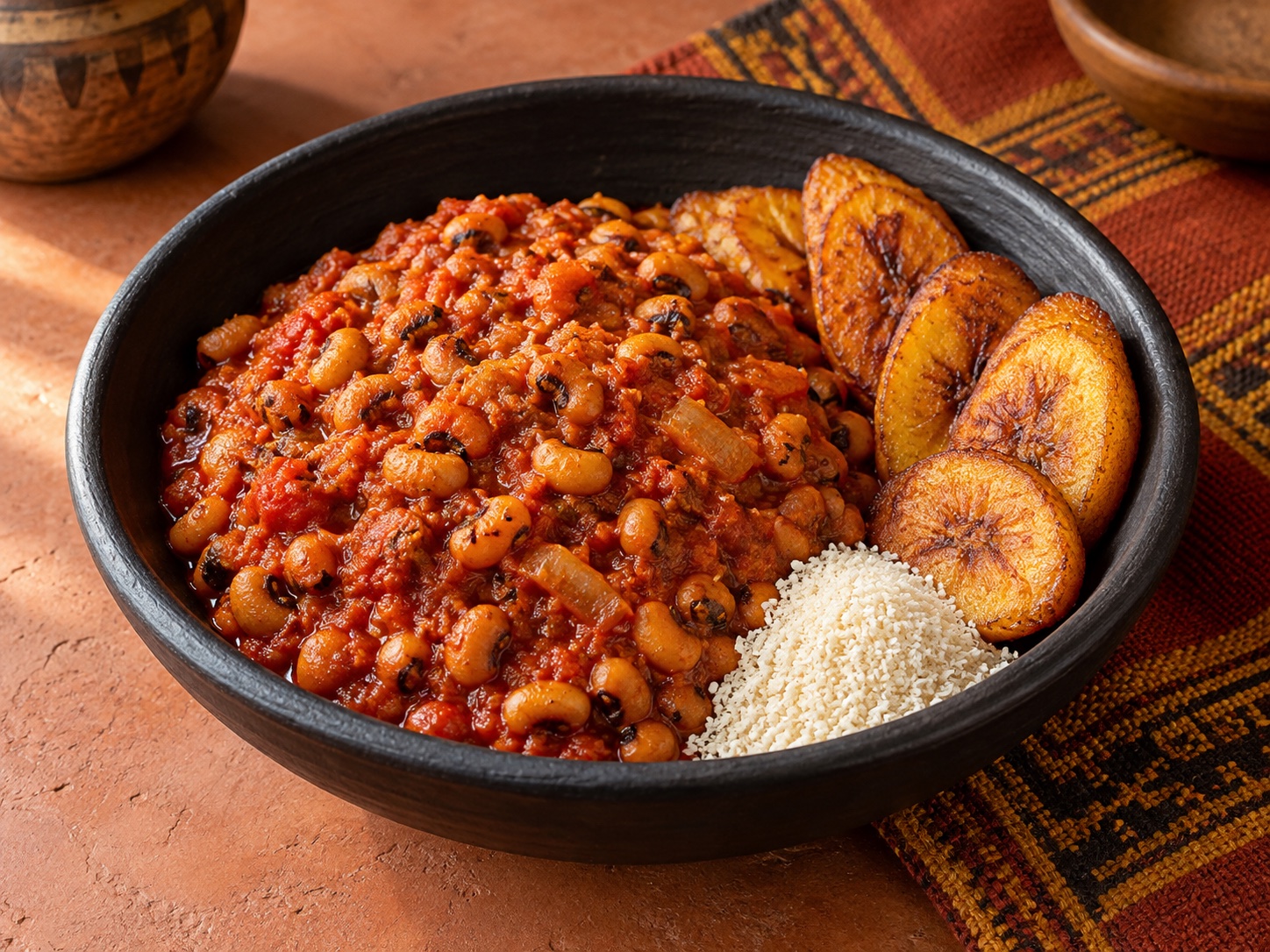
  • Ghanaian Red Red: Black-Eyed Pea Stew

    Ghanaian Red Red: Black-Eyed Pea Stew

    Red red is a beloved Ghanaian pairing of black-eyed pea stew and fried ripe plantain. Its “red” character comes from red palm oil and tomato.

    This version soaks dried peas overnight, cooks them separately until creamy, reduces the tomato base, and combines them at the end. Neutral oil works when palm oil is unavailable, but the color and flavor change.

    Why this method works

    • Cooking peas separately keeps tomato acidity from slowing softening and gives precise texture control.
    • Reducing the tomato base first removes raw flavor and emulsifies the palm oil.
    • Black-speckled yet firm plantain caramelizes without collapsing, balancing the savory stew.

    Before you start

    Prepare a large pot, wide heavy pan, colander, wooden spoon, thermometer, and splatter screen.

    Soak peas 8 hours in plenty of water and discard the water. Ripe plantain should be yellow, black-speckled, and slightly yielding; fully black and soft may collapse.

    Red palm oil stains easily. Keep frying oil near 350°F for plantain.
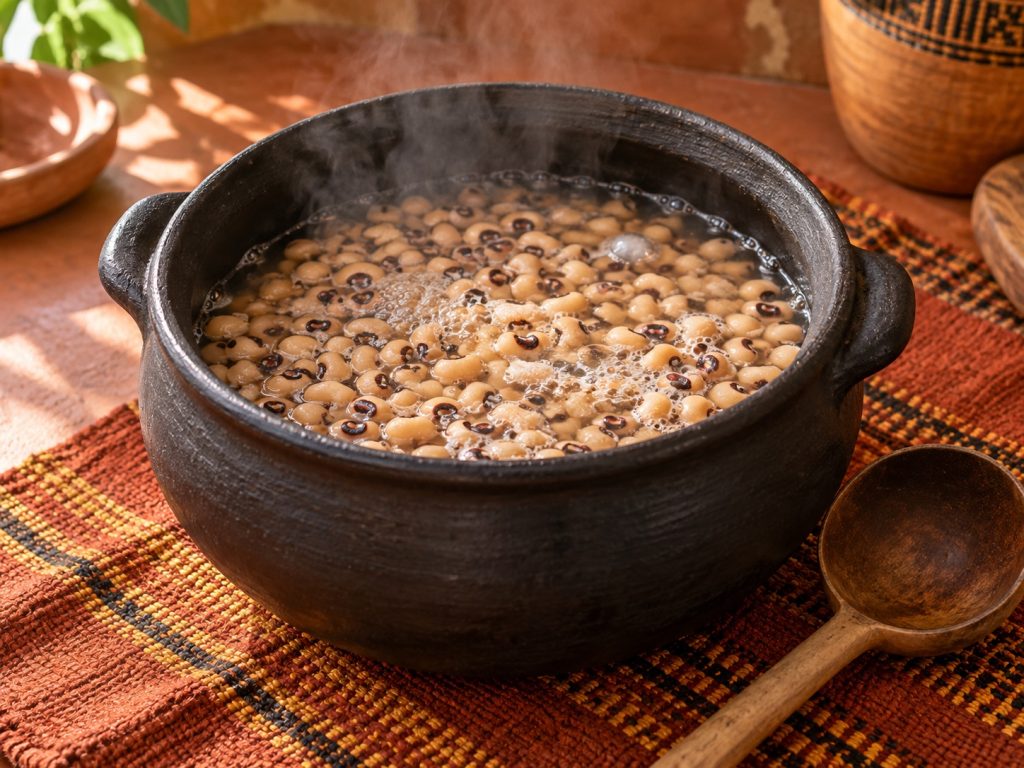
    Cook the peas until creamy
    Discard soaking water and rinse peas. Cover with 700 ml fresh water, boil continuously at least 10 minutes, then simmer 35–50 minutes until a bean crushes easily but skins mostly hold. Reserve 1 cup cooking liquid and drain.

    Step-by-step method

    1. Cook the peas until creamy

    Discard soaking water and rinse peas. Cover with 700 ml fresh water, boil continuously at least 10 minutes, then simmer 35–50 minutes until a bean crushes easily but skins mostly hold. Reserve 1 cup cooking liquid and drain.

    2. Reduce the tomato-palm-oil base

    Heat palm oil over medium in a wide pan. Soften sliced onion 8 minutes without browning. Add tomato, paste, diced onion, ginger, garlic, and whole chilli. Cook medium-low 20–25 minutes until raw aroma disappears and oil shows at the edges.
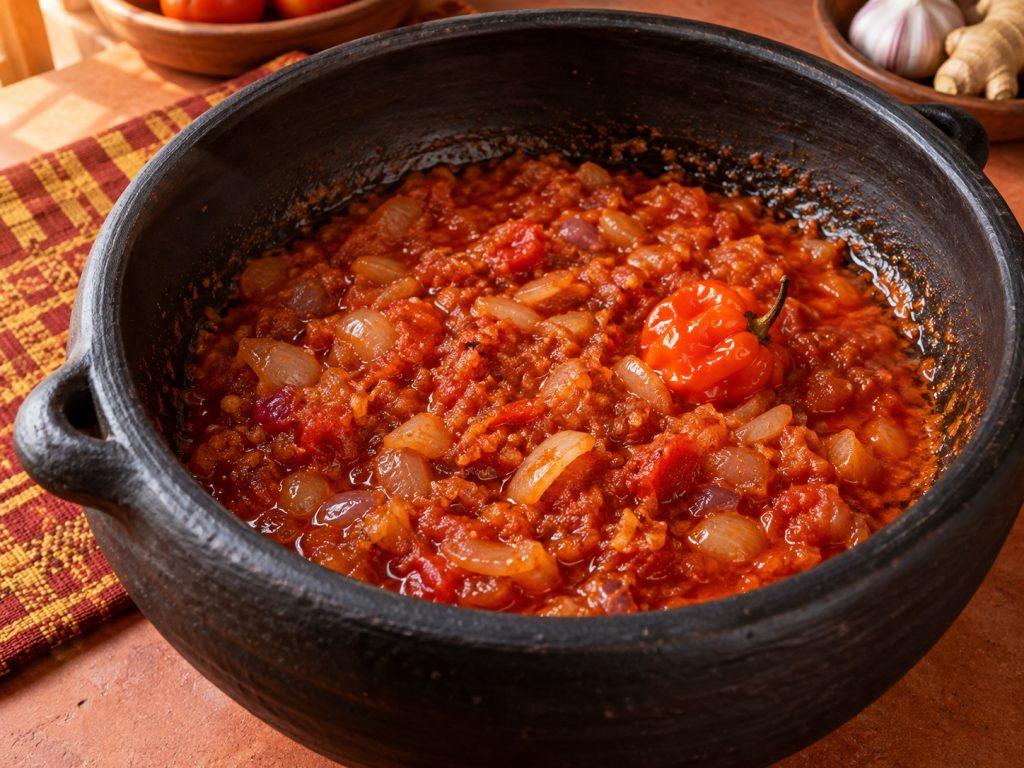
    Reduce the tomato-palm-oil base
    Heat palm oil over medium in a wide pan. Soften sliced onion 8 minutes without browning. Add tomato, paste, diced onion, ginger, garlic, and whole chilli. Cook medium-low 20–25 minutes until raw aroma disappears and oil shows at the edges.

    3. Fold in peas and adjust texture

    Remove the chilli, or crush lightly for more heat. Fold peas and ⅔ cup reserved liquid into the sauce. Simmer 10–15 minutes, mashing a small portion for creaminess. It is ready when a spoon trail remains 2–3 seconds; season.
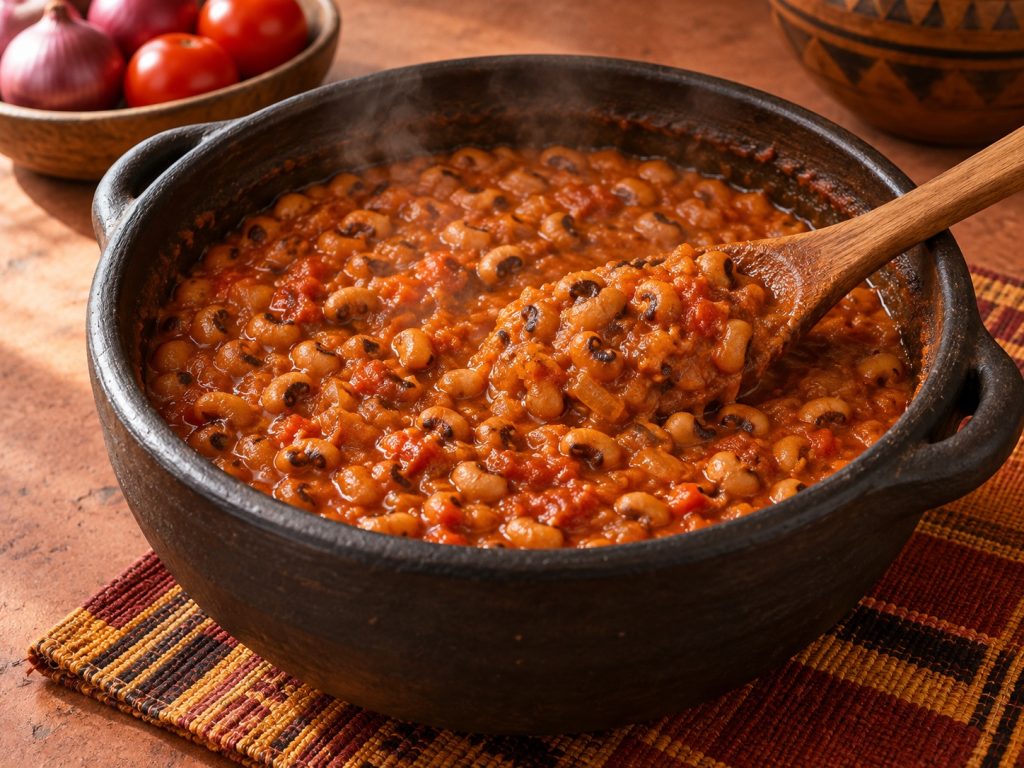
    Fold in peas and adjust texture
    Remove the chilli, or crush lightly for more heat. Fold peas and ⅔ cup reserved liquid into the sauce. Simmer 10–15 minutes, mashing a small portion for creaminess. It is ready when a spoon trail remains 2–3 seconds; season.

    4. Fry ripe plantain and serve

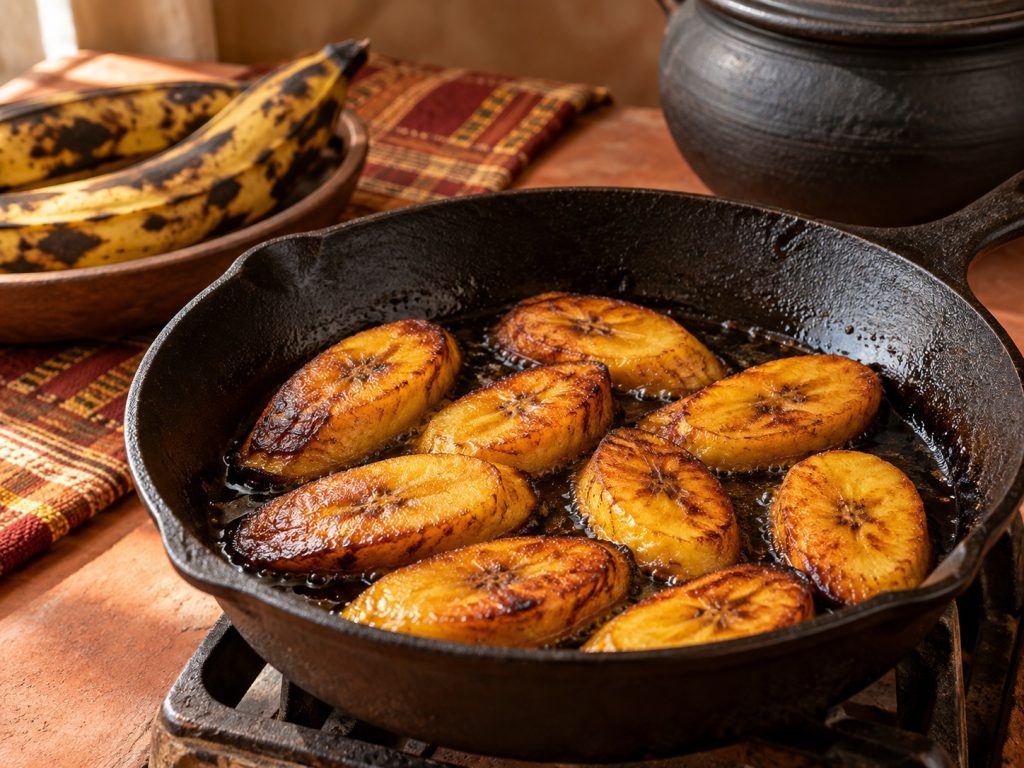
    Slice plantain ¾ inch on the diagonal. Heat neutral oil to 350°F and fry without crowding, 2–3 minutes per side until deep golden. Drain on paper. Serve red red with hot plantain and optional gari.
    Fry ripe plantain and serve
    Slice plantain ¾ inch on the diagonal. Heat neutral oil to 350°F and fry without crowding, 2–3 minutes per side until deep golden. Drain on paper. Serve red red with hot plantain and optional gari.

    Texture and doneness cues

    Individual peas remain visible in a creamy sauce that coats a spoon rather than running like soup. Plantain is deep gold outside, soft inside, and holds its shape.

    Mistakes, substitutions, and measurements

    Neutral oil can replace red palm oil, with less color and characteristic flavor. Two drained 14-ounce cans of black-eyed peas work; use stock instead of bean liquid and simmer 15 minutes. 1 cup dried peas is about 190 g; 60 ml is ¼ cup. Gari is cassava; check packages for cross-contact.

    Serving, storage, and allergens

    Cool stew in shallow containers within 2 hours; refrigerate 3–4 days or freeze 3 months. Store plantain separately up to 2 days and refresh 8 minutes at 400°F. Reheat stew with a splash of water to 165°F throughout.

    Frequently asked questions

    Why are the peas still hard?

    They met acidic tomato too early or are old; soften fully in fresh water before adding sauce.

    Why does the stew look oily?

    The palm-oil tomato base has not emulsified; reduce 5 minutes longer over low heat while stirring.

    Why did the plantain fall apart?

    It was overripe or the oil was cool; choose speckled but firm fruit and fry at 350°F.
  • Chicken Karahi: Pakistani Tomato-Ginger Chicken

    Chicken Karahi: Pakistani Tomato-Ginger Chicken

    Karahi takes its name from the wide round metal pan in which it is cooked. Pakistani versions use goat, lamb, or chicken with tomato, ginger, green chilli, and bold black pepper.

    This practical home adaptation uses bone-in chicken and accessible spices. It omits onion and reduces fresh tomato directly in the pan for a concentrated masala.

    Why this method works

    • Browning chicken first builds flavor and prevents a boiled texture once the tomatoes release water.
    • Uncovered reduction evaporates excess tomato water and thickens the masala without flour or starch.
    • Using ginger, black pepper, and green chilli in two stages provides both depth and fresh aroma.

    Before you start

    Use a karahi, wok, or 12-inch heavy skillet with a lid, plus tongs, grater, and instant-read thermometer.

    Do not wash raw chicken; pat it dry and wash all contacted surfaces with hot soapy water.

    For controllable heat, leave half the chillies whole; seed the sliced ones for a milder dish.

    Dry and brown the chicken
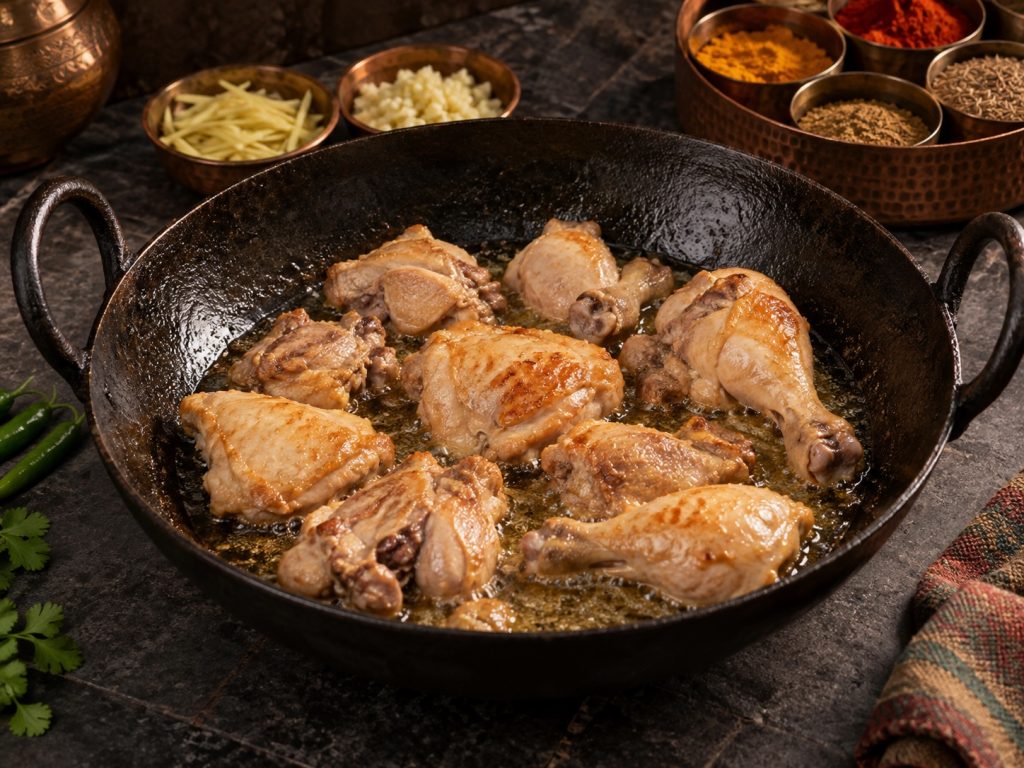
    Pat chicken very dry and season with 1 teaspoon salt. Heat oil over medium-high in a wide pan. Without crowding, brown in two batches for 8–10 minutes total, turning until golden; transfer to a plate.

    Step-by-step method

    1. Dry and brown the chicken

    Pat chicken very dry and season with 1 teaspoon salt. Heat oil over medium-high in a wide pan. Without crowding, brown in two batches for 8–10 minutes total, turning until golden; transfer to a plate.

    2. Build the tomato-spice base

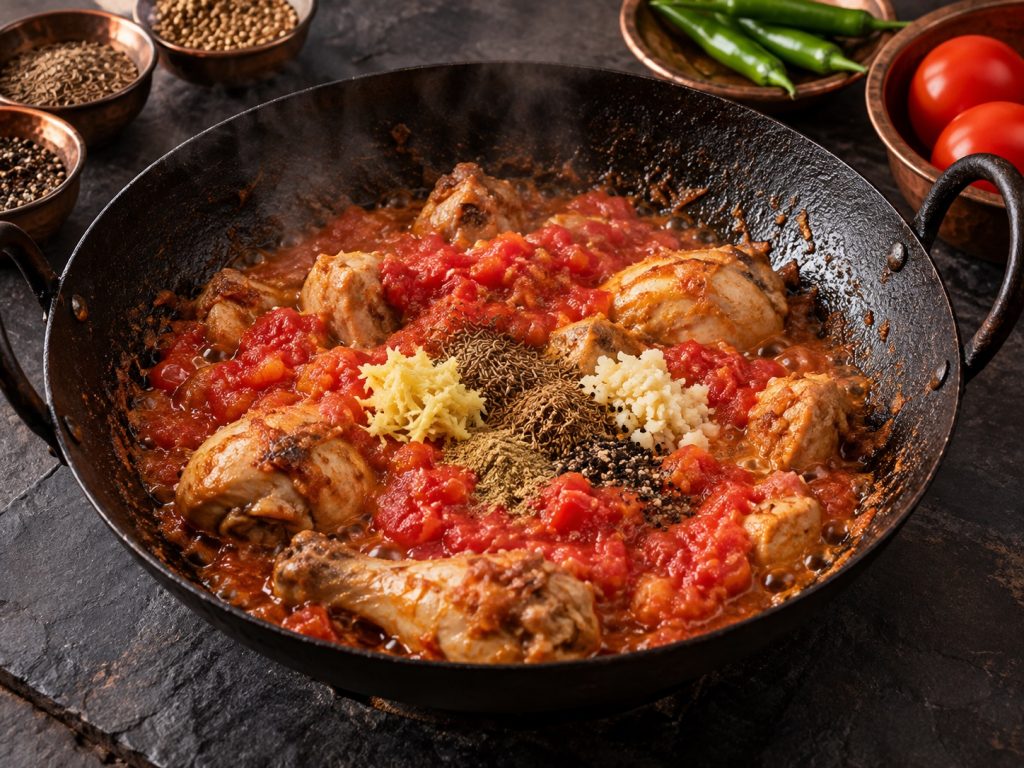
    Lower heat to medium. Stir grated ginger, garlic, coriander, and cumin for 30 seconds. Add tomatoes, chilli powder, and remaining salt. Crush and cook 8–10 minutes until the tomatoes break down into a glossy sauce.

    Build the tomato-spice base
    Lower heat to medium. Stir grated ginger, garlic, coriander, and cumin for 30 seconds. Add tomatoes, chilli powder, and remaining salt. Crush and cook 8–10 minutes until the tomatoes break down into a glossy sauce.

    3. Cover and cook to a safe temperature

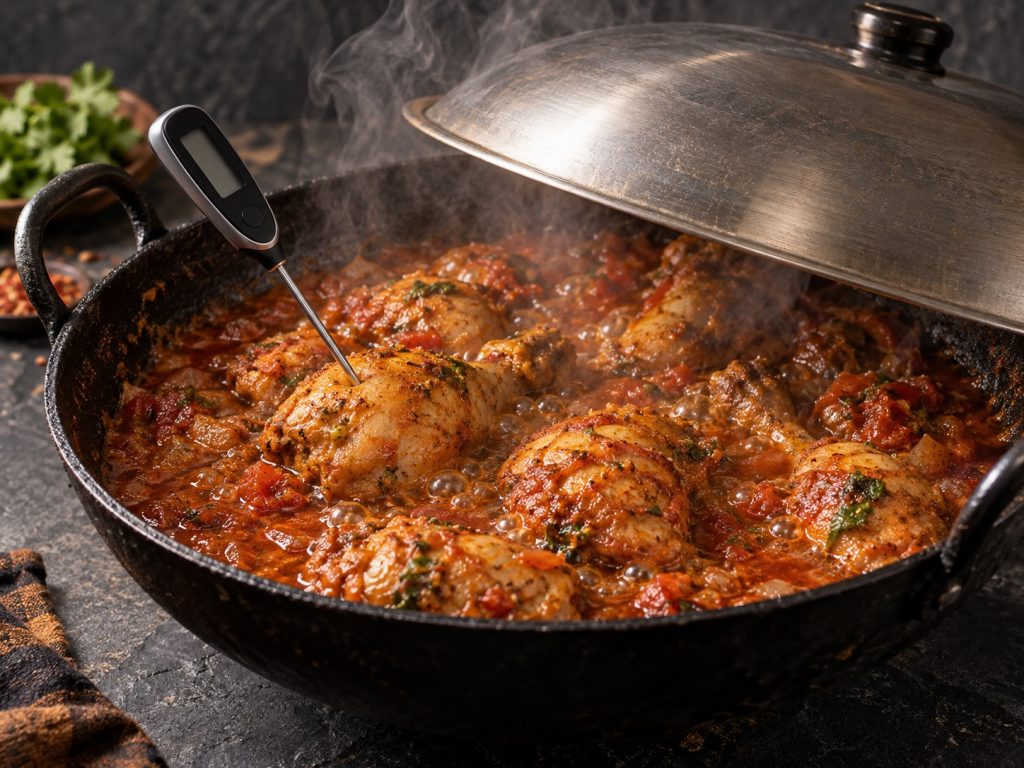
    Return chicken and its juices. Add two whole green chillies, cover, and cook over medium-low for 18–22 minutes. Check the thickest piece away from bone and confirm it reaches 165°F.

    Cover and cook to a safe temperature
    Return chicken and its juices. Add two whole green chillies, cover, and cook over medium-low for 18–22 minutes. Check the thickest piece away from bone and confirm it reaches 165°F.

    4. Reduce uncovered and add fresh aromatics

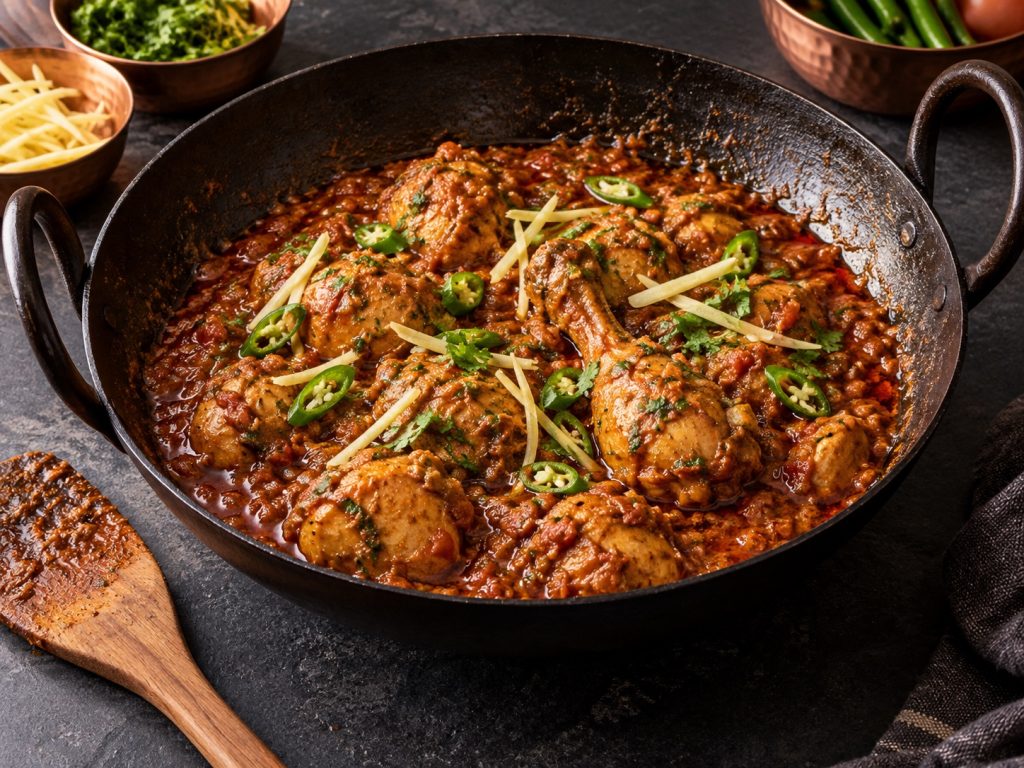
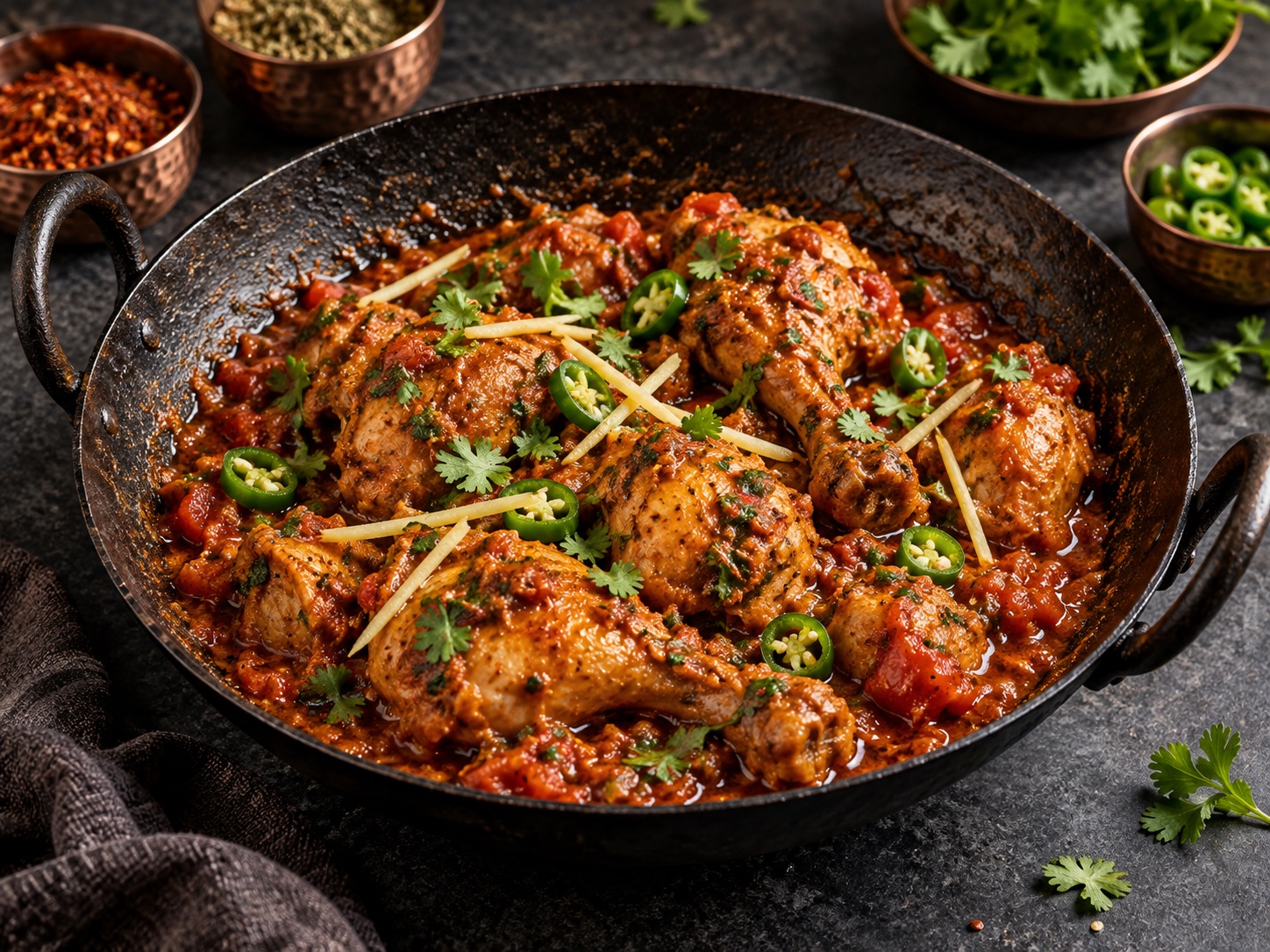
    Uncover and reduce over medium-high for 8–12 minutes, turning often. When masala clings and a little oil appears at the edges, add remaining chilli, black pepper, ginger matchsticks, and cilantro. Rest 2 minutes and serve with lime.

    Reduce uncovered and add fresh aromatics
    Uncover and reduce over medium-high for 8–12 minutes, turning often. When masala clings and a little oil appears at the edges, add remaining chilli, black pepper, ginger matchsticks, and cilantro. Rest 2 minutes and serve with lime.

    Texture and doneness cues

    Chicken reaches 165°F in the thickest area near the bone and remains juicy. The masala is thick and glossy enough to cling rather than pooling like a loose curry; a light oil sheen appears at the edge.

    Mistakes, substitutions, and measurements

    A wide wok or heavy skillet replaces a karahi. For boneless thighs use about 2 pounds and begin checking earlier, still reaching 165°F. Parsley can replace cilantro, though the flavor changes. ¼ cup oil is about 60 ml. Gluten- and dairy-free when made with oil; check ghee labels.

    Serving, storage, and allergens

    Refrigerate in a shallow container within 2 hours for 3–4 days, or freeze with the sauce up to 2 months. Thaw in the refrigerator and reheat with a splash of water until every piece reaches 165°F. Discard any garnish that contacted raw chicken.

    Frequently asked questions

    Why is the sauce watery?

    Very juicy tomatoes or too much covered cooking are common causes; finish uncovered in a wide pan.

    Why is the chicken tough?

    Breast-heavy pieces or overcooking can dry it; favor bone-in thighs and stop once safely cooked and reduced.

    How can I make it milder?

    Seed the green chillies, halve their quantity, and use mild paprika instead of hot chilli powder.

  • Uzbek Palov: Separate Grains and Deep Zirvak Flavor

    Uzbek Palov: Separate Grains and Deep Zirvak Flavor

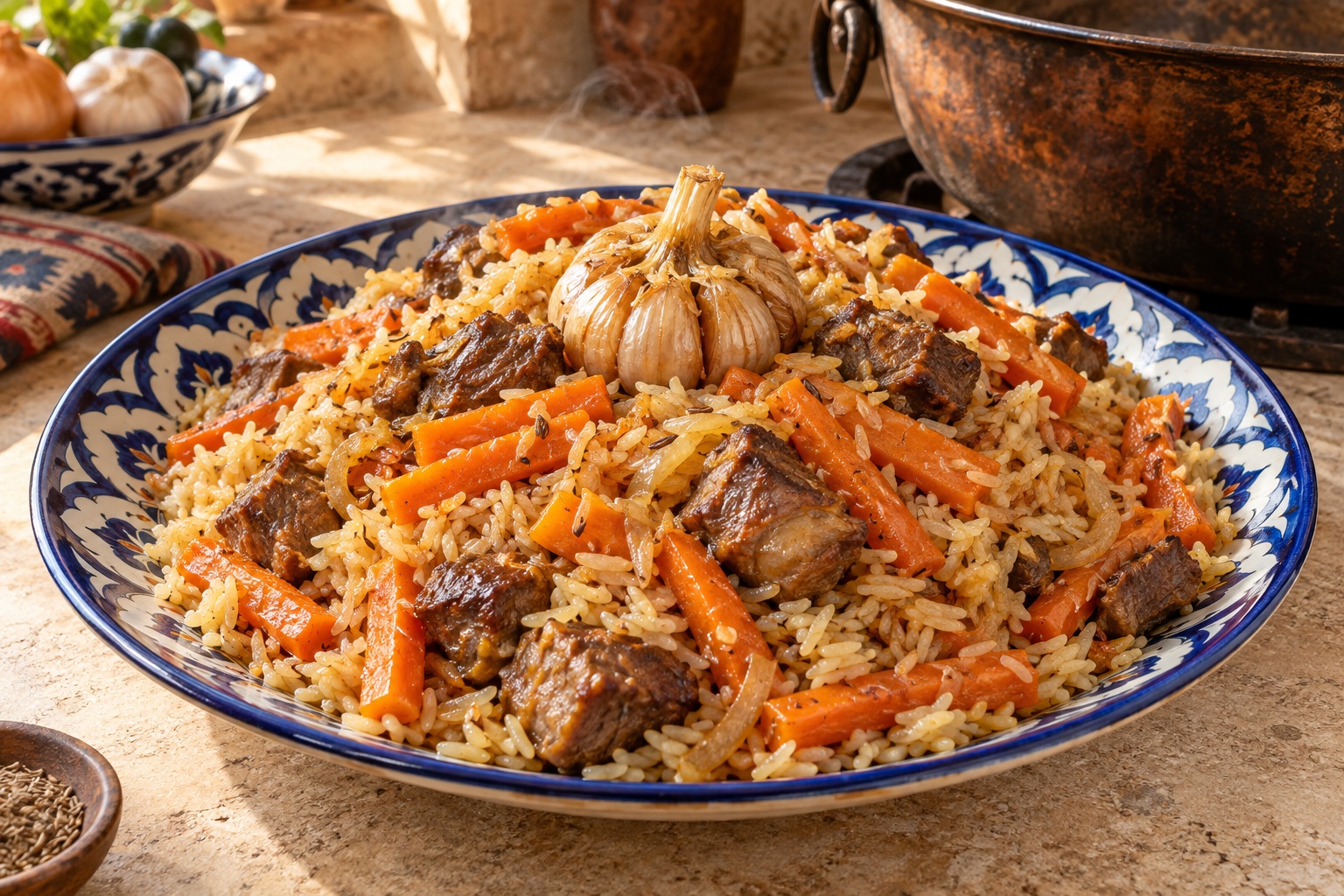
    Palov, or osh, is Uzbekistan’s communal rice dish of meat, carrots, and onion, served from everyday tables to celebrations; its culture entered UNESCO’s list in 2016.

    Regional versions vary widely. This home adaptation uses accessible long-grain rice and a heavy pot, cooking the layers without stirring.

    Why this method works

    • Cooking the zirvak fully first builds concentrated flavor for the rice.
    • Keeping rice in a level top layer lets steam cook it without crushing starch.
    • The final rest redistributes moisture and sets separate grains.

    Before you start

    Use a 5–6 quart heavy pot or kazan, colander, and long spoon.

    Rinse rice 5–6 times until mostly clear and soak 30 minutes in warm salted water.

    Cut carrots into ¼-inch batons rather than grating so they remain distinct.

    Rinse rice and prepare vegetables
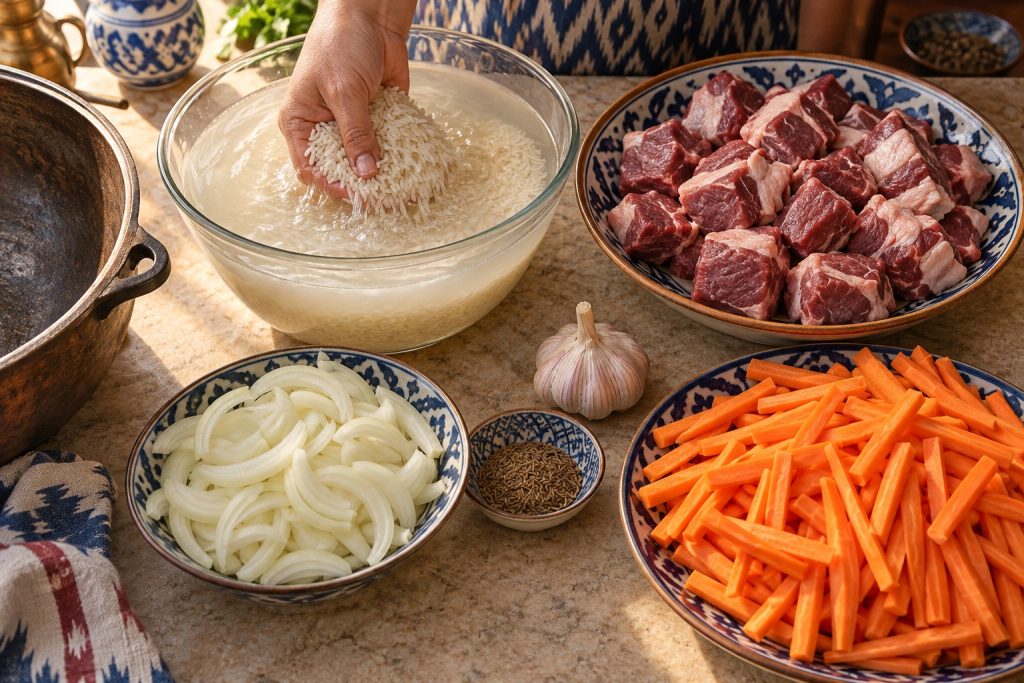
    Rinse rice 5–6 times, soak 30 minutes in warm salted water, and drain. Cut meat into 1½-inch cubes, carrots into ¼-inch batons, and onions into half-moons. Remove only garlic’s outer paper.

    Step-by-step method

    1. Rinse rice and prepare vegetables

    Rinse rice 5–6 times, soak 30 minutes in warm salted water, and drain. Cut meat into 1½-inch cubes, carrots into ¼-inch batons, and onions into half-moons. Remove only garlic’s outer paper.

    2. Build the meat zirvak

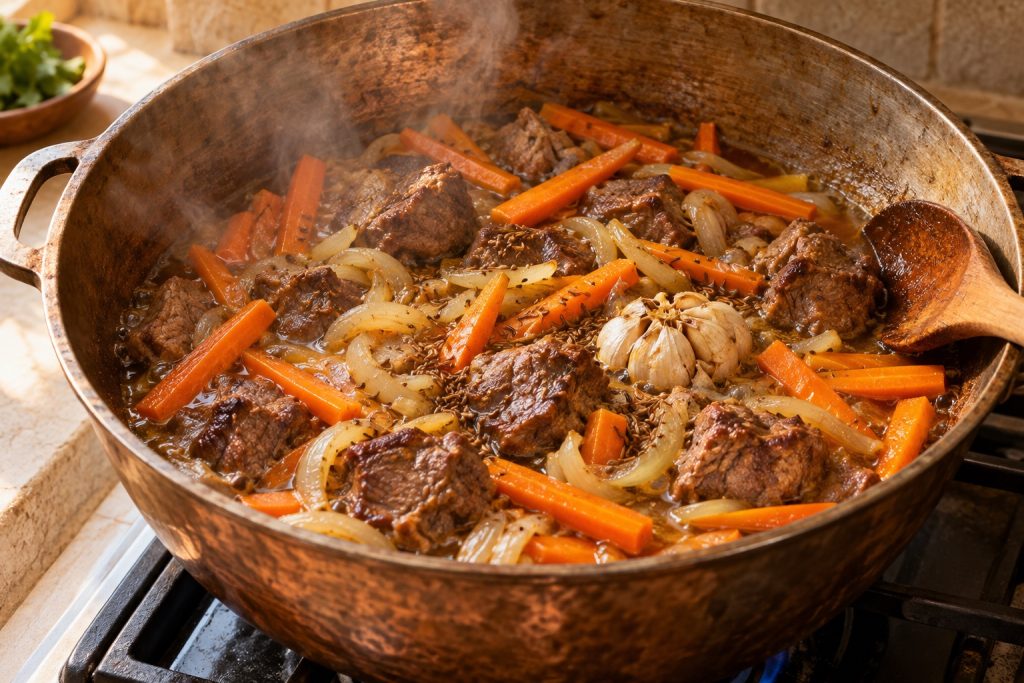
    Heat oil in a heavy pot over medium-high. Brown meat deeply in batches. Cook onion 6–8 minutes and carrots 8–10 minutes. Add cumin, coriander, and salt; pour in 2 cups boiling water, add garlic, cover, and simmer 35–45 minutes until meat is tender.

    Build the meat zirvak
    Heat oil in a heavy pot over medium-high. Brown meat deeply in batches. Cook onion 6–8 minutes and carrots 8–10 minutes. Add cumin, coriander, and salt; pour in 2 cups boiling water, add garlic, cover, and simmer 35–45 minutes until meat is tender.

    3. Layer rice and reduce the liquid

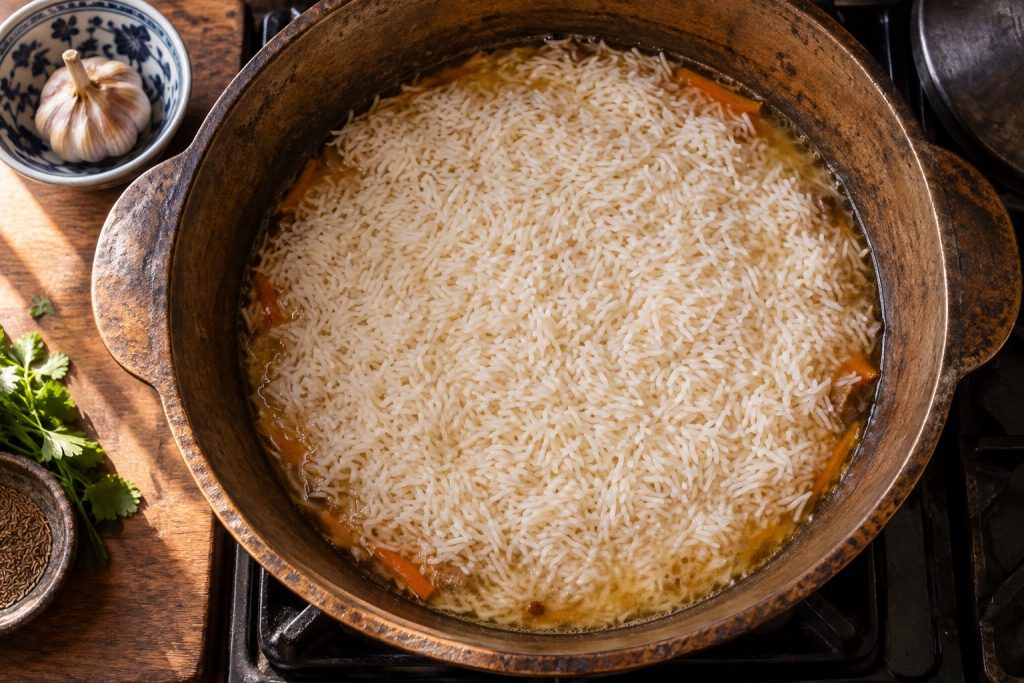
    Remove garlic briefly. Spread rice evenly over the zirvak without stirring. Add boiling water to sit about ½ inch above rice. Cook uncovered over medium-high 10–15 minutes until liquid disappears from the surface and rice is nearly tender.

    Layer rice and reduce the liquid
    Remove garlic briefly. Spread rice evenly over the zirvak without stirring. Add boiling water to sit about ½ inch above rice. Cook uncovered over medium-high 10–15 minutes until liquid disappears from the surface and rice is nearly tender.

    4. Steam in a mound and rest

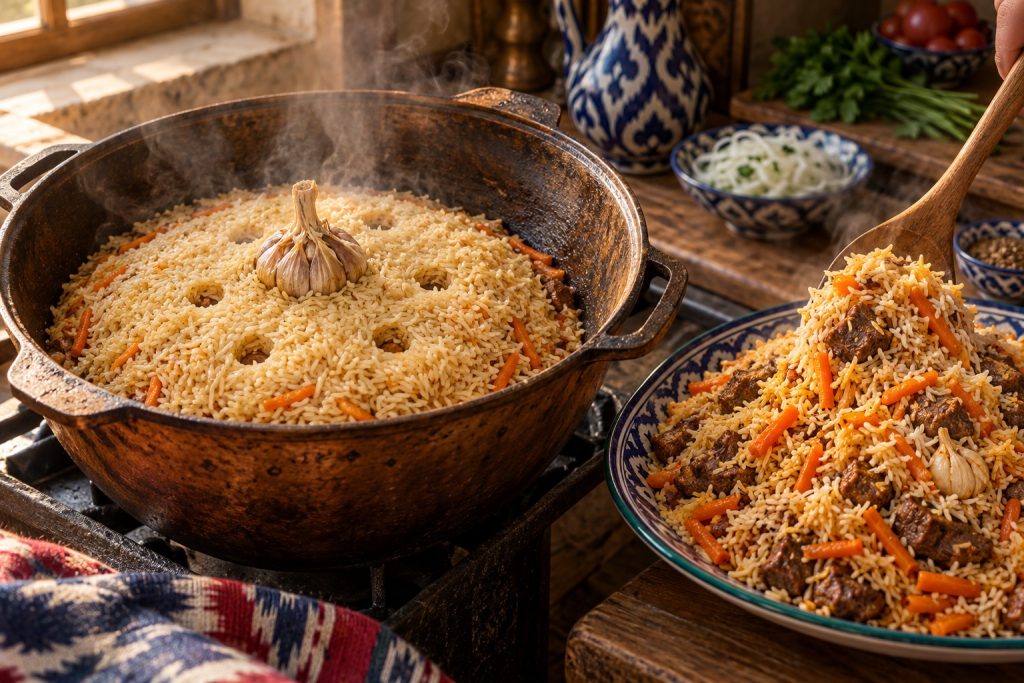
    Mound rice toward the center, pierce 5–6 steam holes with a spoon handle, and return garlic on top. Cover tightly and steam over the lowest heat 20–25 minutes. Turn off heat, rest 15 minutes, then fold layers together gently.

    Steam in a mound and rest
    Mound rice toward the center, pierce 5–6 steam holes with a spoon handle, and return garlic on top. Cover tightly and steam over the lowest heat 20–25 minutes. Turn off heat, rest 15 minutes, then fold layers together gently.

    Texture and doneness cues

    Rice grains are separate, tender but defined, with no free water at the bottom. Meat yields to a fork, carrots remain distinct, and nothing smells scorched.

    Mistakes, substitutions, and measurements

    Beef can replace lamb. Parboiled long-grain rice is forgiving if devzira is unavailable; basmati may need less water. Chickpeas or raisins appear in regional variants but are optional here. Naturally gluten- and dairy-free; check stock labels if used. 1 cup rice is about 190 g.

    Serving, storage, and allergens

    Serve with tomato-onion salad and yogurt. Divide into shallow containers and chill within 2 hours; refrigerate up to 3 days. Reheat once, covered with a splash of water, until the center reaches 165°F. Freeze up to 2 months.

    Frequently asked questions

    Why is the rice mushy?

    Starch remained, water was excessive, or layers were stirred; rinse until clear and keep rice on top.

    Why did the bottom burn?

    Heat stayed high after liquid reduced; use the lowest heat for steaming and a heavy pot.

    Can I cook the meat ahead?

    Make zirvak one day ahead, chill promptly, bring it back to a boil, then add rice.

  • Canadian Poutine: Double-Fried Fries, Curds, and Gravy

    Canadian Poutine: Double-Fried Fries, Curds, and Gravy

    Poutine is the Québec-associated Canadian dish of fries, fresh cheese curds, and hot brown gravy.

    The home challenge is preserving crunch. Fries are cooked once at a lower temperature, crisped hotter, and topped only at the moment of serving.

    Why this method works

    • Soaking removes surface starch; thorough drying prevents splatter and sogginess.
    • The first fry cooks the center, while the hotter second fry builds a dry crisp crust.
    • Adding hot gravy last warms the curds without drowning the fries too soon.

    Before you start

    Fill a deep heavy pot no more than one-third with oil; prepare a thermometer, dry tongs, rack, and small saucepan.

    Cut potatoes into even ⅜-inch sticks, soak 30 minutes in cold water, and dry completely.

    Let curds sit out 20 minutes before serving, but not longer.

    Cut, soak, and dry the potatoes
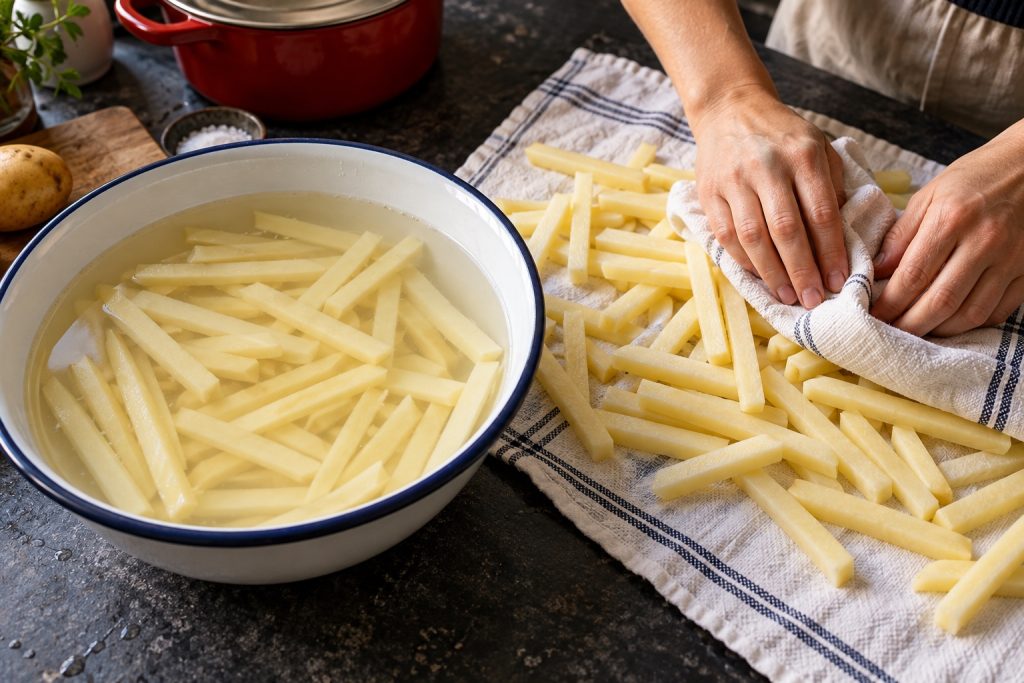
    Cut potatoes into ⅜-inch sticks and soak 30 minutes in cold water. Rinse until clearer, drain, and dry with towels until not a single surface droplet remains.

    Step-by-step method

    1. Cut, soak, and dry the potatoes

    Cut potatoes into ⅜-inch sticks and soak 30 minutes in cold water. Rinse until clearer, drain, and dry with towels until not a single surface droplet remains.

    2. Make smooth brown gravy

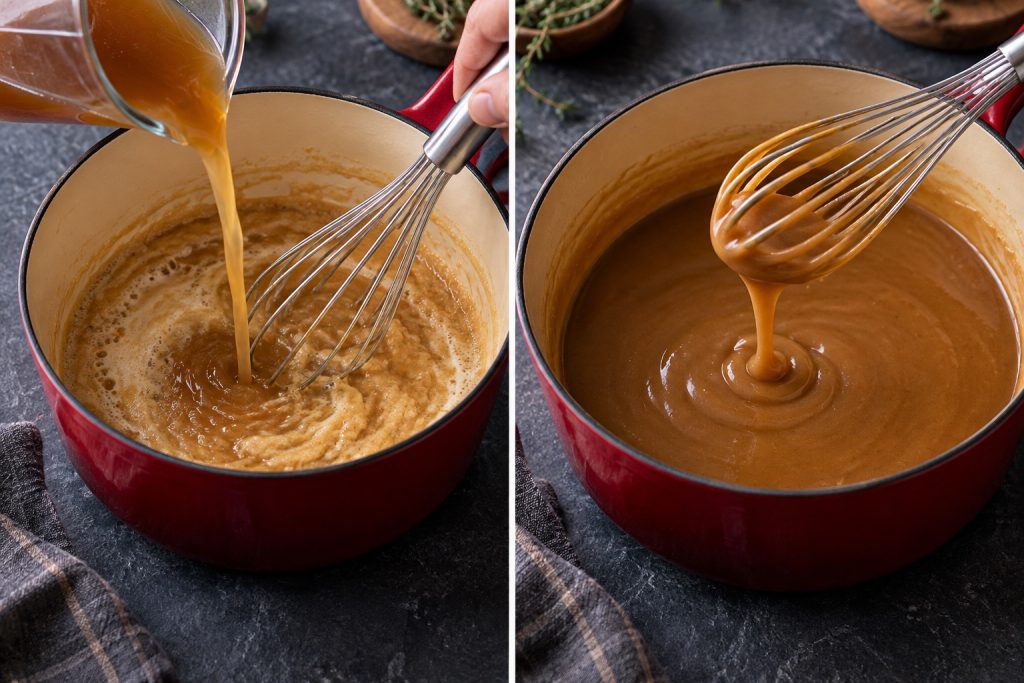
    Melt butter in a saucepan. Whisk in flour 3–4 minutes to pale nutty brown. Add warm broth gradually; simmer 5–7 minutes until it coats a spoon. Add Worcestershire and pepper and keep hot.

    Make smooth brown gravy
    Melt butter in a saucepan. Whisk in flour 3–4 minutes to pale nutty brown. Add warm broth gradually; simmer 5–7 minutes until it coats a spoon. Add Worcestershire and pepper and keep hot.

    3. Fry at two temperatures

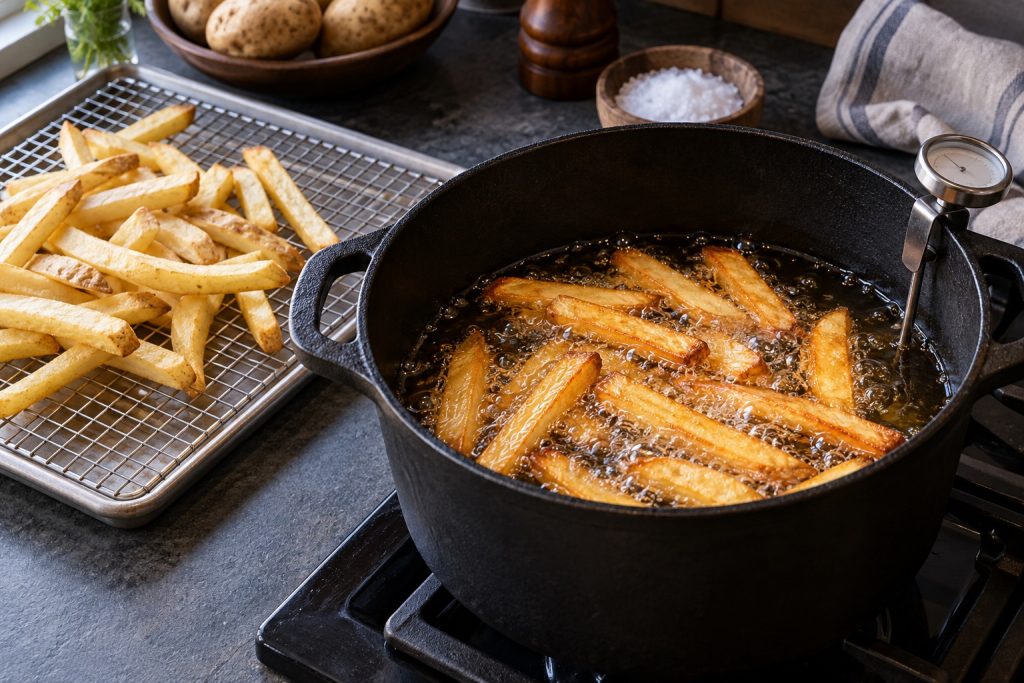
    Heat oil slowly to 320°F. Fry small batches 5–6 minutes until pale and tender; rest on a rack 10 minutes. Raise oil to 375°F and fry again 2–3 minutes until deep golden and crisp.
    Fry at two temperatures
    Heat oil slowly to 320°F. Fry small batches 5–6 minutes until pale and tender; rest on a rack 10 minutes. Raise oil to 375°F and fry again 2–3 minutes until deep golden and crisp.
    4. Assemble with curds and hot gravy

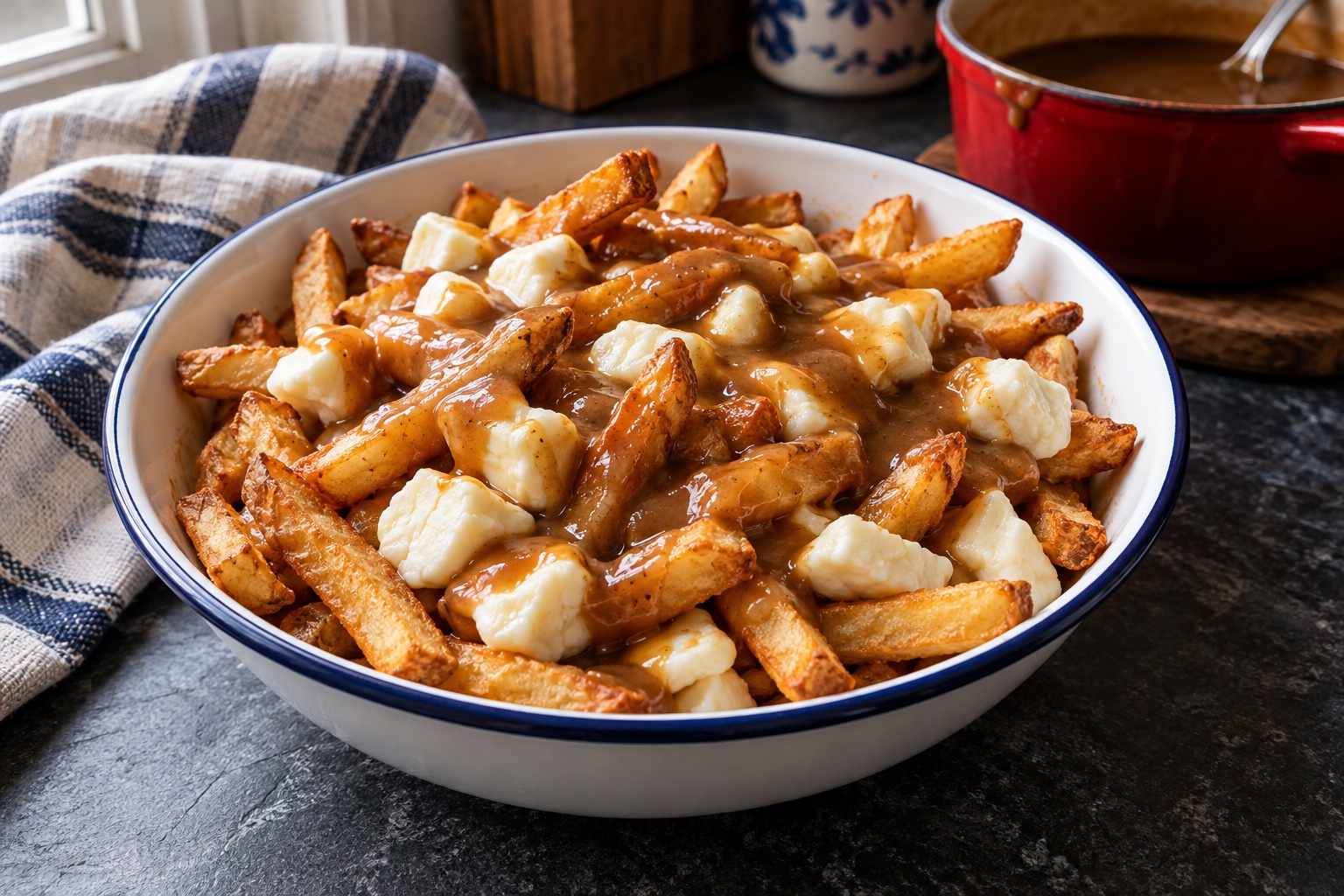
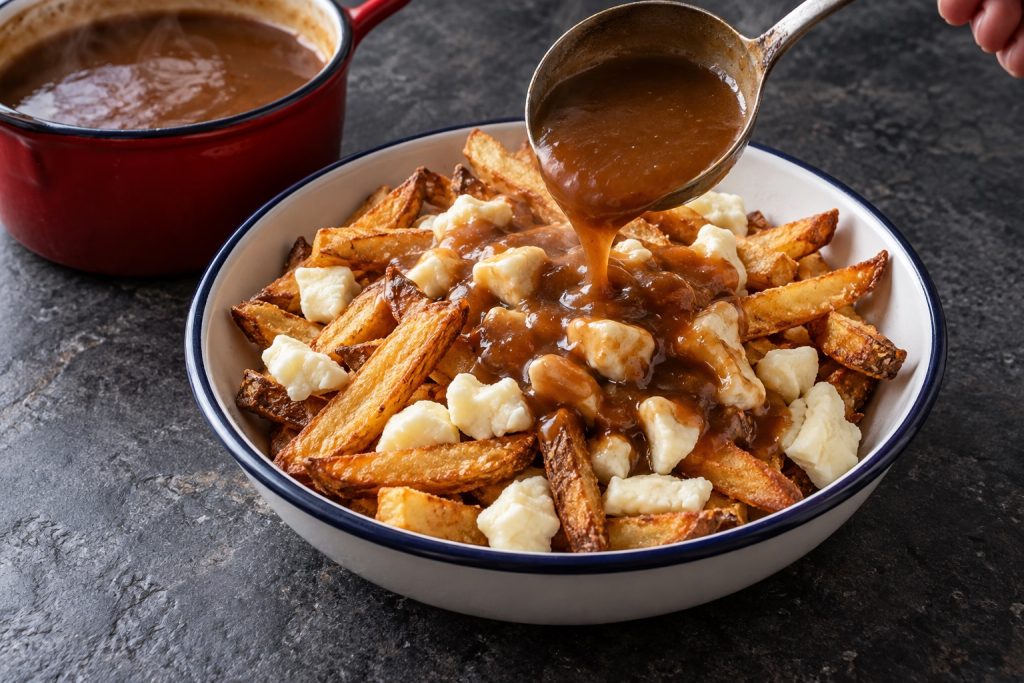
    Salt fries and divide among warm bowls. Scatter room-temperature curds over them. Spoon on hot but not violently boiling gravy only at serving time; serve immediately as the curds soften slightly.

    Assemble with curds and hot gravy
    Salt fries and divide among warm bowls. Scatter room-temperature curds over them. Spoon on hot but not violently boiling gravy only at serving time; serve immediately as the curds soften slightly.

    Texture and doneness cues

    Fries are deep golden and crisp outside, fluffy inside. Gravy coats a spoon yet pours; curds warm and soften without fully melting, retaining a slight squeak.

    Mistakes, substitutions, and measurements

    Large chunks of low-moisture mozzarella can substitute for fresh curds, but are not traditional poutine. Use vegetable broth and vegetarian Worcestershire for a meatless adaptation. Rice flour can replace wheat flour for gravy; verify all labels. Contains gluten and dairy. 1 cup liquid is 240 ml.

    Serving, storage, and allergens

    Poutine should be eaten immediately. Chill leftover fries, gravy, and curds separately within 2 hours and refrigerate 2–3 days. Bring gravy to a full boil and 165°F; re-crisp fries in a 400°F oven or air fryer. Do not freeze assembled poutine.

    Frequently asked questions

    Why did the fries go soggy immediately?

    The second fry was short or gravy went on early; crisp to deep gold and assemble at the table.

    Why did the curds stay cold?

    They were fridge-cold or gravy was lukewarm; temper curds 20 minutes and use hot gravy.

    Why is the gravy lumpy?

    Broth was added too fast; whisk warm broth gradually into the roux.

  • Japanese Oyakodon: Juicy Chicken and Egg Rice Bowl

    Japanese Oyakodon: Juicy Chicken and Egg Rice Bowl

    Oyakodon is a Japanese donburi of chicken and egg simmered in a sweet-savory dashi sauce over rice; its name means “parent-and-child bowl.”

    Japanese versions may leave the egg softer. This home adaptation cooks chicken to 165°F and the egg mixture to 160°F for a safer fully set result.

    Why this method works

    • Thigh meat stays juicier than breast during the short simmer.
    • Adding egg in two stages creates a binding lower layer and a moist upper layer.
    • A wide skillet keeps chicken in one layer for even cooking.

    Before you start

    Use a lidded 10-inch skillet, board, separate raw-chicken knife, and thermometer.

    Unsalted chicken stock can replace dashi, but it is an adaptation.

    Wash the board and knife that touched raw chicken with hot soapy water.

    Prepare ingredients safely
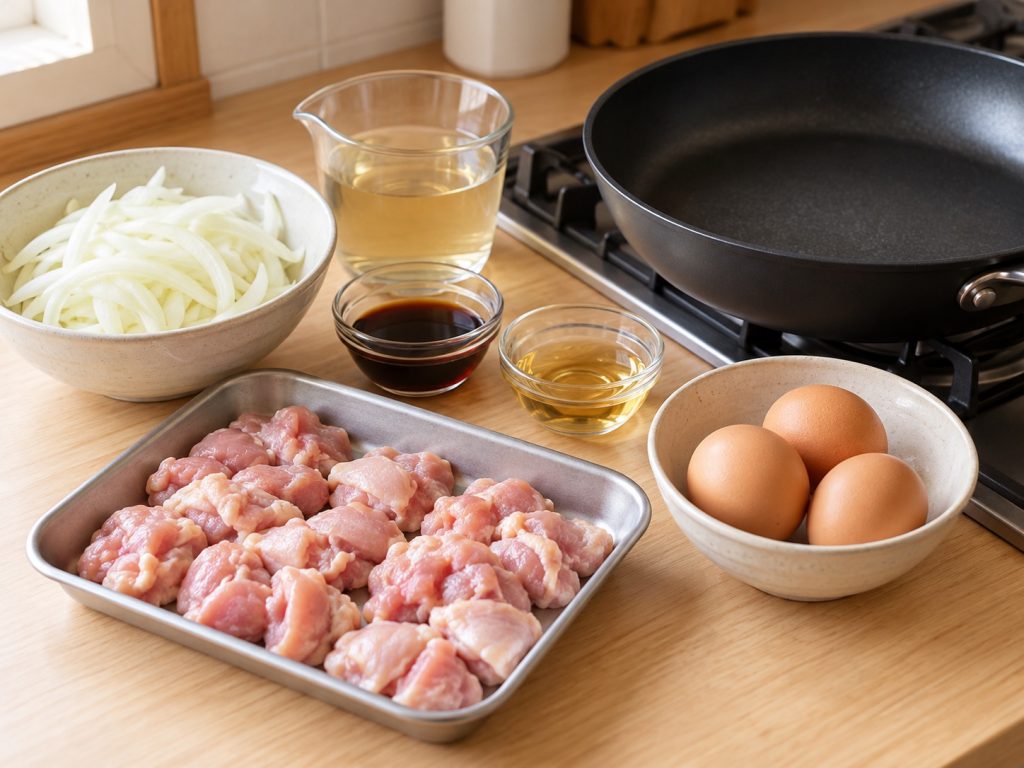
    Divide hot rice among four bowls. Cut chicken into ¾-inch pieces. Mix dashi, soy, mirin, and sugar; lightly beat eggs so a few streaks remain.

    Step-by-step method

    1. Prepare ingredients safely

    Divide hot rice among four bowls. Cut chicken into ¾-inch pieces. Mix dashi, soy, mirin, and sugar; lightly beat eggs so a few streaks remain.

    2. Simmer chicken and onion

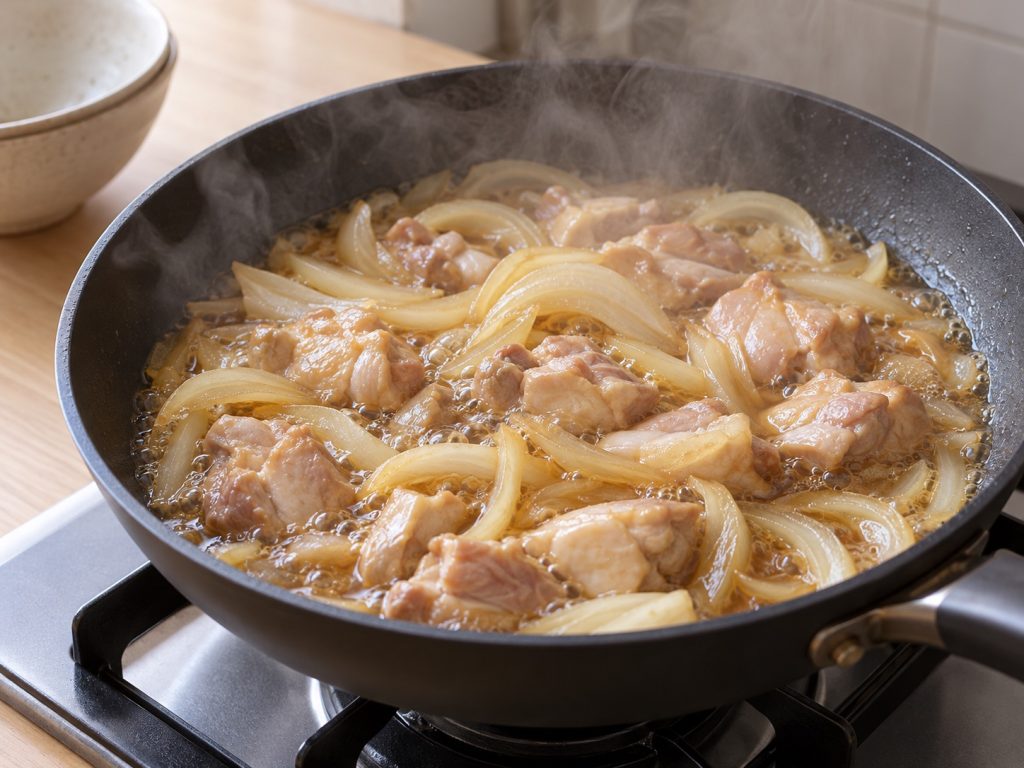
    Simmer sauce and onion gently for 3 minutes. Add chicken in one layer, cover, and cook 6–8 minutes until the thickest piece reaches 165°F.
    Simmer chicken and onion
    Simmer sauce and onion gently for 3 minutes. Add chicken in one layer, cover, and cook 6–8 minutes until the thickest piece reaches 165°F.
    3. Add egg in two stages

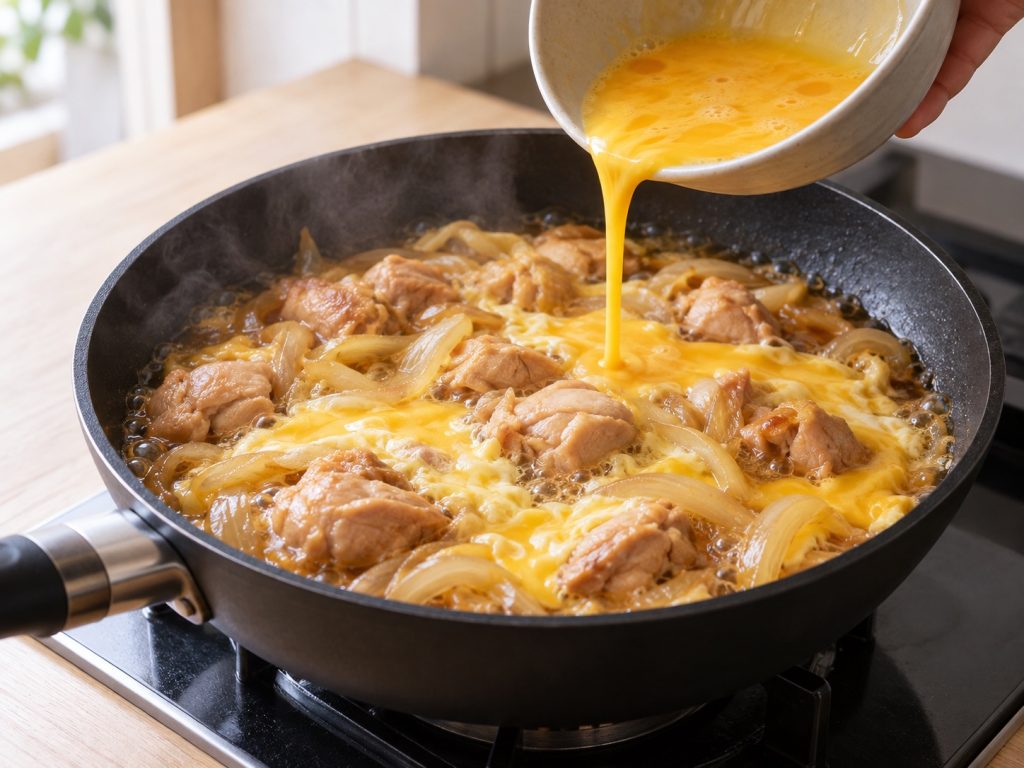
    With the liquid bubbling steadily, stream in two-thirds of the egg. Cover 60–90 seconds; add the rest and cook 1–2 minutes until the center reaches 160°F and no liquid egg remains.

    Add egg in two stages
    With the liquid bubbling steadily, stream in two-thirds of the egg. Cover 60–90 seconds; add the rest and cook 1–2 minutes until the center reaches 160°F and no liquid egg remains.

    4. Serve immediately over rice

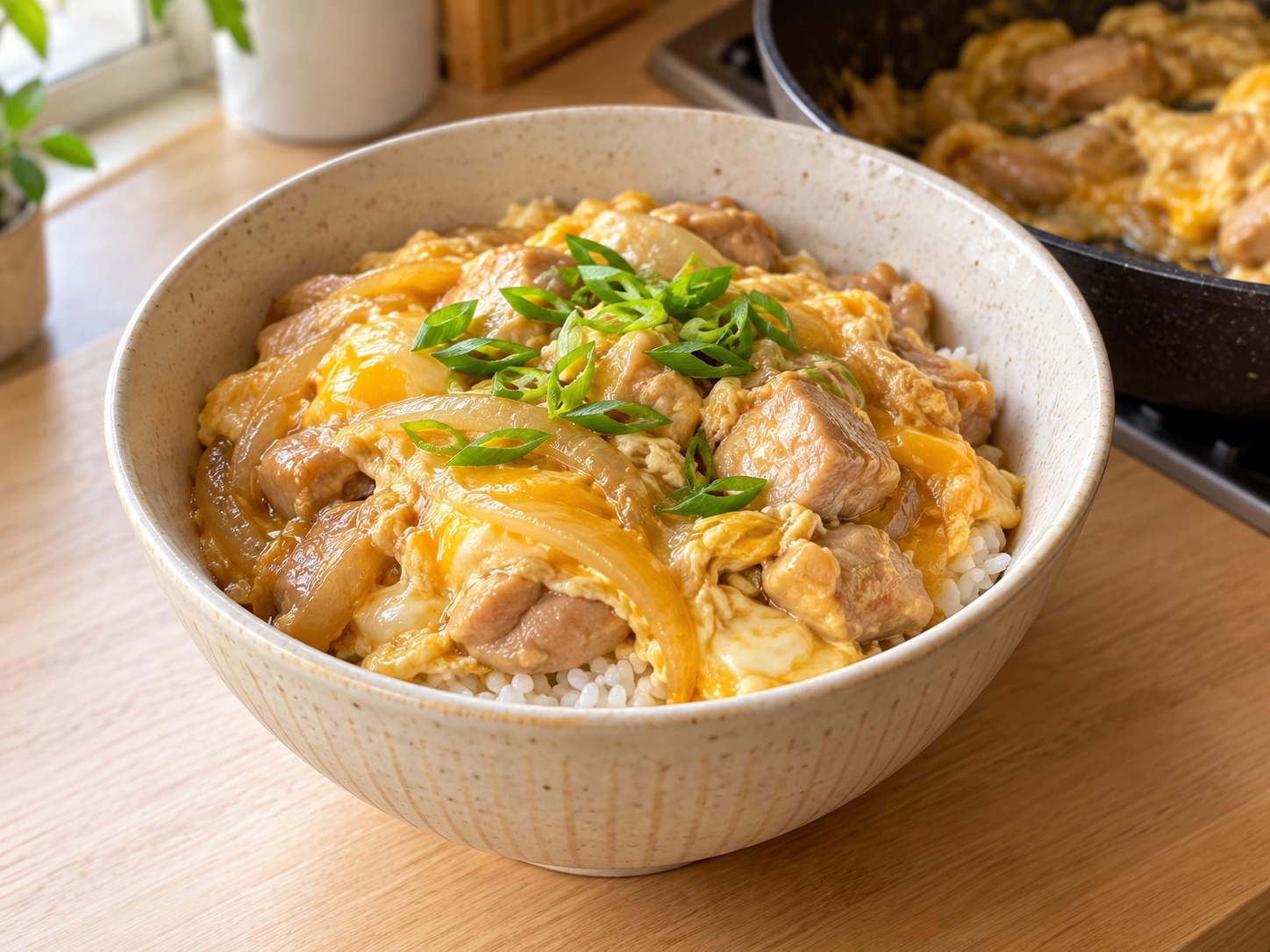
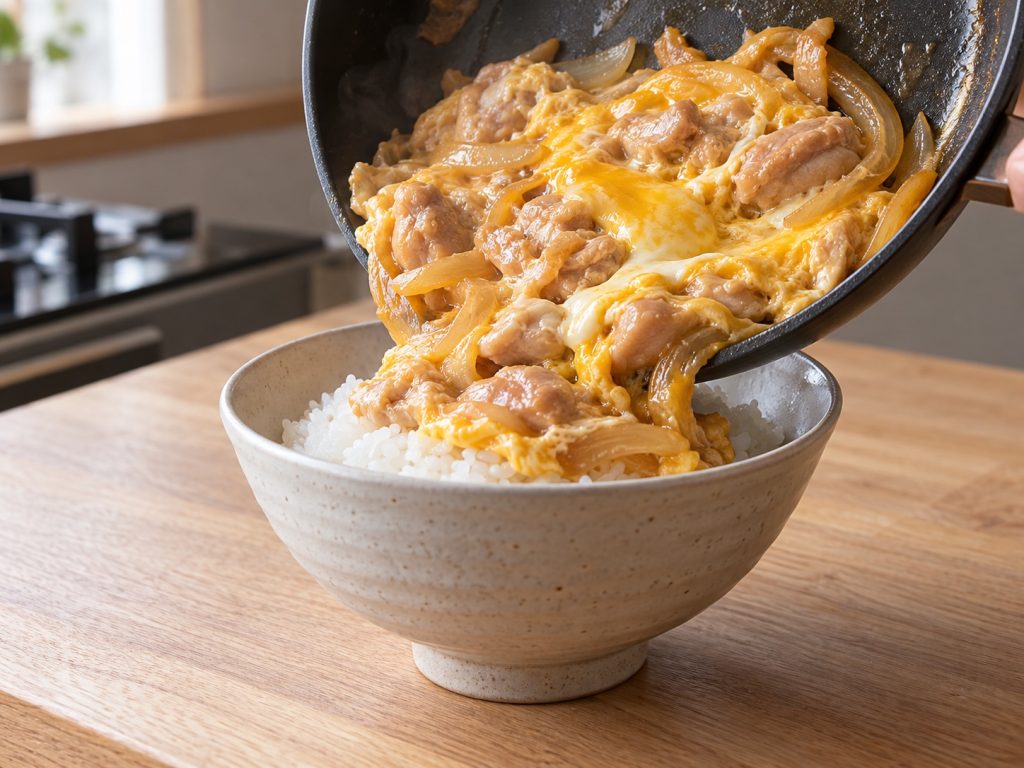
    Remove from heat. Divide chicken, egg, and broth over the hot rice, add scallions, and serve immediately.

    Serve immediately over rice
    Remove from heat. Divide chicken, egg, and broth over the hot rice, add scallions, and serve immediately.

    Texture and doneness cues

    Chicken is opaque at 165°F; egg is moist but not runny at 160°F; onion is translucent and sauce remains fluid enough to soak the rice.

    Mistakes, substitutions, and measurements

    Chicken breast works but check temperature earlier. Unsalted stock for dashi is an adaptation. Use certified tamari for gluten-free service. 1 cup=240 ml; 1 tbsp=15 ml.

    Serving, storage, and allergens

    Serve alone or with pickles. Cool in a shallow container within 2 hours, refrigerate 3–4 days, and reheat to 165°F. Freezing is not recommended because egg texture suffers. Contains egg and soy; regular soy sauce may contain gluten.

    Frequently asked questions

    Why did the egg turn firm?

    Carryover heat continued cooking it; remove from heat as soon as it reaches 160°F.

    Why is there too much broth?

    The pan may be narrow or heat too low; reduce uncovered 1–2 minutes before adding egg.

    Can I make it without dashi?

    Yes, use unsalted chicken stock and recognize the flavor is an adaptation.

  • Palak Paneer: Creamy Spinach Curry That Stays Green

    Palak Paneer: Creamy Spinach Curry That Stays Green

    Palak paneer is a North Indian main combining spinach purée with fresh non-melting paneer, commonly served with roti, naan, or rice.

    This version uses no artificial color: brief blanching, ice water, and a short simmer preserve the natural green.

    Why this method works

    • Brief blanching removes raw flavor without fading the spinach too far.
    • Cooking the onion-tomato base separately avoids a long simmer of the purée.
    • Adding paneer only at the end keeps it tender.

    Before you start

    Use a wide pot, ice-water bowl, blender, and lidded skillet or kadai.

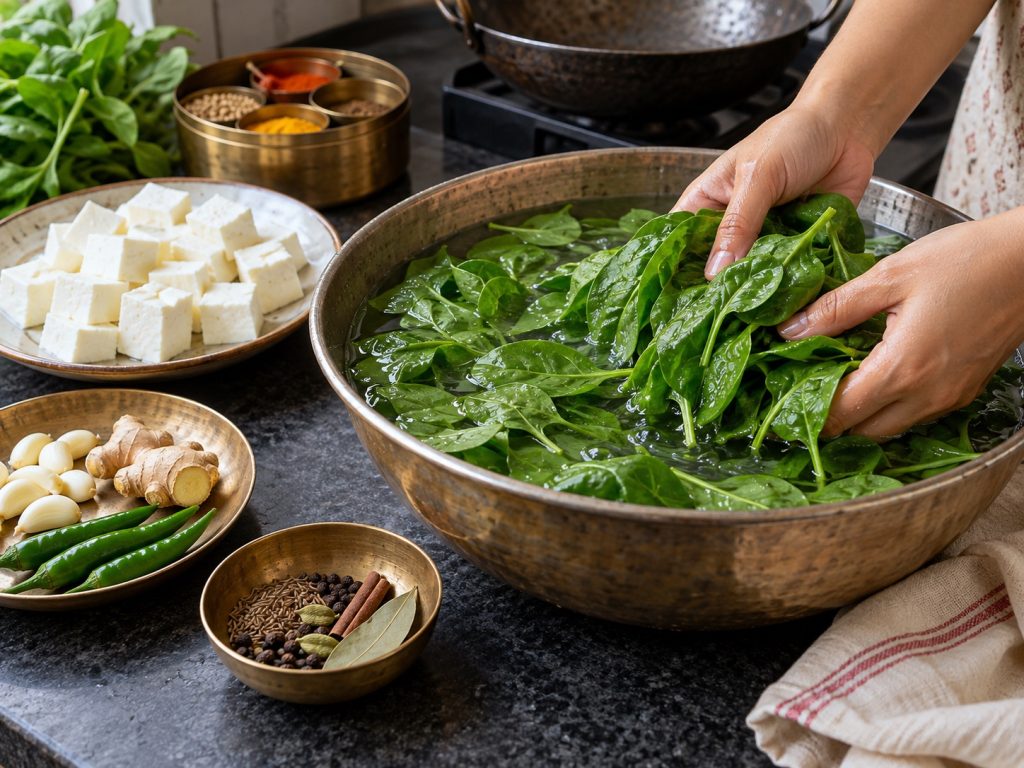
    Wash spinach in several changes of water until no grit remains.

    Do not seal hot purée in a full blender; cool briefly and vent steam.

    Wash the spinach thoroughly
    Wash spinach in three changes of water, letting grit settle and lifting leaves out. Cut paneer into ¾-inch cubes. Finely chop ginger, garlic, and chile.

    Step-by-step method

    1. Wash the spinach thoroughly

    Wash spinach in three changes of water, letting grit settle and lifting leaves out. Cut paneer into ¾-inch cubes. Finely chop ginger, garlic, and chile.

    2. Blanch briefly and chill

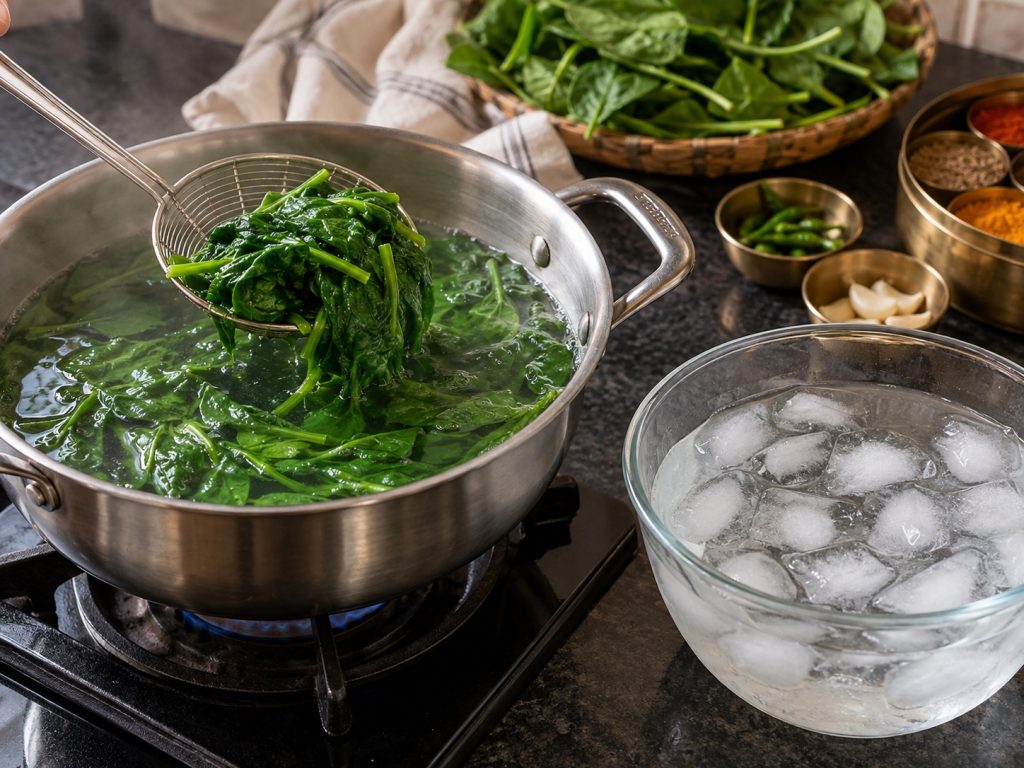
    Boil a large pot of water. Blanch spinach 60–90 seconds, only until collapsed and bright green; move immediately to ice water. Drain without squeezing and blend smooth with ¼ cup water.

    Blanch briefly and chill
    Boil a large pot of water. Blanch spinach 60–90 seconds, only until collapsed and bright green; move immediately to ice water. Drain without squeezing and blend smooth with ¼ cup water.

    3. Cook the spiced base

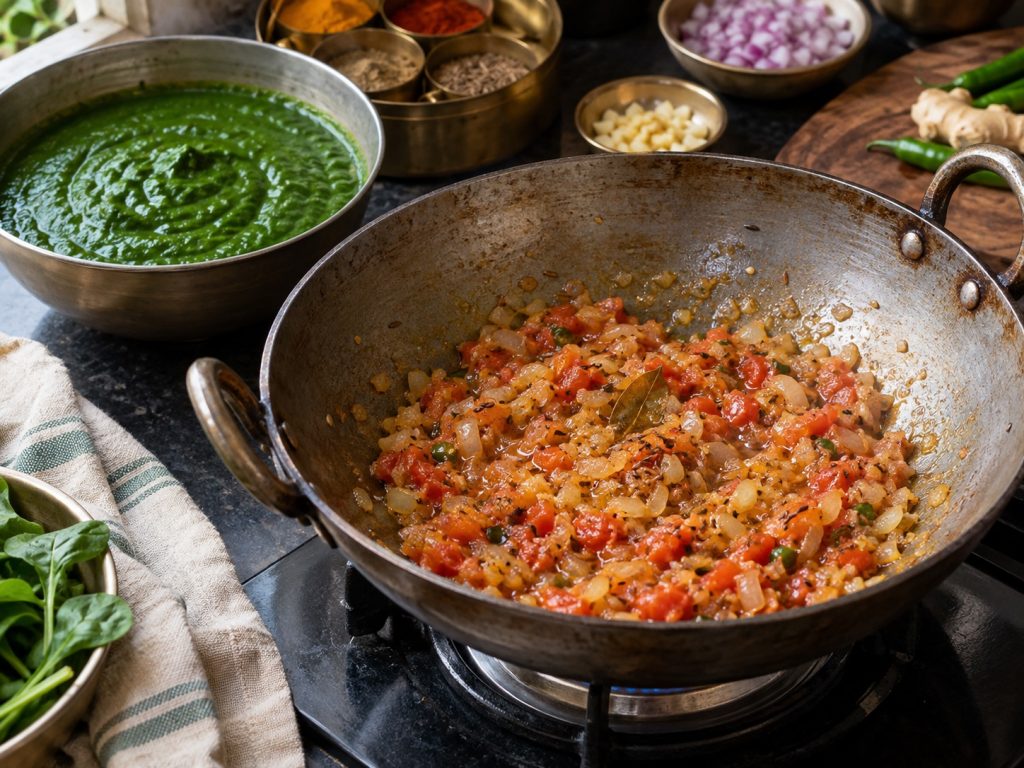
    Heat oil over medium. Stir cumin 20 seconds; soften onion 7–9 minutes. Cook ginger, garlic, and chile 1 minute; add tomato, coriander, and turmeric and cook 6–8 minutes until thick.

    Cook the spiced base
    Heat oil over medium. Stir cumin 20 seconds; soften onion 7–9 minutes. Cook ginger, garlic, and chile 1 minute; add tomato, coriander, and turmeric and cook 6–8 minutes until thick.

    4. Combine purée, paneer, and cream

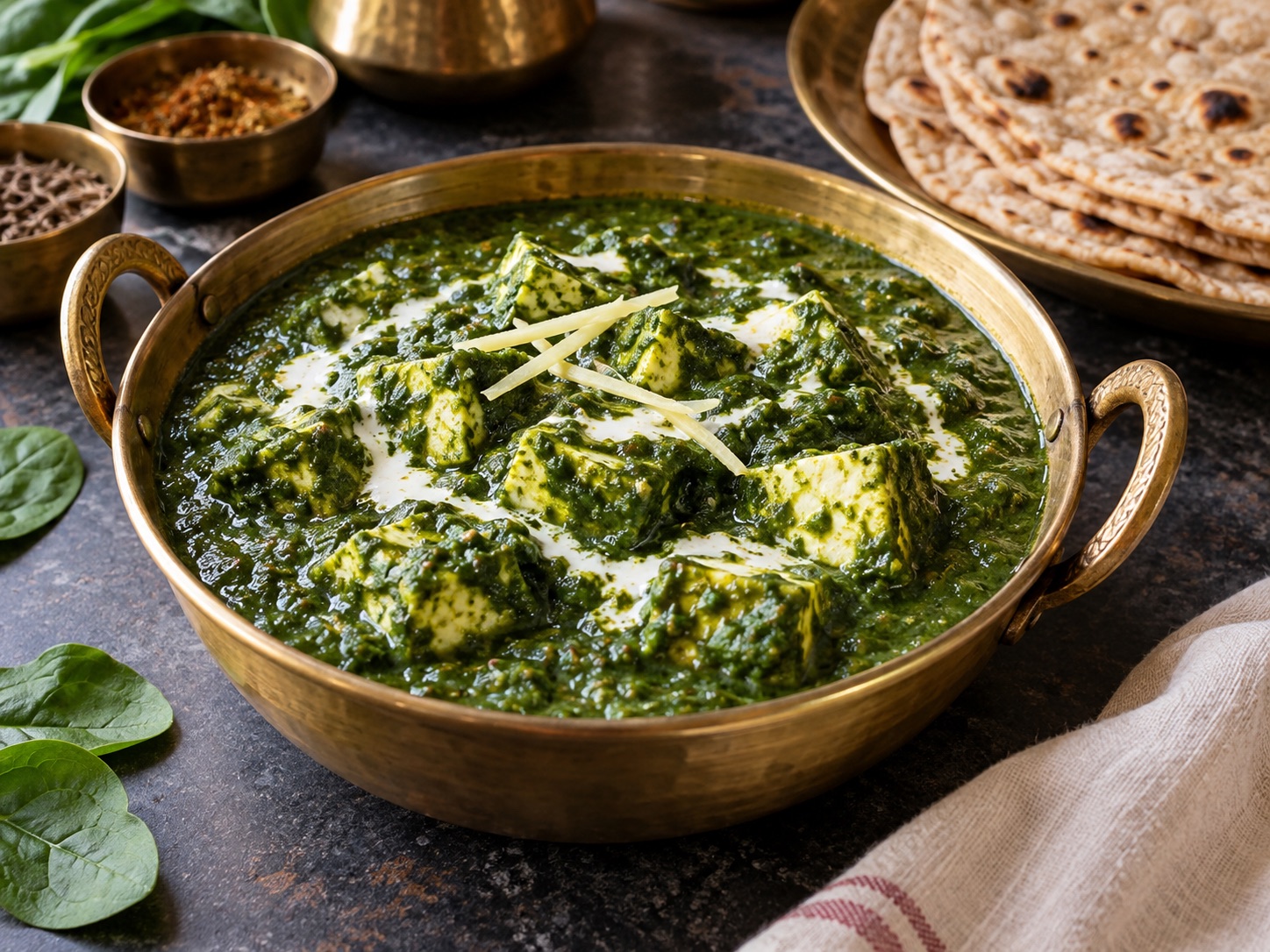
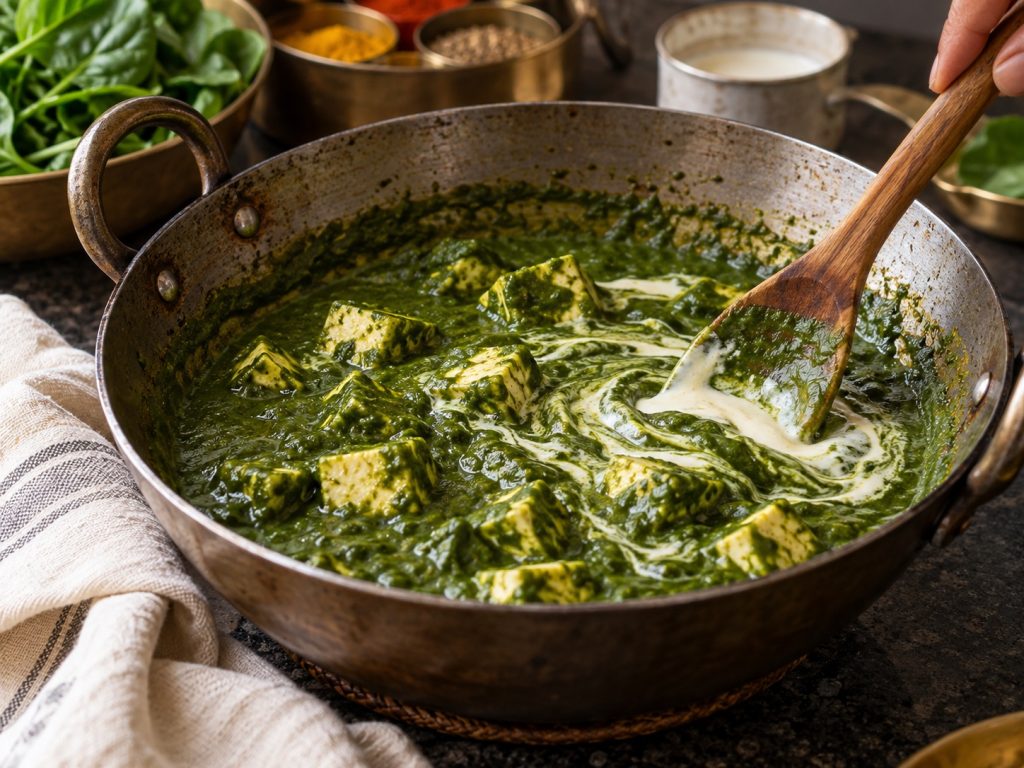
    Add spinach purée and salt; simmer gently 5 minutes, loosening with remaining water as needed. Add paneer for 3–4 minutes. Turn off heat and stir in garam masala and cream; do not hard-boil.

    Combine purée, paneer, and cream
    Add spinach purée and salt; simmer gently 5 minutes, loosening with remaining water as needed. Add paneer for 3–4 minutes. Turn off heat and stir in garam masala and cream; do not hard-boil.

    Texture and doneness cues

    Sauce should coat a spoon, stay naturally deep green, and show no oil puddles; paneer is hot but not spongy or rubbery.

    Mistakes, substitutions, and measurements

    Well-drained firm tofu can replace paneer as an adaptation. For frozen spinach, thaw, squeeze, and skip blanching. Full-fat yogurt can replace cream if stirred in off heat. Contains dairy. 1 cup=240 ml.

    Serving, storage, and allergens

    Serve with roti, naan, or basmati rice. Cool in a shallow container within 2 hours, refrigerate 3–4 days, and reheat gently to 165°F. Freeze up to 1 month, expecting texture changes.

    Frequently asked questions

    Why did it turn dark?

    Spinach was over-blanched or purée simmered too long; blanch 60–90 seconds and simmer only 5 minutes.

    Why is paneer rubbery?

    It hard-boiled too long; add it for only the final 3–4 minutes.

    Why does the spinach taste bitter?

    Mature stems or burnt spices may be responsible; remove thick stems and bloom spices briefly over medium heat.

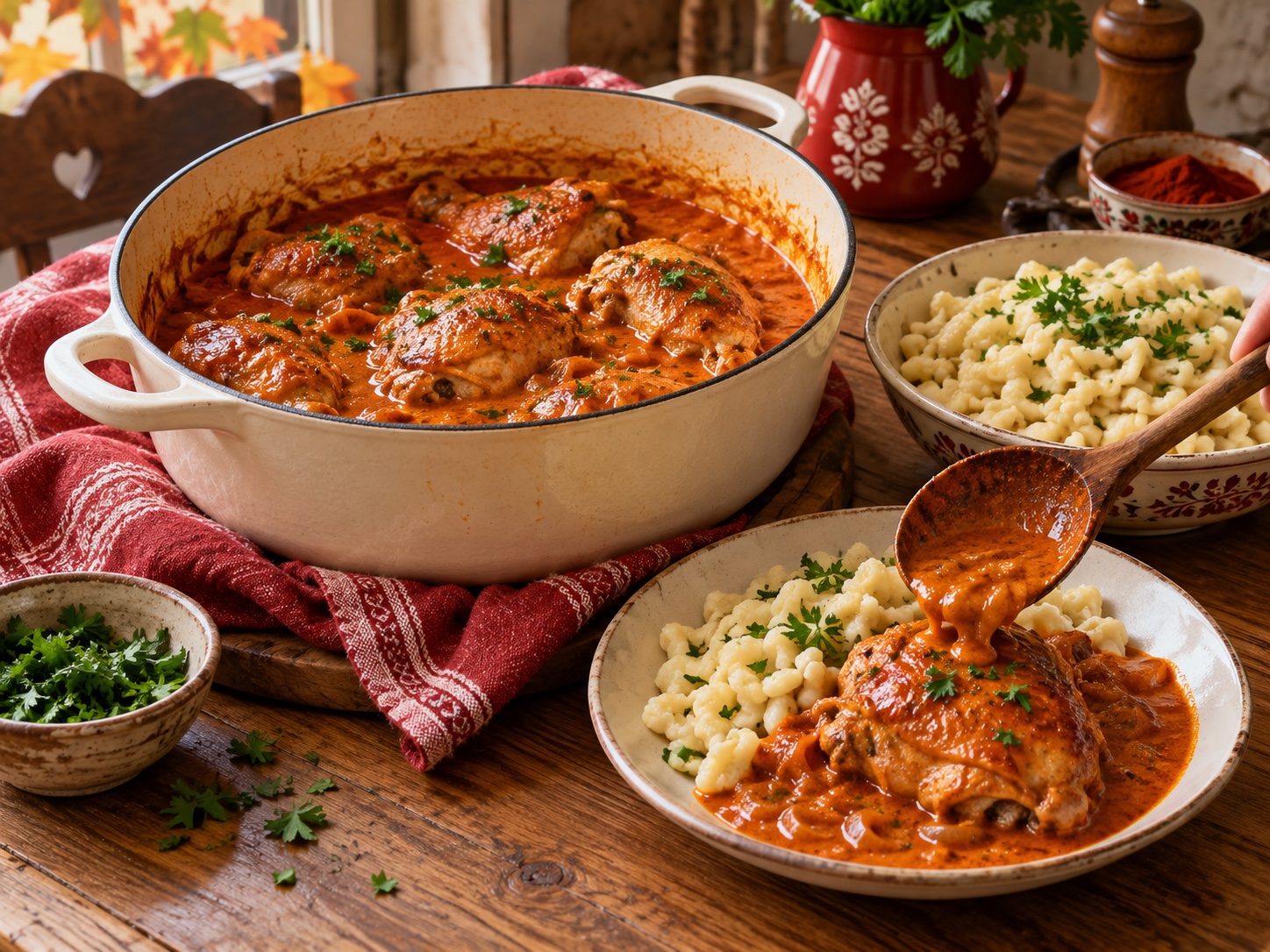
  • Hungarian Chicken Paprikash: Silky Sauce, No Bitter Paprika

    Hungarian Chicken Paprikash: Silky Sauce, No Bitter Paprika

    Paprikás csirke is a signature Hungarian home dish; thighs and drumsticks stay juicier than breast.

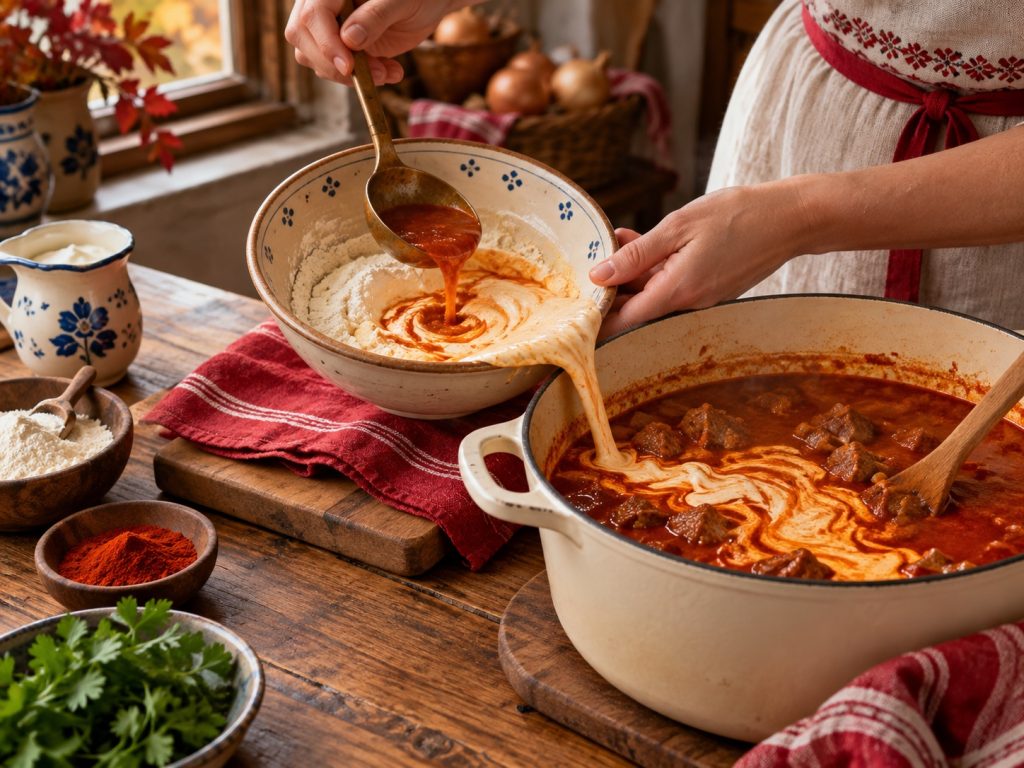
    Taking the pot off heat for paprika and tempering sour cream prevent bitterness and curdling.

    Why this method works

    • Batch browning prevents steaming.
    • Long-cooked onion thickens sauce naturally.
    • Tempering sour cream protects the emulsion.

    Before you start

    Use a heavy pot, tongs, and thermometer.

    Take the pot off heat 30 seconds before adding paprika.

    Chicken must reach 165°F in the thickest part.

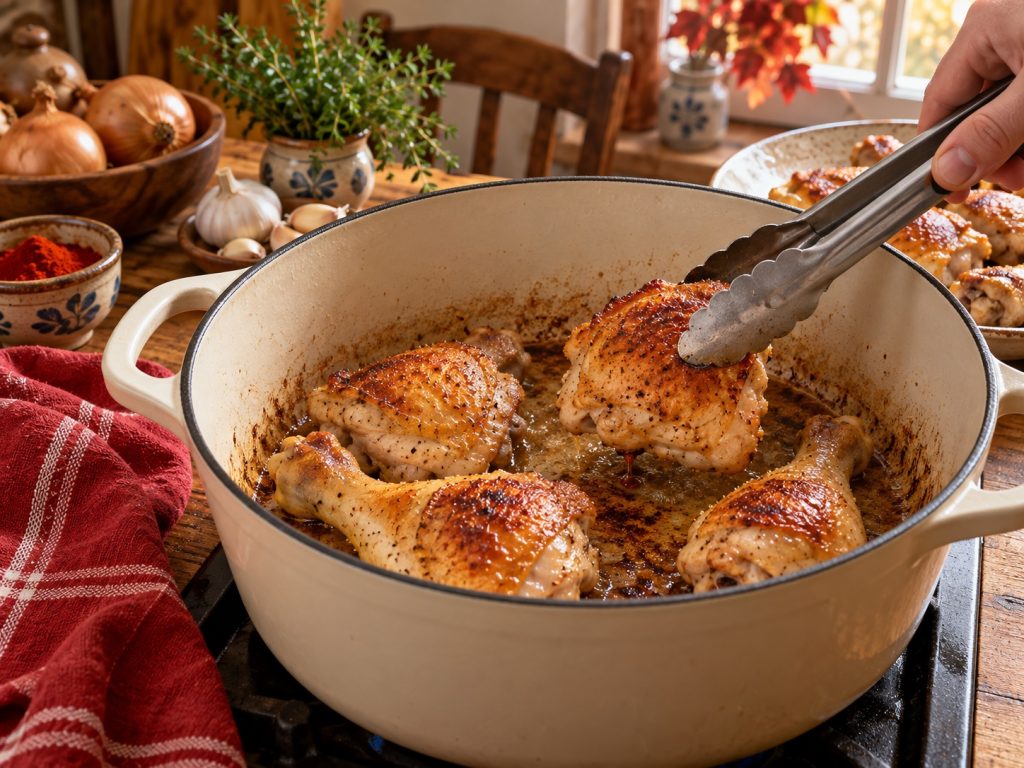
    Brown chicken in batches
    Dry and salt chicken. Heat oil; brown without crowding, 4–5 minutes per side, then remove.

    Step-by-step method

    1. Brown chicken in batches

    Dry and salt chicken. Heat oil; brown without crowding, 4–5 minutes per side, then remove.

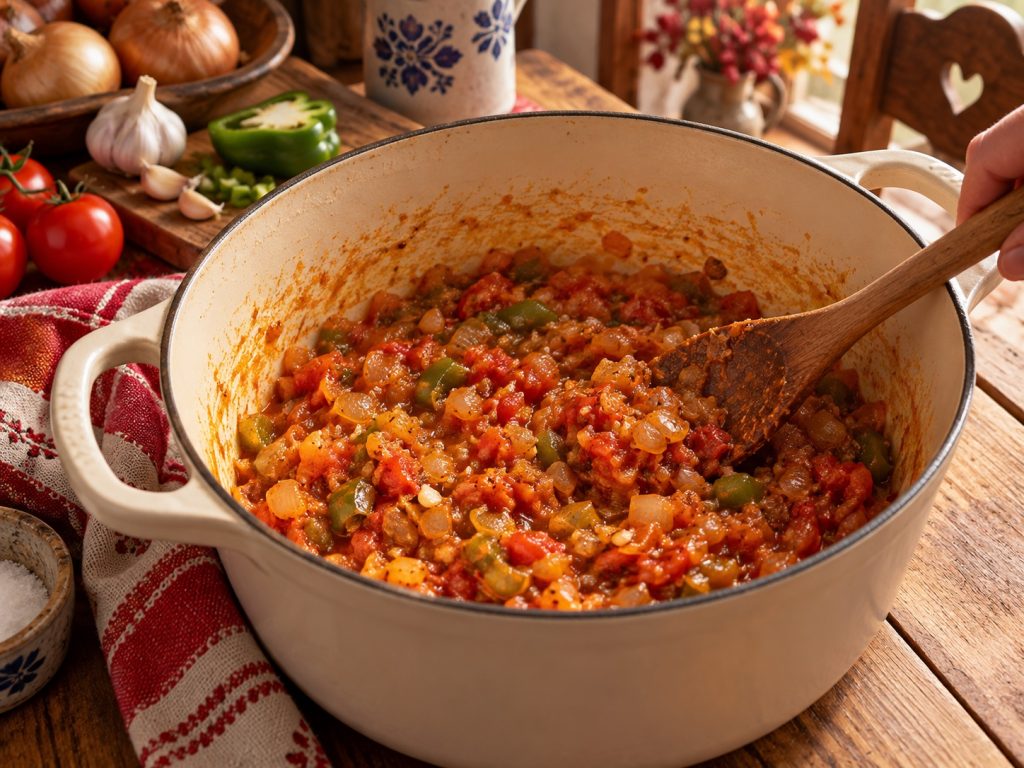
    2. Build the onion base

    Cook onions in the same pot over medium-low 12–15 minutes until gold and soft. Add garlic, tomato, and pepper; cook 5 minutes until moisture reduces.

    Build the onion base
    Cook onions in the same pot over medium-low 12–15 minutes until gold and soft. Add garlic, tomato, and pepper; cook 5 minutes until moisture reduces.

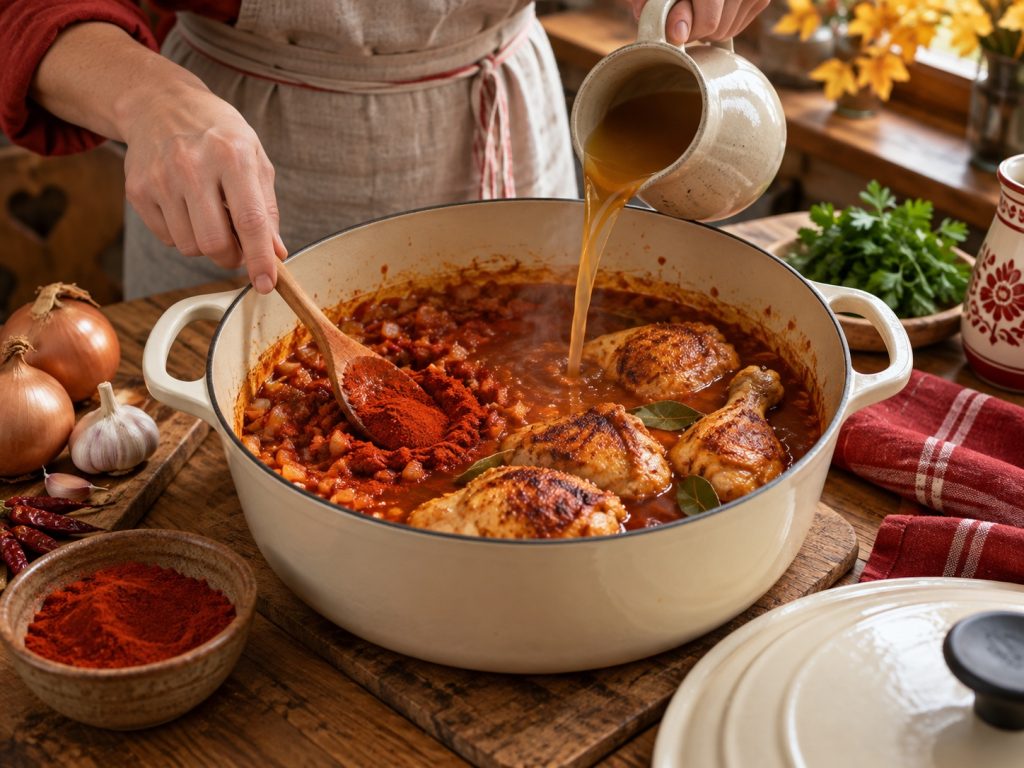
    3. Add paprika off heat and braise

    Take pot off heat 30 seconds, stir in paprika for 20 seconds. Add stock and chicken; partially cover and simmer 30–35 minutes until chicken reaches 165°F.

    Add paprika off heat and braise
    Take pot off heat 30 seconds, stir in paprika for 20 seconds. Add stock and chicken; partially cover and simmer 30–35 minutes until chicken reaches 165°F.

    4. Temper sour cream and finish

    Mix sour cream and flour. Gradually whisk in ⅔ cup hot sauce to temper. Remove chicken, stir mixture into sauce, and thicken 3–4 minutes without boiling; return chicken.

    Temper sour cream and finish
    Mix sour cream and flour. Gradually whisk in ⅔ cup hot sauce to temper. Remove chicken, stir mixture into sauce, and thicken 3–4 minutes without boiling; return chicken.

    Texture and doneness cues

    Chicken is juicy at 165°F; sauce lightly coats a spoon without splitting, and paprika smells sweet, not bitter.

    Mistakes, substitutions, and measurements

    Full-fat yogurt can replace sour cream but do not boil. Use cornstarch for gluten-free thickening. Contains dairy; check stock.

    Serving, storage, and allergens

    Serve with nokedli or broad noodles. Chill within 2 hours for 3–4 days; reheat gently to 165°F without boiling. Freeze 2 months; dairy may split slightly.

    Frequently asked questions

    Why is paprika bitter?

    It fried in very hot fat; remove pot from heat before stirring it in.

    Why did sauce split?

    Sour cream was cold or boiled; temper it first.

    Can I use breast?

    Yes, but cook for less time and stop at 165°F.

  • Sri Lankan Red Lentil Dhal: Creamy Coconut Parippu

    Sri Lankan Red Lentil Dhal: Creamy Coconut Parippu

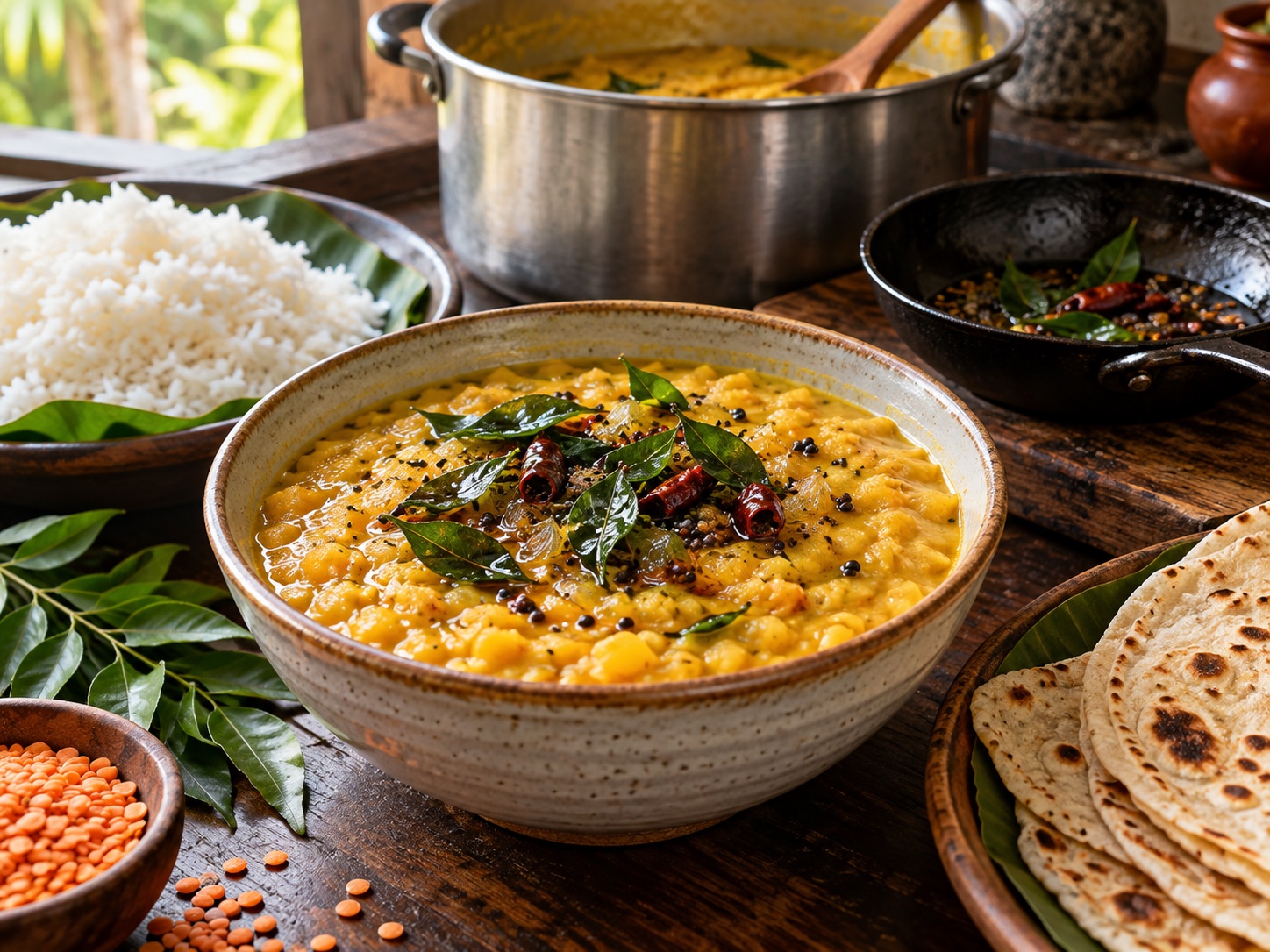
    Dhal is a Sri Lankan staple served with rice, string hoppers, and many mains, commonly using masoor lentils and coconut milk.

    Softening lentils first and adding coconut milk later reduces scorching and splitting.

    Why this method works

    • Rinsing removes excess starch.
    • A gentle simmer gives creamy but textured lentils.
    • Separate tempering preserves spice aroma.

    Before you start

    Use a medium pot, small skillet, and fine sieve.

    Rinse lentils 3–4 times until water is mostly clear.

    Cool a large batch in shallow containers within 2 hours.

    Gently cook the lentils
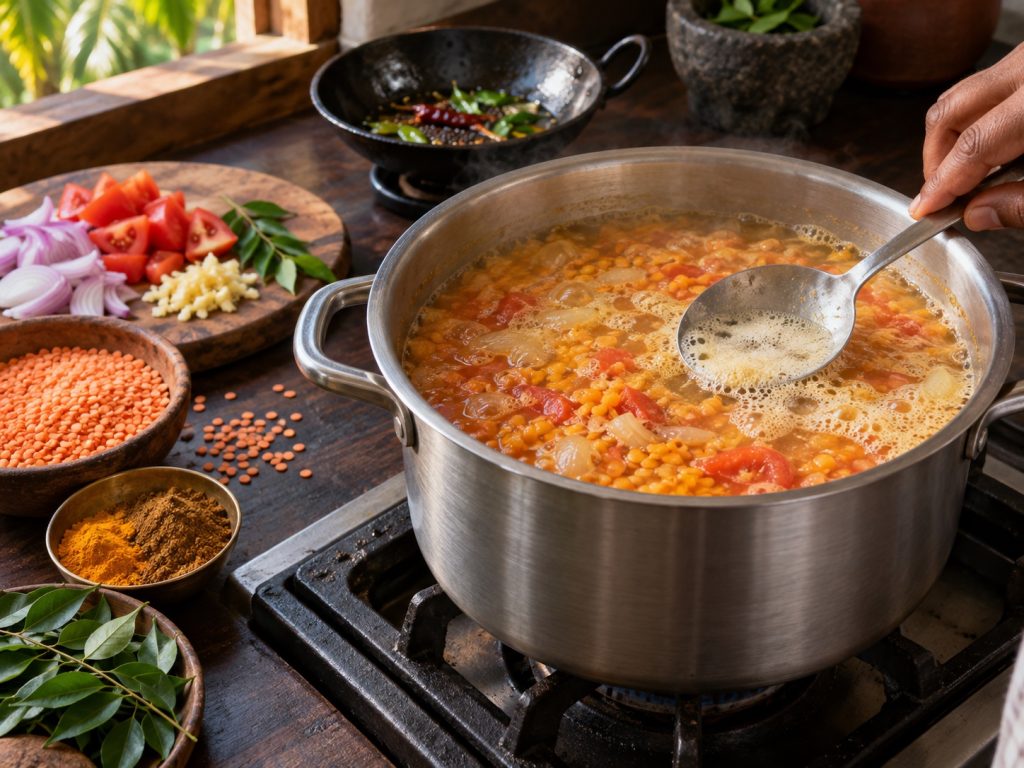
    Simmer lentils, water, half the onion, garlic, turmeric, curry powder, and tomato. Skim foam; cook gently 15–18 minutes until soft and beginning to break down.

    Step-by-step method

    1. Gently cook the lentils

    Simmer lentils, water, half the onion, garlic, turmeric, curry powder, and tomato. Skim foam; cook gently 15–18 minutes until soft and beginning to break down.

    2. Finish with coconut milk

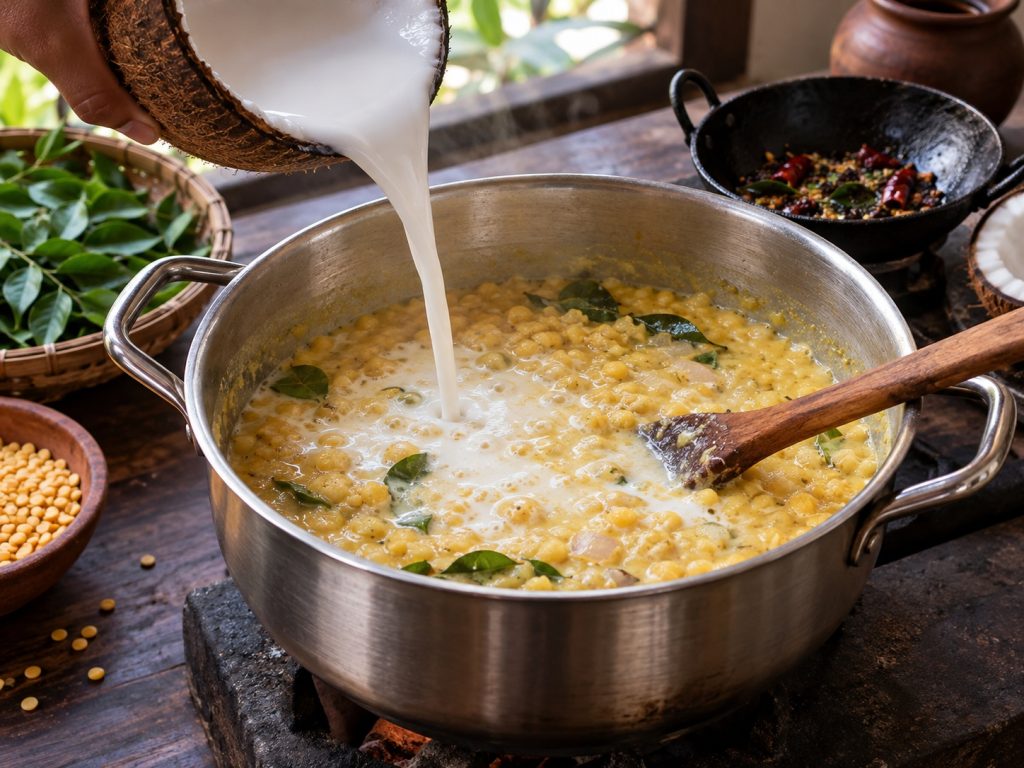
    Add coconut milk and salt. Simmer very gently 7–10 minutes; loosen with ¼ cup hot water if needed.

    Finish with coconut milk
    Add coconut milk and salt. Simmer very gently 7–10 minutes; loosen with ¼ cup hot water if needed.

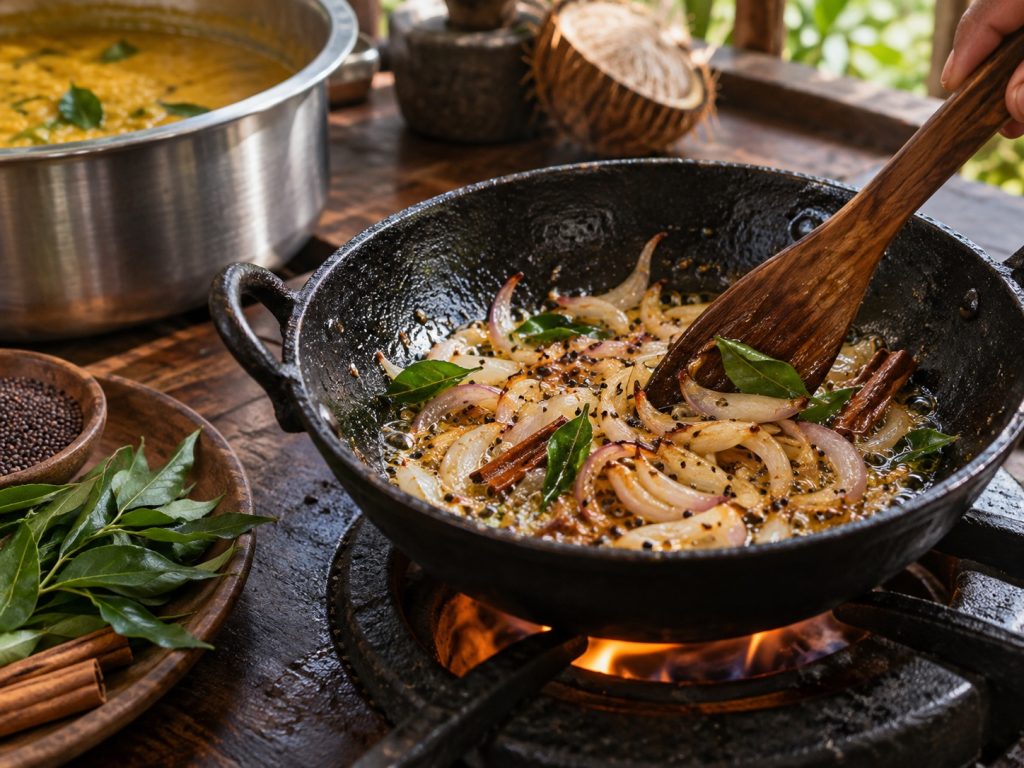
    3. Make the spice tempering

    Heat oil in a small skillet. When mustard seeds pop, add remaining onion, curry leaves, and cinnamon; cook 5–7 minutes until golden.

    Make the spice tempering
    Heat oil in a small skillet. When mustard seeds pop, add remaining onion, curry leaves, and cinnamon; cook 5–7 minutes until golden.

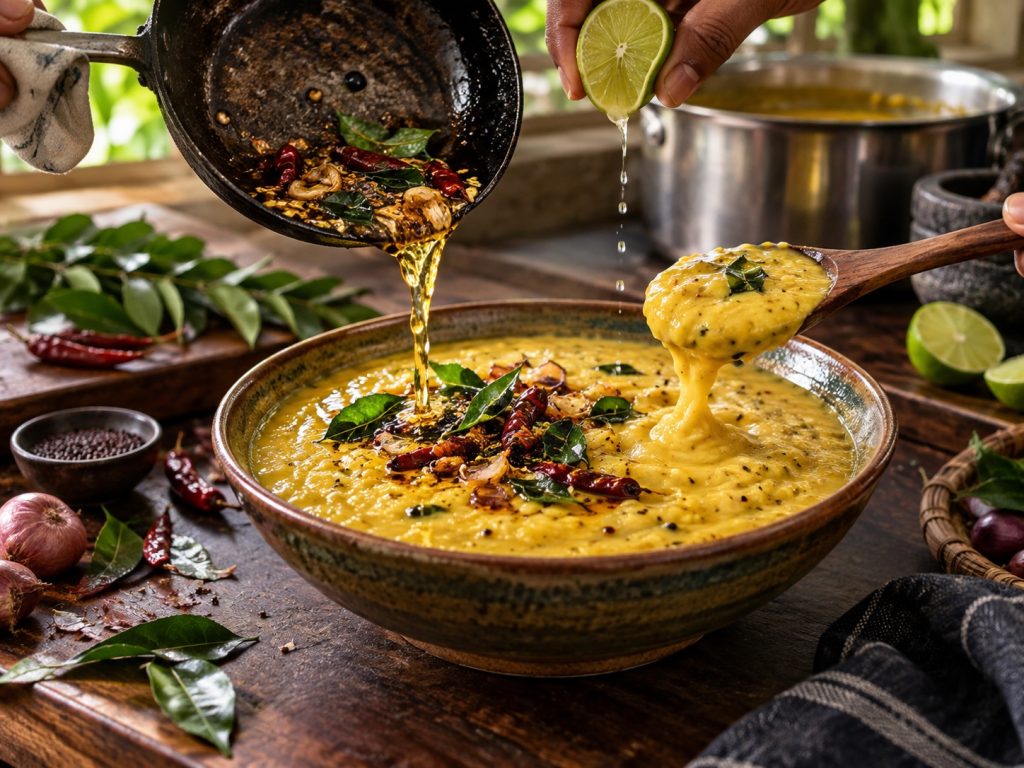
    4. Combine and balance

    Pour tempering into lentils and stir. Add lime; adjust with hot water until it flows heavily from a spoon but spreads on the plate.

    Combine and balance
    Pour tempering into lentils and stir. Add lime; adjust with hot water until it flows heavily from a spoon but spreads on the plate.

    Texture and doneness cues

    Lentils are fully soft, sauce creamy and ribboning from a spoon, with no coconut oil puddles.

    Mistakes, substitutions, and measurements

    If curry leaves are unavailable use lime zest, though flavor differs. Contains coconut; mustard may be an allergen. Naturally vegan and gluten-free.

    Serving, storage, and allergens

    Serve with rice, roti, or string hoppers. Cool within 2 hours; refrigerate 4 days or freeze 3 months. Reheat to a boil/165°F.

    Frequently asked questions

    Why did it get too thick?

    Lentils absorb liquid as they sit; add hot water gradually.

    Why did coconut split?

    It boiled too hard; simmer gently after adding.

    Are curry leaves essential?

    They provide the signature aroma; lime zest is only an adaptation.

  • Indonesian Beef Rendang: Dark, Tender, Never Burnt

    Indonesian Beef Rendang: Dark, Tender, Never Burnt

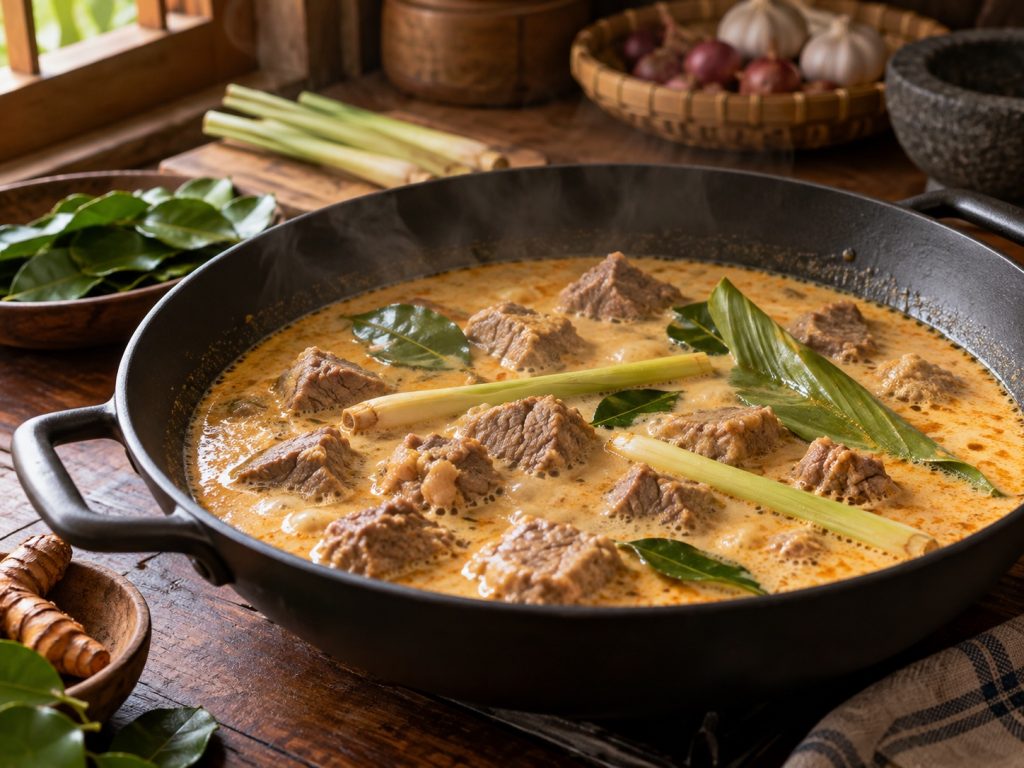
    Rendang comes from the Minangkabau cooking tradition of West Sumatra. This home version moves deliberately from saucy kalio to a dark, dry rendang.

    Frequent stirring and lower heat in the final hour prevent scorching as coconut solids caramelize.

    Why this method works

    • A wide pot speeds evaporation.
    • Large beef cubes resist drying during the long cook.
    • Low heat after oil separation deepens color without burning.

    Before you start

    Use a wide heavy pot, blender, and thermometer.

    Cut beef into 1½–2-inch chunks and bruise lemongrass.

    Beef is safe at 145°F with rest, but long cooking is needed for tenderness.

    Blend the spice paste
    Blend shallots, garlic, ginger, galangal, coriander, and turmeric with ¼ cup water. Cook in a wide pot 5 minutes until fragrant.

    Step-by-step method

    1. Blend the spice paste

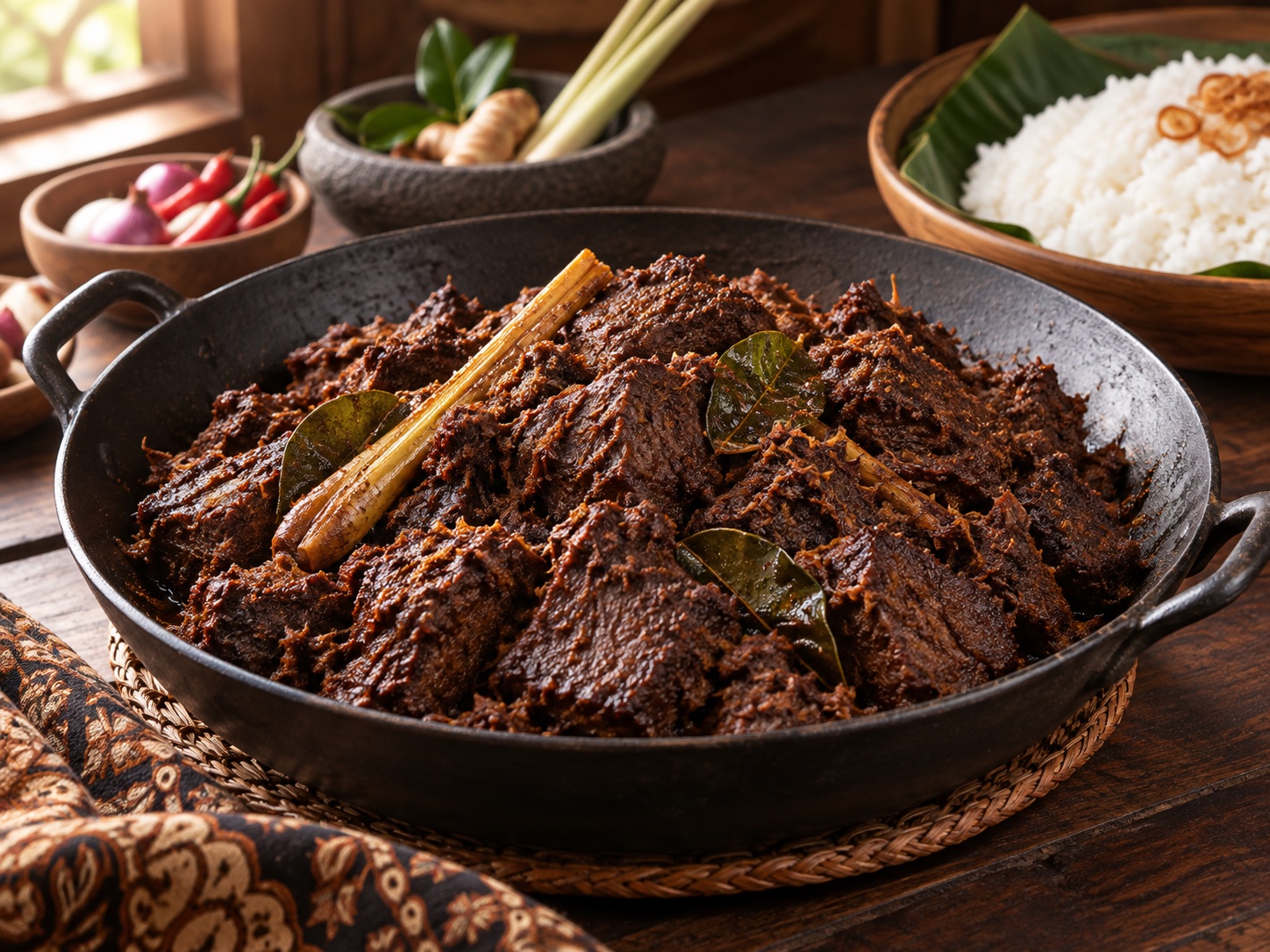
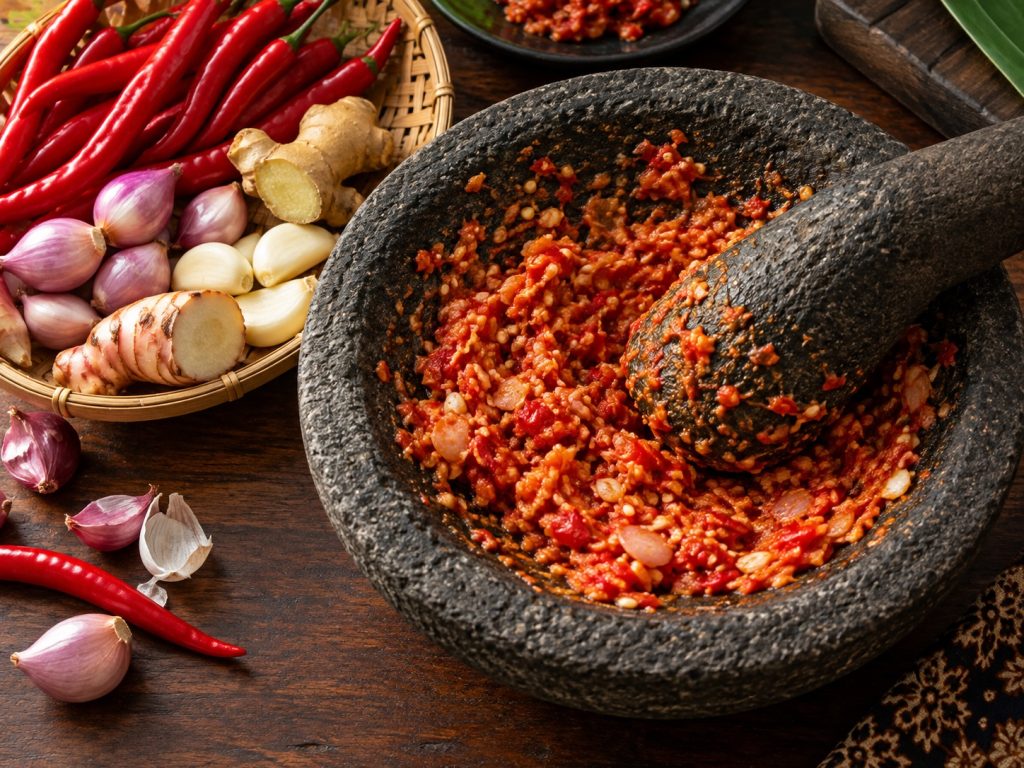
    Blend shallots, garlic, ginger, galangal, coriander, and turmeric with ¼ cup water. Cook in a wide pot 5 minutes until fragrant.

    2. Simmer beef in coconut milk

    Add beef, coconut milk, lemongrass, lime leaves, sugar, and salt. Bring to a gentle simmer; cook uncovered over medium-low 90 minutes, stirring occasionally.

    Simmer beef in coconut milk
    Add beef, coconut milk, lemongrass, lime leaves, sugar, and salt. Bring to a gentle simmer; cook uncovered over medium-low 90 minutes, stirring occasionally.

    3. Reduce slowly

    As sauce thickens, lower heat. Cook 60–75 minutes more, scraping the base every 5–10 minutes, until beef pulls apart easily.

    Reduce slowly
    As sauce thickens, lower heat. Cook 60–75 minutes more, scraping the base every 5–10 minutes, until beef pulls apart easily.

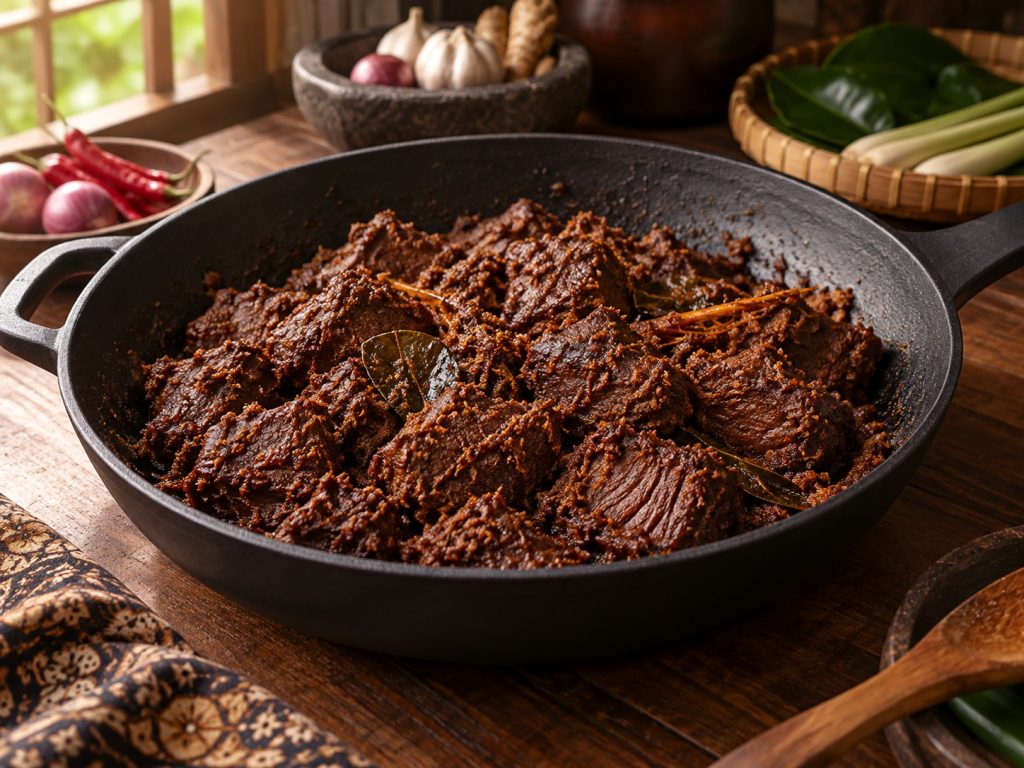
    4. Fry gently after oil separates

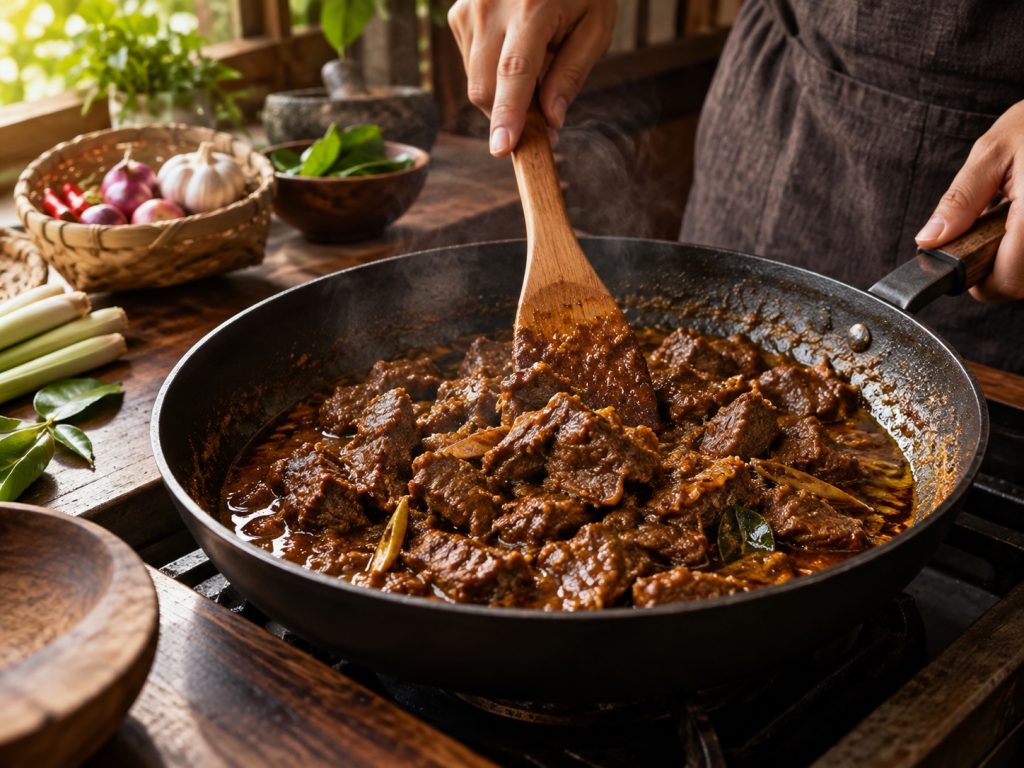
    When oil separates and paste clings to beef, cook on low 15–25 minutes, stirring almost constantly. Stop at deep brown and moist-dry; rest.

    Fry gently after oil separates
    When oil separates and paste clings to beef, cook on low 15–25 minutes, stirring almost constantly. Stop at deep brown and moist-dry; rest.

    Texture and doneness cues

    Beef pulls apart with a fork; paste is dry-glossy and clings with no watery sauce. Black specks or bitter aroma mean scorching.

    Mistakes, substitutions, and measurements

    Replace galangal with extra ginger plus 1 tsp lime zest; replace makrut leaves with lime zest. Contains coconut; check any stock for gluten. 1 cup=240 ml.

    Serving, storage, and allergens

    Serve with rice and cucumber. Cool within 2 hours; refrigerate 3–4 days or freeze 3 months. Reheat with a splash of water to 165°F.

    Frequently asked questions

    Why is it not darkening?

    The pot may be narrow or heat too low; keep it uncovered and use a wide pot.

    Why did it burn?

    Stirring was too infrequent after oil separation; lower heat at the end.

    Can I make it ahead?

    Yes; flavor deepens overnight.

  • Peruvian Lomo Saltado: High Heat, No Watery Beef

    Peruvian Lomo Saltado: High Heat, No Watery Beef

    Lomo saltado is a chifa dish born from Chinese stir-fry technique meeting Peruvian ingredients in the late 19th century.

    At home, small batches, a very hot pan, and complete mise en place prevent steaming; tomato goes in last.

    Why this method works

    • Dry beef and an uncrowded pan create crust.
    • Thick onion wedges stay crisp.
    • Soy-vinegar sauce is reduced briefly at the end.

    Before you start

    Use a wok/cast-iron skillet, tongs, two plates, and thermometer; prep everything first.

    Pat beef dry and cook in two batches.

    Whole beef cuts are safe at 145°F with a 3-minute rest.

    Cook the fries
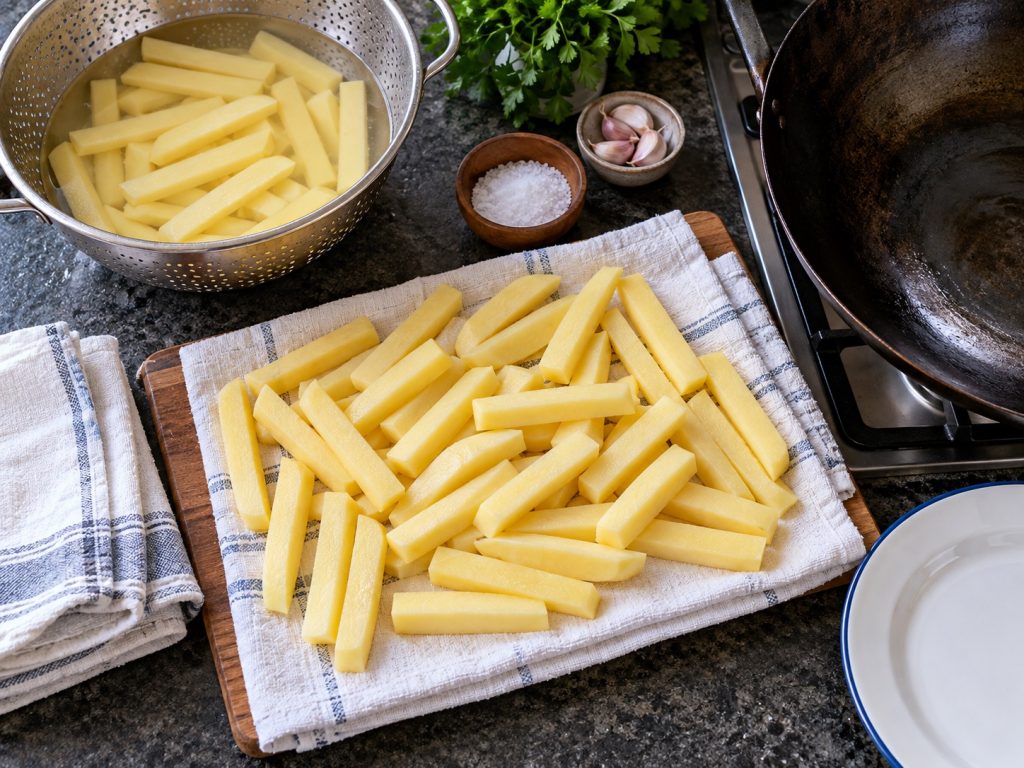
    Cut potatoes into ⅜-inch fries; roast with oil and salt at 450°F for 25–30 minutes, or fry safely. Keep rice hot.

    Step-by-step method

    1. Cook the fries

    Cut potatoes into ⅜-inch fries; roast with oil and salt at 450°F for 25–30 minutes, or fry safely. Keep rice hot.

    2. Sear beef in batches

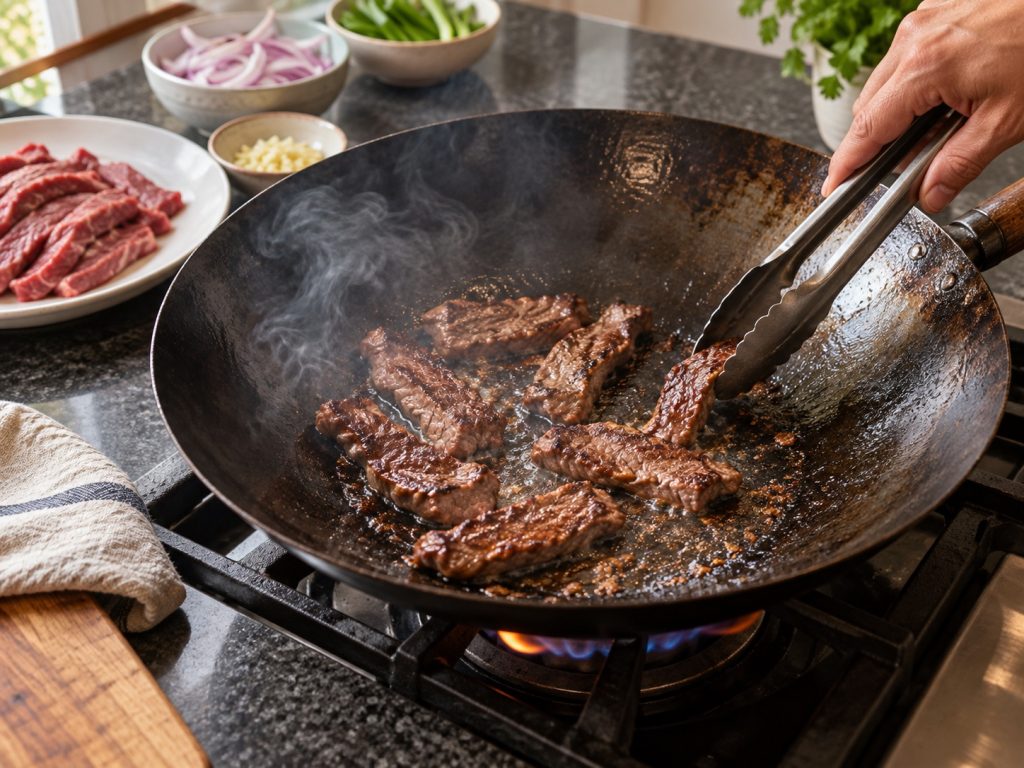
    Cut beef into ½×2-inch strips and dry well; season with cumin, salt, and pepper. Sear in two batches in a smoking-hot oiled pan, 45–60 seconds per side; remove.

    Sear beef in batches
    Cut beef into ½×2-inch strips and dry well; season with cumin, salt, and pepper. Sear in two batches in a smoking-hot oiled pan, 45–60 seconds per side; remove.

    3. Flash-cook onion and tomato

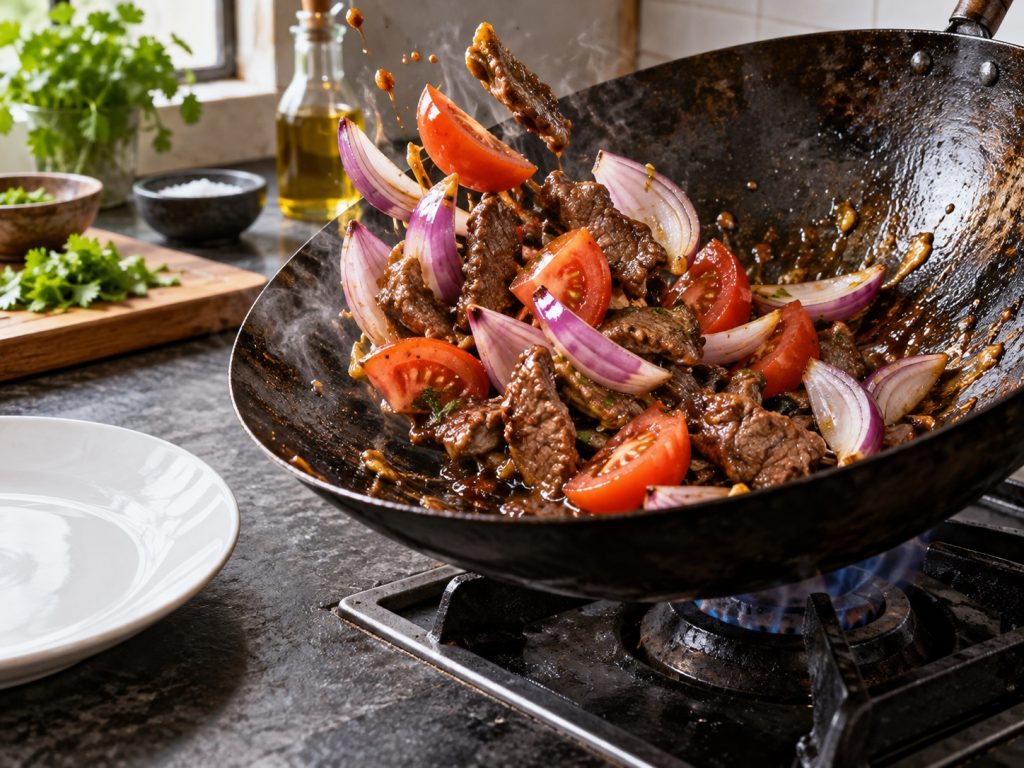
    Cook onion in the same pan 60–90 seconds and garlic 20 seconds. Add tomato for only 30–45 seconds so wedges hold shape.

    Flash-cook onion and tomato
    Cook onion in the same pan 60–90 seconds and garlic 20 seconds. Add tomato for only 30–45 seconds so wedges hold shape.

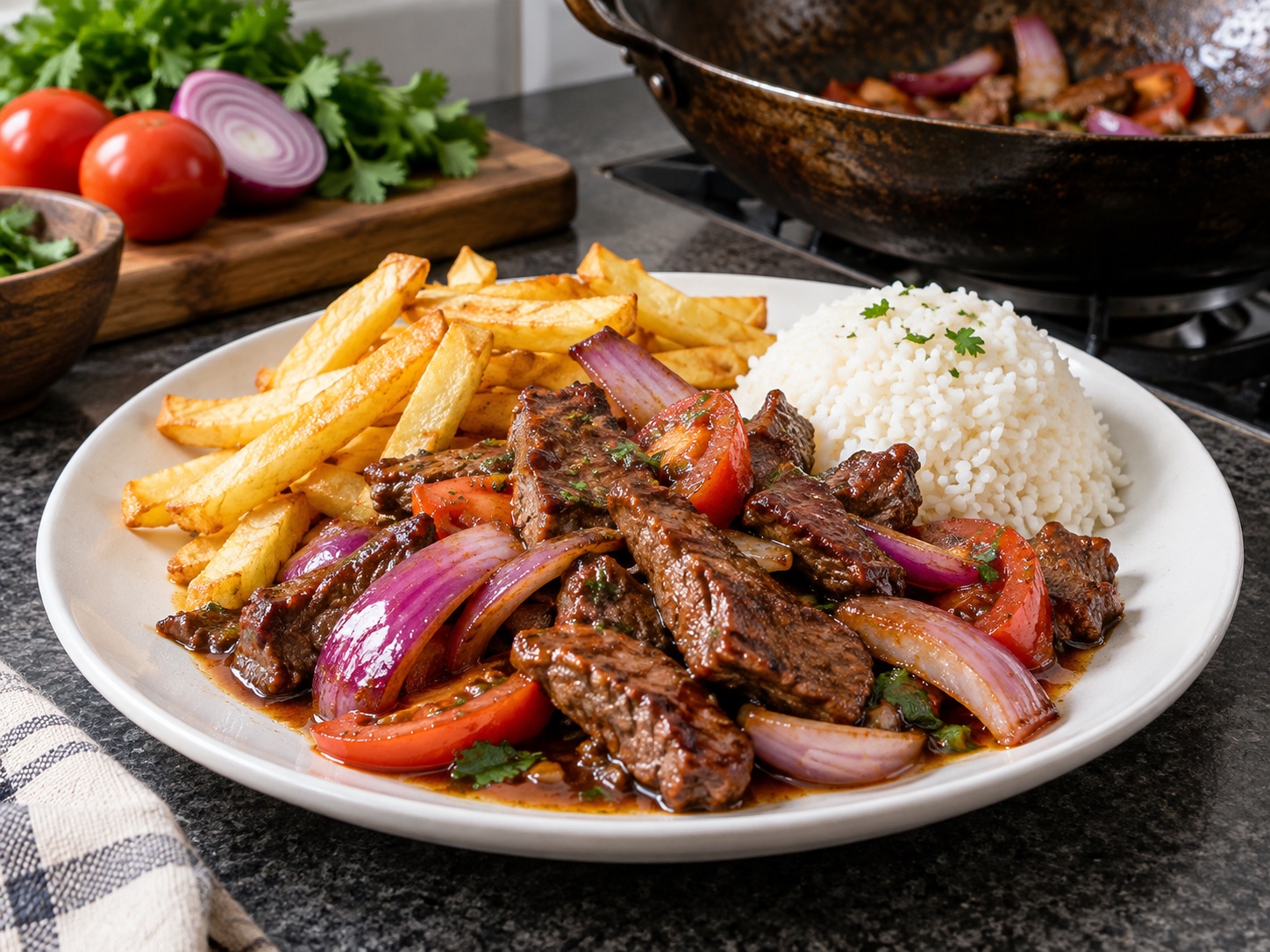
    4. Reduce sauce and serve

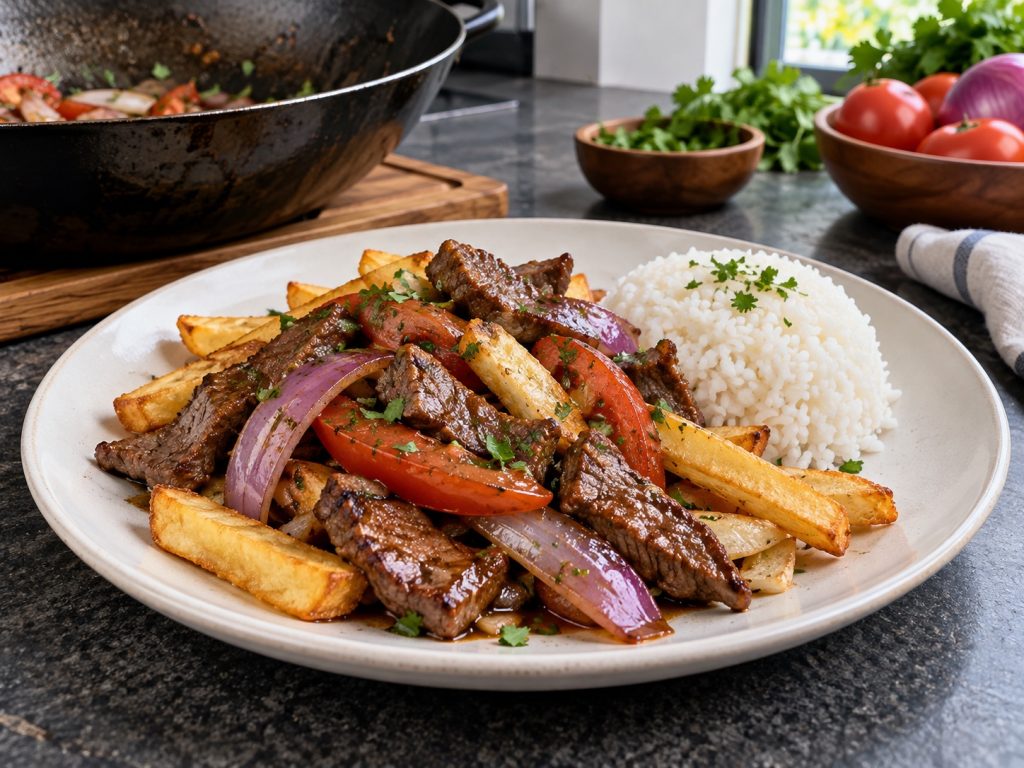
    Return beef; add soy and vinegar and toss 30–60 seconds until glossy. Fold in fries and cilantro at the last moment; serve with rice.

    Reduce sauce and serve
    Return beef; add soy and vinegar and toss 30–60 seconds until glossy. Fold in fries and cilantro at the last moment; serve with rice.

    Texture and doneness cues

    Beef is browned but juicy, onion crisp, tomato intact, and sauce glossy with no puddle.

    Mistakes, substitutions, and measurements

    Use a mild fresh chile if ají amarillo is unavailable. Gluten-free tamari removes wheat but still contains soy. 1 tbsp=15 ml.

    Serving, storage, and allergens

    Best fresh. Separate and chill within 2 hours for 3–4 days; reheat beef and fries separately to 165°F. Freezing softens fries.

    Frequently asked questions

    Why did beef steam?

    The pan was not hot enough or overcrowded; use two batches.

    Why did tomato collapse?

    It went in too early; use thick wedges for the final 30–45 seconds.

    Will fries soften?

    Yes; fold them in only at serving time.