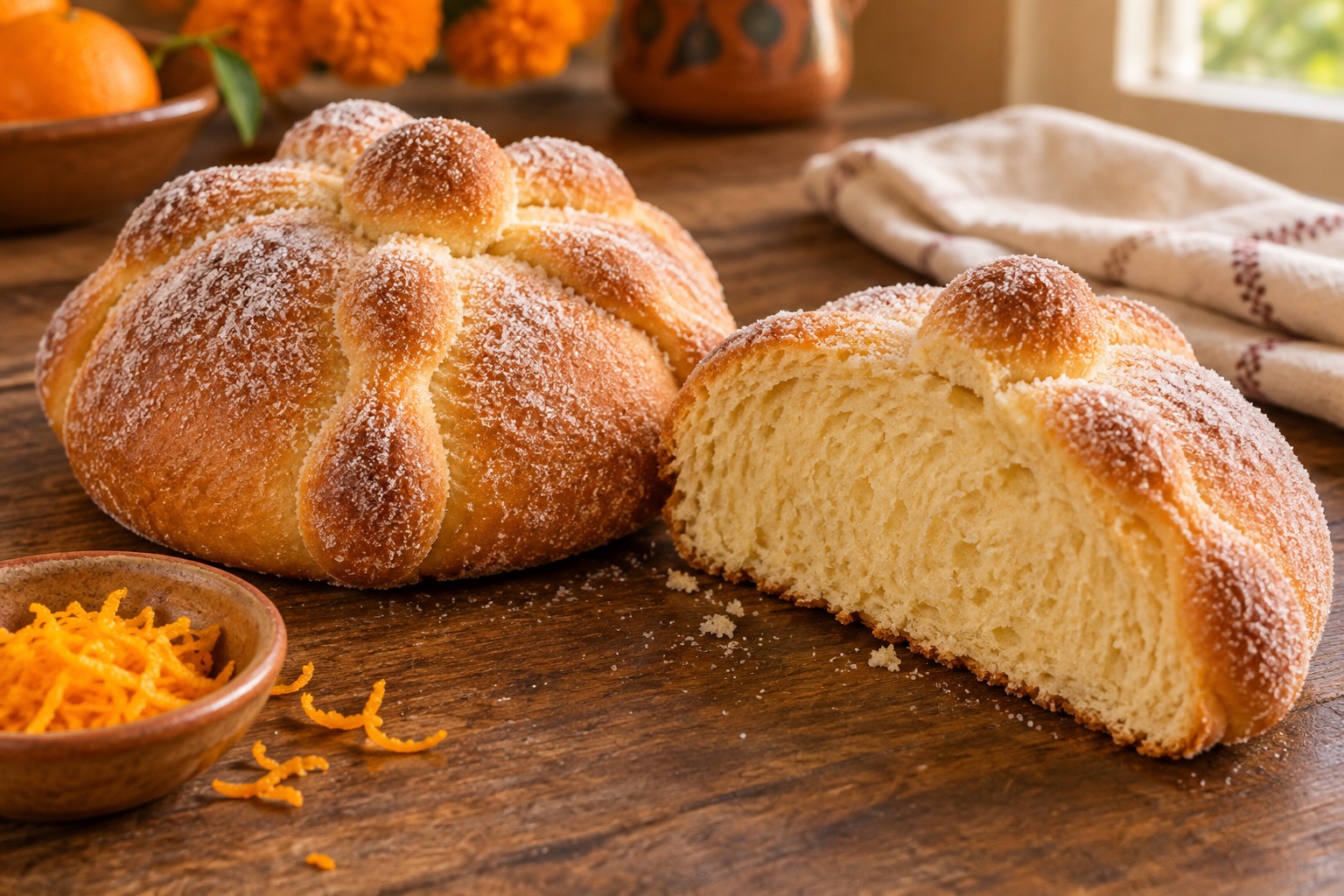
Pan de muerto is a Mexican enriched yeast bread associated with Día de Muertos. This version follows the round, sugar-coated, orange-scented style common around Mexico City; it is one of many regional forms, not the only traditional version.
Because eggs, sugar and butter slow fermentation, use visual cues rather than the clock: nearly doubled after the first rise, then distinctly light and puffy after shaping.
What this guide solves
- Butter is added after initial gluten development to prevent a heavy crumb.
- The reserved-dough ratio keeps the bone decorations visible after baking.
- Doneness is checked by color, spring and a 195–200°F internal temperature.
- Equipment: digital scale, stand mixer or large bowl, spatula, baking sheet, parchment, rack and optional thermometer.
Before you start
Weigh the flour; 1 cup is about 4.4 oz, but enriched dough is much more reliable by weight.
Milk should be warm, not hot. Butter should be pliable but not melted.
No orange-blossom water? Replace it with equal milk plus 1 teaspoon extra orange zest; the structure stays balanced though the aroma changes.
Step-by-step pan de muerto
1. 1. Build the initial dough
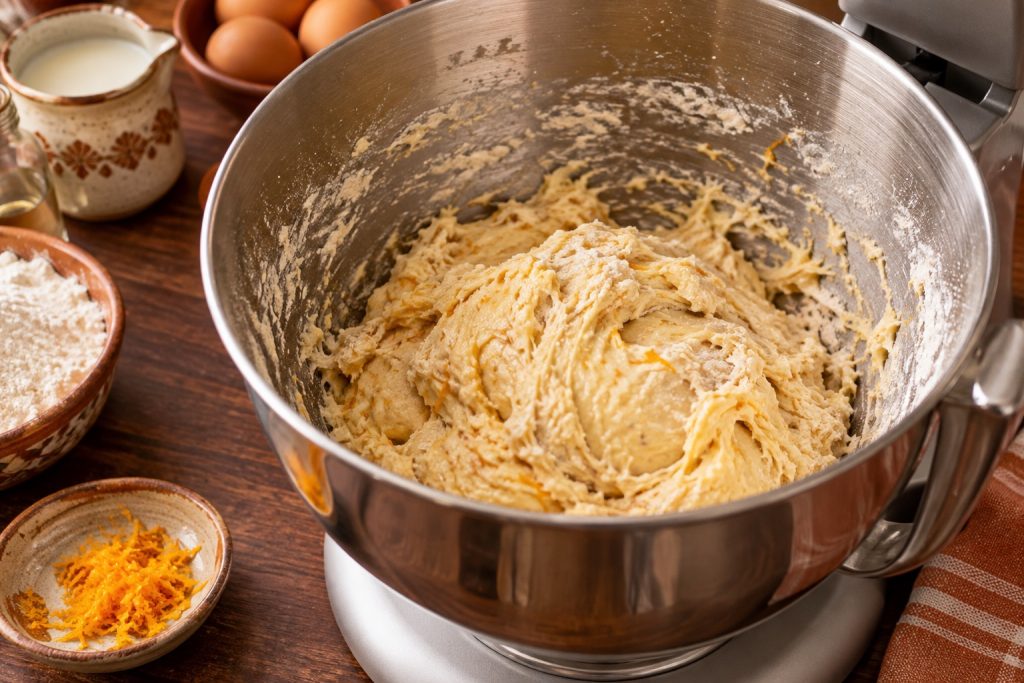
Mix flour, sugar and yeast in the mixer bowl; place salt on the opposite side. Add eggs, warm milk, orange-blossom water, zest and vanilla. Mix 3 minutes on low, then 5 minutes on medium. The dough should be sticky but cohesive.
2. 2. Add butter and proof
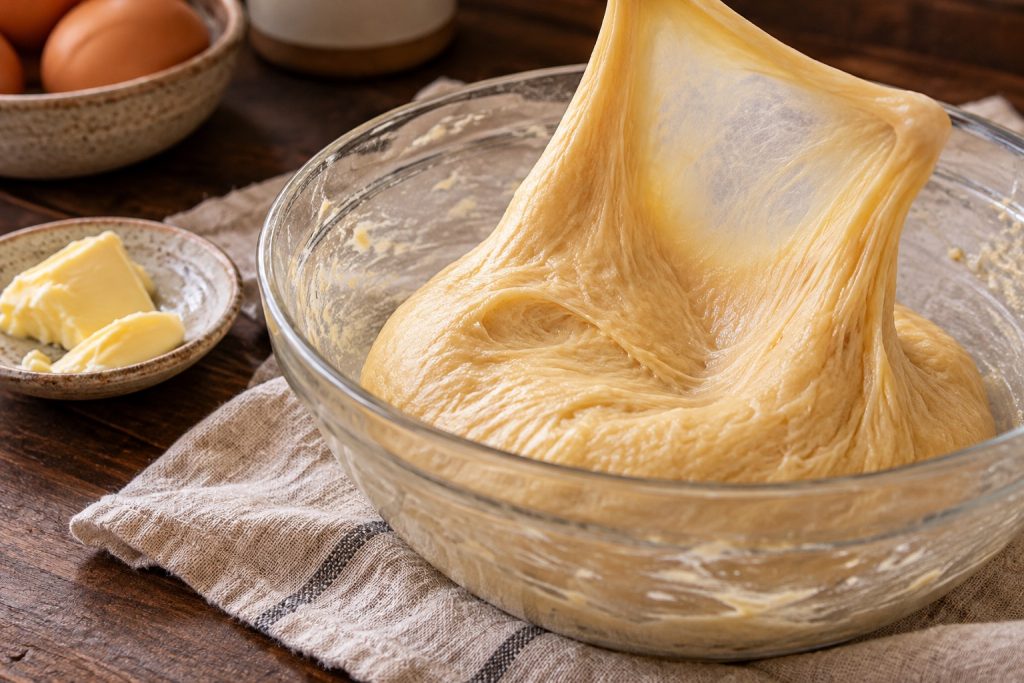
Add soft butter in 4–5 additions, waiting until each is absorbed. Knead 8–12 minutes on medium until smooth, glossy and able to stretch to a windowpane. Transfer to a greased bowl, cover and rise at 75–79°F for about 75–110 minutes, until close to doubled.
3. 3. Shape and proof again
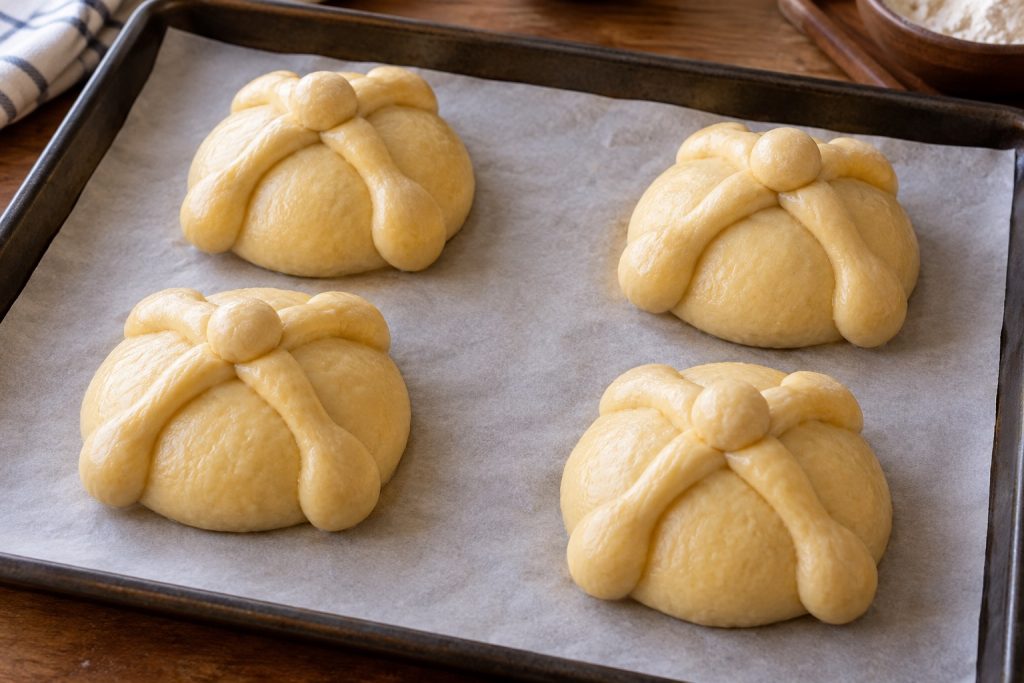
Reserve 20% of the dough for decorations. Round the rest into 4 taut balls. Make 8 slender bone strips with knuckled centers and 4 small knobs. Cross two strips on each bun and attach a knob. Cover and proof 45–75 minutes, until an indentation returns slowly.
4. 4. Bake and sugar
Heat the oven to 350°F. Bake 22–28 minutes until deep golden and 195–200°F inside. Cool on a rack 10 minutes, brush with melted butter and coat with superfine sugar. Cool completely before cutting.
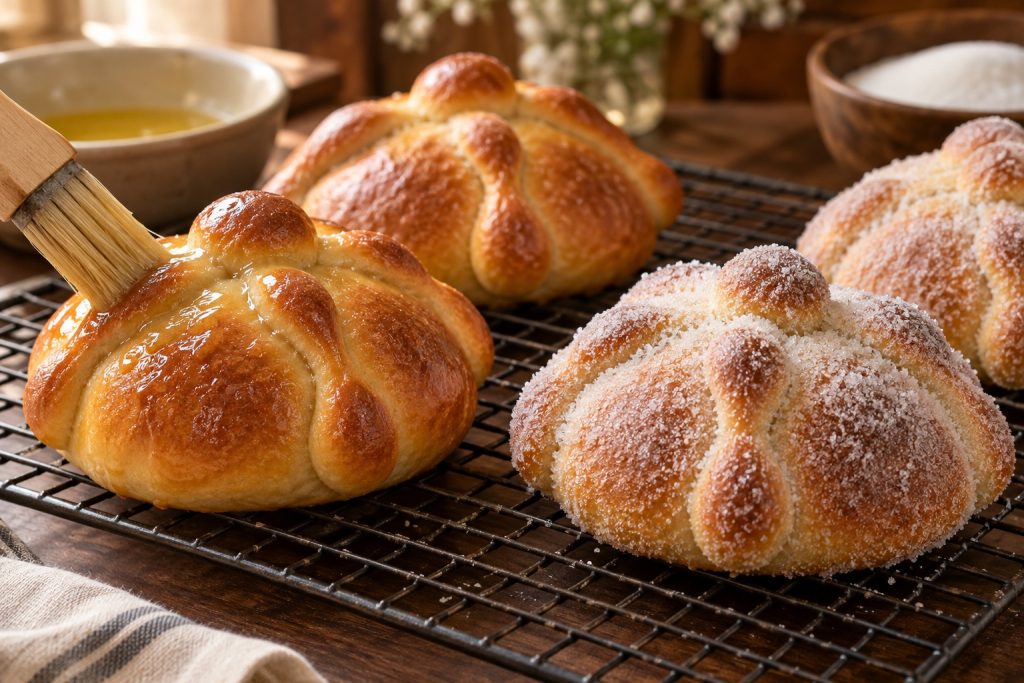
Orange-Blossom Pan de Muerto
Sugar-coated Mexican enriched bread for the Día de Muertos season.
Ingredients
- 500 g bread flour — about 4 cups
- 90 g granulated sugar — for dough
- 7 g instant yeast — 2 1/4 tsp
- 7 g fine salt — 1 1/4 tsp
- 3 large eggs — room temperature
- 120 ml whole milk — 1/2 cup, warm
- 30 ml orange-blossom water — 2 tbsp
- 1 tbsp finely grated orange zest — colored part only
- 1 tsp vanilla extract — optional
- 100 g unsalted butter — 7 tbsp, softened
- 30 g butter — 2 tbsp, melted for coating
- 70 g superfine sugar — about 1/3 cup, for coating
Instructions
- Mix flour, sugar and yeast in the mixer bowl; place salt on the opposite side. Add eggs, warm milk, orange-blossom water, zest and vanilla. Mix 3 minutes on low, then 5 minutes on medium. The dough should be sticky but cohesive.
- Add soft butter in 4–5 additions, waiting until each is absorbed. Knead 8–12 minutes on medium until smooth, glossy and able to stretch to a windowpane. Transfer to a greased bowl, cover and rise at 75–79°F for about 75–110 minutes, until close to doubled.
- Reserve 20% of the dough for decorations. Round the rest into 4 taut balls. Make 8 slender bone strips with knuckled centers and 4 small knobs. Cross two strips on each bun and attach a knob. Cover and proof 45–75 minutes, until an indentation returns slowly.
- Heat the oven to 350°F. Bake 22–28 minutes until deep golden and 195–200°F inside. Cool on a rack 10 minutes, brush with melted butter and coat with superfine sugar. Cool completely before cutting.
Notes
- Spreading suggests weak gluten or overproofing.
- Wait 10 minutes before buttering so the sugar does not dissolve.
- Allergens: wheat/gluten, egg and milk.
Troubleshooting, storage and serving
A dense crumb usually comes from adding excess flour. Manage stickiness through kneading and a short rest. If decorations disappear, make them slimmer and shorten the final proof.
Store fully cooled bread airtight at room temperature for 2 days. Freeze well wrapped for up to 2 months; thaw at room temperature and refresh 5–7 minutes at 300°F.
Serve with hot chocolate or unsweetened coffee. This recipe is not presented as personally kitchen-tested; technique and cultural context were cross-checked against reliable sources.
Frequently asked questions
Is orange-blossom water essential?
No. Use equal milk plus 1 teaspoon extra orange zest; the bread will be less floral.
Why is the dough not rising?
Hot milk can damage yeast, while a cool kitchen slows enriched dough. Follow volume rather than the stated time.
Can I prepare it overnight?
Let the mixed dough start 30 minutes at room temperature, refrigerate 8–12 hours, then shape the next day.
Leave a Reply