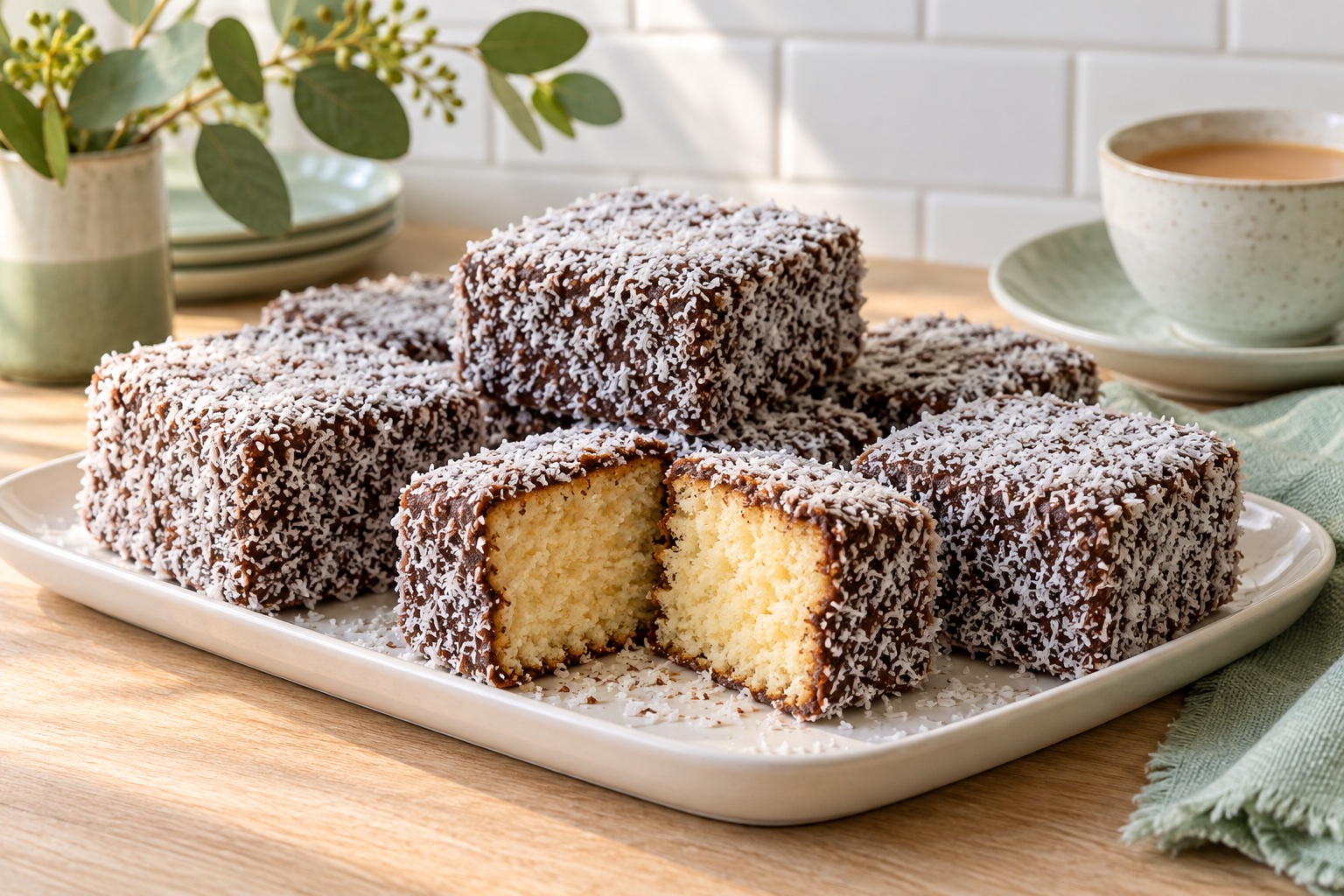
A lamington is a square of sponge dipped in chocolate coating and rolled in desiccated coconut, described by Tourism Australia as a beloved national-style cake.
Origin stories remain debated; the State Library of Queensland notes a published recipe from 1900. This version focuses on simple, unfilled squares.
Why this method works
- A butter-and-egg sponge is sturdier than airy genoise; chilling overnight gives clean cuts and fewer crumbs in the glaze.
- Holding cocoa coating at 90–95°F creates a thin shell; hotter glaze soaks in, colder glaze turns thick.
- A quick dip followed by a 5-second drain prevents soggy, overloaded corners.
Before you start
Prepare an 8-inch square pan, parchment, mixer, rack, two deep bowls, and two forks or bamboo skewers.
Chill the cake at least 2 hours, ideally overnight. Warm sponge breaks in the coating. Spread coconut in a wide shallow dish.
Heat the oven to 350°F. Grease and line the pan with parchment overhang on two sides.
Step-by-step method
1. Mix without knocking out the batter
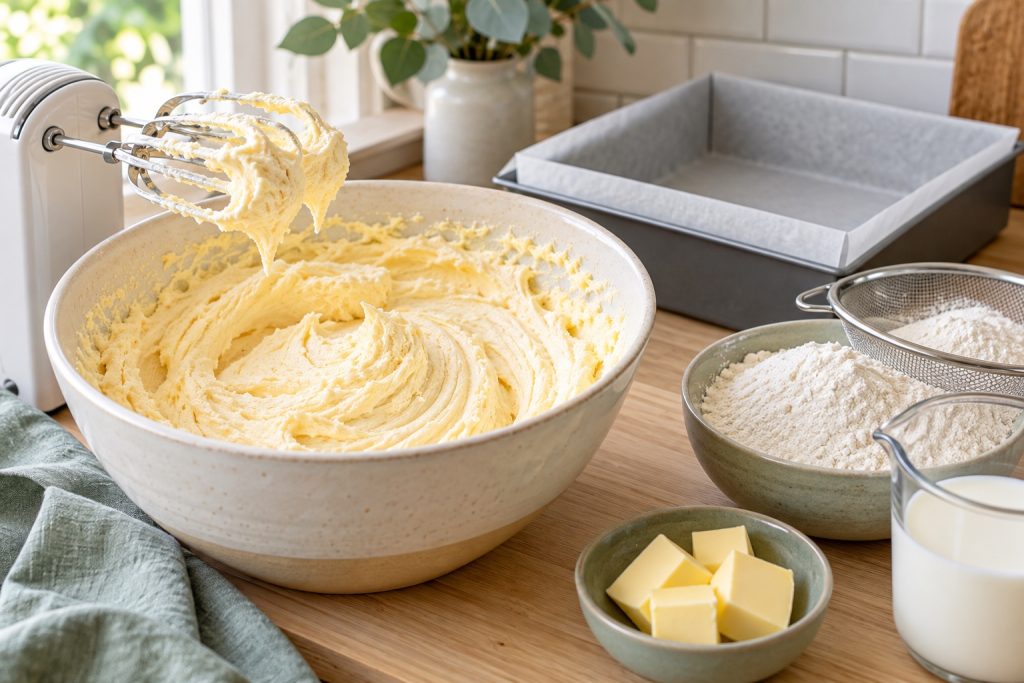
Beat butter and sugar on medium-high 4 minutes until pale and fluffy. Add eggs one at a time, beating 30 seconds after each, then vanilla. Sift flour, baking powder, and salt. Fold dry ingredients in three additions, alternating with milk.
2. Bake through and cool completely
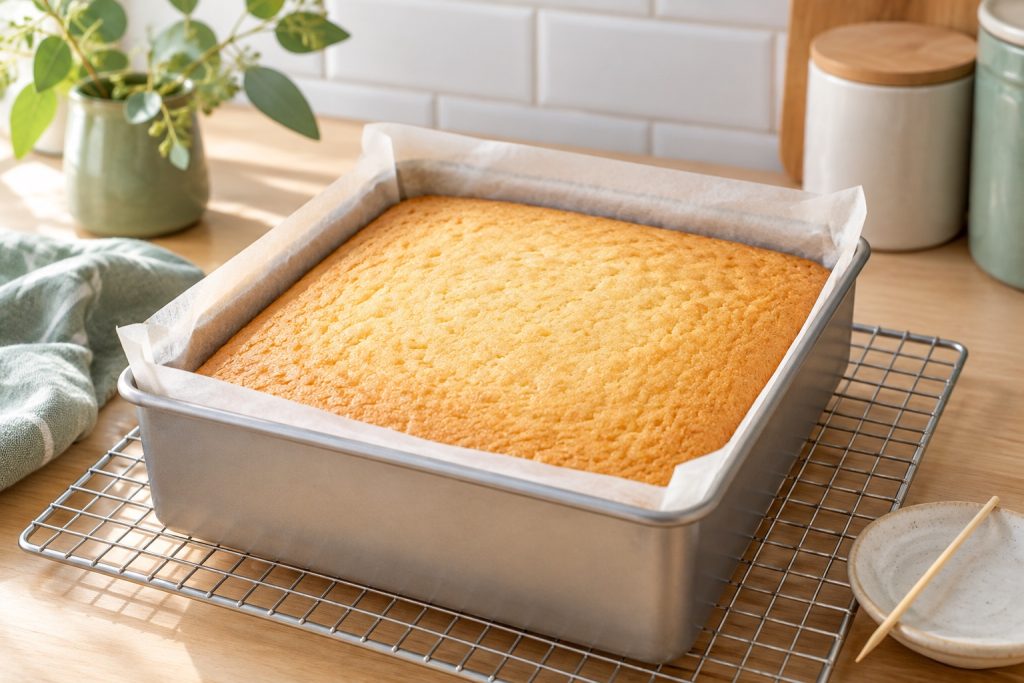
Spread in the pan and bake at 350°F for 25–30 minutes. A skewer should be clean and the center spring back lightly. Cool 10 minutes in the pan, then completely on a rack. Wrap and chill at least 2 hours or overnight.
3. Chill squares and tune the coating
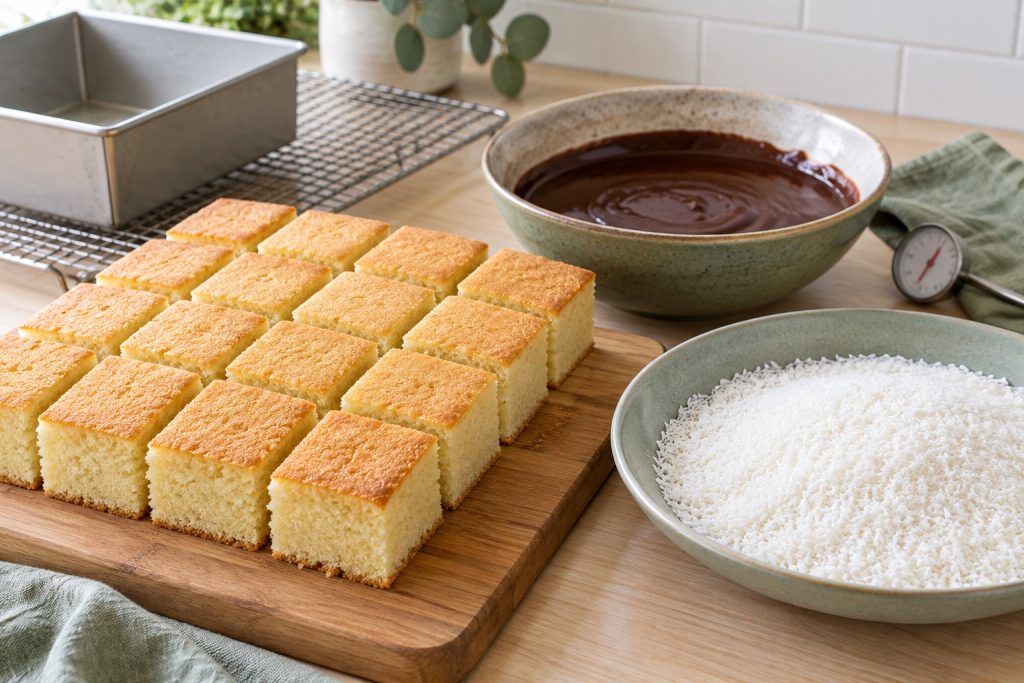
Trim edges and cut 16 equal squares. Sift icing sugar and cocoa; whisk in butter and ⅔ cup boiling water. Add more water by spoonfuls until fluid but thinly coating a spoon; cool to 90–95°F.
4. Dip quickly and set on a rack
Dip each square in chocolate for 2–3 seconds with forks, drain 5 seconds, and gently roll in coconut. Set on a rack. If glaze thickens, mix in 1–2 teaspoons hot water. Let set completely for 45–60 minutes.
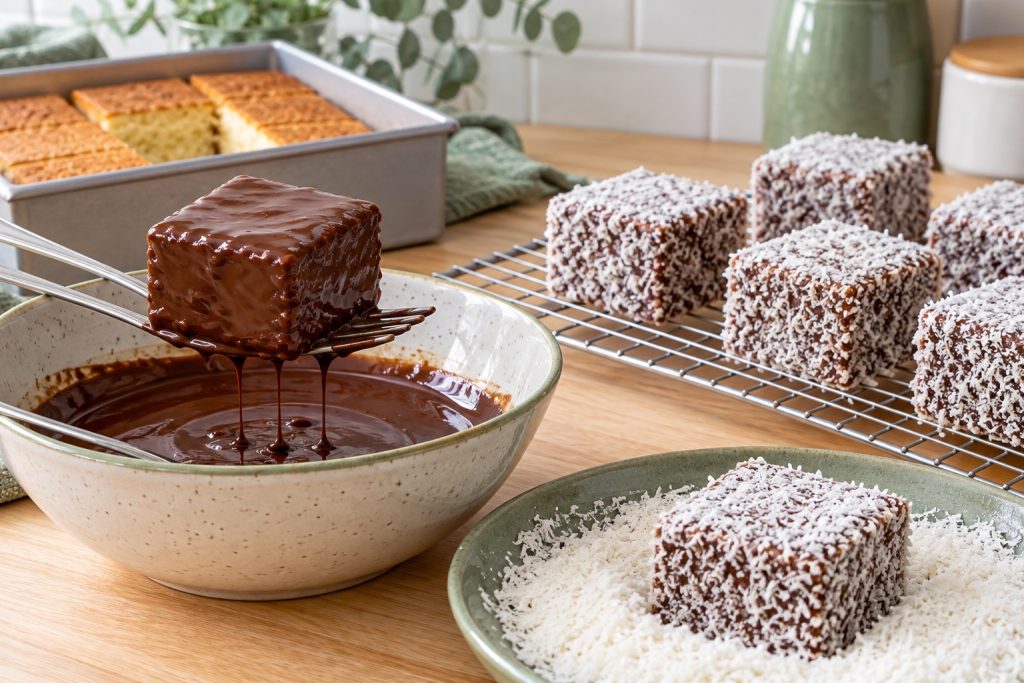
Australian Lamingtons
Classic Australian lamingtons with chilled sturdy sponge, a fluid cocoa coating, and even coconut without soggy corners.
Ingredients
- 180 g unsalted butter — room temperature
- 180 g caster sugar
- 3 eggs — room temperature
- 1 tsp vanilla extract
- 240 g all-purpose flour
- 2 tsp baking powder
- 1/4 tsp fine salt
- 120 ml whole milk
- 450 g icing sugar
- 55 g unsweetened cocoa powder
- 30 g unsalted butter — melted
- 160–190 ml boiling water — as needed
- 250 g fine desiccated coconut
Instructions
- Beat butter and sugar on medium-high 4 minutes until pale and fluffy. Add eggs one at a time, beating 30 seconds after each, then vanilla. Sift flour, baking powder, and salt. Fold dry ingredients in three additions, alternating with milk.
- Spread in the pan and bake at 350°F for 25–30 minutes. A skewer should be clean and the center spring back lightly. Cool 10 minutes in the pan, then completely on a rack. Wrap and chill at least 2 hours or overnight.
- Trim edges and cut 16 equal squares. Sift icing sugar and cocoa; whisk in butter and ⅔ cup boiling water. Add more water by spoonfuls until fluid but thinly coating a spoon; cool to 90–95°F.
- Dip each square in chocolate for 2–3 seconds with forks, drain 5 seconds, and gently roll in coconut. Set on a rack. If glaze thickens, mix in 1–2 teaspoons hot water. Let set completely for 45–60 minutes.
Notes
- The crumb is even, fine, and moist with no gummy line. Chocolate sets into a thin matte layer; coconut adheres evenly without thick muddy corners.
- If cake breaks, it was not chilled enough or was underbaked. Thin thick glaze with hot water by teaspoons; thicken runny glaze with sifted icing sugar by tablespoons. Unsweetened soy milk and block plant butter work, but no verified egg replacement is offered. 240 g flour is about 2 US cups; 180 g sugar about ¾ cup plus 2 tbsp. Contains wheat/gluten, dairy, and egg.
- Serve with tea or coffee. Once set, store in one layer airtight at cool room temperature 2 days or refrigerate 4 days; temper 20 minutes before serving. Freeze the uncoated cake for 2 months. Freezing finished lamingtons makes the coconut damp and is not recommended.
Texture and doneness cues
The crumb is even, fine, and moist with no gummy line. Chocolate sets into a thin matte layer; coconut adheres evenly without thick muddy corners.
Mistakes, substitutions, and measurements
If cake breaks, it was not chilled enough or was underbaked. Thin thick glaze with hot water by teaspoons; thicken runny glaze with sifted icing sugar by tablespoons. Unsweetened soy milk and block plant butter work, but no verified egg replacement is offered. 240 g flour is about 2 US cups; 180 g sugar about ¾ cup plus 2 tbsp. Contains wheat/gluten, dairy, and egg.
Serving, storage, and allergens
Serve with tea or coffee. Once set, store in one layer airtight at cool room temperature 2 days or refrigerate 4 days; temper 20 minutes before serving. Freeze the uncoated cake for 2 months. Freezing finished lamingtons makes the coconut damp and is not recommended.
Frequently asked questions
Why chill the cake overnight?
Cold rested cake firms up, sheds fewer crumbs, and survives the chocolate dip without breaking.
Can I add jam?
Yes, jam-and-cream versions exist in Australia. Chill layered squares thoroughly and keep the coating slightly thicker.
Can I use fresh coconut?
Not recommended. Fresh coconut carries too much moisture, loosens the coating, and shortens shelf life.
Leave a Reply