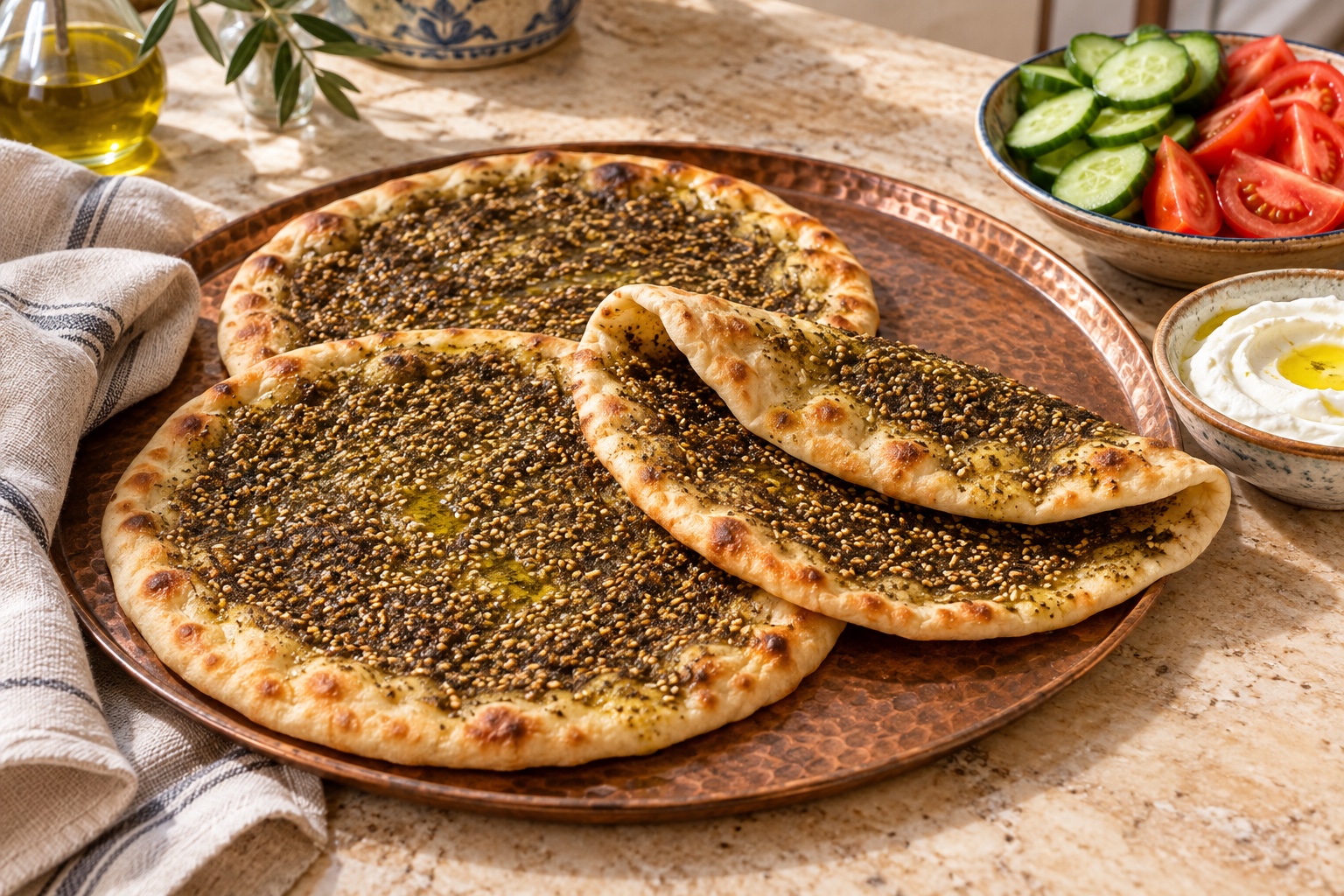
Al-man’ouché is a Lebanese flatbread practice made in homes and specialist bakeries and strongly associated with breakfast. The zaatar version carries thyme, sumac, toasted sesame, salt, and olive oil.
This is not a claim to one baker’s definitive authentic formula. It adapts the method to a home oven using high heat, an inverted preheated tray, and thin shaping for a dry base and flexible crumb.
Why this method works
- Roughly 64% hydration keeps the dough soft enough to stretch by hand but strong enough to carry the topping.
- About two parts zaatar to one part oil makes a spreadable paste that does not pool or run off the bread.
- A preheated inverted tray gives immediate bottom heat; a short 6–8 minute bake colors the rim before the center dries out.
Before you start
Prepare a digital scale, large bowl, dough scraper, rolling pin, parchment, heavy rimmed tray that can be inverted, and a peel or second flat tray.
Zaatar blends vary. Look for thyme or marjoram, sumac, toasted sesame, and salt; do not add more salt to a salty blend.
Heat the oven with the heavy tray inverted inside at its highest safe setting, ideally 475°F, for at least 35 minutes.
Step-by-step method
1. Mix a soft, smooth dough
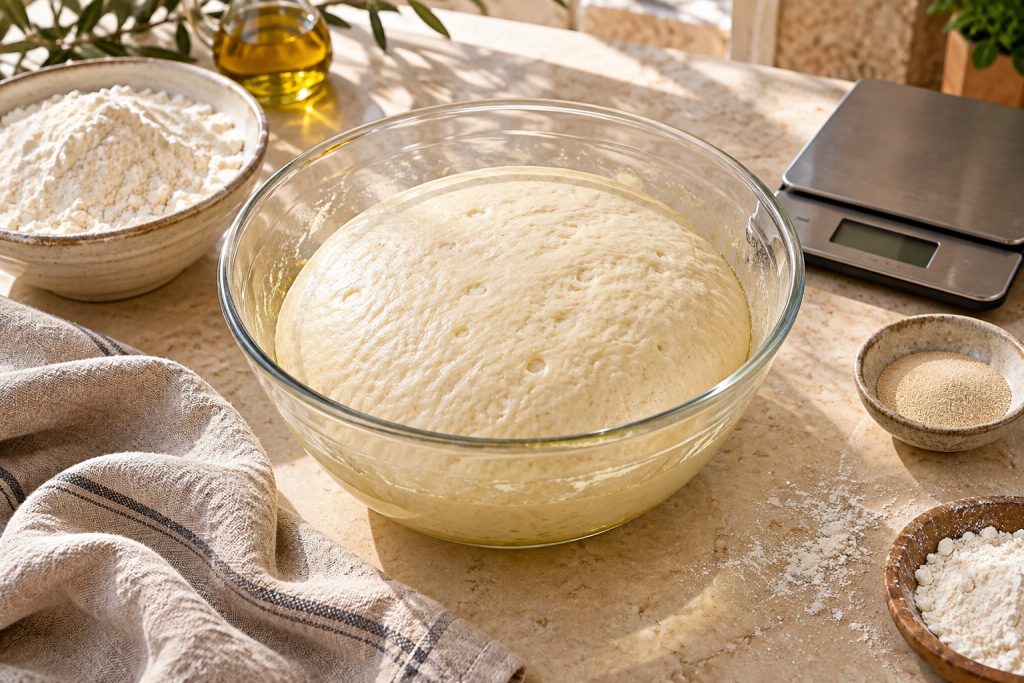
Combine flour, yeast, and sugar. Add water and 2 tablespoons oil; mix until no dry flour remains and rest 10 minutes. Add salt and knead 7–9 minutes until smooth and elastic. The dough may be slightly tacky; limit extra flour to 1 tablespoon.
2. Proof and divide into six balls
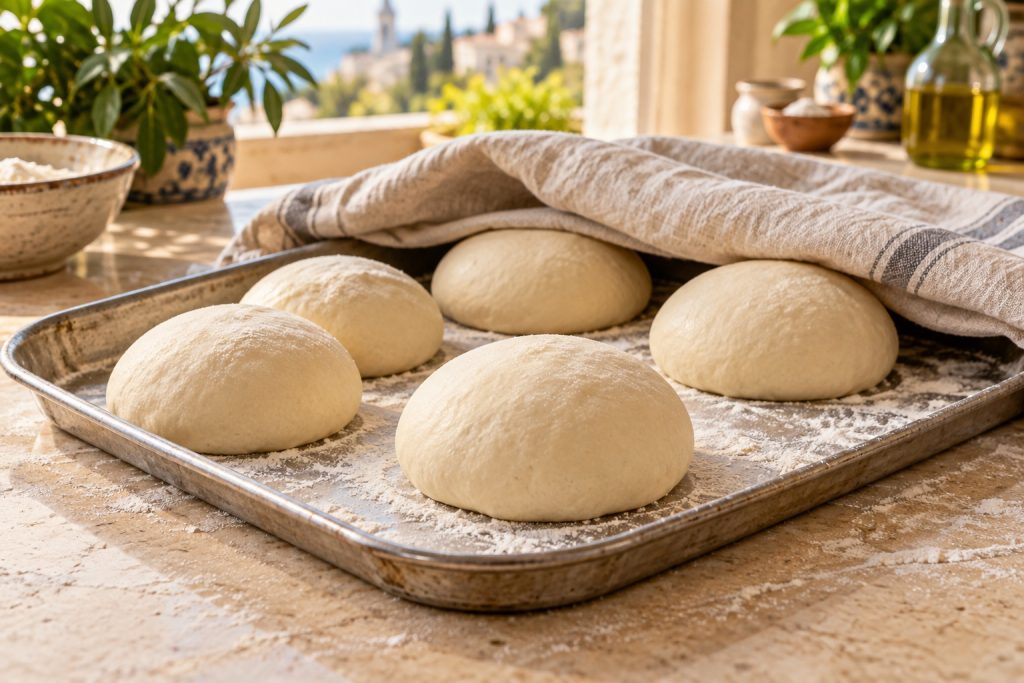
Cover in a lightly oiled bowl and proof at 75–79°F for 60–75 minutes, until about doubled. Deflate gently, divide into six equal pieces of about 5 ounces, and form taut balls. Cover and rest 15 minutes.
3. Stretch thin and spread zaatar evenly
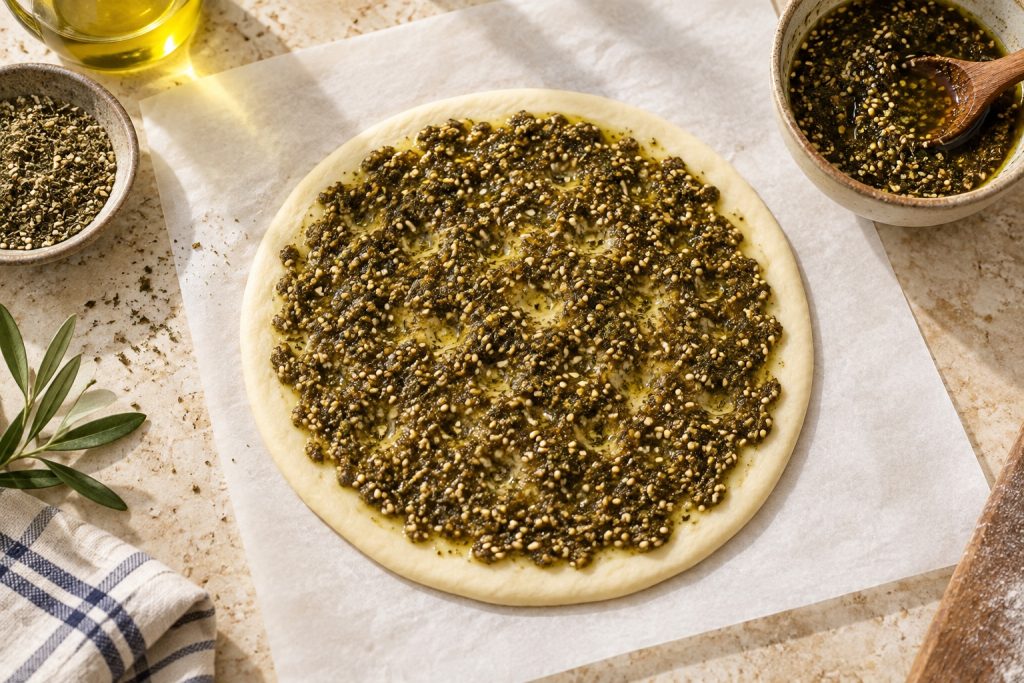
Mix zaatar with ¼ cup oil into a flowing paste. Roll each ball to an 8–9 inch round; lightly dimple the center with fingertips. Spread about 1 heaped tablespoon topping on each, leaving a ½-inch bare rim. Transfer to parchment.
4. Bake briefly on a very hot surface
Slide parchment and flatbread onto the hot inverted tray. Bake at 475°F for 6–8 minutes until the rim puffs and the underside shows brown spots while the center stays flexible. Rest on a rack 2 minutes and serve warm. Bake remaining breads in pairs.
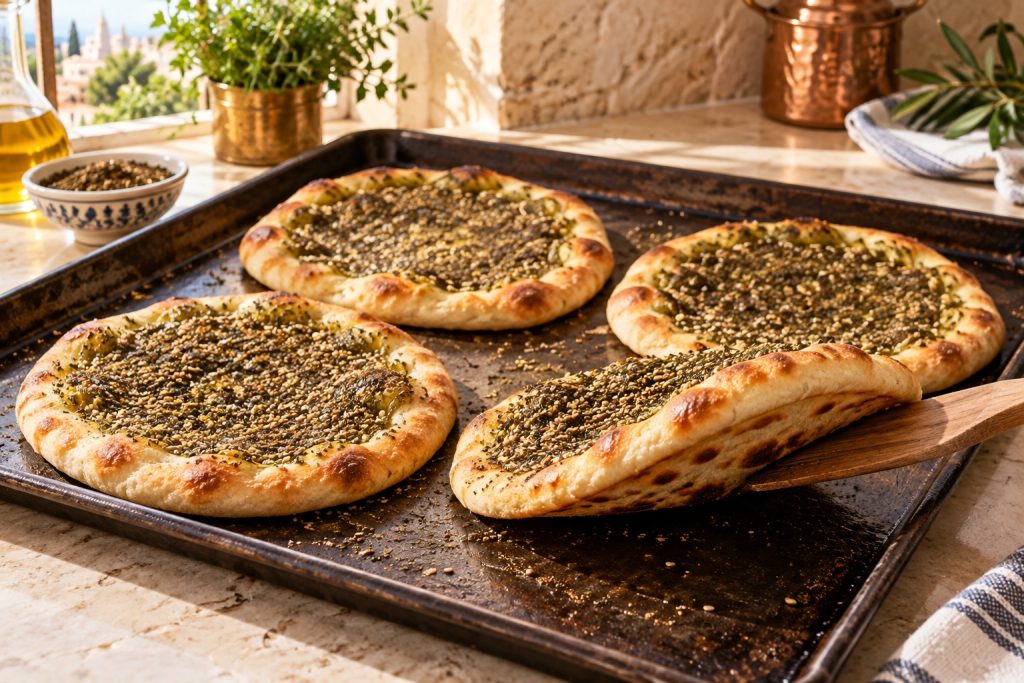
Lebanese Zaatar Manakish
Lebanese zaatar manakish with a spotted underside, gently puffed rim, flexible center, and a zaatar topping that stays aromatic rather than oily.
Ingredients
- 500 g bread flour
- 7 g instant yeast
- 8 g sugar
- 10 g fine salt
- 320 ml lukewarm water — about 80°F
- 30 ml extra-virgin olive oil — for the dough
- 100 g zaatar blend
- 60 ml extra-virgin olive oil — for the topping
- labneh, tomato, cucumber, and mint — optional, to serve
Instructions
- Combine flour, yeast, and sugar. Add water and 2 tablespoons oil; mix until no dry flour remains and rest 10 minutes. Add salt and knead 7–9 minutes until smooth and elastic. The dough may be slightly tacky; limit extra flour to 1 tablespoon.
- Cover in a lightly oiled bowl and proof at 75–79°F for 60–75 minutes, until about doubled. Deflate gently, divide into six equal pieces of about 5 ounces, and form taut balls. Cover and rest 15 minutes.
- Mix zaatar with ¼ cup oil into a flowing paste. Roll each ball to an 8–9 inch round; lightly dimple the center with fingertips. Spread about 1 heaped tablespoon topping on each, leaving a ½-inch bare rim. Transfer to parchment.
- Slide parchment and flatbread onto the hot inverted tray. Bake at 475°F for 6–8 minutes until the rim puffs and the underside shows brown spots while the center stays flexible. Rest on a rack 2 minutes and serve warm. Bake remaining breads in pairs.
Notes
- The rim is lightly puffed and golden, the base dry with brown spots, and the center bends in half without cracking. Zaatar looks moist but oil does not pool on top.
- If dough springs back, gluten is tight; cover and rest 10 minutes. A pale base means the tray was not hot enough; reheat it 8 minutes before the next batch. If topping runs, add zaatar; if dry, add 1 teaspoon oil. All-purpose flour works with 1–2 tablespoons less water. 500 g flour is about 4 US cups. Contains wheat/gluten and sesame; check zaatar for nut cross-contact.
- Serve for breakfast with labneh, tomato, cucumber, olives, and mint. Store cooled breads airtight 1 day at room temperature or 3 days refrigerated; freeze between parchment up to 2 months. Reheat from frozen at 425°F for 5–7 minutes. Keep labneh and vegetables separate.
Texture and doneness cues
The rim is lightly puffed and golden, the base dry with brown spots, and the center bends in half without cracking. Zaatar looks moist but oil does not pool on top.
Mistakes, substitutions, and measurements
If dough springs back, gluten is tight; cover and rest 10 minutes. A pale base means the tray was not hot enough; reheat it 8 minutes before the next batch. If topping runs, add zaatar; if dry, add 1 teaspoon oil. All-purpose flour works with 1–2 tablespoons less water. 500 g flour is about 4 US cups. Contains wheat/gluten and sesame; check zaatar for nut cross-contact.
Serving, storage, and allergens
Serve for breakfast with labneh, tomato, cucumber, olives, and mint. Store cooled breads airtight 1 day at room temperature or 3 days refrigerated; freeze between parchment up to 2 months. Reheat from frozen at 425°F for 5–7 minutes. Keep labneh and vegetables separate.
Frequently asked questions
Why did the manakish turn hard?
A thick round, low oven, or long bake dries it. Aim for an 8–9 inch round, a fully heated tray, and 6–8 minutes.
Can I mix my own zaatar?
Yes: use dried thyme or marjoram, sumac, toasted sesame, and salt. Proportions vary by region and family.
Can I make the dough overnight?
After mixing, leave 30 minutes at room temperature, then cover and chill up to 24 hours. Warm 45 minutes before dividing.
Leave a Reply