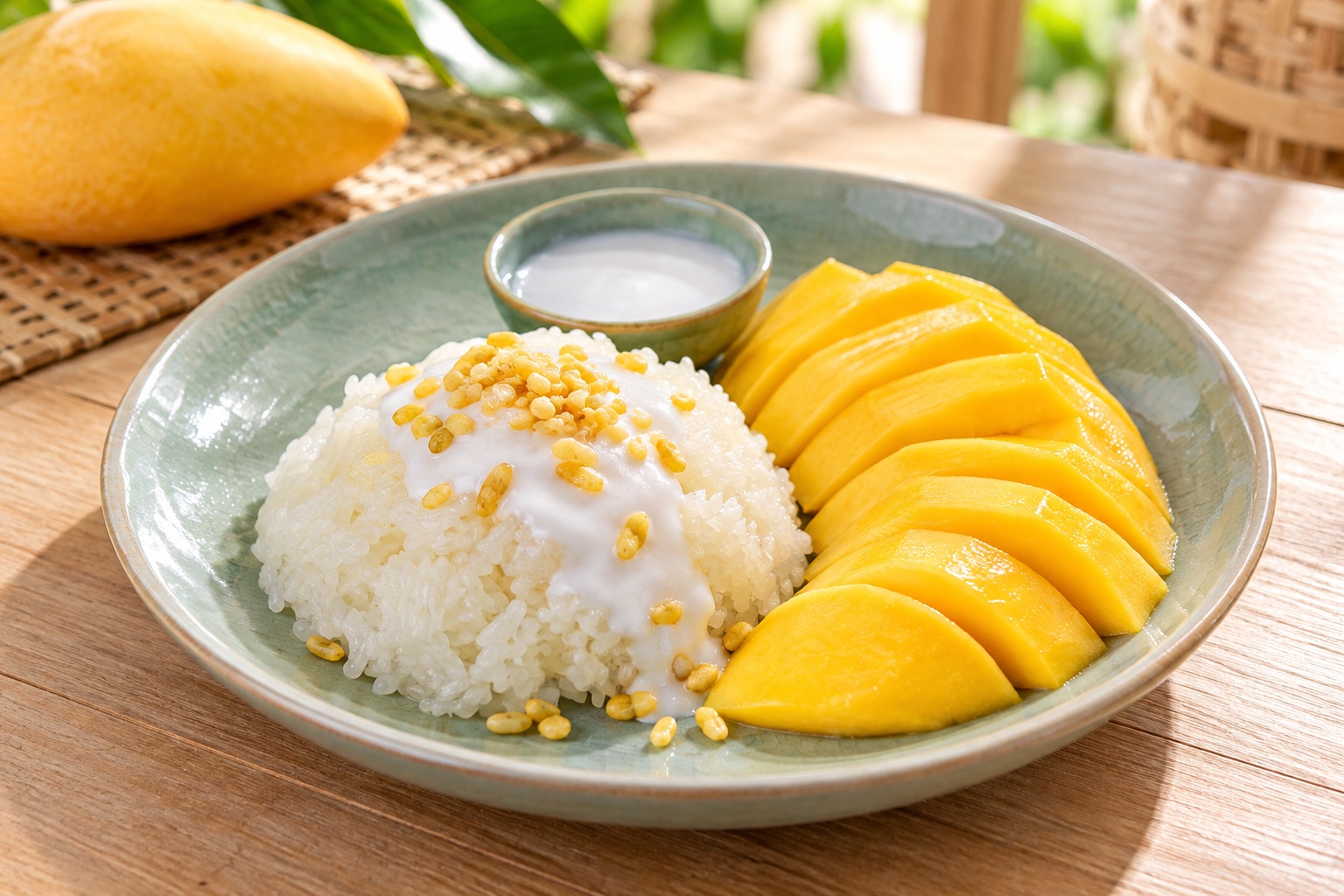
Known in Thailand as khao niao mamuang, mango sticky rice balances warm coconut-saturated glutinous rice with cool, fully ripe mango and a gentle salty edge.
Ordinary long-grain rice or boiling in water does not create the same texture. This method soaks true glutinous rice, steams it, and feeds the warm coconut mixture into the hot grains gradually.
Why this method works
- A 4-hour soak hydrates the grain’s center; steaming gelatinizes it without waterlogging it.
- Keeping both rice and coconut mixture hot speeds absorption, while adding the liquid in three stages prevents a soupy mass.
- Fully ripe but still firm mango provides sweetness without forcing excess sugar into the rice.
Before you start
Prepare a bamboo or metal steamer, thin cloth, wide bowl, small saucepan, strainer, and silicone spatula.
The package must say glutinous rice, sweet rice, or sticky rice; the name does not mean it contains gluten. Do not use jasmine rice.
Soak 4–8 hours in cool water. Mango should smell sweet at the stem and yield slightly without bruised, collapsed flesh.
Step-by-step method
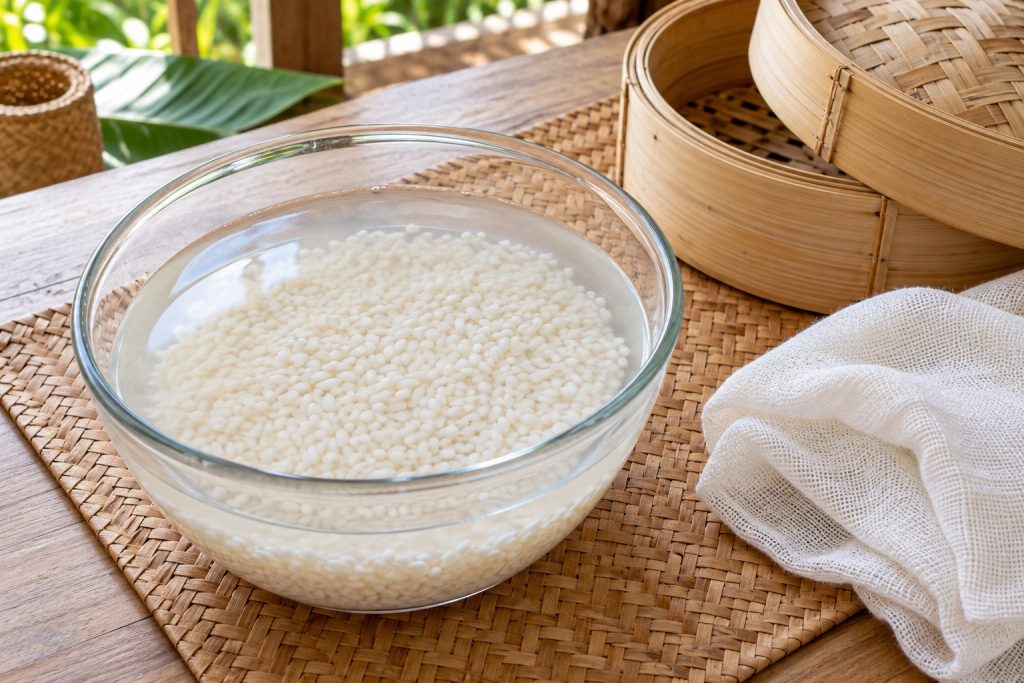
1. Soak and drain the rice
Rinse rice gently 3–4 times until the water is mostly clear. Cover with plenty of cool water and soak 4–8 hours. Drain thoroughly and spread loosely in a damp cloth-lined steamer.
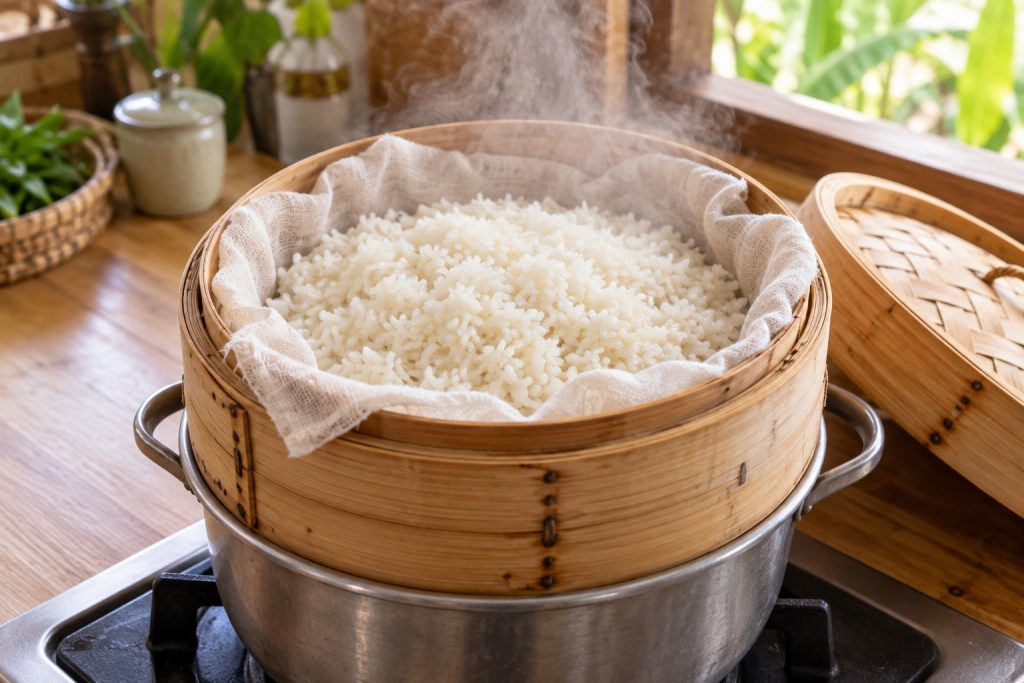
2. Steam without touching the water
Water below the steamer must not touch the rice. Cover and steam over steady steam 25–30 minutes; use the cloth to turn the rice at 15 minutes. Crush one grain: no hard chalky center should remain.
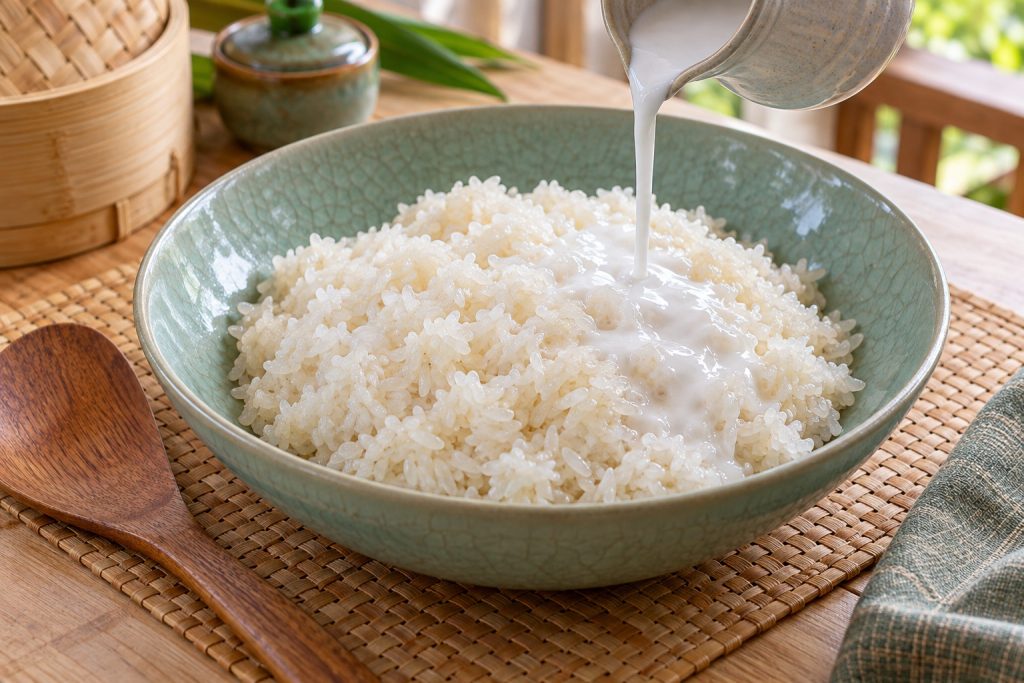
3. Absorb the hot coconut mixture
Meanwhile, warm 1 cup coconut milk with sugar and ½ teaspoon salt without boiling. Move hot rice to a wide bowl. Fold in the mixture in three additions, letting each absorb. Cover and rest 20 minutes.
4. Serve with mango and thick coconut sauce
Warm the remaining ⅓ cup plus 1 tablespoon coconut milk with remaining salt. Mix starch with water, whisk it in, and cook 1–2 minutes until it lightly coats a spoon. Peel and slice mangoes. Divide warm rice among four plates; add mango, sauce, and optional crunch.
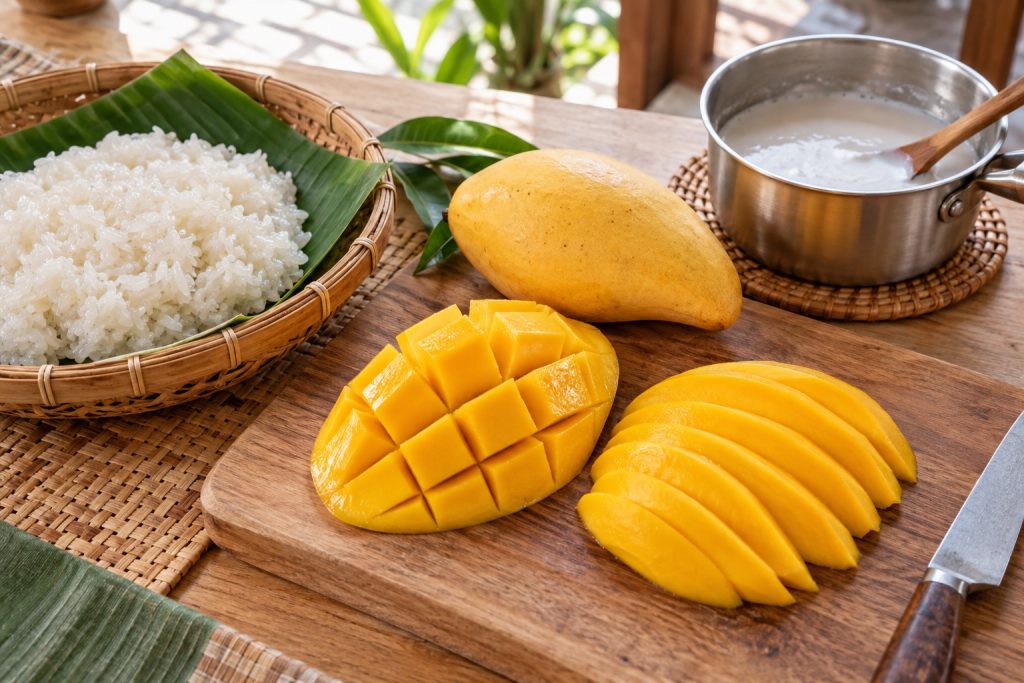
Thai Mango Sticky Rice
Steamed glutinous rice absorbs a balanced sweet-salty coconut mixture and stays glossy rather than mushy beside ripe mango.
Ingredients
- 250 g Thai glutinous rice
- 350 ml full-fat coconut milk — shaken smooth
- 75 g palm or white sugar
- 3/4 tsp fine salt — divided
- 1 tsp cornstarch or rice flour
- 1 tbsp water
- 2 large ripe yellow mangoes — about 1⅓ lb total
- 2 tbsp toasted split mung beans or sesame — optional
Instructions
- Rinse rice gently 3–4 times until the water is mostly clear. Cover with plenty of cool water and soak 4–8 hours. Drain thoroughly and spread loosely in a damp cloth-lined steamer.
- Water below the steamer must not touch the rice. Cover and steam over steady steam 25–30 minutes; use the cloth to turn the rice at 15 minutes. Crush one grain: no hard chalky center should remain.
- Meanwhile, warm 1 cup coconut milk with sugar and ½ teaspoon salt without boiling. Move hot rice to a wide bowl. Fold in the mixture in three additions, letting each absorb. Cover and rest 20 minutes.
- Warm the remaining ⅓ cup plus 1 tablespoon coconut milk with remaining salt. Mix starch with water, whisk it in, and cook 1–2 minutes until it lightly coats a spoon. Peel and slice mangoes. Divide warm rice among four plates; add mango, sauce, and optional crunch.
Notes
- The grains are translucent, glossy, and cling together without collapsing into paste; no free coconut liquid pools in the bowl. Mango is juicy yet firm enough for clean slices.
- Hard rice means a short soak or weak steam; steam 5–10 minutes longer. A soupy bowl means the coconut was added too fast; rest uncovered 10 minutes. Thawed and well-drained frozen mango can replace fresh. 250 g rice is about 1⅓ US cups. Naturally vegan and gluten-free when packages are certified; sesame garnish adds sesame.
- Best warm on the day it is made. Do not leave cooked rice at room temperature: cool in a shallow container within 1 hour, refrigerate no more than 24 hours, and reheat only once until steaming throughout. Store mango and sauce separately. Freezing noticeably hardens the texture and is not recommended.
Texture and doneness cues
The grains are translucent, glossy, and cling together without collapsing into paste; no free coconut liquid pools in the bowl. Mango is juicy yet firm enough for clean slices.
Mistakes, substitutions, and measurements
Hard rice means a short soak or weak steam; steam 5–10 minutes longer. A soupy bowl means the coconut was added too fast; rest uncovered 10 minutes. Thawed and well-drained frozen mango can replace fresh. 250 g rice is about 1⅓ US cups. Naturally vegan and gluten-free when packages are certified; sesame garnish adds sesame.
Serving, storage, and allergens
Best warm on the day it is made. Do not leave cooked rice at room temperature: cool in a shallow container within 1 hour, refrigerate no more than 24 hours, and reheat only once until steaming throughout. Store mango and sauce separately. Freezing noticeably hardens the texture and is not recommended.
Frequently asked questions
Can I use ordinary rice?
No. Jasmine or long-grain rice will not develop the flexible, sticky texture; look for glutinous, sweet, or sticky rice.
Why did the coconut milk split?
A hard boil can separate the fat and water. Warm gently only until the sugar dissolves.
How ripe should the mango be?
It should smell sweet, look yellow, and yield slightly; very soft mango collapses when sliced.
Leave a Reply