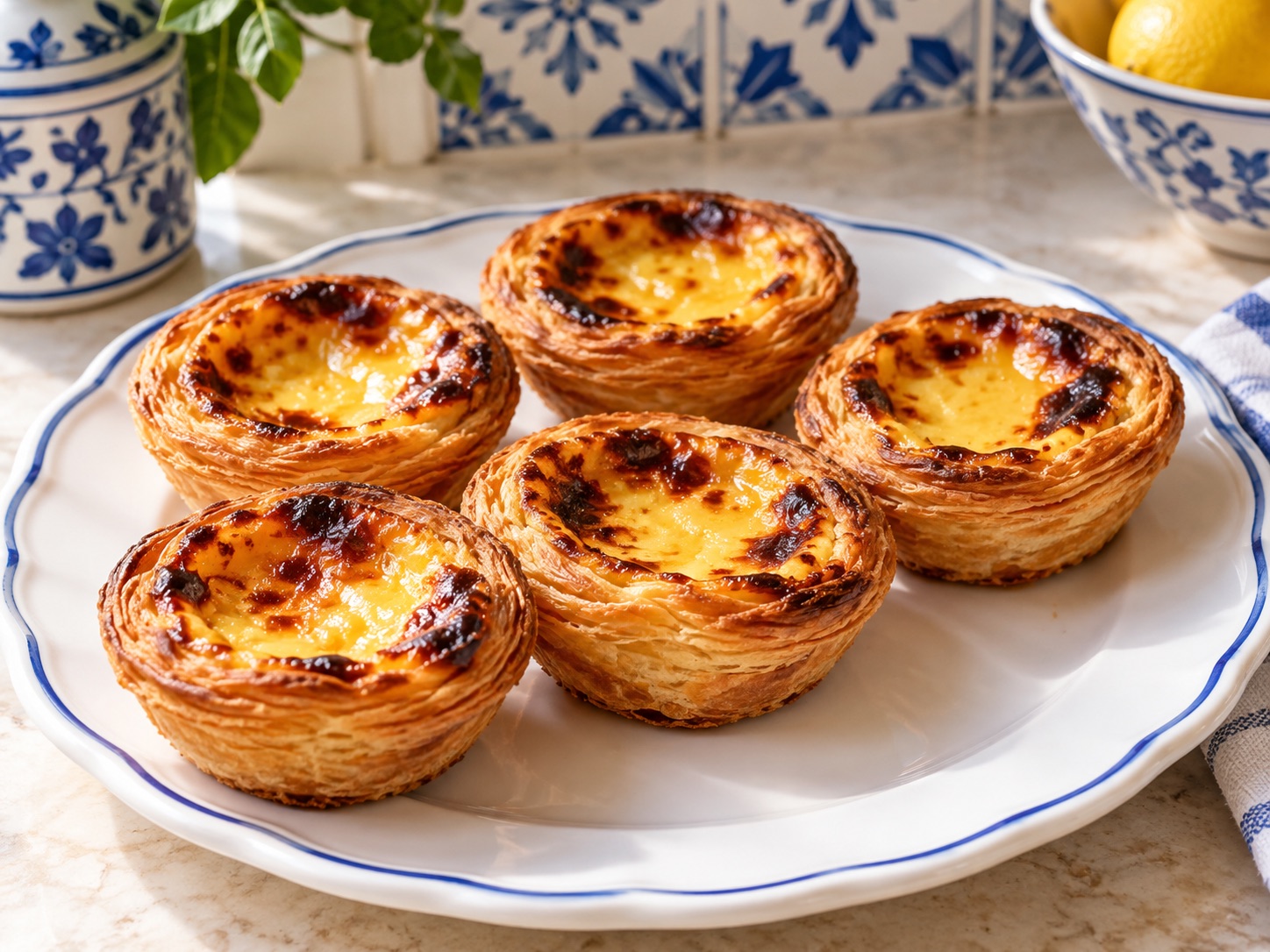
Pastéis de nata are a Portuguese icon: laminated pastry shells filled with lemon-cinnamon egg-yolk custard. Professional ovens use extremely high heat.
This version uses all-butter puff pastry and the highest practical home-oven temperature; it is an explicit home adaptation, not a claim of exact bakery replication.
Why this method works
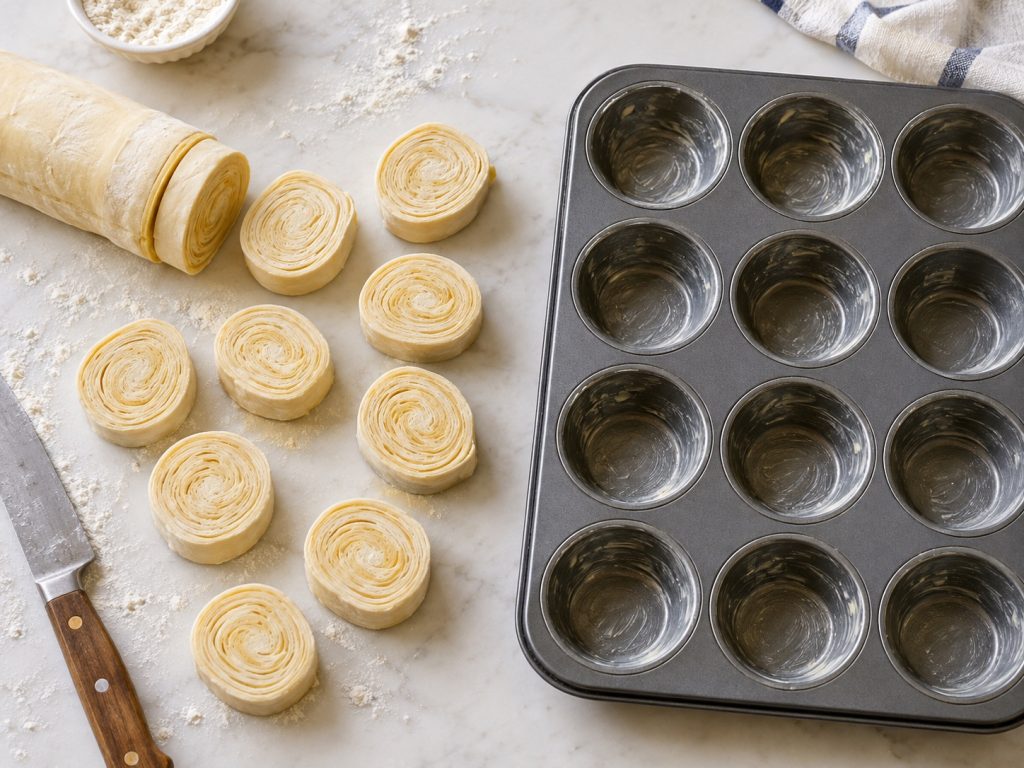
- Rolling and slicing puff pastry creates visible spiral layers in the shell.
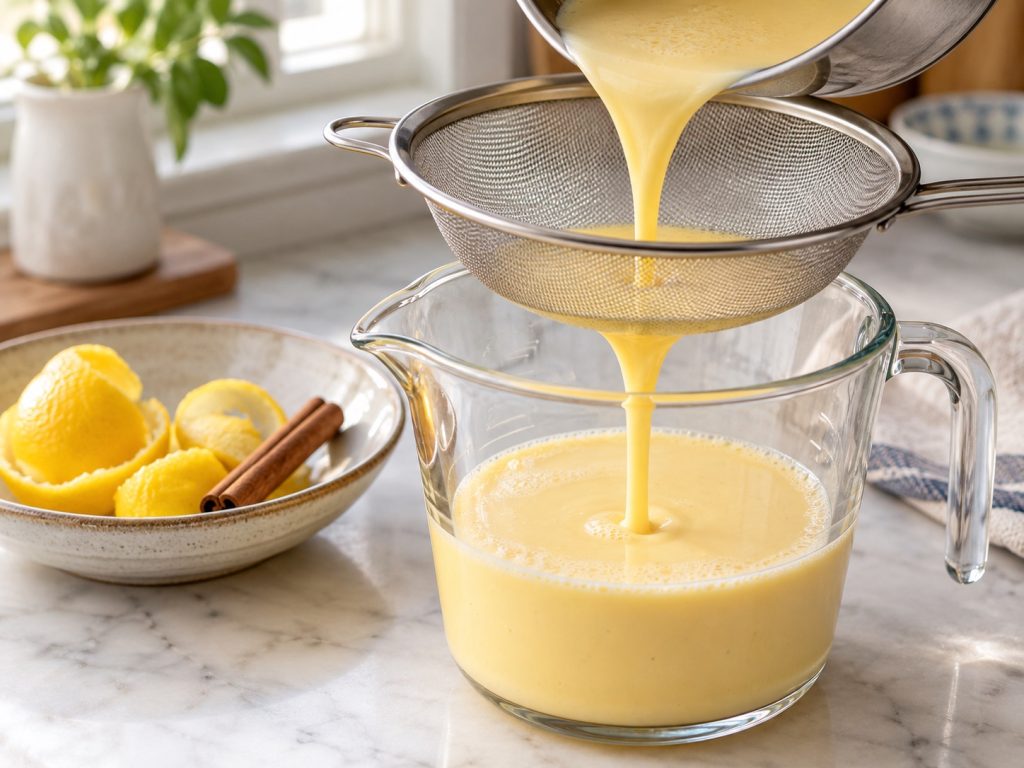
- Straining removes lumps; avoiding a boil prevents scrambled custard.
- A very hot oven rapidly lifts pastry and creates spotted caramelization.
Before you start
Use a metal 12-cup muffin tin, saucepan, whisk, and sieve. Preheat to 475–500°F for at least 30 minutes.
Pastry should be cold but pliable. Silicone does not brown shells as effectively as metal.
Do not leave egg custard at room temperature more than 2 hours.
Step-by-step method
1. Roll, slice, and line the tin
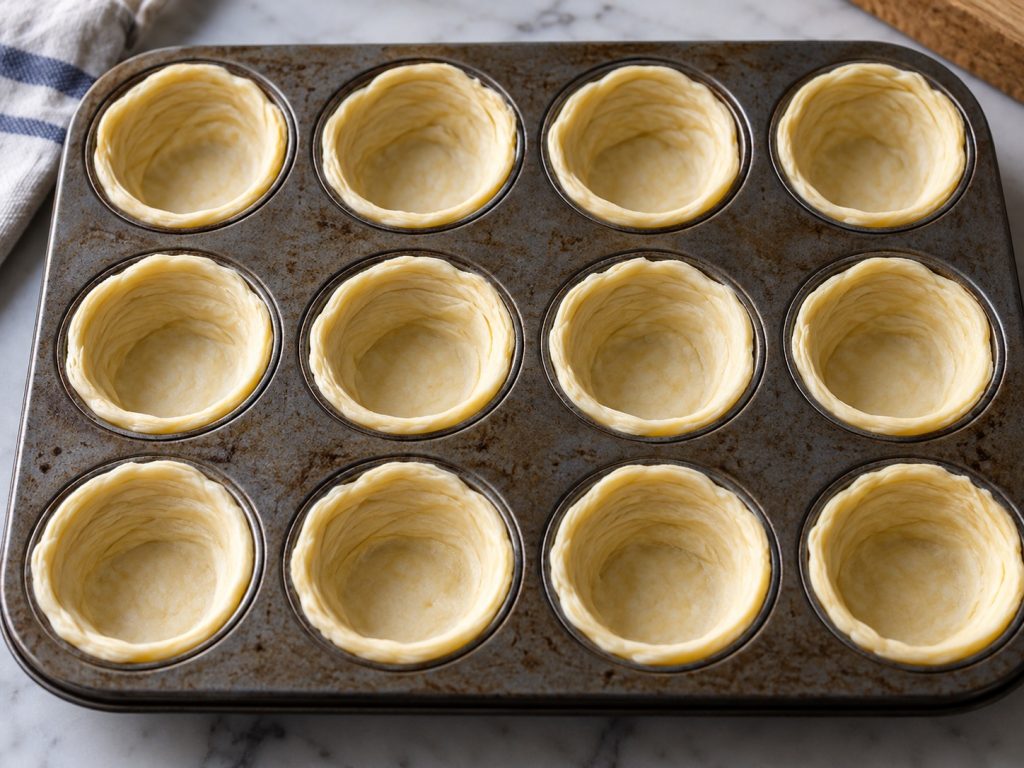
Roll pastry tightly and cut 12 equal spirals. Set cut-side down in a greased metal tin; with wet fingers press bottoms thin and sides slightly thicker. Chill.
2. Make syrup and milk base
Boil sugar, water, cinnamon, and lemon 3 minutes. Whisk flour with one-quarter of the milk; add remaining hot milk and cook until lightly thickened.
3. Strain yolk custard and fill
Whisk syrup in gradually. Once warm, add yolks; do not boil. Strain and fill shells three-quarters full.
4. Bake very hot until spotted
Bake at 475–500°F for 14–18 minutes until pastry is deep gold and custard has dark spots. Cool 10 minutes in tin, then rack.
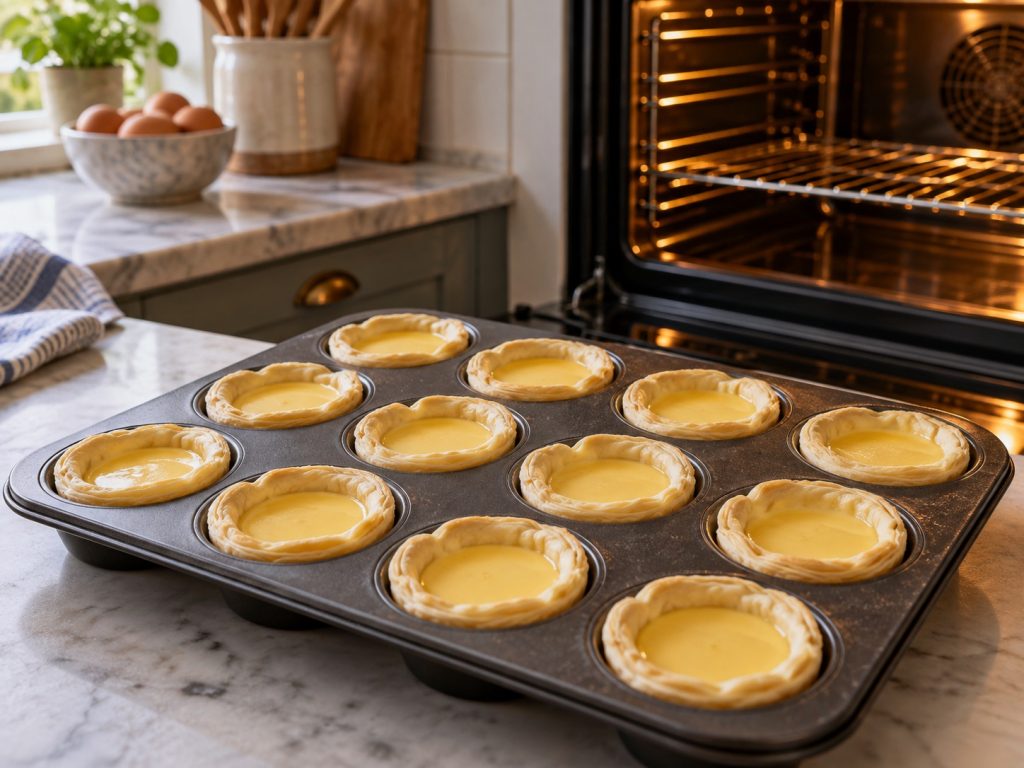
Portuguese Pastéis de Nata for a Home Oven
A home-oven adaptation using all-butter puff pastry, with crisp spirals, silky custard, and caramelized tops.
Ingredients
- 320 g all-butter puff pastry
- 250 ml whole milk
- 150 g sugar
- 100 ml water
- 20 g all-purpose flour
- 6 large egg yolks
- 1 strip lemon peel
- 1 stick cinnamon
- 1/4 tsp salt
Instructions
- Roll pastry tightly and cut 12 equal spirals. Set cut-side down in a greased metal tin; with wet fingers press bottoms thin and sides slightly thicker. Chill.
- Boil sugar, water, cinnamon, and lemon 3 minutes. Whisk flour with one-quarter of the milk; add remaining hot milk and cook until lightly thickened.
- Whisk syrup in gradually. Once warm, add yolks; do not boil. Strain and fill shells three-quarters full.
- Bake at 475–500°F for 14–18 minutes until pastry is deep gold and custard has dark spots. Cool 10 minutes in tin, then rack.
Notes
- Pastry edges are deep gold and visibly layered; custard puffs, blisters, and still jiggles slightly in the center. Baking rigid makes it rubbery.
- Store-bought puff pastry is a practical adaptation of hand-laminated dough. Full-fat lactose-free milk works; plant milk changes richness. Contains gluten, dairy, and egg.
- Serve warm with cinnamon. Refrigerate within 2 hours and use within 3–4 days; custard tarts do not freeze well. Recrisp 5–7 minutes at 400°F.
Texture and doneness cues
Pastry edges are deep gold and visibly layered; custard puffs, blisters, and still jiggles slightly in the center. Baking rigid makes it rubbery.
Mistakes, substitutions, and measurements
Store-bought puff pastry is a practical adaptation of hand-laminated dough. Full-fat lactose-free milk works; plant milk changes richness. Contains gluten, dairy, and egg.
Serving, storage, and allergens
Serve warm with cinnamon. Refrigerate within 2 hours and use within 3–4 days; custard tarts do not freeze well. Recrisp 5–7 minutes at 400°F.
Frequently asked questions
Why is the custard grainy?
Yolks hit a very hot base or boiled; cool slightly, add gradually, and strain.
Why is the pastry not crisp?
The tin or oven was not hot enough; use metal and a long preheat.
Can I prepare ahead?
Chill shells and custard separately up to 24 hours; fill just before baking.
Leave a Reply