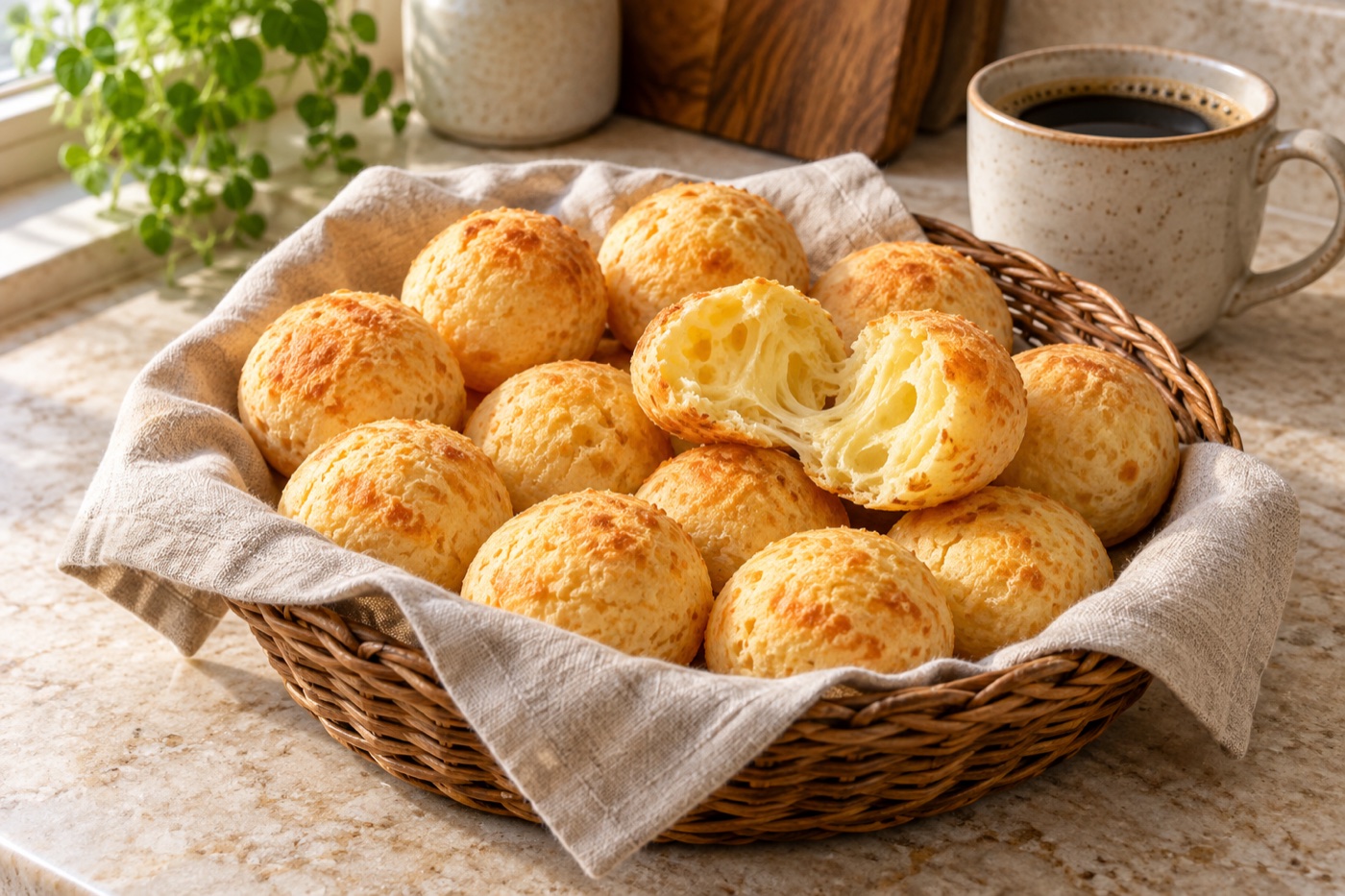
Pão de queijo is the small tapioca-and-cheese bread strongly associated with Brazil’s Minas Gerais. It contains no wheat flour and should have a thin crust with a moist, stretchy center.
Scalding the tapioca starch is the structural key. Because starch and cheese moisture vary, the final egg is added gradually rather than blindly.
Why this method works
- Boiling milk and oil gelatinize the tapioca and reduce raw starch flavor.
- Adding eggs only after the mixture cools prevents scrambling.
- A hot start drives expansion; a lower finish sets the chewy center without burning.
Before you start
Heat the oven to 400°F. Have a scale, saucepan, sturdy spatula, and parchment ready.
Sour cassava starch gives stronger expansion; sweet tapioca starch or a blend gives a softer result.
If the dough sticks, oil your hands; adding excess starch makes the center dry.
Step-by-step method
1. Scald the starch
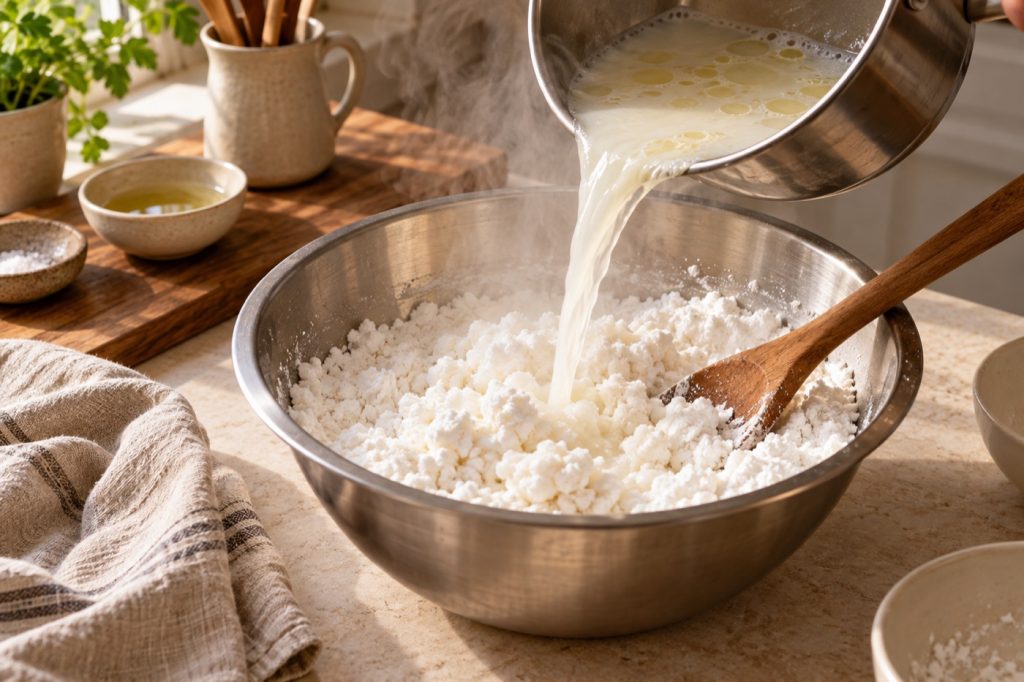
Bring milk, water, oil, and salt to a full boil. Pour over tapioca starch at once and stir firmly until no dry starch remains.
2. Cool the mixture
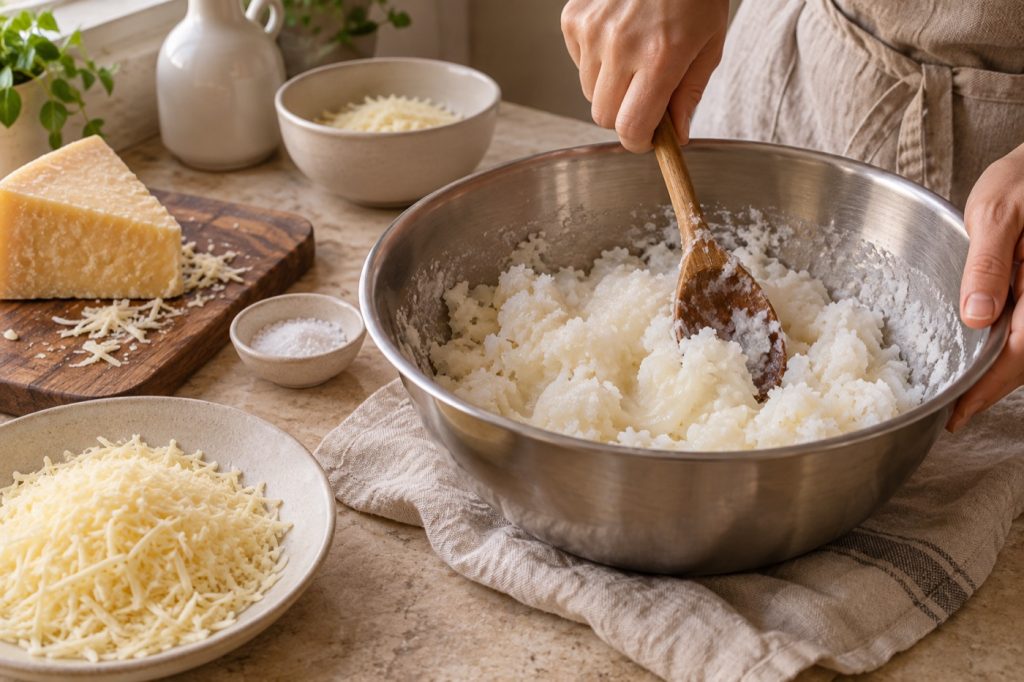
Cool 8–10 minutes until warm but not hot to the touch. Break up large clumps with a spatula; it need not be smooth.
3. Add egg and cheese
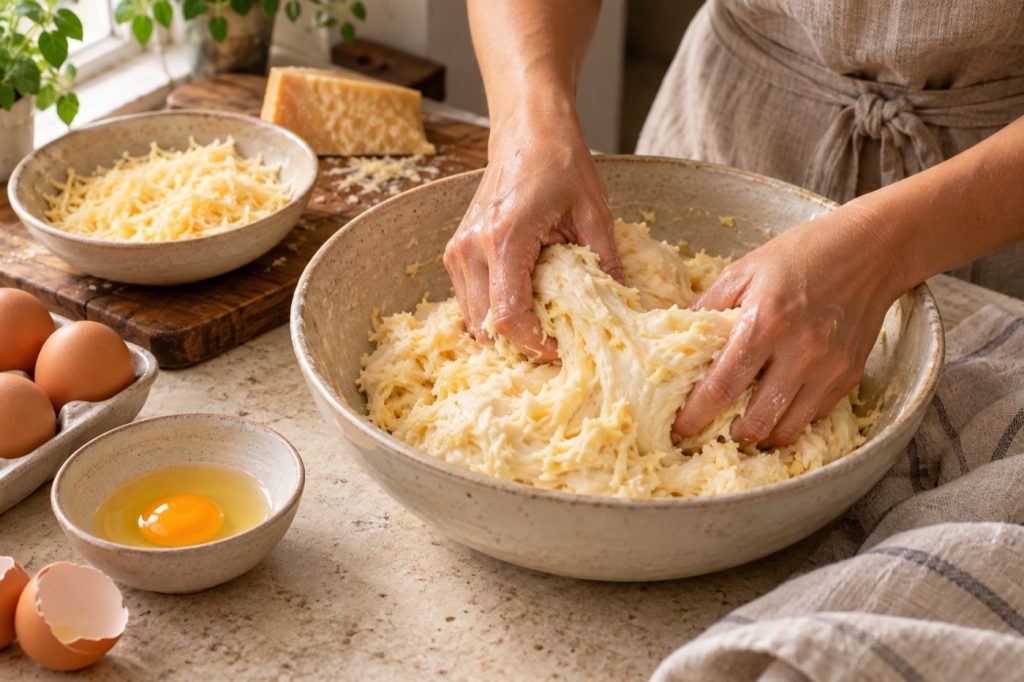
Mix in one egg completely. Beat the second and add gradually, stopping when the dough is soft, glossy, and still holds shape. Knead in both cheeses.
4. Shape and bake at two temperatures
With oiled hands, shape 24 balls of about 25 g. Bake 12 minutes at 400°F, then 10–13 minutes at 350°F. Remove when puffed, light, and golden.
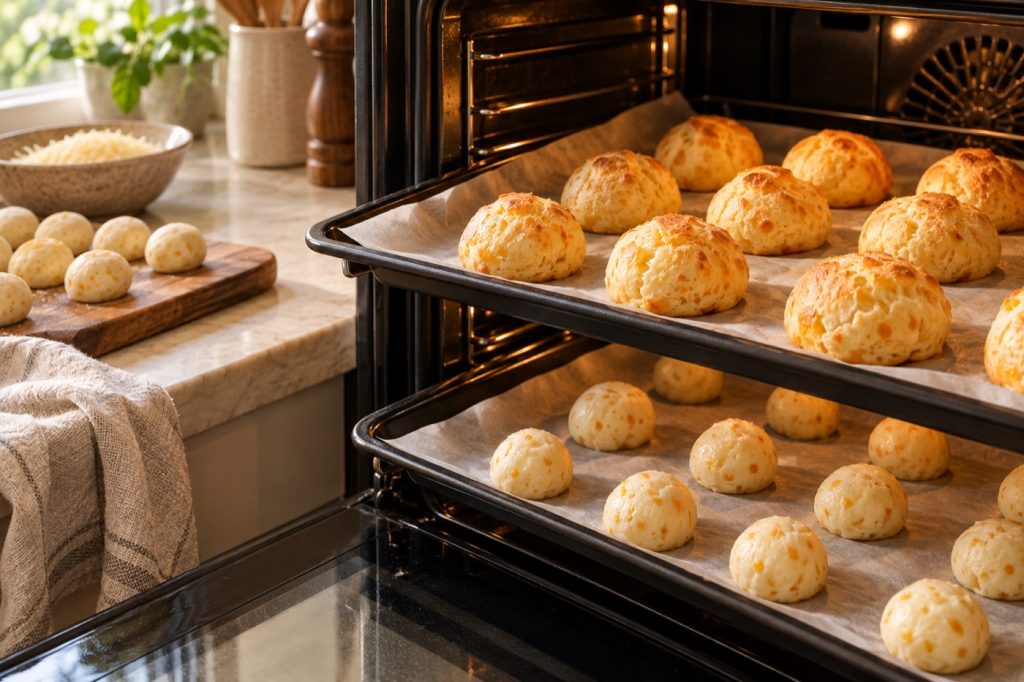
Brazilian Pão de Queijo
Brazilian tapioca cheese bread with proper scalding, adjustable egg, freezer directions, and fixes for collapse.
Ingredients
- 300 g tapioca starch
- 120 ml whole milk
- 80 ml water
- 60 ml neutral oil
- 1 tsp salt
- 2 large eggs — second added gradually
- 150 g aged firm cheese — finely grated
- 50 g Parmesan — finely grated
Instructions
- Bring milk, water, oil, and salt to a full boil. Pour over tapioca starch at once and stir firmly until no dry starch remains.
- Cool 8–10 minutes until warm but not hot to the touch. Break up large clumps with a spatula; it need not be smooth.
- Mix in one egg completely. Beat the second and add gradually, stopping when the dough is soft, glossy, and still holds shape. Knead in both cheeses.
- With oiled hands, shape 24 balls of about 25 g. Bake 12 minutes at 400°F, then 10–13 minutes at 350°F. Remove when puffed, light, and golden.
Notes
- The shell should be dry and lightly cracked, the bread feel light, and the center moist and stretchy rather than wet. Underbaking causes collapse; overbaking toughens it.
- If Minas cheese is unavailable, use a low-moisture aged cheese plus Parmesan. Fine tapioca flour/starch works; tapioca pearls do not. Contains dairy and egg.
- Best served warm. Cool within 2 hours and refrigerate 3 days; reheat 5–7 minutes at 350°F. Tray-freeze raw balls, bag, and bake from frozen 3–5 minutes longer.
Texture and doneness cues
The shell should be dry and lightly cracked, the bread feel light, and the center moist and stretchy rather than wet. Underbaking causes collapse; overbaking toughens it.
Mistakes, substitutions, and measurements
If Minas cheese is unavailable, use a low-moisture aged cheese plus Parmesan. Fine tapioca flour/starch works; tapioca pearls do not. Contains dairy and egg.
Serving, storage, and allergens
Best served warm. Cool within 2 hours and refrigerate 3 days; reheat 5–7 minutes at 350°F. Tray-freeze raw balls, bag, and bake from frozen 3–5 minutes longer.
Frequently asked questions
Why did pão de queijo spread?
The dough may have too much egg or been shaped while hot. Add the second egg gradually and rest the dough 10 minutes.
Why is the center hollow?
Some cavity is normal; an excessive hollow can come from overly high heat or balls that are too large.
Can cornstarch replace tapioca?
No. The stretchy structure is specific to tapioca starch.
Leave a Reply