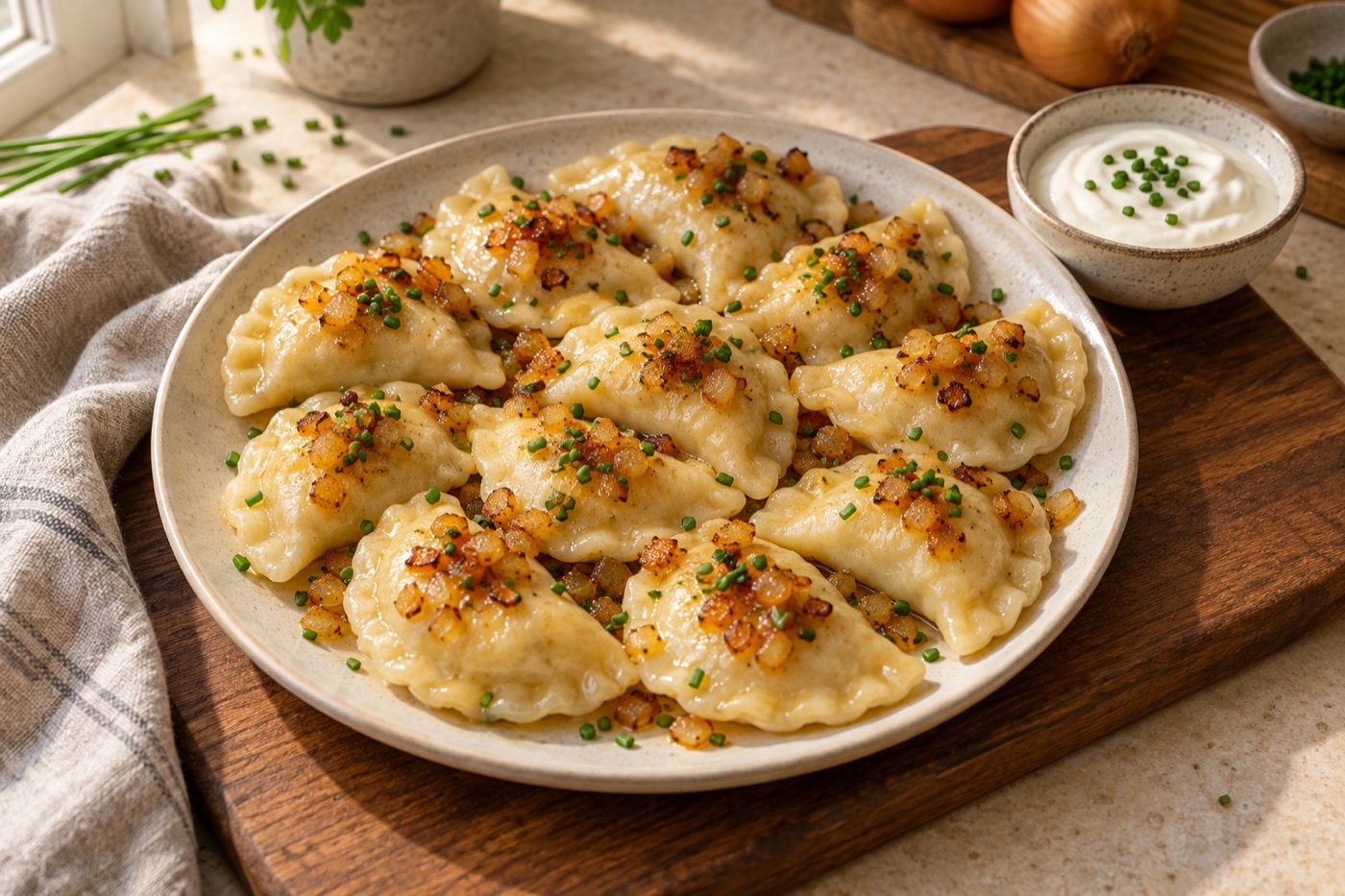
Pierogi ruskie are among Poland’s best-known dumplings, filled with potato and twaróg-style fresh cheese. The name refers to historic Ruthenia rather than Russia.
This accessible version uses farmer cheese or well-drained cottage cheese. A cool, dry filling and flour-free edges are what keep the dumplings sealed.
Why this method works
- Hot water partially gelatinizes the flour, making an egg-free dough that rolls thin without cracking.
- The potatoes are mashed hot but mixed with cheese only after cooling, so the filling does not wet the dough.
- A gentle simmer, not a violent boil, protects the seams while the dough cooks through.
Before you start
Have a scale, saucepan, skillet, rolling pin, 3-inch cutter, and slotted spoon ready. Drain wet cottage cheese in cloth for at least 30 minutes.
Keep unused dough covered. Dividing the filling into 30 portions before rolling makes assembly faster and seals more reliable.
To freeze, tray-freeze uncooked pierogi without touching, then bag them. Cook straight from frozen at a gentle simmer.
Step-by-step method
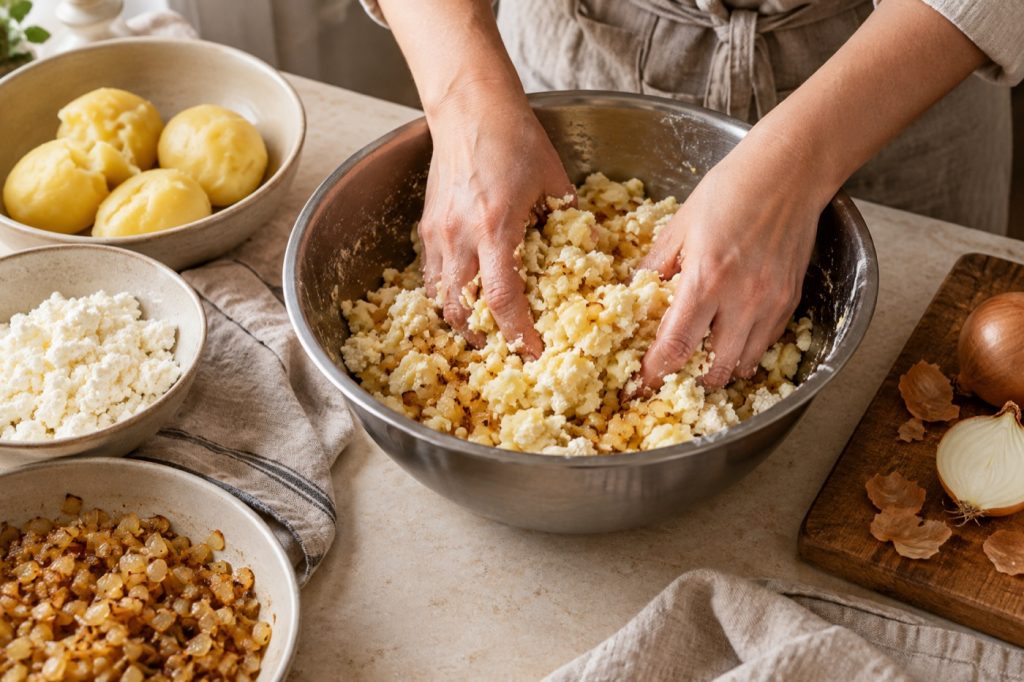
1. Make and cool the filling
Boil the potatoes in salted water until tender, drain very well, and mash. Brown the onion in 1 tablespoon butter. When the potato is cool, mix in cheese, half the onion, salt, and pepper; chill completely.
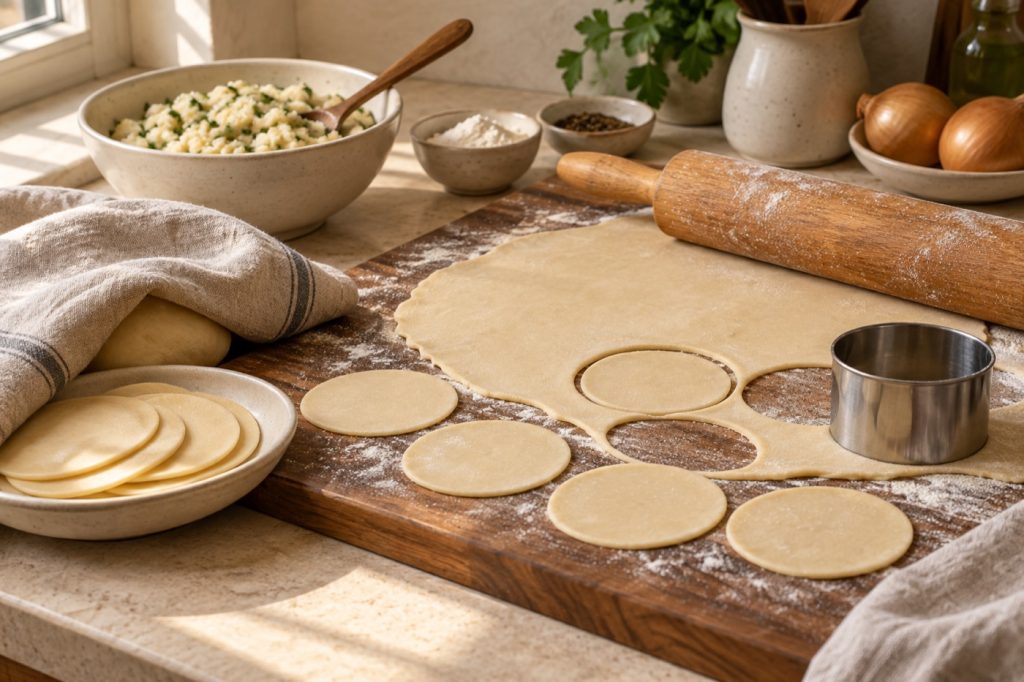
2. Roll the dough thin
Mix flour and salt. Add hot water and oil gradually; knead 7–8 minutes until smooth. Cover and rest 30 minutes. Roll half to 1/16 inch and cut 3-inch rounds.
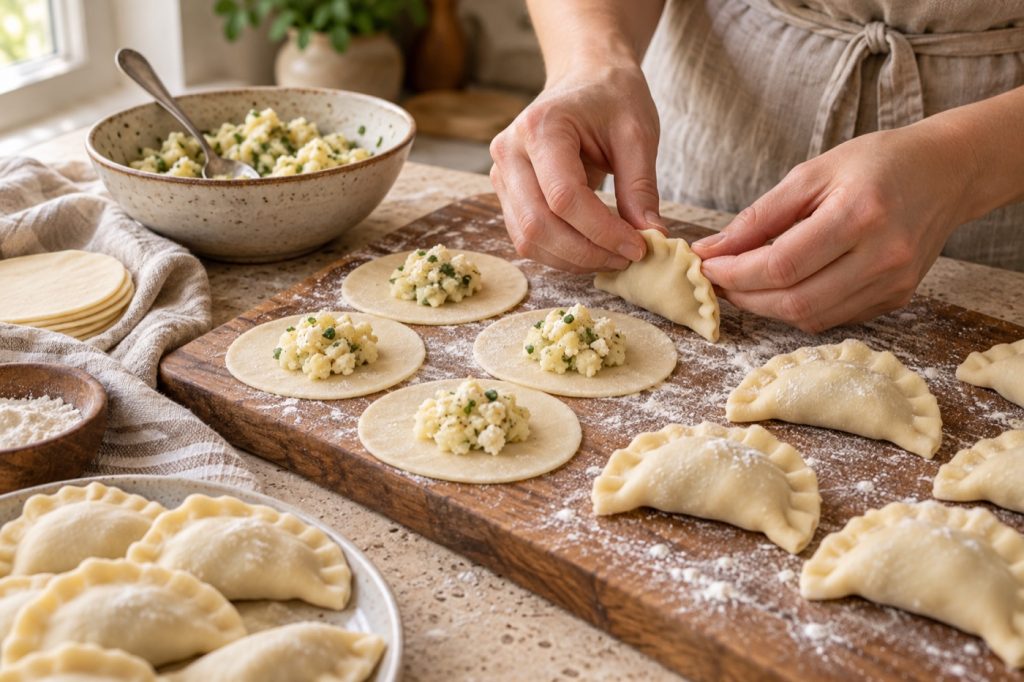
3. Fill and seal firmly
Place about 1 heaped teaspoon filling on each round. Brush flour from the rim, fold into a half-moon, press out air, and pinch twice. Keep finished dumplings covered on a lightly floured cloth.
4. Cook at a gentle simmer
Bring salted water to a gentle boil. Do not crowd the pot; after the pierogi float, cook 2 minutes more. Lift with a slotted spoon and toss with the remaining butter and browned onion.
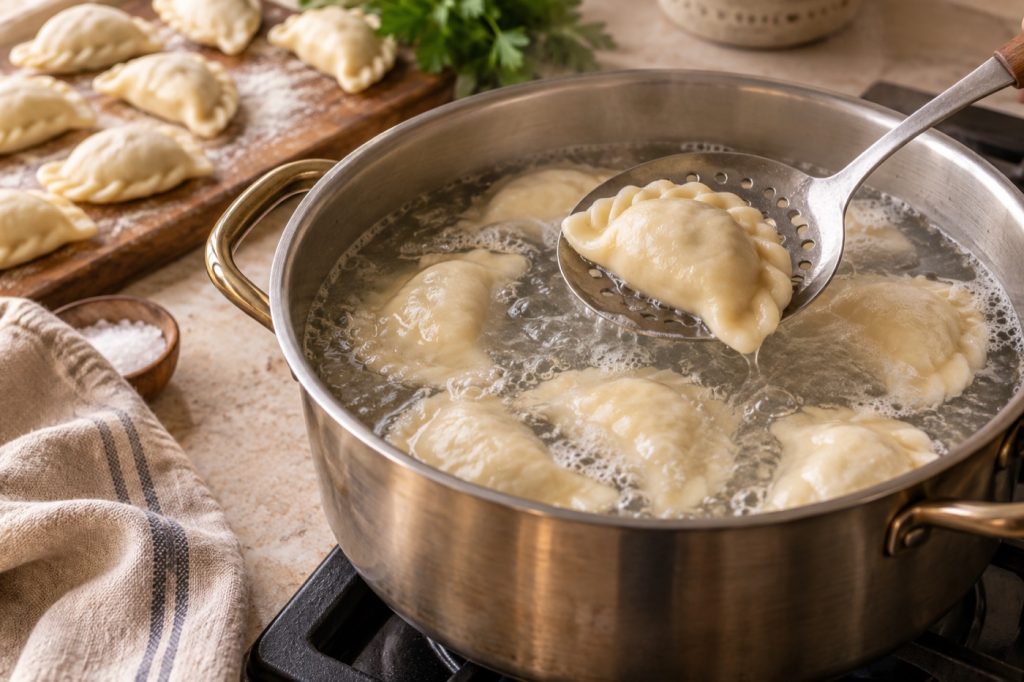
Pierogi Ruskie
Polish potato-and-cheese dumplings with supple egg-free dough, a dry filling, reliable seals, and freezer instructions.
Ingredients
- 300 g all-purpose flour
- 170 ml hot water — about 160°F
- 1 tbsp neutral oil
- 1/2 tsp fine salt
- 500 g floury potatoes — peeled
- 250 g farmer cheese or drained cottage cheese
- 1 medium yellow onion — finely diced
- 2 tbsp butter — divided
- 3/4 tsp salt
- 1/2 tsp black pepper
Instructions
- Boil the potatoes in salted water until tender, drain very well, and mash. Brown the onion in 1 tablespoon butter. When the potato is cool, mix in cheese, half the onion, salt, and pepper; chill completely.
- Mix flour and salt. Add hot water and oil gradually; knead 7–8 minutes until smooth. Cover and rest 30 minutes. Roll half to 1/16 inch and cut 3-inch rounds.
- Place about 1 heaped teaspoon filling on each round. Brush flour from the rim, fold into a half-moon, press out air, and pinch twice. Keep finished dumplings covered on a lightly floured cloth.
- Bring salted water to a gentle boil. Do not crowd the pot; after the pierogi float, cook 2 minutes more. Lift with a slotted spoon and toss with the remaining butter and browned onion.
Notes
- The dough should be opaque and tender, not mushy, with no filling visible at the seam. A hard boil or wet filling causes splitting.
- Use well-drained cottage cheese if farmer cheese is unavailable. 1 tbsp = 15 ml; 1 tsp = 5 ml. Contains gluten and dairy.
- Serve with sour cream and onion. Chill cooked pierogi within 2 hours and refrigerate 3–4 days; reheat in butter in a skillet. Uncooked frozen pierogi keep best for 2 months.
Texture and doneness cues
The dough should be opaque and tender, not mushy, with no filling visible at the seam. A hard boil or wet filling causes splitting.
Mistakes, substitutions, and measurements
Use well-drained cottage cheese if farmer cheese is unavailable. 1 tbsp = 15 ml; 1 tsp = 5 ml. Contains gluten and dairy.
Serving, storage, and allergens
Serve with sour cream and onion. Chill cooked pierogi within 2 hours and refrigerate 3–4 days; reheat in butter in a skillet. Uncooked frozen pierogi keep best for 2 months.
Frequently asked questions
Why do pierogi split?
The rims may be floury, the filling warm or wet, or the boil too vigorous. Clean the rim and pinch twice.
Can I make the dough ahead?
Yes. Lightly oil, wrap airtight, and refrigerate up to 24 hours; temper for 30 minutes before rolling.
Should frozen pierogi be thawed?
No. Thawing makes them sticky and damp; add them directly to gently boiling water.
Leave a Reply