Author: emredikmen1

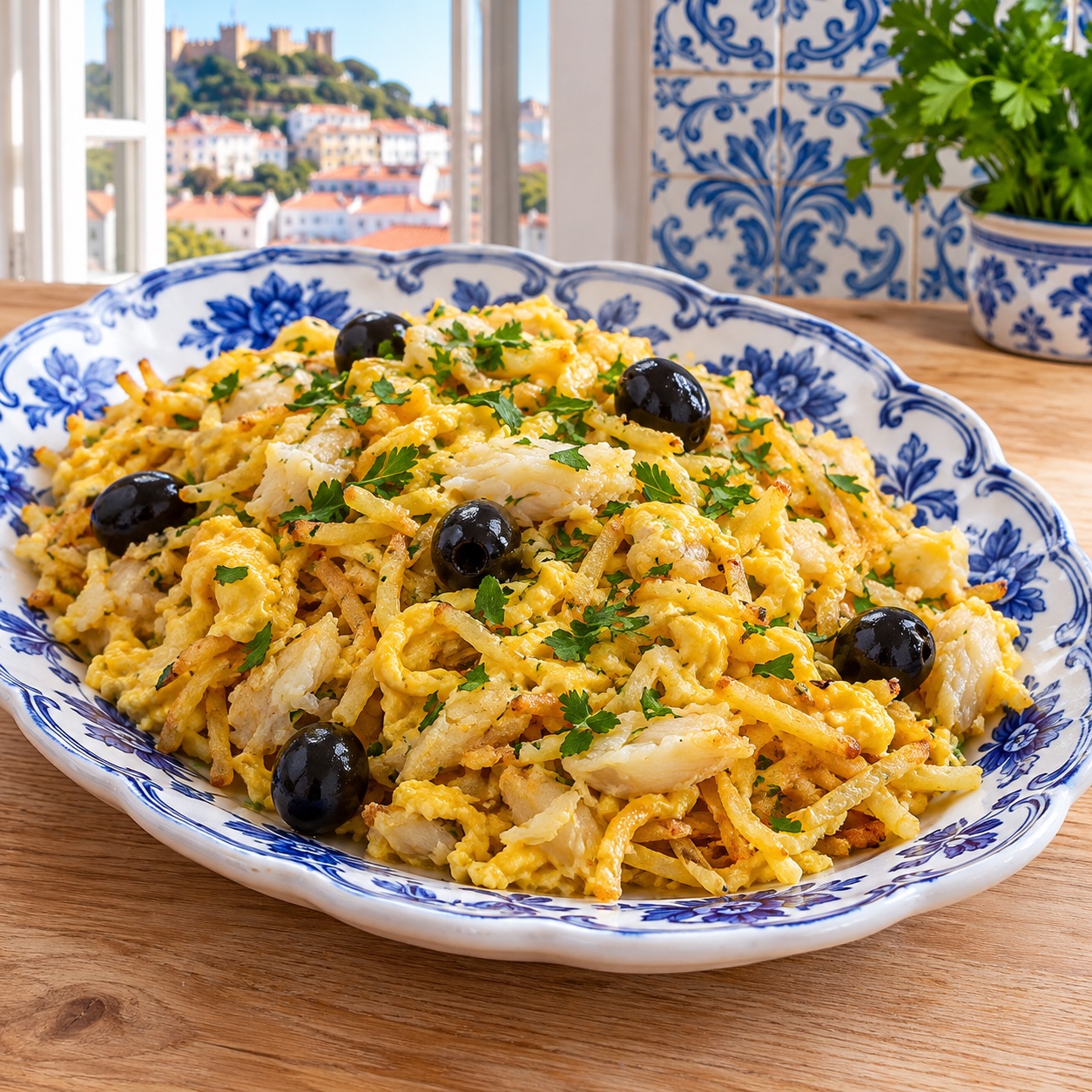
  • Bacalhau à Brás: Creamy Portuguese Cod and Eggs

    Bacalhau à Brás: Creamy Portuguese Cod and Eggs

    VisitPortugal lists Bacalhau à Brás—cod with fried potatoes and eggs—among Portugal’s best-known cod dishes. This home adaptation uses pre-desalted cod, fine potato matchsticks, and controlled egg temperature.

    The key is timing three components: soften onion, cook cod only until flaky, and add half the potatoes at the end to preserve crunch.

    Why this method works

    • Refrigerated desalting evens salt while keeping fish cold.
    • Dry potatoes splatter less and crisp better.
    • Removing the pan from heat and carrying eggs to 160°F/71°C prevents dryness.
    • Adding half the potatoes at the end gives two textures.

    Before you start

    Prepare a wide nonstick skillet, 8-inch saucepan, thermometer, and mandoline/julienne cutter.

    If using salt cod, soak under refrigeration 24–36 hours, changing water every 8 hours. The listed weight is after desalting.

    Cut potatoes into ⅛-inch/3 mm sticks, rinse, and dry thoroughly.
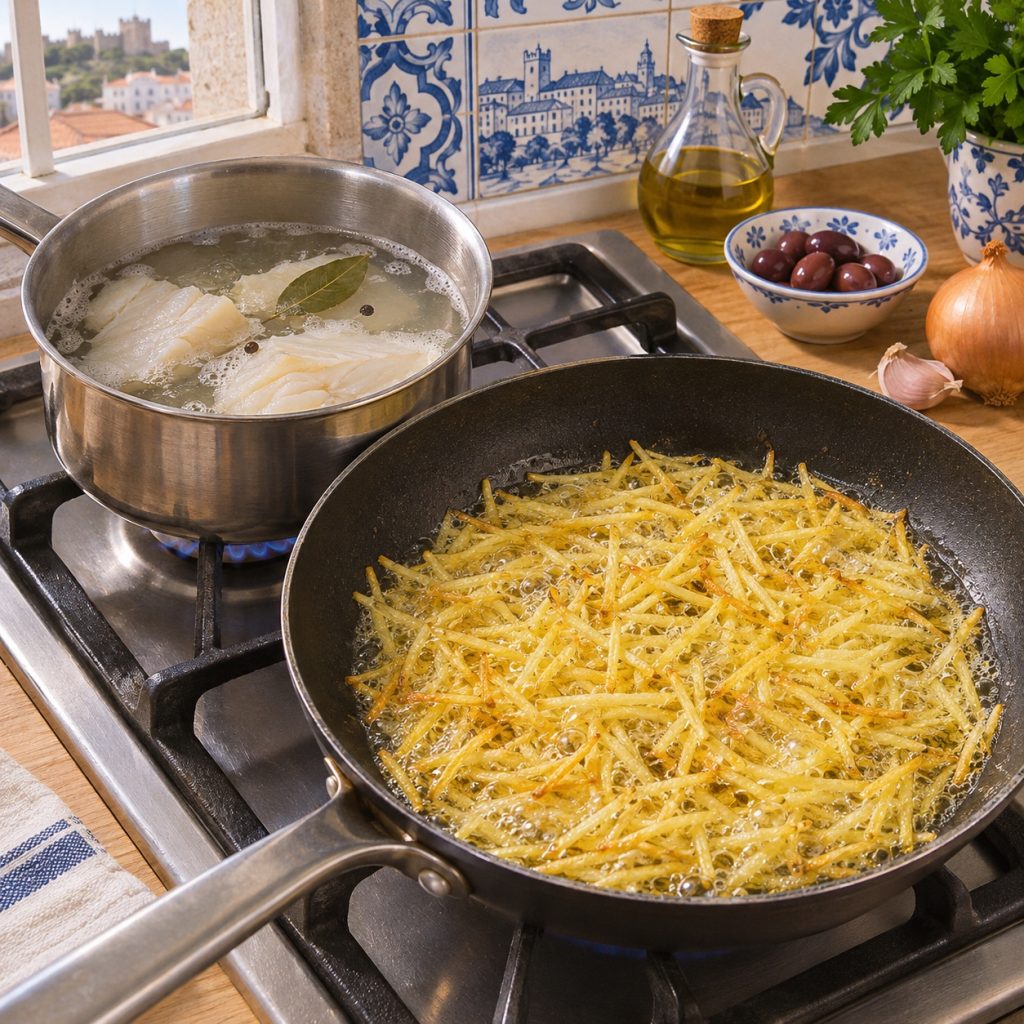
    Prepare cod and fry crisp potatoes
    Poach cod gently 8–10 minutes; when it reaches 145°F/63°C and flakes, drain and remove skin and bones. Fry potatoes in 340°F/170°C oil in 3–4 batches for 3–5 minutes until crisp; drain.

    Step-by-step method

    1. Prepare cod and fry crisp potatoes

    Poach cod gently 8–10 minutes; when it reaches 145°F/63°C and flakes, drain and remove skin and bones. Fry potatoes in 340°F/170°C oil in 3–4 batches for 3–5 minutes until crisp; drain.

    2. Soften onions and add cod

    Heat olive oil over medium. Soften onions 12–15 minutes without browning; add garlic for 1 minute. Fold in cod flakes and cook 2 minutes.
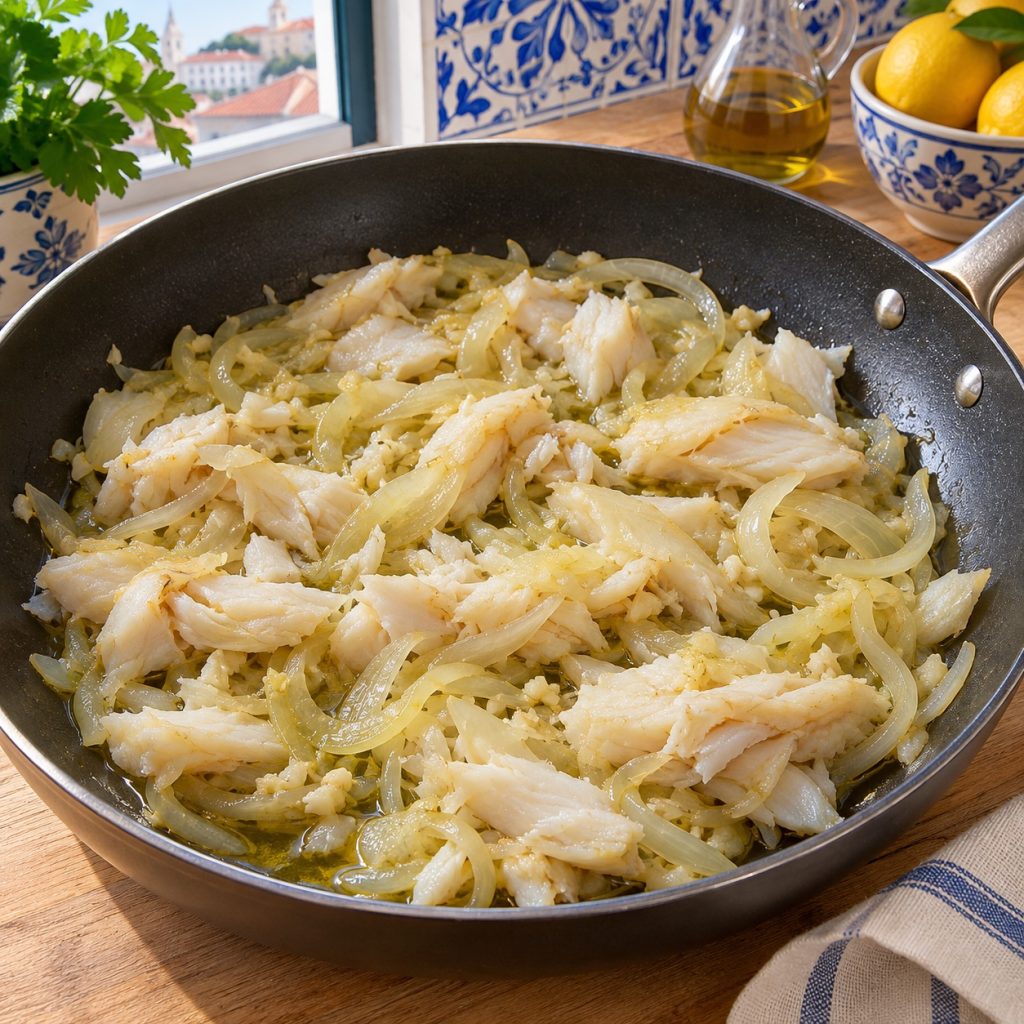
    Soften onions and add cod
    Heat olive oil over medium. Soften onions 12–15 minutes without browning; add garlic for 1 minute. Fold in cod flakes and cook 2 minutes.

    3. Set eggs gently and safely

    Beat eggs with pepper. Add half the potatoes, lower heat, and pour in eggs. Fold gently for 1–2 minutes; remove from heat while glossy and soft.

    Set eggs gently and safely
    Beat eggs with pepper. Add half the potatoes, lower heat, and pour in eggs. Fold gently for 1–2 minutes; remove from heat while glossy and soft.

    4. Finish with crisp potatoes and garnish

    Use residual heat to reach 160°F/71°C. Fold in remaining crisp potatoes, parsley, and olives; serve immediately. Chill leftovers in a shallow container within 2 hours.
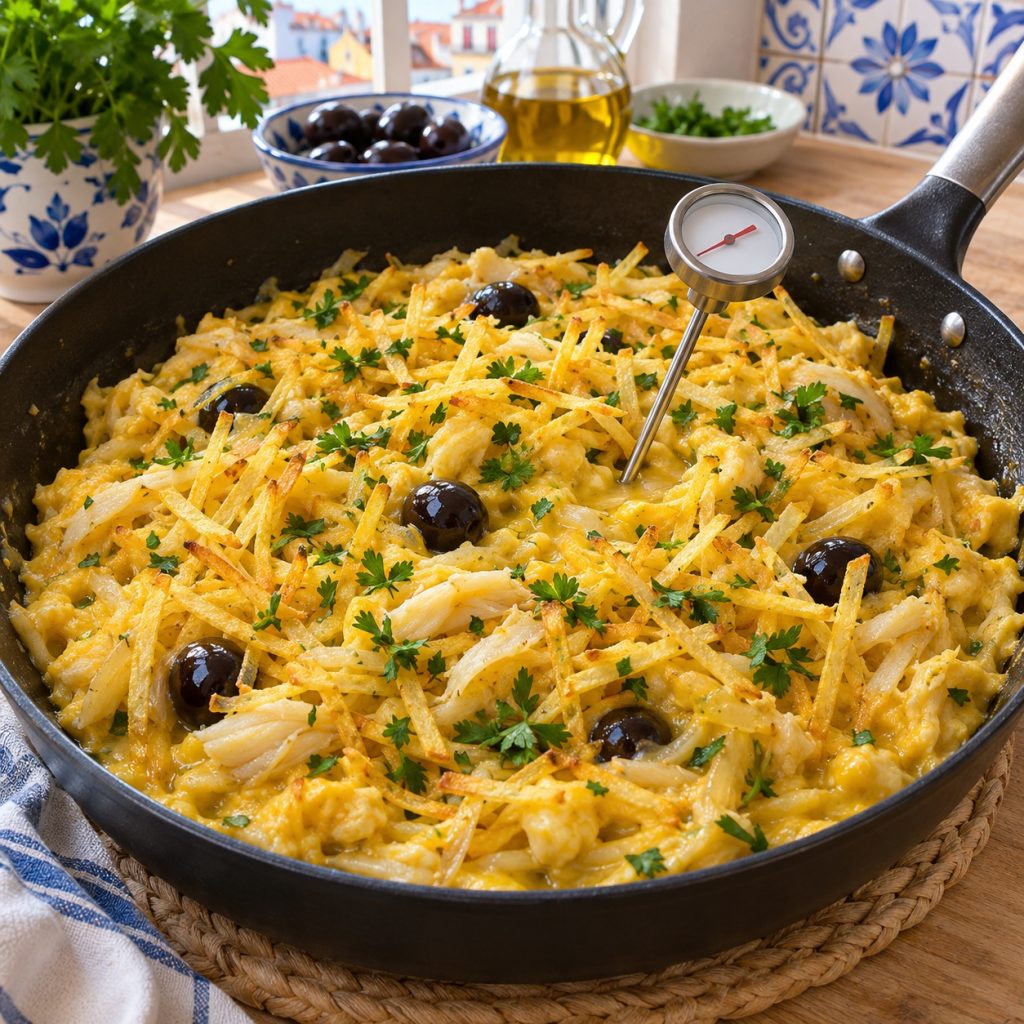
    Finish with crisp potatoes and garnish
    Use residual heat to reach 160°F/71°C. Fold in remaining crisp potatoes, parsley, and olives; serve immediately. Chill leftovers in a shallow container within 2 hours.

    Texture and doneness cues

    Eggs are glossy and creamy without pooling and reach 160°F/71°C.

    Cod remains in flakes and the final potatoes retain an audible crunch.

    Mistakes, substitutions, and conversions

    Overboiling cod dries the flakes; poach only until they separate easily.

    For less frying, use plain packaged potato sticks as directed; taste before adding salt.

    600 g potatoes is about 4 medium potatoes. Add 100 g cod for every 2 extra eggs.

    Serving, storage, and allergens

    Best eaten fresh. Refrigerate up to 3 days; reheat gently with a splash of water to 165°F/74°C. Freezing damages the texture.

    Allergens: fish and eggs. Packaged potato sticks may contain gluten traces.

    Frequently asked questions

    Why is the cod too salty?

    It was not soaked long enough; use up to 36 hours for thick pieces and change water often.

    Why are the eggs dry?

    They stayed on heat too long; remove while glossy and finish with residual heat.

    Why are potatoes soft?

    They were wet or all added early; dry thoroughly and reserve half.

    Can I use fresh cod?

    Yes, though the salt-cod character changes; season separately.
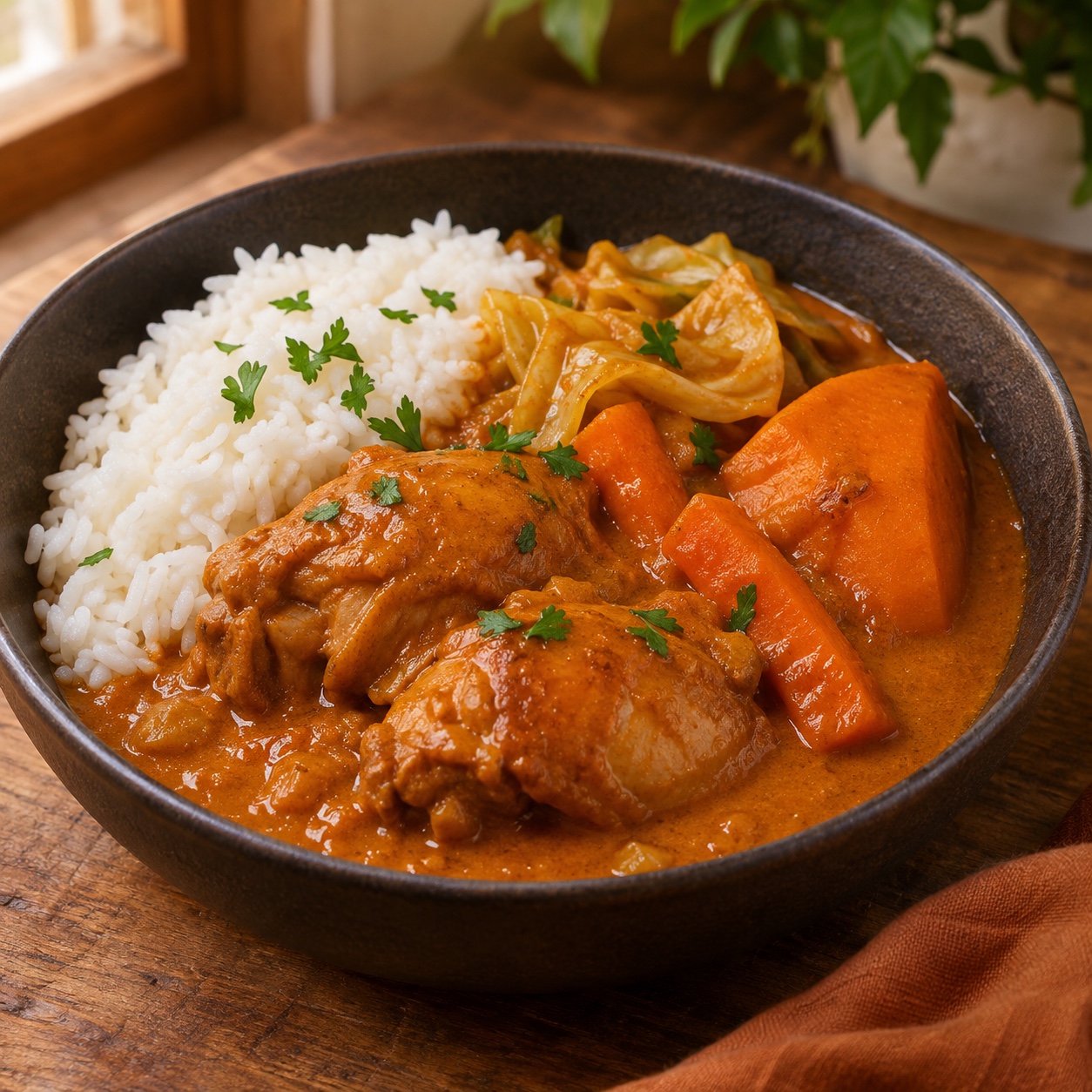
  • Senegalese Chicken Mafé: Smooth Peanut Stew

    Senegalese Chicken Mafé: Smooth Peanut Stew

    The Embassy of Senegal describes mafé as meat—chicken, lamb, or beef—simmered in a silky peanut-and-tomato sauce and served with rice and vegetables. Versions exist across West Africa; this is an accessible chicken-based home adaptation.

    Whisking unsweetened peanut butter with hot stock prevents lumps. Browning the chicken first and adding root vegetables later keeps both flavor and texture in balance.

    Why this method works

    • Whisking peanut butter with hot liquid keeps the sauce smooth.
    • Browning chicken builds flavor before the sauce simmers.
    • Adding sweet potato and carrot for the final 30 minutes prevents collapse.
    • An uncovered finish thickens naturally without flour.

    Before you start

    Prepare a 5-quart heavy pot, whisk, and thermometer.

    Use unsweetened peanut butter made from peanuts and salt; stir the jar well.

    Cut sweet potato into 1¼-inch pieces and carrots into ¾-inch pieces; prep raw chicken separately.
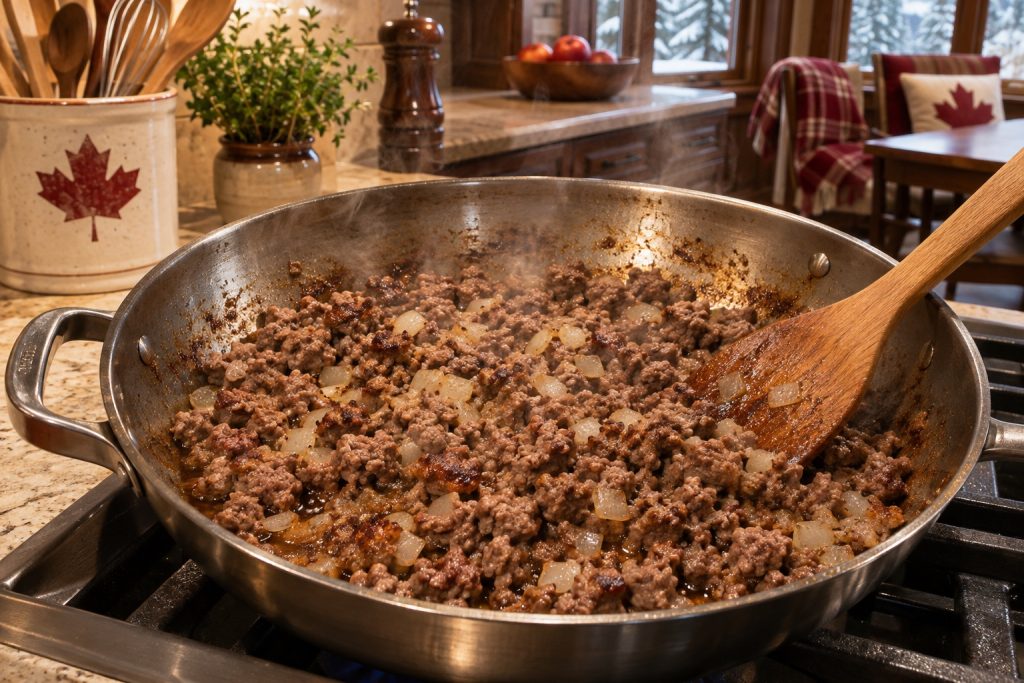
    Brown chicken and build the aromatic base
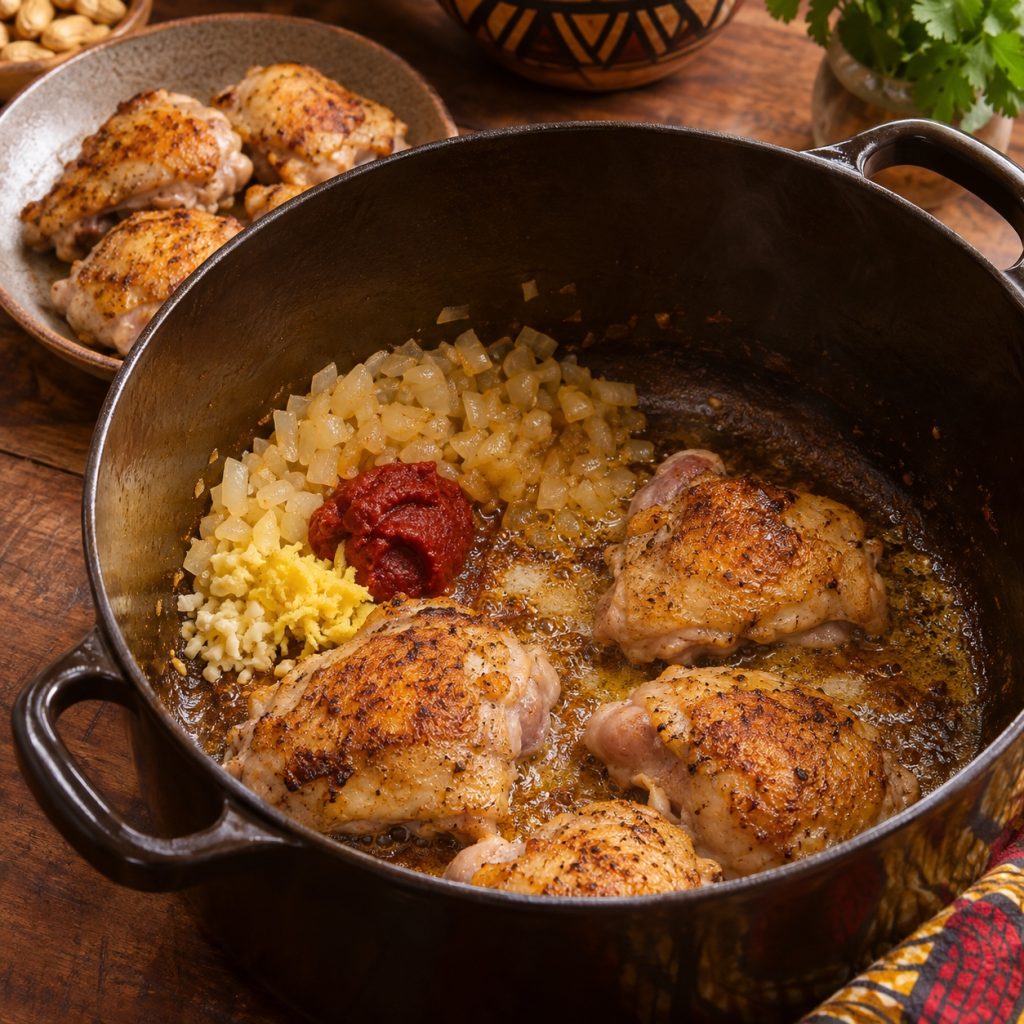
    Pat chicken dry and season with 1 tsp salt. Heat oil over medium-high; brown in two batches, 3 minutes per side, then remove. Cook onion 7 minutes; add garlic and ginger for 1 minute, then tomato paste for 2 minutes.

    Step-by-step method

    1. Brown chicken and build the aromatic base

    Pat chicken dry and season with 1 tsp salt. Heat oil over medium-high; brown in two batches, 3 minutes per side, then remove. Cook onion 7 minutes; add garlic and ginger for 1 minute, then tomato paste for 2 minutes.

    2. Make a lump-free peanut sauce

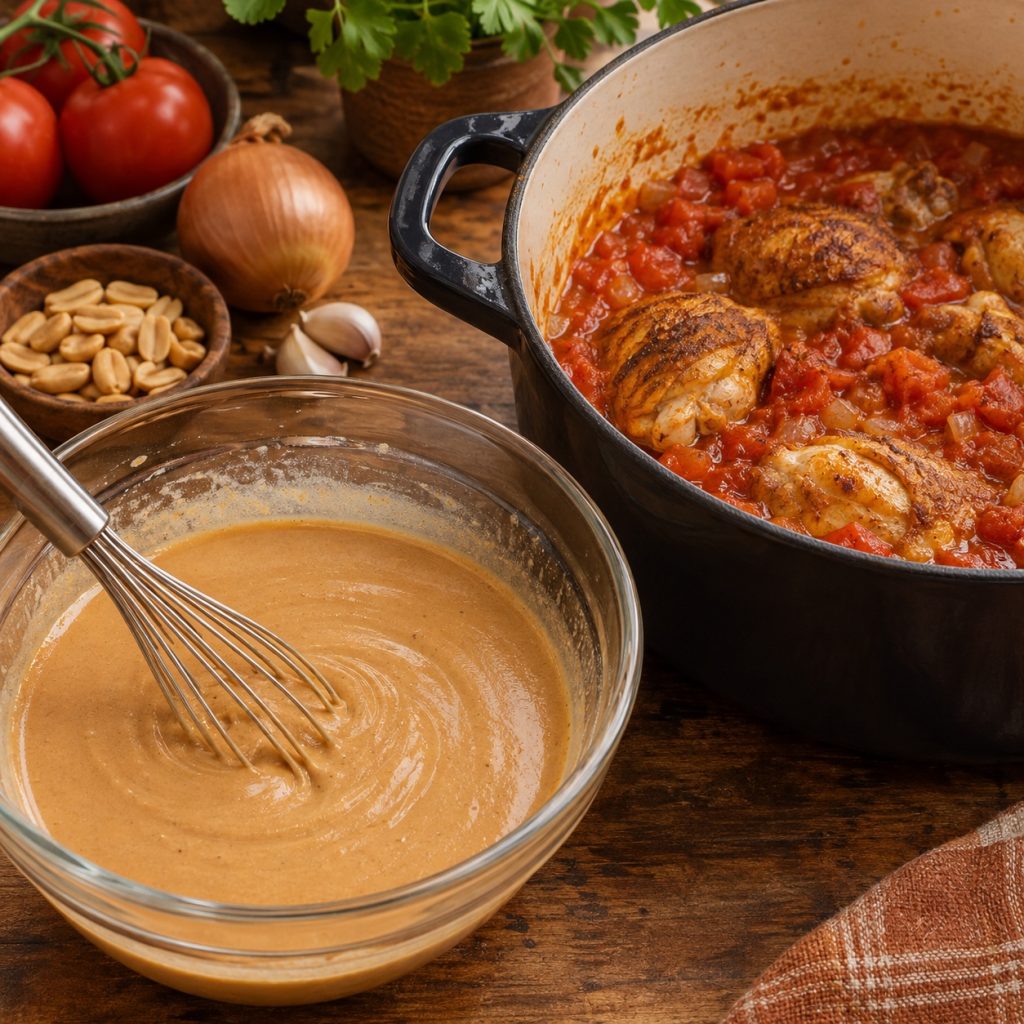
    Whisk peanut butter with 1 cup/250 ml hot stock until smooth. Add tomatoes to the pot and simmer 3 minutes; stir in peanut mixture, remaining stock, and chicken. Simmer gently 25 minutes.

    Make a lump-free peanut sauce
    Whisk peanut butter with 1 cup/250 ml hot stock until smooth. Add tomatoes to the pot and simmer 3 minutes; stir in peanut mixture, remaining stock, and chicken. Simmer gently 25 minutes.

    3. Cook vegetables without breaking them

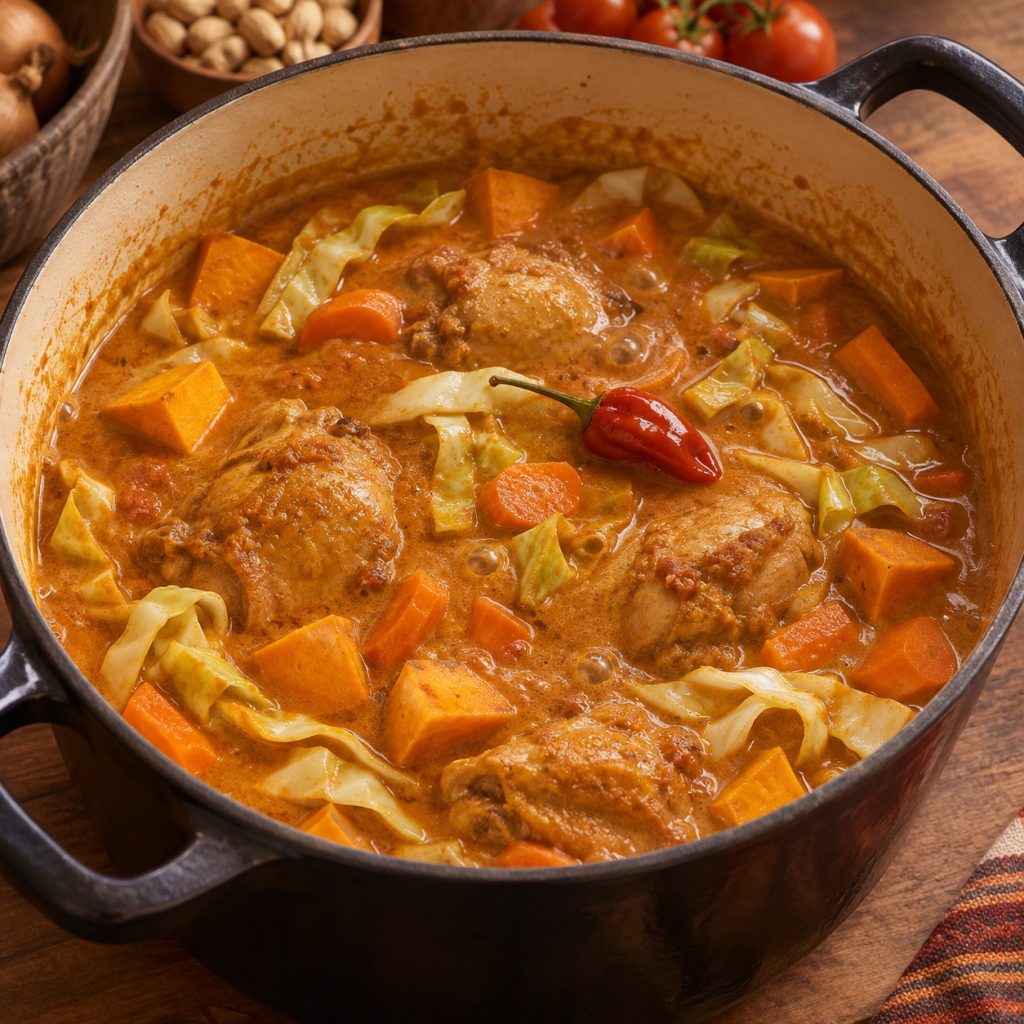
    Add sweet potato, carrots, cabbage, and whole chile. Cook partly covered 25–30 minutes until vegetables pierce easily but hold their shape.

    Cook vegetables without breaking them
    Add sweet potato, carrots, cabbage, and whole chile. Cook partly covered 25–30 minutes until vegetables pierce easily but hold their shape.

    4. Thicken, check doneness, and serve

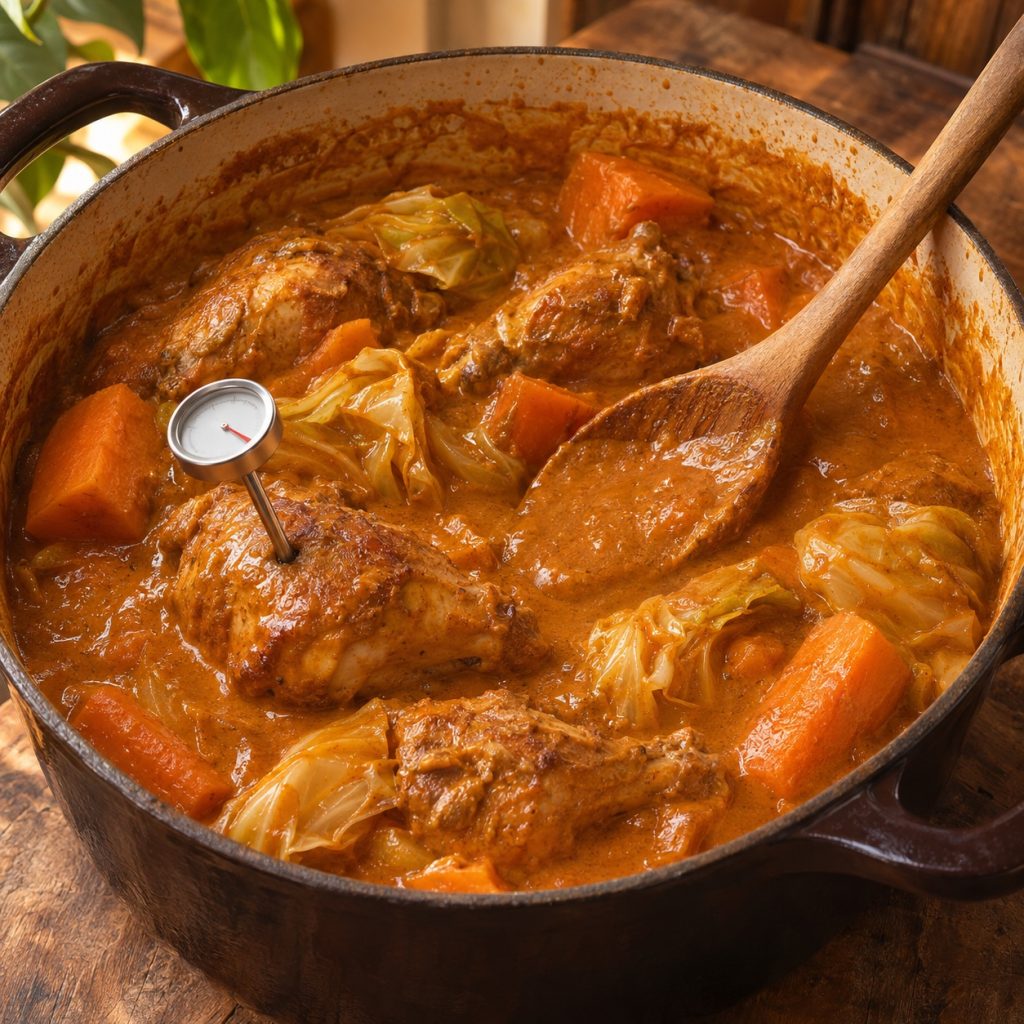
    Remove chile. Simmer uncovered 5–10 minutes until sauce coats a spoon. Chicken must reach 165°F/74°C. Adjust lemon and salt; serve with rice and chill leftovers within 2 hours.

    Thicken, check doneness, and serve
    Remove chile. Simmer uncovered 5–10 minutes until sauce coats a spoon. Chicken must reach 165°F/74°C. Adjust lemon and salt; serve with rice and chill leftovers within 2 hours.

    Texture and doneness cues

    Sauce is glossy, smooth, and spoon-coating without a separate oil layer.

    Chicken reaches 165°F/74°C; sweet potato keeps defined edges.

    Mistakes, substitutions, and conversions

    Adding peanut butter directly to cold liquid causes lumps; loosen it with hot stock first.

    Potato can replace sweet potato and chard can replace cabbage; keep peanut butter unsweetened.

    180 g peanut butter is about ¾ cup. Add ¼ cup/60 ml hot water if too thick.

    Serving, storage, and allergens

    Refrigerate 3–4 days; add a splash of water and reheat to 165°F/74°C. Freeze the sauce and chicken without vegetables up to 2 months.

    Allergen: peanuts. Packaged stock may contain celery or gluten.

    Frequently asked questions

    Why did the sauce turn lumpy?

    The peanut butter met cold liquid; whisk it separately with hot stock.

    Why is it too thick?

    Peanuts thicken strongly; add hot water gradually.

    Must it be spicy?

    No. Keep the chile whole or omit it.

    Can I make it ahead?

    Yes. Flavor improves overnight; store rice separately.
  • Danish Frikadeller: Juicy Centers, Deep-Browned Crust

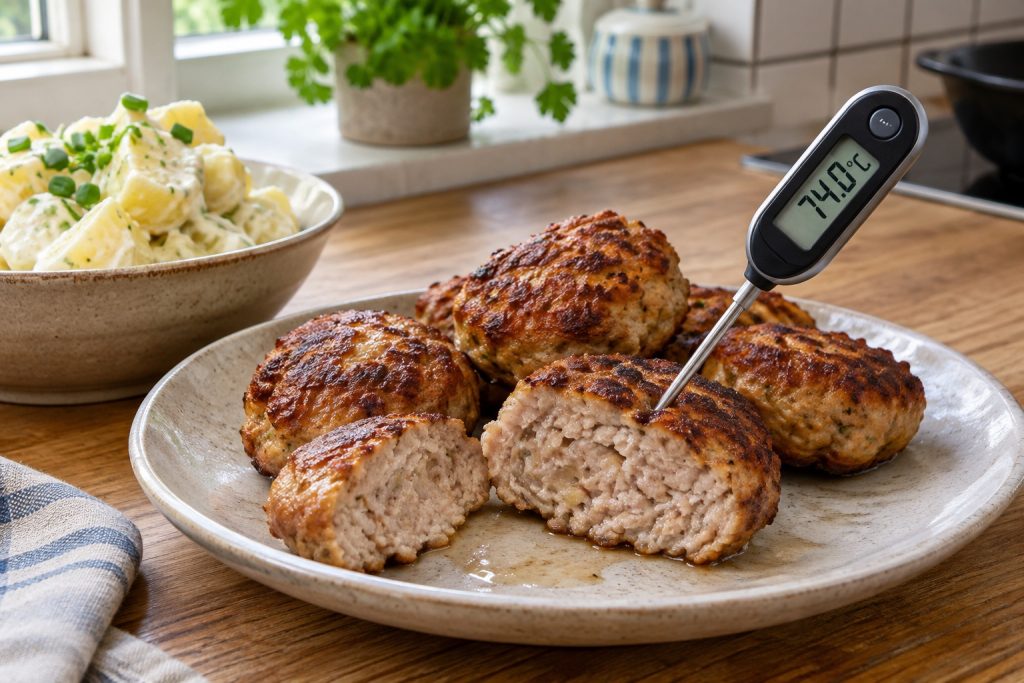
    Danish Frikadeller: Juicy Centers, Deep-Browned Crust

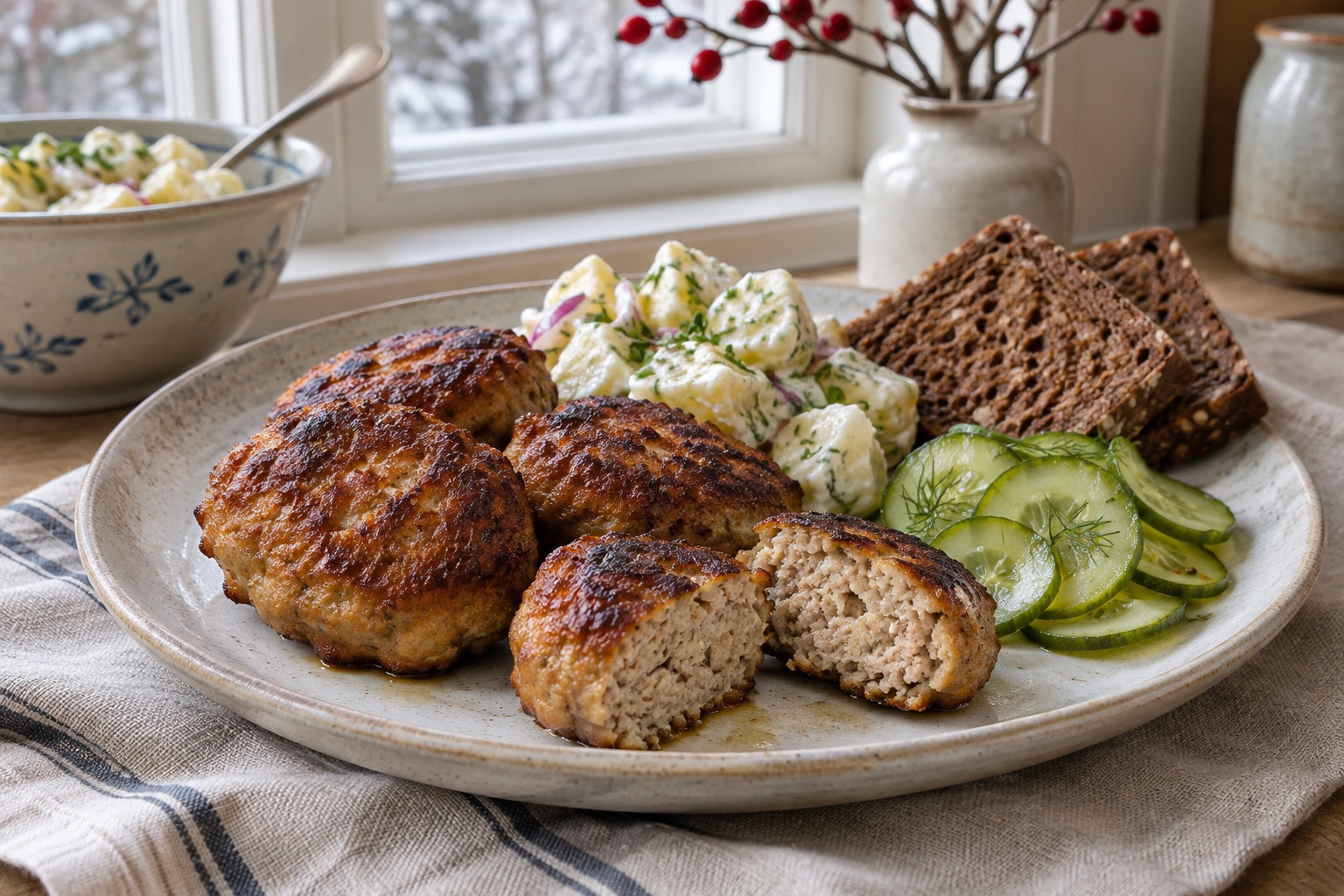
    Denmark’s official country site describes frikadeller as a beloved national dish served for lunch with rye bread or as dinner. Household recipes vary; this home adaptation uses pork, beef, milk, and oats.

    Mixing salt into meat first builds structure, adding liquid gradually controls consistency, and chilling firms the mixture for even pan-frying.

    Why this method works

    • Salt mixed into meat first builds a cohesive bind.
    • Oats and flour absorb milk as the mixture rests.
    • A wet spoon forms smooth oval patties.
    • Medium heat browns the crust while the center cooks safely.

    Before you start

    Prepare a wide heavy skillet, large bowl, tablespoon, and thermometer.

    Grate onion very finely and use its juices.

    Chill the mixed batter at least 30 minutes.

    Bind meat with salt and build the batter
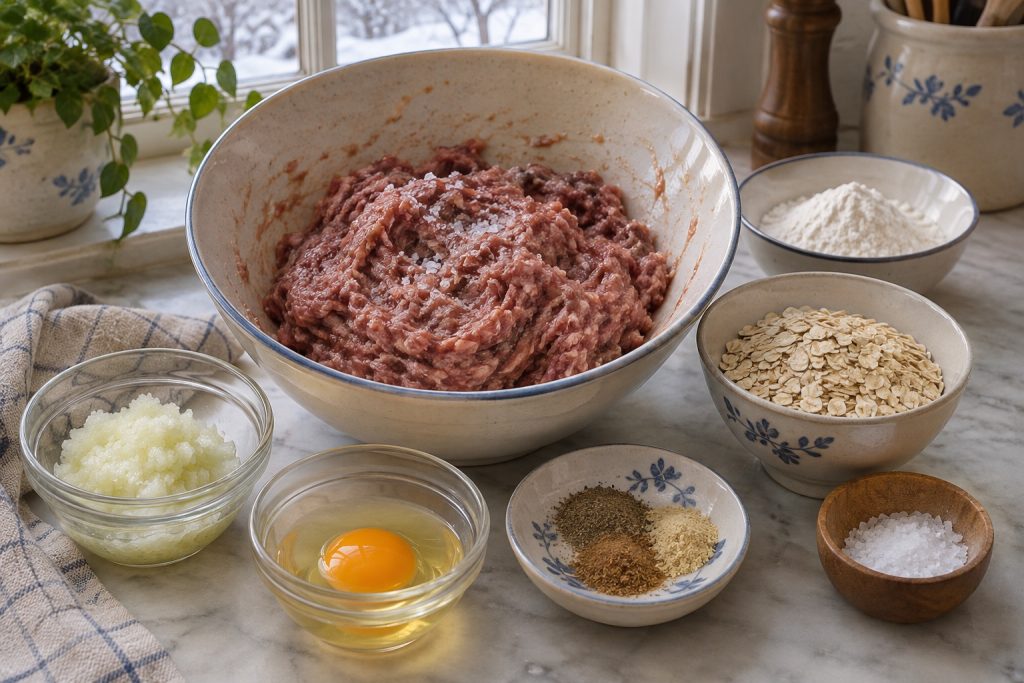
    Mix meats with salt for 2 minutes until tacky. Add onion, egg, oats, flour, pepper, and allspice.

    Step-by-step method

    1. Bind meat with salt and build the batter

    Mix meats with salt for 2 minutes until tacky. Add onion, egg, oats, flour, pepper, and allspice.

    2. Add milk gradually and chill

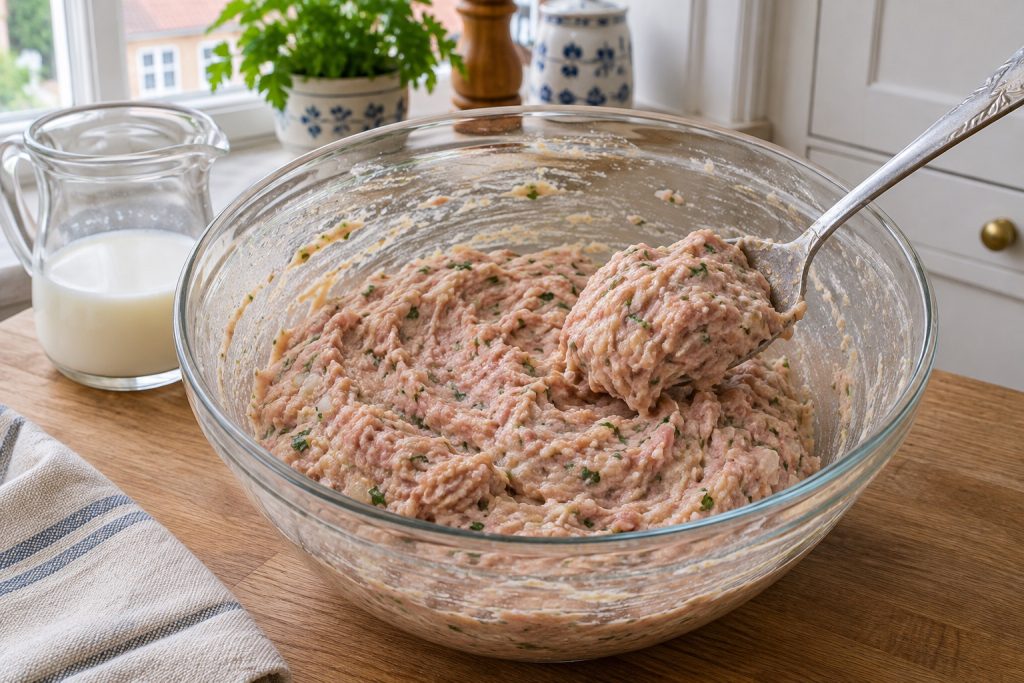
    Add milk in three additions, fully mixing each time. The batter should be soft but hold on a spoon. Cover and chill 30 minutes.

    Add milk gradually and chill
    Add milk in three additions, fully mixing each time. The batter should be soft but hold on a spoon. Cover and chill 30 minutes.

    3. Shape with a wet spoon and fry

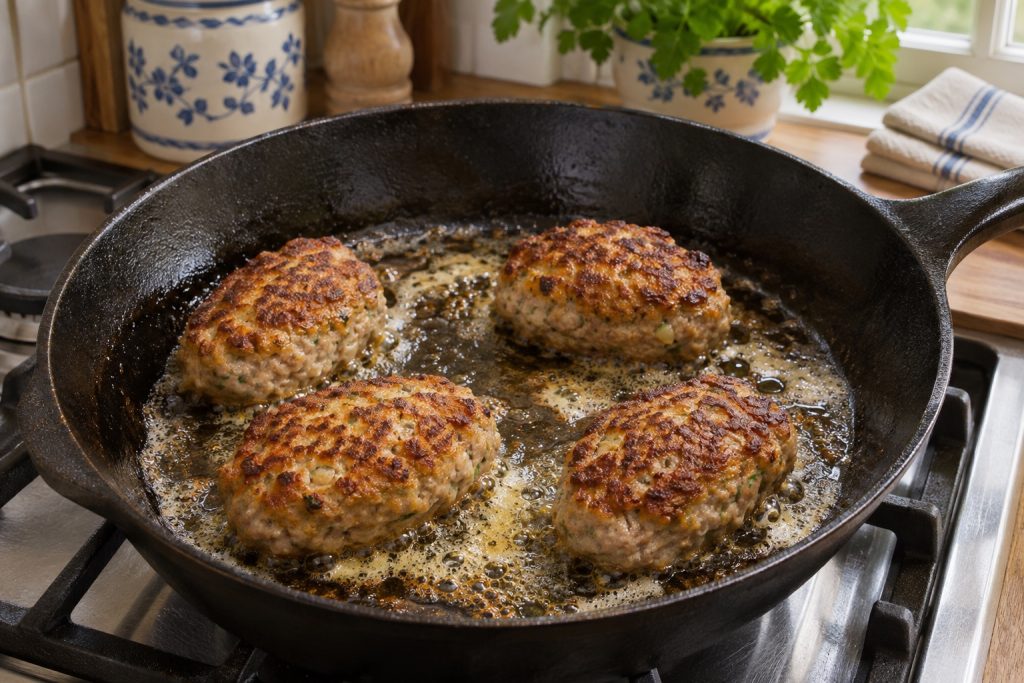
    Heat butter and oil over medium in a wide skillet. With a wet tablespoon form 12 oval patties. Without crowding, fry 5–6 minutes per side until deep golden.

    Shape with a wet spoon and fry
    Heat butter and oil over medium in a wide skillet. With a wet tablespoon form 12 oval patties. Without crowding, fry 5–6 minutes per side until deep golden.

    4. Check the center and rest

    Remove when the thickest center reaches 160°F/71°C. Rest 5 minutes. Serve with potato salad or rye bread and chill leftovers within 2 hours.

    Check the center and rest
    Remove when the thickest center reaches 160°F/71°C. Rest 5 minutes. Serve with potato salad or rye bread and chill leftovers within 2 hours.

    Texture and doneness cues

    Outside is deep golden and dry; the center springs back without feeling hard.

    No raw juices run from a cut patty; center reaches at least 160°F/71°C.

    Mistakes, substitutions, and conversions

    Too much milk makes patties spread; reserve the final 2 tbsp/30 ml unless needed.

    Turkey can replace pork but must reach 165°F/74°C; unsweetened oat drink can replace milk.

    Each patty is about 70 g or 2 heaped tablespoons. Cook in two batches.

    Serving, storage, and allergens

    Refrigerate 3–4 days. Reheat covered with a splash of water or in a 325°F/160°C oven to 165°F/74°C. Freeze cooked patties 2 months.

    Allergens: milk, egg, wheat, and oats. Certified gluten-free oats and flour can be used.

    Frequently asked questions

    Why did they fall apart?

    The meat was not bound with salt or the batter did not rest; mix salt in first.

    Why did they stick?

    The pan was not hot enough or they were turned early; wait for a crust.

    Can batter be made ahead?

    Yes. Keep covered in the refrigerator up to 24 hours.

    Can they be baked?

    Yes, but pan crust is stronger; always verify the center temperature.

  • Thai Chicken Massaman Curry: Smooth Sauce, Tender Chicken

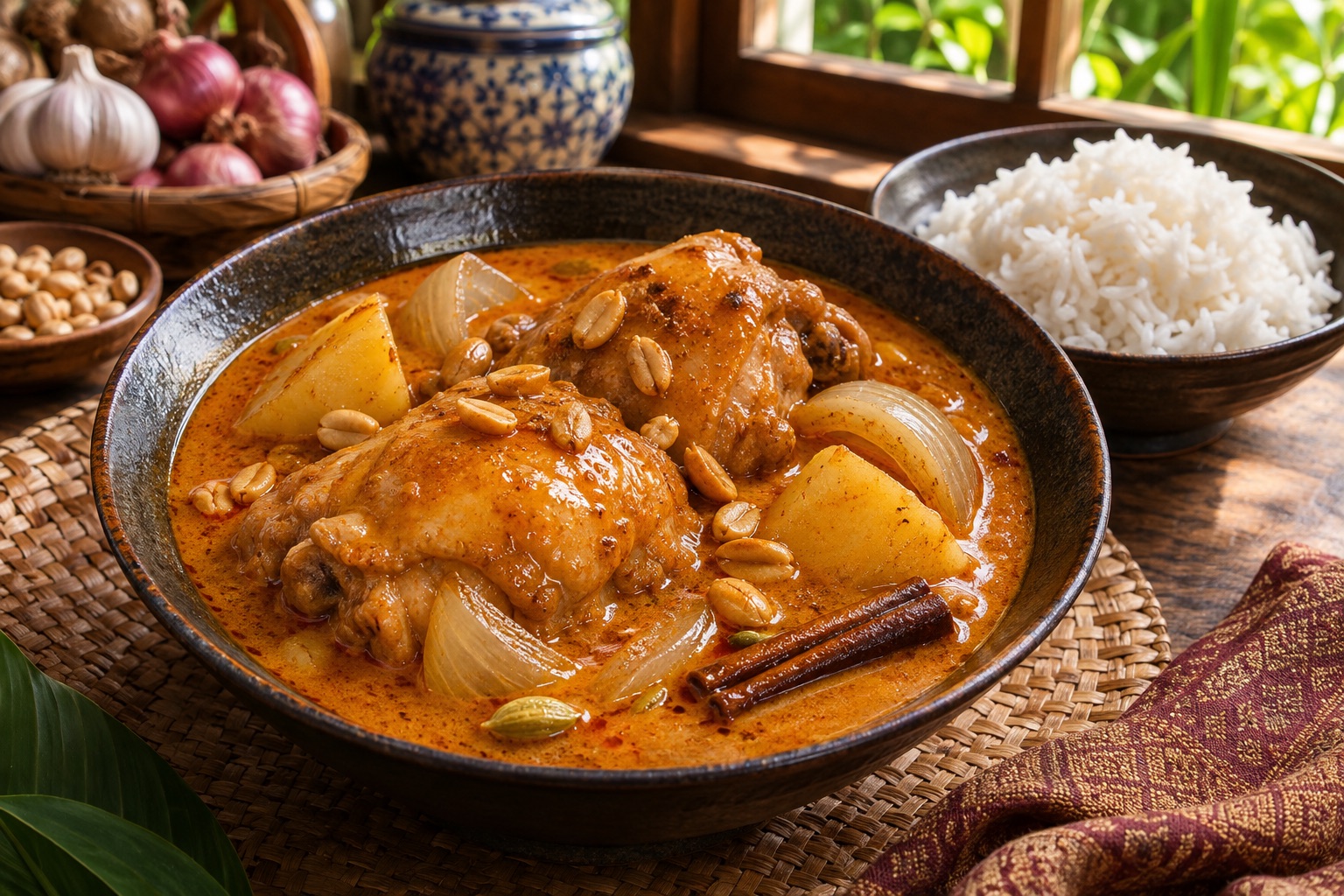
    Thai Chicken Massaman Curry: Smooth Sauce, Tender Chicken

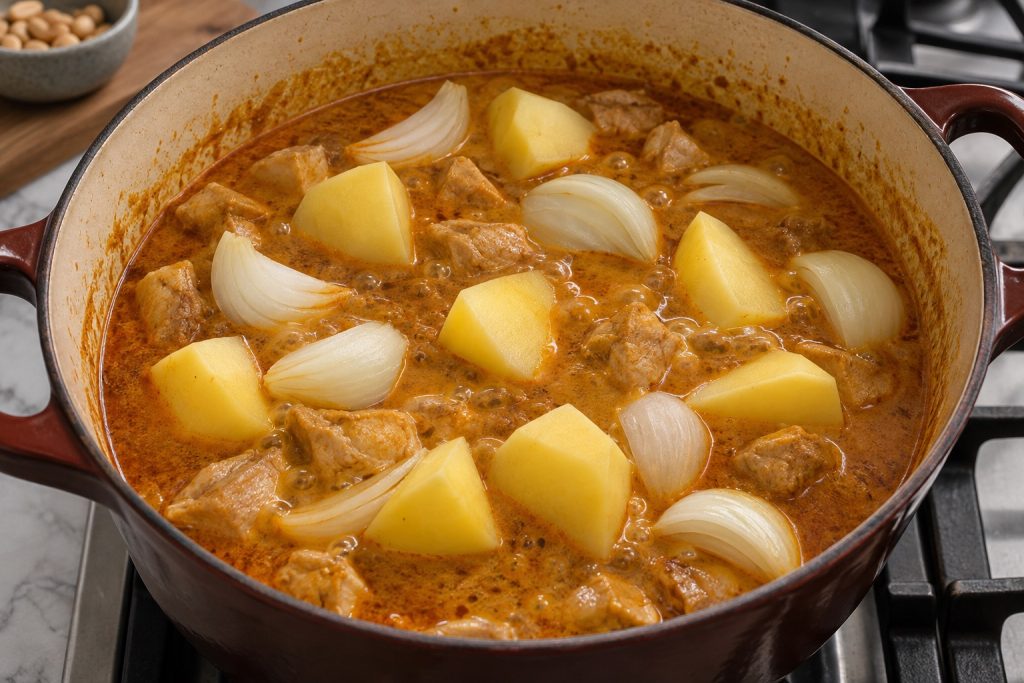
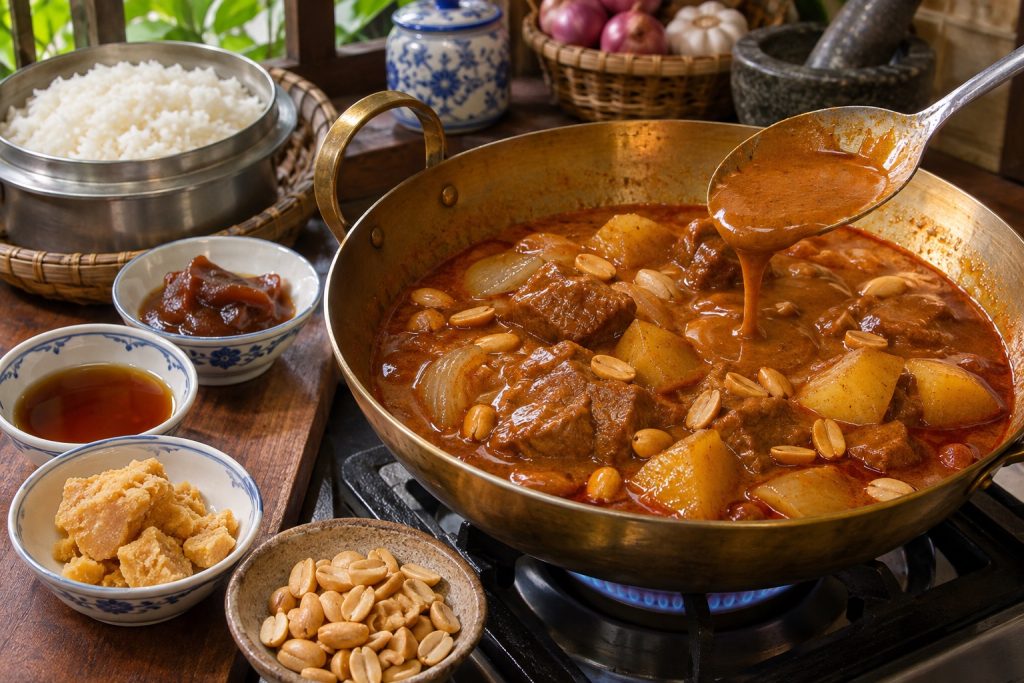
    Thailand’s Department of Agricultural Extension links gaeng massaman gai to southern Thailand and Malay-Muslim influence. Warm spices meet Thai curry paste, coconut, and tamarind. This is a reliable home adaptation using prepared massaman paste.

    Frying the paste in thick coconut cream, gently simmering chicken, and adding potato later keeps the sauce smooth and the vegetables intact.

    Why this method works

    • Thick coconut cream acts as frying fat and blooms the paste.
    • Bone-in thighs stay juicy during a low simmer.
    • Adding potato later prevents crumbling edges.
    • Tamarind, fish sauce, and sugar are balanced at the end.

    Before you start

    Prepare a 5-quart pot, wooden spoon, and thermometer.

    Do not shake coconut milk; reserve the thick cream from the top.

    Cut potatoes into even 1½-inch/4 cm chunks and onions into wedges.

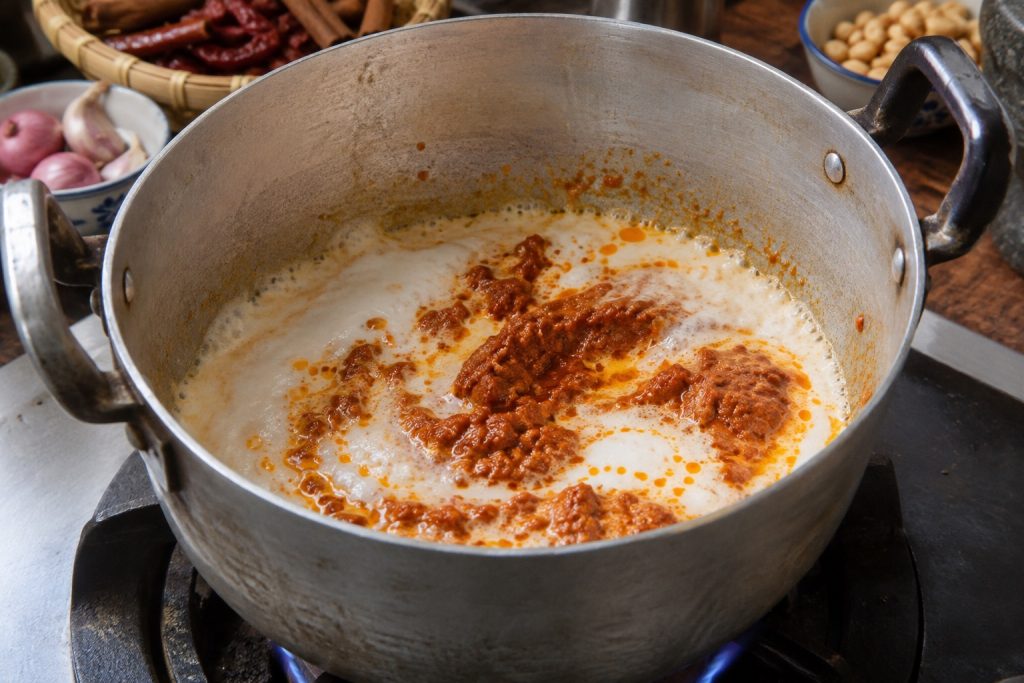
    Bloom curry paste in coconut cream
    Spoon ¾ cup/200 ml thick coconut cream into the pot. Heat 5–7 minutes over medium until tiny oil beads appear. Add curry paste and fry 4 minutes.

    Step-by-step method

    1. Bloom curry paste in coconut cream

    Spoon ¾ cup/200 ml thick coconut cream into the pot. Heat 5–7 minutes over medium until tiny oil beads appear. Add curry paste and fry 4 minutes.

    2. Gently simmer chicken with spices

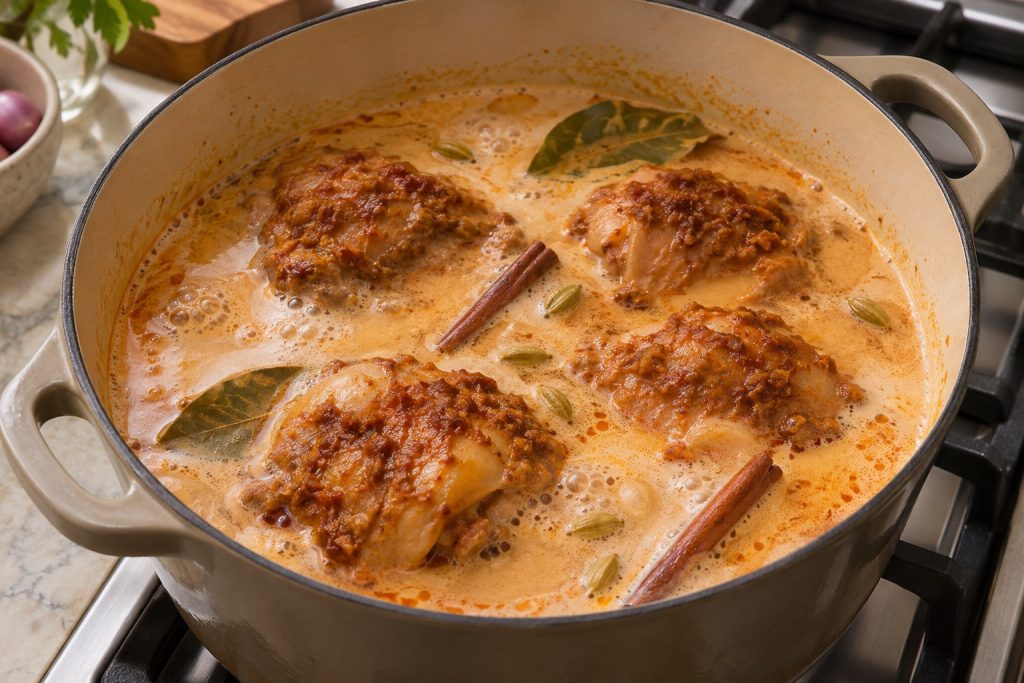
    Add chicken, cinnamon, cardamom, and bay; coat in paste. Add remaining coconut milk and stock. Simmer gently 25 minutes.

    Gently simmer chicken with spices
    Add chicken, cinnamon, cardamom, and bay; coat in paste. Add remaining coconut milk and stock. Simmer gently 25 minutes.

    3. Cook potatoes and onions intact

    Add potatoes and onions. Cook partly covered 20–25 minutes until potatoes pierce easily but hold shape and chicken reaches at least 165°F/74°C.

    Cook potatoes and onions intact
    Add potatoes and onions. Cook partly covered 20–25 minutes until potatoes pierce easily but hold shape and chicken reaches at least 165°F/74°C.

    4. Balance seasoning and finish with peanuts

    Add tamarind, fish sauce, and sugar. Reduce 5 minutes and balance sour, sweet, and salty. Stir in peanuts, serve with jasmine rice, and chill leftovers within 2 hours.

    Balance seasoning and finish with peanuts
    Add tamarind, fish sauce, and sugar. Reduce 5 minutes and balance sour, sweet, and salty. Stir in peanuts, serve with jasmine rice, and chill leftovers within 2 hours.

    Texture and doneness cues

    Sauce is glossy and spoon-coating without large separated oil pools.

    Potato edges remain defined and chicken exceeds 165°F/74°C near the bone.

    Mistakes, substitutions, and conversions

    A rolling boil splits coconut milk and dries chicken; keep a gentle simmer.

    Beef cubes can replace chicken with longer cooking; reduce salt if soy sauce replaces fish sauce.

    800 ml is about 3⅓ cups. Paste heat varies by brand, so start with 70 g if unsure.

    Serving, storage, and allergens

    Refrigerate 3–4 days below 40°F/4°C. Bring gently to a simmer and 165°F/74°C. Potatoes can turn mealy, so freeze the portion without potato up to 2 months.

    Allergens: peanuts and fish; curry paste may contain shrimp.

    Frequently asked questions

    Why did the sauce split?

    The coconut milk boiled too hard. Lower heat and stir gently.

    Can I reduce curry paste?

    Yes. Start with 70 g and strengthen near the end.

    Why did potatoes crumble?

    They were too small or added too early; use 1½-inch chunks for the last 25 minutes.

    Can it be made ahead?

    Yes. Flavor improves overnight; store rice separately.
  • Georgian Lobio: Creamy Red Bean Stew

    Georgian Lobio: Creamy Red Bean Stew

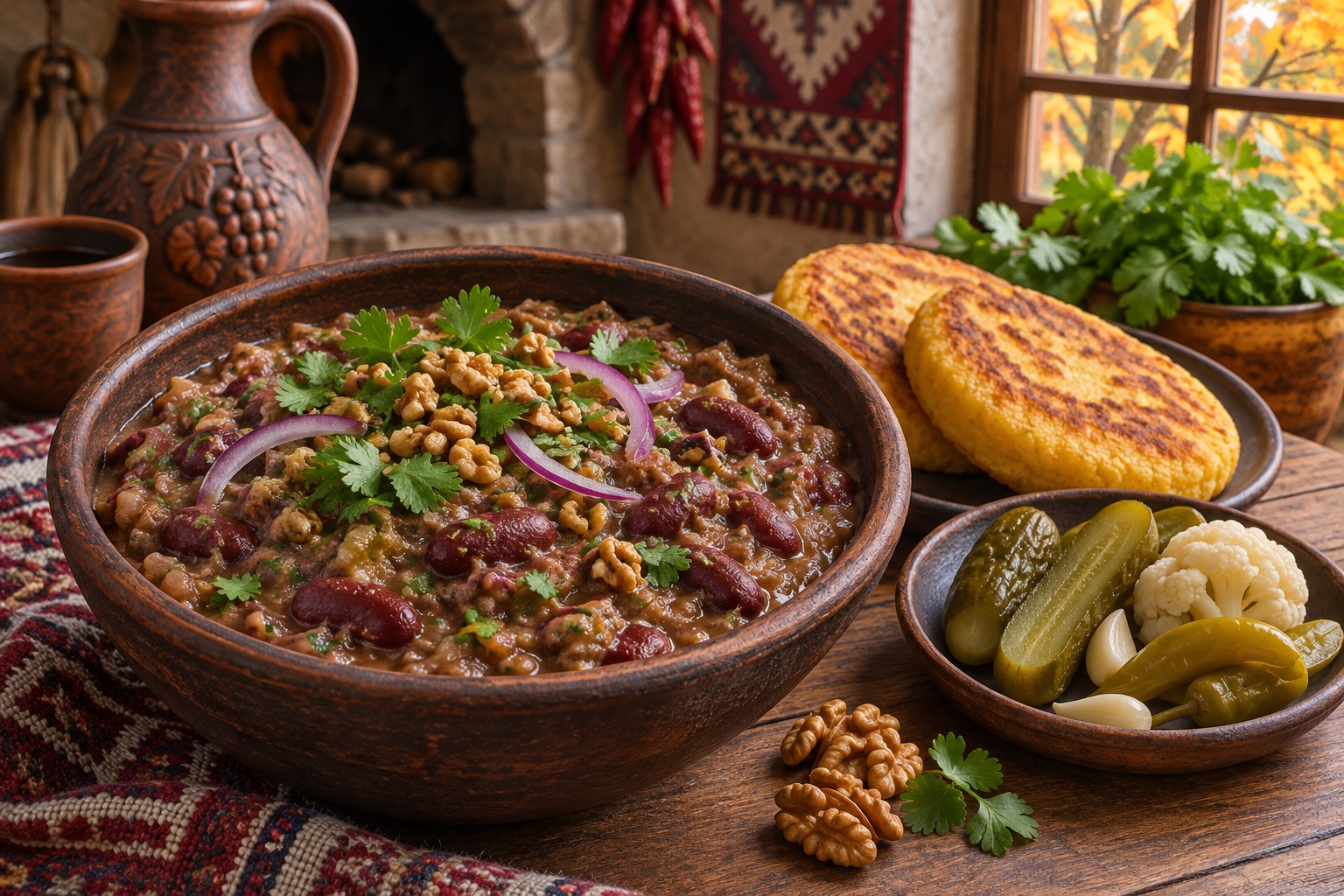
    Lobio is not one fixed recipe but a Georgian family of bean preparations that varies by region and household. Georgia Travel documents versions with tkemali, walnuts, herbs, tomatoes, or meat. This is a meat-free home adaptation with walnuts, cilantro, and warm spices.

    Soaking overnight, simmering until fully tender, and mashing only part of the beans creates body without flour.

    Why this method works

    • Soaking evens cooking and reduces hard centers.
    • Mashing one third gives a creamy yet chunky texture.
    • Toasting walnuts intensifies flavor; vinegar balances richness.
    • Seasoning after tenderness makes salt control easier.

    Before you start

    Prepare a 4–5 quart heavy pot, colander, potato masher, and dry skillet.

    Soak beans in plenty of cold water 8–12 hours; drain and rinse.

    Toast walnuts in a dry pan 3–4 minutes until fragrant.

    Soak and simmer beans until tender
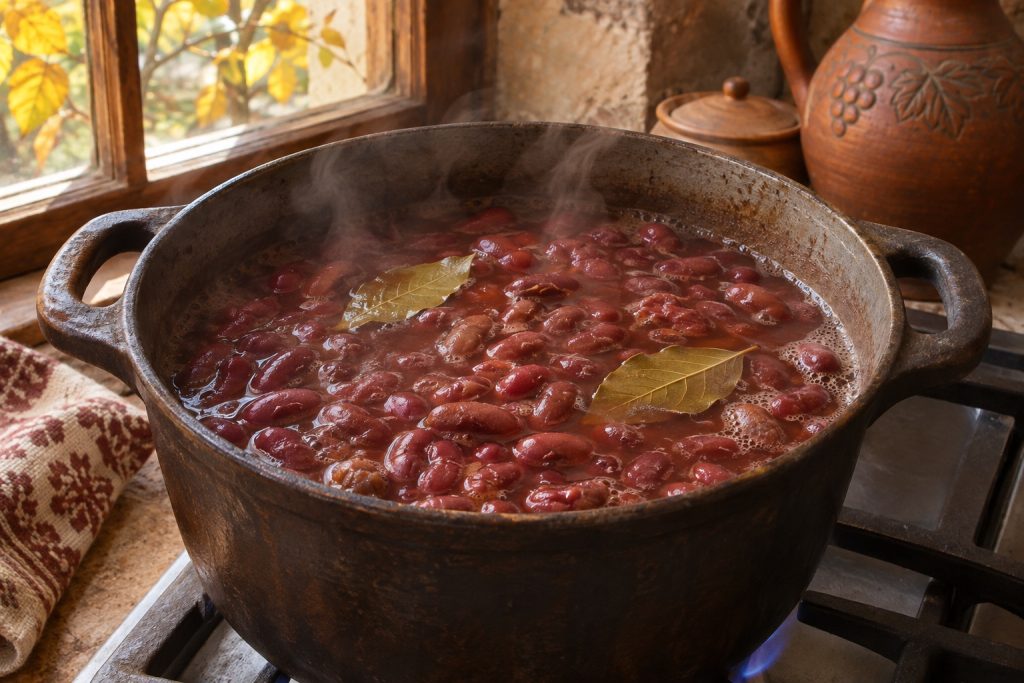
    Cover soaked beans by 2 inches/5 cm with water and add bay. Bring to a boil, lower heat, and simmer 75–95 minutes until easily crushed between fingers, adding hot water as needed.

    Step-by-step method

    1. Soak and simmer beans until tender

    Cover soaked beans by 2 inches/5 cm with water and add bay. Bring to a boil, lower heat, and simmer 75–95 minutes until easily crushed between fingers, adding hot water as needed.

    2. Build the onion and spice base

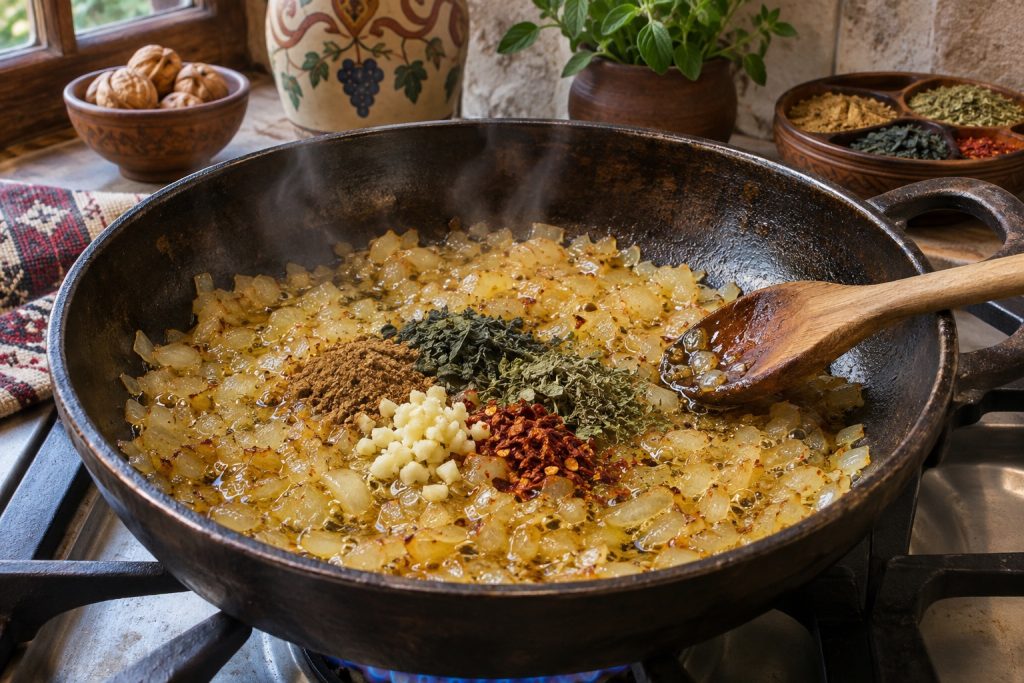
    Heat oil separately. Cook onion 10–12 minutes until golden and soft. Add garlic, coriander, fenugreek, marjoram, and chile; stir 1 minute.
    Build the onion and spice base
    Heat oil separately. Cook onion 10–12 minutes until golden and soft. Add garlic, coriander, fenugreek, marjoram, and chile; stir 1 minute.
    3. Mash a portion and add walnuts

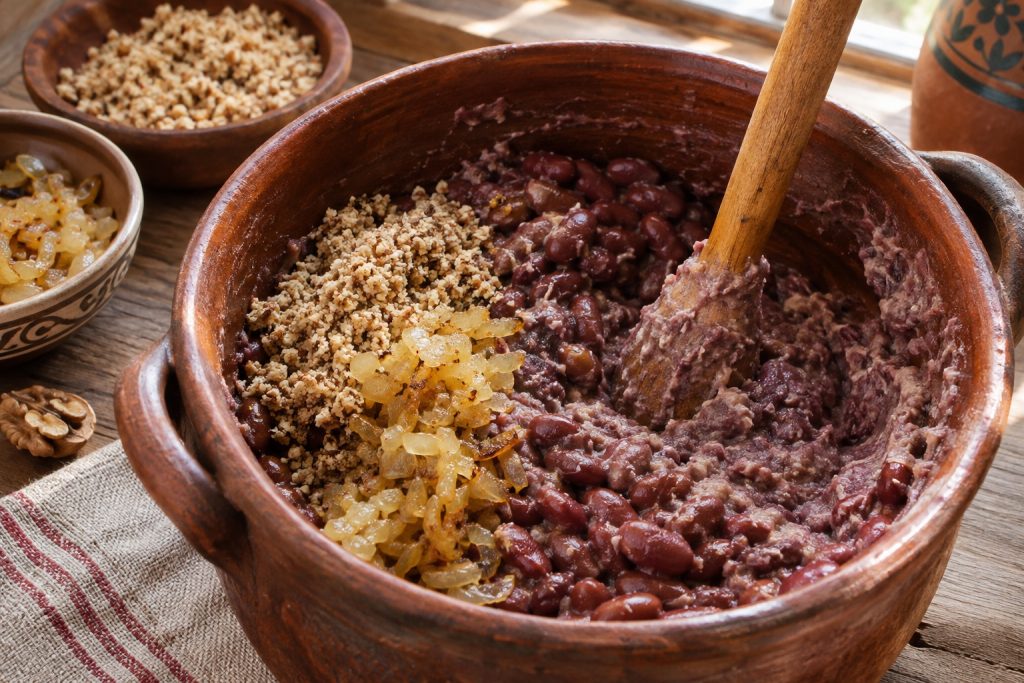
    Remove bay. Mash one third of the beans in the pot. Stir in onion mixture and finely ground walnuts; simmer 10 minutes until a spoon trail closes slowly.

    Mash a portion and add walnuts
    Remove bay. Mash one third of the beans in the pot. Stir in onion mixture and finely ground walnuts; simmer 10 minutes until a spoon trail closes slowly.

    4. Balance with vinegar and herbs

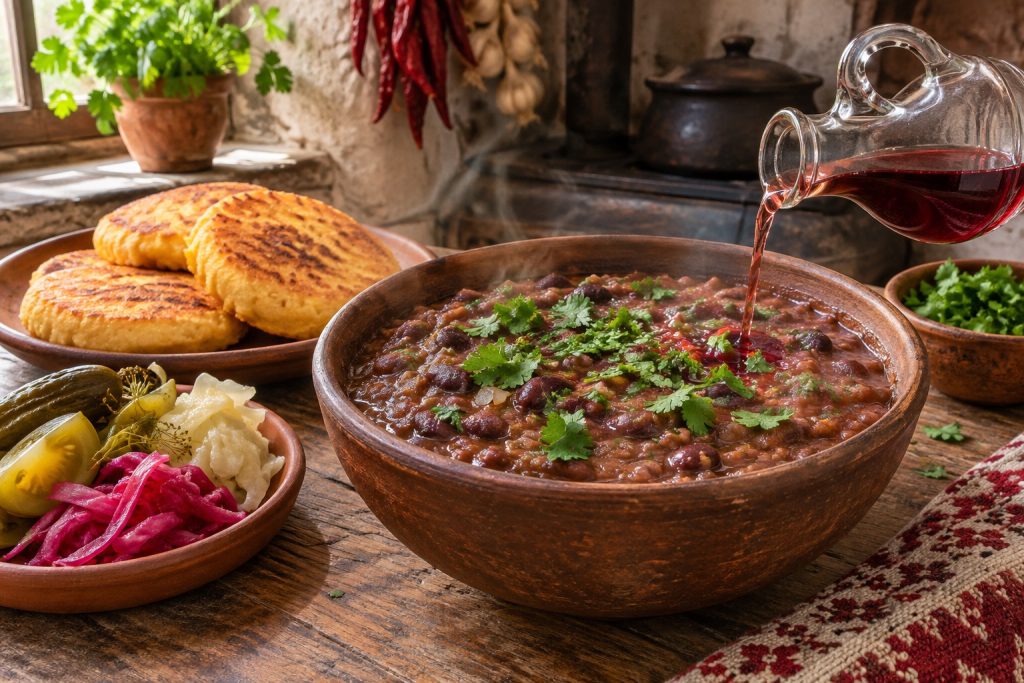
    Add salt, vinegar, and cilantro. Rest 5 minutes and adjust. Serve with cornbread, pickles, or bread; chill leftovers in shallow containers within 2 hours.

    Balance with vinegar and herbs
    Add salt, vinegar, and cilantro. Rest 5 minutes and adjust. Serve with cornbread, pickles, or bread; chill leftovers in shallow containers within 2 hours.

    Texture and doneness cues

    Bean skins are tender and centers fully creamy, with no hard core.

    Lobio falls from a spoon without pooling; it thickens as it cools.

    Mistakes, substitutions, and conversions

    Old beans can stay hard; use a fresh batch rather than endlessly extending cooking.

    Use half as much regular fenugreek for blue fenugreek; hazelnuts can replace walnuts.

    500 g dried beans is about 2¾ cups. For canned beans, drain three 14-oz/400 g cans and simmer 25 minutes.

    Serving, storage, and allergens

    Refrigerate 3–4 days. Add a splash of water and reheat until steaming and 165°F/74°C. Freeze portions 2–3 months.

    Allergen: walnuts. Serving bread may contain gluten.

    Frequently asked questions

    Why are the beans still hard?

    Old beans, hard water, or early acid can delay softening; add vinegar last.

    Should lobio be completely mashed?

    No. Mash about one third for body while keeping texture.

    Can I use canned beans?

    Yes. Rinse well and simmer with less liquid for 25 minutes.

    Can it be made ahead?

    Yes. Flavor improves overnight when cooled and stored safely.

  • Polish Bigos: Balanced Sauerkraut and Tender Meat

    Polish Bigos: Balanced Sauerkraut and Tender Meat

    Bigos is a Polish dish combining sauerkraut, fresh cabbage, and assorted meats. Poland’s Ministry of Agriculture and Poland Travel emphasize regional variations, mushrooms, dried fruit, spices, and flavor that deepens with reheating. This home version is an adaptation inspired by Wielkopolska and hunter-style traditions.

    Taste the sauerkraut first, brown meats separately, simmer low, and rest overnight when possible.

    Why this method works

    • Fresh cabbage moderates acidity and salt.
    • Browning meat separately builds deep roasted flavor.
    • Mushroom soaking liquid adds umami and color without alcohol.
    • Long low cooking softens cabbage; an overnight rest integrates flavors.

    Before you start

    Prepare a 6–7 quart heavy pot, large skillet, strainer, and thermometer.

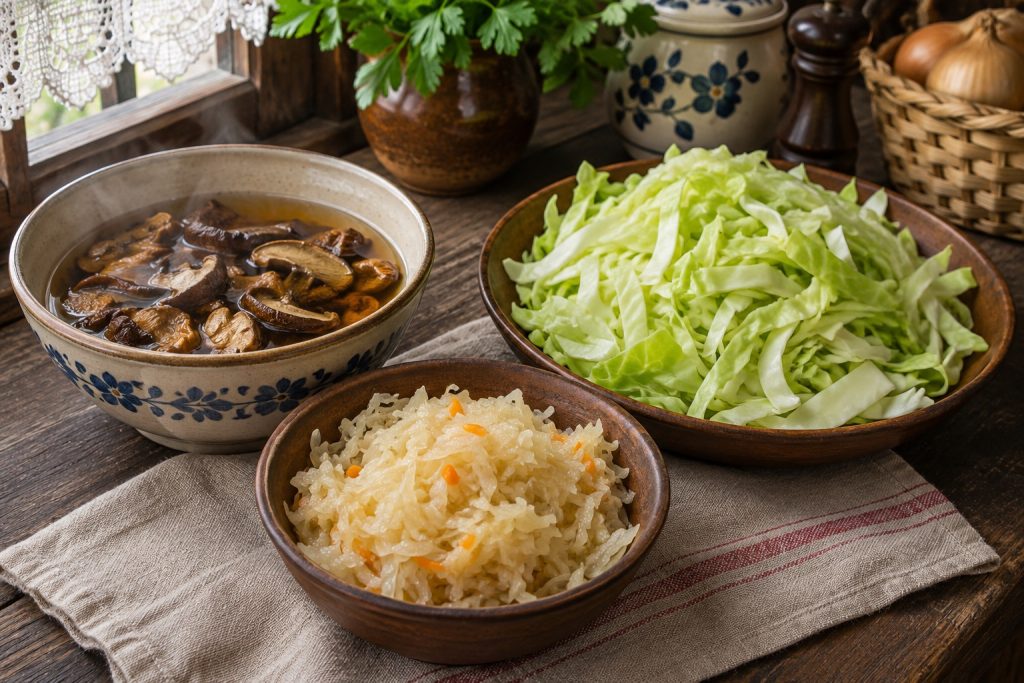
    Soak dried mushrooms in 1 cup/250 ml hot water 20 minutes; strain the liquid finely.

    Taste sauerkraut; if aggressively salty, rinse briefly and squeeze well.

    Prepare mushrooms and cabbages
    Soak mushrooms 20 minutes; chop and strain the liquid. Cut long sauerkraut strands to 1½ inches/4 cm. Wilt fresh cabbage in the large pot 10 minutes until halved in volume.

    Step-by-step method

    1. Prepare mushrooms and cabbages

    Soak mushrooms 20 minutes; chop and strain the liquid. Cut long sauerkraut strands to 1½ inches/4 cm. Wilt fresh cabbage in the large pot 10 minutes until halved in volume.

    2. Brown the meats in batches

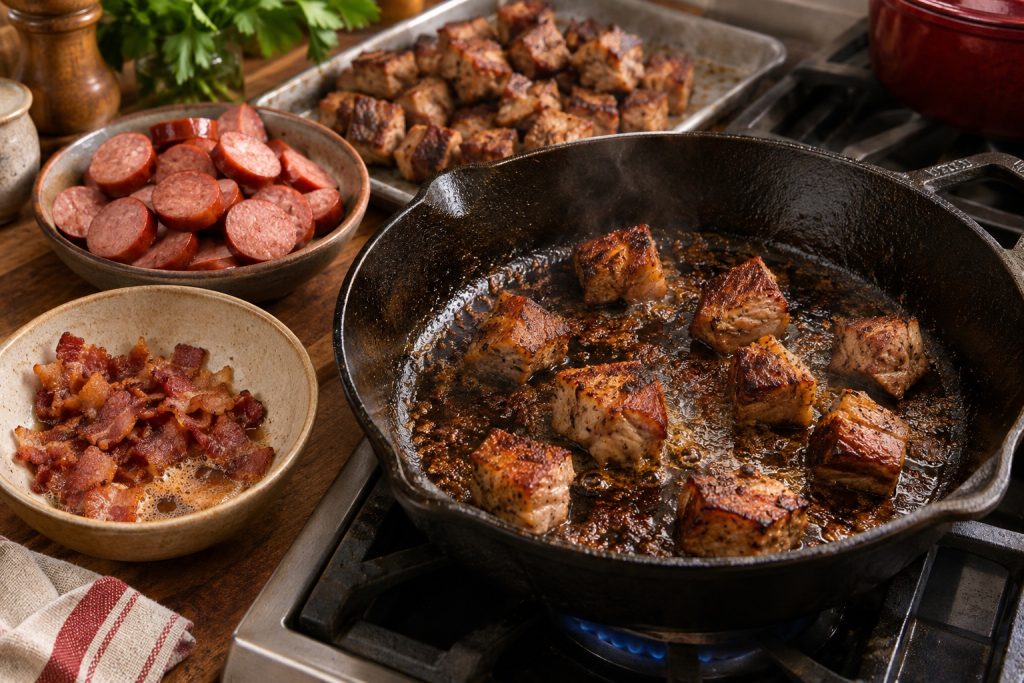
    Render bacon in a skillet. Brown pork deeply in batches and cook to 160°F/71°C. Briefly brown kielbasa, then soften onions in the remaining fat.

    Brown the meats in batches
    Render bacon in a skillet. Brown pork deeply in batches and cook to 160°F/71°C. Briefly brown kielbasa, then soften onions in the remaining fat.

    3. Layer the pot and simmer slowly

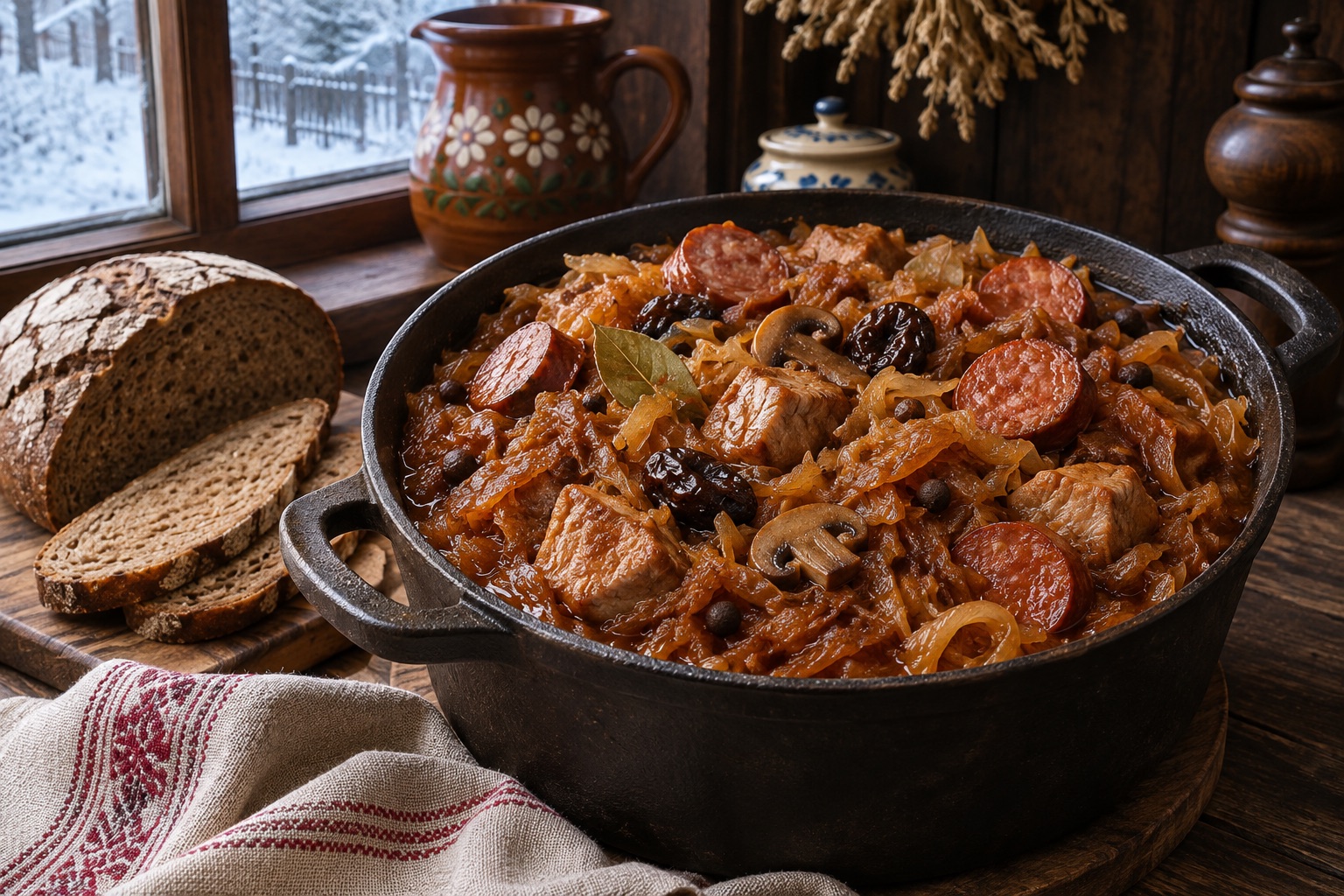
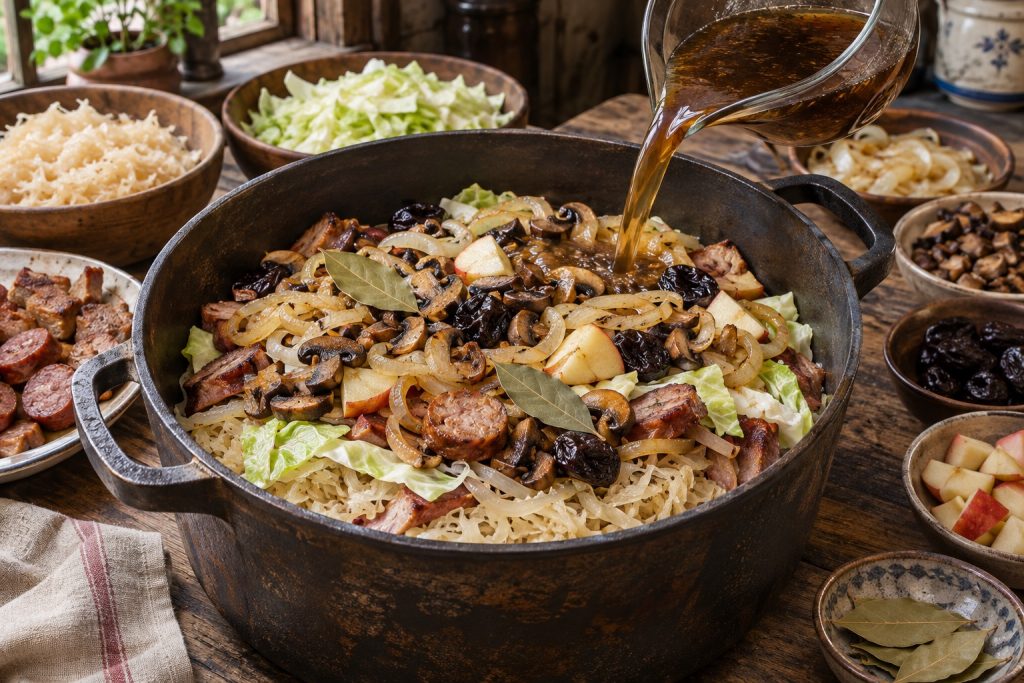
    Combine both cabbages, meats, onions, mushrooms, soaking liquid, stock, paste, apple, prunes, and spices. Bring to a gentle simmer; cook partly covered 2½ hours, stirring every 20 minutes.

    Layer the pot and simmer slowly
    Combine both cabbages, meats, onions, mushrooms, soaking liquid, stock, paste, apple, prunes, and spices. Bring to a gentle simmer; cook partly covered 2½ hours, stirring every 20 minutes.

    4. Reduce, rest, and reheat

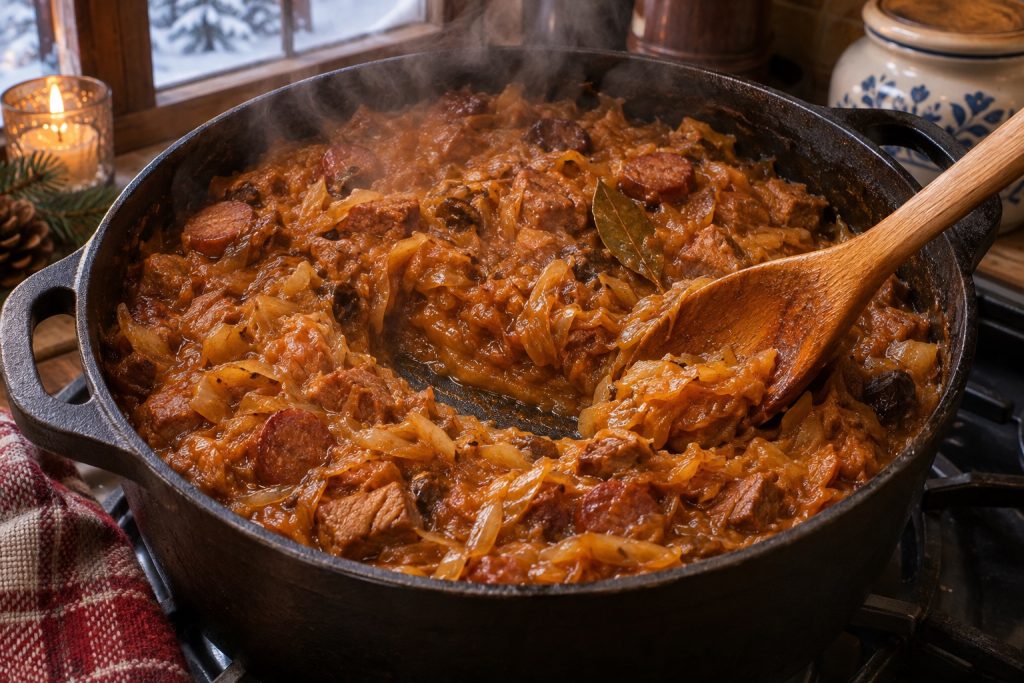
    Uncover for the final 30 minutes until thick and spoon-coating. Remove bay and allspice. Cool quickly and rest overnight; on serving day bring to a full simmer and reheat to 165°F/74°C.

    Reduce, rest, and reheat
    Uncover for the final 30 minutes until thick and spoon-coating. Remove bay and allspice. Cool quickly and rest overnight; on serving day bring to a full simmer and reheat to 165°F/74°C.

    Texture and doneness cues

    Cabbage is silky but intact, meat tender, and no watery liquid pools at the bottom.

    Color is deep chestnut, acidity, sweetness, and smoke are balanced, and serving temperature is 165°F/74°C.

    Mistakes, substitutions, and conversions

    Mistake: taste sauerkraut and rinse only if needed; add no salt at the start.

    Use another smoked sausage for kielbasa and dried porcini for forest mushrooms.

    1 kg sauerkraut is about 6 packed cups. Add hot water a little at a time if the pot catches.

    Serving, storage, and allergens

    Refrigerate in shallow containers 3–4 days or freeze portions 2–3 months. Thaw in the refrigerator, bring to a full simmer, and reach 165°F/74°C. Reheat each portion once.

    Allergen note: processed meats may contain milk, gluten, or mustard; check labels.

    Frequently asked questions

    Is bigos better the next day?

    Resting integrates smoky, sour, and sweet flavors; cool it quickly and safely first.

    Should sauerkraut be rinsed?

    Only rinse briefly if very salty or harsh; over-rinsing removes character.

    Why is my bigos watery?

    The lid stayed on too long or cabbage was not drained. Simmer uncovered 30–45 minutes.

    Can it be frozen?

    Yes. Freeze small portions 2–3 months and thaw in the refrigerator.

  • Canadian Tourtière: Moist Filling and Flaky Crust

    Canadian Tourtière: Moist Filling and Flaky Crust

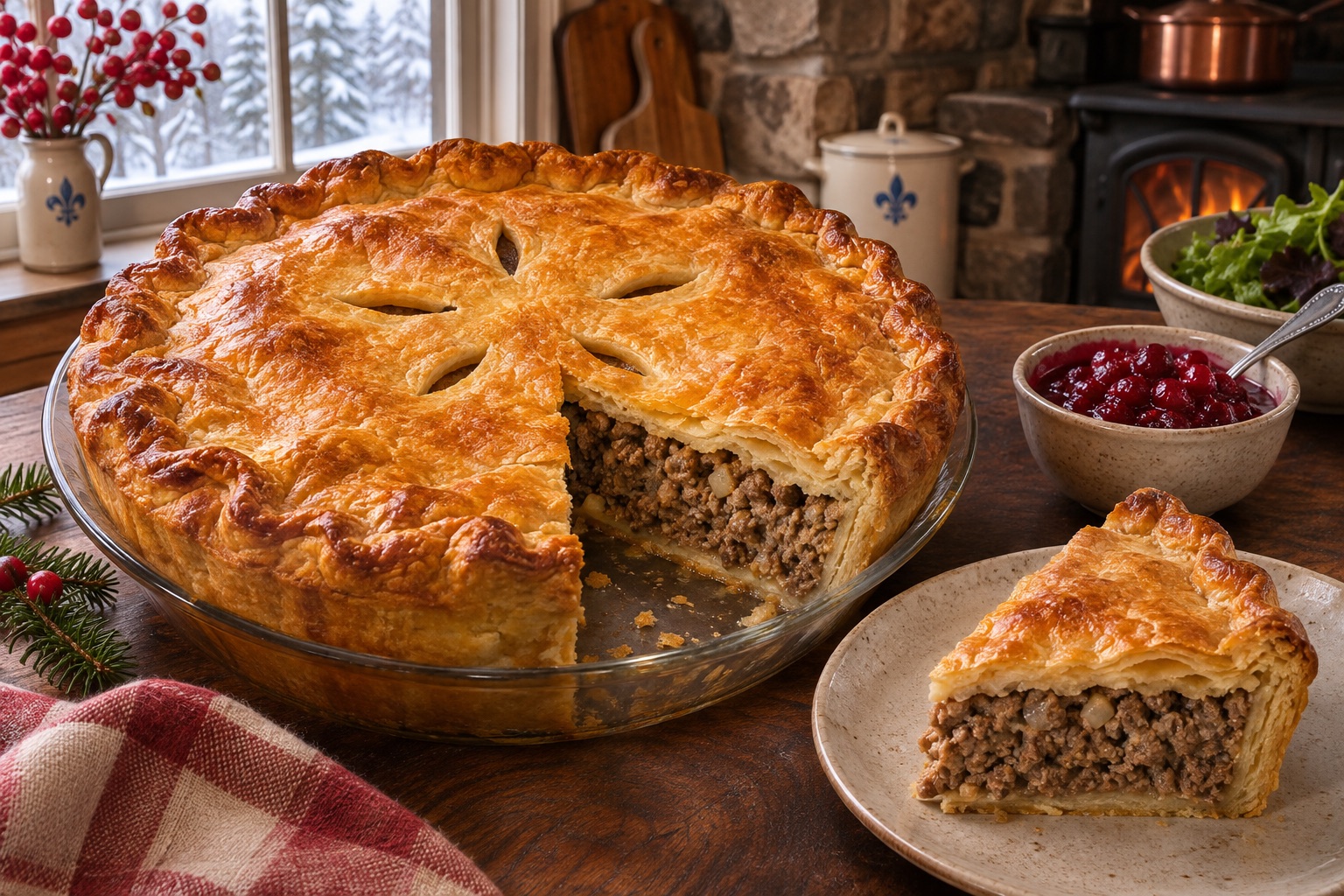
    Tourtière is a family of French-Canadian meat pies with regional differences in meat and seasoning. Parks Canada documents a Fort Langley version using mixed ground meat, potato, warm spices, and a double crust. This recipe is calibrated for a home oven.

    The filling is cooked until no free liquid remains and cooled fully; cold pastry then enters a hot oven. That keeps the bottom crisp and slices neat.

    Why this method works

    • Mashed potato binds excess moisture without turning the filling pasty.
    • Cooling on a tray prevents steam from soaking the pastry.
    • Chilling the bottom crust preserves butter layers.
    • Vents release steam and egg wash promotes even browning.

    Before you start

    Prepare a deep 9-inch/23 cm pie plate, wide skillet, rolling pin, brush, and thermometer.

    Keep pastry cold; chill it 15 minutes whenever it softens.

    Cool the filling at least 30 minutes, until no longer warm.

    Brown the meat and reduce the liquid
    Cook meats and onion over medium-high heat 10–12 minutes, breaking them up. Add garlic. Once meat reaches 160°F/71°C, drain excess fat.

    Step-by-step method

    1. Brown the meat and reduce the liquid

    Cook meats and onion over medium-high heat 10–12 minutes, breaking them up. Add garlic. Once meat reaches 160°F/71°C, drain excess fat.

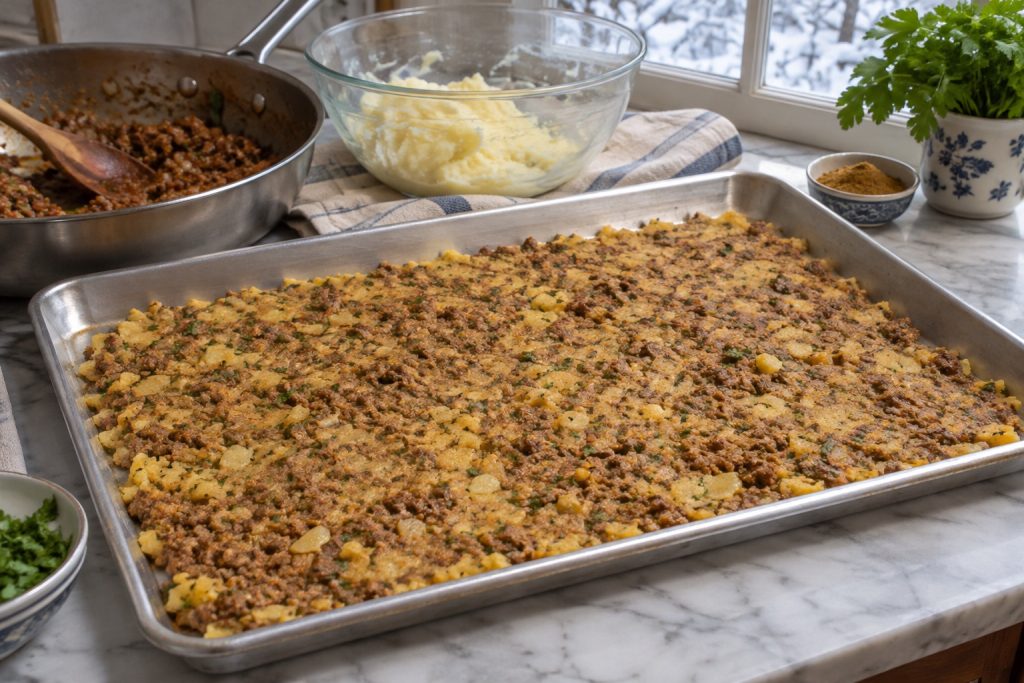
    2. Bind filling with potato and spices

    Add stock and seasonings; simmer uncovered 15 minutes until no free liquid remains. Fold in mashed potato. Spread on a tray and cool completely.

    Bind filling with potato and spices
    Add stock and seasonings; simmer uncovered 15 minutes until no free liquid remains. Fold in mashed potato. Spread on a tray and cool completely.

    3. Enclose the pie with cold pastry

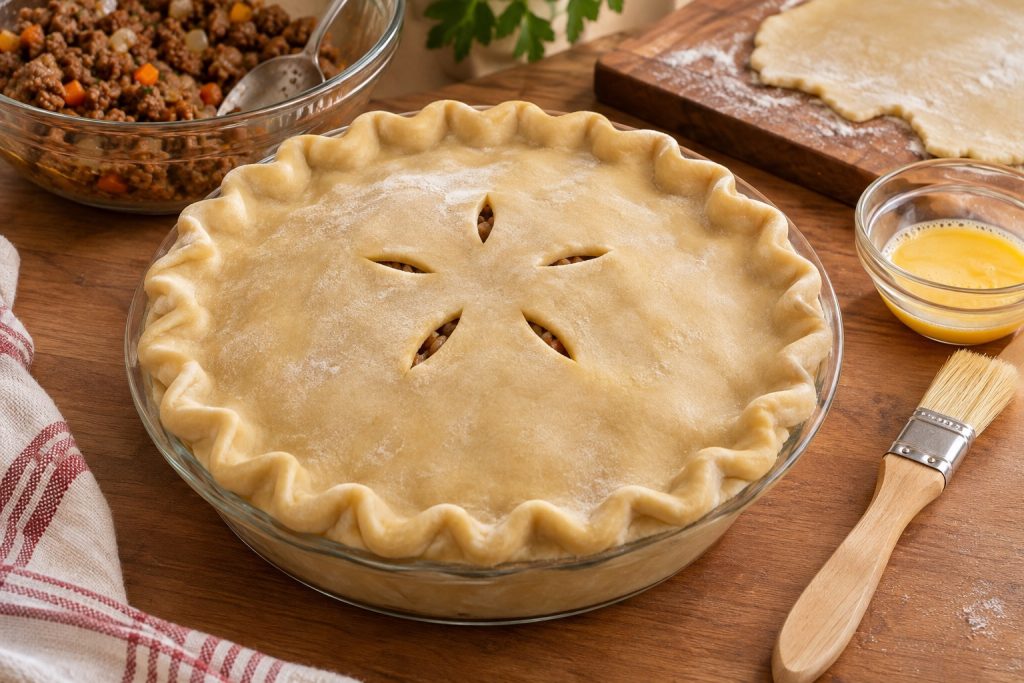
    Fit bottom pastry into a 9-inch plate and chill 15 minutes. Add cold filling, cover with top pastry, crimp, and cut five vents. Brush with egg and chill 15 minutes again.

    Enclose the pie with cold pastry
    Fit bottom pastry into a 9-inch plate and chill 15 minutes. Add cold filling, cover with top pastry, crimp, and cut five vents. Brush with egg and chill 15 minutes again.

    4. Bake golden, rest, and slice

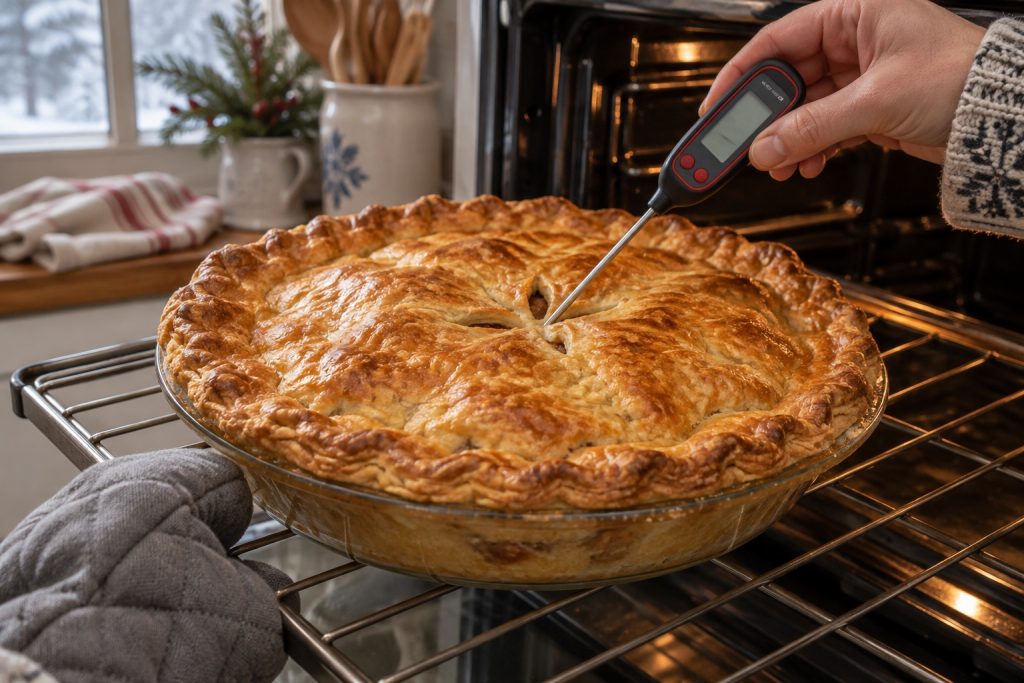
    Bake at 400°F/200°C for 20 minutes, then 350°F/180°C for 30–35 minutes, until deep golden and 165°F/74°C at center. Rest 20 minutes before slicing; chill leftovers within 2 hours.

    Bake golden, rest, and slice
    Bake at 400°F/200°C for 20 minutes, then 350°F/180°C for 30–35 minutes, until deep golden and 165°F/74°C at center. Rest 20 minutes before slicing; chill leftovers within 2 hours.

    Texture and doneness cues

    Pastry is deep golden with dry crisp edges and clear steam at the vents.

    The center reaches 165°F/74°C and a slice holds shape after 20 minutes.

    Mistakes, substitutions, and conversions

    Mistake: warm or wet filling makes a soggy base; cool it fully.

    Use beef and turkey instead of pork, and two store-bought crusts if needed.

    A 23 cm plate is 9 inches. Shield an early-browning rim with foil.

    Serving, storage, and allergens

    Refrigerate 3–4 days. Reheat at 325°F/160°C for 15–20 minutes to 165°F/74°C. Freeze baked slices up to 2 months and thaw in the refrigerator.

    Allergens: wheat and egg; prepared pastry may contain milk.

    Frequently asked questions

    Why is the bottom soggy?

    Warm or wet filling is most common; leave no liquid in the pan and cool completely.

    Can tourtière be made ahead?

    Yes. Make filling 2 days ahead or refrigerate the assembled unbaked pie 24 hours.

    Why rest 20 minutes?

    Fat and juices redistribute; cutting early spills the filling.

    Can it bake from frozen?

    Thawing in the refrigerator and checking for 165°F/74°C is more reliable.

  • Malaysian Curry Laksa: Balanced Coconut Broth

    Malaysian Curry Laksa: Balanced Coconut Broth

    Laksa is a family of Malaysian noodle soups with strong regional variation. Tourism Malaysia describes curry mee/curry laksa as widely enjoyed, while Sarawak laksa has its own shrimp-paste, tamarind, and coconut profile. This is an accessible home curry-laksa adaptation, not a claim of one definitive version.

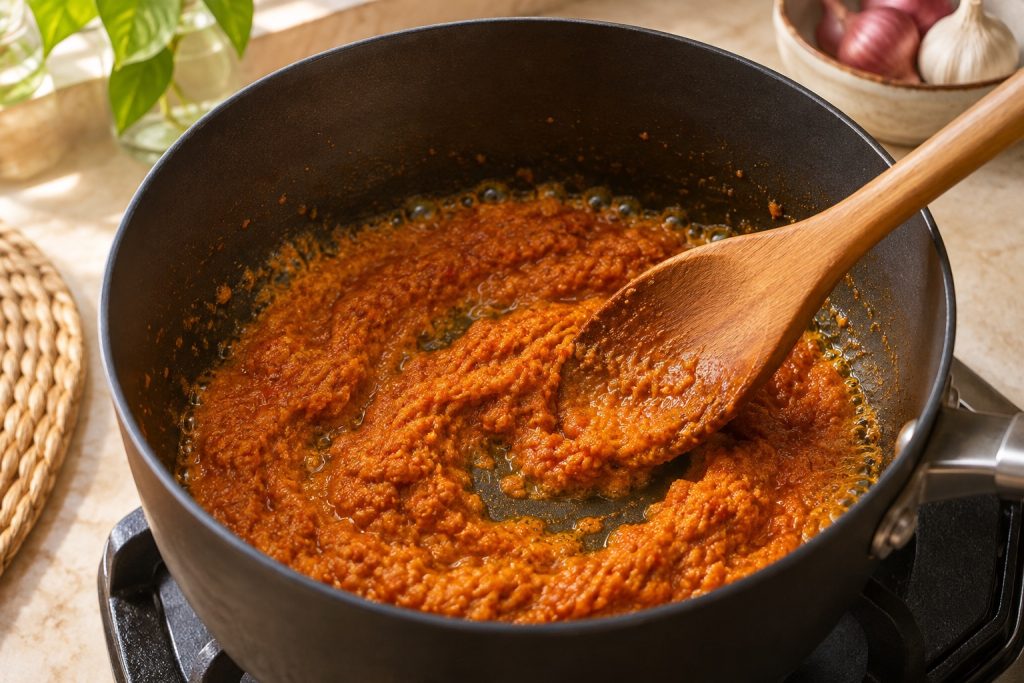
    Success comes from frying the paste until fragrant oil appears, keeping coconut milk below a hard boil, and cooking noodles separately.
    Why this method works

    • Frying spices and aromatics first removes raw flavors.
    • Adding stock before coconut milk protects the emulsion.
    • Cooking noodles separately keeps the broth from turning starchy.
    • Chicken cooks first and prawns last so both stay properly cooked.

    Before you start

    Prepare a 5-quart pot, blender, small pan, tongs, and digital thermometer.

    Blend shallots, garlic, ginger, lemongrass, and chile to a smooth paste.

    Prepare rice noodles separately according to their package and cut garnishes ahead.

    Fry the paste until aromatic oil appears
    Heat oil over medium. Add blended aromatics, curry powder, turmeric, and sambal. Stir 8–10 minutes until the paste darkens and orange oil appears at the edges.

    Step-by-step method

    1. Fry the paste until aromatic oil appears

    Heat oil over medium. Add blended aromatics, curry powder, turmeric, and sambal. Stir 8–10 minutes until the paste darkens and orange oil appears at the edges.

    2. Build the broth and cook the chicken

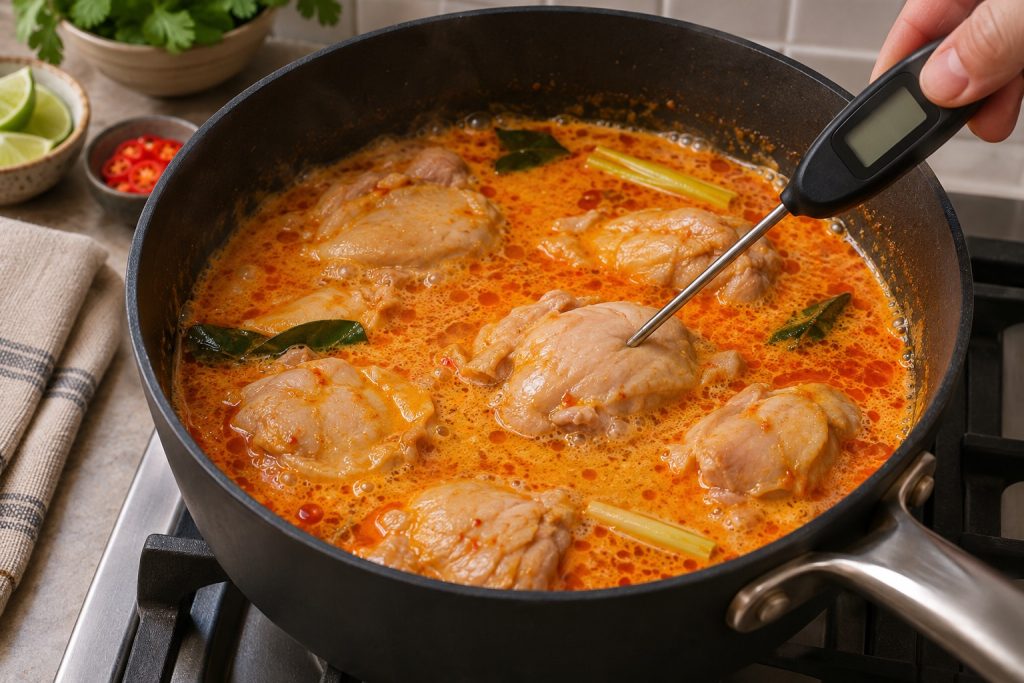
    Add stock gradually, scraping the pot. Add chicken and simmer gently 12–15 minutes, until the thickest piece reaches 165°F/74°C.

    Build the broth and cook the chicken
    Add stock gradually, scraping the pot. Add chicken and simmer gently 12–15 minutes, until the thickest piece reaches 165°F/74°C.

    3. Add coconut and prawns gently

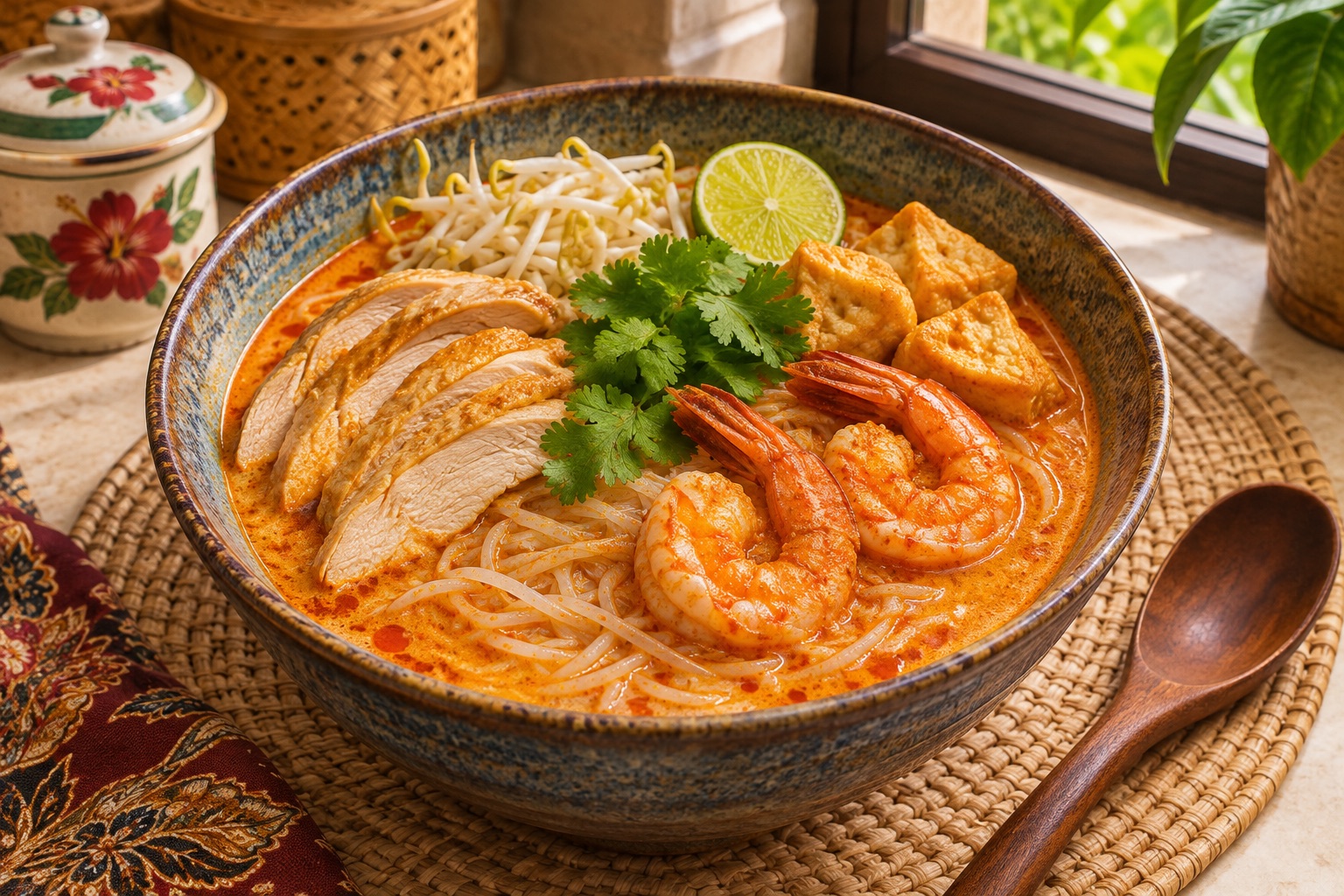
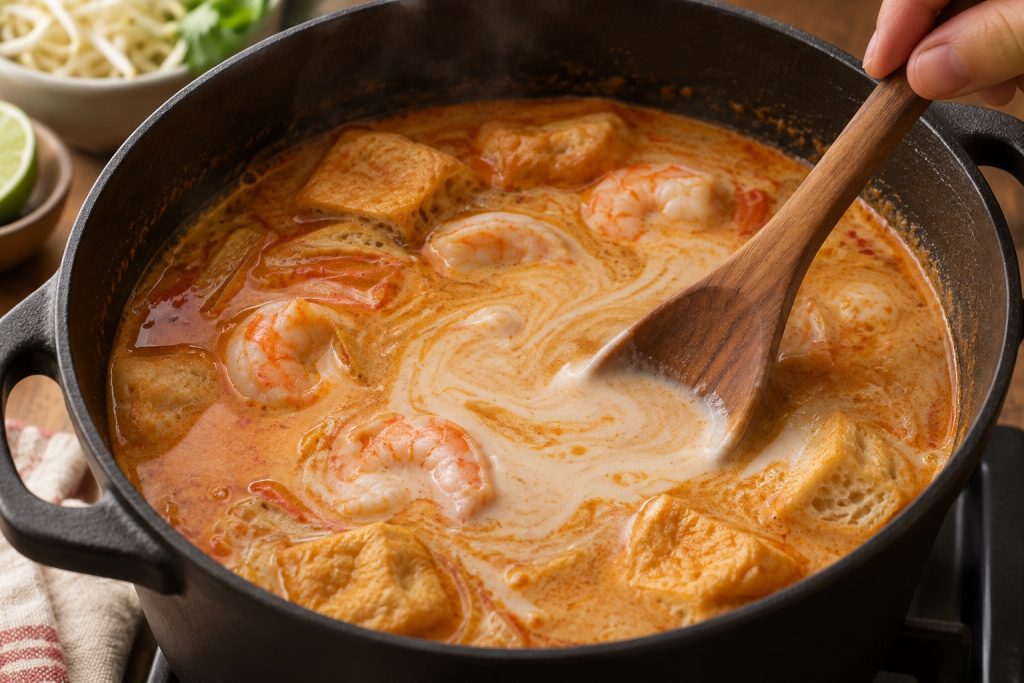
    Lower the heat. Add coconut milk, fish sauce, sugar, and tofu puffs; heat 5 minutes without a hard boil. Add prawns and cook 3–4 minutes until opaque and 145°F/63°C. Balance with lime.

    Add coconut and prawns gently
    Lower the heat. Add coconut milk, fish sauce, sugar, and tofu puffs; heat 5 minutes without a hard boil. Add prawns and cook 3–4 minutes until opaque and 145°F/63°C. Balance with lime.

    4. Assemble noodles in bowls and serve

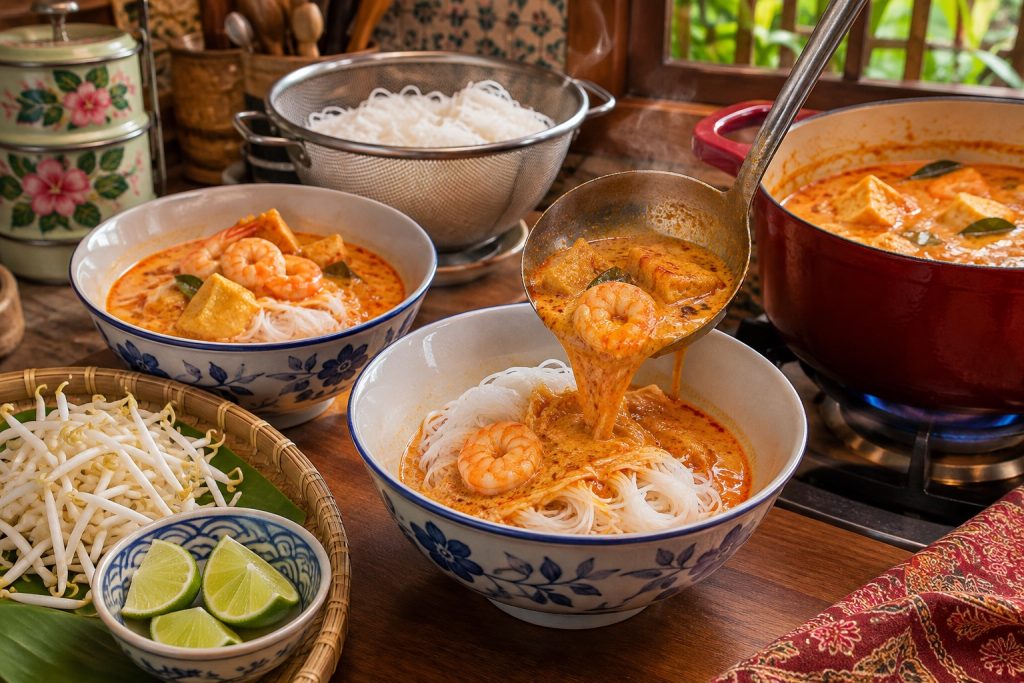
    Cook and drain noodles separately; divide among six bowls. Ladle over hot laksa and finish with sprouts, lime, and cilantro. Chill leftovers in shallow containers within 2 hours.

    Assemble noodles in bowls and serve
    Cook and drain noodles separately; divide among six bowls. Ladle over hot laksa and finish with sprouts, lime, and cilantro. Chill leftovers in shallow containers within 2 hours.

    Texture and doneness cues

    The broth is orange, glossy, and lightly coats a spoon; tiny oil droplets are evenly dispersed.

    Chicken reaches 165°F/74°C, prawns 145°F/63°C, noodles stay springy, and sprouts crisp.

    Mistakes, substitutions, and conversions

    Mistake: a hard boil splits coconut milk; keep it below a rolling boil.

    Substitute firm tofu for tofu puffs, or omit prawns and increase chicken.

    400 ml is about 1⅔ cups. Do not leave noodles soaking in broth before serving.

    Serving, storage, and allergens

    Refrigerate 2–3 days below 40°F/4°C, with noodles separate. Bring the soup to a boil and reheat to 165°F/74°C; reheat the prawn portion once. Freezing can make coconut broth grainy.

    Allergens: crustaceans, fish, soy; some curry blends may contain mustard.

    Frequently asked questions

    Why did the laksa split?

    The heat was too high after adding coconut milk. Use low heat and stir often.

    Can noodles cook in the broth?

    They can, but starch thickens the broth and noodles swell while waiting; separate cooking is more reliable.

    Can I make the paste ahead?

    Yes. Keep raw paste 24 hours or cooked paste 3 days refrigerated.

    When do prawns go in?

    During the final 3–4 minutes, just before serving; longer cooking makes them rubbery.

  • Malva Pudding: Moist South African Sponge That Absorbs Sauce

    Malva Pudding: Moist South African Sponge That Absorbs Sauce

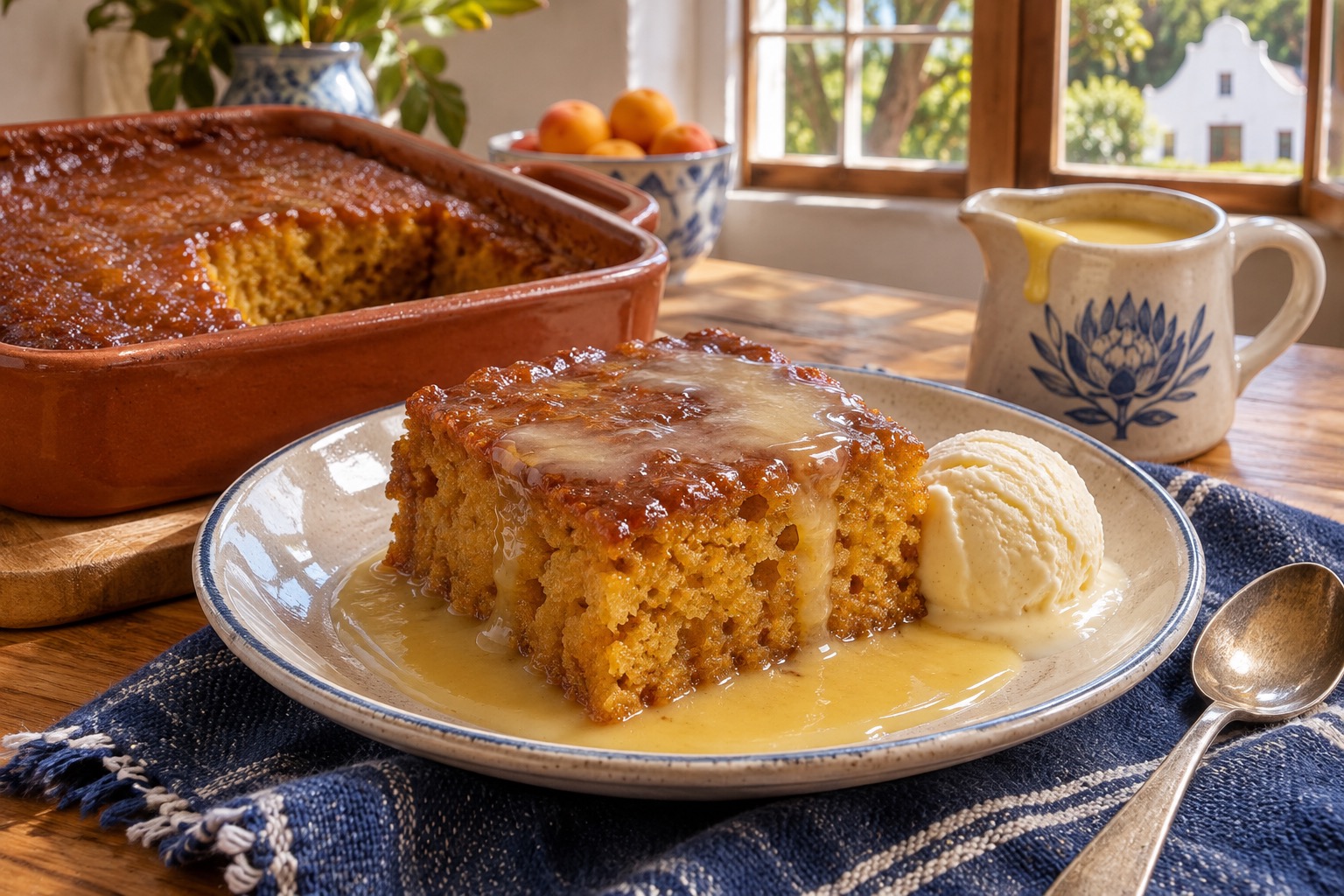
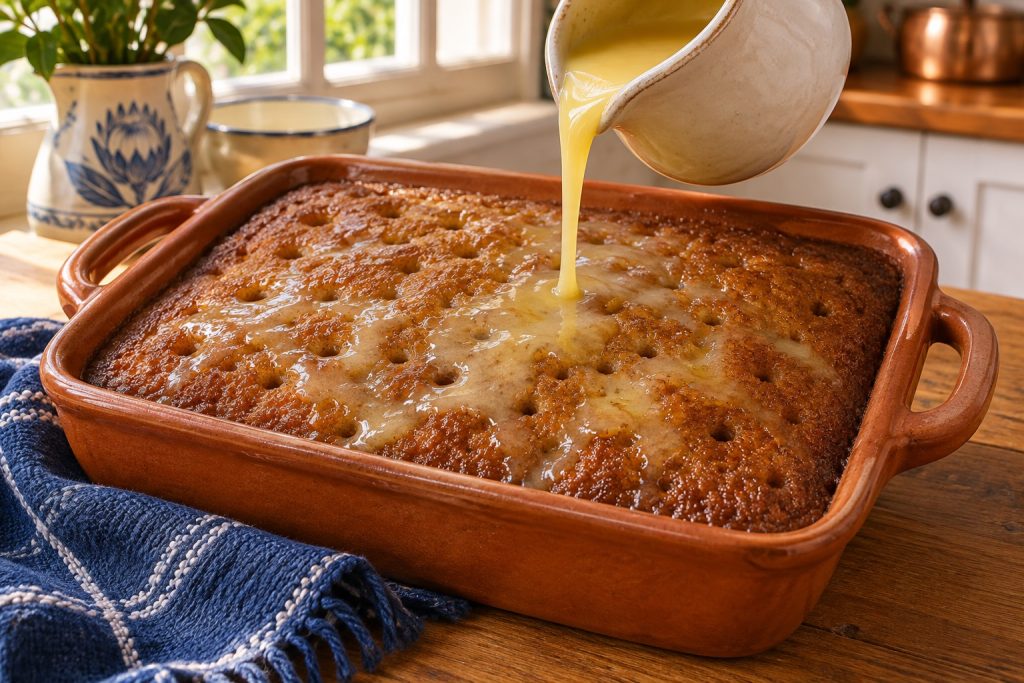
    South African Tourism describes malva pudding as a traditional cake-based dessert covered with rich syrup. Recipes in South African government publications likewise pour a cream-butter sauce over a hot apricot sponge.

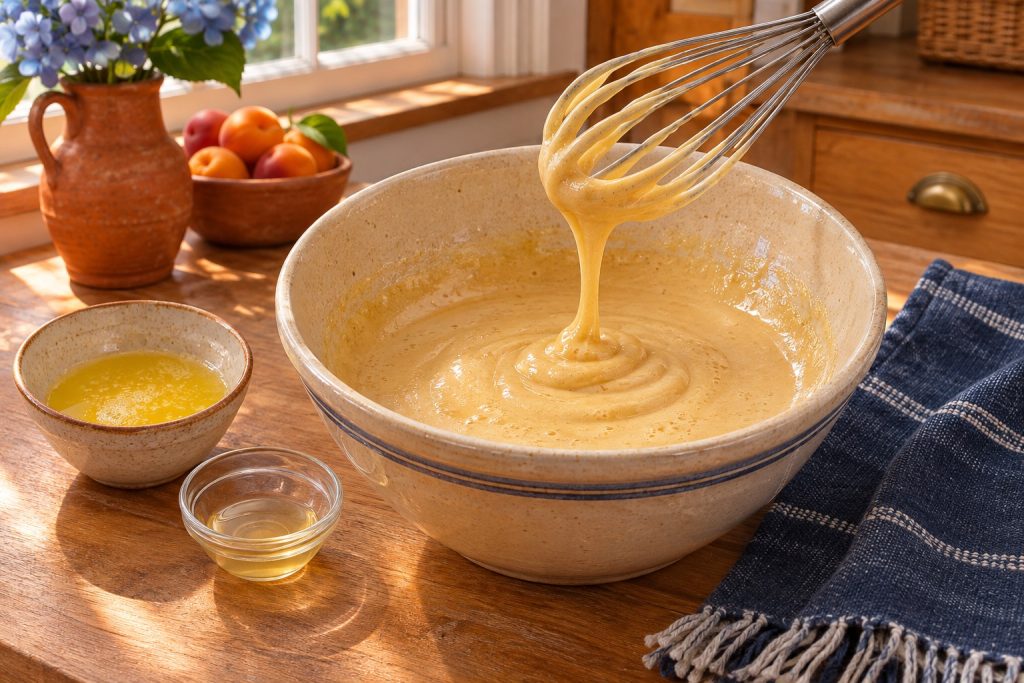
    Here both sponge and sauce are hot and the holes are evenly spaced. The sauce is added in two stages and rests 20 minutes, preventing a dry base or soggy surface.

    Why this method works

    • Apricot jam adds not only flavor but moisture retention from sugar and pectin.
    • Vinegar and baking soda create fine pores in the rich batter.
    • Even holes in the hot sponge make controlled channels for sauce.
    • Adding sauce in two rounds lets you watch absorption and avoid flooding.

    Before you start

    Prepare an 8-inch/20 cm square ceramic or metal dish, two bowls, whisk, spatula, skewer, and saucepan.

    Bring egg and milk out 20 minutes ahead. Strain jam if it has large fruit pieces.

    Heat oven to 350°F/180°C and grease well. Make the sauce during the final 10 minutes of baking.

    Whisk egg, sugar, and jam to a ribbon
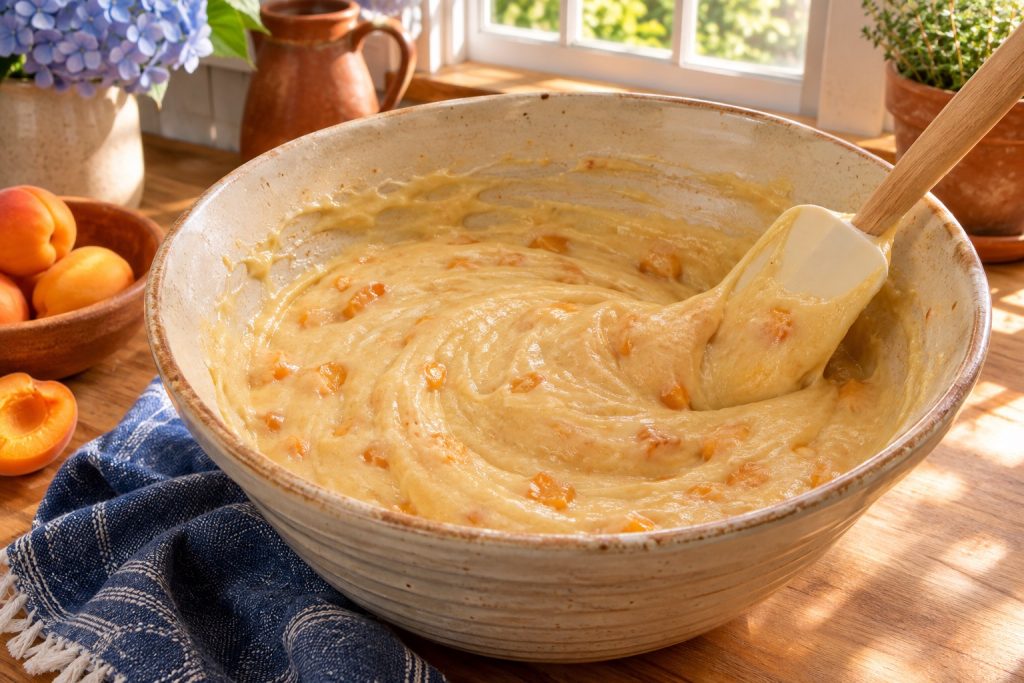
    Beat egg and sugar 3–4 minutes until pale and a thick ribbon falls from the whisk. Beat in apricot jam, 1 tbsp/15 g melted butter, and vinegar until smooth.

    Step-by-step method

    1. Whisk egg, sugar, and jam to a ribbon

    Beat egg and sugar 3–4 minutes until pale and a thick ribbon falls from the whisk. Beat in apricot jam, 1 tbsp/15 g melted butter, and vinegar until smooth.

    2. Briefly combine dry and wet mixtures

    Sift flour, baking soda, and salt separately. Fold dry mixture into the egg mixture in three additions, alternating with milk. Stop when no dry streak remains; batter should pour. Spread in the dish.
    Briefly combine dry and wet mixtures
    Sift flour, baking soda, and salt separately. Fold dry mixture into the egg mixture in three additions, alternating with milk. Stop when no dry streak remains; batter should pour. Spread in the dish.
    3. Bake until golden and porous

    Bake at 350°F/180°C for 30–38 minutes until deep golden, springy, and a center tester comes out clean. During the final 10 minutes, heat cream, milk, 8 tbsp/115 g butter, sugar, and salt until dissolved without a hard boil. Add vanilla.

    Bake until golden and porous
    Bake at 350°F/180°C for 30–38 minutes until deep golden, springy, and a center tester comes out clean. During the final 10 minutes, heat cream, milk, 8 tbsp/115 g butter, sugar, and salt until dissolved without a hard boil. Add vanilla.

    4. Soak with hot sauce in two rounds

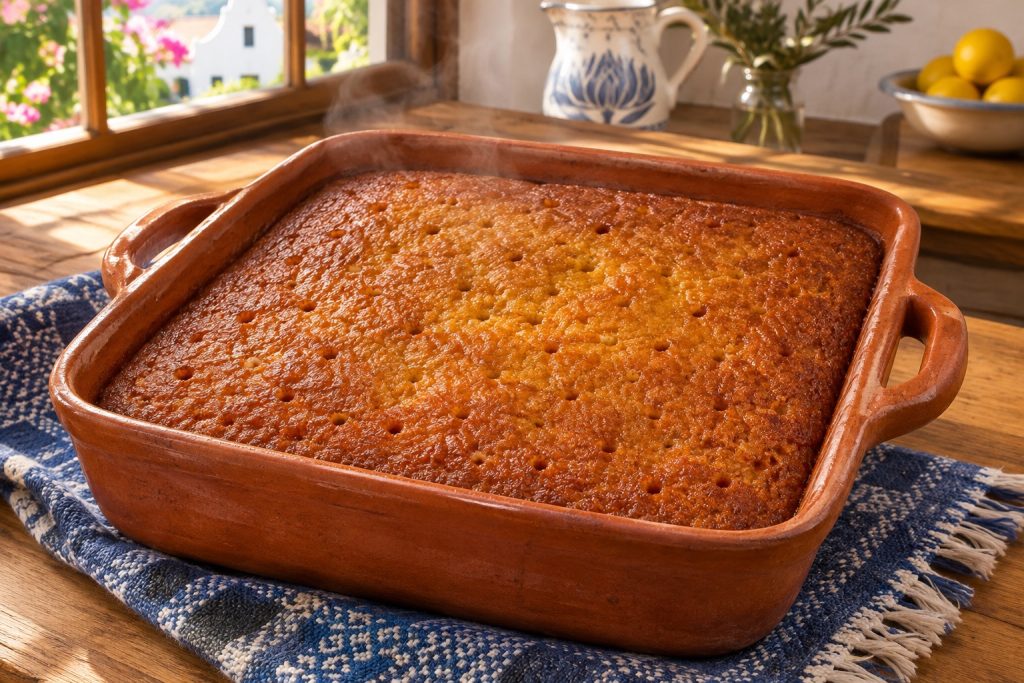
    Immediately pierce the hot sponge to the base every ¾ inch/2 cm. Slowly pour over half the hot sauce; wait 5 minutes, then add the rest. Rest 20 minutes. Cool any portions for storage within 2 hours.

    Soak with hot sauce in two rounds
    Immediately pierce the hot sponge to the base every ¾ inch/2 cm. Slowly pour over half the hot sauce; wait 5 minutes, then add the rest. Rest 20 minutes. Cool any portions for storage within 2 hours.

    Texture and doneness cues

    The sponge is deep golden and lightly springy, with even small pores and a moist but fully baked crumb. Sauce reaches the base without leaving a separate lake in the dish.

    Mistakes, substitutions, and conversions

    Dry pudding points to overbaking, shallow holes, or cool sauce. A soggy top means all sauce arrived at once or the sponge was underbaked. Apricot jam is characteristic; peach works with a changed flavor. 170 g flour is about 1⅓ US cups; 115 ml is just under ½ cup.

    Serving, storage, and allergens

    Serve warm with vanilla ice cream, cream, or custard. Cover within 2 hours and refrigerate below 40°F/4°C up to 4 days. Reheat covered at 320°F/160°C for 10–12 minutes or microwave to 165°F/74°C. Freeze the sauced pudding up to 2 months and thaw in the refrigerator. Contains gluten, dairy, and egg.

    Frequently asked questions

    Why is malva pudding dry?

    Remove as soon as the tester is clean, pierce the hot sponge to the base, and add hot sauce in two rounds.

    Why did the sauce not absorb?

    The sponge or sauce may be cool, holes sparse, or the top overbaked. Use both hot.

    Can it be made a day ahead?

    Yes. Cool completely, cover, and reheat covered next day. Add 1–2 tbsp milk before serving if needed.

    Can I replace cream with milk?

    Yes, but the sauce will be thinner and less rich; use whole milk.

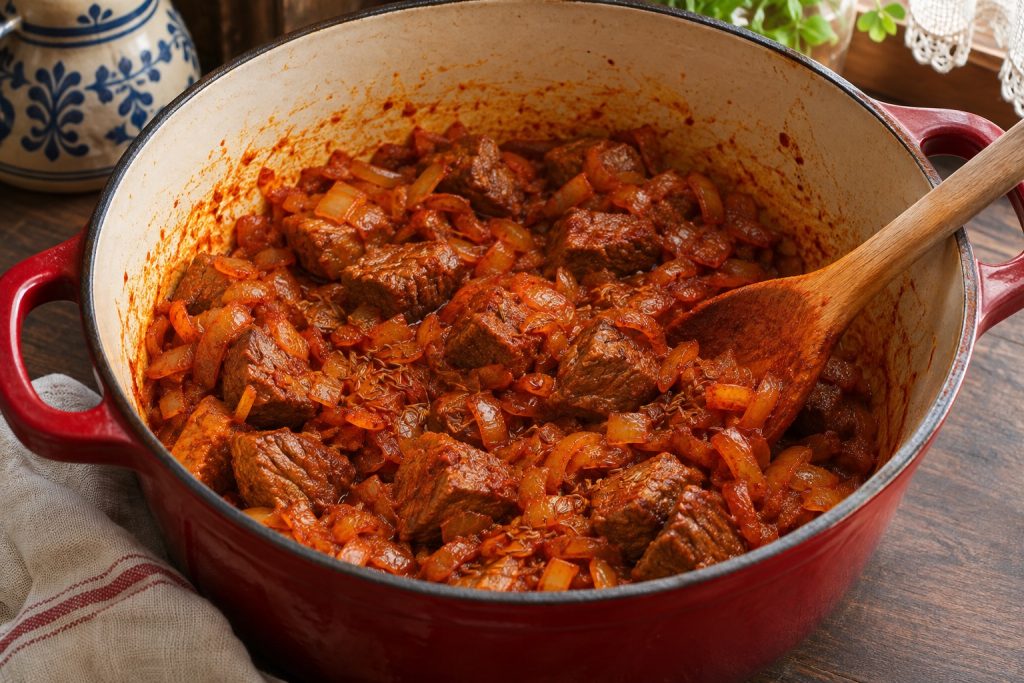
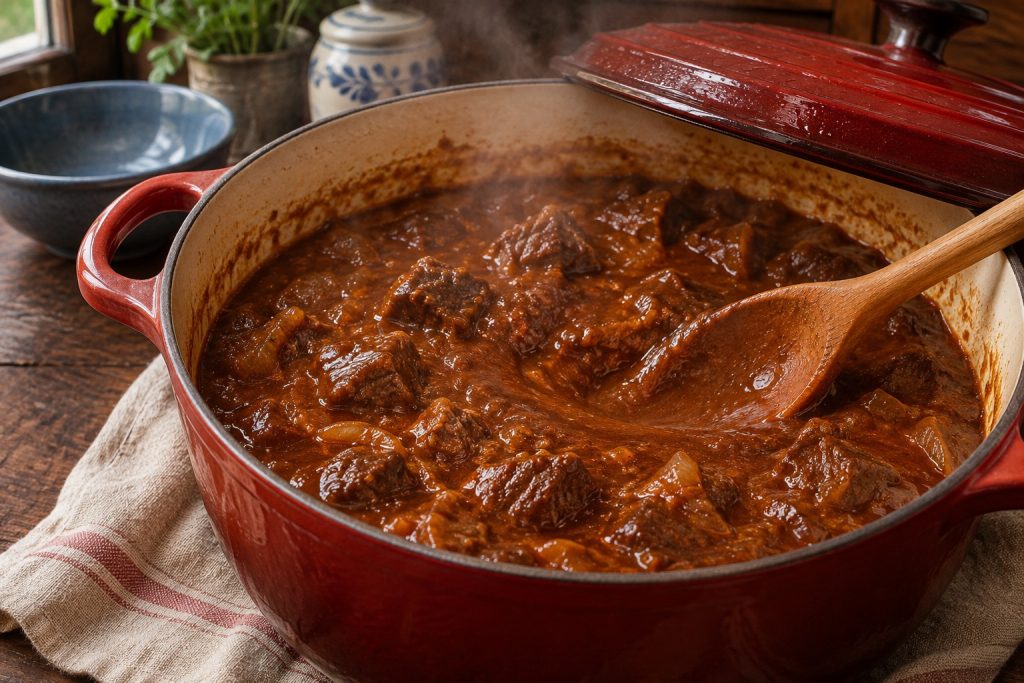
  • Czech Beef Goulash: Thick Onion Gravy and Tender Meat

    Czech Beef Goulash: Thick Onion Gravy and Tender Meat

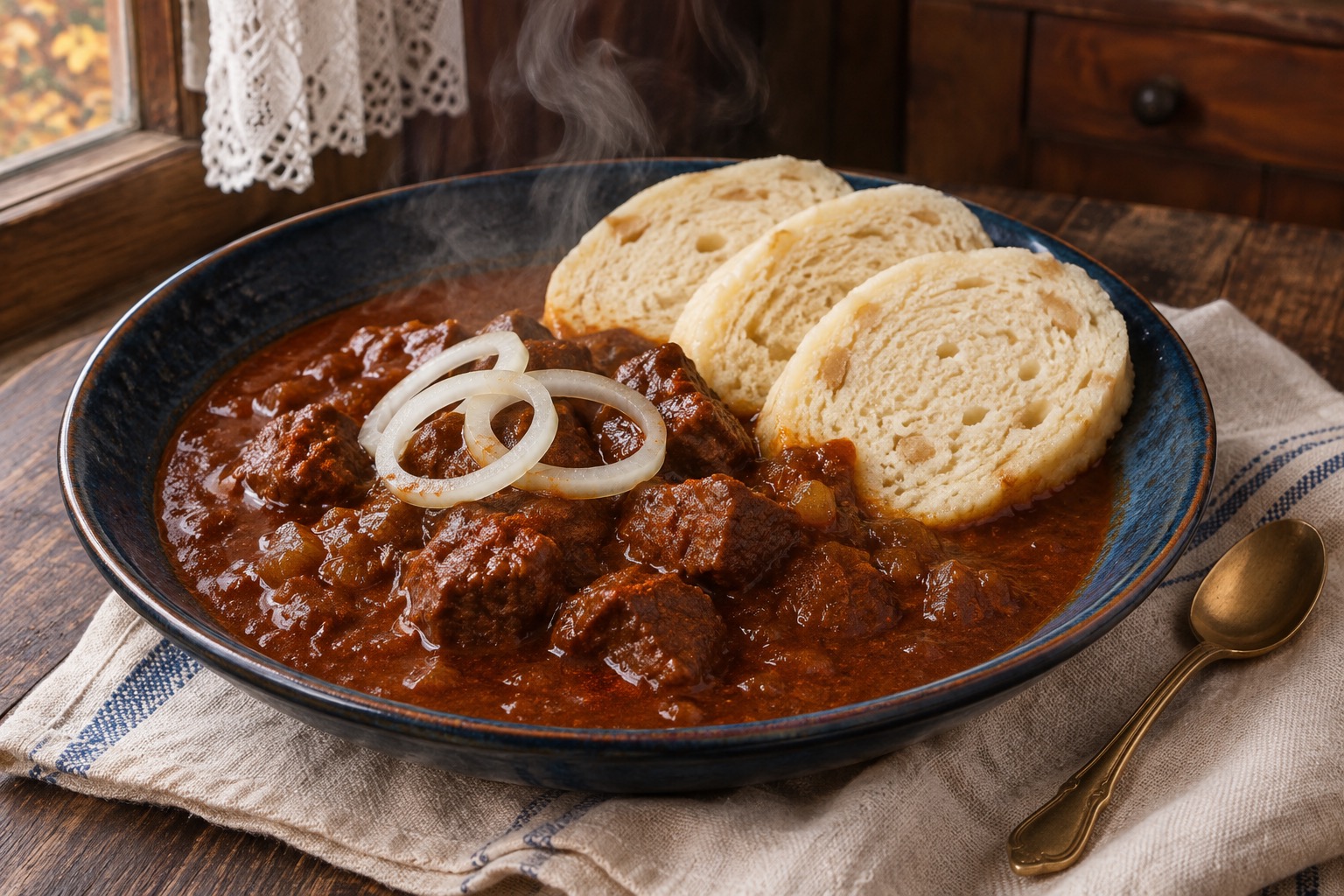
    Goulash has Hungarian roots, but Czech cooking developed a distinct pub classic with beef, abundant onions, thick gravy, and bread dumplings. VisitCzechia presents Czech beef goulash as a typical dish served with dumplings or fresh bread.

    This home version thickens with long-cooked onions rather than flour. Paprika meets the fat briefly off heat so it does not scorch, while low simmering dissolves the beef’s connective tissue.

    Why this method works

    • Using nearly as much onion as beef gives natural body and sweetness as it dissolves.
    • Browning beef in batches builds fond instead of steaming it.
    • Blooming paprika off heat for 20 seconds releases aroma without bitterness.
    • A partly covered simmer tenderizes beef while reducing excess liquid.

    Before you start

    Prepare a 5–6 quart heavy pot, sharp knife, tongs, wooden spoon, and thermometer.

    Cut beef chuck into 1½-inch/4 cm cubes and dry thoroughly. Finely chop onions; coarse pieces take longer to dissolve.

    Use sweet Hungarian- or Czech-style paprika; hot or smoked paprika changes the balance.

    Cook onions deep golden and soft
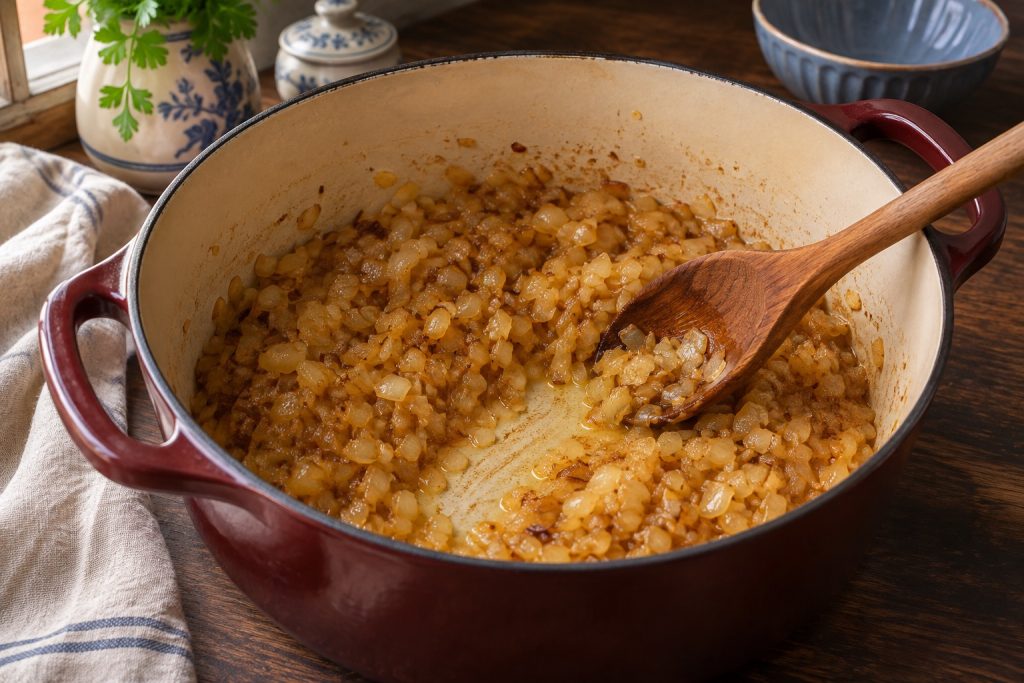
    Heat half the fat over medium. Add onions and ½ tsp salt; cook 30–40 minutes, stirring often, until deep golden and jammy. Deglaze sticking spots with 1–2 tbsp water. Transfer onions to a bowl.

    Step-by-step method

    1. Cook onions deep golden and soft

    Heat half the fat over medium. Add onions and ½ tsp salt; cook 30–40 minutes, stirring often, until deep golden and jammy. Deglaze sticking spots with 1–2 tbsp water. Transfer onions to a bowl.

    2. Brown beef hard in batches

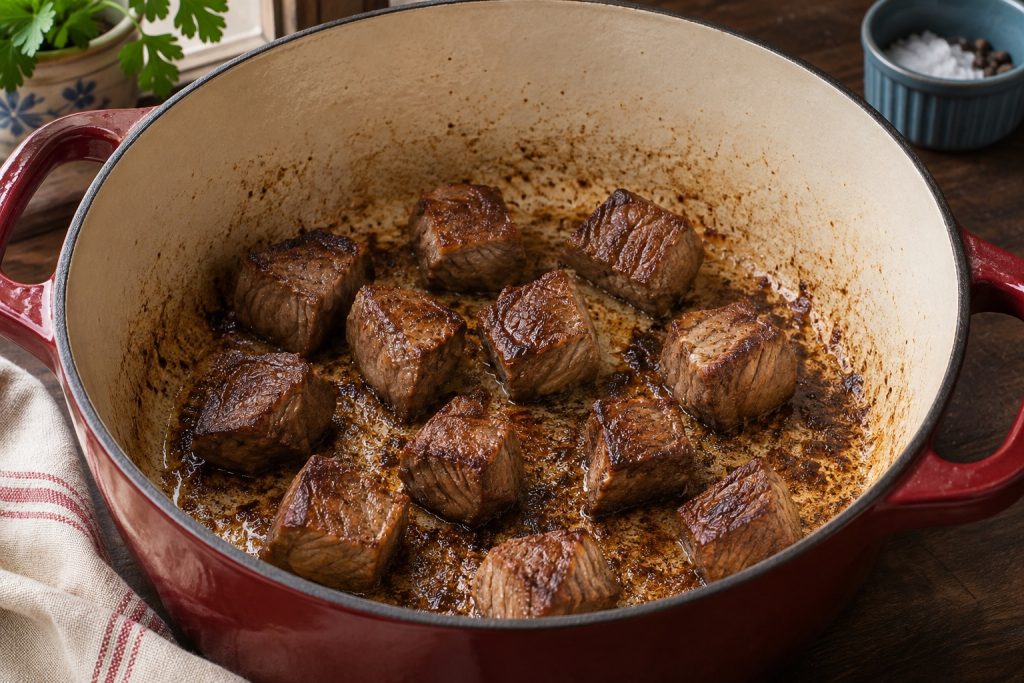
    Dry beef thoroughly and season with remaining salt and pepper. Add remaining fat and brown in 3–4 batches, 6–8 minutes per batch. Do not crowd. Move browned beef to a bowl.

    Brown beef hard in batches
    Dry beef thoroughly and season with remaining salt and pepper. Add remaining fat and brown in 3–4 batches, 6–8 minutes per batch. Do not crowd. Move browned beef to a bowl.

    3. Build the paprika base without burning

    Turn off heat. Return onions; stir in garlic, paprika, and caraway for 20 seconds. Add tomato paste, return to medium, and cook 1 minute. Deglaze with one-third of the stock; add beef, remaining stock, and bay.

    Build the paprika base without burning
    Turn off heat. Return onions; stir in garlic, paprika, and caraway for 20 seconds. Add tomato paste, return to medium, and cook 1 minute. Deglaze with one-third of the stock; add beef, remaining stock, and bay.

    4. Simmer tender and adjust the gravy

    Bring to a bare simmer, partly cover, and cook very gently 1¾–2¼ hours. When beef yields easily to a fork, uncover and reduce 10–20 minutes if needed. Add marjoram and adjust salt. Divide into shallow containers for rapid cooling.

    Simmer tender and adjust the gravy
    Bring to a bare simmer, partly cover, and cook very gently 1¾–2¼ hours. When beef yields easily to a fork, uncover and reduce 10–20 minutes if needed. Add marjoram and adjust salt. Divide into shallow containers for rapid cooling.

    Texture and doneness cues

    Beef cubes hold shape but separate easily under a fork. Gravy thickly coats a spoon and a stirred path closes slowly, with no oil slick or burnt-paprika bitterness.

    Mistakes, substitutions, and conversions

    Thin gravy means undercooked onions, too tight a lid, or excess liquid; remove beef and reduce uncovered. Beef shin can replace chuck; lean stewing beef dries sooner. Omit caraway if unavailable; cumin is not the same. 1.2 kg beef is 2.65 lb and 750 ml stock is 3 US cups.

    Serving, storage, and allergens

    Serve with Czech bread dumplings, boiled potatoes, or fresh bread. Cool in shallow containers within 2 hours and refrigerate below 40°F/4°C up to 4 days; flavor deepens overnight. Reheat while stirring to 165°F/74°C, adding a splash of water if needed. Freeze up to 3 months. The stew is dairy- and egg-free; dumplings or bread may contain gluten and egg.

    Frequently asked questions

    Why did the paprika taste bitter?

    Paprika burns in seconds over high heat. Take the pot off heat, stir 20 seconds, then add liquid immediately.
    Why is the beef still tough?

    Connective tissue, not the clock, decides. Keep at a bare simmer for another 20–30 minutes.

    Should I add flour?

    No. Finely chopped onions cooked long enough thicken the gravy naturally.
    Can it be made a day ahead?

    Yes. Cool quickly and reheat to 165°F/74°C; the flavor often becomes more cohesive.